博客

  • Tanzanian lecturer arrested over anti-government protests charged with terrorism

    Tanzanian lecturer arrested over anti-government protests charged with terrorism

    A political science lecturer from one of Tanzania’s top public higher education institutions has been upgraded to a terrorism charge following his arrest earlier this month amid a sweeping government crackdown on opposition-linked dissent. Melkisedek Kaijage, a faculty member at the University of Dodoma, was one of more than 130 people taken into police custody after the planned July 7 pro-democracy demonstrations, which were blocked by authorities before they could get underway.

    Kaijage’s case took a sharp turn during a recent bail hearing at a lower magistrate’s court, where prosecutors announced the revised terrorism charge after the lecturer had spent 15 days in initial police detention. The academic was originally arrested one day after the planned nationwide protests, which were organized to demand sweeping democratic reforms and accountability for the hundreds of people killed in a post-election government crackdown that followed the October 2025 general election. Under Tanzanian legal rules, terrorism charges carry an automatic bar to pre-trial bail in nearly all cases, meaning Kaijage will remain behind bars until his full trial proceeds. No plea was requested from the lecturer at Thursday’s preliminary hearing, as terrorism cases fall exclusively under the jurisdiction of the country’s higher courts.

    Prosecutors have now added a new allegation that Kaijage threatened to burn down public government buildings as part of what authorities frame as coordinated intimidation tactics to incite unrest. Tanzania’s penal code treats terrorism-related offenses with extreme severity: convictions for activities including recruiting for terrorist groups, facilitating terrorist activity, harboring suspected terrorists, or supporting terrorist operations carry prison sentences ranging from a mandatory 10 years up to life imprisonment.

    Gerald Shija, head of the University of Dodoma Academic Staff Association (Udomasa), confirmed that Kaijage has been moved from local police holding facilities to Isanga Prison, located in the country’s capital city of Dodoma. Colleagues who work alongside Kaijage describe him as a widely respected educator whose popularity on campus stems entirely from his teaching work in political science and public administration, not from overt political activism.

    Kaijage’s terrorism charge comes amid a broader government campaign targeting opposition figures and government critics under the administration of President Samia Suluhu Hassan. Just last month, authorities issued an indefinite suspension of all political public gatherings across the country, justifying the move as a critical security measure to prevent widespread unrest.

    The ongoing crackdown follows deadly violence that erupted after the October 2025 presidential election, which was formally won by President Samia with an overwhelming 99% of the vote. Official findings from a presidential commission of inquiry confirmed that 518 people died from unnatural causes in the post-election unrest, including 192 people killed by gunshot. The scale of this violence upended Tanzania’s long-held international reputation as a stable, consensus-driven East African nation that had avoided large-scale political conflict for nearly 60 years. The opposition rejected the 2025 election result as a undemocratic sham, after President Samia’s two main political challengers were barred from running. In response, President Samia has maintained the election was conducted fairly and transparently, and has blamed foreign actors for orchestrating the post-election unrest as part of a plot to remove her from power.

  • Singer Chris Brown pleads guilty over bottle attack at a London nightclub

    Singer Chris Brown pleads guilty over bottle attack at a London nightclub

    LONDON — Grammy-winning American R&B star Chris Brown has entered a guilty plea to a charge of affray in connection with a violent 2023 altercation at an exclusive London nightclub, resolving a high-profile legal case that had been set to go to trial next month. The 37-year-old singer made the unexpected change of plea during a hearing at London’s Southwark Crown Court on Friday, bringing an early end to legal proceedings that stretched more than two years from the date of the incident. The altercation, which took place in February 2023 at the upscale Tape nightclub in London’s Mayfair district, saw Brown strike music producer Abraham Diaw in the head with a glass bottle amid a crowded venue. Prosecutors had initially brought far more severe charges against Brown, including assault, attempted grievous bodily harm, and possession of an offensive weapon. In exchange for Brown’s guilty plea to the lesser affray charge, prosecutors agreed to dismiss all three more serious counts. Brown’s co-defendant, Omololu Akinlolu — a long-time friend and vocal coach who works with the singer — also pleaded guilty to the same affray charge at the hearing. The pair had been scheduled to face a full jury trial starting in October. Prosecutors noted that the entire confrontation was captured on the nightclub’s internal surveillance footage, recorded in front of dozens of other patrons on the night of the incident. The official statement of the affray charge outlines that both Brown and Akinlolu engaged in, or threatened, unlawful violence against other people at the venue, and that their combined conduct would have caused any reasonably composed person present at the scene to fear for their personal safety. Following the guilty plea hearing, senior Crown Prosecution Service lawyer Claire Campbell emphasized the severity of the incident. “This was a vicious and unprovoked attack by Brown and Akinlolu in a crowded nightclub where Brown used a glass bottle as a weapon to strike the victim’s head twice,” Campbell said. She added that public violence of this nature has no place in the UK, and reaffirmed that the prosecution service would work closely with police and other criminal justice partners to pursue such cases regardless of a defendant’s profile, stressing that “no one is above the law.” After the fight unfolded in 2023, Brown left the United Kingdom. He was not taken into custody until May 2025, when he was arrested at a Manchester hotel after arriving in the city to prepare for a scheduled European tour. Following his 2025 arrest, Brown was granted bail set at 5 million British pounds, equal to roughly $6.7 million. The terms of that bail allowed him to continue touring across Europe and North America through the summer of 2025. After Friday’s plea hearing, Brown was released on bail once again, with sentencing for the affray charge scheduled for October 26. The charge carries a maximum penalty of three years’ imprisonment. Outside the courthouse after the hearing, Brown — dressed in a tan suit, gold-rimmed sunglasses, and a St. Louis Cardinals baseball cap — stopped to sign autographs for waiting fans before departing. Brown first rose to mainstream fame as a teenage artist in 2005, and has since become one of the most commercially successful R&B artists of his generation. He earned his first Grammy Award for Best R&B Album in 2011 for his project *F.A.M.E.*, and picked up a second Grammy in the same category earlier this year for his 2024 *11:11 (Deluxe)* release. This guilty plea marks the latest entry in a long string of legal troubles for the singer, dating back to a 2009 felony assault conviction for attacking his then-girlfriend, pop star Rihanna, just hours before the pair were scheduled to perform at the Grammy Awards that year.

  • At least 17 killed in Russian and Ukrainian long-range strikes

    At least 17 killed in Russian and Ukrainian long-range strikes

    Escalating cross-border attacks between Russia and Ukraine have left at least 17 people dead across both countries, marking a sharp intensification of violence as diplomatic efforts to end the four-and-a-half-year conflict remain completely deadlocked. The tit-for-tat long-range strikes on Friday targeted locations ranging from the outskirts of Ukraine’s capital Kyiv to industrial sites hundreds of miles east of Moscow, pushing civilian casualty rates to their highest levels since the early months of Russia’s 2022 full-scale invasion, United Nations data shows.

    On the Ukrainian side, Ukrainian President Volodymyr Zelensky confirmed that a Russian missile strike on a suburb just outside Kyiv killed six people, with dozens more injured and rescue operations still ongoing as of Friday evening. Separately, five additional civilians were killed in Russian aerial bombing operations on Sloviansk, a strategic frontline city in eastern Ukraine’s Donetsk Oblast. Vadym Filashkin, the local Ukrainian governor, reported that Russian forces dropped two heavy aerial bombs directly on populated areas of the city. Sloviansk, which had a pre-war population of roughly 105,000, holds major symbolic weight as a site of early Ukrainian resistance against pro-Russian separatists in 2014, and has remained a key Russian military target throughout the current full-scale invasion. This daytime strike on Kyiv marked a rare escalation in Russian attacks on the capital, which has faced repeated waves of deadly ballistic missile assaults from Russian forces in recent weeks.

    In a coordinated retaliatory strike the same day, Ukraine launched a large-scale wave of long-range drone and missile attacks targeting sites deep inside Russian territory. The deadliest of these attacks hit an industrial factory in Kirov, a Russian city located more than 1,000 kilometers (620 miles) from the active front line. Kirov Governor Alexander Sokolov confirmed that six people were killed instantly in the strike, with another 26 people injured. Zelensky framed the attack as a deliberate strike on a critical Russian military supply hub, noting that the facility produces components for Russian aircraft and missile systems used to attack Ukrainian population centers. While Ukraine has launched occasional strikes on Russian infrastructure as far east as the Urals and Siberia, fatalities among people located deep inside Russia have remained rare prior to the recent escalation of attacks.

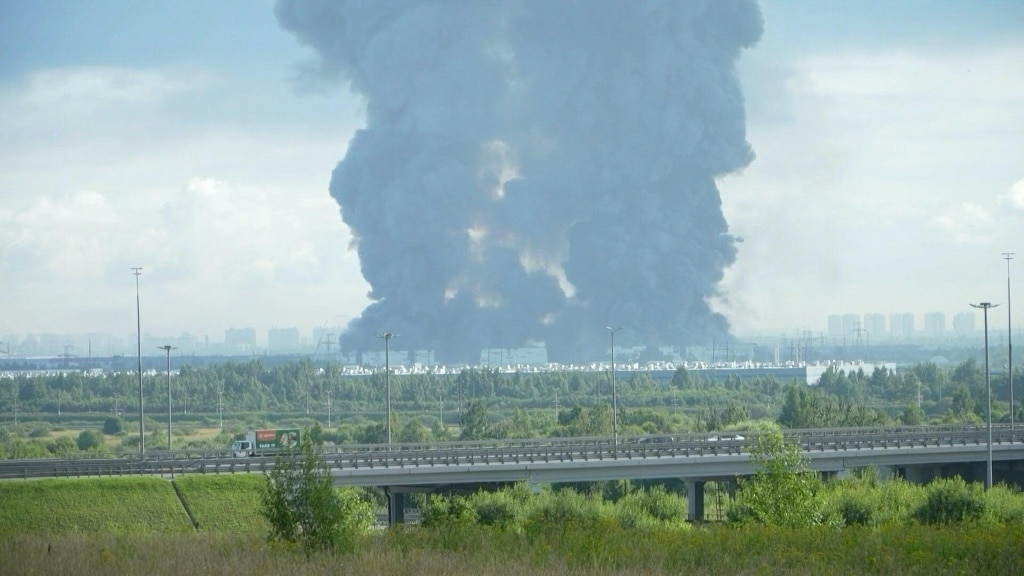
    Ukrainian forces also targeted a second high-profile site on Friday: warehouses operated by Wildberries, Russia’s largest online retail platform often described as the country’s equivalent to Amazon, in the outskirts of Saint Petersburg, Vladimir Putin’s hometown. This marked the third time Ukraine has targeted Wildberries facilities in the past week. Thick plumes of smoke from the attack were visible across the historic city center. Zelensky has publicly accused Wildberries of storing drone components and providing logistical support to the Russian military, and he hailed Friday’s wave of attacks as “successful.” Ukrainian officials have repeatedly stated that these retaliatory strikes deep inside Russia are intended to disrupt Moscow’s war production capacity and force the Kremlin to enter good-faith negotiations to end the conflict. The targeting of major Russian cities marks a dramatic shift from the start of the war in 2022, when the Kremlin launched its offensive confident of a quick victory and promised Russian civilians that the conflict would not impact daily life at home.

    Public reaction to the strikes among Russian civilians in Saint Petersburg was divided, reflecting the uneven flow of information under Russia’s strict wartime censorship laws, which ban all criticism of the country’s military campaign. Anna, a 50-year-old teacher in the city, said the attacks only stoked anti-Ukrainian sentiment among ordinary Russians. “This Ukrainian tactic is not leading to peace,” she said. “Even in my entourage, people are getting angrier and say that if that’s their way, then we should continue the offensive.” Other residents expressed fear over the escalating violence. “I am frightened, everything is getting worse,” said Svetlana, a 30-year-old cashier in Saint Petersburg, who blamed Ukraine for the attack while adding that she wanted an end to the fighting.

    The latest wave of violence comes amid a stark upward trend in civilian harm across the conflict zone. The United Nations reported this week that overall civilian casualties rose 37 percent in the first half of 2025, reaching almost double the number recorded in all of 2024. UN data confirms that this summer has seen more civilian deaths than any period since the first three months of Russia’s full-scale invasion. Diplomatic efforts to break the deadlock have gone nowhere, as Russia continues to occupy large swathes of eastern and southern Ukraine and refuses to abandon its maximalist goal of seizing the entire Donbas region.

  • South Africa halts impeachment against President Cyril Ramaphosa over stolen cash inquiry

    South Africa halts impeachment against President Cyril Ramaphosa over stolen cash inquiry

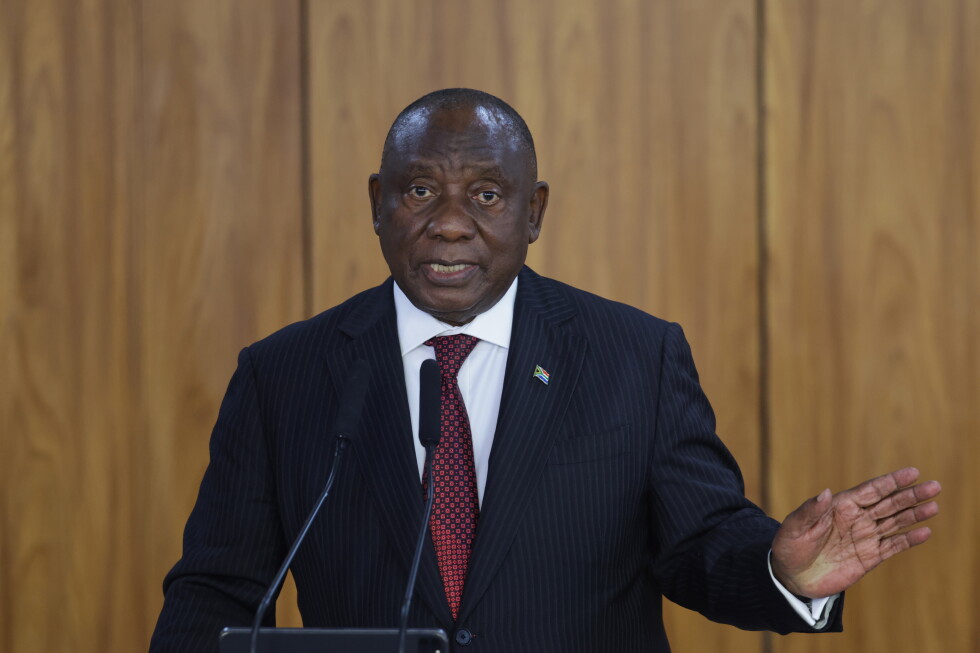
    In a major legal development that shakes South African political landscape, the Western Cape High Court has issued an order temporarily halting impeachment proceedings targeting President Cyril Ramaphosa, centered on the controversial 2020 theft of more than $580,000 in cash from his private Phala-Phala farm.

    The Friday ruling does not bring the entire impeachment process to a permanent stop, however. The multi-party parliamentary committee tasked with overseeing the inquiry is still permitted to carry out preliminary administrative and preparatory work while the legal challenge plays out in the courts.

    Impeachment proceedings were initially launched by national lawmakers back in June, following the release of a critical parliamentary inquiry report that found Ramaphosa had substantive questions to answer regarding his response to the theft. The report raised multiple pressing points of contention: how such a large sum of cash ended up stashed inside a sofa on his farm, the origin of the funds, whether any foreign currency included in the stolen amount was properly declared to regulatory authorities, and why the burglary was not immediately reported to South African police services.

    Ramaphosa has contested the findings of the parliamentary report through the court system, and filed an application to suspend impeachment proceedings until his legal challenge to the report is fully resolved. On Saturday, Ramaphosa’s office released a statement welcoming the high court’s latest judgment, noting that the president remains committed to upholding institutional accountability.

    “The President reaffirms his respect of judicial independence and separation of powers enshrined in our Constitution,” the statement read, adding that Ramaphosa will “cooperate with and abide by processes of accountability.”

    This long-running controversy, dubbed the Phala-Phala scandal, has been one of the most persistent and damaging political challenges Ramaphosa has faced since he took office as South Africa’s head of state in 2018. The legal battle traces back to earlier this year, when South Africa’s Constitutional Court — the nation’s highest judicial body — upheld the validity of the parliamentary investigation report, clearing the way for impeachment proceedings to move forward. That ruling came after the ruling African National Congress (ANC) party initially secured a parliamentary vote to block the inquiry from advancing.

    The impeachment committee is composed of legislative representatives from every political party represented in South Africa’s national parliament. Following the high court’s order Friday, most party representatives confirmed they would first conduct a full review of the judgment before deciding on whether to file an appeal against the ruling.

  • Giraffes given a new home in Uganda to escape oil drilling in the country’s largest park

    Giraffes given a new home in Uganda to escape oil drilling in the country’s largest park

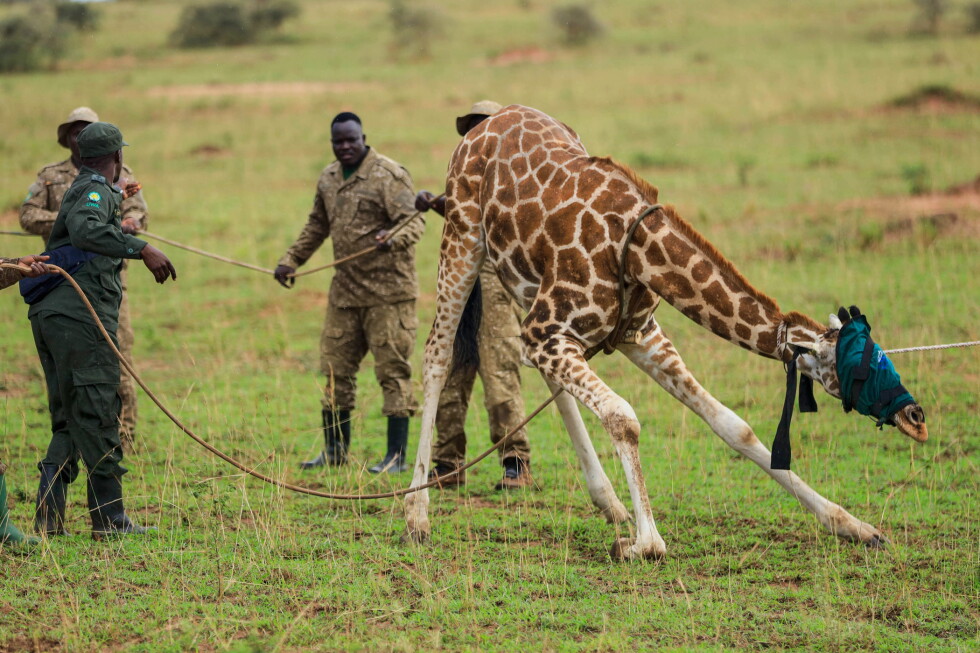
    On a crisp, cold morning at Murchison Falls National Park, Uganda’s largest protected wilderness, a team of park rangers gathered to begin a high-stakes conservation mission: relocating a dozen of the country’s critically endangered Nubian giraffes to a safer habitat 65 miles away. As the rangers traded lighthearted jokes and sang to lift their spirits ahead of the complex translocation operation, the weight of the task ahead hung over the group—this project is widely viewed as a critical safeguard for a species increasingly squeezed by human industrial activity.

    Starting on Tuesday, conservation teams began moving 12 Nubian giraffes, Earth’s tallest terrestrial mammal, from Murchison Falls National Park to the rejuvenated Ajai Wildlife Reserve, a journey of 106 kilometers. The multi-day operation is designed to establish a separate, self-sustaining population of the vulnerable species, boost regional biodiversity, and unlock new ecotourism opportunities for local communities.

    The urgent need for this translocation stems from a growing threat to Murchison Falls’ ecosystem: the Ugandan government’s push to develop the region’s extensive oil reserves. An estimated 40 percent of Uganda’s total known oil deposits lie within and around the boundaries of Murchison Falls National Park, and large-scale drilling operations have expanded rapidly in recent months, despite years of fierce opposition from global and local environmental advocates. Heavy industrial machinery now traverses protected wilderness areas as the country moves toward its goal of producing first commercial oil from the region. By June 2023, French energy giant TotalEnergies had officially launched drilling operations in the Tilenga project area, which sits entirely within Murchison Falls National Park.

    Patrick Atimnedi, assistant commissioner for veterinary services at the Uganda Wildlife Authority, who led Tuesday’s translocation work, explained that establishing a satellite population of giraffes in a separate protected area will mitigate the risk of population collapse if oil drilling causes irreversible damage to the species’ current habitat. Beyond oil and gas development, Atimnedi noted that multiple interconnected pressures have been steadily shrinking the available habitat for Nubian giraffes in Uganda, including unregulated tourism expansion, climate change-driven ecological shifts, the spread of woody brush into savanna landscapes, and invasive plant species.

    Nubian giraffes can reach heights of up to 6 meters and weigh as much as 2,000 kilograms, making them particularly vulnerable to habitat fragmentation and loss. “This is shrinking the habitat of wildlife here, but especially giraffes,” Atimnedi said. “So having a seed population somewhere about 100 kilometers away from here within the same conservation area, the same zone, is the right conservation decision to make.”

    After a final safety and strategy briefing from Atimnedi, the operation got underway, with conservation staff guiding three giraffes into specialized waiting trucks. Tree branches were secured inside the vehicles to give the animals access to food during the journey, helping keep them calm throughout the transport. At the Ajai Wildlife Reserve, a team of 12 rangers was already on standby to receive the newly arrived giraffes. Once offloaded, the animals wasted no time exploring their new 166-square-kilometer home.

    Ajai Wildlife Reserve has a complicated conservation history: once home to a thriving, diverse array of African wildlife, the reserve’s entire animal population was wiped out in the early 1980s amid widespread poaching and prolonged political insecurity across northern Uganda. Today, the reserve is the site of an ambitious long-term ecological restoration project, and the Nubian giraffe translocation is the latest milestone in that effort. Beyond giraffes, conservationists have already successfully reintroduced southern white rhinos, Cape buffalo, plains zebras, and hundreds of Uganda kobs to the restored landscape.

    Wilson Katamigwa, senior warden at Ajai Wildlife Reserve, reported that the reintroduced species already in the reserve are thriving: “The animals are now doing very well and are multiplying. Many are now pregnant. They are spreading all over the reserve, both inside the electric fence and outside the electric fence.”

    Conservation officials are optimistic that the 86-year-old reserve, first established in 1937, will provide a stable long-term home for the new giraffe population, helping grow Uganda’s overall Nubian giraffe numbers despite mounting threats from human activity and climate change. To protect the new population, part of the reserve has been enclosed with predator-proof fencing, and the number of anti-poaching rangers has been increased substantially. Local communities, which receive a cut of all tourism revenues generated by the reserve, have also participated in extensive conservation education programs to build buy-in for the project.

    “They are ready to conserve with us, and we are having a good working relationship with the district leadership,” Katamigwa said. Once the full translocation of 12 giraffes is complete, community members will be invited to the reserve to see the giraffes, which have been absent from the region for more than 40 years. “The big dream is that we want to see the economy of this place growing bigger and bigger and for the Madi Okollo district to be included in the money economy using tourism,” Katamigwa added.

    As the first giraffes stepped off the transport trucks onto the reserve’s grasslands, local resident Moses Ayoti could not contain his excitement at the return of the species to the region, and at the environmental and economic benefits the giraffes will bring to his community. “The community is aware, the vigilance is high, and I am sure they are going to take care of the animals because they belong to the local community, too,” Ayoti said.

  • Using a bathroom 20 times a day – life in the middle of US cyclospora outbreak

    Using a bathroom 20 times a day – life in the middle of US cyclospora outbreak

    Across the United States, an unprecedented, mysterious outbreak of cyclosporiasis — an intestinal illness caused by the cyclospora parasite marked by debilitating explosive diarrhea — has reached historic proportions, infecting thousands of people and sowing widespread anxiety in hard-hit communities.

    For many Americans, a sudden case of diarrhea seems like a minor, passing inconvenience. That was the initial assumption of Nick Palmiter, a 29-year-old resident of Monroe County, Michigan, when he first developed symptoms in early July. But what began as a mild discomfort quickly escalated into a weeks-long battle with unrelenting stomach cramps and frequent bathroom trips. As days stretched on, Palmiter told reporters he found himself using the bathroom 15 to 20 times a day, describing a constant sensation of pressure and bubbling in his abdomen that felt “almost like you have a balloon in your stomach”. After persistent urging from a coworker, he sought care at an urgent care clinic, where providers immediately sent him to the emergency room. That is where Palmiter received his diagnosis: cyclosporiasis, a parasite-borne illness that has now spread to every corner of the U.S., with more than 4,173 confirmed cases across 41 states — marking the largest recorded outbreak of the disease in U.S. history.

    Michigan has recorded more cases than any other state, topping 7,000 total, with Monroe County — a rural community of roughly 154,000 along the state’s eastern border — facing one of the highest infection rates in the region. Local data confirms 286 confirmed cases in the county alone, and the outbreak has sent ripples of fear through the tight-knit community. Palmiter described the local mood as one of pervasive anxiety, a sentiment echoed by his mother, Michelle Palmiter. She has watched neighbors and family members take extreme precautions to avoid infection: her own niece threw out all fresh produce in her refrigerator, including a perfectly good watermelon, rather than risk exposure. Social media discussion boards for Monroe County residents are filled with similar accounts, including one mother who wrote her toddler has survived exclusively on chicken nuggets and crackers since the outbreak began. Michelle still consumes produce, but only after cooking it thoroughly, and has stopped eating at restaurants entirely. She said much of the public panic stems from widespread distrust of the inconsistent and delayed government response to the crisis. “We’re not trusting anything they’re putting out about it,” she explained.

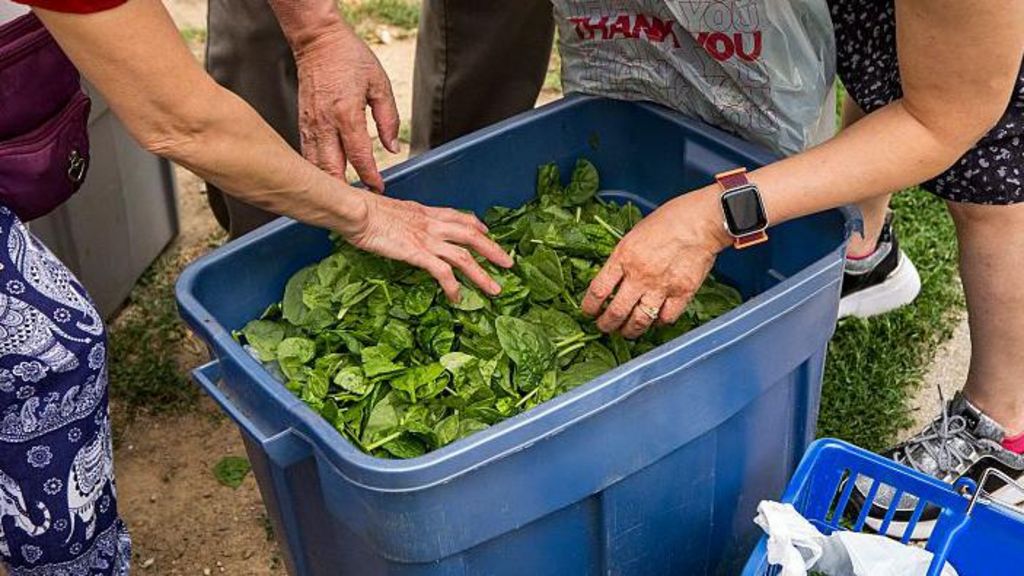
    Public health officials first detected the unusual cluster of infections on May 13, according to the U.S. Food and Drug Administration (FDA). But in the months since, cases have continued to climb, and the ultimate source of the parasite remains a public health mystery. Restaurants and major national retailers including Walmart, Jack in the Box, and Taco Bell have pulled fresh produce, most commonly iceberg lettuce, from shelves “out of an abundance of caution”, but no definitive source has been confirmed. FDA investigators have pointed to major U.S. food supplier Taylor Farms as a potential origin point, and the company voluntarily recalled all of its central Mexico-grown iceberg lettuce out of precaution. An apparent breakthrough came in early July, when the FDA announced a test sample of Taylor Farms iceberg lettuce returned a positive result for cyclospora. But less than 24 hours later, the agency retracted the announcement, confirming the result was a false positive.

    Francisco Diez-Gonzalez, director of the Center for Food Safety at the University of Georgia College of Agricultural and Environmental Sciences, explained that detecting the cyclospora parasite is inherently an extraordinary challenge. Two main factors complicate investigators’ work: first, the parasite’s genetic makeup makes it difficult to sequence and identify reliably. Second, cyclospora symptoms can take up to several weeks to appear after infection, meaning investigators struggle to trace an infected person’s food consumption back to a single common contaminated source. “Finding a few cysts of cyclospora in a lettuce sample is literally like looking for a needle in a haystack,” Diez-Gonzalez said. He added that while false positive results are not uncommon in laboratory testing, it is unusual for unconfirmed results to be released to the public. Typically, test findings go through multiple rounds of validation before being announced, to avoid the kind of confusion that has marked this outbreak. “Whether they had sufficient evidence to actually go public, that’s what is questionable,” he noted. The inconsistent communication, he added, erodes public trust in health authorities, leaving consumers confused about what is safe to eat. The FDA did not respond to requests for comment from media outlets ahead of publication.

    The disconnect between official statements and case counts deepened in mid-July, when Health Secretary Robert F. Kennedy Jr. publicly stated that cyclosporiasis was “under control” — the same day the U.S. Centers for Disease Control and Prevention (CDC) released its highest case tally to date, reporting 4,173 confirmed cases and an additional 7,400 suspected cases still under investigation. Most of the new cases were reported in Ohio and Michigan.

    For local residents like Brian Clare, a 52-year-old grain and beef farmer in Monroe County, the outbreak has upended daily life. Though Clare has never received an official diagnosis, he developed classic cyclospora symptoms after eating store-bought raspberries, a produce item linked to possible contamination, and he knows at least five other local residents with matching symptoms. For more than three weeks, he has dealt with severe stomach cramps and repeated nightly trips to the bathroom. “This is the most painful thing I’ve ever been through in my life,” he said. To cope while working his fields, Clare keeps rolls of toilet paper with him on his tractor, and has to stop mid-work to relieve himself in open fields when the urge hits — which can come on in less than two minutes with no warning. Like many local farmers, he has not sought formal medical care, saying he cannot afford the time off work, and that most small-scale farmers lack adequate health insurance to cover doctor visits. The outbreak has changed his habits permanently: he now always washes produce before eating it, a step he never bothered with before, and says he will never buy store-bought raspberries again. “It’s been that miserable,” he said.

  • Police ‘intercept car with bomb on way to attack in NI’

    Police ‘intercept car with bomb on way to attack in NI’

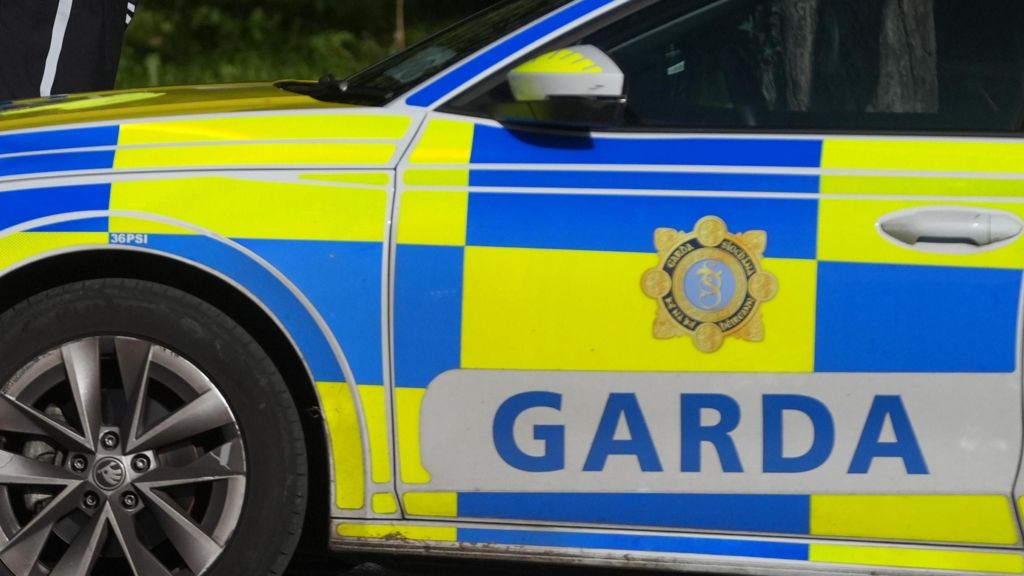
    In a major counter-terrorism operation along the Irish border, Ireland’s national police force, Gardaí, has intercepted a vehicle carrying a fully assembled explosive device that authorities believe was en route to an attack in Northern Ireland. The interception unfolded shortly after 3 p.m. local time on Wednesday, when officers pulled the car over along the N2 highway in the vicinity of Carrickmacross, County Monaghan, a region that sits just kilometers from the border between the Republic of Ireland and Northern Ireland.

    Following the stop, two suspects were taken into police custody. The vehicle’s driver, a woman in her 20s, was arrested immediately during the Wednesday afternoon operation, while a second suspect, a man in his 40s, was apprehended later in connection with the plot. Law enforcement officials confirmed the operation was explicitly targeted at curbing dissident republican activity, a long-running source of regional security tensions in the border area.

    Irish national public broadcaster RTÉ cited official sources confirming the explosive discovered in the vehicle was fully completed and primed for an imminent attack. After the vehicle was stopped, Gardaí called in the Irish Defence Forces’ Explosive Ordnance Disposal (EOD) team to conduct a full examination of the device and the vehicle. In an official public statement released Wednesday, Gardaí declined to share details of the EOD team’s findings, noting that the outcome of the examination is being withheld for operational security purposes. The incident comes amid ongoing security cooperation between Irish and Northern Irish law enforcement to disrupt planned attacks by dissident groups that oppose the 1998 Good Friday Agreement that ended decades of conflict in the region.

  • Iranians find community in art, culture and memes as missiles fly

    Iranians find community in art, culture and memes as missiles fly

    Most global media coverage of the ongoing tensions between Iran, Israel and the United States centers narrowly on military maneuvers, official political statements and high-stakes international diplomatic negotiations. But a quieter, more powerful grassroots movement has been unfolding across Iran’s public spaces and digital platforms, as ordinary citizens and artists push back against the uncertainty and fear of war through intentional collective presence.

    History shows that communities facing crisis consistently turn to public gathering as a source of strength: Ukrainian protesters assembled in city squares following Russia’s 2014 invasion, New Yorkers came together across the city after the September 11 attacks, and Londoners gathered in underground stations during the Nazi German Blitz of World War II. In moments when every part of daily life feels unstable and out of control, visible public presence becomes an act of reclamation: it allows civilians to reclaim agency over their own lives and communities. For Iranians navigating the current conflict, this movement has formed across three interconnected, mutually reinforcing spheres: physical public presence, cultural and artistic expression, and digital grassroots storytelling.

    ## Physical Presence: Defying Fear Through Visibility

    Iranians have maintained a steady, noticeable public presence in city streets, neighborhood parks and central public squares since regional tensions escalated. What began as spontaneous gatherings in the immediate aftermath of heightened threats has slowly evolved into a quiet, sustained ritual of community cohesion.

    The meaning of these gatherings extends far beyond simple displays of personal courage. During open conflict, empty streets are universally recognized as symbols of fear, societal collapse and government instability. By contrast, consistent public presence sends a clear message of continuity: by refusing to retreat behind closed doors, Iranian citizens are symbolically rejecting the idea that war has completely overtaken their lives and identities.

    For most participants, these gatherings are not inherently an act of political alignment with any faction or leader. Instead, they are a defense of the lives, connections and shared histories that bind communities together. Years of personal labor, generations of family history and collective cultural memory all face existential risk from escalating conflict; showing up in public is a quiet act of protecting the things that matter most.

    A notable early example came in April, after former U.S. President Donald Trump threatened to attack Iran’s critical civilian infrastructure. Renowned Iranian musician Ali Ghamsari responded by traveling to the Damavand power plant and performing his work directly outside the facility. Images of his performance spread rapidly across social media, becoming a touchstone for conversations about civic solidarity amid crisis. More recently, in July, the strength of mass collective public presence was on full display during funeral ceremonies for Iran’s Supreme Leader Ayatollah Ali Khamenei, when tens of thousands of mourners gathered in Tehran to grieve together in a massive show of shared community.

    ## Cultural and Artistic Presence: Building Social Cohesion Through Creativity

    Iranian artists, musicians and cultural figures have stepped into a central role in shaping the public’s collective response to ongoing conflict. Their work does more than entertain: it fosters a deep sense of belonging and encourages people to stay connected to public life, acting as a form of informal social infrastructure that ties individual people to their broader communities.

    Across genres, creative expression has become a way for Iranians to collectively process the fear, grief and uncertainty that come with the threat of war, while also exploring themes of national resilience and shared identity. Music, poetry, religious chanting and visual art all serve this purpose.

    One prominent example is the song *Hasbi Allah*, created by Iranian singer-songwriter Mohsen Chavoshi with lyrics by poet Mehdi Abassi. The work draws on centuries of Iranian poetic, musical and spiritual tradition, reflecting on the devastating human cost of war, mourning those who have been harmed, and centering expressions of deep attachment to the Iranian homeland.

    Similarly, traditional Shia Islamic mourning chants known as maddahi have become a core part of many public wartime gatherings. Long tied to collective remembrance and mourning in Shia religious practice, these chants have been reimagined for the conflict context, blending traditional religious symbolism with declarations of love for country and willingness to stand together as a community. Many chants also draw on Iran’s long cultural and historical mythology: one viral video references Arash-e Kamangir, the legendary Persian folk hero who famously sacrificed his own life to fire an arrow that defined Iran’s national borders. These creative works weave together religious devotion, centuries of shared historical memory, and modern national identity to build a sense of collective purpose.

    ## Digital Presence: Grassroots Storytelling for a Global Audience

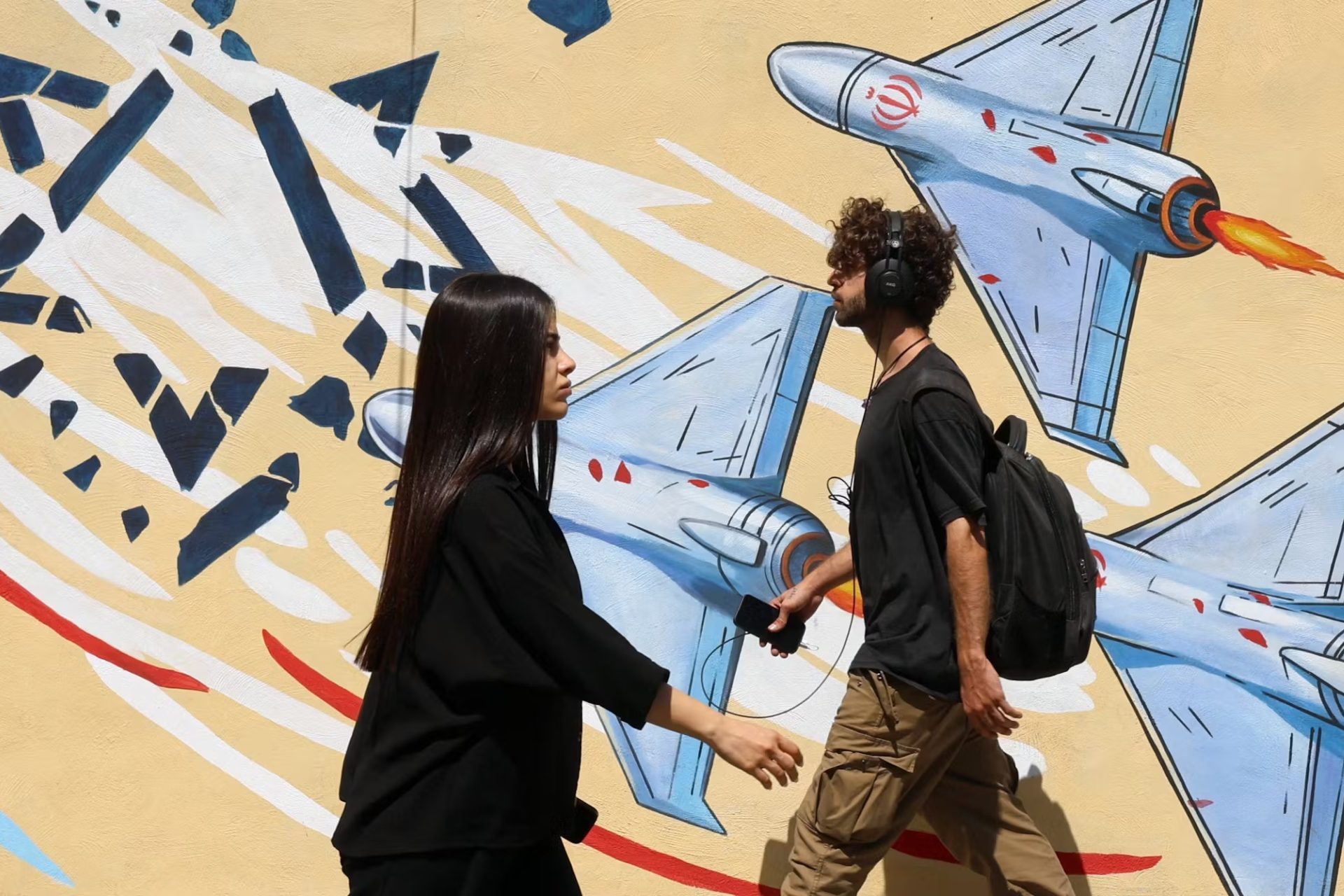
    One of the most distinctive shifts in how Iranians are communicating about this conflict is the rise of AI-generated videos, memes and parody as tools for grassroots wartime storytelling. Unlike the heavily ideological, martyr-focused narratives that defined official Iranian propaganda in past eras of conflict, much of this new content uses the familiar language of contemporary global internet culture.

    A series of AI-generated Lego animations have gone viral in recent months, with some amassing hundreds of millions of views across platforms. These videos retell recent military events, while weaving in references to Iranian history and mythology and sharp, playful humor that most often parodies former U.S. President Donald Trump and Israeli Prime Minister Benjamin Netanyahu. Many of the videos are overlaid with English-language popular music and lyrics, indicating that creators intend for them to reach audiences far beyond Iran’s borders. Remarkably, almost all of the creators behind these viral works remain anonymous.

    Younger Iranians in particular have embraced irony, meme culture and pop culture references to express their feelings about the conflict. One popular viral video blends overt patriotic themes with playful, self-aware visuals and humor, built around a rap lyric that repeats: “from us remain spirits that live on because they love the homeland.”

    These examples mark a clear, significant shift in how wartime narratives are created in Iran. Iranian citizens are no longer passive recipients of official government messaging about the conflict; they are active, independent creators building their own narratives about what the war means for their lives and their country. The most human, compelling stories of this conflict are not coming from battlefields or diplomatic negotiating tables – they are coming from ordinary people who refuse to sit by helplessly as crisis unfolds around them.

  • Woman charged over anti-Semitic slur at Bondi Beach terror site

    Woman charged over anti-Semitic slur at Bondi Beach terror site

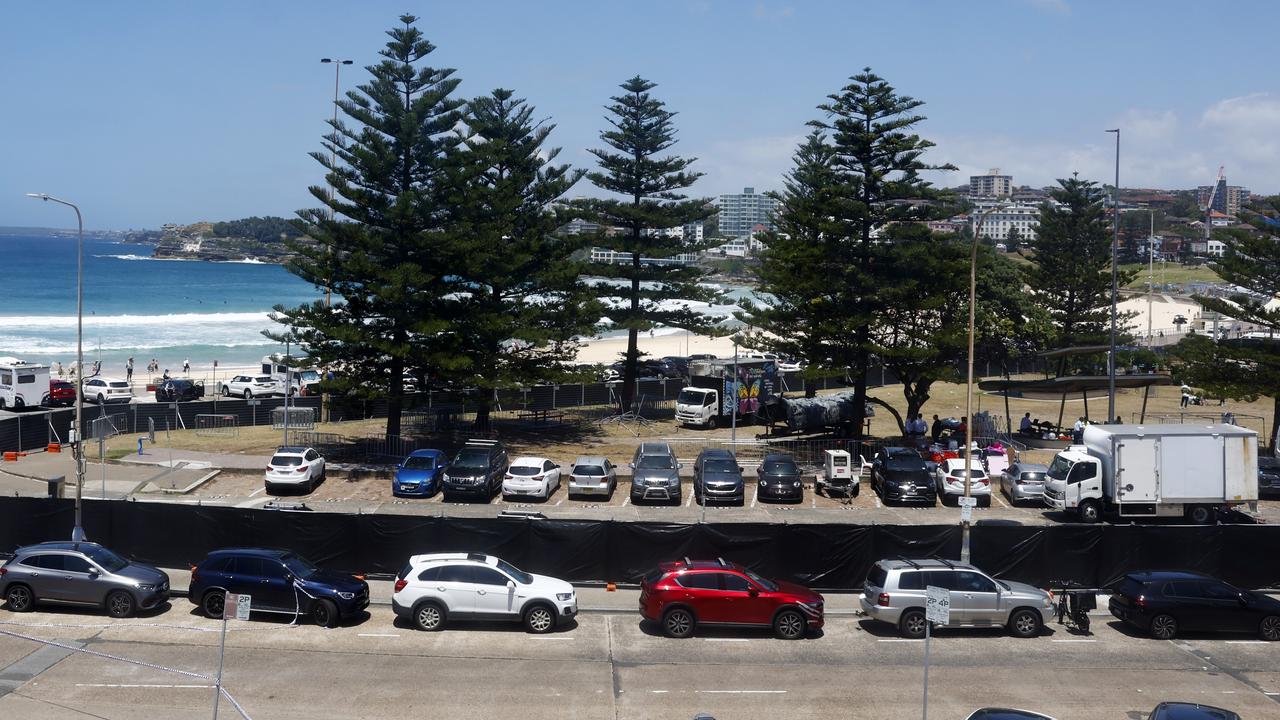
    Weeks after a deadly terror attack on Bondi Beach claimed 15 innocent lives, a shocking incident of hate speech has occurred meters from the massacre site, leading to a 67-year-old local woman facing criminal charges and an upcoming court appearance.

    On Wednesday afternoon, around 4:30 p.m., NSW Police received an emergency call about a woman aggressively confronting a gathered group at Archer Park, located adjacent to the Bondi Beach attack site. The confrontation unfolded at the same time that Jewish community leaders and Sydney Swans players were visiting the site to pay respects to the victims of the December terror attack.

    Following a prompt investigation into the incident, law enforcement officers arrested the 67-year-old Bondi resident and formally charged her with one count of using offensive language in public. In an official statement released this week, NSW Police confirmed that the woman has been issued a mandatory notice to appear before the court, adding that investigators will allege she launched a verbal tirade against the visiting group that included explicit anti-Semitic slurs.

    The incident has drawn widespread condemnation from Australian Jewish community leadership. Alex Ryvchin, co-chief executive of the Executive Council of Australian Jewry, released a formal response Friday praising the swift action of NSW Police. “We’re grateful to NSW Police for their professionalism in investigating and laying charges promptly,” Ryvchin said.

    He emphasized that the Jewish community would not tolerate attempts to spread hate in a space that has been turned into a de facto memorial for terror victims. “The Jewish community will not succumb to hatred and vilification. We will not allow the desecration of a sacred site,” Ryvchin stated. He went on to push back against attempts to normalize anti-Jewish sentiment disguised as political critique, saying: “And we will not allow the poison of antizionism, which places targets on the backs of virtually all Jews, to be passed off as benign political commentary. We cannot turn antisemites into good and rational people. But we can exact consequences when they endanger our society and break the law.”

    The accused woman is scheduled to make her first court appearance at Waverley Local Court on September 23, where the case will be formally heard.

  • South Africa’s president wins bid to temporarily halt impeachment inquiry over ‘Farmgate’

    South Africa’s president wins bid to temporarily halt impeachment inquiry over ‘Farmgate’

    South Africa’s political landscape has been shifted by a latest court ruling that has temporarily paused an impeachment probe into President Cyril Ramaphosa tied to the controversial 2020 ‘Farmgate’ cash theft scandal, granting the embattled leader critical breathing room as he fights to clear his name.

    The roots of this saga stretch back to 2020, when burglars broke into Ramaphosa’s private Phala Phala farm in Limpopo province and made off with a cache of undeclared U.S. dollars stuffed inside a sofa. Stolen funds are alleged to total roughly $580,000, but details of the break-in remained hidden from public view until 2022. That year, Arthur Fraser, former head of South Africa’s intelligence service and a close ally of ex-president Jacob Zuma, submitted an explosive dossier to police that exposed the theft, leveling serious accusations against Ramaphosa: that the president deliberately concealed the incident from law enforcement and tax regulators, and potentially violated the country’s foreign exchange control laws by holding the unreported cash. Ramaphosa has repeatedly denied all wrongdoing, asserting the funds were legitimate proceeds from the sale of buffaloes from his farm.

    Following the 2022 revelations, an independent parliamentary panel concluded there was sufficient evidence to open an impeachment inquiry against the president. Initially, lawmakers voted to shelve the probe, but South Africa’s Constitutional Court overturned that decision in May 2024, ruling parliament had acted unlawfully in setting aside the panel’s findings. The ruling cleared the way for the impeachment process to be revived, coming at a time of massive change for South Africa’s legislative branch: Ramaphosa’s long-ruling African National Congress (ANC) lost its parliamentary majority in the 2024 national election, forcing the party to govern as part of a fragile coalition government.

    To block the revived inquiry, Ramaphosa launched a legal challenge, arguing the 2022 independent panel had overstepped its authority, misevaluated evidence, and incorrectly interpreted the four misconduct charges brought against him. He also launched a separate court application to have the panel’s entire findings thrown out, a case set to be heard by the courts in September 2024.

    On Friday, the Western Cape High Court issued its ruling on Ramaphosa’s request to halt the impeachment proceedings pending the outcome of his challenge to the panel’s findings. A three-judge panel split on the decision, with two justices ruling in the president’s favor. Judge Andre le Grange ordered the parliamentary impeachment committee to suspend all hearings and activities “pending the determination by this court of the applicant’s review”. Ramaphosa’s legal team had argued that allowing the inquiry to move forward before his challenge was resolved would cause irreversible damage to his reputation, a harm that could not be corrected even if he was ultimately cleared of wrongdoing.

    The temporary pause effectively gives Ramaphosa several extra months to build his case and shore up political support before the impeachment process can resume. In a public statement released shortly after the ruling, Ramaphosa said he had noted the court’s decision and “respects” the outcome of the legal process.

    This development marks the latest turn in a years-long political scandal that has tested South Africa’s democratic institutions and reshaped the country’s post-election political balance, with ramifications for the stability of the nation’s new coalition government.