博客

  • Fires in Europe: latest developments

    Fires in Europe: latest developments

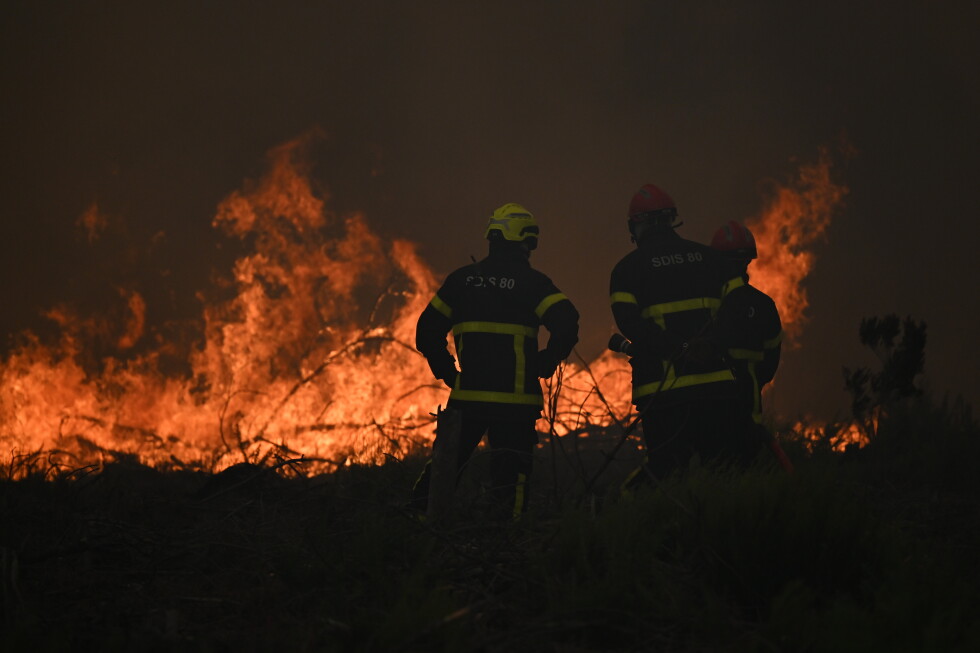
    Across southwestern France and central Spain, out-of-control wildfires have carved a path of destruction, forcing hundreds of thousands of residents to flee their homes, shutting down key transport links and prompting a major military deployment to combat the blazes. The rapid spread of the infernos, fueled by unseasonably high temperatures and strong gusty winds, has created one of the most severe wildfire crises Europe has faced in decades, with new developments unfolding hourly over the weekend.

    In France’s Gironde region, the massive wildfire burning outside the major city of Bordeaux has already consumed 42,000 hectares of forest and inhabited land, marking it as one of the largest single wildfire events recorded in the country since the end of World War II. For context, the largest wildfire in modern French history, recorded in 1949, scorched roughly 50,000 hectares. By Sunday, the scale of evacuations from Gironde and surrounding at-risk areas had surpassed 220,000 people, with an additional 55,000 villagers ordered to leave their homes overnight Saturday as the fire line advanced toward populated areas. Further south in the Landes region, another 30,000 residents have already been relocated to emergency shelters away from the advancing flames.

    To bolster firefighting efforts, the French government announced it would deploy an extra 500 soldiers to the southwestern fire zone, bringing the total number of military personnel supporting response operations to 1,500. Defense officials confirmed the troops will support local emergency teams with evacuation logistics and help secure abandoned properties to prevent looting and further damage.

    Strong winds pushed the Gironde fire across containment lines over the weekend, forcing authorities to close 60 kilometers of the A63 motorway, the primary highway connecting Bordeaux to the Spanish border. National rail operator SNCF also suspended passenger and freight service along a 100-kilometer stretch of track south of Bordeaux, cutting off a key north-south transport link for the region.

    French officials have warned residents that the battle against the blazes will be a prolonged one. Following a downward revision of weather forecasts, Prime Minister Sebastien Lecornu cautioned late Saturday that “the coming hours could be difficult” for crews working to contain the fire near Bordeaux. Interior Minister Laurent Nunez added that evacuated residents would not be permitted to return to their properties until the blaze is fully contained and the area is deemed safe.

    In a surprising development, three local men were taken into custody Saturday in Gironde on charges of endangering public life. Prosecutors confirmed two of the three are accused of setting off unauthorized fireworks in a dry, wooded area, an act investigators believe may have sparked one of the regional blazes that has now scorched more than 32,000 hectares.

    The wildfire crisis is not isolated to southwestern France. In southeastern Var, the Ponteves wildfire remained “very active” on Sunday after five days of burning, having already destroyed 4,000 hectares of land and leaving roughly 2,000 displaced residents unable to return to their homes. On the island of Corsica, firefighters continued to battle an out-of-control blaze near the town of Corte that has spread across more than 800 hectares of vegetation.

    The cross-border crisis has hit Spain just as hard. As of Sunday, at least 60,000 people have been forced to evacuate wildfire zones surrounding the capital city of Madrid. On Saturday evening, Spanish authorities ordered the evacuation of eight additional municipalities near Toledo, located west of Madrid. All residents of Buenaventura, Navamorcuende, Real de San Vicente, Hinojosa de San Vicente, Castillo de Bayuela, Garciotum, Nuno Gomez and Pelahustan were instructed to leave their homes immediately as the fire advanced. In eastern Spain’s Valencia region, one person has already been confirmed dead in a wildfire that was only contained by firefighters after it spread through populated areas.

    The widespread destruction has even disrupted major international events. Organizers of the Tour de France announced Sunday that they would shorten the race’s final stage in a show of solidarity with affected communities. The original route, which was set to run from Thoiry to Paris, will be adjusted to avoid passing through fire-impacted regions of southwestern France.

    As fire crews from across the continent work to contain the blazes, officials warn that ongoing heat and dry conditions are likely to keep wildfire risk elevated across much of Southern Europe through the coming weeks.

  • Wildfires in France drive 250,000 people from their homes, creep toward wine city

    Wildfires in France drive 250,000 people from their homes, creep toward wine city

    LEGE-CAP FERRET, France — Uncontrolled wildfires tearing through southwestern France have triggered a sweeping new wave of evacuations, forcing 55,000 additional residents to flee their homes overnight Sunday. This new displacement pushes the total number of people evacuated from the Gironde region alone — the country’s renowned wine-producing area home to the historic city of Bordeaux — to 220,000, as fast-spreading flames draw steadily closer to the city’s urban core.

    Regional officials confirmed overnight evacuation orders for five more communities located southwest of Bordeaux, a centuries-old city celebrated globally for its wine industry and cultural heritage. According to an official statement, strong gusting winds amplified the blaze through the overnight hours, supercharging the spread of a fire that has burned without containment since the middle of last week.

    The prefect of Gironde also implemented a partial closure of a major highway running southwest out of Bordeaux, a key transport link for the region, to support emergency response efforts and keep residents out of harm’s way. Bordeaux’s mayor emphasized in a public update that the fire remains an immediate threat to the metropolitan area, with the closest edge of the blaze now sitting just 15 kilometers, or roughly 9 miles, from the city’s outer limits.

    A second large-scale wildfire, burning hundreds of kilometers south in France’s Landes region, has forced another 30,000 people to evacuate since the outbreak began earlier this week. When combined, the two French blazes have now displaced more than 250,000 people total. The crisis is not confined to France, either: neighboring Spain is also facing its own severe wildfire emergency, with authorities reporting that 70,000 people have been evacuated from areas west of Madrid this week as blazes spread across the region amid hot, dry conditions.

  • Authorities in Germany issue a wanted notice for suspect in Berlin Pride van ramming

    Authorities in Germany issue a wanted notice for suspect in Berlin Pride van ramming

    BERLIN – Less than 24 hours after a violent vehicle attack near Berlin’s annual LGBTQ+ Pride festival left one person dead and at least 16 others injured, German law enforcement officials launched a public manhunt Sunday for a fugitive suspect identified as 21-year-old Abdul B. In an official wanted notice published by state police and public prosecutors, authorities issued an urgent warning for residents to exercise extreme caution around the suspect, noting he is believed to be armed and should not be approached directly by members of the public.

    Investigators confirmed that the incident involved multiple layers of violence beyond the van ramming. A moving vehicle was used to strike multiple victims, after which at least one individual fled the scene. Initial investigations also uncovered evidence that several victims suffered stab wounds, adding to the complexity of the ongoing probe.

    Berlin police spokesperson Florian Nath told reporters that investigators have already established that the suspect has documented connections to Islamic extremist networks operating within the German capital. “The suspect is already known to our department. He is linked to Islamic circles based here in Berlin, and our search operations are being prioritized and carried out at maximum speed,” Nath stated in a press briefing.

    Despite early progress in identifying a person of interest, Nath added that key details surrounding the attack remain unconfirmed as of Sunday. “At this stage, we have no confirmed information about the suspect’s specific motives, the exact order of events that unfolded during the attack, or the full scope of his role in planning or carrying out this crime,” Nath said. Investigators are asking members of the public who may have information about Abdul B.’s current whereabouts to contact authorities immediately.

  • Cheaper, open and intelligent: Chinese AI models gain ground, as they make inroads in the US

    Cheaper, open and intelligent: Chinese AI models gain ground, as they make inroads in the US

    In a shifting global artificial intelligence landscape, Chinese AI models are emerging as unexpected heavy hitters in the U.S. market, drawing growing adoption from developers, corporate users, and tech industry insiders with their combination of competitive performance and far lower price points. What started as a niche alternative to U.S.-built frontier models has now reached a critical turning point, reshaping the U.S. AI market and fueling intensifying great power competition in one of the world’s fastest-growing strategic tech sectors.

    Raffi Krikorian, chief technology officer at Mozilla — the organization behind the widely used Firefox browser — is among the early converts to the new wave of Chinese AI. Just over a week after Chinese AI startup Moonshot launched its powerful new Kimi K3 model, Krikorian had already shifted the majority of his daily work tasks to the system. Comparing K3 to Anthropic’s higher-priced, widely acclaimed Claude Fable chatbot, Krikorian noted that the Chinese model “just seems snappier.” Before adopting Kimi K3, Krikorian already relied on another top-tier Chinese model, Z.ai’s GLM-5.2, for routine work such as calendar management, document processing, and email sorting.

    Krikorian is far from alone. A rising number of American technology professionals and companies are turning to Chinese AI systems, which have been gaining global market share thanks to their affordability and rapidly improving efficiency. Even major U.S. firms, including cryptocurrency exchange Coinbase, have announced shifts to Chinese AI models as a strategy to cut operational costs amid pressure to reduce AI spending.

    This growing popularity has created frustration for leading U.S. tech giants that have long dominated the global AI market. But unless Washington imposes an outright ban on Chinese AI systems, industry analysts note that these models will likely remain attractive to independent software developers across the U.S. and other global markets.

    The rising profile of Chinese AI comes amid escalating U.S. restrictions on Chinese tech access. Existing American-led trade controls already bar China from purchasing some of the world’s most advanced technologies, including cutting-edge AI chips. U.S. Treasury Secretary Scott Bessent has also warned that additional sanctions could be imposed to protect what Washington calls American intellectual property. Last Wednesday, the Trump administration accused Moonshot of using “covert” methods to develop K3 based on Anthropic’s Fable model, though the administration stopped short of labeling the activity illegal. A number of U.S. politicians and AI firms, including Anthropic itself, have claimed that Chinese startups engage in illicit “model distillation” to extract proprietary technology from U.S. models — a claim Beijing has repeatedly rejected as completely groundless.

    The rapid breakthrough of cutting-edge Chinese AI models in 2025 marks a new phase in the U.S.-China AI race, which has evolved significantly since early 2024, when Chinese startup DeepSeek upended the U.S. tech industry by launching a model that matched the performance of top U.S. alternatives at a far lower cost, putting China firmly on the global AI map.

    Industry experts confirm that the latest generation of models from Chinese startups — Zhipu (Z.ai)’s June release GLM-5.2, Moonshot’s July launch Kimi K3, Alibaba’s previewed Qwen3.8 Max model, and DeepSeek’s April V4 preview — all perform nearly on par with frontier models from U.S. leaders OpenAI and Anthropic. These Chinese models are already challenging the dominance of OpenAI’s GPT series and Google’s Gemini, with consistent quarterly advances that have steadily closed the performance gap.

    For most business and individual users, the Chinese models hit the sweet spot between performance and cost. Curt Meinhold, a North Carolina-based technology executive and founder of digital legacy platform LilyList, says he increasingly relies on DeepSeek for commercial tasks including generating sales leads and identifying new business opportunities. “At the end of the day, most of us, the vast majority of us, 90 plus percent, don’t need (Anthropic’s) Mythos or Fable,” Meinhold explained. “We just don’t need it, we need something good enough.”

    A July research report from U.S. investment bank Goldman Sachs highlighted that Chinese AI models have now reached a “critical stage” for mass global adoption. This shift is being accelerated by a global boom in “agentic” AI usage, a development that requires AI systems to autonomously complete multi-step, complex tasks, driving sharp growth in demand for cost-effective AI solutions.

    AI pricing is calculated per million tokens for both input and output data, so the rise of AI agents dramatically amplifies cost differences between competing models, according to analysts including Alex Colville of the Australian Strategic Policy Institute. Meinhold echoed that observation, noting that his testing found Chinese models perform nearly as well as U.S. alternatives for coding and research work. “If I can pay a handful of cents per million output tokens versus 30 bucks or 40 bucks or 50 bucks, then it’s good enough,” he said.

    Data from the past month shows just how far Chinese AI has come: on OpenRouter, a leading platform that aggregates usage data across AI models, the top five most popular models are all Chinese. Market intelligence firm Sensor Tower estimates that Kimi gained more than 930,000 downloads globally in the week following K3’s July launch, a 200% increase from the week before. In the U.S. alone, downloads jumped 387% to roughly 86,000 in that period. Demand for K3 grew so rapidly that Moonshot was forced to temporarily suspend new subscriptions after usage pushed the platform’s infrastructure close to its maximum capacity.

    Despite these gains, industry analysts note that Chinese AI still has clear limits. Anastasios Angelopoulos, co-founder and CEO of AI evaluation platform Arena, pointed out that while Chinese models have become serious competitors to U.S. offerings, they still lag behind leading American AI systems in overall full-spectrum capability. Yasir Atalan, a researcher at the Center for Strategic and International Studies, added that U.S. AI firms are already responding to the price competition by developing lower-cost alternatives of their own to retain market share.

    Ironically, some U.S. policy choices have ended up boosting adoption of Chinese AI models in the U.S. and global markets. Unlike most leading U.S. frontier models from Anthropic and OpenAI, which are closed-source, the vast majority of Chinese AI models are released as open-source software, meaning any developer can examine the code and build new tools on top of the existing model. Lian Jye Su, a senior analyst at tech research firm Omdia, explained that Chinese AI vendors are expected to leverage their open-source positioning to drive global adoption. Mozilla’s Krikorian noted that as Chinese open-source models become nearly comparable in performance to leading U.S. closed-source systems, “the open frontier is becoming increasingly Chinese-built.” At the same time, even as Washington weighs restrictions on Chinese AI, a group of major U.S. tech firms including Microsoft, Meta and Nvidia recently published an open letter backing the development of open AI models, aligning indirectly with the Chinese approach.

    Other U.S. trade policies have also created unintended openings for Chinese competitors. Shortly after the Trump administration imposed export controls that took Anthropic’s Fable and Mythos models offline for more than two weeks, Chinese AI firm Z.ai launched its GLM-5.2 model to fill the gap. “Restricting an American model can immediately create an opening for a Chinese competitor,” Arena’s Angelopoulos said.

    Within China, domestic adoption of AI technologies has grown rapidly, supported by state policy and investment. Major Chinese tech firms including Huawei and Tencent are integrating AI into a wide range of consumer products, from smartphones and AI smart glasses to humanoid robots. Now, Chinese AI developers are setting their sights on global market dominance. At a major flagship technology summit in Shanghai, Chinese President Xi Jinping has publicly championed open-source AI development, emphasized the need for greater global equity in AI access, and pledged China’s support to help developing nations build up their domestic AI capabilities.

    As with many other Chinese industries, intense domestic competition has pushed leading AI startups to pursue global expansion to sustain growth. Top Chinese AI firms are now raising billions in new funding to support their international push, with several planning public share offerings to raise capital.

    Chelsey Tam, an analyst at investment research firm Morningstar, noted that both the U.S. and China are focused on encouraging widespread adoption of their own AI ecosystems, while protecting core technologies that could strengthen strategic rivals. “The competition is no longer simply the United States against China; the Chinese labs are also putting a lot of pressure on one another,” Arena’s Angelopoulos explained.

    Still, the huge capital requirements of AI development have raised questions about the long-term financial sustainability of many Chinese AI startups, mirroring similar concerns in the U.S. For example, Z.ai reported that its 2024 revenue surged 132% to 724 million yuan ($107 million), but its net loss jumped 60% to 4.7 billion yuan ($694 million) as heavy research and development spending weighed on profitability.

    For the immediate future, however, analysts expect Chinese AI models to continue expanding their presence, even in the U.S. market. Mozilla’s Krikorian summed up the view of many American tech professionals: “I would highly recommend anyone doing any serious AI load to at least evaluate it.”

  • Left-wing Democrats are on a winning run – but can they lure back crucial swing voters?

    Left-wing Democrats are on a winning run – but can they lure back crucial swing voters?

    Beneath hazy skies still tinted by wildfire smoke drifting south from Canada, hundreds of Michigan voters packed Detroit’s century-old Opera House last Saturday evening, leaping to their feet in thunderous applause as two of America’s most prominent progressive leaders—Senator Bernie Sanders and Representative Alexandria Ocasio-Cortez—stepped onto the stage. The high-profile gathering was far more than a routine campaign stop: it was a public declaration that left-wing Democrats are positioning physician and Senate candidate Abdul El-Sayed as the future of the party, as the nation gears up for November’s pivotal midterm elections.

    El-Sayed, a former Wayne County health director, is running on a unapologetically progressive platform anchored by Medicare for All, a wealth tax on billionaires, and the complete rejection of corporate campaign donations. His rally crowd carried signs emblazoned with his signature universal healthcare slogan, and wore shirts calling for an end to harsh immigration enforcement and cuts to U.S. military aid to Israel. But the eyes of the entire nation are fixed on this race, which has become a defining test of the progressive movement’s ability to win in critical battleground states amid deep internal divisions within the Democratic Party.

    El-Sayed’s opponent in the August 4 primary is Congresswoman Haley Stevens, a well-funded centrist incumbent backed by the Democratic establishment, including Michigan Governor Gretchen Whitmer and outgoing Senator Gary Peters. Stevens has drawn massive financial support from corporate donors and pro-Israel lobbying group AIPAC, which has poured nearly $30 million into her campaign. For Democrats, the outcome of this primary will do more than pick their general election candidate: it will shape the party’s ideological direction ahead of 2028, as the faction split between establishment-aligned centrists and grassroots progressives continues to widen.

    Michigan’s open Senate seat is a make-or-break race for Democrats. The state flipped from Joe Biden in 2020 to Donald Trump in 2024, and holding the seat is critical to the party’s goal of retaining Senate control and blocking Trump’s policy agenda. The primary winner will face Trump-endorsed Republican Mike Rogers in the November general election, raising urgent questions among party members about which candidate can win over swing voters.

    This race comes at a moment when progressives have already notched a string of primary wins across the country this summer, most notably Zohran Mamdani’s upset victory in New York City’s mayoral race. But political analysts warn that replicating that success in the Midwest, a historically working-class region with many purple swing districts, will be far more challenging. “They got a big win with Mamdani in New York City, but New York is an outlier,” explained Adrian Hemond, a Michigan-based political strategist. “Progressives have struggled to gain traction in more politically mixed, traditionally purple areas like this.”

    For many progressive voters, however, El-Sayed’s campaign has sparked unprecedented enthusiasm, drawing first-time volunteers like 35-year-old Corie Johnson, who has never canvassed for a candidate before. “Millennial voters aren’t stuck in the old, rigid ways of politics,” Johnson said while canvassing door-to-door in Hamtramck. “That’s why he’s building such momentum here.” El-Sayed’s campaign message, centered on stripping big money out of politics and lowering everyday costs for working families, has resonated with voters struggling with skyrocketing prices for groceries, gas, housing, and healthcare—issues consistently ranked as top priorities by Michigan voters in pre-election polling.

    Les Lukacs, a lifelong Democrat from Monroe who lacks health insurance, says El-Sayed’s platform has earned his unwavering support. If El-Sayed loses the primary, Lukacs says he will not vote for Stevens in November. “We can barely afford basic groceries and gas,” he said. “I have to cut corners everywhere, and healthcare is the first thing that goes.” El-Sayed argues that the Democratic Party’s declining favorability, which dropped 12 points to 67% among self-identified Democrats in 2025 Gallup polling, stems from the party’s failure to prioritize the needs of everyday working people. “If Democrats cared more about the struggles of ordinary people, they’d be fighting for the exact same policies I am,” he told the BBC.

    A spokesperson for Stevens’ campaign pushed back on that framing, saying the congresswoman “will fight for all Michiganders from every corner of the state to lower costs, protect manufacturing jobs, and take on Donald Trump’s corruption and abuses of power.”

    The Israel-Gaza war has emerged as another defining fault line in the race, with particular resonance in Michigan, home to the nation’s second-largest Arab-American population. The son of Egyptian immigrants, El-Sayed has labeled Israel’s military campaign in Gaza a genocide and repeatedly called for an end to U.S. military aid to the country, drawing a sharp contrast with Stevens, who supports maintaining unconditioned U.S. aid to Israel and has received massive backing from AIPAC. Polling shows growing opposition to continued U.S. support for Israel among Democratic voters, and community leaders like Rex Nazarko of the American Muslim Engagement and Empowerment Network expect El-Sayed to win over thousands of Michigan Democrats who refused to support Biden and Harris in the 2024 presidential election over their Israel policy.

    That divide reflects a broader existential dilemma for the national Democratic Party, which has long relied on support from both Jewish and Arab-American communities to win competitive races, according to Larry Sabato, director of the University of Virginia Center for Politics. “They have to make a choice,” Sabato said. “Both sides are working to make that choice as painful as possible for party leadership.”

    Even as progressives turn out enthusiastically for El-Sayed, many Democrats across the state remain skeptical that a far-left candidate can hold the seat against a Trump-aligned Republican. Seventy-four-year-old Colleen Houlihan of Ferndale, who plans to vote for Stevens, says she supports many of El-Sayed’s policy goals but worries he is too progressive to win in November. “I want radical change for this country, but first we need an electable candidate to get power back into reasonable hands,” she said. Other Democratic officials, speaking off the record, note that Stevens’ corporate fundraising gives her a critical advantage in a high-stakes general election, arguing that established political connections are necessary to advance policy change.

    Even some of El-Sayed’s own supporters share that anxiety. “I’m a little scared, a little nervous,” said 70-year-old Claire McHugh, who attended Saturday’s Detroit rally. “I just hope enough people are fed up with the status quo to turn out for him.”

    For his part, El-Sayed says he is focused on building a new vision for the party, regardless of the primary outcome. “I’m not concerned with fighting over the future of the Democratic Party,” he said. “But if Democrats want to find their future, we’re showing it to them right here in Michigan.”

    Sabato says it remains unclear which faction of the party will emerge victorious in the primary, but warns that failure to bridge the growing ideological gap will have long-term consequences for Democratic electoral hopes. “The party is already fraying,” he said. “If they don’t repair this divide quickly, certainly by 2028, they’re going to have to get used to losing for a long time to come.”

  • Whale ‘supergroups’ show numbers are rebounding from hunting. But Iran war holds dangers for them

    Whale ‘supergroups’ show numbers are rebounding from hunting. But Iran war holds dangers for them

    Off the rugged west coast of South Africa, a seasoned wildlife observer couple encountered a once-in-a-generation marine spectacle last December that has reinforced one of the oceans’ most remarkable conservation success stories — while shining a light on growing new dangers facing recovering whale populations.

    Veteran marine photographer Chris Fallows and his wife Monique Fallows, a naturalist and author, set out on a routine excursion familiar to their decades of work documenting ocean life. What they encountered exceeded even their most optimistic expectations: a sprawling “supergroup” of humpback whales, with more than 200 enormous blowhole sprays rising steadily from the water, creating a silhouette Chris Fallows compared to the dense skyline of Manhattan. By the time the pair finished their systematic count, using the global standard practice of identifying individual whales from their unique tail flukes, they documented 299 humpbacks gathered in a single area — the largest such supergroup ever recorded.

    For marine scientists, this extraordinary sighting is far more than a thrilling wildlife encounter. It is tangible proof that decades of protection have allowed humpback whale populations in the southern hemisphere to rebound dramatically from the brink of extinction. Following the 1986 international ban on commercial whaling, southern hemisphere humpback numbers have surged from fewer than 10,000 at the peak of industrial whaling to more than 100,000 today, according to data from the International Whaling Commission.

    Humpback whales are typically solitary creatures or travel in small, loose pods, only forming massive supergroups in areas with extraordinary concentrations of their primary prey: tiny krill and small schooling fish. Happywhale, a global citizen science project that maintains a massive open database of whale sightings contributed by recreational and professional observers alike, confirmed the Fallows’ count as the largest humpback supergroup ever recorded. Els Vermeulen, chief scientist of the University of Pretoria’s Whale Unit, noted that humpback supergroups began reappearing in southern hemisphere waters around 2012, a trend directly tied to their population recovery after decades of overhunting.

    “In general, the moratorium on whaling can be classified as one of the strongest conservation success stories in the marine environment,” said Vermeulen, a zoology expert who has studied southern hemisphere whale populations for years. She explained that once large feeding groups form, the low-frequency underwater sounds humpbacks produce attract more whales to the area, creating the massive gatherings researchers are now observing with increasing frequency.

    But even as humpbacks celebrate a rare conservation win, scientists warn that new and growing threats put this hard-won recovery at risk. While humpbacks have bounced back strongly, the World Wildlife Fund notes that recovery remains uneven across all great whale species: seven of the 14 recognized great whale species are still classified as endangered or vulnerable by the International Union for Conservation of Nature, including North Atlantic right whales, whose global population numbers only around 380 individuals today. All whale species face persistent existing threats, including entanglement in commercial fishing gear, ship strikes, and disruptions to feeding and migration patterns caused by climate change.

    Most alarmingly, researchers have identified a sudden, rapidly growing threat to South African whale populations tied to geopolitical conflict in the Middle East. Since the outbreak of the Israel-Hamas war in late 2023 and subsequent attacks on commercial shipping in the Red Sea by Yemen’s Houthi rebels, coupled with growing security tensions around the Strait of Hormuz linked to ongoing Middle East instability, thousands of commercial ships have diverted their routes around the southern tip of Africa to avoid the Red Sea. Preliminary research co-authored by Vermeulen found that shipping traffic around South Africa’s Cape region has quadrupled since December 2023.

    This surge in traffic has drastically increased the risk of fatal ship strikes for whales, a threat that is often undercounted because most whales killed by ships sink to the ocean floor rather than washing ashore. Gregg Oelofse, coastal and environmental manager for the city of Cape Town, confirmed that whale carcasses that do wash ashore regularly show clear evidence of fatal collisions: large, deep cuts from ship propellers that cut through the whales’ bodies.

    “More whales and more shipping clearly increase the risk,” Oelofse said. To mitigate this growing danger, Vermeulen and other marine conservation researchers are lobbying South African regulators to implement mandatory speed limits for large commercial vessels traveling near key whale feeding and migration routes off the country’s coast. Slower ship speeds give both crew and whales more time to avoid collisions, drastically reducing the risk of fatal strikes, researchers say.

  • German police hunt suspect after deadly car ramming near Berlin Gay Pride

    German police hunt suspect after deadly car ramming near Berlin Gay Pride

    On the evening of Saturday, a devastating vehicle attack cut short a massive annual LGBTQ+ Pride celebration in central Berlin, leaving one person dead and 16 others wounded, three of them in critical condition. As many as 30 additional attendees also required on-site medical treatment for acute shock following the incident, which unfolded shortly before 10 p.m. local time near the heart of Christopher Street Day, one of the largest Pride gatherings in Europe that drew hundreds of thousands of peaceful revelers.

    According to German law enforcement officials, a vehicle matching the description of the attacker’s — described as a small minivan or compact SUV — was later found abandoned just a few hundred meters from the attack site in Berlin’s sprawling Tiergarten park. By Sunday morning, a large-scale city-wide manhunt was already in full swing, involving helicopter units equipped with thermal imaging technology and law enforcement officers drawn from multiple German states to expand the search operation.

    Police spokesperson Florian Nath confirmed Sunday that investigators have formally identified a prime suspect, who authorities believe has documented connections to Islamist extremist circles. As of Sunday evening, the suspect remained at large, with the search extended across the entire German capital.

    Eyewitnesses on the ground described a sudden and chaotic end to the day-long celebration, which had wrapped up its main parade near the iconic Brandenburg Gate just hours earlier. Moments after the vehicle plowed into a crowd of pedestrians in the park, uniformed officers immediately ordered all attendees to evacuate, with emergency responders rushing in to triage and treat wounded victims. AFP reporters at the scene documented dozens of emergency vehicles lined along adjacent roads, with investigators setting up a large command tent as they combed the park for evidence.

    The deadly attack has quickly reignited public debate over public space security in Germany, which has faced a string of high-profile violent assaults in public gathering spots in recent years. The incident comes just months after a fatal car ramming attack at a Magdeburg Christmas market in December 2024, where a Saudi anti-Islam extremist killed six people and injured more than 300. In February 2025, a stabbing attack just a short distance from Saturday’s attack site at Berlin’s Holocaust Memorial left a Spanish tourist seriously wounded; the perpetrator, a Syrian man, was sentenced to 13 years in prison in March after a court confirmed he acted on behalf of the Islamic State group. The deadliest such attack in recent German history remains the 2016 truck rampage at a Berlin Christmas market that left 12 people dead.

    German Chancellor Friedrich Merz issued a swift condemnation of what he called a “horrific act,” confirming that he and Interior Minister Alexander Dobrindt are receiving regular updates on the investigation. Merz vowed that the perpetrator would be brought to full justice under German law. Berlin Mayor Kai Wegner, who joined Merz in condemning the attack, called it a brutal assault on a gathering that stood for tolerance and peace in the German capital.

    More than 2,000 police officers had already been deployed to provide security for the Christopher Street Day event before the attack. Following the incident, additional law enforcement resources from across the country were mobilized to support the manhunt.

    The attack comes just two months ahead of Berlin’s scheduled state assembly election, a closely watched race that has already shaped up as a tight contest. Both Merz and Wegner belong to the centre-right Christian Democratic Union (CDU), which polling indicates faces significant challenges from the far-right Alternative for Germany (AfD) and the far-left Linke party. Wegner announced earlier this month that he would not seek re-election, following months of public criticism over his administration’s response to a major January blackout that authorities believe was caused by sabotage.

  • Brazil’s government denies visas to US officials over upcoming elections

    Brazil’s government denies visas to US officials over upcoming elections

    Escalating diplomatic friction between Brazil and the United States has taken a sharp new turn, with Brazil’s Foreign Ministry confirming Saturday it has denied entry visas to two senior U.S. State Department officials scheduled to travel to the South American nation next week. The visa rejection marks the latest high-profile exchange of political hostilities between the two governments ahead of Brazil’s pivotal October presidential election.

  • ‘It hits different because she’s mine’: Fatherhood hits home for Stephen Crichton as he welcomes ‘princess’ Praise into the world

    ‘It hits different because she’s mine’: Fatherhood hits home for Stephen Crichton as he welcomes ‘princess’ Praise into the world

    The Canterbury Bulldogs are on the cusp of qualifying for the NRL finals, but the biggest win of skipper Stephen Crichton’s life has nothing to do with ladder positions or try counts. Just 12 hours before Crichton crossed the line to score the opening try in the Bulldogs’ win over the New Zealand Warriors, the star five-eighth welcomed his first child, a baby girl named Praise, with his partner Leone.

    The extraordinary 24 hours began at 4 a.m. on Friday, when Crichton received a late-night call from Leone, who had been staying with family in Penrith while he prepared for the weekend match. He immediately dropped his pre-game preparations and made a frantic dash across Sydney to be at the hospital for the birth. After a full day of labor, Leone delivered the couple’s daughter at 9:30 p.m. that night, leaving Crichton exhausted but elated.

    Despite getting barely any sleep and juggling the emotional whirlwind of new parenthood, Crichton suited up for the match the very next day. Leone encouraged him to honor his team commitment, a choice that Crichton said gave him an extra boost of focus on the field.

    “It’s been a massive 24 hours for me, just being there for wifey and seeing what she goes through. It was a massive motivation for me to come and get strapped up,” Crichton told reporters after the match. “The moment she told me that I could go and play, it was just like no matter how tired I was today or how sore I was, it wasn’t as bad as what she was going through. So massive motivation there. But to hold the baby last night was the biggest blessing and probably the biggest thing in life right now.”

    When Crichton scored the game’s opening try, he marked the moment with a quiet, viral “rock the baby” celebration, a public tribute to his new daughter and partner. The 24-year-old, who already has many nieces and nephews, said the reality of fatherhood only sunk in when he held his daughter for the first time.

    “Not really (it hadn’t hit me that I’m a dad) until probably just last night holding her. I’ve got a lot of nieces and nephews – she’s going to be the tenth grandchild for mum and dad,” he explained. “I’ve got a lot of nieces and nephews, but obviously it hits different because she’s mine. She’s going to be a little princess for the rest of my life, and I’ll be protecting her. It has hit me now, but the most important thing while I was on the field was just doing my job for the boys and getting that win. Now, going back and seeing her is going to be really special.”

    Crichton even joked that he has already ruled out a future NRLW career for his newborn daughter, citing the intense pressure of public attention that comes with top-flight rugby league. Regardless of her future path, the match against the Warriors will always hold a special place in the family’s history as the day Crichton celebrated their new arrival in front of thousands of fans.

    Bulldogs head coach Cameron Ciraldo has heaped praise on his captain, whose performance in the five-eighth position has silenced early critics after his switch from the centre role one month prior. “He looks pretty good as a five-eighth,” Ciraldo said. “Especially one that didn’t sleep so I’m very proud of him.”

    The win keeps the Bulldogs on track for a finals spot, with the club and its fans already celebrating both on-field and off-field success this season.

  • The notorious Cameroonian prison with its own record label

    The notorious Cameroonian prison with its own record label

    Deep inside the overcrowded, crumbling concrete barriers of New Bell Prison in Douala, Cameroon, a self-sustaining parallel world thrives. Inmates operate informal delivery services nicknamed “prison taxis,” self-appointed inmate enforcers assist overstretched security staff, and open-air markets sell homemade fried cassava and beignets to the facility’s population. Now, a gritty, transformative initiative born from this adaptive culture is turning incarcerated artists into global creative voices: Jail Time Records, an in-prison independent music label and documentary project that just earned international acclaim.

    Against the harsh backdrop of one of Africa’s most notoriously violent and overcapacity prisons, Jail Time Records offers more than just a recording space. It is a space of catharsis, rehabilitation, and freedom beyond the four concrete walls that hold its artists. The project was born by chance in 2018, when Italian artist Dione Roach volunteered with a non-profit running arts programming inside New Bell. During a casual dance workshop for inmates, a group of aspiring rappers grabbed the microphone to deliver raw, unplanned freestyles. Blown away by their talent and vulnerability, Roach approached prison officials for permission to build a small on-site studio. When authorities approved the request, she partnered with Steve Happi, a former New Bell inmate with first-hand experience of the prison’s injustices, to lead the project as producer and sound engineer.

    Happi’s own path to New Bell underscores the arbitrary nature of justice that many incarcerated people face. After a bitter family dispute over his late father’s remains, his aunt—a high-ranking Cameroonian judge—allegedly arranged to have him imprisoned on false charges of patricide. He was ultimately acquitted two years later, and carried a deep understanding of how the carceral system strips people of agency and voice. For Happi, the studio became a tool to push back against that erasure: “It’s this instrument of resistance… where we can really share friendship, love and our voices can be heard,” he told the BBC’s *Talking Movies* program. “We don’t think anymore about the four walls – we find the freedom.”

    That freedom has resonated far beyond New Bell’s gates. Today, tracks recorded in the studio’s spartan 100-square-foot booth—where a single desktop computer powers all recording work—have earned fans across South Africa, the United States, and Argentina. One of the label’s biggest stars, Empereur, a longtime gang leader serving a 10-year sentence for multiple violent offenses, has accumulated 24,000 YouTube views for a music video filmed entirely on-location inside the prison. The initiative has grown to include artists from the prison’s women’s wing, where Jeje, the label’s first female signee, debuted her brooding 2022 Afrobeats track *Show Me The Way*, exploring her experience of incarceration after fleeing an abusive uncle. In 2022, the collective released *Jail Time Vol 1*, their first full album, with half of all profits going directly to the incarcerated artists and the rest reinvested into expanding the label.

    The story of the project has now been captured in an eponymous feature documentary, co-directed by Happi and Roach over six years of on-site filming. Last month, the film took home three top awards, including Best Documentary Feature, at New York’s prestigious Tribeca Film Festival, with Oscar-winning New Zealand director Taika Waititi and his wife, pop star Rita Ora, signing on as executive producers. Waititi praised the project for the profound role it plays for incarcerated people, many of whom are serving life sentences: “Just in terms of the power of art in relation to redemption and what that can mean to someone who, you know, some of these people are in prison for life. I think having an outlet is an incredibly powerful and humane thing.”

    The documentary pulls no punches about the grim realities of life inside New Bell. A 2022 Human Rights Watch report found the facility, originally built to hold just 1,175 people, crammed with 4,700 inmates—four times its intended capacity. Unsaniatry, overcrowded conditions fueled a deadly cholera outbreak in 2020 that killed at least six prisoners, and the prison has a long history of violence: in 2008, guards shot and killed 16 inmates during an attempted uprising. The film itself shows Empereur shaking down a young, newly arrived inmate for his necklace and flip-flops, a raw depiction of the coercive power dynamics that shape daily life inside.

    Critics have questioned whether the project risks glorifying incarcerated people who have committed violent offenses, but Roach pushes back on that framing, emphasizing that the initiative is rooted in harm reduction and rehabilitation, not glorification. “The process we’re doing is a rehabilitation process, basically. We enter the prison without any judgment and it’s the only way we can really approach this kind of work,” she explained. “Music, as with any creative process, is also a way of self-discovery… coming to terms with things you’ve done and hopefully changing for the better.”

    Prison officials have embraced that approach, with the prison’s warden even attending the label’s 2024 courtyard concert and dancing alongside performing inmates. With official support and growing international attention, the project is expanding: in 2023, Roach and Happi opened a second Jail Time Records studio inside a maximum-security prison in Ouagadougou, the capital of Burkina Faso, 1,600 kilometers from the original New Bell location, with plans to replicate the label, video production, and documentary model there.

    For the artists who record at New Bell, the impact goes far beyond streaming numbers or festival awards. The documentary profiles Stone, a former presidential guard serving 10 years for armed robbery (a crime he maintains he did not commit), who raps in his track *Heart of Stone*: “I’m closed and tight like a cell door. No solid ground I slip like a fish.” The film captures his repeated, often unsuccessful attempts to call his young daughter Maira, moments that lay bare the deep pain of separation that incarceration brings. Even for those who will never leave New Bell alive, the film closes with a quiet tribute to six inmates who died during the project’s six years of filming, the project offers something no prison can take away: a sense of purpose.

    As Happi puts it, music acts as a “lantern for a brighter future” for men and women who have been written off by society. “Before that, they had the stubborn mentality: it’s them against the world,” he says. “They feel now important – they feel like they have a place in the society.”