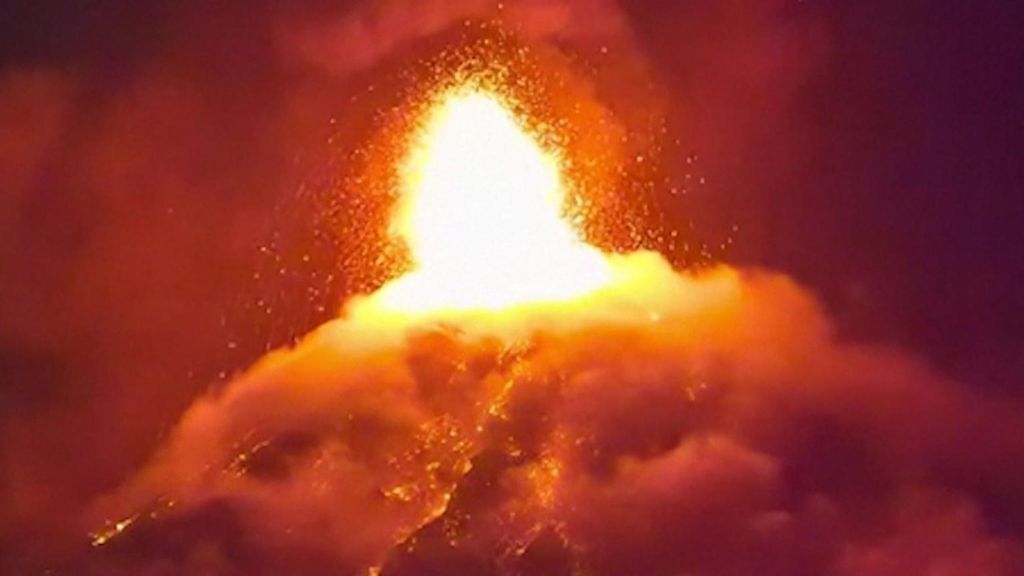
One of the Western Hemisphere’s most consistently active volcanoes has roared back to life in Guatemala, forcing emergency evacuations of nearby communities and putting the entire nation on high alert for further dangerous activity.
Fuego, a towering stratovolcano located just 10 miles west of Guatemala’s famous tourist hub Antigua, began ejecting glowing lava and thick plumes of ash on Monday. By early Tuesday, the country’s official volcanology monitoring agency confirmed that fast-moving pyroclastic currents – lethal mixtures of superheated gas, volcanic ash, and jagged rock fragments – were still cascading down the volcano’s southeastern slope, a sign that the eruption was far from over.
In response, Guatemala’s national disaster management agency Conred issued a nationwide orange alert, the second-highest warning level in the country’s emergency system. The agency issued a series of urgent public advisories, noting that ongoing volcanic activity could spawn additional pyroclastic flows and large ash clouds that threaten communities across the region. Residents were instructed to keep all windows and doors sealed to avoid inhaling toxic ash particles, while all classes have been canceled at schools within the danger zone near the volcano’s base.
Fuego’s proximity to Antigua, a UNESCO World Heritage Site famed for its well-preserved Spanish colonial architecture that draws millions of international tourists annually, adds an extra layer of urgency to the emergency response. The active volcano itself is also a popular destination for adventurous hikers from around the globe. Conred has strongly warned both tourists and local residents to avoid all high-risk areas, particularly the steep slopes close to the volcano’s crater, and to follow evacuation orders immediately if instructed to leave.
This is not the first time Fuego has caused catastrophic loss of life. A devastating 2018 eruption of the volcano killed more than 200 people, most of whom were trapped by the fast-moving pyroclastic flows that swept through the Las Lajas ravine. That disaster remains one of the deadliest volcanic events in Central America’s recent history, and emergency officials are keen to avoid a repeat of the 2018 tragedy by acting proactively to move at-risk populations out of harm’s way.