博客

  • Tropical Cyclone Luana smashes Western Australian coastline north of Broome

    Tropical Cyclone Luana smashes Western Australian coastline north of Broome

    Tropical Cyclone Luana has struck the Western Australian coastline, unleashing destructive weather conditions across the Kimberley region. The Category 2 system made landfall north of Broome approximately 2,000 kilometers north of Perth on Saturday afternoon, bringing with it sustained winds of 95 km/h and powerful gusts reaching 130 km/h.

    According to the Bureau of Meteorology (BoM), the cyclone is tracking east-southeast at 12 km/h, posing significant threats to communities throughout northern Australia. Meteorologist Jonathan How warned that Luana would continue generating dangerous weather patterns throughout the long weekend, including damaging winds up to 120 km/h and heavy rainfall likely to cause flash flooding.

    Emergency services have issued a Cyclone Emergency Warning for areas between Coulomb Point and Cape Leveque, emphasizing the immediate threat to lives and property. Evacuation centers have been activated at Broome Recreation and Aquatic Centre and Derby Civic Centre to accommodate residents fleeing the dangerous conditions.

    The weather system is expected to move southward, bringing substantial rainfall to Western Australia’s interior early next week. Current forecasts predict 150-200mm of precipitation for the West Kimberley region over the next 48 hours, with a flood watch remaining in effect across broad sections of the state. The cyclone is projected to weaken below tropical cyclone strength by Sunday morning as it moves further inland.

  • Russia strikes Ukraine as talks with US to end war continue

    Russia strikes Ukraine as talks with US to end war continue

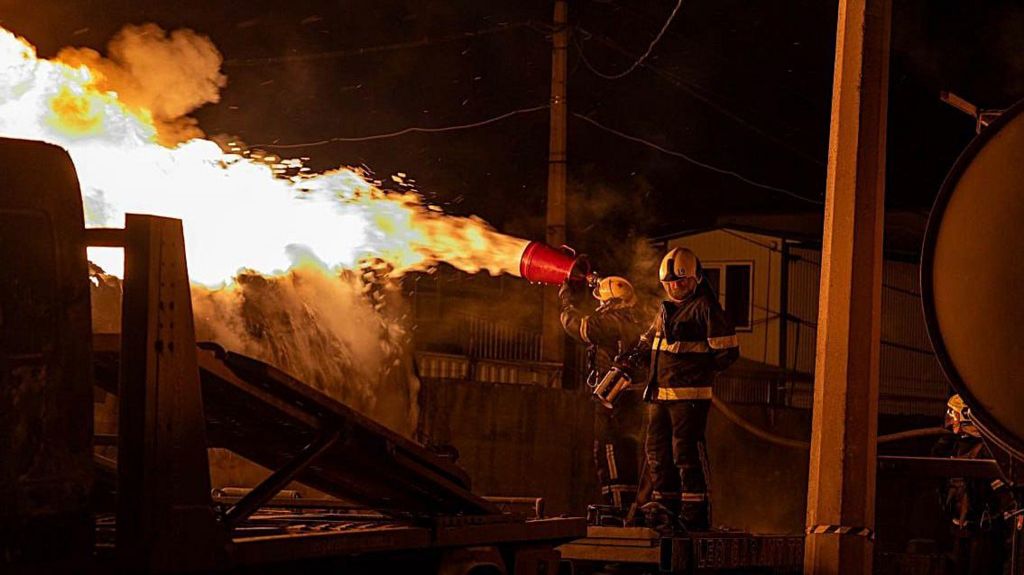
    Amid ongoing trilateral peace discussions in Abu Dhabi, Russia escalated its military offensive against Ukraine with coordinated drone and missile strikes overnight, resulting in significant civilian casualties and infrastructure damage. The assault claimed at least one life and left 23 individuals wounded across multiple Ukrainian cities.

    Kyiv Mayor Vitali Klitschko reported through Telegram that the capital sustained a ‘massive enemy attack’ resulting in one fatality and four injuries, with three victims requiring hospitalization. The strikes targeted critical energy infrastructure, leaving approximately 6,000 buildings without heating amid sub-zero temperatures. President Volodymyr Zelensky confirmed that Russian forces specifically targeted energy systems, exacerbating the humanitarian crisis.

    Simultaneously, Kharkiv endured sustained bombardment that injured 19 civilians, with a maternity hospital and displacement hostel among the damaged civilian structures. Mayor Ihor Terekhov described the early morning assault as particularly severe.

    These developments occurred as diplomatic delegations from Russia, Ukraine, and the United States convened for their first trilateral talks since Russia’s full-scale invasion in 2022. While a BBC source indicated some procedural progress had been achieved, the fundamental dispute regarding territorial sovereignty remains unresolved. Russia currently occupies approximately 20% of Ukrainian territory, including significant portions of the Donbas region, and continues to demand formal cession of these captured lands—a condition Ukraine has consistently rejected.

    The timing of these military strikes during active peace negotiations underscores the complex dynamics between battlefield actions and diplomatic processes in the ongoing conflict.

  • Pentagon to offer ‘more limited’ support to US allies in defence strategy shift

    Pentagon to offer ‘more limited’ support to US allies in defence strategy shift

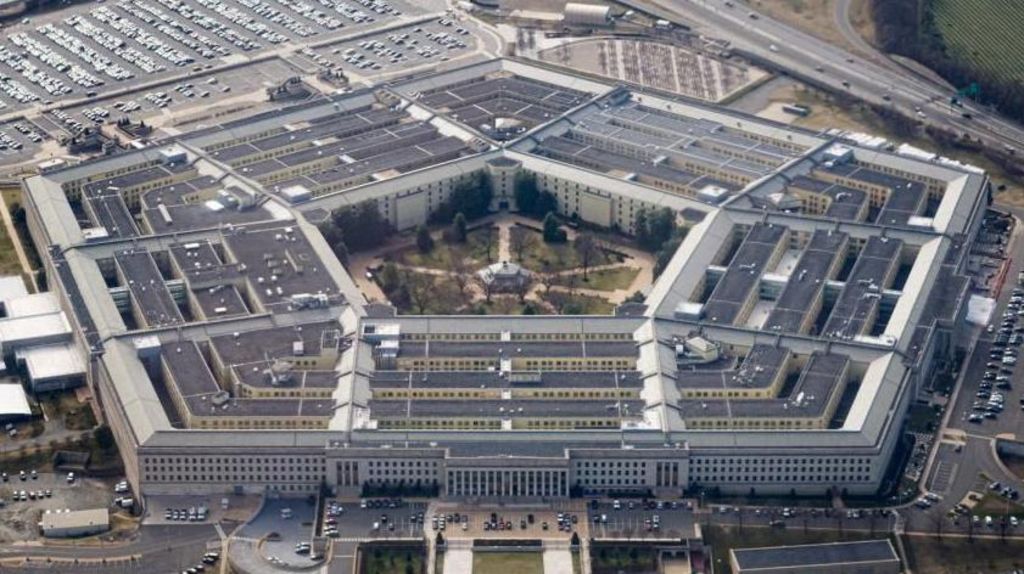
    The U.S. Department of Defense has unveiled a transformative National Defense Strategy that fundamentally reorients American security priorities toward domestic protection and Western Hemisphere security. This strategic pivot marks a significant departure from previous frameworks that prioritized countering China as the primary defense concern.

    The 34-page document, published quadrennially, establishes homeland security as the Pentagon’s foremost objective rather than focusing on great power competition. While acknowledging China and Russia as security considerations, the strategy approaches relations with Beijing through a lens of ‘strength, not confrontation’ rather than direct opposition. Notably, the document omits specific mention of Taiwan, though it affirms commitment to preventing any nation from dominating the U.S. or its allies.

    This revised framework emphasizes burden-sharing among international partners, particularly regarding European security and North Korean deterrence. The strategy characterizes Russia as a ‘persistent but manageable threat’ to NATO’s eastern members while asserting that South Korea should assume primary responsibility for addressing North Korean threats.

    The document reflects President Trump’s repeated calls for allied nations to contribute more substantially to collective security arrangements. It explicitly denies representing a move toward isolationism, instead framing the approach as ‘a focused and genuinely strategic approach to the threats our nation faces.’

    The strategy identifies specific geographical priorities including the Panama Canal, Gulf of America, and Greenland as areas where the Pentagon will guarantee military and commercial access. This focus aligns with recent administration actions including strikes against suspected drug vessels in the Caribbean and pressure on allies regarding Greenland’s acquisition.

    The philosophical underpinnings of the new strategy reject ‘utopian idealism’ in favor of ‘hardnosed realism,’ signaling a definitive break from post-Cold War defense paradigms. This repositioning occurs alongside growing international concern about the erosion of established global order, as expressed by leaders including French President Emmanuel Macron and Canadian Prime Minister Mark Carney at the World Economic Forum.

  • IP protection for new fields to improve

    IP protection for new fields to improve

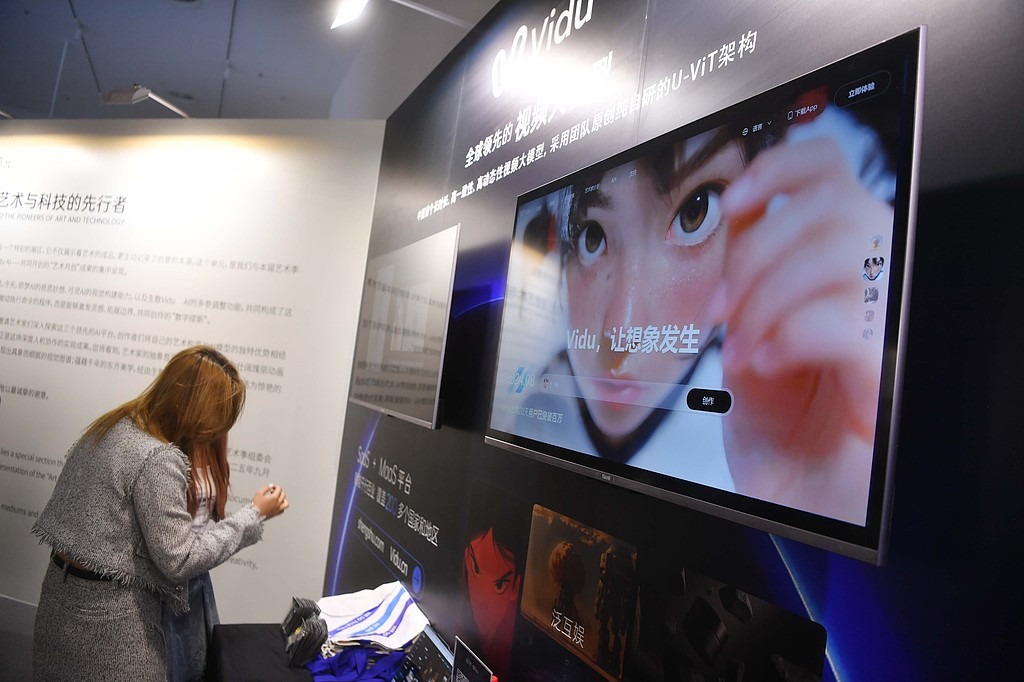
    China is poised to significantly enhance intellectual property safeguards for cutting-edge sectors, with particular emphasis on artificial intelligence domains, while actively shaping international IP governance frameworks throughout 2026. Senior officials from China National Intellectual Property Administration unveiled comprehensive strategies during a State Council Information Office briefing, highlighting multilateral cooperation with World Intellectual Property Organization as cornerstone to developing global standards for nascent industries.

    Deputy Administrator Rui Wenbiao confirmed deepened intellectual property collaboration within Belt and Road Initiative frameworks, emphasizing consolidation of pragmatic cooperation across multilateral, regional and bilateral contexts. This advancement occurs alongside strengthened mechanisms supporting Chinese enterprises navigating international markets, where foreign-related IP disputes have become increasingly prevalent.

    Intellectual Property Protection Department Director Guo Wen revealed substantial progress in overseas rights protection, with 99 specialized guidance platforms established across 30 provincial-level regions by end-2025. Six industry-specific platforms now focus on critical sectors including automotive and photovoltaic technologies. Remarkable achievements include over 4,800 guidance consultations conducted during 2025 alone, resolving cross-border e-commerce disputes and trademark squatting cases while recovering approximately 2.75 billion yuan ($0.39 billion) in corporate losses.

    The administration plans intensified cross-departmental coordination and enhanced dispute response networks throughout 2026. Strategic initiatives will provide targeted risk warnings and precision guidance for key industries, with specialized expert recruitment strengthening capabilities in complex disputes involving standard-essential patents and trade secrets.

    Strategic Planning Department Director General Liang Xinxin highlighted patent-intensive industries’ crucial role in national innovation development, particularly noting digital economy sectors’ growing prominence. Information and communication technology manufacturing and services approached 8 trillion yuan in combined added value, representing over 40% of patent-intensive industries’ total output. Emerging sectors including advanced equipment manufacturing, pharmaceuticals, healthcare and environmental protection demonstrate accelerating growth, reflecting China’s industrial transition toward high-end, intelligent and green development paradigms.

    Recent data from National Bureau of Statistics and intellectual property administration confirmed patent-intensive industries achieved 18.04 trillion yuan added value during 2024, accounting for 13.38% of GDP and demonstrating robust expansion momentum.

  • Draft rules define premade dishes in consumer interest

    Draft rules define premade dishes in consumer interest

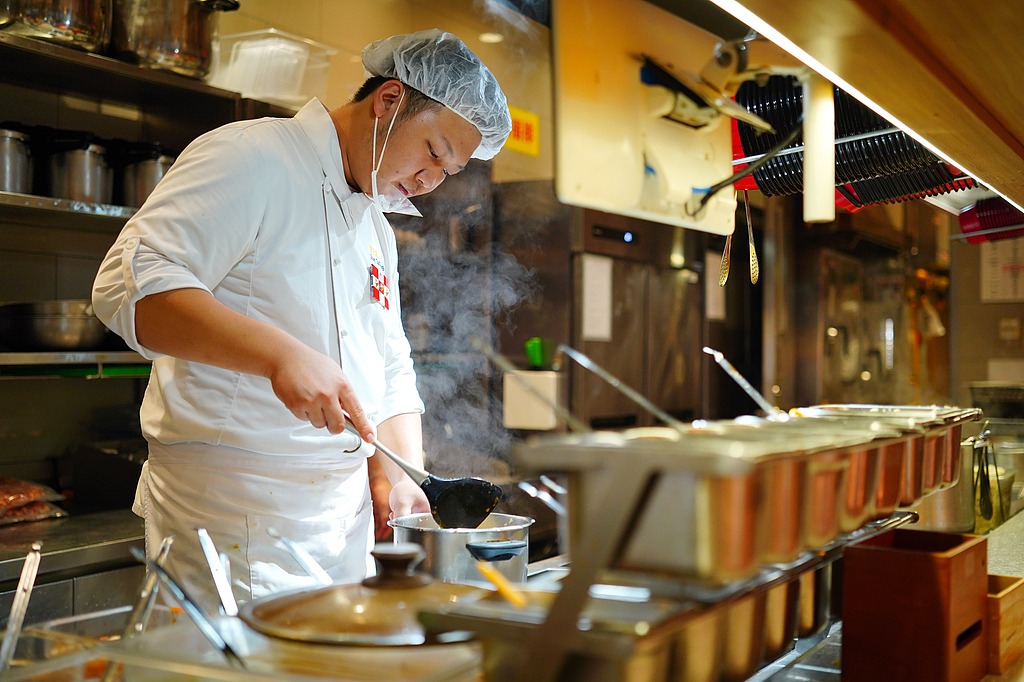
    Chinese authorities have unveiled groundbreaking draft regulations establishing clear definitions and classification systems for premade dishes, marking a significant step toward consumer protection in the catering industry. The move comes amid growing public scrutiny over restaurant chains marketing industrially processed foods as freshly prepared meals at premium prices.

    The National Food Safety Standards for Premade Dishes and Terminology and Classification for Premade Dishes represent China’s first comprehensive regulatory framework for the rapidly expanding prepared food sector. Jointly developed by the State Council’s food safety office, National Health Commission, and State Administration for Market Regulation, the standards aim to eliminate ambiguous labeling practices that have misled consumers.

    According to the draft provisions, premade dishes are formally defined as prepackaged food items manufactured from agricultural ingredients—with or without seasonings but excluding preservatives—that undergo industrial preprocessing techniques including marinating, frying, or boiling. These products may incorporate seasoning packets, require final cooking before consumption, and must adhere to specific storage and transportation requirements as labeled.

    The regulatory initiative gained urgency following a September 2025 controversy involving restaurant chain Xibei, traditionally promoted as using natural ingredients. Influencer Luo Yonghao exposed the company’s substantial reliance on premade dishes while charging premium prices for supposedly fresh-cooked meals, sparking nationwide debates about culinary transparency.

    Notably, the regulations clarify that dishes prepared in-house through central kitchen models and distributed exclusively to owned outlets do not qualify as premade dishes, provided they comply with existing catering safety laws. This distinction acknowledges the operational realities of chain restaurants while maintaining safety standards.

    Complementing the standards, authorities have drafted a circular encouraging voluntary disclosure of food preparation methods, empowering consumers to make informed dining choices. The drafts will soon enter public consultation phases, reflecting China’s commitment to balancing industry development with consumer rights protection.

  • After accepting US deportees, South Sudan wanted sanctions relief for top official, documents show

    After accepting US deportees, South Sudan wanted sanctions relief for top official, documents show

    Recently disclosed diplomatic communications between South Sudan and the United States have revealed the African nation’s extensive list of political requests in exchange for accepting U.S. deportees. The documents, made public by the State Department this month, show South Sudan sought American support for prosecuting opposition leader Riek Machar and sanctions relief for former Vice President Benjamin Bol Mel, who stands accused of diverting over $1 billion in public funds.

    The correspondence details how South Sudan became the first African country to receive third-country deportees from the U.S. in July, followed by Rwanda, Eswatini, Ghana and Equatorial Guinea. The eight deportees sent to Juba included nationals from Mexico, Cuba, Vietnam, Laos, Myanmar, and South Sudan itself. These individuals arrived after spending weeks at a U.S. military base in Djibouti following a temporary court block on their deportation.

    In confidential communications dated May 12, South Sudan’s Ministry of Foreign Affairs presented eight specific demands ranging from visa restriction easements to construction of rehabilitation facilities and support in addressing armed civilians. The most politically sensitive requests involved Washington’s backing for Machar’s prosecution and lifting sanctions against Bol Mel, who was recently dismissed and placed under house arrest despite previously being considered a potential presidential successor.

    The Machar case has drawn international criticism as a potential violation of the 2018 peace agreement that ended civil war. The UN has warned that renewed fighting has brought South Sudan “back to the edge of a relapse into civil war,” with over 1,800 killed between January and September 2025.

    While Human Rights Watch documents show the U.S. agreed to pay Rwanda $7.5 million and Eswatini $5.1 million for accepting deportees, the specifics of the South Sudan arrangement remain undisclosed. Both U.S. and South Sudanese officials have declined to comment on whether any promises were made or benefits provided, with a State Department official citing standard diplomatic practice of keeping such discussions private.

    Despite the deportation agreement, relations between the two nations have deteriorated recently, with the U.S. threatening to reduce its substantial aid contributions—totaling approximately $9.5 billion since 2011—over accusations that South Sudan’s government has imposed fees on aid groups and obstructed their operations.

  • Self-powering pacemaker could last a lifetime

    Self-powering pacemaker could last a lifetime

    A groundbreaking medical innovation emerging from China promises to transform cardiac care through the development of a self-sustaining pacemaker that harnesses the heart’s kinetic energy. Researchers from the University of Chinese Academy of Sciences have created a revolutionary device that generates electricity from natural heartbeats, potentially eliminating the need for battery replacement surgeries that currently burden millions of cardiac patients worldwide.

    The research team, led by Associate Professor Ouyang Han, introduced the concept of ‘symbiotic bioelectronics’ inspired by natural symbiotic relationships. This approach represents a paradigm shift in medical device engineering, focusing on creating implantable technology that coexists harmoniously with the human body while drawing power from biological processes.

    Through seven years of dedicated research, the team developed an electromagnetic induction system that converts the mechanical energy of heart contractions into electrical power. The device achieves an impressive average output of 120 microwatts—significantly exceeding the 10 microwatts required for stable pacemaker operation. This surplus energy ensures reliable performance even during periods of reduced cardiac activity.

    The technology incorporates an innovative magnetic levitation design that minimizes energy loss and internal friction. Laboratory testing demonstrated exceptional durability, with only 4% wear observed after simulating 300 million heartbeats—equivalent to a decade of continuous operation. This remarkable longevity suggests the device could potentially function throughout a patient’s lifetime without requiring replacement.

    Notably, the capsule-sized device is constructed from biocompatible materials that reduce rejection risks and prevent blood clotting complications. Its leadless design and minimally invasive implantation procedure via femoral vein catheterization represent significant advancements over conventional pacemakers, reducing surgical trauma and recovery time.

    In a critical validation study, the device successfully maintained normal heart rhythm in a pig suffering from severe bradycardia for one month, operating exclusively on power generated by the animal’s own heartbeats. This demonstration confirms both the technological feasibility and clinical potential of the self-powering system.

    Professor Ouyang emphasized the economic implications of this breakthrough, noting that current imported leadless pacemakers cost approximately $23,000. The research team aims to produce devices with two to three times the lifespan of existing models at just one-third to half the price, potentially making advanced cardiac care more accessible globally.

    The technology, recently detailed in Nature Biomedical Engineering, is scheduled for clinical trials before 2030. Researchers believe this symbiotic approach could revolutionize not only cardiac care but also other implantable medical devices for bone repair and neural regulation applications.

  • Young leaders stress need to strengthen Sino-US ties

    Young leaders stress need to strengthen Sino-US ties

    A new generation of leadership advocates for reinvigorated Sino-American relations through sustained engagement and collaborative action. During a recent symposium at Beijing’s Tsinghua University, emerging leaders from both nations emphasized the critical importance of face-to-face diplomacy in an era of increasing technological mediation.

    The dialogue brought together students from Harvard University, New York University, Peking University, and Tsinghua University to address pressing global challenges. Discussion panels focused on science and technology innovation, social governance frameworks, and sustainable development strategies, creating a platform for cross-cultural problem-solving.

    This event forms part of President Xi Jinping’s ambitious “50,000 in Five Years” initiative, designed to facilitate educational exchange by bringing 50,000 young Americans to China. The program represents a significant investment in track-two diplomacy, recognizing youth engagement as fundamental to navigating complex bilateral challenges.

    Zhao Xiuye, a Tsinghua PhD candidate with extensive experience in both countries, highlighted the transformative power of personal connection. “Our happiness and sorrows do connect,” he noted, recalling shared experiences during the Beijing 2008 Olympics and US presidential campaigns. “There’s far more that we share than that differentiates us.”

    Harvard Business School student Lily Bailey emphasized the potential of “subnational collaboration” between US states, cities, and universities with their Chinese counterparts. “We are a federal society,” she stated. “There are many people and companies excited and interested in continuing cooperation.”

    University and government officials expressed strong support for these efforts. Tsinghua Vice-President Bai Benfeng invoked both Chinese philosophical tradition and Western poetry to express optimism about future relations, while Education Vice-Minister Ren Youqun reported that 45,000 young Americans have already visited over 200 Chinese cities, fostering substantial people-to-people connections.

  • A US warship is making a friendship visit to a Cambodian naval base upgraded with China’s help

    A US warship is making a friendship visit to a Cambodian naval base upgraded with China’s help

    In a significant diplomatic development, the USS Cincinnati has become the first U.S. Navy vessel to dock at Cambodia’s Ream Naval Base since its Chinese-funded renovation was completed in early 2024. The Independence-class littoral combat ship arrived Saturday for a five-day visit through January 28th, marking a potential warming in U.S.-Cambodia military relations after years of tension.

    The base’s modernization, financed primarily by China, had raised substantial concerns in Washington about potential exclusive Chinese military access. Controversy has surrounded the facility since 2019 amid reports of a proposed 30-year agreement granting China special privileges at the strategic Gulf of Thailand location. Cambodian officials have consistently denied any such exclusive arrangement exists.

    Prime Minister Hun Manet, who presided over the base’s reopening ceremony in April 2025, has maintained that Ream remains open to all friendly nations for joint exercises, provided visiting vessels conform to the facility’s size limitations. The newly constructed pier and dry dock facilities can accommodate ships similar in scale to the Cincinnati, which is specifically designed for operations in shallow coastal waters.

    During the port call, the ship’s crew of approximately 100 personnel will participate in sporting events and cultural activities in nearby Sihanoukville. The visit coincides with scheduled meetings between U.S. Indo-Pacific Command leader Admiral Samuel Paparo and Cambodian Defense Minister Tea Seiha, signaling continued diplomatic engagement.

    This development represents the latest step in rebuilding military ties that had cooled considerably. Relations began improving with Defense Secretary Lloyd Austin’s 2024 visit, followed by the USS Savannah’s port call at Sihanoukville’s civilian facility in December 2024—the first U.S. military ship visit in eight years. According to Cambodian Navy records, 37 U.S. warships have visited Cambodian ports between 2003 and 2026.

    Deputy Base Commander In Sokhemra emphasized the inclusive nature of the facility, stating: ‘Our government has worked diligently to construct this port to welcome all foreign vessels wishing to dock in Cambodia. We have succeeded in this effort, and we are open from this moment forward for American, Australian, Japanese, or any other ships that wish to visit.’

  • Russian attacks on Ukraine kill 1 and wound 23 ahead of second day of peace talks

    Russian attacks on Ukraine kill 1 and wound 23 ahead of second day of peace talks

    As international diplomats convened for critical peace negotiations in Abu Dhabi, Russian forces launched renewed aerial assaults across Ukraine overnight Friday into Saturday. The attacks resulted in significant civilian casualties, with at least one fatality and 23 individuals wounded across multiple cities.

    In the capital Kyiv, drone strikes killed one person and left four injured, according to official statements from Kyiv City Military Administration head Tymur Tkachenko. The northeastern city of Kharkiv suffered even greater damage, with Mayor Ihor Terekhov reporting 19 civilians wounded in similar attacks.

    These developments occurred simultaneously with the second day of trilateral talks involving senior officials from Ukraine, Russia, and the United States in the United Arab Emirates. This meeting represents the first known instance of Trump administration envoys engaging directly with both warring parties as part of Washington’s intensified diplomatic initiative to resolve the nearly four-year conflict.

    The UAE Foreign Ministry characterized the discussions as part of ongoing efforts “to facilitate dialogue and explore political resolutions to the crisis.” White House officials described initial sessions as productive, despite the challenging context of continued violence.

    The diplomatic engagement occurs amid conflicting signals from leadership on both sides. Ukrainian President Volodymyr Zelenskyy suggested during the World Economic Forum in Davos that a potential peace agreement was “nearly ready,” while the Kremlin maintains that any settlement must include Ukrainian withdrawal from territories Russia has illegally annexed—a condition Kyiv has consistently rejected.

    The negotiations gain additional significance following revelations that Russian President Vladimir Putin engaged in marathon overnight discussions with Trump envoys Steve Witkoff and Jared Kushner just hours before the Abu Dhabi talks commenced.