博客

  • Minnesota gears up for more protests against ICE

    Minnesota gears up for more protests against ICE

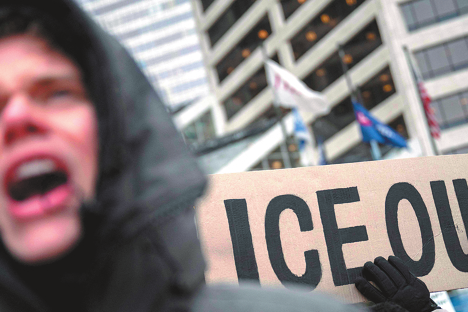
    Minnesota braces for intensified demonstrations as a powerful coalition of labor unions, progressive advocacy groups, and religious leaders calls for statewide work and school walkouts on Friday. The planned protests target U.S. Immigration and Customs Enforcement operations that have sparked widespread community outrage following recent confrontations.

    The movement gained momentum after the January 7th fatal shooting of Renee Good by an ICE officer during an enforcement operation. Since this incident, the Twin Cities of Minneapolis and St. Paul have experienced continuous daily protests, with federal officers frequently clashing with activists who monitor their movements through digital tracking and street surveillance.

    At the heart of the controversy lies the detention of at least four children from Columbia Heights, including five-year-old Liam Conejo Ramos. According to school district superintendent Zena Stenvik, masked and armed ICE officers have apprehended students ranging from elementary to high school age, creating what she describes as “trauma taking a toll on our children.”

    The case of Liam and his father, Adrian Alexander Conejo Arias, has become particularly contentious. Though both were in the country legally as asylum applicants according to family attorney Marc Prokosch, they were transported to a family detention facility in Dilley, Texas. Witnesses describe how masked agents took the father from their driveway after returning from preschool, then allegedly attempted to use the child as bait to lure the mother from their home.

    Vice-President JD Vance presented a contrasting narrative during his Minneapolis visit, stating immigration officers were pursuing Liam’s father who abandoned his child, leaving officers no choice but to take custody. “What are they supposed to do? Are they supposed to let a five-year-old child freeze to death?” Vance challenged during a news conference.

    However, multiple witnesses including school board chair Mary Granlund assert that school officials and neighbors offered to take custody of the child but were denied by ICE agents, despite having legal authorization to assume guardianship in parental absence.

    The Department of Homeland Security maintains that Liam’s father was in the country illegally but has not provided detailed evidence supporting this claim. As tensions escalate, community organizations continue mobilizing residents to pressure ICE to cease operations in Minnesota neighborhoods and school zones.

  • Survey finds bipartisan support for Sino-US cooperation

    Survey finds bipartisan support for Sino-US cooperation

    A comprehensive national survey has uncovered significant bipartisan support among American citizens for enhanced cooperation between the United States and China, even as concerns mount regarding how escalating geopolitical tensions are adversely affecting Chinese American communities.

    The landmark study, conducted through collaboration between the Committee of 100 and the University of Chicago’s National Opinion Research Center (NORC), represents one of the most extensive independent social research initiatives in the United States. According to Alex Chew, NORC AmeriSpeak director and head of Amplify AAPI, this third iteration of the State of Chinese Americans research provides unprecedented breadth in examining public perceptions regarding issues impacting Chinese American communities.

    The findings reveal that 59% of US citizens advocate for their government to strengthen collaborative efforts with China on diplomatic matters and policies of mutual concern. This perspective transcends political affiliations, with 65% of Democrats and 63% of Republicans expressing support for closer Sino-American cooperation.

    The collaborative sentiment extends significantly into scientific and technological domains. Merely 23% of respondents endorsed prohibiting Chinese researchers from working within US institutions, revealing a substantial partisan divide—with only 16% of Democrats but 34% of Republicans supporting such restrictions.

    Sam Collitt, research lead at the Committee of 100, emphasized that these findings demonstrate minimal public support for policies that would undoubtedly strain international relations and produce negative outcomes. The survey questions regarding researcher restrictions were formulated in response to numerous federal and state efforts to prosecute, restrict, and ban Chinese researchers from American institutions.

    Collitt noted that these results align with recent surveys by Pew Research Center and the Chicago Council on Global Affairs, suggesting that negative attitudes toward China among the American public may have peaked. However, researchers caution that it remains uncertain whether this represents a temporary fluctuation or the beginning of a sustained trend toward improved perceptions.

    The research also highlighted how initiatives like the “China Initiative” program—which resulted in numerous Chinese American scientists facing false espionage allegations—exemplify how bilateral tensions directly harm Chinese American communities. As China narrows the economic gap with the United States, resulting in many Americans perceiving China as a threat, University of Maryland history professor Madeline Hsu suggests Americans need historical context, noting China’s pre-1800 status as an extremely wealthy civilization before its decline under Western imperial exploitation.

  • Using DIY lash extensions? UAE experts say ‘not worth the risk’ amid rise in eye issues

    Using DIY lash extensions? UAE experts say ‘not worth the risk’ amid rise in eye issues

    Medical professionals in the United Arab Emirates are issuing urgent warnings against the growing trend of at-home eyelash extension applications, citing a dramatic increase in serious ocular complications. Ophthalmologists report a concerning surge in patients presenting with severe eye conditions directly linked to unprofessional lash procedures.

    According to Dr. Nikulaa Parachuri, Specialist in Ophthalmology and Retinal Surgery at Aster Hospital Qusais, complications range from blepharitis (eyelid margin inflammation) and chronic dry eyes to conjunctivitis, keratitis, and even permanent vision damage. “We’re observing multiple cases weekly stemming from improper lash application techniques and substandard adhesives,” Dr. Parachuri confirmed.

    The accessibility of inexpensive DIY lash kits—available online for as little as Dh30 compared to professional salon services costing Dh200-Dh500—has contributed significantly to the problem. These kits often contain formaldehyde-based adhesives and methyl/ethyl cyanoacrylate compounds that pose severe irritation risks. Many users experience allergic reactions, chemical burns, and toxic responses to these poorly regulated products.

    Olga V., a Ukrainian lash technician practicing in the UAE, reports encountering clients weekly with infections from DIY attempts. “People underestimate the delicacy of the eye area,” she noted. “Without proper training, one contaminated tool or misplaced adhesive can cause significant damage.”

    Particularly hazardous practices include applying excessively heavy extensions, stacking multiple lash layers, using unsterilized tools, and placing adhesive too close to the lid margin. Warning signs of complications include persistent redness, swelling, itching, burning sensations, excessive tearing, crusting, discharge, and abnormal lash loss.

    Dr. Parachuri emphasized that corneal infections can progress to ulceration and scarring—potentially causing permanent blindness if untreated. Eyelid scarring and permanent follicle damage may also occur from repeated irritation and improper extension removal.

    While magnetic lashes present a somewhat safer alternative by eliminating glue-related reactions, medical professionals caution that no lash enhancement method is entirely risk-free. They particularly advise against extensions for individuals with pre-existing conditions including dry eye disease, meibomian gland dysfunction, chronic allergies, sensitive skin, recent eye surgery, or compromised immune systems.

    Consumers are urged to verify product safety data sheets, request medical-grade adhesives, and ensure technicians maintain strict hygiene protocols including single-use application tools and proper disinfection practices. Any salon normalizing post-application irritation should be considered a red flag, experts warn.

  • Meet Emirati photographer turning Sharjah roundabout into ‘fashion car’ runway

    Meet Emirati photographer turning Sharjah roundabout into ‘fashion car’ runway

    What originated as an impromptu family photography session has evolved into a distinctive cultural phenomenon in Sharjah, thanks to the creative vision of 35-year-old Emirati photographer Muhammad Al Mazmi. The Al Jada roundabout, once merely a traffic intersection, has transformed into an unofficial gathering point for automotive enthusiasts seeking distinctive photographic portraits of their vehicles against the urban landscape.

    Al Mazmi’s journey into photography began during childhood, sparked by his fascination with preserving memories through imagery. His father introduced him to camera operation at age seven, planting the seeds of what would become a lifelong passion. In 2008, he acquired his first professional camera and subsequently developed a diverse portfolio encompassing portraits, nature, street photography, and cultural events.

    The automotive photography movement emerged unexpectedly approximately one year ago when Al Mazmi visited the roundabout to photograph his brothers’ cars. The spontaneous interest from other motorists prompted him to share his work on TikTok, generating immediate and substantial public response. Followers began identifying him as ‘the photographer of Al Jada,’ establishing his reputation within the community.

    Despite the public nature of his photography sessions, Al Mazmi maintains rigorous ethical standards regarding privacy protection. He explicitly avoids random photography, instead coordinating with subjects through social media platforms or accepting direct requests. This approach enables him to capture not only the aesthetic qualities of vehicles but also the personal narratives and human connections within automotive culture.

    One particularly memorable photograph depicts two individuals exchanging a traditional Emirati nose touch inside their vehicle, illustrating Al Mazmi’s ability to document cultural moments alongside automotive subjects. His scheduling now operates through community requests via Snapchat, where enthusiasts track his appearance dates.

    Looking forward, Al Mazmi intends to continue his roundabout photography sessions, viewing them as a natural extension of his fundamental photographic philosophy: documenting emotions and memories for future reflection. The phenomenon demonstrates how organic community initiatives can redefine public spaces and create unexpected cultural gatherings.

  • ‘Hopes are high’: Dubai event woos Emiratis, expats to invest in Sri Lanka

    ‘Hopes are high’: Dubai event woos Emiratis, expats to invest in Sri Lanka

    Dubai has become the focal point for Sri Lanka’s ambitious campaign to attract foreign investment from the United Arab Emirates, with government officials and financial experts presenting the island nation as a prime destination for capital deployment. At the Invest Sri Lanka Investor Forum held in Dubai, representatives highlighted the country’s remarkable economic turnaround and diverse investment prospects.

    Sri Lankan authorities emphasized their nation’s exceeding of fiscal and economic targets over the past two years, coupled with comprehensive modernization initiatives and digital transformation of government services. These developments have created what officials describe as a ‘more stable and predictable’ investment environment, supported by streamlined governance frameworks and attractive incentives including tax holidays.

    Investment opportunities span multiple sectors, with tourism emerging as particularly promising. Naveen Gunawardane, Managing Director and Co-Founder of Lynear Wealth Management, identified significant potential in developing resort areas beyond Colombo, noting a shortage of quality accommodations in coastal regions. ‘There’s a massive opportunity over the next couple of years for companies to set up hotels in resort areas,’ Gunawardane emphasized, pointing to the Southern coast and Eastern belt as key development zones.

    The construction sector likewise shows strong growth prospects, rebounding from previous contractions with renewed infrastructure projects and increased residential development. Additionally, logistics, agriculture, IT services, energy, and renewable energy present compelling opportunities for UAE investors.

    Professor Arusha Cooray, Sri Lankan Ambassador to the UAE, highlighted the existing bilateral agreements that provide solid legal foundations for investor protection. ‘Sri Lanka is a very attractive destination to invest in, not just in terms of lifestyle, but numerous opportunities now available through government reforms,’ she stated, specifically mentioning Colombo Port City as an emerging financial and trade hub.

    The Central Bank of Sri Lanka projects economic growth between 5-7%, supported by what Governor P. Nandalal Weerasinghe characterized as ‘the right balance of monetary policy.’ The investment push extends beyond major portfolios to include ordinary expatriates, who can participate through mutual funds with initial investments as modest as a few hundred dollars.

    With approximately 350,000 Sri Lankans residing in the UAE—whose remittances contribute significantly to Sri Lanka’s GDP—the campaign leverages both institutional investment channels and individual expatriate participation in the nation’s economic revitalization.

  • Vision for Gaza faces obstacles

    Vision for Gaza faces obstacles

    Jared Kushner, former Middle East adviser to President Donald Trump, has presented an ambitious vision for Gaza’s future featuring modern cities with sleek high-rises, attractive coastline developments, and state-of-the-art port facilities. His presentation at the World Economic Forum in Davos, Switzerland, outlined a rapid reconstruction timeline claiming Gaza’s cities could be rebuilt within three years given adequate security conditions.

    This optimistic projection emerges as world leaders gather to ratify the charter of the Board of Peace, a newly proposed body intended to oversee Gaza’s ceasefire and reconstruction process. However, the initiative faces significant international resistance and skepticism regarding its feasibility and potential implications for global governance structures.

    Major European powers have expressed strong reservations about the Board of Peace, with Spain explicitly declining participation in the initiative. Spanish Prime Minister Pedro Sanchez emphasized the country’s commitment to multilateralism and the United Nations system. European Council President Antonio Costa similarly voiced serious doubts regarding the board’s scope, governance structure, and compatibility with the UN Charter following emergency summit discussions in Brussels.

    Academic experts have raised concerns about the potential undermining of United Nations authority. Ayman Yousef, Professor of International Relations at the Arab American University in Jenin, warned that such alternative bodies could weaken the UN’s mission and legal resolutions regarding the Palestinian question.

    Practical obstacles further complicate the ambitious reconstruction timeline. The United Nations Office for Project Services estimates Gaza contains over 60 million metric tons of rubble—enough to fill nearly 3,000 container ships—requiring more than seven years for clearance alone, not including subsequent demining operations. Rights groups note that rubble clearance and demining activities have not substantially begun due to Israeli restrictions on heavy machinery entry.

    Security concerns present additional complications. Conflict resolution expert Nomi Bar-Yaacov of the Geneva Centre for Security Policy described the high-rise development concept as “unrealistic,” noting Israel would unlikely accept structures providing clear visibility into its military installations near the border. Former US Middle East negotiator Aaron David Miller concluded the initiative lacks both bandwidth and guiding principles necessary for serious international participation.

  • Africa looks to diversify markets amid uncertainty

    Africa looks to diversify markets amid uncertainty

    Against a backdrop of deepening global geopolitical fractures, African nations are strategically repositioning their international economic alliances. The continent finds itself navigating between tightening Western restrictions and expanding Eastern opportunities, prompting a fundamental reassessment of its global engagement strategy.

    Stephen Nduvi, a Nairobi-based public policy expert, observes that Washington’s shift toward unilateralism—manifested through stricter visa regimes and reduced overseas aid—is significantly constraining African economies and mobility. Simultaneously, China is moving in the opposite direction, offering zero-tariff market access to 53 African nations, creating alternative trade corridors that are reshaping the continent’s external economic options.

    The immediate consequences of US policy changes are already materializing. Declining American assistance is straining health systems, humanitarian programs, and governance reforms that remain dependent on external financing. Furthermore, tightened visa policies are restricting business mobility, academic exchanges, and research collaboration. Nduvi characterizes these restrictions as ‘nontariff barriers’ that subtly undermine innovation, entrepreneurship, and access to global knowledge networks.

    Charles Onunaiju, Director of Nigeria’s Centre for China Studies, interprets Washington’s retreat not as a sudden shock but as the culmination of a long-running trend. He notes that Africa should have anticipated a more inward-looking US, referencing years of limited market access under initiatives like the African Growth and Opportunity Act, which frequently imposed political and ideological conditions.

    African nations have already initiated diversification efforts, particularly toward the Asia-Pacific region, which now accounts for nearly half of global trade. Growing ties with China, Southeast Asia, and emerging blocs like BRICS, coupled with efforts to boost intra-African trade, demonstrate the continent’s proactive approach to building buffers against external shocks.

    Both experts emphasize that China’s zero-tariff policy could prove transformative by not only expanding export earnings but also providing a pathway for structural economic transformation. Access to the Chinese market could incentivize local processing, manufacturing, and job creation, enabling African nations to ascend value chains rather than perpetuating raw material exports.

    However, external opportunities will only yield lasting benefits if matched by internal reforms. Nduvi stresses that reducing dependence on foreign aid requires shifting from consumption-led growth to production-driven development. Strengthening domestic resource mobilization through tax base expansion, digital systems, and reduced financial leakages is critical, alongside industrial policy aligned with infrastructure, finance, and skills development.

    Onunaiju adds that resilience in an increasingly volatile world will depend on state capacity and social consensus, emphasizing that strong institutions, inclusive governance, and regional connectivity are essential for absorbing geopolitical shocks.

    As African representatives engage at international forums like Davos, the continent is projected to demonstrate confidence, coherence, and strategic clarity. The future of Africa’s global partnerships will be defined less by aid and more by reciprocity, value addition, technology transfer, and mutual respect for sovereignty.

  • Naomi Osaka withdraws from Australian Open before third round because of injury

    Naomi Osaka withdraws from Australian Open before third round because of injury

    MELBOURNE — Tennis star Naomi Osaka has made the difficult decision to withdraw from the Australian Open ahead of her third-round match against Australian qualifier Maddison Inglis, citing a persistent abdominal injury that forced her to prioritize her long-term health over continuing her Melbourne campaign.

    The four-time Grand Slam champion revealed through social media that she needed to address a physical concern following her previous match. ‘I was profoundly excited to continue this journey, and this particular run held immense personal significance,’ Osaka expressed on Instagram. ‘Making this decision breaks my heart, but I cannot jeopardize my recovery by risking further damage.’

    Tournament officials later confirmed the specific nature of her injury as a left abdominal issue, which Osaka described as a recurring problem. ‘I attempted to push through the discomfort during my last match, believing that additional rest might alleviate the condition,’ she explained. ‘However, during my warm-up today, the pain intensified significantly.’

    The 28-year-old athlete, who returned to professional tennis in 2024 after a 15-month hiatus during which she welcomed her daughter Shai in July 2023, acknowledged how pregnancy has altered her physical condition. ‘My body has undergone substantial changes since becoming a mother,’ Osaka noted. ‘This requires me to exercise extreme caution with any injuries.’

    Osaka’s Australian Open appearance had already generated considerable attention for both her on-court performance and distinctive fashion choices. Her first-round entrance went viral when she appeared wearing a wide-brimmed hat, veil, and carrying a white parasol—a design collaboration with sponsor Nike.

    Her second-round victory against Sorana Cirstea concluded with notable tension, as the players exchanged minimal courtesies at the net. Cirstea reportedly took issue with Osaka’s enthusiastic self-motivation during the match, though Osaka dismissed the incident as inconsequential.

    The former Australian Open champion (2019, 2021) was seeded 16th in this year’s tournament. Her withdrawal advances Inglis to face world No. 2 Iga Świątek, who expressed concern for Osaka’s condition while acknowledging the opportunity to advance in her own quest for a career Grand Slam.

  • Oaklands Ave, Ferntree Gully: Two dead in horror crash, driver taken to hospital

    Oaklands Ave, Ferntree Gully: Two dead in horror crash, driver taken to hospital

    A devastating single-vehicle collision in Melbourne’s eastern suburb of Ferntree Gully has resulted in two fatalities, with the driver currently hospitalized under police supervision. The tragic incident occurred on Oaklands Avenue shortly before 6:00 PM on Saturday evening when the vehicle collided with a stationary pole.

    Victoria Police confirmed that two unidentified passengers succumbed to their injuries at the crash scene despite emergency response efforts. The surviving driver was transported to a medical facility with injuries and remains under official guard as investigations continue.

    Detectives from the Major Collision Investigation Unit have launched a comprehensive probe into the circumstances surrounding the fatal crash. Authorities are appealing to potential witnesses and anyone with relevant dashcam footage or information to contact Crime Stoppers to assist with the ongoing investigation.

    The accident’s location at the intersection of Oaklands Avenue and Burwood Highway, a significant transportation corridor in Melbourne’s eastern region, prompted immediate road closures. The Department of Transport implemented full closures in both directions east of Commercial Road to facilitate emergency response and investigation procedures.

    This tragedy adds to Victoria’s concerning road safety statistics, with the Transport Accident Commission reporting 16 fatalities on state roads since the beginning of the year. The investigation continues as authorities work to determine the exact circumstances that led to this devastating outcome.

  • A landslide on Indonesia’s Java island kills at least 8 people and leaves more than 80 missing

    A landslide on Indonesia’s Java island kills at least 8 people and leaves more than 80 missing

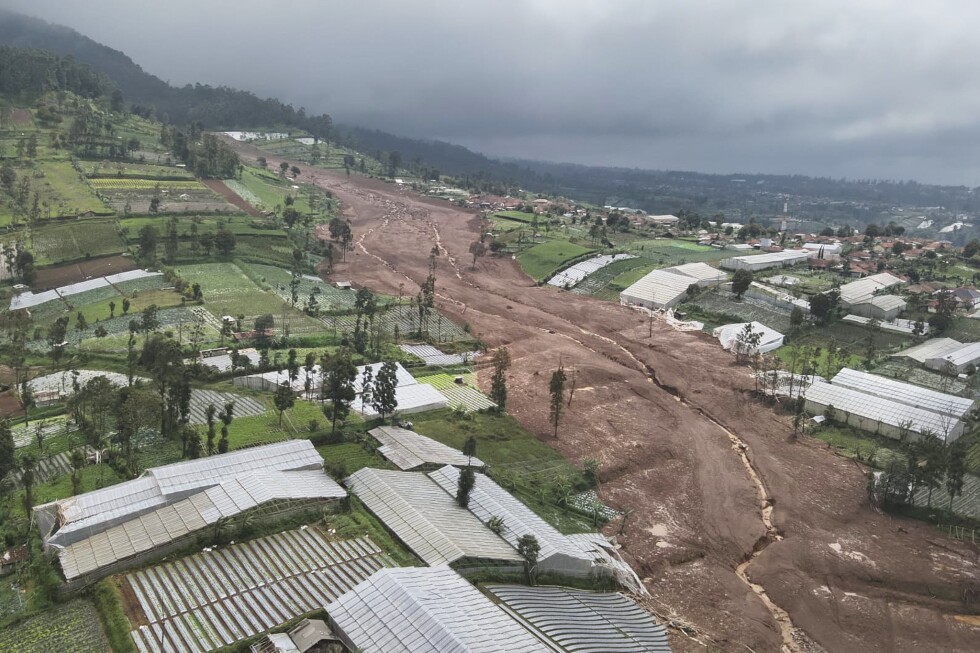
    JAKARTA, Indonesia — A catastrophic landslide triggered by relentless torrential rains has claimed at least eight lives with 82 individuals remaining unaccounted for on Indonesia’s primary island of Java. The pre-dawn disaster struck Pasir Langu village in West Bandung district around 3 a.m. local time on Saturday, transforming the picturesque landscape into a scene of devastation.

    According to National Disaster Management Agency spokesperson Abdul Muhari, approximately 34 residential structures were completely buried under cascading mud, rocks, and uprooted vegetation. While 24 residents managed to escape the rapidly moving earth, rescue teams continue battling challenging conditions to locate those feared trapped beneath the debris.

    Television broadcasts depicted harrowing scenes of emergency personnel and local citizens digging through deep mud where roads and terraced rice fields once stood. The worst-impacted area, Pasir Kuning hamlet, has become the focal point of recovery operations as workers extract victims from the sludge.

    Teten Ali Mungku Engkun, director of West Java’s Disaster Management Office, emphasized the operational challenges: ‘Unstable soil conditions and continuing heavy precipitation significantly hinder search and rescue efforts.’ Authorities have executed rapid damage assessments and deployed emergency response units while evacuating families within 100 meters of the landslide zone due to ongoing geological instability.

    This tragedy echoes similar seasonal disasters across the Indonesian archipelago. In December, catastrophic flooding and landslides on Sumatra Island resulted in approximately 1,200 fatalities and over 7,000 injuries. The nation’s geographical vulnerability—with millions inhabiting mountainous regions and fertile floodplains—makes it particularly susceptible to such events during the October-April rainy season when high tides and precipitation frequently combine to create dangerous conditions.

    Officials have issued urgent advisories for residents in landslide-prone areas to remain vigilant for soil movement or unusual rumbling sounds and evacuate immediately if safety concerns arise.