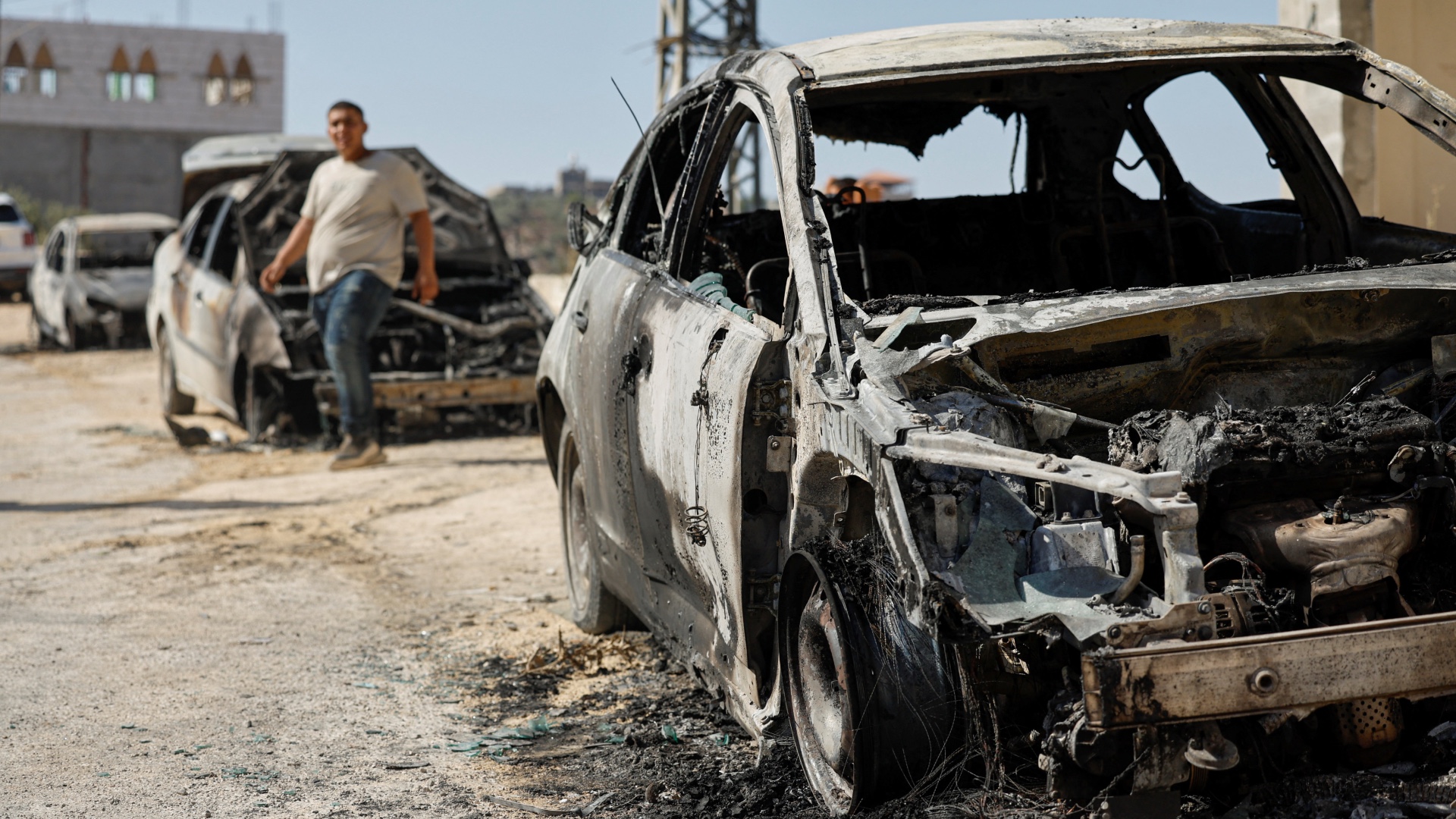
On Monday, the U.S. Supreme Court dealt a major legal blow to the Palestinian Authority (PA) and Palestine Liberation Organization (PLO), rejecting their request to pause a $656 million damages judgment that has wound its way through American courts for 22 years. The ruling, announced by liberal Justice Sonia Sotomayor who oversees emergency judicial reviews, clears the way for immediate collection of the funds, closing a years-long legal saga that raises sharp questions about double standards in international accountability.
The case traces its origins to a 2003 lawsuit filed by American victims of Palestinian attacks carried out between 2002 and 2004 during the Second Intifada. Plaintiffs secured the original $656 million damages ruling in 2015, but the U.S. Circuit Court of Appeals overturned the judgment a year later, holding that U.S. courts lack jurisdiction over foreign political groups when violence is not targeted at American citizens. The legal fight shifted dramatically last year, when the Supreme Court voted unanimously to revive the case, upholding the federal Promoting Security and Justice for Victims of Terrorism Act—a law that explicitly opened the door to such suits.
By March 2025, the Circuit Court of Appeals reinstated the original $656 million judgment, setting the stage for the PA and PLO’s latest emergency appeal, which the Supreme Court has now rejected.
Palestinian leaders and advocates warn the ruling will deliver catastrophic harm to ordinary Palestinians already grappling with a collapsing economy and ongoing Israeli occupation. The PA and PLO argue that a payout of this size would completely destabilize their ability to govern the occupied West Bank, where Israel already regularly withholds collected tax revenue that forms the bulk of the PA’s operating budget. Raed Jarrar, advocacy director for Democracy for the Arab World Now (Dawn), described the legal process as a fundamentally unprecedented overreach of U.S. power.
“Congress passed special laws to force the Palestinian Authority to submit to U.S. jurisdiction against its will, all over the PA’s policy of providing stipends to families of martyred Palestinians,” Jarrar told Middle East Eye. “It will be levied against ordinary public workers—doctors, engineers, civil servants. This is nothing short of collective punishment against the Palestinian people.”
To contextualize the case, the PA was established in 1994 under the Oslo Accords, the landmark peace agreement with Israel, to administer Palestinian-populated areas of the occupied West Bank and Gaza Strip. The PLO, a broad umbrella coalition of Palestinian political factions, is recognized internationally as the official representative of the Palestinian people, both in the occupied territories and across the global Palestinian diaspora.
The Second Intifada—the uprising at the center of the lawsuit—erupted in September 2000 after then-Israeli opposition leader Ariel Sharon, a hard-right nationalist, led a controversial incursion into Jerusalem’s Al-Aqsa Mosque compound, a site sacred to both Muslims and Jews that Palestinians view as part of their future capital. The visit was widely interpreted as a deliberate provocation, sparking mass Palestinian protests. Israeli security forces responded with lethal force, killing nearly 50 Palestinians in the first five days of unrest. The five-year uprising left an estimated 5,000 Palestinians and 1,000 Israelis dead, and became globally iconic for the televised killing of 12-year-old Palestinian child Mohammed al-Durrah, who was shot dead while hiding behind his father during an Israeli attack—one of the first instances of a deadly, civilian killing of a child broadcast live to global audiences. Mohammed remains a lasting symbol of Palestinian resistance to Israeli occupation.
Monday’s Supreme Court ruling has thrown into stark relief a longstanding double standard in U.S. policy toward international law: while Washington now asserts broad authority to hold foreign political groups legally liable in U.S. courts, it has repeatedly rejected and undermined international judicial bodies created to hold perpetrators of mass atrocities accountable for crimes against humanity. Most recently, in July 2025, the U.S. imposed sanctions on unnamed senior PA and PLO officials after the groups pursued legal action against Israel at the International Criminal Court (ICC) and International Court of Justice (ICJ), the world’s highest permanent courts for war crimes and state aggression.
The U.S. State Department claimed the officials had “undermined prospects for peace” by pursuing legal action through international institutions, accusing them of violating two decades-old U.S. laws restricting PLO political activity: the 1989 PLO Commitments Compliance Act and the 2002 Middle East Peace Commitments Act. Just two months later, in September 2025, the second Trump administration announced it would revoke and deny visas to any individual affiliated with the PA and PLO, demanding the groups “consistently repudiate terrorism” and citing the October 7, 2023 Hamas-led attacks on southern Israel.
The escalating U.S. pressure on the PA comes amid growing diplomatic isolation for Israel in the wake of its ongoing military assault on Gaza that began in October 2023, which has killed more than 74,000 Palestinians, according to local health authorities. Deadly, escalating attacks by Israeli settlers in the occupied West Bank and East Jerusalem have further deepened global condemnation of Israel’s actions.