博客

  • Jorge Messi, Lionel Messi’s father and longtime agent, dies at 68

    Jorge Messi, Lionel Messi’s father and longtime agent, dies at 68

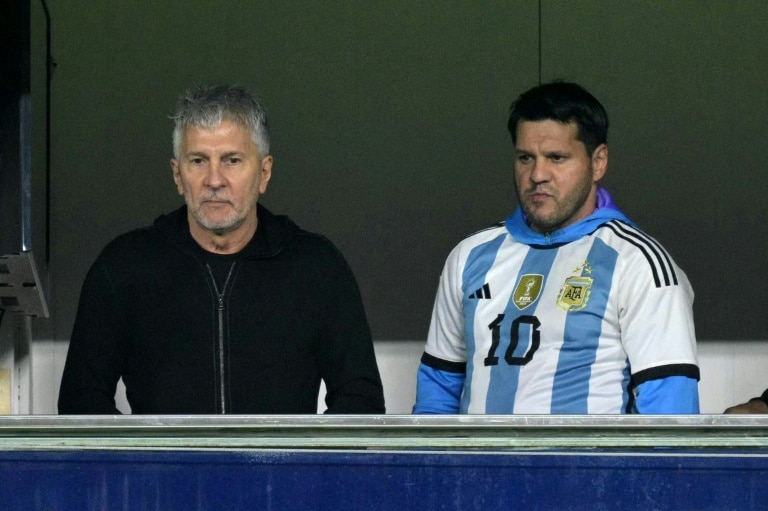
    In a sad announcement that has rippled through the global soccer community, Jorge Messi, the father, first mentor, and long-time professional manager of Argentina captain and eight-time Ballon d’Or winner Lionel Messi, has passed away at the age of 68 at a hospital in Rosario, Argentina, on Saturday.

    The death was first confirmed via a social media statement from Club Atlético Newell’s Old Boys, the Rosario-based soccer club where Jorge Messi once rose through the youth ranks. The club shared that Jorge had been receiving ongoing treatment for an undisclosed health condition over the past several months, and remembered him as “the pillar and the person who, with vision, rigor and affection, supported the career of the best player of all time, alongside his wife, Celia Cuccittini.”

    Shortly after the confirmation, the South American Football Confederation (CONMEBOL) released an official statement extending its sincere condolences “with respect and affection for Lionel” and the entire Messi family.

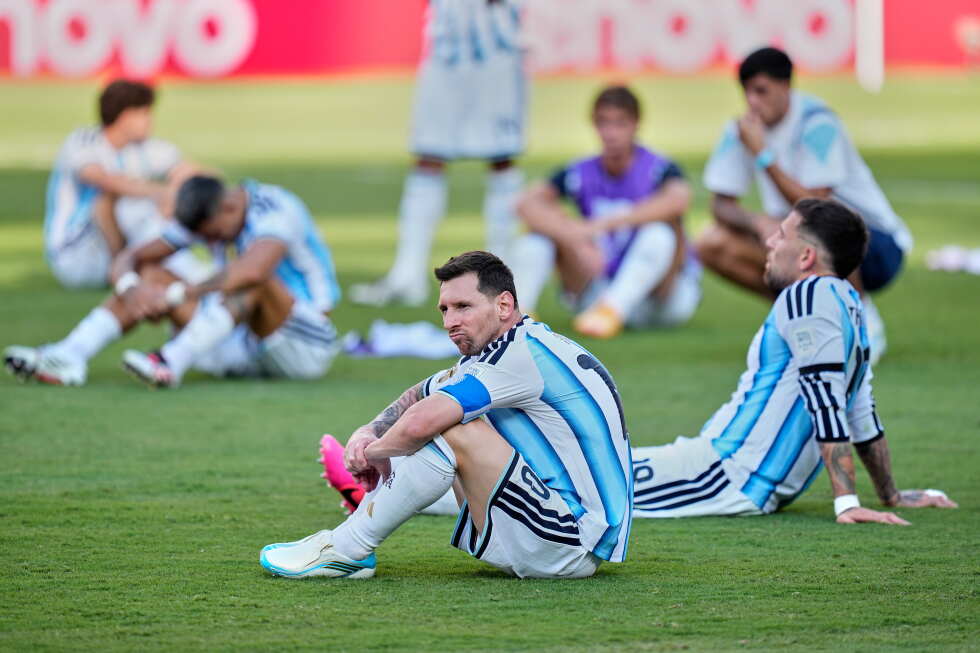
    Though the public only learned of Jorge’s passing Saturday, his health struggles first became public knowledge during the 2026 FIFA World Cup, when Lionel Messi gave an uncharacteristically emotional post-match interview after scoring against Algeria in Argentina’s opening group stage match. At the time, the star said his tears were prompted by “a reason unrelated to sports,” adding that he had just navigated “some difficult, complicated days” and thanked his national team teammates for supporting him through the crisis. Unfounded and invasive media speculation about Jorge’s health in the wake of that interview drew sharp condemnation from the Messi family, which released a statement days later confirming Jorge was dealing with a health issue but rejecting intrusive reporting. The statement pushed back against the “lack of sensitivity, respect and scruples with which some people have treated a strictly private and family matter,” noting that “a person’s health and the peace of mind of their loved ones should not be the subject of speculation or irresponsible media interest.”

    Beyond being the father of one of the greatest athletes in history, Jorge Messi built his own working-class background before devoting much of his adult life to nurturing his son’s unprecedented career. A trained chemical technician who worked for years as a steelworker, Jorge was a skilled youth soccer midfielder who earned a spot in Newell’s Old Boys’ youth system, only to be forced to abandon his own playing aspirations to complete mandatory military service in Argentina.

    That unfulfilled soccer dream turned into a legacy of supporting his third son, Lionel. From Lionel’s earliest youth matches in Rosario to his global stardom, Jorge served as his son’s agent and primary advisor, managing all of his professional contracts, business affairs, image rights, and diverse business investments spanning real estate, hospitality, and restaurants. Most famously, Jorge was the one who traveled with a 13-year-old Lionel to Barcelona in the early 2000s for the trial that earned the young prospect a spot at La Masia, FC Barcelona’s legendary youth academy, launching the career that would redefine modern soccer. Lionel would go on to make his professional debut in 2005, claim a record eight Ballon d’Or awards, and lead Argentina to the 2022 FIFA World Cup title.

    In a 2007 interview with Radio del Plata, Lionel Messi opened up about the quiet sacrifice his father made during their earliest, hardest days in Barcelona. “My dad was always by my side,” he recalled. “Sometimes I would lock myself in my room to cry when we arrived in Barcelona, or my dad would do the same without me seeing him, or thinking I didn’t see him. We pretended we were both OK, but we weren’t. My dad even asked me what I wanted to do when we were feeling down, if I wanted to stay or go back, and I wanted to stay, and he stayed with me.”

    The pair also faced professional controversy together: in 2016, both were convicted of tax evasion by a Spanish court. They avoided prison time, as the sentenced term was less than two years, a requirement for suspended sentences under Spanish law at the time.
  • Spain imposes border controls against Italy as row over Ceuta migrant influx intensifies

    Spain imposes border controls against Italy as row over Ceuta migrant influx intensifies

    A diplomatic dispute between two European Union member states, Spain and Italy, has escalated sharply in recent days over a surge of migrant arrivals into the Spanish North African exclave of Ceuta, with both nations enacting temporary border controls that suspend long-standing Schengen Area free movement rules. The tit-for-tat measures, each set to run for one month, took effect after Italy first implemented random additional checks for air and sea travelers arriving from Spain a week ago, triggering an immediate retaliatory response from Madrid that went into force at midnight Spanish time (22:00 GMT).

    The root of the crisis stretches back to late July, when roughly 78,000 migrants crossed from Morocco into Ceuta, a Spanish territory that Morocco has long claimed as its own. In the wake of that mass influx, Italian Prime Minister Giorgia Meloni, a conservative leader who has built her political platform on demanding stricter EU-wide migration policies, announced Rome would temporarily pause its Schengen border-free commitments to block any migrants who entered Ceuta from traveling onward to Italy. Italian officials clarified that only non-EU residents would face extra checks, with Spanish and other EU citizens exempt, and confirmed the restrictions would remain in place through at least August 15, citing unsubstantiated claims of an anticipated second major migrant wave into Ceuta.

    Spain has flatly rejected Italy’s justification for the controls, dismissing the argument as factually baseless spurious reasoning. Spanish authorities note that migrants currently in Ceuta have no existing route to enter the wider Schengen Area, making Italy’s security concerns unfounded. Madrid issued an ultimatum for Rome to reverse the measures by the past Sunday, a demand that Meloni’s government rejected outright. In response, Spain rolled out its own set of random border checks for all air and sea passengers arriving from Italy, set to expire September 7, with a clause allowing for early termination only if the underlying circumstances that prompted the move change significantly.

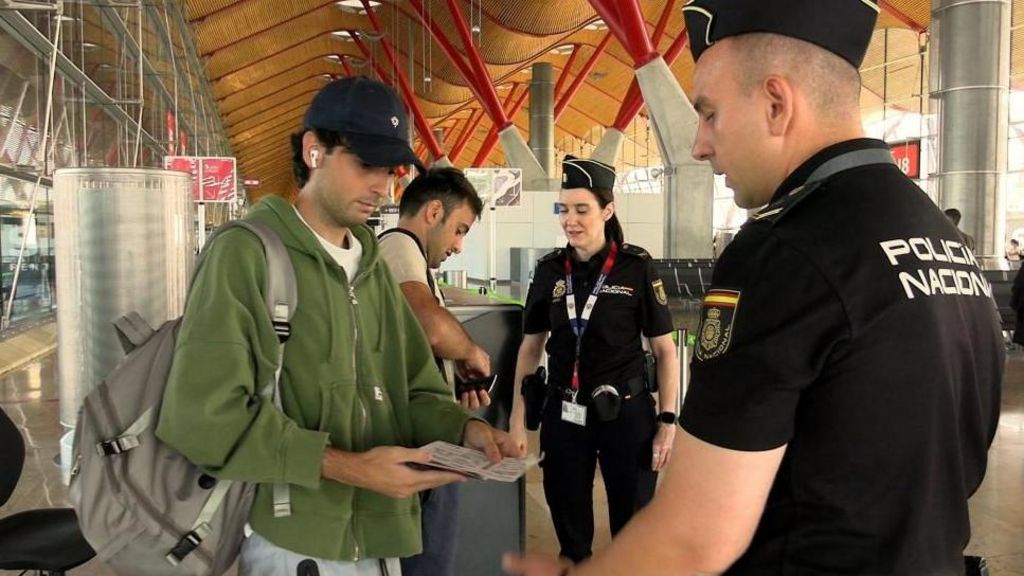
    While both governments have characterized their respective checks as random, on-the-ground reports have challenged these claims. Spanish national newspaper El Pais has documented long passenger queues and extended wait times at multiple Italian airport terminals over recent days, with all travelers from Spain directed to separate screening lines regardless of their nationality. On the Spanish side, multiple passengers arriving from Italy told public broadcaster RTVE that every person on their flights was required to show passports before being allowed to disembark. “They told us we couldn’t get off the plane without showing our documents,” one passenger, Elisa, told reporters.

    The dispute has laid bare deep divisions across the European Union over migration policy. Italy’s one-month suspension of Schengen rules for Spanish travelers has received public backing from Finland and Denmark, while the Czech Republic has gone a step further, calling for Spain’s EU Schengen Area membership to be temporarily suspended. Temporary Schengen suspensions are not without precedent: Italy already maintains ongoing extra controls along its land border with Slovenia.

    In the weeks following the initial mass crossing, the vast majority of the 78,000 migrants who entered Ceuta have been returned to Morocco. Tragically, an estimated 100 people are believed to have died during the dangerous crossing from North Africa, and nearly 1,400 unaccompanied minor migrants, including many very young children, remain in Ceuta with no clear path forward.

    Though Spain’s government has stated it does not expect a second large-scale wave of migrant crossings to match the late July surge, BBC Arabic has identified dozens of public Facebook posts calling for a new mass crossing in mid-August, including some posts marketing swimming equipment to aspiring migrants. Some of these Facebook groups had accumulated more than 100,000 followers before parent company Meta removed the content for violating its platform policies.

    Officials have continued to debate the underlying cause of the unprecedented mass crossing. The European Union’s Migration Commissioner Magnus Brunner has blamed criminal smuggling networks spreading intentional disinformation for the event, a conclusion that the Spanish government under Socialist Prime Minister Pedro Sanchez has endorsed. The crossing came shortly after Spain’s Supreme Court issued a ruling that barred authorities from immediately summarily returning migrants intercepted at sea while attempting to reach Ceuta or the other Spanish Moroccan exclave Melilla. The Moroccan government has echoed this framing, with an anonymous senior source telling local outlets that the ruling eliminated the existing deterrent to unauthorized crossings, saying “the dam gave way, not under the weight of the criminals, but of a judge’s decision”.

    The mass crossing also reignited long-standing diplomatic tensions between Spain and Morocco, as Morocco does not recognize Spanish sovereignty over either Ceuta or Melilla, and questions remain open about why Moroccan border forces did not intervene to stop the tens of thousands of people attempting the crossing simultaneously.

  • Lionel Messi’s father Jorge dies aged 68

    Lionel Messi’s father Jorge dies aged 68

    Jorge Messi, the father, first coach and long-time professional agent of global football icon Lionel Messi, has passed away at the age of 68, according to an official announcement from Newell’s Old Boys, the Argentine club where Lionel Messi launched his childhood football career. The confirmation was made public by the club on Saturday.

    Local Argentine media outlets have reported that Jorge Messi died on Friday at a hospital in Rosario, the central Argentine city where the Messi family has deep roots. The 68-year-old had been facing publicized health struggles in recent months, during which the Messi family made a public plea for media privacy and empathy amid widespread speculation over his condition.

    In a heartfelt social media statement shared Saturday, Newell’s Old Boys paid tribute to Jorge Messi’s foundational role in his son’s unprecedented career, noting: “His constant companionship and behind-the-scenes leadership were essential in backing every step of Lionel.”

    The story of Jorge Messi is inextricably tied to Lionel’s rise from a young prospect in Rosario to one of the greatest footballers in history. He served as Lionel’s first coach when the future star began playing the sport at the grassroots level in Argentina, and was the only person to accompany the 13-year-old Lionel when he moved across the Atlantic to join FC Barcelona’s youth academy, a move that set the stage for his legendary career. Later, he stepped into the role of Lionel’s official agent, managing the off-pitch business and logistics that allowed the footballer to focus on his performance on the pitch.

    Looking back on his father’s influence in a 2022 interview with DirecTV Sports, Lionel Messi publicly acknowledged the outsized impact Jorge had on his career and personal growth, saying: “My father helped me enormously. He is very critical of me. That made me always want to push myself further.”

    The news of Jorge’s passing has prompted an outpouring of tributes from across the global football community in the hours following the announcement, with fans, fellow players and football institutions extending their condolences to the Messi family.

  • Australia survives red card and Japan rally for a 35-32 win in Les Kiss debut

    Australia survives red card and Japan rally for a 35-32 win in Les Kiss debut

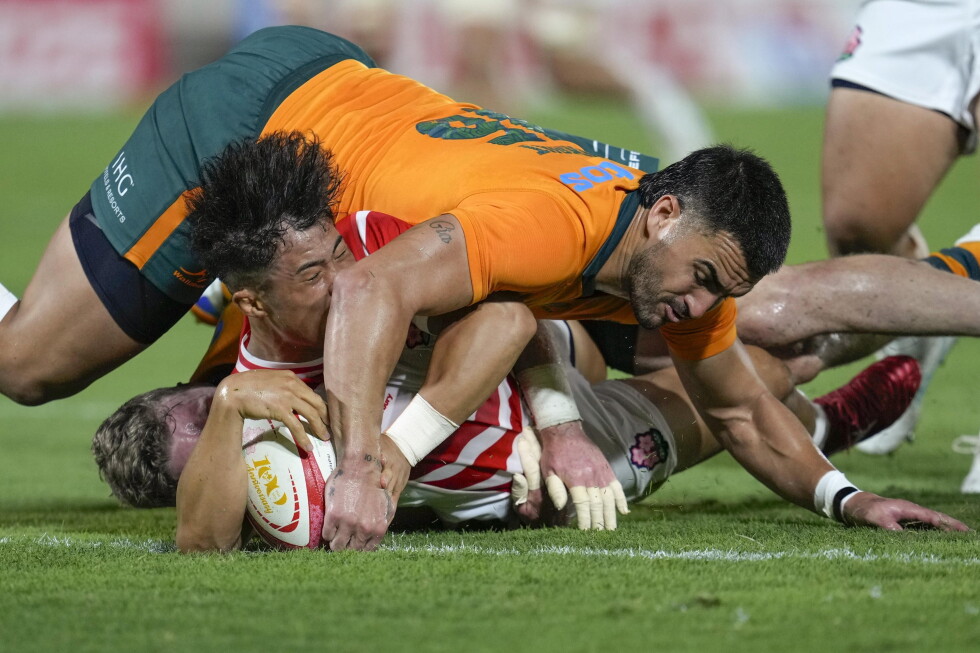
    In a gripping, physically demanding test match in Osaka on Saturday, Australia’s national rugby union team, the Wallabies, secured a nail-biting 35-32 victory over Japan, delivering a winning start for newly appointed head coach Les Kiss. The result was far from straightforward, however: Australia was reduced to 14 players before halftime after lock Miles Amatosero received a red card, forcing the side to fight through extra pressure, sweltering conditions and a late Japanese fightback to claim the win.

    Kiss stepped into the Wallabies’ top coaching role last month, taking over from Joe Schmidt after a mixed opening phase of the Nations Championship, where Australia finished with a 1-2 record – picking up a victory over Italy following back-to-back losses to Ireland and France. For the opening match of this two-test series against Japan, Kiss made several notable selection calls: he named just one uncapped player, center Isaac Henry, recalled experienced Queensland Reds forward Lukhan Salakaia-Loto, and opted to leave veteran prop James Slipper out of the matchday squad.

    Throughout the 80 minutes, temperatures at the Osaka venue hovered near 30 degrees Celsius (86 Fahrenheit), adding an extra layer of fatigue for both sides. The game’s turning point came in the 32nd minute, when Amatosero was penalized for a dangerous cleanout on Japan captain Warner Dearns. Referees initially issued a yellow card, but upgraded the sanction to a red following a bunker review just before halftime, with the two sides locked at 14-all at the break.

    Down a player for the entire second half, Australia still managed to stretch its lead early after the break, with tries from Max Jorgensen and Fraser McReight pushing the Wallabies’ advantage to nine points. But Japan fought back methodically, cutting the deficit with two well-taken penalties from fly-half Takuro Matsunaga.

    The difference in the final 20 minutes proved to be Australia’s depth off the bench, as the Wallabies’ replacements maintained intense pressure on the Japanese defense. With 10 minutes remaining, prop Taniela Tupou crashed over the try line to extend Australia’s lead back to 10 points, appearing to put the game out of reach.

    Japan, however, had one final push left. Dearns, the host nation’s captain who was on the receiving end of Amatosero’s controversial foul earlier in the match, crossed for a late try to cut the gap back to just three points. Despite the frantic final minutes, Australia held firm to defend its narrow lead and close out the win.

    Saturday’s match also pitted Kiss against Japan head coach Eddie Jones, a former Wallabies coach who is currently serving his second stint in charge of the Japanese national side. The two teams will meet again next weekend in the second test of the series.

  • Hunter Biden says his father’s prostate cancer is causing him pain even as he continues to speak out

    Hunter Biden says his father’s prostate cancer is causing him pain even as he continues to speak out

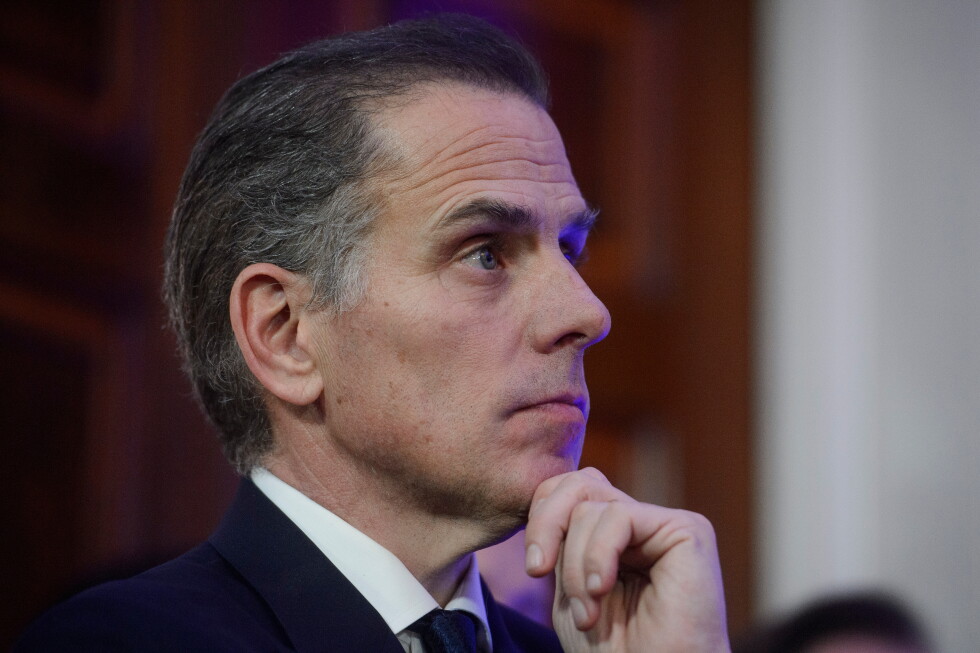
    LONDON – In an emotional, wide-ranging interview broadcast by the BBC on Friday evening, Hunter Biden has shared a devastating update on the health of his father, former U.S. President Joe Biden, confirming that the 83-year-old’s prostate cancer has metastasized to other parts of his body, including his bones, and triggered persistent, debilitating pain that he largely hides from public view.

    At 83 years old, Biden made history as the oldest person to ever occupy the Oval Office, and his advanced age was a constant source of public concern and political scrutiny throughout his four-year presidential term. The former president and his White House team faced sharp criticism over allegations that they concealed the full severity of his health issues during his time in office. That criticism intensified after a poor performance in a pre-election debate against eventual successor Donald Trump forced Biden to drop his 2024 re-election campaign.

    Biden first publicly announced his prostate cancer diagnosis in May 2024, fewer than four months after he departed the White House following the inauguration of Donald Trump. Hunter Biden told the BBC that the diagnosis has taken a heavy emotional and physical toll on the entire Biden family, and that watching his father navigate the illness is an incredibly difficult experience.

    “It’s really sad to watch,” Hunter Biden said of his father’s condition. “The cancer has spread, metastasized into his bones and further. It’s very painful and it’s very debilitating in many respects. The only thing that I’d say about my dad, about his health right now, is I wish he would complain more, because it’s not good.”

    Despite the advanced progression of his cancer and the severe symptoms it causes, Hunter Biden emphasized that the former president has not stepped back from public life. He remains actively engaged in speaking out on policy and political issues that he has long prioritized, holding onto his deep faith in the future of the United States. “He’s still doing his thing,” Hunter Biden said. “He so believes in this country.”

    Separately, the former president is set to release a new memoir titled “Promise Me, America” following the conclusion of U.S. midterm elections.

  • Vollering wins Stage 8 to take overall lead at Women’s Tour de France from Niewiadoma-Phinney

    Vollering wins Stage 8 to take overall lead at Women’s Tour de France from Niewiadoma-Phinney

    NICE, France – The 2024 Women’s Tour de France delivered another chapter of high-stakes cycling drama on Saturday, as Dutch star Demi Vollering pulled off a spectacular late-stage attack to claim victory on the eighth leg and wrestle the overall race lead away from Katarzyna Niewiadoma-Phinney heading into Sunday’s decisive final stage. The 2023 race champion left her closest title rivals in her wake on the day’s final categorized climb, surging clear with six kilometers remaining to secure a result she had visualized only hours before the start of the race.

    The 172-kilometer route from Sisteron to the Mediterranean coastal city of Nice was designed on paper to favor sprinters, with mostly flat terrain broken up by just four short, low-elevation climbs. That rolling profile added an element of uncertainty, however, as general classification contenders sought to conserve energy for the final day’s challenging course, opening the door for early breakaways. Early in the stage, French rider Maeva Squiban and Dutch competitor Loes Adegeest managed to pull away from the peloton and build a significant gap, holding off the main chase group for most of the day.

    The breakaway bid hit trouble when Squiban crashed on a downhill turn, sliding off her bike and landing hard on her left side. The incident left her with cuts and scrapes, and she screamed in pain as a motorbike medic patched up her arm while she continued riding. Despite the injury, Squiban pushed on to finish the stage, while Adegeest was reeled back in by the peloton with less than nine kilometers left to race.

    In the wake of the catch, the stage’s climax unfolded on the day’s final climb, when Vollering made her decisive move. The Dutchwoman upped her pace, putting pressure on Niewiadoma-Phinney – who had claimed the yellow jersey just one day prior with a stunning solo victory up Mont Ventoux – who eventually cracked under the intensity. Once Vollering surged clear, neither Niewiadoma-Phinney nor Italy’s Elisa Longo Borghini, a former Giro d’Italia winner, could close the gap as the leader rode the iconic Promenade des Anglais to the finish line.

    Crossing the line, Vollering raised her arms in triumph before collapsing on the ground, gasping for breath to recover from her all-out effort. Speaking to reporters after the stage, she opened up about the mental and physical toll of her victory, revealing she had predicted the turnaround that morning. “It’s funny but only this morning I saw myself taking the yellow jersey,” Vollering said. “I thought it might come true, that maybe that’s the way things should be. During the day, I tried to remind myself I could do it.” She added, “I was in so much pain, I can hardly describe it, but I made it happen. This goes to prove that if you really believe in something, if you dream big, it doesn’t matter how much risk you take or how much pain you have to go through.”

    Longo Borghini crossed the finish line second, with Niewiadoma-Phinney taking third, both riders 17 seconds behind the stage winner. The result gives Vollering an 8-second overall lead over Niewiadoma-Phinney heading into the final stage, and also cements a historic milestone for the Dutch star: she has now won all three of women’s cycling Grand Tours in the same calendar year, taking the Giro d’Italia earlier in 2024 to complete the rare treble.

    Saturday’s stage was not without off-the-road news, as defending champion Pauline Ferrand-Prévôt withdrew from the race shortly before the start after reporting feeling unwell. The French rider, who is also the 2024 Paris Olympic gold medalist in mountain biking, pulled out following consultation with medical staff from her Visma-Lease a Bike team, who announced the decision on social media platform X. Ferrand-Prévôt made headlines last year when she won the Women’s Tour de France on her debut, but struggled through the 2024 edition and sat 14th overall before her withdrawal.

    All eyes now turn to Sunday’s ninth and final stage, which will see riders tackle four testing climbs up Col d’Èze, a hilltop route that overlooks the tiny Principality of Monaco. The parcours sets up a tense showdown for the overall title, with a history that adds extra drama: two years ago, Niewiadoma-Phinney beat Vollering on a final-day mountain stage to claim the overall victory by a razor-thin 4-second margin. Vollering is well aware of the stakes ahead of the decisive leg. “Tomorrow’s course is going to be super hard,” she said. “We know it from the beginning of the Tour.”

  • Ukraine honors its ‘collector of souls’ killed while recovering the war dead

    Ukraine honors its ‘collector of souls’ killed while recovering the war dead

    Thousands of Ukrainians gathered in central Kyiv’s Cathedral of Saint Volodymyr on Saturday to bid a final farewell to Oleksiy Yukov, the 40-year-old founder of a volunteer organization dedicated to recovering the remains of fallen troops and civilians from Ukraine’s war zones. Yukov, who died in a landmine detonation during a recovery operation on August 5, spent more than 20 years honoring the dead by bringing their remains home for proper burial — including those of enemy Russian soldiers.

    A native of the conflict-scarred Donbas region, Yukov first began his life’s work as a teenager, when he stumbled on the unclaimed remains of Soviet and Russian World War II soldiers. Before dedicating himself full-time to recovery work, he worked as a martial arts instructor, but he soon committed fully to his mission: every life deserves a dignified burial, regardless of which side a fighter belonged to.

    In 2014, after the outbreak of full-scale conflict in Donbas, Yukov launched the volunteer NGO Platsdarm, which translates to “bridgehead” in English. Over the years, he earned the reverent nickname “the collector of souls” for his tireless, high-risk work. Platsdarm’s teams venture into mine-laced terrain, from abandoned fields and dense forests to bombed-out urban ruins, to locate and retrieve the remains of the dead, a mission that puts volunteers in constant danger of explosive blasts.

    Yukov already survived a catastrophic mine incident in 2022, which left him with permanent leg injuries and cost him an eye. Even while recovering from those life-altering wounds, he returned to the field to continue his work. In a social media post shared just weeks before his death, Yukov laid out the harsh reality of his mission, acknowledging that every outing carried grave risk. “Remote mines, shelling, drones — everything is against you. But you go and do everything to ensure that every soul returns home,” he wrote.

    He pushed back against critics who argued that the remains of Russian soldiers should be left unclaimed to rot. “When they say: ‘Let them rot,’ I do not agree. This is how we fight for every soul,” Yukov wrote. He framed his work as a deeply moral and spiritual calling, writing that every fallen body is a soul waiting to return to its home. “This is action,” he noted of his daily work. “Action every day in the fields, in the forest belts, among the ruins, where your life can end at any moment.”

    Saturday’s Orthodox Christian funeral service drew crowds of mourners who came to honor Yukov’s legacy of radical compassion amid decades of ongoing war in Ukraine.

  • Arsenal sign Brazil midfielder Guimaraes from Newcastle

    Arsenal sign Brazil midfielder Guimaraes from Newcastle

    In a high-profile transfer move that shakes up the Premier League landscape, reigning English top-flight champions Arsenal have finalized the acquisition of Brazilian midfielder and Newcastle United captain Bruno Guimaraes, both clubs confirmed in official statements released on Saturday. Reports peg the transfer value at £75 million, equal to roughly $101.2 million.

    After four and a half seasons with the Magpies, the 28-year-old Brazil international has put pen to paper on a long-term deal with the Gunners, who ended a 20-year trophy drought to claim the Premier League title last season. Guimaraes marks Arsenal’s most high-profile incoming transfer of this summer transfer window, joining already completed signings goalkeeper Illan Meslier and winger Christos Tzolis at the Emirates Stadium.

    Arsenal sporting director Andrea Berta emphasized the transformative impact of Guimaraes’ arrival, noting that the addition further solidifies the club’s midfield core. “As we have all seen, Bruno can operate both as a holding midfielder and a dynamic box-to-box option. He blends technical quality with relentless work rate, and has contributed consistent goals and assists for his side every season across his career,” Berta explained. “Bruno will give Mikel [Arteta] greater flexibility to evolve our playing system, while also boosting healthy internal competition – a key factor if we want to maintain the high standards needed to compete for major honours.”

    While the full transfer fee remains officially undisclosed by both clubs, Newcastle confirmed that the deal ranks among the top 10 highest transfer fees ever received for a player aged 28 or older. This is not the first time Arsenal have been linked to Guimaraes: the club was in the running to sign him back in January 2022, before he ultimately left French side Lyon to join Newcastle.

    Across his tenure on Tyneside, Guimaraes made 195 appearances for Newcastle and found the back of the net 31 times. Playing under former manager Eddie Howe, he was a central figure in the club’s 2023 League Cup triumph, which ended a 54-year wait for a major silverware for the St James’ Park side.

    Reflecting on his departure, Guimaraes called the choice to leave one of the hardest decisions of his career. “When I first arrived at the club, we were in a really difficult position, and I am incredibly proud of everything we built and achieved together,” he said in Newcastle’s official statement. “I fell in love with this place, and I truly mean that.”

    Guimaraes’ departure comes just one week after Howe stepped down from his role as Newcastle manager, with the club already appointing German coach Matthias Jaissle as his replacement. The Brazilian, who represented his nation at the most recent FIFA World Cup, will now compete for a starting spot in Arsenal’s midfield alongside established names including Declan Rice, Martin Zubimendi, and Mikel Merino, as well as young prospect Myles Lewis-Skelly.

    The new Premier League season is fast approaching, with Arsenal set to kick off their campaign against last season’s second-place side Manchester City in the FA Community Shield next Sunday. Five days after that showpiece, they will get their title defense underway against newly promoted Coventry City. Newcastle, meanwhile, will open their 2025-26 campaign at home to Liverpool at St James’ Park on August 23.

  • Arsenal lands Bruno Guimarães from Newcastle ahead of Premier League title defense

    Arsenal lands Bruno Guimarães from Newcastle ahead of Premier League title defense

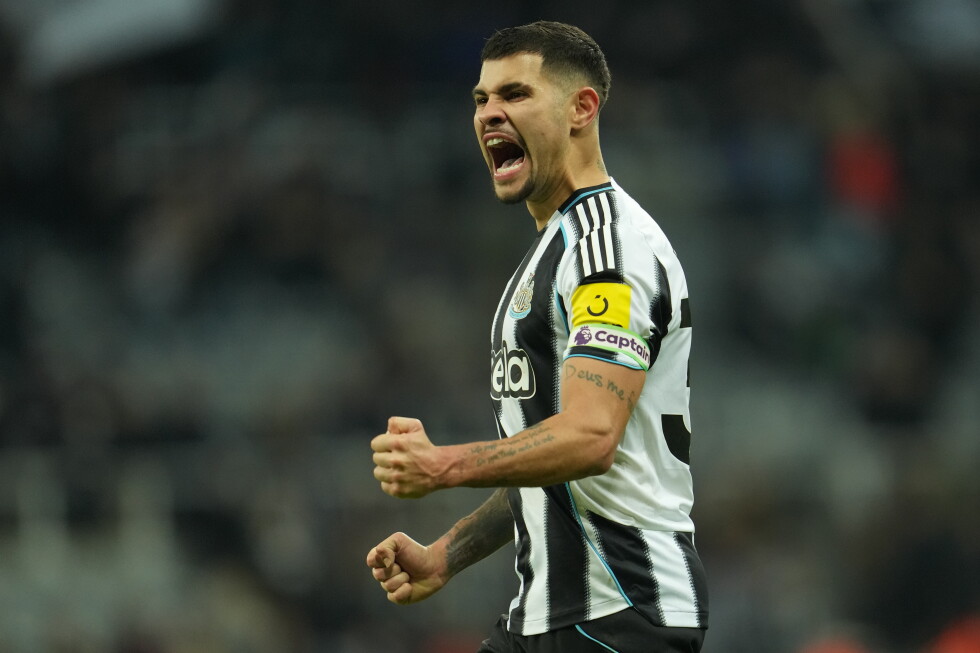
    In a high-profile transfer deal that shook up the Premier League on Saturday, defending champion Arsenal announced it has finalized the acquisition of star Brazilian midfielder Bruno Guimarães from Newcastle United, for a reported transfer fee of £75 million (equivalent to $101 million). The 28-year-old has put pen to paper on a long-term contract with the north London side, officially completing his move to the Emirates Stadium.

    Speaking after the announcement, Guimarães expressed unbridled excitement about his new chapter, noting he is at a stage in his career where he is hungry for a new challenge. “I want to win trophies, I want to make history and I think I’m in the right place to do it,” the midfielder said, adding that he enters the move at his physical peak, with ambitions to cement his legacy at the club. “It’s massive what I have done so far, but I want more. I want to win for Arsenal. Someday, when I leave, I want players to come here and say I want to do exactly what Bruno did for the club.”

    The transfer comes even as Newcastle resisted efforts to offload their club captain. Guimarães had made clear to the Magpies that he intended to pursue a move, forcing the hand of the northeast club. Since joining Newcastle from France’s Ligue 1 side Lyon in January 2022, Guimarães quickly emerged as the team’s talismanic figure and one of the most impactful central midfielders across the entire Premier League. During his tenure at St James’ Park, he led the club to its first major domestic silverware in 70 years — the 2025 English League Cup — and was instrumental in helping the side qualify for the UEFA Champions League on two separate occasions.

    In an emotional statement posted to Newcastle’s official website, Guimarães called the choice to leave one of the hardest decisions of his career. “When I arrived, the club was in a challenging position and I am incredibly proud of what we achieved together. I fell in love with this place. I really mean that,” he said. “This move is very tough because Newcastle means so much to me, but I wanted to experience something new in my life. I feel ready for a new challenge for myself and my family. I had a very positive conversation with Matthias Jaissle, and I leave knowing the club is in very good hands.”

    Guimarães’ exit marks the third high-profile departure for Newcastle this transfer window, following fellow star players Anthony Gordon and Sandro Tonali out of the club. The regime change at the top also preceded the transfer: long-serving head coach Eddie Howe stepped down at the end of last month after nearly five years in charge, and was replaced by former RB Salzburg manager Matthias Jaissle.

    Now, Guimarães will join an already formidable Arsenal midfield anchored by England international Declan Rice, as Mikel Arteta’s side look to defend their Premier League title and chase further domestic and European honors. On the international stage, the Brazilian brings a wealth of experience, having earned 48 caps for the Brazil national team including appearances at the most recent FIFA World Cup, and won a gold medal at the 2020 Tokyo Olympic Games.

    Ahead of his first appearance for the Gunners, Guimarães confirmed he will continue his longstanding tradition of wearing the number 39 shirt, a tribute to his father. The number holds deep personal meaning: it is the dispatch number for his father’s taxi in Rio de Janeiro, where his father worked for more than 20 years to support the family. “The taxi, of course, gave me everything for my family, the place we live, the food, my clothes, everything,” Guimarães explained. “When I got the chance to sign to a top club in Brazil, I asked my father which number I should take and he said 39. I was upset a little bit because I wanted to take the 97. He said: ‘No, no, take the 39. The 39 gave you everything.’ I even have a tattoo of the number 39 to honor this legacy,” he added.

  • A drone likely from Ukraine explodes in Bulgaria near a gas pipeline close to Romania’s border

    A drone likely from Ukraine explodes in Bulgaria near a gas pipeline close to Romania’s border

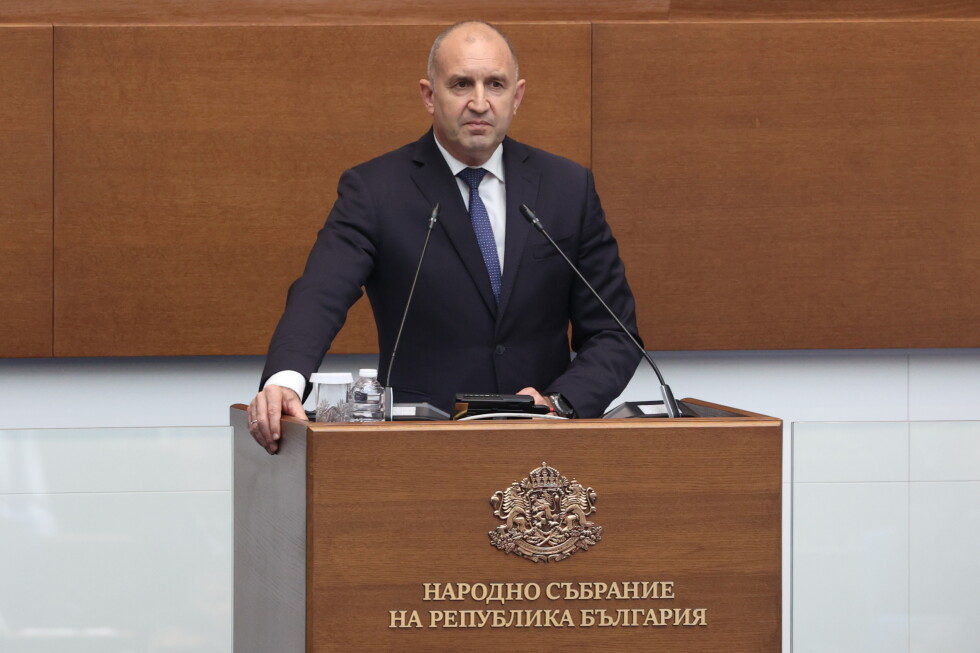
    On a Saturday morning, an unmanned aerial vehicle crossed into Bulgarian airspace from neighboring Romania and detonated shortly after crossing the border, close to a major international gas pipeline, Bulgarian authorities confirmed. No injuries or infrastructure damage were reported in the incident, which has sparked urgent security reviews across both national and alliance-level institutions.\n\nBulgaria’s capital-based Defense Ministry shared initial findings indicating the drone matches specifications of a type operated by Ukraine’s armed forces, adding that the incursion was almost certainly an accidental event. Both Bulgaria and Romania hold dual membership in NATO and the European Union, placing the incident firmly within the alliance’s collective security framework.\n\nBulgarian Prime Minister Rumen Radev told reporters after an emergency government meeting that the explosion occurred just after 5 a.m. local time, roughly 100 meters inside Bulgarian sovereign territory. Notably, the drone went undetected by air surveillance systems in both Romania and Bulgaria during its entire flight through the two countries’ airspace. Radev confirmed that “there are no casualties or damage to buildings” and that the blast site had been secured by security forces, with ongoing monitoring of the surrounding area.\n\nGeographically, the detonation took place approximately 200 meters from a Romanian compressor station and one kilometer from a Bulgarian compressor station that is part of the critical Trans-Balkan gas pipeline, a key infrastructure link for regional energy distribution. In response to the security gap exposed by the incursion, Radev announced a strategic redeployment of anti-drone capabilities: border police units equipped with drone detection and countermeasure technology, previously stationed along Bulgaria’s border with Turkey, will be moved to the Romanian border to strengthen airspace monitoring.\n\nDefense Minister Dimitar Stoyanov added that the incident will be formally raised for discussion at an upcoming North Atlantic Council meeting scheduled for early next week. Stoyanov noted that observations of the blast, which produced a large column of black smoke, suggest the drone carried a substantial explosive payload. He added that small, low-flying drones like this one are inherently difficult for conventional air defense systems to track and identify, explaining why it went undetected during its flight.\n\nWhile early confusion surrounded the drone’s origin and possible links to either Russia or Ukraine amid the ongoing war in Ukraine, the Defense Ministry’s later analysis of recovered wreckage narrowed down the device as most likely a “Maya” decoy drone, a variant widely deployed by Ukrainian forces. The ministry’s official statement emphasized that as of the current investigation, “there is no reason to believe that the incident was intentional.”