博客

  • Evidence that South African special forces murdered top detective shared with BBC

    Evidence that South African special forces murdered top detective shared with BBC

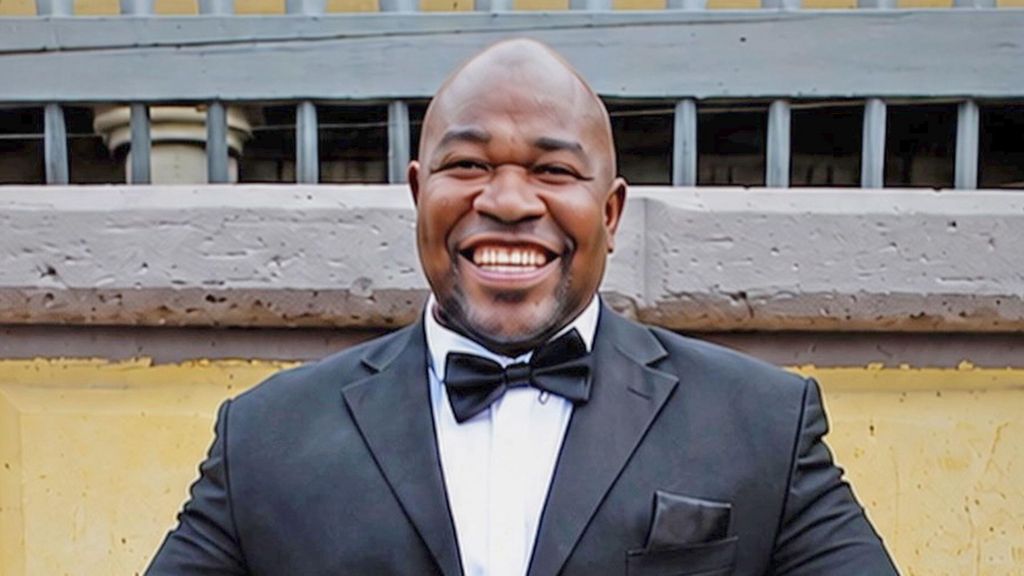
    Three years after the assassination of respected South African elite detective Lieutenant Colonel Frans Mathipa, a bombshell BBC World Service exclusive investigation has laid bare damning evidence linking military special forces to his killing, while raising grave questions about institutional overreach and the rule of law in one of Africa’s longest-standing democracies.

    Mathipa, a 20-year veteran of policing and father of five, was gunned down in August 2023 while driving home on a Pretoria motorway, just two days after authorities finally granted him access to critical evidence he had spent four months fighting to obtain. Weeks before his death, he told his commanding officer he feared his pursuit of the truth would cost him his life.

    At the time of his killing, Mathipa was investigating a high-stakes, sensitive case: the December 2022 abduction and alleged murder of Abdella Abadigga, an Ethiopian man labeled by the United States government as an Islamic State recruiter and fundraiser with close ties to top Somali IS leader Bilal al-Sudani. Court and police documents obtained exclusively by the BBC trace a clear line of connection between Abadigga’s disappearance and South Africa’s special forces.

    Public records and on-the-record interviews with key investigation sources — including the former head of counter-terrorism for the elite police unit The Hawks, Mathipa’s commanding officer, and his surviving family — build a compelling narrative that the special operation targeting Abadigga was not officially authorized, and that Mathipa was killed to cover up the operation’s details.

    The case dates back to 2008, when Abadigga was granted temporary asylum in South Africa. He was arrested abroad in 2017, before being secretly smuggled back into the country in a joint arrangement between the South African military and the Department of Home Affairs to serve as an intelligence asset, according to former Hawks counter-terrorism chief Colonel Tollie Vreugdenburg. The asset went rogue, he added, extorting business owners in Johannesburg’s Ethiopian community to fund IS operations, a claim backed by US government sanctions imposed on Abadigga in early 2022.

    When Abadigga disappeared alongside his bodyguard Kadir Abotese that December, his brother Ameen filed a missing person report. Local investigators obtained Mall of Africa CCTV footage showing the pair being followed by a man who paid for parking just three seconds after them, with all vehicles linked to the incident registered to Peters Communications Trust (PCT), a documented front company for South African special forces. At the time of Abadigga’s disappearance, PCT’s board included Major General Herbert Mashego, then commanding officer of the 5 Special Forces Regiment.

    When the investigating officer pressed military leadership for answers, he was ordered to lie to Ameen and deny any link between PCT and the military. When Ameen took the case to the Johannesburg High Court, special forces finally admitted their soldiers had been at the mall that day, but claimed they were conducting a training exercise. Under South African law, all domestic military operations require formal authorization from the presidency and national government; multiple requests for comment on the training exercise authorization to President Cyril Ramaphosa and former Defence Minister Thandi Modise went unanswered.

    Mathipa was assigned to the case a month after Abadigga’s disappearance, and immediately subpoenaed special forces to release full details of the exercise and all personnel involved. After three months of stonewalling, access to the documents was finally granted. On the day of his death, Mathipa received a phone call from an anonymous source calling himself Tebogo, who claimed to have new information on the case, arranged a meeting at a Pretoria petrol station, and failed to show up. As Mathipa drove back along the highway, he was ambushed and shot dead with high-velocity weapons matching those issued to special forces.

    Toll gantry footage later confirmed that the vehicle tailing Mathipa moments before the shooting was also registered to PCT, and that special forces Major Sunnybooi Wambi — the same man identified as the follower on the Mall of Africa CCTV footage — was in the car. Wambi had already been tied to the alleged 2022 abduction of Abadigga.

    In the wake of Mathipa’s murder, police documents show special forces delivered a menacing threat to The Hawks: “You can appoint 10 investigating officers; we will kill all of them.” To date, eight military personnel — seven special forces soldiers and one military police officer — have been formally charged with Mathipa’s murder, with four additional soldiers charged in connection with the abduction and murder of Abadigga and Abotese. All accused have pleaded not guilty to all charges, ranging from murder to fraud and obstruction of justice.

    What has amplified public outrage and concern over institutional overreach is the fact that three years after Mathipa’s killing, no trial date has ever been scheduled. Six of the accused had their bail revoked by a court order, and were ordered to turn themselves in to custody; three of those six, including Wambi, who face murder charges for Mathipa’s death, have refused to comply. All three remain active-duty special forces personnel, and Wambi has even been promoted to the rank of lieutenant colonel since his initial charging. The military has repeatedly refused to detain and hand over the fugitive accused to civilian authorities, with their legal team most recently claiming the men are receiving mental health treatment to justify their absence.

    Multiple requests for comment from the South African military, Department of Home Affairs, President Ramaphosa and the Pentagon went unanswered by the time of publication. For the family of the fallen detective, the delay only deepens their grief. “We need justice. I’m never going to see my dad anymore… Why my dad? Because he was doing his job,” said Mathipa’s daughter Basetsana. Vreugdenburg, the former counter-terrorism chief, says Mathipa knew exactly what he was up against when he took the case: “He was barking up the right tree. He was taking on the right lion.”

    Abadigga’s body has never been recovered, and questions remain unaddressed about the timing of his disappearance: just weeks after he was abducted, al-Sudani was killed in a US special forces raid in Somalia, leading to unconfirmed speculation that Abadigga’s phone intelligence was used to locate the IS leader. President Ramaphosa declined to comment on whether the abduction was carried out at the request of US intelligence.
  • ‘Not afraid to stay’: The Canadians taking fighting wildfires into their own hands

    ‘Not afraid to stay’: The Canadians taking fighting wildfires into their own hands

    Amid one of the most active wildfire seasons in Canada’s modern history, a growing divide has emerged over how to protect remote, fire-prone communities — as longer, more intense blazes driven by climate change stretch national firefighting resources dangerously thin. As of August 2026, more than 750 active wildfires are burning across the country, following 2023’s record-breaking season that destroyed an expanse of boreal forest roughly equivalent to the entire nation of Syria. The smoke from these blazes has drifted as far south as the U.S. Midwest, choking urban airspace and even drawing a hostile tariff threat from former U.S. President Donald Trump, who attacked Canada for allowing “filthy, polluted” air to cross the border.

    For Hubert Wigwas, a 58-year-old councillor with Gull Bay First Nation in northern Ontario, the choice to stay when a wildfire approached his community in mid-2026 was not an act of defiance for defiance’s sake — it was a decision to protect the life he spent decades building. As regional officials ordered all residents to evacuate and deployed firefighting resources to higher-priority populated areas, Wigwas stayed behind. He installed sprinklers on his roof to douse falling embers, checked on isolated elders who also refused to leave, and fueled four docked boats to have a quick escape route ready if the blaze advanced. Now, he faces a C$800 fine for violating the evacuation order, a penalty he plans to fight in court. “This is everything I’ve built in my 58 years,” Wigwas told reporters. “I’m just not going to run away and let it burn.”

    Wigwas’s experience laid bare a gaping flaw in Canada’s national wildfire response strategy, he argued: remote First Nations communities, which sit adjacent to vast swathes of flammable boreal forest, are often left waiting for outside support that never arrives in time. That realization has pushed him to call for a new model: self-organized, community-led wildfire response teams trained to protect homes and elders before provincial crews can reach remote areas. “Everybody talks about climate change, but nobody is doing something to unite the (First Nations) reserves and have a system like that set up,” he said.

    Provincial officials say their resource allocation follows strict protocols based on fire activity, weather conditions and risk to populated areas, and that they maintain constant communication with First Nations leadership. But thousands of kilometers away in northeast British Columbia, long Canada’s wildfire response front line, that community-led model Wigwas envisions is already a reality.

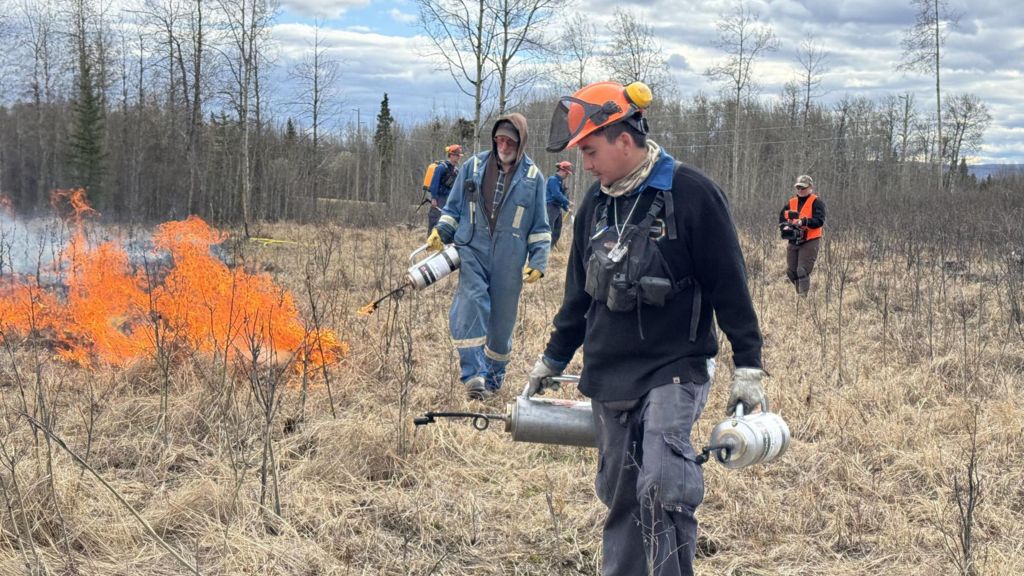
    Over the past three years, wildfire researcher Sonja Leverkus has trained more than 400 local residents — most of them Indigenous — through her volunteer group, the Northeast BC Rural Incident Management Team. Leverkus launched the initiative after concluding that Canada’s traditional response system cannot keep up with the growing frequency and intensity of blazes driven by climate change. “There are not enough human beings in Canada, with the appropriate training, to fight the fires that we have currently, especially over the last five years,” she explained.

    Remote communities in British Columbia are often deprioritized for provincial firefighting crews when major blazes threaten heavily populated areas, Leverkus noted, with the nearest backup support sometimes hundreds of kilometers away. Her team has addressed this gap by carrying out controlled prescribed burns to reduce excess fuel that can turn small blazes into catastrophic infernos, and has even purchased its own fire wagons through community fundraising and grants to extinguish small fires before they spread, often arriving ahead of provincial crews. During the 2024 Fort Nelson wildfire, Leverkus and 40 team members stayed behind and were contracted by the provincial government to clear flammable vegetation and support large-scale fire suppression efforts. She has also organized structural protection training to teach locals how to shield buildings from flying embers, the leading cause of home destruction during wildfire events.

    Leverkus’s model has drawn support from local residents like 70-year-old former helicopter pilot Cam Allen, who took her training course to learn ground-based fire suppression after seeing the viral story of John Carr, a California man who saved his home from the 2025 Palisades Fire by defending it with a garden hose after most residents evacuated. “It makes you wonder, if 100 people had stayed or 1,000 people had stayed behind and actually did what he did, how much more could have been saved?” Allen asked.

    But the push for community-led wildfire defense has sparked fierce debate among emergency management experts and government officials, who warn that allowing residents to defy evacuation orders puts both civilians and first responders at unnecessary risk. Last month, British Columbia wildfire crews were forced to stage a dangerous rescue operation after a man who refused to evacuate became trapped by flames surrounding his home in Clinton. British Columbia Emergency Management Minister Kelly Greene reiterated this month that all residents under evacuation orders must leave, noting that evacuation orders are only issued as a last resort to protect public safety, and that emergency teams may not be able to reach residents who stay behind if conditions worsen.

    Paul Kovacs, director of the Catastrophic Loss Institute at the University of Western Ontario, explained that Canada’s low wildfire fatality rate is directly tied to its strict evacuation-first policy, a stance that contrasts with approaches in other fire-prone nations like Australia that allow for “stay and defend” strategies. “In the hierarchy of what is it that you do to manage a wildfire, preservation of life is first,” Kovacs said. While he agreed that local communities can play a critical role in fireproofing homes and structures ahead of fire season, he argued that that work should never take place while an active blaze is approaching.

    Provincial officials note that British Columbia has expanded its full-time wildfire staff by 56% in recent years to match growing fire risk, and that self-organized rural groups can be temporarily contracted during major blazes when no provincial crews are available. But Leverkus’s group still lacks official government recognition, leaving trained volunteers at risk of penalties for staying behind to defend their communities. Leverkus is currently working to change that, emphasizing that her training program prioritizes safety above all else: all trainees learn to map multiple escape routes, read fire behavior, and follow orders from trained commanders who will order an evacuation if conditions become too dangerous. Not all trainees choose to stay and defend during active blazes, she added — only those who understand the risks are selected to remain.

    “If people want to stay and defend, they need to understand what that means for themselves, what that means for their family,” Leverkus said. Her long-term goal is to turn her program into a national blueprint that can be adopted by remote and rural communities across Canada, creating a network of trained local teams that can fill gaps left by strained provincial response resources. For Wigwas, the fight is just beginning: as he prepares to contest his C$800 fine in court, he says he has no regrets about his choice to stay and protect his community.

  • Kurdish PKK criticises Turkey bill on fate of its fighters

    Kurdish PKK criticises Turkey bill on fate of its fighters

    A day before Turkey’s parliament is set to debate a landmark piece of legislation aimed at winding down 40 years of armed conflict with the Kurdistan Workers’ Party (PKK), the outlawed Kurdish group has issued sharp criticism of the bill, warning it will fail to deliver lasting peace without the release of its imprisoned leader Abdullah Ocalan.

    The proposed bill, which enjoys cross-party backing from President Recep Tayyip Erdogan’s ruling Justice and Development Party (AKP) and the pro-Kurdish DEM party, forms the cornerstone of Turkey’s latest push to end decades of deadly fighting that has claimed at least 50,000 lives since the conflict began. The legislation does not offer a full blanket amnesty for PKK fighters. Instead, it pauses prosecutions and prison sentences for some offenses for a period between five and 10 years. If individuals covered by the law do not reoffend within that window, all active investigations are dropped and sentences are counted as completed. Serious violent offenses, including intentional homicide, are excluded from the protections of the bill, a carveout that pro-government media argue should bar Ocalan, who has served a life sentence since 1999, from any early release.

    In an official statement published Sunday by the PKK-aligned ANF news agency, the group’s leadership condemned the legislation as fundamentally flawed. The statement argued that key proposals aimed at advancing democratic reform and a comprehensive solution to the long-running Kurdish political issue were completely ignored by lawmakers crafting the bill. The PKK also pointed out that the legislation frames the process solely around disarmament, but never explicitly references the “Kurdish issue” – a choice that the group says proves the proposal fails to address the root of the conflict at its core. Beyond demanding Ocalan’s release, the PKK also called for binding legal guarantees that former fighters who lay down their arms will be able to participate freely in Turkish political life without the threat of imprisonment for their political beliefs.

    The PKK warned that every provision included in the bill would amount to nothing more than a “dead letter” if 77-year-old Ocalan, the group’s founding and longtime leader, is not granted release from prison. Ocalan’s path to release remains unclear: last year, he called on the PKK to disarm and disband in response to a new peace initiative launched by Turkish authorities in late 2024, but no official decision has been made on his future. The PKK formally announced its disarmament and disbandment plan last year in line with Ocalan’s call.

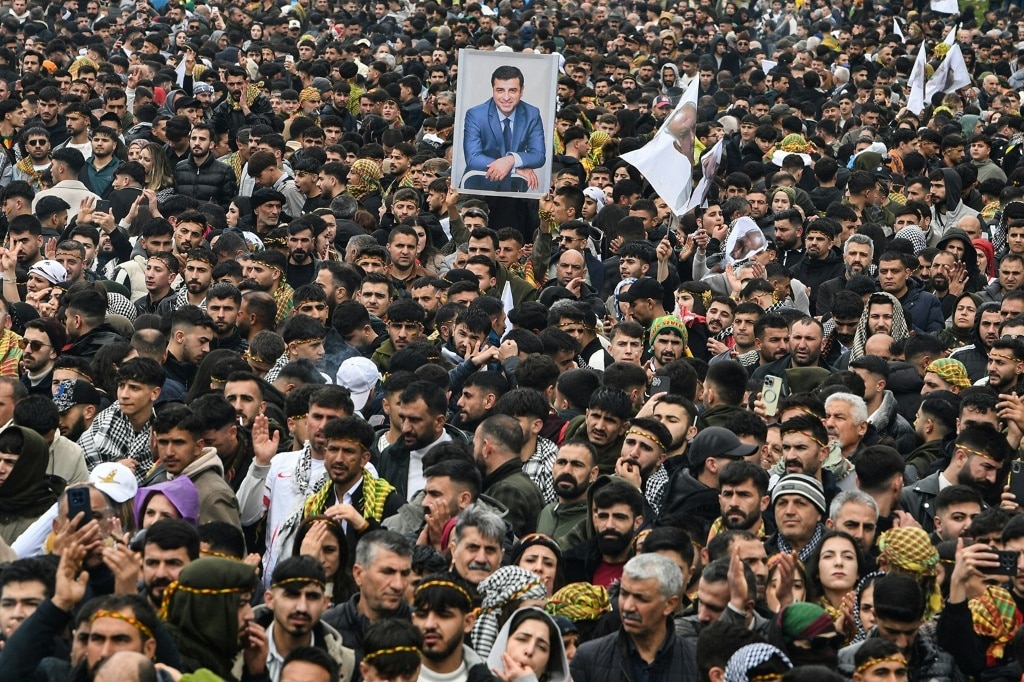
    Not all Kurdish political figures have rejected the bill, however. Prominent former Kurdish opposition leader Selahattin Demirtas, who has been imprisoned in Turkey since 2016, threw his support behind the legislation Sunday. Demirtas, who previously served as co-chair of Turkey’s main pro-Kurdish party, described the bill as a crucial moment for the country, saying he hopes the parliamentary debate will mark another critical step forward in this historic peace effort. If implemented successfully, Demirtas argued, the law will fundamentally and permanently transform the future of Turkey and its Kurdish region, bringing an end to more than 40 years of violence that has reshaped the lives of millions of people across the country. For decades, Kurds across Turkey and the wider region have held regular demonstrations calling for Ocalan’s release from prison.

  • African quartet secure Women’s World Cup places

    African quartet secure Women’s World Cup places

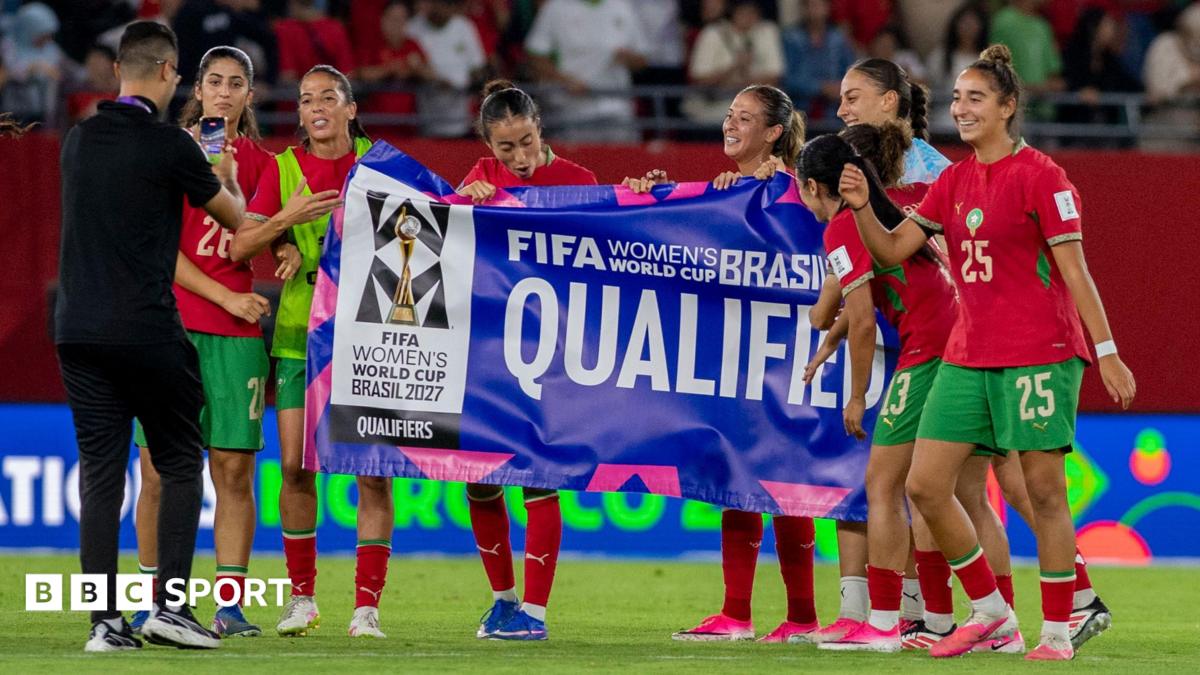
    The road to the 2027 FIFA Women’s World Cup in Brazil has reached a pivotal milestone, with four African teams securing their places at the global tournament after dramatic quarterfinal matches at the 2026 Women’s Africa Cup of Nations (Wafcon), hosted in Morocco.

    This edition of Wafcon doubles as the African qualifying competition for next summer’s World Cup, with a straightforward rule: any side that advances to the tournament’s semi-finals automatically claims a spot at the 32-nation global showpiece. The four quarterfinal winners that earned their qualification this week brought no shortage of surprise, skill, and historic firsts to the table.

    Algeria made history by booking its first-ever berth at the Women’s World Cup, pulling off a come-from-behind 2-1 victory over 10-player Ivory Coast. The match turned on its head when Ivorian player N’Sira Oudraogo was sent off while her side held a 1-0 lead. Algeria capitalized on the numerical advantage, with goals from Ines Khiri and Amira Ould Braham pushing the team across the line and into the Wafcon last four.

    Morocco, which reached the 2023 Women’s World Cup knockout stage before falling to France, secured its second consecutive World Cup qualification with a 2-1 win over 2022 Wafcon champions South Africa. Sakina Ouzraoui Diki and Hanane Ait El Haj notched the goals that secured Morocco’s place in the semi-finals and World Cup.

    Cameroon claimed its spot with a 1-0 upset over powerhouse Nigeria, settled by a stunning 30-yard free-kick from 19-year-old rising star Myriam Nyadjou that proved enough to separate the two sides. The biggest upset of the quarterfinal round came from Malawi, the world’s 153rd-ranked team, who fought back from a one-goal deficit to beat Ghana 2-1. Goals from Temwa Chawinga and Rose Kadzere sealed the historic result, booking Malawi’s first ever Women’s World Cup spot.

    The Wafcon semi-finals are scheduled for Wednesday, with Morocco set to face Cameroon in the first matchup, followed by a clash between Algeria and Malawi. While the four quarterfinal losers — Ghana, Ivory Coast, Nigeria, and South Africa — did not secure automatic qualification, they still have a path to the World Cup. On Thursday, Ivory Coast will face Ghana, and Nigeria will take on South Africa. The two winners of those matches will advance to the 10-team intercontinental play-off tournament scheduled for November and December, where three additional World Cup spots will be awarded.

    The 2027 Women’s World Cup will run from June 24 to July 25 in Brazil. To date, 18 of the 32 participating nations have already secured their qualification. Beyond the four African qualifiers, the confirmed lineup includes Asian sides Australia, China, Japan, North Korea, the Philippines, and South Korea; European powerhouses Denmark, France, Germany, and Spain; Oceania’s New Zealand; and South American teams Argentina, host nation Brazil, and Colombia. Four home nations — England, the Republic of Ireland, Wales, Scotland, and Northern Ireland — are still in contention for World Cup spots through the European play-off round, which will run from October to December, requiring each side to win two two-legged ties to advance.

  • How Kinahan’s hearing unfolded inside the courtroom in Dublin

    How Kinahan’s hearing unfolded inside the courtroom in Dublin

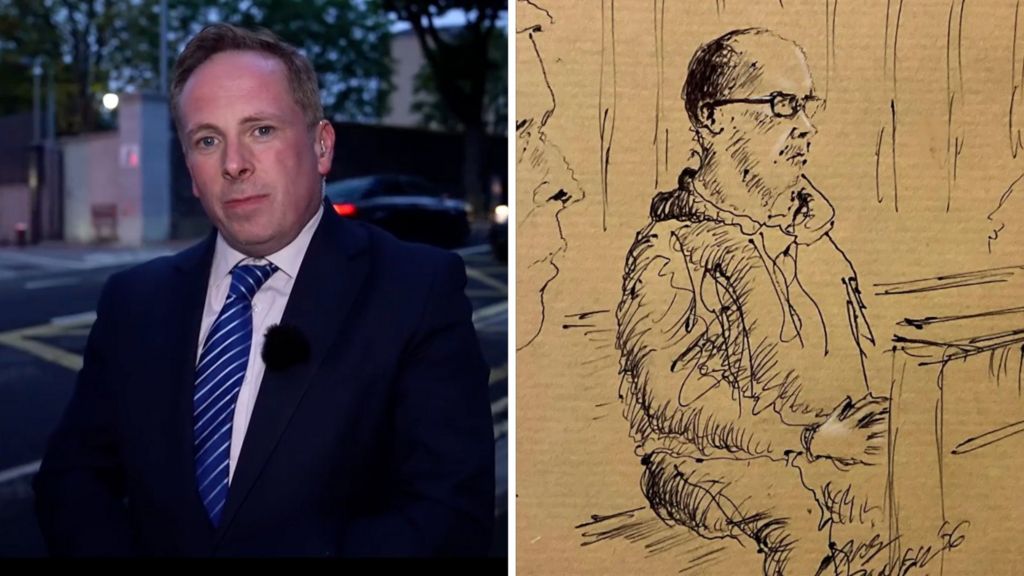
    The long-awaited first court appearance of alleged transnational criminal network leader Daniel Kinahan unfolded this week in a Dublin courtroom, closing a major chapter in a years-long international manhunt following his extradition from the United Arab Emirates. Kinahan, who has long been linked to organized drug trafficking, money laundering, and violent gang rivalries across Europe, was transferred into Irish law enforcement custody after authorities in Dubai approved the extradition request put forward by Irish judicial officials. Once inside the Dublin courtroom, prosecutors formally presented a single core charge: directing the activities of a designated criminal organization, an offense that carries severe legal penalties under Irish organized crime legislation. Kinahan stood before the judge as the charge was read aloud, with security details surrounding the high-profile defendant to maintain order throughout the brief hearing. The appearance marks a significant milestone in international law enforcement cooperation against transnational organized crime, ending years of Kinahan operating outside the reach of Irish justice systems. Legal proceedings are set to advance in the coming months as both the prosecution and defense prepare their cases for trial.

  • Suspected crime boss Daniel Kinahan appears in court after extradition

    Suspected crime boss Daniel Kinahan appears in court after extradition

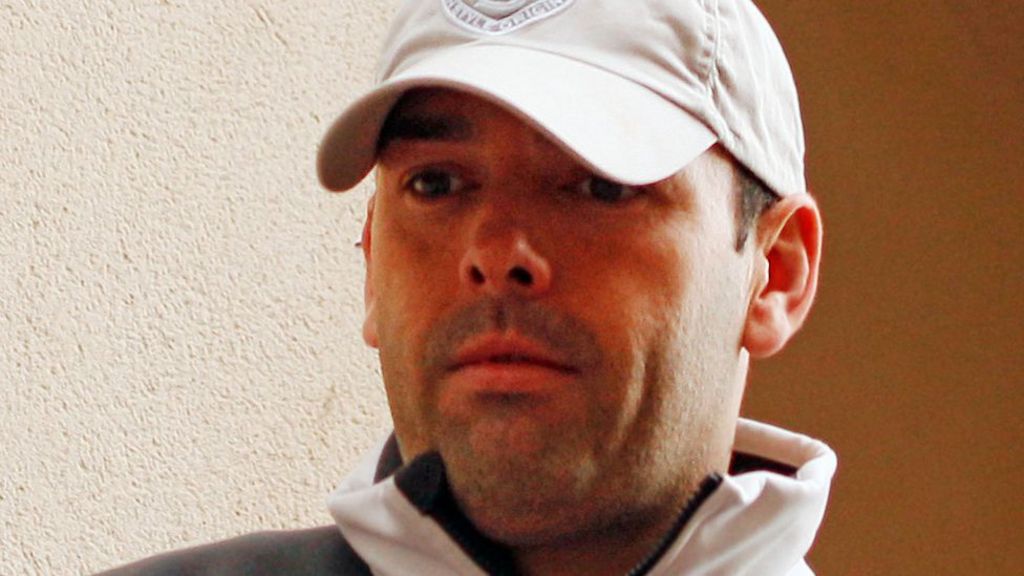
    After months of legal challenges and years of international pursuit, alleged transnational crime boss Daniel Kinahan has finally been extradited from the United Arab Emirates to the Republic of Ireland, landing in Dublin on a government jet Sunday evening and appearing in court hours later to face organized crime charges.

    The 49-year-old, who heads what global law enforcement has labeled one of the world’s most dangerous criminal syndicates, was arrested immediately upon landing at Dublin’s Casement Aerodrome. He was then transported under heavy armed police escort to the Special Criminal Court in Dublin, where a packed courtroom of journalists, prosecution legal teams, court staff and members of the public awaited his first appearance.

    Prosecutors have charged Kinahan with directing the activities of a criminal organization between October 2015 and April 2017. The short, 13-minute non-jury hearing concluded with the judge remanding Kinahan in custody until his next court date, scheduled for October 5. Kinahan attended the hearing without legal representation, telling the court he had not had sufficient time to secure a lawyer following his overnight transfer. When informed he could apply for bail through Ireland’s High Court, Kinahan responded calmly, “I think we all know I won’t be getting bail, but thank you for your time.” He was granted the option to choose between in-person or remote appearance for his next hearing at a later date.

    Kinahan’s extradition marks the culmination of a years-long international manhunt. He fled Ireland more than a decade ago, following a 2016 assassination attempt at a Dublin hotel boxing event that left one man dead. He resided in Spain for several years before relocating to Dubai, where he was arrested by Emirati authorities in April this year. The suspected crime leader launched multiple appeals against his extradition over the past four months, but all legal challenges were ultimately rejected.

    Global law enforcement has linked the Kinahan cartel to widespread international criminal activity: the UK’s National Crime Agency (NCA) confirms the syndicate has imported tonnes of illicit drugs and illegal firearms across global markets, and has been directly connected to more than 12 gangland killings. The cartel’s violent decade-long feud with a rival Irish gang alone has claimed 18 lives. The U.S. Department of the Treasury has compared the Kinahan organization to notorious global syndicates including Italy’s Camorra, Mexico’s Los Zetas and Japan’s Yakuza, formally labeling it one of the world’s most dangerous transnational criminal networks in 2022, when U.S. authorities imposed sweeping sanctions on Kinahan, his father and his brother, who are named as the cartel’s top leaders. The U.S. government also currently offers a $5 million reward for information that leads to the arrest or conviction of Kinahan and his immediate family members. Former Irish Garda Commissioner Drew Harris estimates the cartel has generated more than €1 billion ($1.08 billion) in illicit profits from its global operations.

    This extradition is not the first high-profile outcome of the bilateral extradition treaty between Ireland and the UAE. Last year, senior Kinahan cartel lieutenant Sean McGovern was extradited under the same agreement, and was sentenced to 24 years in prison in June for directing criminal organization activities. In the UK, three senior cartel members including the group’s UK operations leader Thomas Kavanagh were jailed in 2022 for a combined 60.5 years, convicted over a smuggling operation that brought £29.8 million worth of cocaine and cannabis into the country.

    Irish and UAE justice officials framed Sunday’s extradition as a landmark win for international judicial cooperation. Irish Justice Minister Jim O’Callaghan praised the “professionalism, efficiency, and diligence” of Emirati authorities throughout the proceedings, noting that the handover represents a major milestone in cross-border collaboration against organized crime. His UAE counterpart, Abdullah bin Sultan bin Awad Al Nuaimi, added that the extradition underscores both nations’ unwavering commitment to supporting global efforts to dismantle transnational criminal networks.

    Garda Commissioner Justin Kelly highlighted that the successful arrest and extradition demonstrates Irish law enforcement’s unwavering commitment to targeting transnational organized crime, in close partnership with international policing and judicial allies. “This outcome is a direct result of years of coordinated work between our force, UAE judicial and police authorities, and the Irish Department of Justice,” Kelly said.

    Kinahan has long denied all allegations of criminal activity. His legal team previously told BBC Panorama that Kinahan holds no criminal convictions anywhere in the world, and all claims that he leads an international crime syndicate are unsubstantiated and false.

  • India to Israel and back: How a fake IRGC quote on nuclear weapons reached Netanyahu’s speech

    India to Israel and back: How a fake IRGC quote on nuclear weapons reached Netanyahu’s speech

    A joint investigation by leading Israeli outlet Ynet and veteran New York Times journalist Ronen Bergman has exposed how Israeli Prime Minister Benjamin Netanyahu deployed a fabricated quote attributed to a top Iranian military commander to advance his hardline narrative on Iran’s nuclear program — a false claim that originated from a fringe pro-Israel, Hindu-nationalist social media account in India before spreading across global right-wing media and political circles.

    The fake quote, falsely credited to Islamic Revolutionary Guard Corps chief Ahmad Vahidi, was first posted to X on August 5 by Ritika, an Indian account aligned with Hindu nationalist politics that openly supports Israel. The fabricated statement claimed Vahidi said: “There will be no discussion over enriched uranium or nuclear weapons. As long as the United States and Israel possess nuclear weapons, we will continue working on them for our national security. If they disarm, we will disarm.”

    Within hours of the original post, the false claim went viral. Just four and a half hours after its initial publication, an unofficial X account falsely branding itself “Mossad Commentary” — which has no actual connection to Israel’s official intelligence service and boasts more than 1 million followers — amplified the quote, adding additional commentary claiming Iran’s regime “is not preparing to abandon its nuclear ambitions. It is buying time. There will be no deal.”

    The false attribution was then picked up by Israel’s Channel 14, a media outlet widely recognized as a mouthpiece for Netanyahu and his far-right governing coalition. A 2024 report confirmed the Israeli government has purchased millions of shekels in commercial airtime from the channel in recent years. Channel 14 presented the fake quote as “the first direct admission by an Iranian official that Tehran was developing a nuclear bomb,” and failed to disclose any verifiable primary source for the remarks.

    Shortly after Channel 14 ran the story, Yair Netanyahu — the prime minister’s eldest son and an influential far-right voice within his inner circle, with nearly 300,000 X followers — reposted the content from both the unofficial Mossad account and Channel 14. Multiple independent reports have confirmed Yair Netanyahu, alongside his mother Sara, wields significant influence over the prime minister’s policy decisions, and he has a well-documented history of spreading misinformation and extreme right-wing messaging via his social media platforms. Even senior figures within Netanyahu’s own Likud party regularly seek his approval for political messaging.

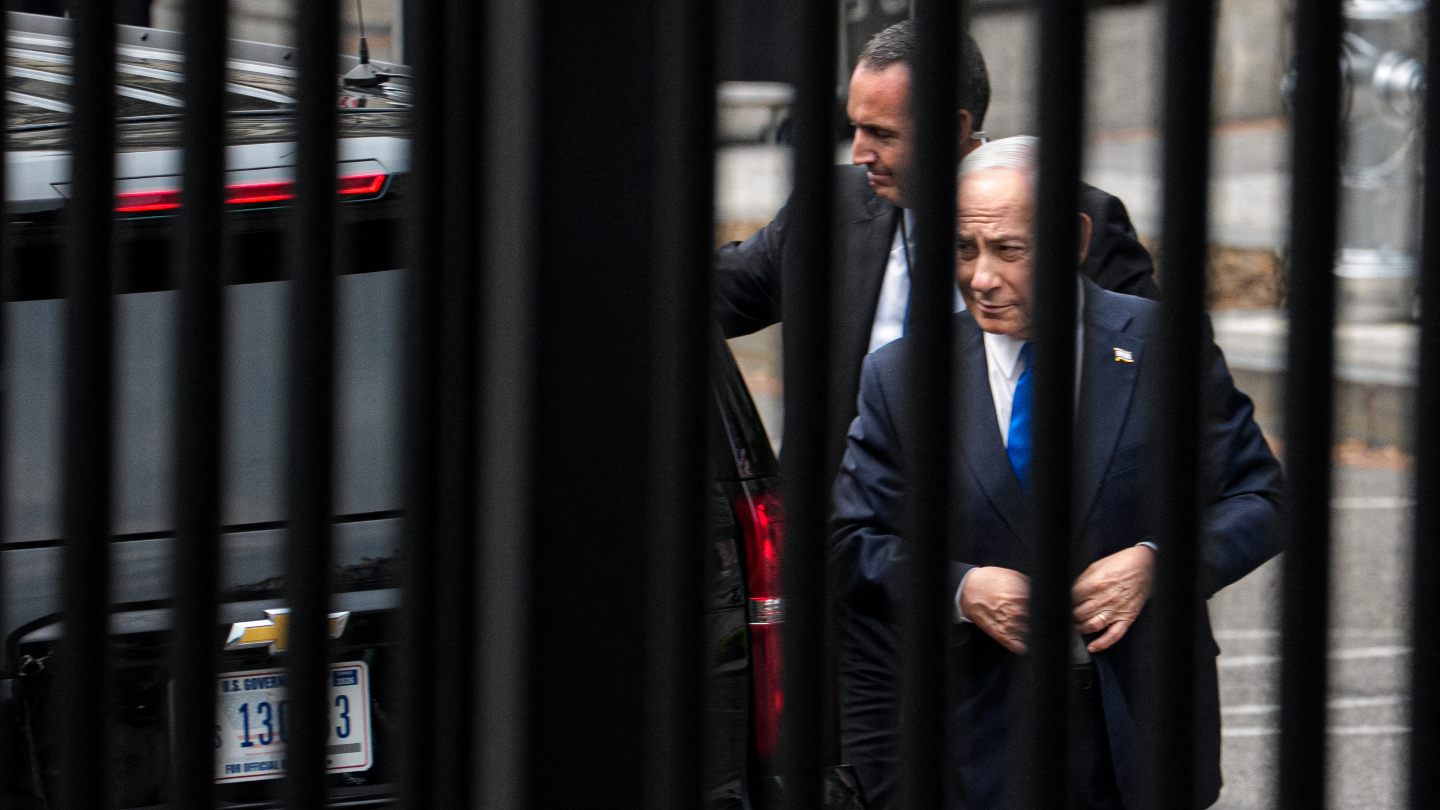
    It was at this point that Benjamin Netanyahu himself deployed the fake quote in an official public address to Israeli citizens. According to the investigation’s transcript, Netanyahu told attendees: “Today, we heard the commander of the Revolutionary Guards, Vahidi, explicitly declare Iran’s intention to continue developing nuclear weapons – ‘continue’, as he put it.”

    From there, the disinformation spread beyond Israel’s borders, reaching top political and media figures in the United States. Mike Waltz, the U.S. Ambassador to the United Nations, reposted Channel 14’s report on his own X account before deleting the post hours later after the fabrications were exposed. Prominent conservative U.S. commentator Mark Levin also shared the false claim with his large audience.

    Mainstream U.S. outlet Fox News initially ran a story repeating the claim that Vahidi had admitted Iran would pursue nuclear weapons as long as Israel and the U.S. maintained their own arsenals, linking the remarks to growing concerns that Iran was using Strait of Hormuz negotiations to delay nuclear concessions. Only two days later did Fox News issue a clarification, acknowledging the remarks had been “previously taken out of context and amplified as comments made this week.” Major Indian wire service Asian News International also repeated the false claim, citing unvetted Israeli media reports.

    Even after the source of the fabrication was exposed, the quote continued to circulate in pro-Netanyahu Israeli media. Multiple pro-government journalists, including Yaakov Bardugo and Avishay Ben Haim, repeated Netanyahu’s warning on national television, and Israel’s foreign ministry even amplified Netanyahu’s remarks featuring the fake quote on its official Persian-language X account.

    Investigators say the entire episode fits a clear pattern of deliberate disinformation that serves Netanyahu’s longstanding political goal of blocking any nuclear deal between the U.S. and Iran. Netanyahu has repeatedly stated his opposition to any new agreement, telling Channel 14 in June 2024: “As long as I am prime minister, Iran will not have nuclear weapons,” adding that he had already saved Israel from “annihilation” twice by pushing back against Iranian nuclear progress.

    While Ynet’s investigation could not definitively prove that Netanyahu or his inner circle coordinated the initial spread of the fake quote, it noted the campaign matches “a series of familiar markers of disinformation distribution” that have been tied to Netanyahu in the past. Just months earlier, in September 2024, Netanyahu’s office was accused of supplying false information to UK outlet *The Jewish Chronicle* and German newspaper *Bild* falsely claiming Hamas planned to smuggle Israeli hostages out of Gaza through the Rafah border crossing into Iran. Two senior Netanyahu aides are currently under criminal investigation for leaking classified documents to shape public opinion in favor of the controversial Israeli military offensive in Rafah.

    The investigation also noted that Israeli state-backed influence operations have increasingly targeted audiences outside of Israel — particularly in the U.S. — as the Netanyahu government faces growing bipartisan criticism over its military campaign in Gaza and its hardline stance on Iran. This is not the first time Indian media has been used to spread anti-Iran disinformation either: Last month, Iran’s embassy in New Delhi issued a formal statement accusing Indian outlets of spreading false information about the country, urging media outlets “not to compromise the public trust and its professional credibility by disseminating fake and fabricated news” and asking them to “avoid participating in external propaganda efforts.”

  • Israel rejects Trump’s 15-point plan for Gaza, says Netanyahu

    Israel rejects Trump’s 15-point plan for Gaza, says Netanyahu

    In a stark rejection of a US-brokered initiative aimed at ending months of conflict in Gaza, Israeli Prime Minister Benjamin Netanyahu announced Sunday that his government will not accept former President Donald Trump’s 15-point peace framework, and ruled out any Israeli military withdrawal from the enclave until the complete disarmament of the Hamas militant group.

    The plan, spearheaded by Trump’s Board of Peace, was billed as a major breakthrough to de-escalate the Gaza war when it was unveiled last month. The original ceasefire architecture, agreed to by both Israel and Hamas in October 2023, was meant to pave the way for a gradual end to hostilities. But despite the formal ceasefire agreement, Israel has continued to launch near-daily airstrikes across Gaza in the months since.

    When the 15-point plan was announced, Trump stated that Hamas had already committed to laying down its weapons under the terms of the deal. However, Netanyahu made clear his government’s opposition during a weekly cabinet meeting Sunday. “Israel rejects the 15-point document,” he said, adding that the Israel Defense Forces “will not carry out any withdrawal until Hamas is genuinely disarmed and will continue to thwart threats against our forces and our citizens.”

    Independent regional news outlet Middle East Eye obtained a full copy of the draft agreement last month, revealing key details that explain the core disagreement between the two sides. Unlike Israel’s demands for Hamas to surrender weapons directly to Israeli authorities, the framework outlines that Hamas and other Palestinian factions would not transfer Gaza’s weapons to Israeli control. Instead, all weapons would be managed by a newly created domestic Palestinian body called the National Committee, with all arms remaining under exclusive Palestinian ownership.

    The draft text explicitly states: “No weapons will be transferred or surrendered to Israel or any non-Palestinian parties,” and specifies that by the conclusion of the disarmament process, “the National Committee alone shall retain, store, or control weapons in Gaza.” The agreement frames the weapons collection process as an exclusively domestic Palestinian affair, noting that the National Committee — set to act as Gaza’s transitional authority — would hold sole power to register weapons, issue and revoke licenses, and enforce weapons regulations, with all Palestinian factions required to cooperate with the body.

    Hamas has already publicly pushed back on any unilateral implementation of the plan, stating it will not enact any part of the framework unless Israel fulfills its own agreed obligations, chief among them a full, phased withdrawal of Israeli forces from all areas of Gaza they currently occupy. The 15-point document itself codifies this condition, requiring that each phase of the process can only move forward after an independent international commission verifies that all parties have completed their obligations from the previous stage.

    Shortly after the plan was made public, Trump praised the initiative on his social platform Truth Social, calling it “a monumental step toward lasting PEACE and SECURITY.” He outlined at the time that Israeli forces would withdraw from Gaza incrementally as disarmament progressed, and that a UN-mandated International Stabilization Force would partner with a new Palestinian police force to maintain security in the enclave.

    Hamas official Ghazi Hamad reaffirmed the group’s position to Reuters when the plan was released, noting that Hamas would keep its weapons until Israel halts all military attacks, allows a massive expansion of humanitarian aid and commercial goods into blockaded Gaza, and completes its force withdrawal in line with the original October 2023 ceasefire agreement.

  • NSW government to offer $250 washing machines in electricity bill push

    NSW government to offer $250 washing machines in electricity bill push

    As cost-of-living pressures continue to squeeze household budgets across Australia, the New South Wales (NSW) state government has launched a new round of a popular practical relief program, offering thousands of low-income and vulnerable residents heavily discounted energy and water-efficient washing machines to cut long-term utility bills.

    Under the expanded initiative, at least 6,000 eligible households – including qualifying pensioners, veterans, social housing tenants, and low-income families – will be able to replace their old, inefficient top-loading washing machines with a new 8kg front-loading model that meets modern water and energy efficiency standards for just $250. The scheme includes additional perks beyond the discounted appliance: major white goods retailer The Good Guys handles delivery to any location across NSW, provides a two-year manufacturer’s warranty, and arranges for the responsible recycling and removal of the old unit.

    State officials estimate that the switch from an older top-loader to a new efficient model will save the average participating household roughly $300 per year through combined reductions in electricity use, water consumption, and detergent costs. Beyond household savings, the initiative also delivers measurable environmental benefits: across the roughly 12,000 upgrades completed in the program’s first two rounds, total water usage has fallen by an estimated 223 million liters – a volume equivalent to 93 Olympic-sized swimming pools.

    Housing Minister Rose Jackson highlighted that the program has consistently outperformed expectations in demand, with all discounted units selling out in less than a week in both previous rounds. “The response to this program has been extraordinary with machines snapped up in next to no time and that’s why we’re back again with another 6,000 discounted washing machines,” Jackson said, adding that the scheme delivers targeted, long-lasting cost-of-living support for households struggling with ongoing economic pressure.

    Veterans Affairs Minister David Harris emphasized that the program is one small way the state can honor its commitment to former service members. “The state’s veterans are owed an unpayable debt,” Harris said. “Easing their electricity bills with a new washing machine is the least we can do.” Seniors Minister Jodie Harrison echoed that sentiment, noting that cumulative annual savings add up to meaningful financial relief for older residents on fixed incomes, urging eligible seniors to apply quickly given the program’s history of rapid sell-outs.

    The expanded washing machine scheme is part of the incumbent Labor state government’s broader push to deliver tangible cost-of-living relief to voters, ahead of state elections scheduled for 2025. Ongoing geopolitical instability in the Middle East has continued to put upward pressure on global fuel prices and supply chains, keeping utility and grocery costs elevated for Australian households. In addition to energy efficiency support, the government has recently expanded access to common prescription medications, allowing women to access contraceptive pills without a doctor’s prescription and broadening access to ADHD medication without requiring a specialist referral.

  • Nigerian army says it safely rescued 33 people kidnapped by gunmen

    Nigerian army says it safely rescued 33 people kidnapped by gunmen

    In a recent successful security operation, Nigeria’s military has announced the safe rescue of 33 civilians who were abducted by armed assailants while traveling through Nigeria’s northwestern Zamfara State. The abduction took place Saturday afternoon in the Tsafe local government area of the state, and security forces from the Nigerian Army moved out alongside police units immediately after receiving word of the incident, according to official military statements.

    Military tracks intercepted the kidnapping group as they were moving their captives to an undisclosed location. When troops opened fire on the abductors, the armed gunmen abandoned their hostages and fled into the dense surrounding bushland. All 33 hostages were recovered without a single casualty among the freed victims, Nigerian Army spokesman Lieutenant Colonel Aliyu Danja confirmed in an official briefing. Danja added that military command has not yet confirmed the final destination the kidnappers were heading for, but search operations are currently underway to track down the fleeing perpetrators.

    Kidnapping-for-ransom attacks by criminal armed groups have become a persistent security crisis across northwestern Nigeria, with major intercity highways regularly targeted by bandit gangs. Security analysts point out that widespread ransom payments, made by desperate victim families, middlemen negotiators, and in some instances government officials, have only amplified the cycle of abductions and incentivized more attacks. Danja has urged local residents to maintain heightened situational awareness and share any intelligence about suspicious activity with security agencies to help prevent future kidnappings.

    This latest rescue marks part of a string of recent security successes for Nigerian forces against kidnapping groups. Just two days before the Zamfara operation, Nigeria’s presidency announced that more than 300 abducted people held across different regions of the country had been freed in coordinated operations. That large group of freed hostages included 163 people kidnapped in a deadly February attack on the Woro and Nuku communities in Kwara State, which left dozens of residents dead, alongside another 145 captives seized in attacks across Niger State. The successful operations come only a few weeks after 44 abducted schoolchildren and their teachers were released following more than 50 days of captivity after a raid on a Oyo State primary school.

    In a sign of the Nigerian government’s commitment to tackling the country’s widespread insecurity, President Bola Tinubu announced last week that frontline soldiers combatting extremist violence and banditry would receive a pay raise of up to 80 percent, a gesture meant to recognize the military’s sacrifice in facing the nation’s acute security challenges. Tinubu, who took office with a core campaign promise to curb widespread banditry, kidnapping, and insurgent violence from groups including Islamist militant networks, has made security a top priority of his administration. The continuing wave of insecurity across the country has emerged as one of the most contentious political issues ahead of Nigeria’s 2027 general elections, with voters widely demanding tangible progress in curbing kidnapping and violence.