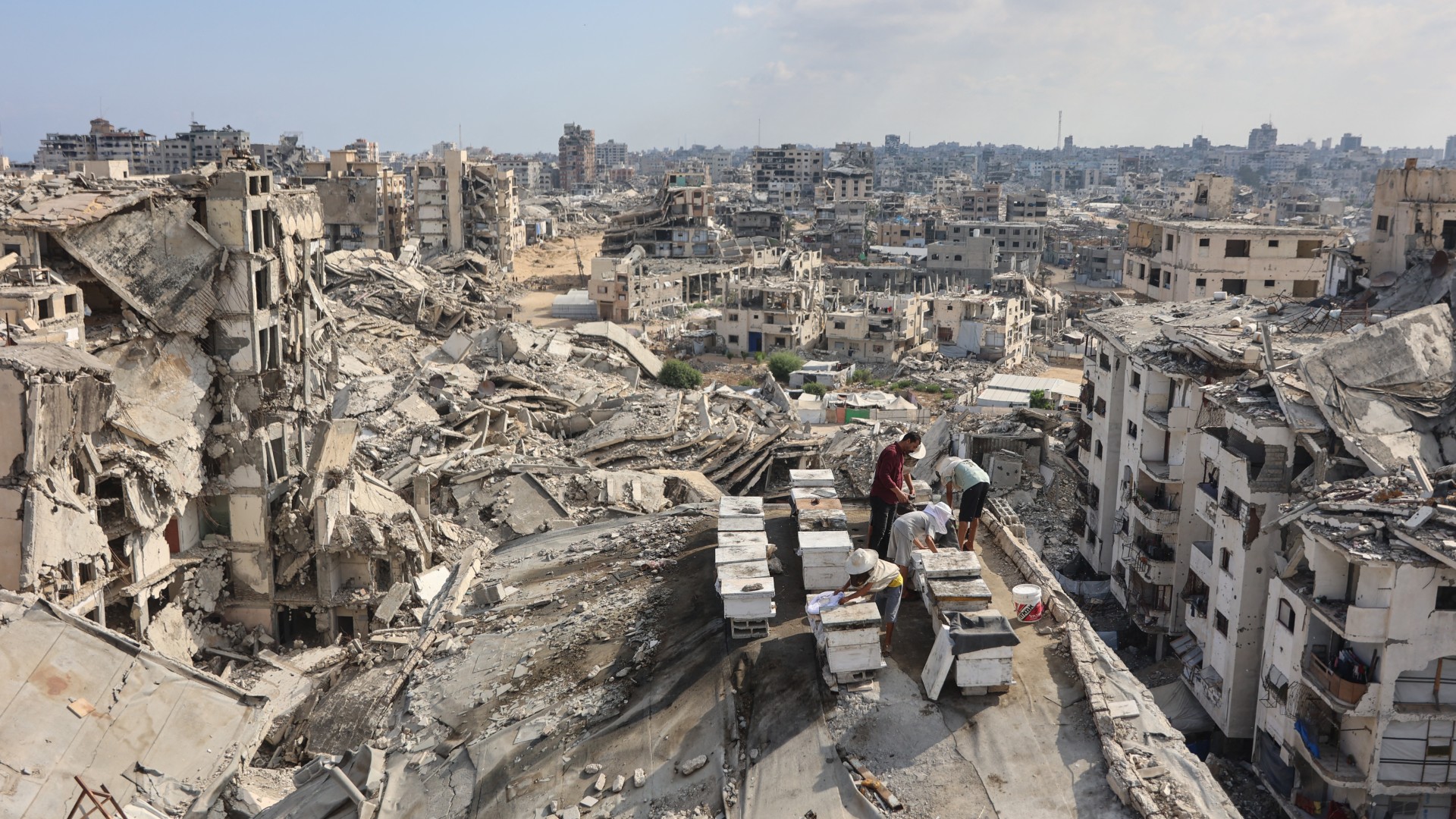
In a stark rejection of a US-brokered initiative aimed at ending months of conflict in Gaza, Israeli Prime Minister Benjamin Netanyahu announced Sunday that his government will not accept former President Donald Trump’s 15-point peace framework, and ruled out any Israeli military withdrawal from the enclave until the complete disarmament of the Hamas militant group.
The plan, spearheaded by Trump’s Board of Peace, was billed as a major breakthrough to de-escalate the Gaza war when it was unveiled last month. The original ceasefire architecture, agreed to by both Israel and Hamas in October 2023, was meant to pave the way for a gradual end to hostilities. But despite the formal ceasefire agreement, Israel has continued to launch near-daily airstrikes across Gaza in the months since.
When the 15-point plan was announced, Trump stated that Hamas had already committed to laying down its weapons under the terms of the deal. However, Netanyahu made clear his government’s opposition during a weekly cabinet meeting Sunday. “Israel rejects the 15-point document,” he said, adding that the Israel Defense Forces “will not carry out any withdrawal until Hamas is genuinely disarmed and will continue to thwart threats against our forces and our citizens.”
Independent regional news outlet Middle East Eye obtained a full copy of the draft agreement last month, revealing key details that explain the core disagreement between the two sides. Unlike Israel’s demands for Hamas to surrender weapons directly to Israeli authorities, the framework outlines that Hamas and other Palestinian factions would not transfer Gaza’s weapons to Israeli control. Instead, all weapons would be managed by a newly created domestic Palestinian body called the National Committee, with all arms remaining under exclusive Palestinian ownership.
The draft text explicitly states: “No weapons will be transferred or surrendered to Israel or any non-Palestinian parties,” and specifies that by the conclusion of the disarmament process, “the National Committee alone shall retain, store, or control weapons in Gaza.” The agreement frames the weapons collection process as an exclusively domestic Palestinian affair, noting that the National Committee — set to act as Gaza’s transitional authority — would hold sole power to register weapons, issue and revoke licenses, and enforce weapons regulations, with all Palestinian factions required to cooperate with the body.
Hamas has already publicly pushed back on any unilateral implementation of the plan, stating it will not enact any part of the framework unless Israel fulfills its own agreed obligations, chief among them a full, phased withdrawal of Israeli forces from all areas of Gaza they currently occupy. The 15-point document itself codifies this condition, requiring that each phase of the process can only move forward after an independent international commission verifies that all parties have completed their obligations from the previous stage.
Shortly after the plan was made public, Trump praised the initiative on his social platform Truth Social, calling it “a monumental step toward lasting PEACE and SECURITY.” He outlined at the time that Israeli forces would withdraw from Gaza incrementally as disarmament progressed, and that a UN-mandated International Stabilization Force would partner with a new Palestinian police force to maintain security in the enclave.
Hamas official Ghazi Hamad reaffirmed the group’s position to Reuters when the plan was released, noting that Hamas would keep its weapons until Israel halts all military attacks, allows a massive expansion of humanitarian aid and commercial goods into blockaded Gaza, and completes its force withdrawal in line with the original October 2023 ceasefire agreement.