博客

  • Western Europe experienced hottest June-July on record: EU monitor

    Western Europe experienced hottest June-July on record: EU monitor

    Europe, the continent warming faster than any other on Earth, is facing an unprecedented summer of climate-driven disasters, after the European Union’s official climate monitoring service confirmed Monday that Western Europe has just endured the hottest combined June and July ever recorded.

    Successive back-to-back heatwaves have baked the region, leaving parched landscapes and severe water shortages that have created near-perfect conditions for out-of-control wildfires to spread. Data from the Copernicus Climate Change Service, the EU’s leading climate monitoring body, shows that the average temperature across Western Europe for the first two months of summer 2025 hit 21.62 degrees Celsius, breaking the previous record set just three years ago in 2022.

    This new record is a direct reflection of the extraordinary, unrelenting heat that has gripped the region since the start of summer, Copernicus officials noted. Beyond air temperatures, soil moisture levels across Western Europe are already significantly lower than they were during the crippling 2022 drought, one of the most severe water shortages the region has seen in modern history.

    Samantha Burgess, deputy director of the European Centre for Medium-Range Weather Forecasts which manages the Copernicus program, emphasized that these conditions offer a clear, stark example of how human-caused climate change is supercharging extreme heat events. “Heat and drought increasingly reinforce one another, creating a feedback loop that makes these events more severe and longer-lasting,” Burgess explained.

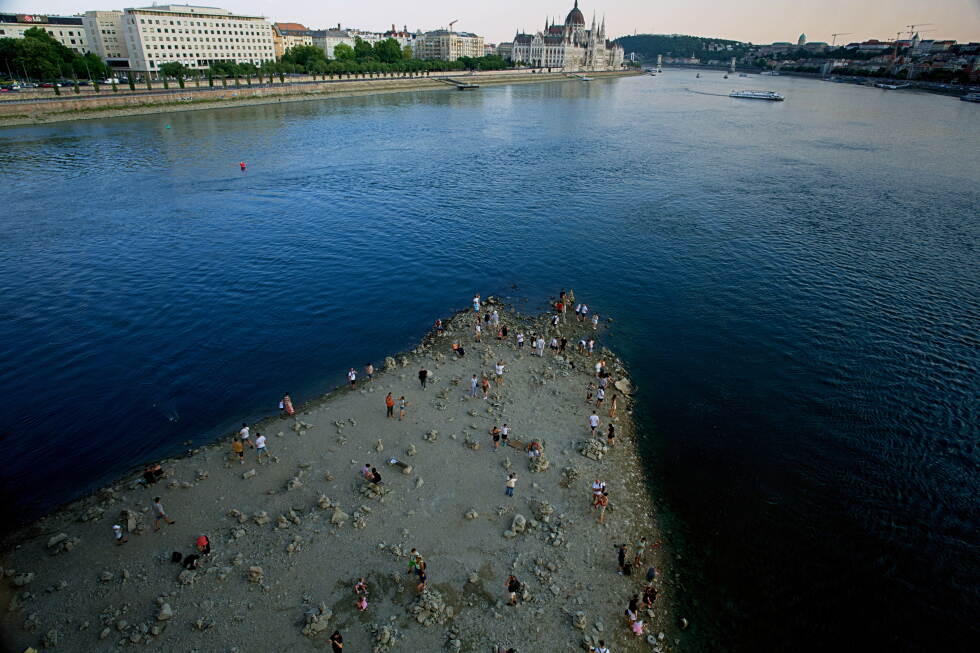
    Exceptionally dry conditions have been recorded across much of Western and Central Europe in July, stretching from southern Europe’s Spain and France through Central Europe’s Austria and Hungary, and reaching as far north as the United Kingdom, Ireland and parts of Iceland. Major European waterways including the Seine, Rhine and Danube have seen water levels drop to far below normal seasonal averages, disrupting commercial shipping, cutting off water supplies for agricultural irrigation and reducing hydropower output across multiple countries.

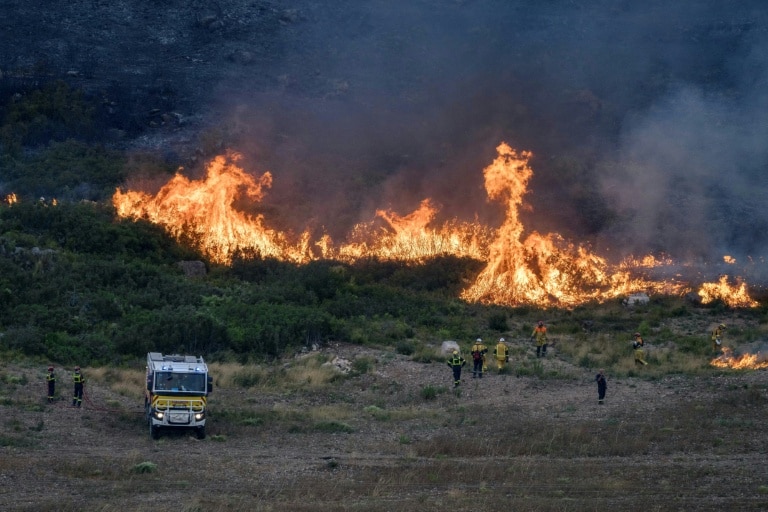
    The combination of extreme heat and dry vegetation has also created prime wildfire conditions. Climate scientists have long warned that the frequency of extreme fire-prone weather across Europe is rising steadily as global temperatures climb. This summer, France and Spain have already fought the most destructive wildfires the two nations have seen in living memory, with dangerous blazes also spreading across other European nations, as well as western North America, where the U.S. Northwest and Canada have faced severe fire seasons of their own.

    Beyond land-based extremes, Copernicus also announced that global ocean surface temperatures hit a new record high in July, marking the second consecutive month that this benchmark has been broken. The record warmth is being driven by widespread marine heatwaves around European coastlines and a rapidly strengthening El Niño event developing across the tropical Pacific Ocean.

    The global average sea surface temperature for July hit 20.96 degrees Celsius, surpassing the previous record set in 2023. Carlo Buontempo, director of Copernicus, told reporters on August 5 that while parts of the Mediterranean and North Atlantic are running far above average temperatures, the developing El Niño is the primary driver of the new global ocean heat record. “We are now facing a very large El Niño — possibly unprecedented in terms of its amplitude,” Buontempo said. “It is clear that the contribution coming from the tropical Pacific becomes quite important.”

    El Niño is the warm phase of a natural Pacific climate cycle that temporarily raises tropical ocean temperatures and alters global weather patterns, increasing the risk of extreme drought and flooding across many regions. It also adds extra heat to a planet already warmed by centuries of fossil fuel burning that has pumped greenhouse gases into the atmosphere.

    El Niño events typically reach their peak strength at the end of the calendar year, before stored ocean heat is released into the atmosphere, pushing up global average temperatures. The previous major El Niño event helped make 2023 the second-hottest year on record globally, and 2024 the hottest. Buontempo said climate researchers now expect a new global average temperature record to be set either later this year or by early 2027.

    On a global scale, July 2025 tied for the second-warmest July ever recorded, with an average surface air temperature 1.47 degrees Celsius above the pre-industrial baseline from 1850 to 1900, the benchmark used to measure progress toward global climate targets. The last 11 consecutive years are already the 11 hottest years ever recorded, and Buontempo noted that current temperatures are outside the range that modern human civilization has ever experienced. “We have not seen a climate that warm during our lifetime, and very possibly our civilisation,” he said, adding that the primary driver of this ongoing warming remains the rising concentration of greenhouse gases from human activity.

    Oceans absorb more than 90 percent of the excess heat generated by humanity’s carbon emissions, making them the planet’s primary natural climate regulator. But rising ocean temperatures come with severe cascading risks: hotter oceans fuel more intense tropical storms, increase extreme rainfall events, and cause widespread coral bleaching that destroys critical marine ecosystems.

    Copernicus generates its climate data using billions of measurements from satellites, land-based weather stations and ocean monitoring sensors, with a consistent temperature record extending back to 1940, making it one of the most trusted regional and global climate monitoring sources in the world.
  • Ithaca bets on hometown hero Odysseus for tourism boom

    Ithaca bets on hometown hero Odysseus for tourism boom

    When Italian lawyer Giorgia Ongarato stepped off the docked ferry onto the shores of the Greek island of Ithaca, her first conversation centered on the epic that has drawn visitors to this quiet Ionian Sea island for centuries: Homer’s *Odyssey*. For Ongarato, a lifelong student of ancient Greek literature who studied the epic as a child, visiting the fabled home of hero Odysseus has been a lifelong dream. Though she counts Christopher Nolan’s newly released blockbuster inspired by the ancient poem among her favorite recent films, she emphasizes that the movie was not what sparked her desire to make the trip—still, she calls the adaptation “wonderful”.

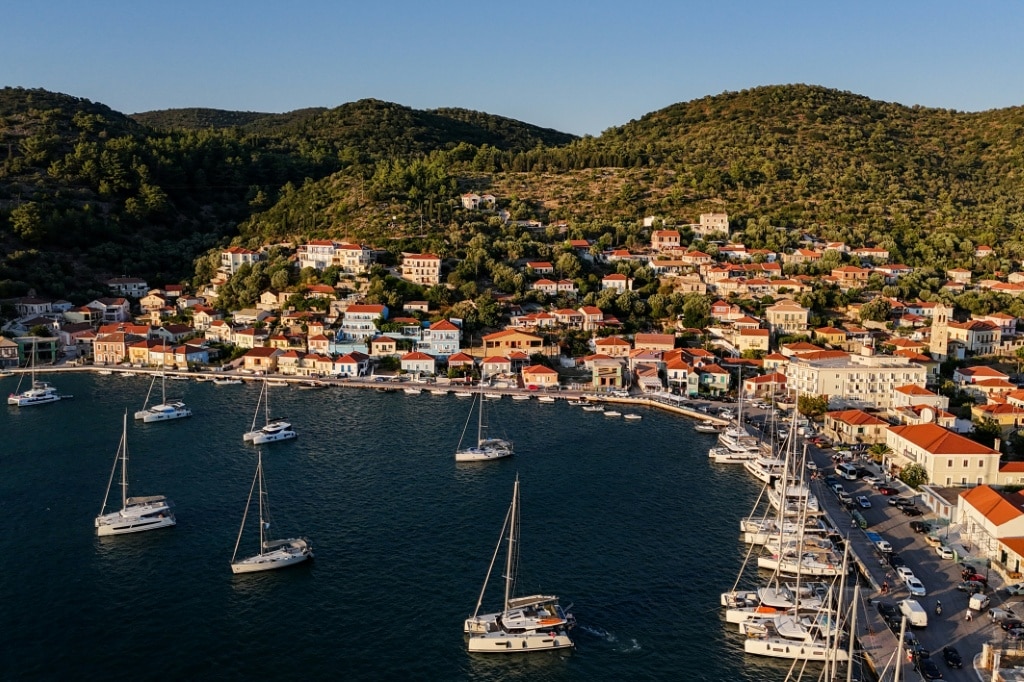
    Now, local businesses and municipal leaders across the island are betting that thousands more travelers like Ongarato will follow her lead, turning the film’s global fame into a long-overdue tourism boom for the quiet, off-the-beaten-path destination. Tucked off the western coast of mainland Greece, Ithaca has never been part of Greece’s crowded tourist circuit, despite its crystal-clear coastal waters, dramatic cliffside bays, and lush, rugged interior carpeted with centuries-old olive groves and fragrant cypress forests. Even at the peak of July and August travel season, the island retains a quiet, unhurried calm that sets it apart from neighboring popular Greek getaways.

    While Nolan’s blockbuster has undeniably piqued global interest in Ithaca, the production has not been without controversy on the island. Though the film shot on location at other Greek sites, not a single scene set on Odysseus’s home island was actually filmed in Ithaca—a fact that has left many local residents disappointed. For the 3,000-person community that hosted two open-air screenings of the film shortly after its worldwide July 16 release, the snub stung.

    Still, most local stakeholders are choosing to focus on the unprecedented publicity the film has brought the island, rather than the missed filming opportunity. Xhimi Xoxha, a restaurant owner in Ithaca’s capital Vathi, says even without on-location shooting, the movie is already driving free global exposure for the island, and he expects those positive economic ripple effects to grow in coming years.

    Ithaca mayor Dionysis Stanitsas echoed that perspective, calling the worldwide media attention “tremendous” even as he acknowledged his disappointment that the production declined the island’s outreach to host filming. “We reached out to the production team and asked that some scenes be filmed here on the island,” Stanitsas explained. “Unfortunately, that wasn’t feasible.” Despite the missed chance, the mayor says the island was already completely booked for the 2024 tourist season by the time the film hit theaters, and he is forecasting even stronger demand for 2025, as more moviegoers see the film and start planning their own trips to the mythic destination.

    Visitors who make the trip will not find a excavated royal palace of Odysseus or a major archaeological site that can confirm the Homeric hero’s literal existence—but the island is steeped in *Odyssey*-themed heritage at every turn. Statues of Odysseus and Homer line village squares and stand outside the town hall, and working fishing boats bobbing in the sun-drenched main port bear names tied to the epic, from Telemachus (Odysseus’s son) to Calypso, the nymph who held the hero captive on her island for seven years.

    Local souvenir shops cater to mythology fans, selling small busts of Homer and Penelope, Odysseus’s faithful wife, graphic T-shirts featuring the one-eyed giant Cyclops Polyphemus, and hand-painted decorative wall plates emblazoned with the Trojan Horse. According to legend, Dexia Beach, a popular soft-sand spot just a short walk from the port, is the exact spot where Odysseus washed ashore after his decade-long voyage home from the Trojan War.

    Archaeologist Spyros Couvaras, who has worked on sites across Ithaca, says he expects a dramatic long-term increase in visitor numbers, driven by a shifting trend in global travel: modern travelers are no longer satisfied with just beach getaways, they are craving immersive cultural and mythic experiences that the island can deliver in spades. Couvaras notes that while Nolan’s film is the immediate catalyst for the current wave of interest, the enduring pull of Homer’s 3,000-year-old epic is the real draw that will keep visitors coming long after the film leaves theaters. “The driving force of the renewed interest was undoubtedly the movie,” Couvaras said. “But behind Nolan’s film stands Homer.”

  • Western Europe sets new temperature record as heat waves pummel the region

    Western Europe sets new temperature record as heat waves pummel the region

    A brutal summer heat wave sweeping across Western Europe has broken the region’s average temperature record for the June-July period, a benchmark previously set just four years ago in 2022, the European Union’s Copernicus Climate Change Service has confirmed.

    The extreme heat event actually began earlier, starting in May 2026, and has already triggered cascading environmental and public health crises across the continent: large-scale wildfires have burned thousands of hectares of land, prolonged drought has strained agricultural and water supplies, multiple nations have broken their all-time national temperature records, and thousands of premature heat-related deaths have been projected by public health researchers.

    Global climate data paints an equally stark picture for 2026. As of the end of July, it ranks as the third-warmest year ever recorded globally, trailing only 2024 and 2025 in average temperatures. But scientists note there is still half of the year remaining for temperatures to rise further, and the confluence of two major warming forces makes it increasingly likely 2026 could claim the unwanted title of hottest year on record by December.

    The dual drivers are accelerating anthropogenic (human-caused) global warming and a particularly strong El Niño event developing in the equatorial Pacific. El Niño is a naturally recurring climate pattern marked by elevated ocean surface temperatures in parts of the Pacific Ocean, which ripples out to drive temperature increases across much of the globe. Even if 2026 does not overtake 2024’s top spot, scientists say it will almost certainly land near the top of the historical ranking.

    Copernicus also confirmed a new concerning ocean temperature milestone: July 2026 saw the highest average sea surface temperature ever recorded for the month across all extra-polar oceans – the parts of the world’s oceans outside polar regions that do not experience seasonal sea ice. The agency pegged the new July average at 20.96 degrees Celsius (69.73 degrees Fahrenheit), beating the previous 2023 record of 20.89 C (69.60 F). Researchers said developing El Niño conditions in the equatorial Pacific were a key contributor to the new ocean heat record.

    Globally, the average surface air temperature for July 2026 came in at 16.90°C (62.42 F), tying it with July 2024 as the second-warmest July ever recorded, according to Copernicus.

    For Western Europe specifically, the June-July 2026 average temperature hit 21.62°C (70.92 F), shattering the previous regional average mark. Samantha Burgess, strategic lead for climate at the European Centre for Medium-Range Weather Forecasts, which hosts Copernicus operations, explained the dynamic that prolonged and amplified the regional heat wave.

    “Persistent high-pressure systems trapped heat over western Europe, and the extreme temperatures also amplified widespread drought,” Burgess explained. “As soils dry out, they lose their ability to provide natural cooling, allowing heat to build more readily. This is a clear example of how climate change is intensifying heat extremes, with heat and drought increasingly reinforcing one another.”

  • ‘Haven’t really been a big fan’: Jayden Sullivan unloads on NRL rule as he firms for South Sydney starting spot

    ‘Haven’t really been a big fan’: Jayden Sullivan unloads on NRL rule as he firms for South Sydney starting spot

    As South Sydney Rabbitohs gear up for their high-stakes Friday blockbuster against the Canterbury Bulldogs, young utility player Jayden Sullivan — the frontrunner to replace injured starting half Ashton Ward — has launched a candid critique of the National Rugby League’s controversial six-man bench rule, arguing it is actively holding back the development of emerging specialist playmakers.

    Ward was forced out of South Sydney’s Saturday night victory over the Parramatta Eels after suffering a hamstring injury during a goal attempt, and the 24-year-old playmaker is set to miss an extended stretch of games. His injury has created an unexpected starting opportunity for Sullivan, who will make only his third starting appearance of the 2024 NRL season if named this week.

    This season, Sullivan has spent the majority of his time on the first-grade bench: he has made several appearances coming on as a reserve, while he has been left as an unused substitute six times already this year. For the young half, this lack of consistent game time is a direct unintended consequence of the NRL’s decision to expand the match day bench to six players. While the rule provides much-needed flexibility for teams dealing with early-game injuries to outside backs, Sullivan says it robs young specialists of the regular minutes they need to grow.

    “I’ve been part of the six-man bench set-up for a while now, but I’ve never really been a big fan of it,” Sullivan told reporters ahead of the Bulldogs clash. “I’ve stayed healthy all season and I’ve only played 10 games — it’s been pretty tough. I’m still a young player, I’ve only got 50 first-grade games under my belt, and I’m still learning how to play the half position. The best way to improve is to play week in and week out, whether that’s in the Cup or the NRL, and I just haven’t been getting that opportunities right now.”

    Sullivan has not been completely sidelined this year, picking up seven matches in the NSW Cup to stay in match condition, and he has held open, honest conversations with legendary Rabbitohs head coach Wayne Bennett about his development pathway. The young playmaker says Bennett has been a consistent advocate for him, and the pair regularly align on the best way forward for his career.

    “It’s a tricky position to be in,” Sullivan explained. “I still want to be part of the first-grade squad, even if that means sitting on the bench, but it’s hard to stay sharp when you’re not getting on the field. Wayne’s been great with me, we can talk honestly about where I’m at, which I really appreciate.”

    With Ward sidelined, Sullivan is set to get an extended run of game time over the coming weeks, an opportunity he says he is relishing as the Rabbitohs push toward a finals berth. Sullivan has not played finals football at the NRL level, but his last post-season appearance came in 2019, when he led the Illawarra Steelers to a famous SG Ball Cup grand final victory over Manly Warringah Sea Eagles — and seven years on, he is hungry for another shot at high-stakes football.

    “Seven years is a crazy long time to wait for another crack at finals footy, but I’m just grateful to get any opportunity to play now,” he said. “I’ve been healthy all year, even if I haven’t played as much as I want, and the two years before that I was out with injuries the whole time, so I don’t take any minute for granted.”

    Sullivan also paid tribute to Ward, who he says is one of his closest friends off the field, with both hailing from Wollongong. “Wardy’s had an outstanding year, and I’ve learned so much from him,” he said. “I know exactly what it’s like to do a hamstring injury, I’ve had a few myself, so it’s really tough for him right now. I’m just sending him all my support as he recovers, and I’m going to do my best to fill in while he’s out.”

  • Alexandria Ocasio-Cortez freezing her eggs and hasn’t ‘ruled out’ presidential run

    Alexandria Ocasio-Cortez freezing her eggs and hasn’t ‘ruled out’ presidential run

    New York Democratic Representative Alexandria Ocasio-Cortez has made a rare, personal reveal: the 36-year-old progressive leader has opted to freeze her eggs, and she is opening up about the early stages of the process to destigmatize fertility care amid a national reckoning over reproductive rights in the United States.

    Ocasio-Cortez first shared short video clips documenting her experience on social media this past Sunday. Just hours after posting the content, she appeared on ABC News’ *This Week* where she addressed both her fertility journey and swirling speculation about her future political ambitions.

    In her candid social media clips, Ocasio-Cortez walks viewers through a self-administered injection required for the egg-freezing process, shares actionable tips she has picked up from her own medical appointments, and answers common public questions about everything from the steep costs of fertility treatment to the clinical steps involved and how accessing this care navigates what she describes as America’s broken healthcare system.

    Speaking to *This Week*, the congresswoman explained her decision to share such a personal process: she aims to normalize open conversations about egg freezing and fertility care, particularly at a moment when reproductive autonomy is under attack across the country. “This administration is denying reproductive care to women across the country, from abortion rights to the ability to carry out a healthy pregnancy,” she told anchor George Stephanopoulos. “I think it’s important for us as leaders to have these conversations and share these processes,” she added, framing her transparency as an act of political solidarity with people navigating reproductive care access nationwide.

    The conversation soon turned to growing rumors about Ocasio-Cortez’s national political aspirations, prompted by recent polling that shows strong popularity for her as a potential 2028 Democratic presidential candidate. When first asked about a White House run, Ocasio-Cortez laughed and deflected the question, emphasizing her immediate political priority. “I’m focused on winning the midterms, I’m running for Congress right now,” she said.

    When pressed further on whether she would leave the door open to a 2028 presidential bid and whether such a run is a realistic prospect, Ocasio-Cortez confirmed she has not closed off that path. “I haven’t ruled out the possibility and I’m very humbled by the tremendous amount of support out there,” she said, adding that “We have a responsibility to remain focused on the midterms and not on our individual aspirations or plans.”

    When asked about another high-profile potential race—a challenge to Senate Majority Leader Chuck Schumer, New York’s senior Democratic senator, for his Senate seat—Ocasio-Cortez offered a similarly open-ended response, saying “anything was possible.”

    The upcoming U.S. midterm elections, scheduled for early November, fall in the middle of President Biden’s four-year presidential term. All 435 seats in the U.S. House of Representatives are up for election, along with 35 of the 100 seats in the U.S. Senate, making the cycle critical for Democrats looking to maintain or expand their control of Congress.

  • China evacuates one million from homes as massive storm arrives

    China evacuates one million from homes as massive storm arrives

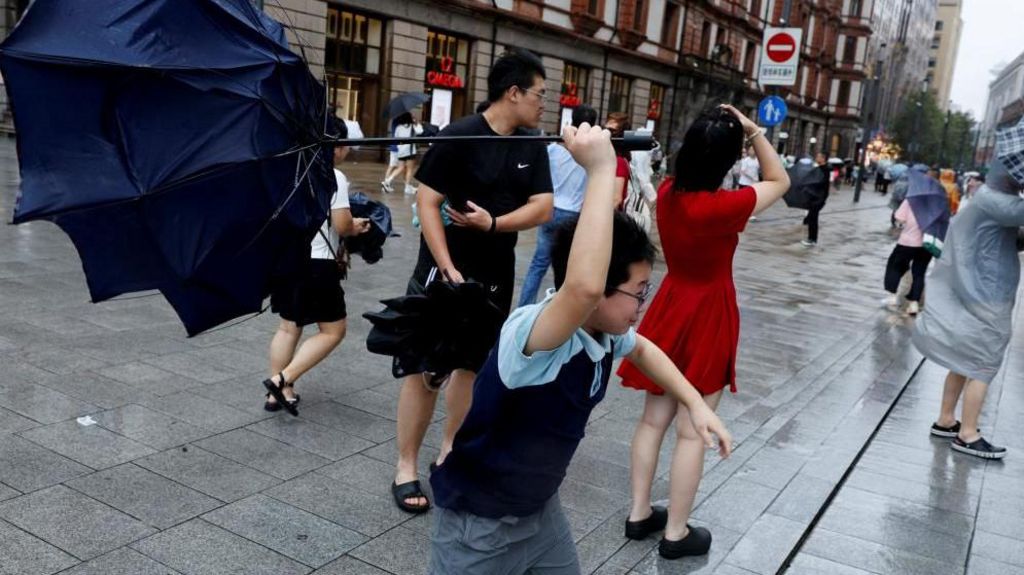
    On a Sunday evening, eastern China braced for the impact of Typhoon Dolphin, which made two consecutive landfalls along the Zhejiang province coastline, forcing emergency responders to evacuate more than one million residents across the region including the major coastal metropolis of Shanghai.

    Meteorological officials confirmed the storm first made landfall in Yuhuan at 17:30 local time (09:30 GMT), carrying maximum sustained wind speeds of 150 kilometers per hour (94 miles per hour). Roughly 60 minutes later, the typhoon made a second landfall in nearby Wenzhou, maintaining enough strength to batter coastal infrastructure and trigger severe weather warnings across a wide swathe of eastern China.

    Before the storm’s arrival, national meteorological authorities issued the nation’s highest-level red alert for typhoon activity, activating emergency response protocols across multiple provincial and municipal governments. By Monday morning, however, the system had weakened enough to be downgraded to a tropical storm, though official warnings remain in place through Wednesday.

    As the weakened storm system progresses inland, emergency management teams continue to warn residents of ongoing hazards, including torrential downpours, widespread flash flooding, and elevated landslide risks across multiple inland and coastal regions. On Monday, heavy rainfall was forecast for seven provinces – Shandong, Henan, Hubei, Anhui, Jiangsu, and Zhejiang – as well as the major urban center of Shanghai.

    The severe weather has brought regional transportation to a near standstill. In Shanghai alone, more than 1,400 scheduled flights were canceled in advance of the storm’s arrival, with rail services also suspended and ferry routes closed to protect passenger safety.

    Local authorities have urged residents across the affected region to avoid unnecessary outdoor activities, and dozens of high-profile tourist sites have temporarily shut their gates to visitors. Closures include large sections of Shanghai Disneyland and Legoland Shanghai, alongside multiple popular viewing platforms along the city’s iconic Bund waterfront.

  • Laneway Festival axes Adelaide, Perth shows in major 2027 shake-up

    Laneway Festival axes Adelaide, Perth shows in major 2027 shake-up

    One of Australia’s most beloved and long-running indie-pop music festivals, Laneway Festival, has announced sweeping changes to its 2027 national schedule that will see the event take a one-year hiatus from two of its longest-standing host cities: Adelaide and Perth. The pause marks the first time the festival will skip the two markets outside of the global COVID-19 pandemic lockdown period, breaking a 19-year annual streak in Perth that dates back to 2009, and a 19-year run in Adelaide stretching back to 2008. Organisers made the announcement official via a public post on the festival’s Instagram channel on Monday morning, moving quickly to address growing fan speculation and reassure attendees that the break is not permanent.

    In the statement, organisers acknowledged the news would come as a disappointment to loyal local audiences. “To our Adelaide and Perth friends, we know this will be disappointing. In 2027, Laneway will be taking a break in your cities,” the post read. The festival team went on to reflect on its 20-plus year history of bringing independent music to audiences across Australia, New Zealand, and even international stops including Singapore and Detroit. “Running so many shows, so close together, across so much ground is a logistical feat we are proud of, but it also asks a lot of our line-up and crew,” the statement explained.

    Organisers emphasized that the planned pause serves two key purposes: it will allow the team to refine the overall festival experience to deliver the highest quality event for attendees across all stops, and it will open up touring gaps that let more performing artists book standalone headline shows in cities that are typically only included on the festival’s annual route. The statement closed with a note of gratitude to local fans: “Adelaide and Perth, we love you! We are incredibly grateful to every single person who has shown up for us over the years,” adding “this isn’t goodbye, just see you soon” to reinforce that the hiatus is temporary.

    Alongside the hiatus announcement, organisers confirmed a change of location for the festival’s Queensland stop. After being hosted on the Gold Coast in recent cycles, the 2027 Queensland Laneway show will return to its previous home in Brisbane. As of the announcement date, the full 2027 festival line-up of performing artists has not yet been revealed to the public.

  • AFL 2026: Patrick Dangerfield admits Geelong ‘buggered up’ Jake Kolodjashnij concussion waiver

    AFL 2026: Patrick Dangerfield admits Geelong ‘buggered up’ Jake Kolodjashnij concussion waiver

    A growing controversy over a contentious concussion-related waiver agreement involving Geelong Cats player Jake Kolodjashnij has prompted the club’s captain Patrick Dangerfield to publicly acknowledge the team made missteps in the process, while urging the public and football community to wait for full details before drawing final conclusions.

    The scandal first broke into public view last Thursday, when it was revealed that Geelong’s leadership and Kolodjashnij had reached an agreement that saw the defender waive his right to file future legal claims against the club if he develops long-term brain injuries linked to repeated on-field concussions. By Friday, the player himself went public to confirm his identity as the athlete at the center of the case, and Geelong chief executive Steve Hocking released a statement emphatically denying that Kolodjashnij had been pressured or coerced into signing the controversial document.

    Speaking to Fox Footy Monday morning while arriving for team training, Dangerfield offered the most candid comment from a club leader to date, admitting that portions of the process were handled poorly. “It’s not until you unpack all of the detail that you sort of find out what the whole process was,” Dangerfield said. “Why it was done the way that it was. Clearly, there’s some parts of it that we buggered it up and we can be better, but I still think there’s a bit to unpack yet.”

    Like most outside observers, Dangerfield said he first learned of the agreement via social media last Thursday morning, a reveal that came as a shock even to the team’s captain. He acknowledged that the topic of player brain health is deeply emotionally charged for football communities, making it difficult to wait for full context before reacting. “As an older player what I’ve learned over time is you’ve got to wait for the detail before the shock and awe kicks in,” he explained. “That’s a bit of a challenge with something like this that is very much emotive, and especially when it comes to players’ health and when it’s one of our own, one my players – that’s certainly concerning in that sense.”

    Dangerfield added that key contextual details about the agreement are still being assessed by the Australian Football League (AFL), with Geelong staff working over the past several days to compile and share full records. “But you’ve got to get the detail first. The nuance to that is the context of how it was done and clearly there has been more information needed from the AFL and that’s what the club has been doing over the past few days,” he said. “I think it’s not until we get all that information, that’s assessed, there will be a decision made around process and all that sort of stuff.”

    Beyond the procedural controversy, Dangerfield emphasized that the human impact on Kolodjashnij and his family has been largely overlooked amid intense media scrutiny. “I think that’s not a question that’s been asked a lot over the last little bit, that human element sometimes gets lost in the chase for a story,” he said. “That’s been, as players, the most important thing for us. And as leaders of the football club, it’s been a pretty difficult few days for Jake and his family for obvious reasons.”

  • A rare on-field headline in South Korea: Manchester City’s 3-1 comeback over Atlético

    A rare on-field headline in South Korea: Manchester City’s 3-1 comeback over Atlético

    A sold-out pre-season exhibition match between two European soccer giants brought 50,000 cheering fans to Seoul World Cup Stadium on Sunday, providing a rare moment of uncomplicated on-field action for South Korean soccer amid a turbulent, scandal-plagued summer.

    Manchester City rallied from an early second-half deficit to secure a 3-1 victory over Atlético Madrid, even with the introduction of South Korean fan favorite Lee Kang-in after halftime. Lee, the 23-year-old national team star, only completed his high-profile $40 million transfer from Paris Saint-Germain to Atlético Madrid last month, and his appearance marked one of the biggest local draws for the clash. Atlético held a 1-0 lead going into halftime after Jorge Dominguez netted a late first-half strike, but Manchester City flipped the script in the final 45 minutes: Omar Marmoush notched two unanswered goals, and Rayan Ait-Nouri added a third to seal the win.

    For South Korean soccer, however, the friendly offered a much-needed distraction from a cascade of controversies that have roiled the Korean Football Association (KFA) for months. The latest scandal broke after a leaked government audit exposed that senior KFA officials used corporate credit cards to pay for visits to adult entertainment venues for foreign referees back in 2011 and 2012.

    The KFA released an official apology on Saturday, acknowledging public concern over the string of controversies, ranging from parliamentary probes and a historic police raid to the decade-old entertainment venue scandal. “We express our sincere apologies for causing concerns over a range of issues, from a parliamentary hearing and an unprecedented police raid to media reports about incidents from more than a decade ago that even members within the federation were unaware of,” the statement read.

    But prominent South Korean soccer commentator Park Moon-sung dismissed the apology as insufficient, questioning how the federation could expect to dismiss such serious misconduct as an old, forgotten issue. “Are match-fixing and sexual services — things so disgraceful that I do not even want to mention them — something that can be brushed aside by saying, ‘Why bring up events from more than a decade ago that we did not know about?’” Park wrote on social media.

    This scandal is only the latest to hit KFA this summer. Public anger first erupted in June following South Korea’s underperformance at the 2026 FIFA World Cup co-hosted by the U.S., Mexico and Canada, where the national team lost two of three group-stage matches and failed to advance to the knockout round. The outcry prompted South Korean police to reopen a stalled investigation into the 2024 appointment of former head coach Hong Myung-bo, with critics accusing KFA President Chung Mong-gyu and technical director Lee Lim-saeng of bypassing the federation’s own formal hiring procedures. By July, both Hong and Chung had stepped down from their KFA positions and appeared before National Assembly lawmakers for questioning over the hiring scandal.

    In response to the institutional crisis, the South Korean government launched a K-Football Innovation Committee tasked with overhauling the KFA’s governance structure. The panel is co-chaired by Park Ji-sung, the legendary former Manchester United and South Korean national team captain, and Ryu Seung-min, head of the Korean Sport and Olympic Committee. Its flagship proposal to date would dramatically expand the electorate for the next KFA presidential election, growing the voting body from just 300 hand-picked voters to roughly 20,000, including active professional players, coaches, referees, and amateur soccer stakeholders.

    With both the top federation leadership and national team head coach positions currently vacant, the KFA is now moving to appoint an interim head coach in preparation for the 2027 Asian Cup, which is set to kick off in Saudi Arabia this coming January.

  • Israeli media eye Rebeca Grynspan’s Jewish identity as she emerges as UN chief frontrunner

    Israeli media eye Rebeca Grynspan’s Jewish identity as she emerges as UN chief frontrunner

    As the United Nations prepares to select a new leader to succeed two-term Secretary-General António Guterres when his tenure ends on 31 December, Costa Rican economist and diplomat Rebeca Grynspan has claimed an early lead in the race, bringing her Jewish heritage and deep family connections to Israel into the global spotlight.

    The first unofficial, secret straw poll held by the UN Security Council on 30 July delivered a strong opening showing for Grynspan, who currently leads the UN Conference on Trade and Development (UNCTAD). She earned 10 votes in the “encourage” category, four “no opinion” votes, and just one “discourage” vote out of the 15 total Security Council members, which include five permanent members and 10 rotating elected members. Individual country votes are not made public, and while subsequent rounds of voting could shift the standings, Grynspan’s single objection leaves her well-positioned ahead of other contenders. The Security Council is on track to finalize its preferred candidate by October, though any of the five permanent members holds veto power that could immediately end her campaign.

    Longstanding informal regional rotation practices at the UN have led to widespread expectations that Guterres’ successor will hail from Latin America, a geographic alignment that works in Grynspan’s favor. Born in 1955 to a Jewish family in Costa Rica, Grynspan’s background is rooted in a history of displacement and tragedy: her parents were European Jewish refugees who fled rising Nazi persecution in the years before World War II, and multiple members of her extended family were murdered in the Holocaust. If selected, she would make history as the first woman, the first Central American, and the first Jewish person to take the top UN post.

    Israeli media outlets have dedicated extensive coverage to Grynspan’s family ties to the country, noting that her sister Frida Greenspan relocated to Israel at age 17 and currently resides in Mevaseret Zion, a town just outside Jerusalem. Greenspan’s children have all served in the Israeli military, some holding officer ranks, and she told Israeli outlet Ynet that the family “are Zionists by birth.” The reporting adds that Grynspan has relatives living in the occupied West Bank, and Israeli media has framed her as one of the most pro-Israel candidates in the field, emphasizing that she is open about her Jewish identity and has maintained close working relationships with Israeli officials based in Jerusalem for decades.

    Despite these widely reported connections, it remains unclear how Grynspan would approach the decades-long Israeli-Palestinian conflict if she became Secretary-General. The candidate has rarely centered Israel in her public political profile, leaving her potential approach to the UN’s longstanding policy positions on Palestine untested. Even Israeli analysts acknowledge that her perceived closeness to Israel could become a significant liability in a contest where candidate support is needed from governments holding deeply opposing views on Israel’s occupation of Palestinian territory and its ongoing military campaign in Gaza.

    A key contradiction has already emerged in Grynspan’s record: under her leadership, UNCTAD has published some of the UN system’s most critical assessments of the economic harm Israeli policies have inflicted on the Palestinian people. UNCTAD reports have repeatedly documented the economic costs of occupation, the damaging impact of Israeli movement restrictions across the occupied West Bank, and the total collapse of Gaza’s economy following Israeli military operations, directly linking Palestinian economic suffering to Israeli policy choices.

    In January 2024, Israel’s foreign ministry cut diplomatic ties with multiple UN agencies and international bodies over their reporting on Israel’s military campaign in Gaza, labeling the coverage anti-Israel. UNCTAD was included on that list, with Israel accusing the agency of publishing “dozens of virulent anti-Israel reports.” Notably, however, Israeli officials have not publicly targeted Grynspan personally, in contrast to their repeated public attacks on current Secretary-General Guterres and other senior UN leaders.

    Israel Hayom, a newspaper widely aligned with Israeli Prime Minister Benjamin Netanyahu, has examined Grynspan’s public comments on Gaza, noting that she has repeatedly called for full, unrestricted humanitarian access to Gaza and has insisted that aid must not be politicized or weaponized for political ends. The outlet concluded that “despite the candidate’s identity”, Grynspan largely adheres to the UN system’s traditional, longstanding position on the conflict. An opinion piece in Israel Hayom went further, arguing that Grynspan’s candidacy has been quietly promoted to key member states — most notably the United States and Israel — through a carefully framed narrative centered on her identity as a daughter of Holocaust survivors, her familiarity with Hebrew, and her close family ties within Israel.

    Israeli media also suggests that Israel can wield indirect influence over the selection process, noting that Israeli positions on candidates tend to filter through to the permanent Security Council members that ultimately hold decisive power: the United States, the United Kingdom, and France. Ynet also reported that multiple candidates in the race have already sent representatives to court Israeli UN Ambassador Danny Danon in a bid to win his implicit backing.