When Italian lawyer Giorgia Ongarato stepped off the docked ferry onto the shores of the Greek island of Ithaca, her first conversation centered on the epic that has drawn visitors to this quiet Ionian Sea island for centuries: Homer’s *Odyssey*. For Ongarato, a lifelong student of ancient Greek literature who studied the epic as a child, visiting the fabled home of hero Odysseus has been a lifelong dream. Though she counts Christopher Nolan’s newly released blockbuster inspired by the ancient poem among her favorite recent films, she emphasizes that the movie was not what sparked her desire to make the trip—still, she calls the adaptation “wonderful”.
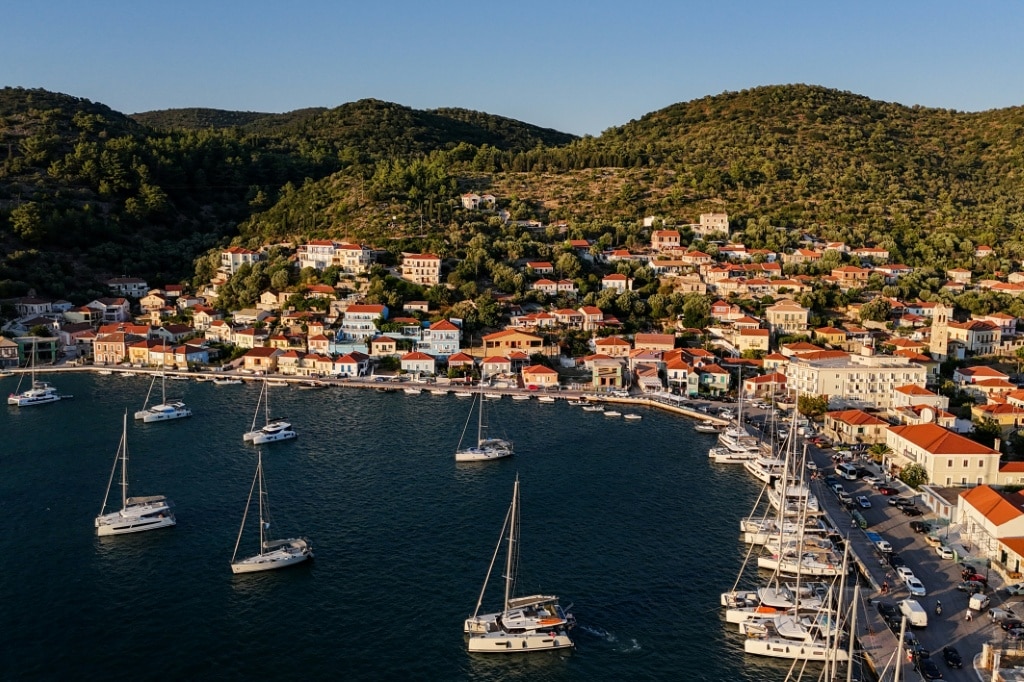
Now, local businesses and municipal leaders across the island are betting that thousands more travelers like Ongarato will follow her lead, turning the film’s global fame into a long-overdue tourism boom for the quiet, off-the-beaten-path destination. Tucked off the western coast of mainland Greece, Ithaca has never been part of Greece’s crowded tourist circuit, despite its crystal-clear coastal waters, dramatic cliffside bays, and lush, rugged interior carpeted with centuries-old olive groves and fragrant cypress forests. Even at the peak of July and August travel season, the island retains a quiet, unhurried calm that sets it apart from neighboring popular Greek getaways.
While Nolan’s blockbuster has undeniably piqued global interest in Ithaca, the production has not been without controversy on the island. Though the film shot on location at other Greek sites, not a single scene set on Odysseus’s home island was actually filmed in Ithaca—a fact that has left many local residents disappointed. For the 3,000-person community that hosted two open-air screenings of the film shortly after its worldwide July 16 release, the snub stung.
Still, most local stakeholders are choosing to focus on the unprecedented publicity the film has brought the island, rather than the missed filming opportunity. Xhimi Xoxha, a restaurant owner in Ithaca’s capital Vathi, says even without on-location shooting, the movie is already driving free global exposure for the island, and he expects those positive economic ripple effects to grow in coming years.
Ithaca mayor Dionysis Stanitsas echoed that perspective, calling the worldwide media attention “tremendous” even as he acknowledged his disappointment that the production declined the island’s outreach to host filming. “We reached out to the production team and asked that some scenes be filmed here on the island,” Stanitsas explained. “Unfortunately, that wasn’t feasible.” Despite the missed chance, the mayor says the island was already completely booked for the 2024 tourist season by the time the film hit theaters, and he is forecasting even stronger demand for 2025, as more moviegoers see the film and start planning their own trips to the mythic destination.
Visitors who make the trip will not find a excavated royal palace of Odysseus or a major archaeological site that can confirm the Homeric hero’s literal existence—but the island is steeped in *Odyssey*-themed heritage at every turn. Statues of Odysseus and Homer line village squares and stand outside the town hall, and working fishing boats bobbing in the sun-drenched main port bear names tied to the epic, from Telemachus (Odysseus’s son) to Calypso, the nymph who held the hero captive on her island for seven years.
Local souvenir shops cater to mythology fans, selling small busts of Homer and Penelope, Odysseus’s faithful wife, graphic T-shirts featuring the one-eyed giant Cyclops Polyphemus, and hand-painted decorative wall plates emblazoned with the Trojan Horse. According to legend, Dexia Beach, a popular soft-sand spot just a short walk from the port, is the exact spot where Odysseus washed ashore after his decade-long voyage home from the Trojan War.
Archaeologist Spyros Couvaras, who has worked on sites across Ithaca, says he expects a dramatic long-term increase in visitor numbers, driven by a shifting trend in global travel: modern travelers are no longer satisfied with just beach getaways, they are craving immersive cultural and mythic experiences that the island can deliver in spades. Couvaras notes that while Nolan’s film is the immediate catalyst for the current wave of interest, the enduring pull of Homer’s 3,000-year-old epic is the real draw that will keep visitors coming long after the film leaves theaters. “The driving force of the renewed interest was undoubtedly the movie,” Couvaras said. “But behind Nolan’s film stands Homer.”