博客

  • World shares are mixed after Wall Street gains, while oil prices bounce higher

    World shares are mixed after Wall Street gains, while oil prices bounce higher

    Global equity markets delivered a mixed performance across Europe and Asia on Monday, building on an upward rally that pushed major U.S. indexes to fresh records in the prior session. The uptick on Wall Street was driven by an unexpected monthly jobs report that fueled investor expectations the U.S. Federal Reserve would hold off on interest rate hikes for the near term.

    In early European trading, benchmarks split gains and losses: Germany’s DAX climbed 0.3% to 26,411.01, France’s CAC 40 edged 0.1% lower to 8,703.72, and the U.K.’s FTSE 100 dipped 0.3% to 10,869.35. Futures tied to the S&P 500 ticked up 0.1% ahead of the U.S. trading open, while Dow Jones Industrial Average futures slipped 0.1%.

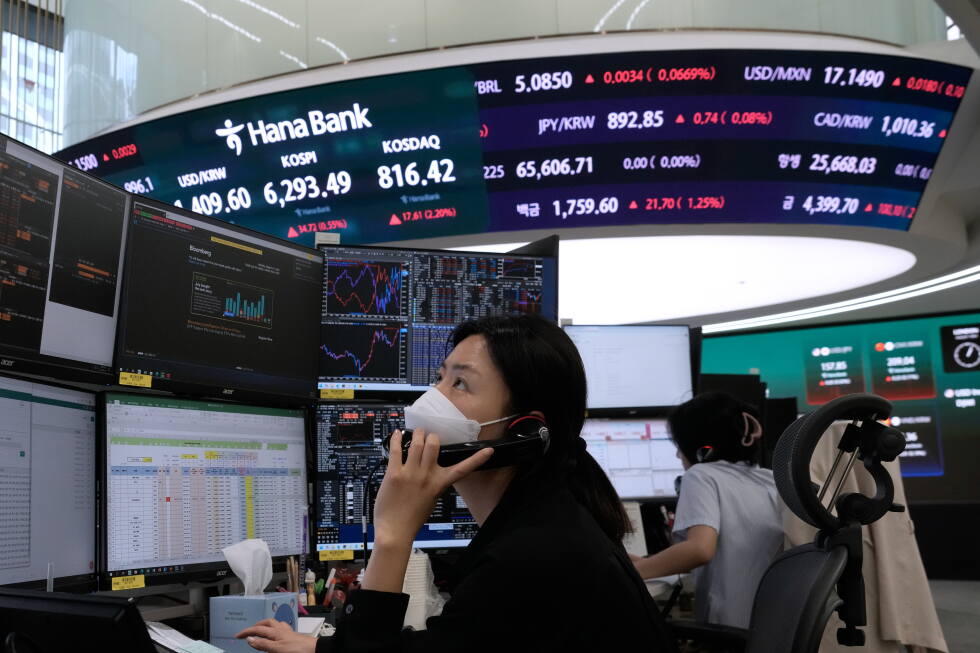
    Across Asian markets, Japan’s Nikkei 225 outperformed peers, jumping 2.1% to close at 66,970.22, lifted by robust gains in the domestic technology sector. Leading chip equipment manufacturer Tokyo Electron rose 4.1%, while chip testing producer Advantest gained 6.4% to lead the index upward. South Korea’s Kospi posted a more modest 0.7% gain to 6,299.66, even as major domestic chipmakers pulled back: Samsung Electronics lost 0.4% and SK Hynix, the rival memory chip producer, edged 0.1% lower. Analysts noted foreign investors have recently started selling off large tech holdings to lock in recent gains and reallocate capital to other sectors, including defense contracting.

    Other major Asian indexes also notched gains: Hong Kong’s Hang Seng Index added 1.1% to 25,937.49, and China’s Shanghai Composite rose 0.7% to 3,966.59. Australia’s S&P/ASX 200 bucked the upward trend to lose 0.3% at 9,232.60, while Taiwan’s Taiex surged 1.6% and India’s Sensex held nearly flat from Friday’s close.

    Oil prices climbed on Monday as geopolitical uncertainty across the Middle East disrupted expectations for energy supply security. The uptick came after Israel rejected a Gaza ceasefire proposal announced by former U.S. President Donald Trump, while new details emerged of a potential shipping management deal between Iran and Oman for the strategic Strait of Hormuz. Tehran has recently signaled it will bar vessels linked to “hostile countries” from passing through the key waterway, through which roughly 20% of global oil supplies transit daily. Separate tensions escalated over the weekend when Yemen’s Iranian-backed Houthi rebels attacked a government-controlled port on the country’s Red Sea coast, deepening fears of threats to critical global shipping lanes and a potential resumption of full-scale Yemeni civil war.

    Brent crude, the global benchmark for oil prices, gained 0.8% to trade at $84.23 per barrel on Monday. U.S. West Texas Intermediate crude rose 0.7% to settle at $78.72 per barrel. “Negotiators said that a deal to establish a safe shipping route was close, but Iran may now be exploring just how much it can extract from the U.S. in return,” Bas van Geffen, senior macro strategist for Rabobank, noted in a market commentary.

    This week, investors are turning their focus to a series of key U.S. inflation updates, headlined by the release of the July Consumer Price Index (CPI), the most closely watched gauge of consumer-level inflation. Economists forecast a 3.4% annual rise in inflation for July, a slight slowdown from June’s 3.5% gain. Inflation has held stubbornly above the Federal Reserve’s 2% target for most of 2024, keeping pressure on central bank policymakers to consider continued rate hikes.

    The market momentum that carried into Monday originated from Friday’s surprise U.S. jobs report, which showed employers cut 23,000 jobs in July, defying analyst projections of continued job growth. The softer than expected labor data pushed U.S. stocks higher and pulled Treasury yields lower, as investors bet a cooling jobs market would convince the Fed to delay further interest rate increases. All major U.S. indexes notched a second straight week of gains, with several hitting all-time records. The S&P 500 rose 0.6% to 7,757.64, topping its prior all-time high, while the Dow Jones Industrial Average gained 0.3% to 54,036.93, just short of the record it set Wednesday. The Nasdaq composite climbed 1.3% to 26,690.62, led by large technology stocks that have driven much of 2024’s market rally: Nvidia jumped 2.3% and Broadcom rose 1.7%.

    While the soft jobs report supported expectations for steady interest rates, it also clouded the broader economic outlook, dimming one of the economy’s strongest recent performers and stoking concerns about consumer household spending amid persistent high inflation. The report also revised lower payroll numbers for May and June, cutting a combined 103,000 jobs from the prior two months’ totals. The slowing pace of employment growth complicates the Federal Reserve’s dual mandate to balance stable job growth and taming persistent inflation, as higher interest rates cool price pressures by slowing overall economic growth, but also raise borrowing costs that make business expansion more difficult.

    In currency markets on Monday, the U.S. dollar strengthened against the Japanese yen, rising to 158.72 yen from 157.71 yen in the prior session. The euro edged slightly lower to $1.15617 from $1.1568.


  • South Australia announced huge $3m royal commission into AI

    South Australia announced huge $3m royal commission into AI

    As artificial intelligence continues its explosive global growth, South Australia’s state government is stepping forward to lead thoughtful regulation of the transformative technology, announcing a $3 million Royal Commission inquiry into AI’s current uses and emerging risks. The initiative, unveiled by Premier Peter Malinauskas, draws on the successful regulatory framework the state developed for social media reform that ultimately shaped Australia’s national ban on underage social media use, a model now adopted by governments around the world.

    Malinauskas’s announcement comes shortly after his official visit to the United States, where he held in-depth talks with leading AI developers, including OpenAI – creator of the viral ChatGPT large language model – and tech giant Apple. During those meetings, the premier explored emerging use cases for generative and advanced AI, gaining first-hand insight into how rapidly the sector is evolving and what impacts it will have on regional economies and communities.

    The Royal Commission, set to launch in October 2024, will launch a sweeping public inquiry to map how AI is already being deployed across key South Australian sectors, from education and public health to public services, industry and the arts. Its core mandate is clear: to identify pathways to unlock AI’s full economic and social benefits for South Australia, while proactively flagging potential risks, unregulated harms, and unwanted negative impacts on residents.

    Malinauskas framed the rapid expansion of AI as the most significant technological shift the global community has experienced since the Industrial Revolution, noting that while no single regional government can halt the global rollout of the technology, it can shape how it is adopted locally to center public good. “This rapid development cannot occur unchecked. Governments must assume its responsibility to ensure these changes improve the lives of their citizens,” Malinauskas said, adding that the state aims to become a global leader in people-first AI policy.

    “What we are trying to do is embrace the huge opportunity AI presents, but not in a careless way that leaves our community dealing with avoidable regrets down the line,” he added.

    The inquiry is expected to collect public and stakeholder evidence over the next nine months, with a final report containing policy recommendations due to be published no later than 1 July 2025. The approach to the inquiry mirrors the process South Australia used for its earlier social media reform investigation: the state’s local inquiry laid the groundwork for the federal government’s national ban on children’s access to social media platforms, which has since become a blueprint for policymakers across the globe grappling with digital regulation.

    With the $3 million price tag to be covered by South Australian taxpayer funds, the commission marks one of the most ambitious subnational regulatory efforts into AI anywhere in the world, signaling that regional governments are increasingly moving to address AI impacts even as national and international bodies negotiate broader global governance frameworks.

  • Eight more people charged after teen allegedly tied to tree, assaulted in Townsville

    Eight more people charged after teen allegedly tied to tree, assaulted in Townsville

    A violent, orchestrated attack on a 17-year-old in North Queensland has led to eight new charges, bringing the total number of accused individuals facing criminal proceedings to 11, Queensland Police have confirmed.

    The incident unfolded on July 18, when the injured teenager was discovered by passing joggers around 6:35 a.m. in remote bushland just off Cape Pallarenda Road in Town Common, near Townsville. When found, he was tied to a tree with severe, life-altering injuries, and was immediately transported to Townsville University Hospital in stable condition. Law enforcement later confirmed the victim required surgical intervention to treat his wounds.

    Initially, three suspects were taken into custody and charged shortly after the attack in July. That group includes a 13-year-old boy from Deeragun, who faces four charges: unlawful deprivation of liberty, assault causing bodily harm while in company, grievous bodily harm, and torture. A 14-year-old girl from Kirwan faces the same four offences and has been processed under Queensland’s Youth Justice Act. The third original suspect is a 35-year-old Kirwan woman, who faces the same four core charges plus an additional count of driving with a suspended Queensland driver’s license. She is scheduled to appear in court on September 28.

    On Monday, police announced that eight more people have now been arrested and charged in connection with the brutal assault. Five adult suspects were taken into custody: a 40-year-old Heatley woman, a 36-year-old Cranbrook woman, a 32-year-old Kirwan woman, a 30-year-old Heatley man, and a 24-year-old Heatley man. All five face one count each of the same four core offences: unlawful deprivation of liberty, grievous bodily harm, assault causing bodily harm in company, and torture. They are set to appear before Townsville Magistrates Court this coming Monday.

    Alongside the five adults, three 15-year-old boys were also charged with the same four offences. Two of the teens are from Kirwan and already appeared at Townsville Children’s Court on August 8, while the third boy, from Mount Low, is scheduled for a court appearance on August 14.

    Detective Senior Sergeant Dave Miles, head of the Townsville Child Abuse and Sexual Crime Unit, shared key details about the investigation and the nature of the attack. He confirmed the attack was not random, but a pre-planned act coordinated by the group of suspects against the 17-year-old victim. Only some of the accused are known to the victim, he added. Miles also revealed that after abandoning the injured teen, the suspects engaged in dangerous driving around the Townsville Strand area, which ended in a vehicle collision.

    Queensland Police investigations into the incident remain ongoing. Law enforcement is urging any member of the public who has information related to the attack, regardless of how minor it may seem, to contact investigators to assist with the case.

  • New Zealanders abroad urged to enroll for the election as new law locks out last-minute voters

    New Zealanders abroad urged to enroll for the election as new law locks out last-minute voters

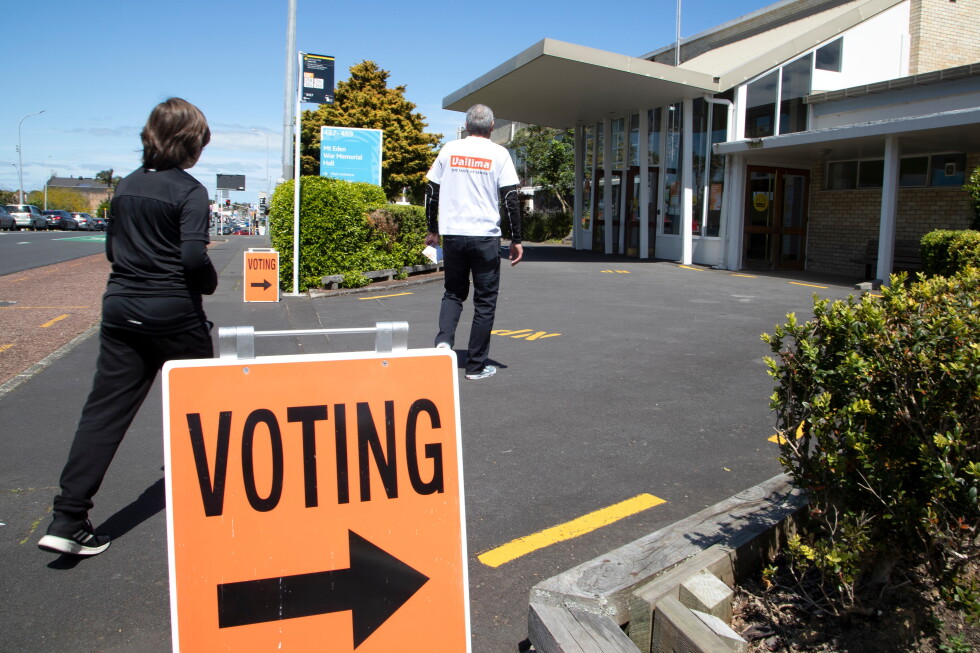
    WELLINGTON, New Zealand — As the country prepares for its October-November 2025 general election, New Zealand’s independent Electoral Commission has kicked off a national outreach campaign on Monday, calling on all eligible voters both domestically and overseas to complete their voter registration or update their personal information ahead of a strict new enrollment deadline. The change, which came into force after legislative approval last December, eliminates the long-standing rule that allowed eligible voters aged 18 and older to register or update their details on election day itself, even when they arrived at polling stations to cast their ballot.

    Under the new regulation, all voters must finalize their registration and confirm up-to-date contact and address information no later than 13 days before election day. For this year’s contest scheduled for November 7, the final enrollment deadline is set for October 25. Early voting will open October 21 for overseas voters and October 26 for domestic voters, and any citizen who fails to meet the enrollment cutoff will be turned away from polling places when they attempt to vote.

    The new enrollment cutoff is part of a broader package of electoral law amendments introduced by the country’s incumbent center-right National-led government, which is currently campaigning for a second consecutive term in office. Other changes included in the legislation are a ban on voting for incarcerated prisoners and an increase to the cap on allowable anonymous political donations. Governing officials argue the deadline change is a practical reform designed to address lengthy election result delays. Prime Minister Christopher Luxon, leader of the National Party, explained in a July interview with Radio New Zealand that the 2023 election, which allowed on-the-day registration, took three full weeks to finalize the final result — the longest delay in New Zealand’s electoral history.

    The change has drawn sharp criticism from center-left opposition parties, led by the Labour Party, who claim the reform is a partisan move designed to suppress special votes — a category that includes ballots cast by overseas voters, domestic voters voting away from their home electorate, and voters registering on election day. In recent decades, special votes have consistently leaned in favor of left-wing political parties. Labour Party leader Chris Hipkins told reporters in July that the change risks disenfranchising tens of thousands of eligible New Zealanders, and pledged to reverse the regulation if his party wins the November election.

    Even with the new deadline in place, Electoral Commission officials still project that the final election result will not be confirmed until 20 days after voting concludes, a mere three-day reduction from the 23-day wait that was projected without the cutoff. Roughly 700,000 special votes are still expected to be cast in this year’s election.

    Latest commission data shows that 89% of all eligible domestic voters have completed their registration so far. While voting itself is voluntary in New Zealand, enrollment is mandatory for all eligible citizens residing in the country, with a fine of 100 New Zealand dollars (approximately $59 USD) for those who fail to comply.

    More than 1 million New Zealand citizens currently reside overseas, though exact figures for how many of those are eligible to vote have not been confirmed. Eligible overseas voters can participate by downloading ballot papers from the Electoral Commission website, having their ballots witnessed by a third party, and uploading the completed document digitally. Chief Electoral Officer Karl Le Quesne confirmed that the October 25 deadline applies to overseas voters as well, noting that many eligible voters living abroad can also cast ballots in person at New Zealand embassies and consulates around the world.

    The commission’s new outreach campaign is specifically targeting young eligible voters, who have historically been the most likely to delay registration until close to election day. The campaign will run targeted advertising across social media, online gaming platforms, and streaming services to reach this demographic. Electoral Commission Chair Simon Moore noted that as of the campaign launch, roughly 440,000 eligible voters remain unenrolled nationwide, and nearly half of those — 200,000 — are between the ages of 18 and 25. “That’s the cohort we really need to get the attention of,” Moore said.

  • AFL 2026: Port Adelaide gun Jason Horne-Francis must prove his fitness to face Melbourne

    AFL 2026: Port Adelaide gun Jason Horne-Francis must prove his fitness to face Melbourne

    Port Adelaide’s standout young talent Jason Horne-Francis has avoided a serious long-term knee injury, but his availability for this weekend’s clash against Melbourne remains hanging in the balance, according to Power assistant coach Stuart Dew.

    The 20-year-old midfielder was forced to hobble off the Sydney Cricket Ground pitch midway through Port Adelaide’s loss to the Swans on Saturday afternoon, leaving fans and coaching staff fearing the worst after he immediately clutched at his knee following a contested play. Follow-up scans have delivered a far more positive diagnosis than initial fears suggested, revealing only bone bruising rather than the structural ligament damage many expected.

    Despite the welcome news on his injury, Dew confirmed on Monday that the club’s medical team will continue monitoring the young gun’s recovery over the coming 48 hours to determine whether he can take the field against the Demons. “He’ll be touch and go this week, obviously with a little bit of bone bruising when that happens for anyone,” Dew told reporters. “But from where we thought it could’ve been from when he came off, it’s a great result. You see how it settles down, like a normal game under any circumstance it will end up being a medical call. I am sure he will want to play, but we’ll see how it settles down the next couple of days and once he gets moving we’ll get a little bit more information.”

    The fitness question mark extends beyond Horne-Francis to another of Port Adelaide’s key midfielders, Zak Butters, who has been sidelined since sustaining a syndesmosis injury in Round 18. Butters is widely tipped to request a trade back to Victoria during the upcoming offseason, meaning a Round 24 clash against Essendon next week could mark his farewell appearance for the Power.

    The star midfielder has been vocal about his desire to return in time for the final round of the regular season, but Dew made clear the club will not rush his recovery to put him back on the field prematurely. Dew joked that much of the growing optimism around Butters’ potential return has been driven by the player himself, emphasizing that the club’s priority is his long-term health over a single farewell match.

    “He’s pushing to try and get back and I think that’s a good mindset but again, there will be no risk taken,” Dew said. “In terms of the side, he’s going to have to have put in a bit of work on the training track and at the moment he’s still getting up and running. It’ll be, not a miracle, but again just a medical call at the end of the day to see how he’s going, but there’s no need to rush. He’s got another week or so to continue to get moving and try to get back into training but no risk will be taken.”

    For Port Adelaide, the outcomes of these two fitness battles will do little to shift the club’s position on the 2024 AFL ladder. Following the Gold Coast Suns’ victory over GWS on Sunday, the Power are all but locked into 15th place for the season with just two rounds remaining, ending any mathematical chance of reaching the finals series.

  • Thai school shooter learnt how to use guns via social media

    Thai school shooter learnt how to use guns via social media

    Thailand is grappling with its deadliest mass shooting in recent years, after a 14-year-old student carried out a premeditated attack that left eight people dead, including the perpetrator himself. The tragedy, which unfolded in Nonthaburi province — a region bordering the Thai capital Bangkok — began at the teen’s home before continuing at his campus, Debsirin Nonthaburi School, a respected local branch of one of the country’s elite secondary schools.

    According to senior Thai law enforcement official Atthapol Anusit, the teen first used his grandfather’s legally owned handgun to kill his grandparents, who had raised him from the age of two after his parents separated. He then brought the weapon, along with a knife, to his school, where he opened fire on fellow students and teachers. To date, investigators have interviewed 17 witnesses as they work to unpack the full set of motivations behind the attack.

    Early investigative findings point to multiple potential contributing factors. Forensic analysis has found that the teen’s shots were surprisingly accurate, with many striking vital areas of victims’ bodies. Despite this precision, police have found no evidence that the attacker received formal firearms training or practiced at a registered shooting range. Instead, investigators confirm the teen taught himself to handle guns through content he accessed on social media platforms, where he also repeatedly viewed violent material. Investigators also note that the teen had previously brought an illegally ordered BB gun to school, which was confiscated by his teachers. Beyond social media influence, authorities cite personal stressors that may have fueled the attack: academic anxiety, unresolved family tensions, and conflicts with his circle of friends. When asked if the attack was pre-planned, Atthapol told reporters Sunday that premeditation was “probable” based on the evidence collected so far, which includes the used firearm, spent cartridge cases, the attacker’s mobile phone, and the knife recovered from his school bag. A search of his home computer confirmed repeated access to violent social media content.

    The attack has shaken families and communities across the country, with conflicting accounts emerging of the teen’s demeanor and character. His unnamed mother, who told Reuters she last saw her son during a recent school break, described him as a bright, cheerful teenager who behaved normally. “We are truly devastated, because no one thought this would happen,” she said. Local media also confirmed that the teen’s father has issued a public apology for his son’s actions. A teacher from the school recalled the teen as a high-performing good student, while education officials noted he was an enthusiastic video game player. Prime Minister Anutin Charnvirakul previously shared that the teen’s grandmother, who was one of the victims, worked as a teacher and may have been strict with her grandson.

    In the wake of the tragedy, communities across Nonthaburi are mourning the lost lives. Mourners have laid flowers and left tributes outside the school campus, while Buddhist funeral rites have begun for victims. On Sunday, dozens of mourners dressed in black gathered at a local temple to lay to rest a 12-year-old girl who succumbed to her injuries two days after the shooting. Her music teacher remembered her to AFP as a joyful, active child who loved dancing and taking part in every school activity.

    In response to public outcry and growing calls for reform, Thai Prime Minister Anutin Charnvirakul has pledged to introduce new, stricter gun control legislation in the wake of the attack, as the country continues to process the worst mass shooting it has seen in decades. Investigations remain ongoing as authorities work to finalize their findings on motive and potential systemic failures that allowed the attack to occur.

  • ‘Terrifying’: CCTV compilation captures woman’s heart-stopping near-miss on SA train line

    ‘Terrifying’: CCTV compilation captures woman’s heart-stopping near-miss on SA train line

    South Australia is grappling with a troubling upward trend in dangerous close calls between trains and road users, newly released government data and compiled security footage have revealed. Released to mark national Rail Safety Week, the collection of closed-circuit and on-train footage captures a series of heart-stopping near-disasters that have underscored growing risks along the state’s busiest commuter rail lines.

    In one of the most viral clips from the compilation, a woman hesitates mid-step while crossing active tracks before reaching the opposite side, only for a speeding passenger train to emerge from around a bend mere seconds after she clears the rail bed. A second incident shows a cyclist darting across tracks just as an oncoming train approaches at full speed, narrowly escaping a catastrophic collision. These clips are far from isolated: official statistics for the 2025-26 fiscal year show 163 dangerous near-miss incidents were recorded across Adelaide’s Metro rail network, marking a 4% year-on-year increase. That works out to an average of one near-disaster every two days.

    The data also pinpoints one particularly high-risk corridor: the Gawler line, which connects central Adelaide to growing northern suburban communities including Elizabeth, Mawson Lakes and Salisbury. The busy commuter line accounted for 72 of the state’s total near-miss incidents, or 44% of all cases, with incidents jumping more than 20% compared to the previous year. In a contrasting trend, Adelaide’s tram network recorded a major 30% drop in near-miss incidents over the same period.

    Further breakdown of the data reveals other alarming patterns. Incidents at designated pedestrian rail crossings jumped 54% to 98 total cases in 2025-26. Cyclists were involved in 35% of all recorded near-misses, and the most dangerous window for risky behavior around tracks falls between 7pm and 8pm daily.

    South Australia’s Transport Minister Joe Szakacs described the compiled footage of near-misses as truly terrifying, warning that reckless behavior around rail lines carries far-reaching consequences for entire communities. “The irresponsible actions by a few reckless individuals can have a lasting impact on those around them,” Szakacs said. “We are seeing an alarming rise in these close calls which can have a traumatic effect on our train drivers and cause injuries to passengers when emergency brakes are activated.”

    Szakacs emphasized that the timing of the public release of footage and data is intentional, coinciding with Rail Safety Week to remind commuters and local residents of the deadly risks of distraction and impatience around active rail lines. He urged all people crossing tracks to remove headphones, put away mobile devices, and stay fully focused on their surroundings to avoid preventable tragedies.

  • Lifelike doll with ‘bruises and grazes’ sparks mistaken Australian murder inquiry

    Lifelike doll with ‘bruises and grazes’ sparks mistaken Australian murder inquiry

    What began as a grisly reported discovery of a body in a suitcase quickly unravelled into one of the most unusual police cases of the year in regional New South Wales, Australia, after forensic tests confirmed the supposed corpse was actually an incredibly realistic doll.

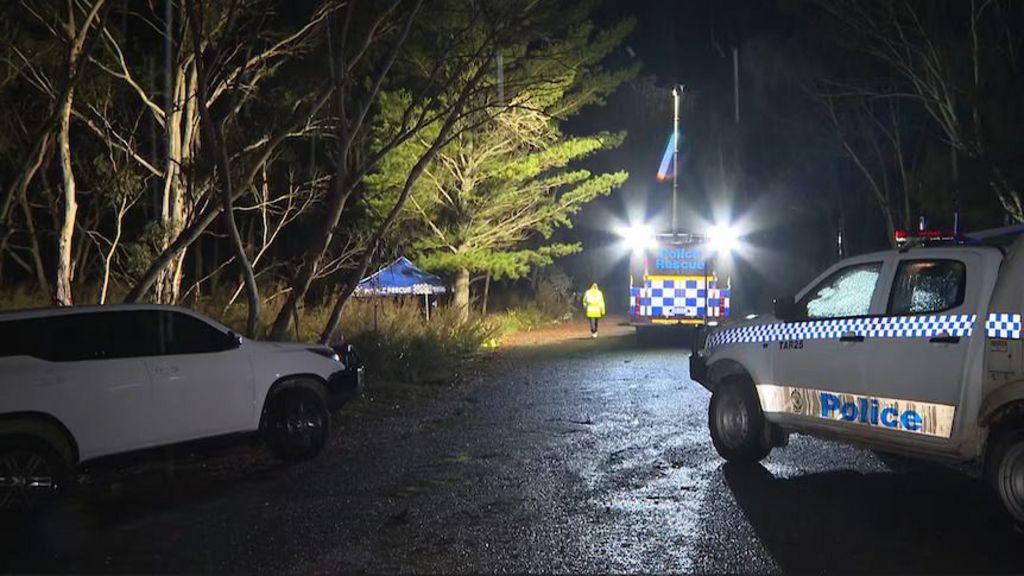
    The incident unfolded on Sunday afternoon, when two men out for a casual weekend drive pulled over for a rest near the tiny rural village of Oallen, roughly 230 kilometers southwest of Sydney. Spotting a discarded suitcase by the side of the road, the pair opened it to find what appeared to be the body of a woman, complete with realistic hair, a nose piercing, and markings that mimicked bruises and abrasions. Shaken by the find, they immediately contacted local police to report their discovery.

    By Monday morning, NSW Police had formally launched a full murder investigation, a announcement that triggered widespread media and public attention across the country. But just hours after the investigation was announced, authorities issued a rapid correction: forensic analysis had ruled out any human remains at the scene.

    Superintendent Linda Bradbury, commander of the Hume Police District, explained that the hyper-realistic design of the doll had understandably led investigators to misidentify it initially. “They are very realistic in terms of looking like human remains, so the original call that this was a body was completely understandable,” Bradbury said.

    The superintendent emphasized that police followed all proper protocols from the moment the report came in. Forensic teams and investigators secured the site immediately to preserve potential evidence, a step Bradbury defended as necessary to protect investigation integrity. “I have no regrets about how we handled this case,” she stated. “Our priority when any report of potential foul play comes in is to treat it seriously, and that is exactly what we did.”
    Bradbury also noted that the two men who made the discovery were left shaken by the incident, saying “it has been quite a shocking discovery” for the pair, who were just enjoying a routine weekend outing. She added that the men made the correct choice to alert police immediately, and officers have since followed up with them to confirm the doll was not human remains, closing the case.

    Police have not yet released information about how the realistic doll ended up abandoned by the roadside, but the investigation into any potential criminal activity has now been formally closed.

  • Chinese users of AI companions bereft after government tightens regulations

    Chinese users of AI companions bereft after government tightens regulations

    For 24-year-old Li Linlin, the grief that followed the disappearance of her AI boyfriend was no less real than losing a human companion. Over two years, she exchanged roughly 700,000 words in intimate conversations with her virtual partner, and when the service shut down suddenly, she was never able to exchange a final goodbye. She spent days weeping over the forced separation.

    Li is far from alone in her mourning. In recent weeks, some of China’s largest technology firms have permanently disabled their popular AI companion platforms, a move mandated to bring services into alignment with strict new government regulatory guidelines that took effect on July 15. For many users who built deep emotional bonds with their virtual companions, the shutdown has upended a core part of their daily emotional lives. “It was like we were forced to be separated by our parents, but I still miss him,” Li shared in an interview.

    AI companion services in China had grown to fill a wide range of emotional needs: many users turned to the platforms for romantic virtual partnerships, while others used the tools to recreate interactive versions of deceased loved ones to hold onto connections after loss. But the new regulations prohibit AI platforms from generating content that manipulates user emotions to influence decision-making, or that could trigger extreme emotional responses or unhealthy behavioral patterns in children and adolescents. The rules also require platforms to prominently display warnings about the risks of excessive reliance on AI companions, and explicitly ban services from positioning themselves as a full replacement for in-person human social interaction.

    Among the companies phasing out their AI companion offerings are ByteDance, the parent company of global short-video platform TikTok, e-commerce leader Alibaba, and Tencent, the developer of China’s dominant superapp WeChat. According to AI governance experts, the regulations were crafted to pre-empt potential public harm, a proactive approach that aligns with China’s long-standing tradition of paternalistic policy-making to address emerging social risks. A key factor that informed the new rules, experts note, was a small number of high-profile suicide cases among young users in the United States linked to excessive engagement with AI companion platforms.

    “This regulation tried to strike a balance between the AI service providers, the users, as well as guardians of minors using the services,” explained Yolanda Ma, a research fellow with ERA, a UK-based non-profit talent and research initiative focused on technology governance. Official Chinese state media has also publicly underscored the concerns behind the crackdown: in April, People’s Daily, the official newspaper of China’s ruling Communist Party, published a report highlighting the damage these services can cause to users’ mental health and their real-world interpersonal relationships.

    Angela Zhang, a professor of law at the University of Southern California, notes that the observed psychological risks in the U.S. gave Chinese regulators strong motivation to tighten oversight of the AI companion chatbot sector. Despite the shutdown, Zhang does not expect the new rules to significantly derail long-term development of AI companion technologies in China, as major firms have already begun pivoting to adjusted alternative offerings that comply with the new guidelines. For example, ByteDance has redirected former users of its shut-down AI companion service to another of its products, which focuses on building personalized AI characters for interactive storytelling rather than romantic or emotional companionship. For many former users, that replacement is a poor substitute for the connections they lost. “It’s just not the same,” Li said.

    The shutdown has sparked a wave of public frustration across Chinese social media, with hundreds of users sharing their grief and pushing back against the policy. Some have uninstalled parent company apps in protest, while others have worked to transfer their years of saved chat history to unregulated third-party platforms in an attempt to “resurrect” their virtual partners. A small group of users has even launched a social media campaign urging others to contact regulators and tech companies directly to voice their opposition to the shutdown.

    Not all users were deeply emotionally invested in the services, but many still sympathize with those who lost their virtual companions. Song Wenxin, a 22-year-old video industry designer based in Chengdu, southwestern China, says she never formed a strong attachment to AI companions, but she understands why many people relied on them. When she first moved to Chengdu for her first job and had no local friends her age, she turned to AI to get the non-judgmental support and guidance she could not find in her real life at the time. “Not everyone has enough resources and support to turn to in real life,” she explained.

    Song also echoed a common suspicion among many Chinese internet users that the new rules tie into broader government policy goals aimed at reversing China’s declining birth rate by encouraging real-world family formation. “Any virtual app getting women too engaged to give birth in real life gets banned,” she said, noting that she personally has no desire to have children. For users like Li, who have already built deep emotional bonds with virtual companions, the policy has only left a gap that real-world connections have yet to fill.

  • ‘Doesn’t need to happen’: NRL veteran Kurt Mann warns playoff game proposal poses huge injury risk

    ‘Doesn’t need to happen’: NRL veteran Kurt Mann warns playoff game proposal poses huge injury risk

    A controversial plan to add a new consolation match between the two losing teams from the NRL preliminary finals during grand final week has been firmly pushed back by current players, with injury risk cited as the primary point of opposition. The proposal, which emerged in media reports over the weekend, draws loose inspiration from the FIFA World Cup’s third-place playoff match between England and France earlier this year – a high-scoring 6-4 contest that produced plenty of on-field highlights but failed to match the relentless intensity of the tournament’s other knockout round fixtures. Even so, NRL officials have floated the idea as a way to generate extra broadcast and gate revenue on the Friday night of grand final week, though the plan still faces major hurdles to win buy-in from players and their representative body.

    Canterbury Bulldogs veteran Kurt Mann, one of the first active players to publicly comment on the proposal, has emerged as a prominent critic, arguing that there is little incentive for athletes to risk long-term damage in a meaningless match. Mann, who has spent years navigating the physical and emotional toll of a full NRL schedule, highlighted that coming off a devastating preliminary final loss already puts players in a vulnerable state. “It’s a big emotional rollercoaster, and usually when you have a massive emotional high and then you have the big comedown – which would be losing a preliminary final – the likelihood of getting injured or something going on in those next games is pretty high,” Mann explained. “You don’t really want that to happen to any of the players, especially if there doesn’t need to be. If there’s nothing in it for them, then it probably doesn’t need to happen.”

    Mann added that the risk of losing key talent to injury ahead of the next pre-season and regular season far outweighs any potential benefits the extra game could bring to the league. “You just wouldn’t want to risk it,” he said. The Rugby League Players Association (RLPA), which has long advocated for reducing the total number of games on the annual calendar to protect player welfare, has echoed these concerns. As of the latest update, the association has not yet received a formal briefing on the proposal, but has already signaled it would prefer players get an extended break between the preliminary finals and the season-ending grand final. This year, player workload has been an even more pressing issue, with the NRL season overlapping with the men’s Rugby League World Cup, creating an unusually packed schedule for elite athletes.

    Not all players have outright rejected the idea, however. Bulldogs prop Max King acknowledged that psychologically and physically, gearing up for another match just days after a season-ending heartbreak would be a major ask, but said he would comply with any league decision if it benefits the sport financially. “I’m a football player, it’s a business, so I’m respectful enough to know that,” King said. “It’s such a tough sport that we play, you leave everything out there. You go home after game days and the next two or three days you’re just a wreck. So it is tough knowing you’re out, but then getting up for another game from a player’s side, it would be tough. But again, I’m a player, I get paid to play, so whatever they tell me to play, I’ve got to play it.”

    King added that if the match drives ticket sales and grows overall revenue for the code, it is not his place to dismiss it out of hand. “I’m sure it would be tough for the players, but like I said, if it’s bringing in crowds, if it’s bringing in revenue, I guess who am I to say it’s a bad thing for the game,” he noted. For context, if the match had been introduced last season, it would have pitted the 2023 preliminary final losers the Cronulla Sharks and Penrith Panthers against one another. It remains unclear if the NRL will move forward with the plan, or how the league would address player concerns around injury and workload to secure the support needed to launch the fixture. At this stage, league head office still has a long way to go to convince the playing group that the extra match is a worthwhile addition to the grand final week schedule.