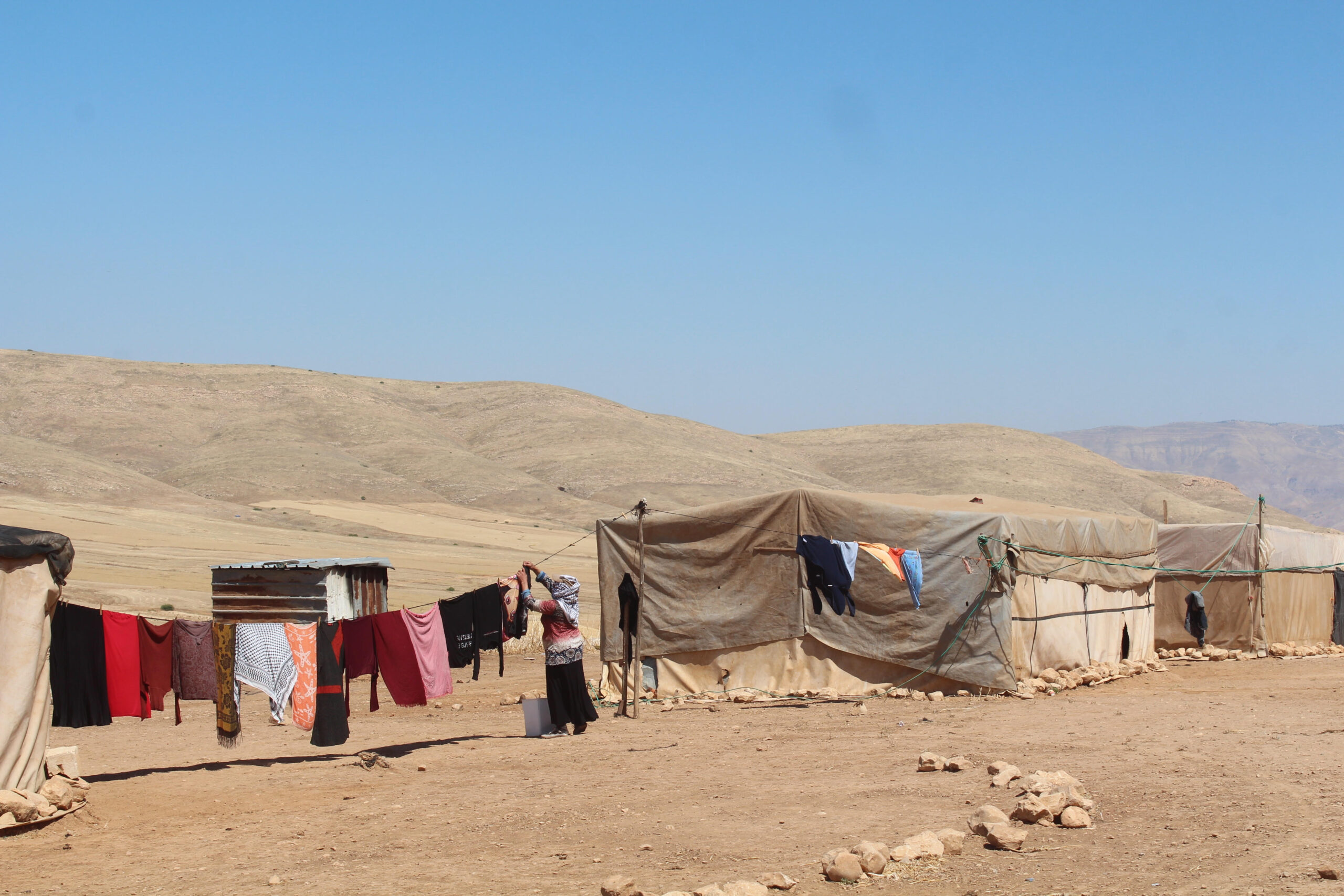
A Israeli settler implicated in a brutal pre-dawn assault on a Palestinian village in the occupied West Bank that left multiple residents injured and humiliated has been released from house arrest, the Israeli military confirmed in a public statement issued Monday.
Tal Yinon Dardik, who is alleged to have participated in the March 13 attack on the small Palestinian community of Khirbet Humsa, will no longer be confined to his place of residence, but is required to check in at a local police station twice a day under the terms of the court ruling that cleared his release.
The decision to end Dardik’s house arrest followed a ruling by the Jerusalem District Court that the original terms of his detention were unworkable. Dardik had been held under house arrest at his mother-in-law’s home in Adei Ad, a Israeli settlement located in the central West Bank, but the court found the arrangement unsustainable after Dardik’s mother-in-law refused to continue hosting him.
Dardik has become a cause célèbre for Israeli settler activist groups and right-wing political figures, who mounted a sustained public campaign to push for his release. He has repeatedly denied any involvement in the attack, which unfolded when dozens of masked settlers stormed Khirbet Humsa before sunrise, targeting multiple Palestinian residents including women, children and elderly people in a coordinated assault that left dozens traumatized.
One of the most severe assaults targeted 29-year-old Qusai Abu al-Kebash, who has told reporters that settlers stripped him naked, bound his arms and legs, fastened a plastic zip-tie around his genitals, and paraded him through the village in front of his family and neighbors. An American peace activist who was staying in the village at the time of the attack gave a firsthand account of the violence to Israeli newspaper Haaretz earlier this year, describing being attacked as she slept in a tent.
“Six masked Israeli settlers armed with heavy wooden sticks swarmed me while I was asleep,” the activist recalled. “They immediately beat the three of us to the ground, smashing our faces with their fists and clubs. They zip-tied our hands and feet, and were yelling things like, ‘We are going to kill you!’” During the attack, she said, settlers pulled down Abu al-Kebash’s pants, poured cold water over him, and beat him repeatedly into the dirt. “All he could do was curl into a fetal position and scream when they beat him with their clubs,” she added.
Multiple village residents confirmed the assault lasted roughly an hour, and estimated that as many as dozens of masked settlers took part in the incursion. A Palestinian woman who was in the village during the attack said she was beaten, dragged out of her home, had her head covering torn off and portions of her clothing ripped. “They pulled the girls out and beat them, even the little ones. They mocked us and celebrated our humiliation,” she told Haaretz. A 74-year-old resident added that three attackers beat him repeatedly on his head, hands and stomach, while another destroyed the village’s security cameras, internet router and outdoor lighting.
The release of Dardik comes after months of political pressure from senior Israeli figures, including Defense Minister Israel Katz, who has openly criticized the original restrictions placed on Dardik and ordered government and military officials not to renew his detention. Katz visited Dardik in prison last month while Dardik was conducting a hunger strike to protest his detention. He also previously threatened to fire Major General Avi Bluth, head of the Israeli military’s Central Command, after Bluth appealed a court ruling that would have allowed Dardik to move his house arrest to a location of his choosing. Katz ultimately backed down from the threat after widespread public outcry.
The attack is one of a sharp rising tide of settler violence targeting Palestinian communities in the occupied West Bank in recent years. The International Court of Justice has repeatedly ruled that all Israeli settlements built in the occupied West Bank and East Jerusalem violate international law, yet more than 700,000 Israeli citizens currently reside in these illegal settlements. United Nations data shows that attacks on Palestinian herding communities like Khirbet Humsa have spiked dramatically in recent years, with at least 5,910 Palestinians internally displaced by settler violence between January 2023 and April 2024.