博客

  • Moon offers unique view of Earth’s radiation signature: study

    Moon offers unique view of Earth’s radiation signature: study

    A groundbreaking study published in the Journal of Geophysical Research: Atmospheres has demonstrated that lunar-based observation platforms offer a revolutionary perspective on Earth’s radiation dynamics, effectively capturing the planet’s complete energy signature without atmospheric interference.

    The research, conducted by scientists from the Chinese Academy of Sciences, reveals that the moon’s unique vantage point provides a permanent, full-disk view of Earth that surpasses the limitations of conventional satellite monitoring systems. Unlike low-Earth orbit satellites that capture fragmented regional data or geostationary satellites limited to hemispheric observation, the lunar perspective enables continuous monitoring of the entire planet’s radiation budget.

    Dr. Ye Hanlin, lead researcher from the Institute of Atmospheric Physics at CAS, explained the significance of this discovery: “The lunar observation platform allows us to distinguish planetary-scale climate patterns from localized weather noise. Approximately 90% of Earth’s radiation variations can be mapped using spherical harmonics—mathematical patterns that essentially form Earth’s unique radiation fingerprint.”

    The study further identified distinct rhythmic cycles in radiation data corresponding to lunar phases, orbital mechanics, and Earth’s rotation. These patterns provide scientists with unprecedented clarity in analyzing climate-relevant radiation features that were previously obscured by atmospheric interference.

    Academician Guo Huadong, corresponding author of the study, emphasized the transformative potential of this approach: “This holistic perspective from the moon represents a paradigm shift in climate monitoring. It provides the consistent, comprehensive data required to advance our understanding of global climate change mechanisms and improve the accuracy of climate models.”

    The findings establish lunar-based Earth observation as a critical tool for future climate research, offering a stable platform for long-term monitoring of planetary energy balance and contributing to more precise climate change predictions.

  • Goma in eastern Congo is hanging by a thread a year after the city fell to Rwanda-backed rebels

    Goma in eastern Congo is hanging by a thread a year after the city fell to Rwanda-backed rebels

    GOMA, Congo — Marking one year since M23 militants seized control of Goma, the strategic eastern Congolese city remains firmly under rebel authority with deteriorating economic conditions. The Rwanda-backed insurgent group, considered the most dominant among over 100 armed factions operating in mineral-rich eastern Congo, has established an unyielding grip on the region despite ongoing humanitarian concerns.

    The visual scars from January 2025’s intense combat between Congolese military forces and M23 fighters remain evident throughout the city. While surface-level normalcy has returned with functioning markets and adapted daily routines, the economic infrastructure has suffered catastrophic collapse. Banking institutions have shuttered completely, followed by the closure of Goma’s international airport, creating a financial vacuum that has plunged countless households into severe poverty.

    In the central banking district, once vibrant financial buildings stand abandoned with disabled ATMs and deactivated signage. This financial paralysis has forced residents to rely exclusively on mobile money transfer services, albeit at exorbitant costs. “Current withdrawal fees reach 3.5% per transaction—devastating sums for families with virtually no remaining income,” explained Grâce Omari, a resident of the Chaumage neighborhood.

    At Kituku Market, the city’s primary trading hub, Monday’s traditional market day maintains visible crowds and activity. Local boats continue docking at piers, unloading agricultural products from surrounding rural areas for market stalls. Women vendors still offer vegetables, flour, secondhand clothing, and basic necessities, yet their movements appear mechanical and their expressions weary. Market activity persists but has lost its economic substance.

    Espérance Mushashire, a 44-year-old mother of twelve who has sold vegetables for years, describes a dramatic decline in living standards. “We purchase inventory at high prices but sell almost nothing. Customers merely inquire about prices without purchasing power. Our children no longer attend school,” she recounted.

    In Goma’s Mugunga outskirts, daily life continues with resigned quietness. Local resident Agathe Hanghi detailed her evaporated savings: “The situation deteriorated completely. Previously I earned money through sales that covered food and medical needs. Now all savings are gone—rebels took what little remained.” Like most families, Hanghi’s children have abandoned education as priorities shrink to absolute essentials: food, shelter, and basic survival.

    University economics professor Deo Bengeya attempts to analyze the unprecedented situation with students, describing an economy paralyzed by absent financial institutions. “Goma’s economy post-capture exists in critical condition,” Bengeya told AP. “Population purchasing power has collapsed, residents have fled, wages have plummeted, and unemployment has skyrocketed.

    Without functional banking systems, economic recovery remains impossible—no credit availability, investment mechanisms, or savings security exists. Households consume minimal resources when available, devoid of future prospects. One year after M23’s takeover, Goma’s inhabitants advance incrementally, sustained only by the certainty of continued survival amid profound uncertainty.

  • Xinjiang launches China’s first express cotton freight train service

    Xinjiang launches China’s first express cotton freight train service

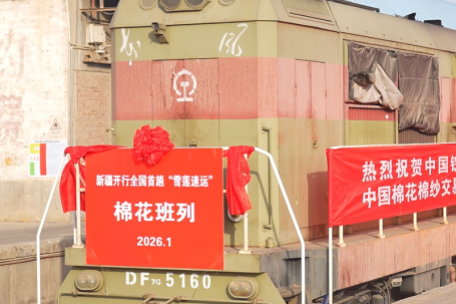
    China’s transportation sector has achieved a significant milestone with the inaugural launch of a dedicated express cotton freight train service from Xinjiang Uygur Autonomous Region. The pioneering service departed from Aksu railway station on January 26, 2026, transporting 1,395 metric tons of cotton destined for Binzhou in Shandong Province, eastern China.

    Operated by China Railway Urumqi Group Co., Ltd., this specialized freight service represents a transformative development in textile industry logistics. The express trains maintain operational speeds of 120 kilometers per hour utilizing premium, well-maintained carriages specifically configured for cotton transportation. Customized loading protocols have been implemented at each warehouse facility to preserve cargo integrity throughout the journey.

    The strategic initiative provides substantial benefits to both cotton producers and manufacturing enterprises. Agricultural suppliers gain enhanced shipping convenience while downstream textile manufacturers can optimize production scheduling with improved supply chain predictability.

    Yang Baofu, General Manager of China National Cotton Exchange, revealed expansion plans for the service, indicating future routes will extend to Zhengzhou in Henan Province and Shanghai metropolitan area. These developments are projected to significantly reduce overall logistics expenses across the cotton industry value chain, strengthening China’s position in global textile markets while supporting economic development in Xinjiang region.

  • Chinese premier chairs symposium on draft govt work report, five-year plan

    Chinese premier chairs symposium on draft govt work report, five-year plan

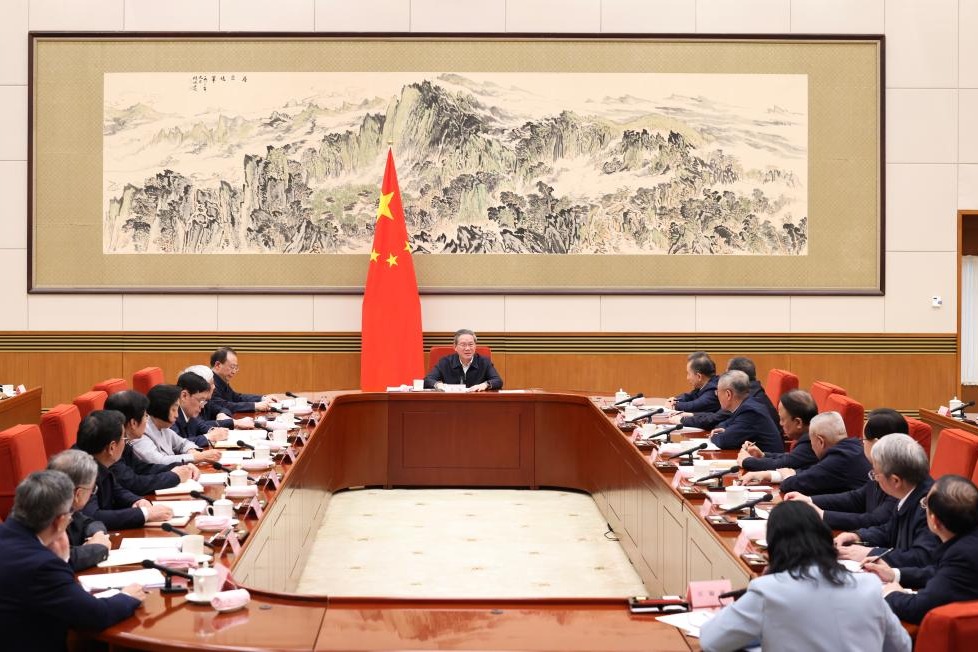
    In a significant demonstration of China’s consultative governance approach, Premier Li Qiang convened a high-level symposium in Beijing on January 26, 2026, to gather expert input on two crucial policy documents: the draft government work report and the preliminary framework for China’s 15th Five-Year Plan (2026-2030). The meeting brought together leadership from non-Communist political parties, the All-China Federation of Industry and Commerce, and prominent non-affiliated intellectuals, creating a diverse forum for policy refinement.

    During the comprehensive dialogue, participants presented substantial recommendations across multiple development domains. Key discussion points included strategies for enhancing macroeconomic regulation mechanisms, fortifying domestic market structures, cultivating innovative productive capabilities, advancing reform and opening-up initiatives, and improving social welfare systems. The exchange highlighted China’s multidimensional approach to policy formulation during a critical juncture in its development trajectory.

    Premier Li acknowledged the substantive value of these contributions, emphasizing the symbiotic relationship between governmental planning and expert consultation. He contextualized the current economic landscape, noting increasing external uncertainties and persistent domestic challenges that require sophisticated policy responses. The Premier advocated for implementing more proactive macroeconomic measures with enhanced coordination between reform initiatives and broader economic policies, aiming for qualitative economic improvement alongside appropriate quantitative growth targets.

    Looking forward, Li expressed expectations for continued collaborative engagement from all participating organizations, particularly in addressing prominent development obstacles and contributing collective wisdom toward China’s high-quality economic and social advancement. This consultative process exemplifies China’s distinctive governance model that integrates specialized expertise into national strategic planning.

  • China helps Indonesia restore its coral reefs

    China helps Indonesia restore its coral reefs

    A groundbreaking marine conservation initiative between China and Indonesia has achieved significant breakthroughs in coral reef restoration, demonstrating the power of international scientific collaboration in addressing oceanic environmental challenges. The joint research project on marine offshore ecological ranching technology, spearheaded by Shanghai Ocean University in partnership with Indonesian institutions, has transformed degraded marine areas into thriving underwater ecosystems.

    According to the latest survey data, coral coverage in the project area near Pulau Bonetambung island in Indonesia’s South Sulawesi province has shown extraordinary recovery. From October to December 2025, coral coverage surged from 10% to 22%, representing one of the most successful marine restoration efforts recorded in the region. Researchers have documented 132 distinct coral species, predominantly from the Acropora and Porites genera, establishing vibrant new habitats for marine biodiversity.

    The project’s success extends beyond coral regeneration to encompass the entire marine ecosystem. The research team, led by Professor Liu Bilin from Shanghai Ocean University, reports the return of high-trophic-level fish species including the eight-banded butterflyfish (Chaetodon octofasciatus) and bicolor parrotfish (Cetoscarus bicolor), indicating the establishment of a complete, self-sustaining food chain within the restored area.

    Advanced monitoring technologies have been deployed to ensure the project’s continued success. Underwater binocular cameras function as ‘ecological sentinels,’ providing real-time, high-definition monitoring of fish activity, biological distribution, and fouling organism growth without requiring frequent manual surveys. This technological innovation, as explained by Professor Zou Leilei, addresses the traditional limitations of marine environmental assessment.

    The project, currently in its second phase (2025-2027), is expanding both technically and geographically. Syiah Kuala University, another Indonesian institution with strong marine science expertise, has joined the collaboration, enhancing knowledge exchange and local capacity building. Training programs and joint research initiatives are being strengthened to cultivate Indonesian expertise in marine conservation, ensuring the long-term sustainability of these restoration efforts.

  • Philippines grounds company’s fleet of passenger ships after at least 18 die in ferry sinking

    Philippines grounds company’s fleet of passenger ships after at least 18 die in ferry sinking

    MANILA, Philippines — In a decisive response to a maritime tragedy, Philippine transport authorities have indefinitely suspended all passenger vessel operations of Aleson Shipping Lines, Inc. This action follows the sinking of the company’s ferry, M/V Trisha Kerstin 3, which resulted in at least 18 fatalities and left 10 individuals missing.

    The incident occurred early Monday off the coast of Baluk-baluk village in Basilan province as the steel-hulled vessel traveled from Zamboanga to Jolo island. The ferry, carrying 317 passengers and 27 crew members, succumbed to unknown circumstances, plunging approximately 76 meters (249 feet) beneath the sea surface.

    Coast Guard Admiral Ronnie Gavan confirmed ongoing search operations utilizing naval assets, divers, and remotely operated vehicles in waters where an oil sheen has been sighted. The rescue effort has successfully saved 316 individuals, though recovery operations continue for the missing persons.

    Transport Secretary Giovanni Lopez announced the comprehensive grounding order to facilitate thorough inspections of Aleson’s fleet seaworthiness. The company’s vessels have been involved in 32 safety-related incidents since 2019, according to official records. To mitigate transportation disruptions in the ferry-dependent region, alternative shipping companies will be permitted to operate, with the coast guard potentially providing complimentary transit services.

    Survivor Mohamad Khan recounted the vessel suddenly listing and capsizing, hurling passengers into dark waters. While Khan and his wife were rescued, their six-month-old infant perished in the tragedy.

    The Philippines continues to grapple with maritime safety challenges, with historical accidents attributed to tropical storms, inadequate vessel maintenance, overcrowding, and inconsistent regulatory enforcement. This latest incident recalls the nation’s deadliest peacetime maritime disaster in December 1987, when the Dona Paz collision claimed over 4,300 lives.

  • Sharp rise in domestic tourism spurs spending

    Sharp rise in domestic tourism spurs spending

    China’s domestic tourism sector demonstrated remarkable resilience in 2025, achieving substantial growth with residents making 6.522 billion trips—a significant 16.2% increase from the previous year. According to the Ministry of Culture and Tourism’s latest sampling survey, this surge generated approximately 6.3 trillion yuan ($906 billion) in tourism expenditure, marking a 9.5% year-on-year increase.

    The most striking development emerged in rural tourism dynamics. While urban residents recorded 4.996 billion trips (14.3% growth), rural residents demonstrated exceptional momentum with 1.526 billion trips—a dramatic 22.6% increase. Spending patterns mirrored this trend: urban tourism expenditure reached 5.3 trillion yuan (7.5% growth), while rural tourism spending skyrocketed by 21.4% to 1 trillion yuan.

    Industry experts attribute this growth to multiple factors. Professor Lyu Ning, Dean of the School of Tourism Sciences at Beijing International Studies University, identified three primary drivers: a flourishing holiday economy, deeper integration of tourism with cultural and sports activities creating novel experiences, and effective pro-consumption policies. She emphasized tourism’s evolution from mere leisure activity to a essential source of emotional value and happiness in modern Chinese society.

    The disproportionate growth in rural tourism reflects the sector’s crucial role in rural revitalization. Years of tourism-focused poverty alleviation have substantially improved rural infrastructure, while urban demand for authentic cultural experiences and micro-vacations has created new economic opportunities. This transformation has repositioned rural areas from tourist sources to premium consumption destinations, establishing a mutually beneficial urban-rural dynamic.

    Both Professor Lyu and Professor Yin Ping from Beijing Jiaotong University dismissed concerns about ‘consumption downgrading’ despite the slower spending growth relative to trip volume. They characterized this phenomenon as market maturation rather than weakening consumption, noting travelers’ increasing preference for value-conscious experiences, short-distance travel, and county-level destinations. Improved transportation infrastructure, particularly high-speed rail, has reduced travel times and altered traditional spending patterns while enhancing overall accessibility.

    The professors emphasized that tourism’s economic impact extends beyond direct revenue, stimulating broader industrial chains, expanding domestic demand, creating employment opportunities, and facilitating information and capital flow throughout the economy.

  • Efficiency and reform drive SARs’ progress

    Efficiency and reform drive SARs’ progress

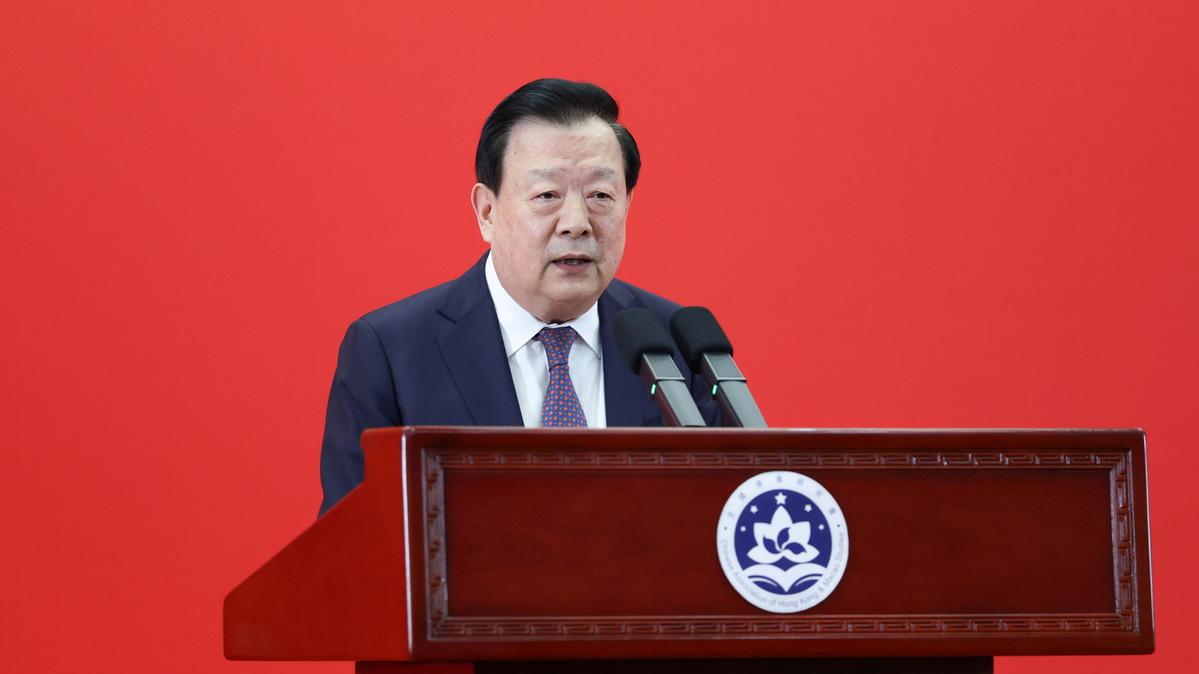
    China’s senior official responsible for Hong Kong and Macao affairs has called for strengthened commitment to the executive-led governance model in both special administrative regions. Xia Baolong, director of the Hong Kong and Macao Work Office of the Communist Party of China Central Committee, emphasized the system’s critical role in ensuring administrative efficiency and alignment with national development objectives during a Beijing seminar on January 26, 2026.

    The seminar, organized by the Chinese Association of Hong Kong and Macao Studies, focused on enhancing governance frameworks in both regions. Xia described the executive-led principle as fundamental to the political architecture of the SARs and essential for the comprehensive implementation of the “one country, two systems” principle. He asserted that this governance model has demonstrated both vitality and superiority, particularly evident in Hong Kong’s transition from stability to prosperity.

    Xia stressed that effective governance requires coordinated synergy between executive, legislative, and judicial branches, with all components operating on “the same stage” rather than working at cross-purposes. His comments come following recent legislative elections in both Hong Kong and Macao, with Xia urging newly elected lawmakers to deepen their patriotic commitment and actively participate in regional development initiatives.

    The senior official called on SAR governments to function as “primary stewards” of local governance, rallying legislative, judicial, and community stakeholders behind national development priorities. He specifically emphasized the need to align regional governance with China’s 15th Five-Year Plan (2026-30), encouraging innovation in administrative methods and leveraging legal authorities to drive reform.

    Hong Kong Chief Executive John Lee Ka-chiu responded to Xia’s remarks through social media, characterizing executive-led governance as both a “fundamental requirement” under “one country, two systems” and a “staunch pillar” of Hong Kong’s continued success. Lee committed to enhancing governance efficiency and building a results-oriented administration, requesting support and oversight from the new Legislative Council.

    Legislators from both regions expressed alignment with the governance direction. Hong Kong lawmaker Michael Ngai Ming-tak acknowledged his responsibility to support government efficiency through pragmatic policies, while Macao legislator Jose Chui Sai-peng pledged to fulfill a “bridging role” between government and community needs.

    The Chinese General Chamber of Commerce in Hong Kong endorsed the approach, with chairman Jonathan Choi Koon-shum emphasizing that implementing the executive-led system and cultivating constructive executive-legislative relations would enable deeper reforms and stronger economic growth.

  • LA port chief highlights US-China supply chain and green shipping ties

    LA port chief highlights US-China supply chain and green shipping ties

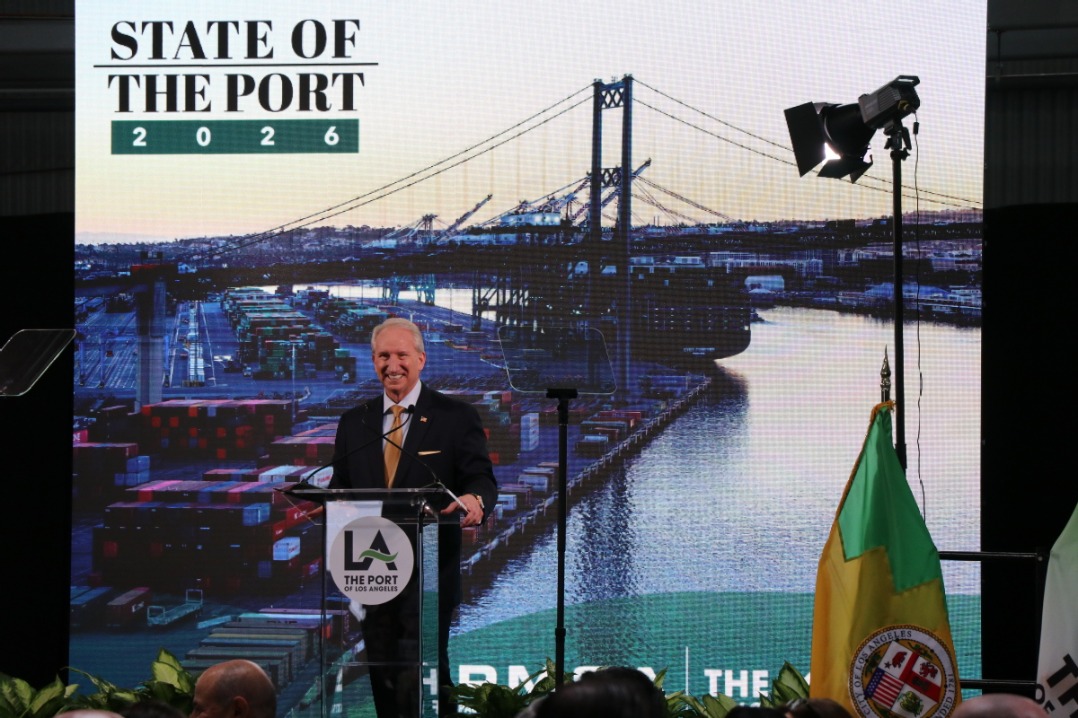
    The Port of Los Angeles, maintaining its position as America’s busiest container port for 26 consecutive years, is intensifying efforts to enhance sustainable shipping practices and deepen its crucial trade partnership with China. Executive Director Gene Seroka revealed these strategic priorities during his annual address, emphasizing that China accounts for approximately 40% of the port’s business—more than double that of any other trading partner.

    Seroka highlighted the indispensable nature of trans-Pacific supply chains, noting that there is no faster route for Chinese goods to reach US markets than through Los Angeles. His multiple visits to China throughout the previous year reinforced relationships with government agencies, state-owned enterprises, and private companies, underscoring the mutual economic dependency between the nations.

    The port’s environmental initiatives have achieved significant milestones, particularly through the Los Angeles-Long Beach-Shanghai Green Shipping Corridor. This pioneering partnership has successfully completed all Phase 1 objectives, including expanded use of shoreside electricity for docked vessels, advancement of cleaner vessel technologies, and foundational work for future bunkering of low-carbon marine fuels.

    Infrastructure development remains central to the port’s ‘Building Bigger and Building Smarter’ strategy. Ambitious projects include the proposed Pier 500 Marine Terminal, designed for next-generation, zero-emission operations. Los Angeles currently boasts the lowest emissions per TEU of any major global port, demonstrating its environmental leadership.

    Local officials, including LA City Councilmember Tim McOsker and Mayor Karen Bass, echoed the importance of stable US-China economic relations for regional logistics and manufacturing sectors. The San Pedro Bay port complex handles approximately 40% of all US containerized imports, with substantial volumes originating from Chinese export hubs like Shanghai, Ningbo-Zhoushan, and Yantian.

    As global supply chains evolve, analysts emphasize that US-China cooperation in decarbonization, digital logistics, and green shipping corridors will become increasingly critical for maintaining trans-Pacific trade efficiency and resilience.

  • Nipah virus outbreak in India triggers Asia airport screenings

    Nipah virus outbreak in India triggers Asia airport screenings

    Health authorities across Asia are implementing enhanced screening protocols following the emergence of a Nipah virus outbreak in India’s West Bengal state. The highly lethal pathogen, which boasts a mortality rate ranging from 40% to 75%, has prompted immediate public health responses due to the absence of approved vaccines or treatments.

    Thailand has activated screening measures at three major airports receiving flights from West Bengal, while Nepal has instituted similar precautions at Kathmandu’s international airport and land border crossings with India. These preventive actions come as health officials confirm five healthcare workers infected in West Bengal, with one individual in critical condition. Approximately 110 contacts have been quarantined as containment efforts intensify.

    The World Health Organization classifies Nipah among its top ten priority diseases alongside COVID-19 and Zika, recognizing its significant epidemic potential. The virus demonstrates zoonotic transmission capabilities, primarily spreading from fruit bats and pigs to humans, with additional person-to-person transmission occurring through contaminated food sources.

    Clinical presentation varies considerably among infected individuals, with some remaining asymptomatic while others develop severe neurological complications. Initial symptoms typically include fever, headache, muscle pain, vomiting, and sore throat, potentially progressing to encephalitis—a dangerous brain inflammation—in severe cases. The incubation period ranges from 4 to 14 days.

    First identified in 1998 during an outbreak among Malaysian pig farmers, the virus derives its name from the village where it was initially discovered. Historical outbreaks have demonstrated substantial societal impact, including the culling of over one million pigs in Malaysia and significant economic losses across agricultural sectors.

    Bangladesh has experienced the heaviest burden in recent years, recording over 100 fatalities since 2001. India’s Kerala state emerged as another hotspot, with outbreaks in 2018 (17 fatalities among 19 cases) and 2023 (2 deaths among 6 confirmed cases). The current cluster in West Bengal appears connected to a private hospital in Barasat, where two nurses remain hospitalized in intensive care.

    While no cases have been reported beyond India’s borders, Taiwan’s health authorities have proposed designating Nipah as a ‘Category 5 disease’—a classification reserved for emerging infections with substantial public health risks that mandate immediate reporting and specialized control measures.