博客

  • Al Rawdah Special Economic Zone on Oman-UAE border to boost trade

    Al Rawdah Special Economic Zone on Oman-UAE border to boost trade

    A transformative economic initiative is taking shape at the Oman-UAE border with the development of the Al Rawdah Special Economic Zone. This ambitious project, spanning approximately 14 square kilometers in its initial phase, represents a significant collaboration between the two Gulf nations through the Emirati-Omani joint venture Mahadha Development Company. UAE-based global logistics leader DP World serves as the majority partner in this strategic development.

    The zone’s strategic positioning offers exceptional connectivity advantages, featuring direct access to Oman’s primary road infrastructure and proximity to major regional logistics centers including Sohar Port and Dubai’s Jebel Ali Port. Located in the Al Rawdah District of Mahdah Wilayat, the development sits approximately 85 kilometers from Al Buraimi and 125 kilometers from Sohar, creating an optimal gateway for cross-border trade and industrial cooperation.

    According to recent high-level discussions between Omani officials and DP World leadership, the economic zone’s implementation roadmap is now advancing. Sultan Ahmed bin Sulayem, Chairman and CEO of DP World, emphasized the project’s strategic significance: “The Al Rawdah Special Economic Zone represents a strategic platform for enabling seamless trade, industrial growth, and regional connectivity between Oman and the UAE. We are committed to leveraging our global expertise in logistics and economic zone development to create a competitive, future-ready ecosystem.”

    The development anticipates substantial expansion, with plans to potentially grow to 24 square kilometers in a second phase based on investor response and long-term growth projections. The zone is expected to attract substantial investments across multiple sectors including logistics, light manufacturing, and industrial services, while simultaneously supporting job creation, knowledge transfer, and Oman’s broader economic diversification goals outlined in Vision 2040.

  • Dubai Marathon to celebrate 25th anniversary with elite athletes and fast route

    Dubai Marathon to celebrate 25th anniversary with elite athletes and fast route

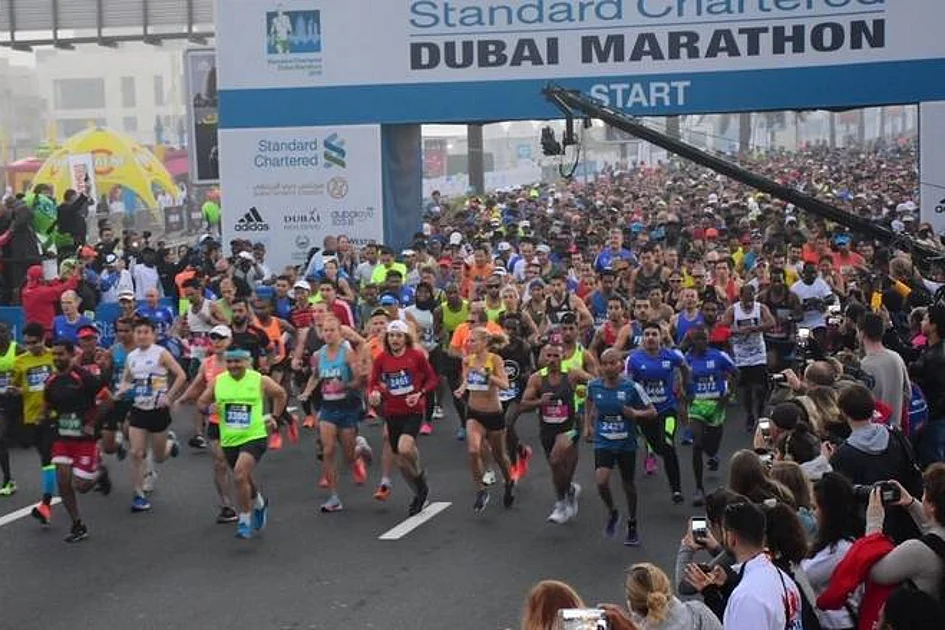
    The prestigious Dubai Marathon prepares to commemorate its 25th anniversary on February 1st, 2026, with significant enhancements to its racing format and course design. This landmark edition will feature a meticulously planned flat route renowned for facilitating record-breaking performances, culminating in a spectacular grandstand finish within the Dubai Police Academy grounds.

    Organizers have implemented strategic adjustments to optimize runner experience and competitive integrity. Elite marathon athletes will commence their race at 5:45 AM, followed by the general marathon participants at 6:30 AM—a full 30 minutes earlier than the previous year’s schedule. The popular 10km Road Race and 4km Fun Run start times will be announced subsequently through official channels.

    The course architecture represents a collaborative achievement between event management and Dubai’s civic authorities, including the Dubai Sports Council, Dubai Police, RTA, and Dubai Municipality. Key modifications include newly incorporated turns at Dubai Media City, adjustments 280 meters past Mehemal Junction, and a revised two-lap segment near Burj Al Arab instead of the traditional Madinat turn.

    Event Director Peter Connerton emphasized the organizational effort: “Through continuous coordination with our civic partners, we’ve engineered a route that balances urban development considerations with athletic excellence. We particularly appreciate Dubai Police’s invitation to utilize their Academy parade grounds for creating an unforgettable finishing spectacle.”

    This finishing area will simultaneously host spectator grandstands, the Dubai Marathon Family Village, exhibitor booths, and live entertainment facilities. As the Middle East’s first World Athletics Gold Label race, the event continues to attract top international talent, with expectations set for the largest elite participant field in its history.

    The 2026 edition maintains support from leading sponsors including ASICS, MG Motor, Channel 4 Radio Network, ITP Media Group, and infrastructure partners Dubai RTA and Dubai Municipality.

  • ‘Starstruck’: Meeting with rugby royalty that could help emerging Storm fullback make his NRL debut in 2026

    ‘Starstruck’: Meeting with rugby royalty that could help emerging Storm fullback make his NRL debut in 2026

    A strategic partnership with Irish rugby powerhouse Leinster is accelerating the development of Melbourne Storm’s emerging talent Hugo Peel, who stands poised to make his NRL debut in 2026. The 20-year-old fullback, fresh from a transformative training exchange in Ireland, is leveraging his unique cross-code experience to challenge for a first-grade position.

    The vacancy created by Ryan Papenhuyzen’s departure has intensified competition for Melbourne’s number one jersey, with dynamic fullback Sua Fa’alogo initially favored for the role. However, Peel’s exceptional performance in junior competitions and recent international exposure positions him as a formidable long-term contender.

    Peel’s developmental trajectory accelerated dramatically following a two-and-a-half-week immersion with Leinster’s academy and first-grade squads in October. The exchange program, part of an ongoing collaboration between the Storm and the European rugby giants, provided unprecedented access to elite training methodologies and mentorship.

    The career highlight emerged through an unexpected mentoring session with Josh van der Flier, the 2022 World Rugby Player of the Year. “He sat me down for half an hour in the lunch room just to chat,” Peel recalled. “Having someone of that quality be so open and honest was surreal. He provided invaluable insights on professional athletic development across sporting codes.”

    Peel’s athletic background proves remarkably diverse. Before switching codes, he captained St Kevin’s College’s prestigious rugby program to a 2023 premiership victory. His transition to rugby league began through touch football connections at age 17, eventually leading to a starring role in Melbourne’s 2025 Jersey Flegg premiership victory where he scored two tries in the grand final.

    The Storm’s expanded NSW Cup involvement and roster changes create additional pathways for Peel’s advancement. While primarily training at fullback, he’s developing versatility across wing, center, and five-eighth positions. “My goal remains earning debut selection,” Peel stated. “I’m focused on demonstrating value through fitness, speed, and ball involvement wherever opportunity arises.”

    As trial matches approach, Peel’s unique blend of rugby union fundamentals, league-specific training, and elite international experience establishes him as one of Melbourne’s most intriguing prospects for the 2026 season.

  • RAKBank posts Dh2.6 billion record profit on its 50th anniversary

    RAKBank posts Dh2.6 billion record profit on its 50th anniversary

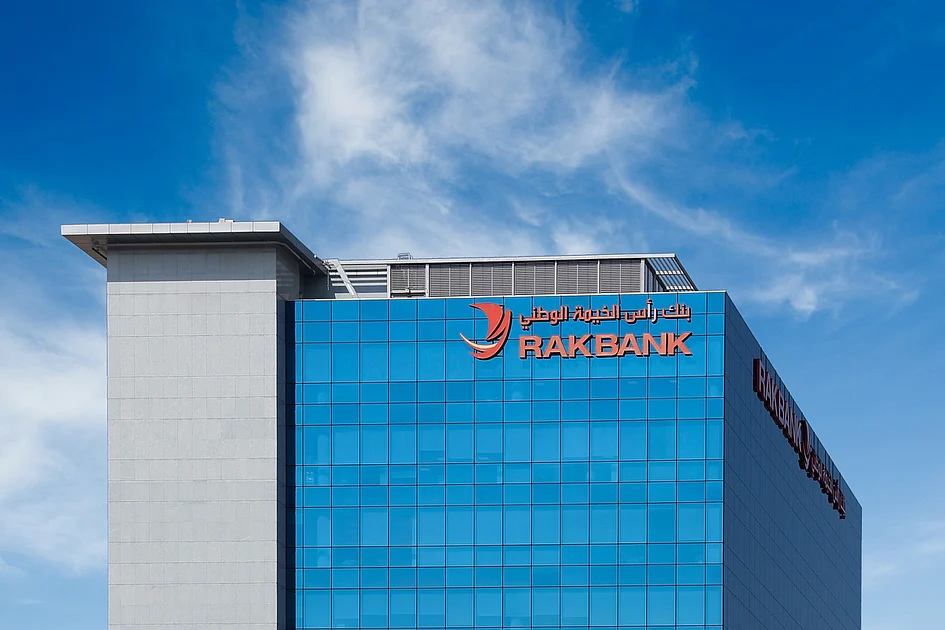
    RAKBank has achieved unprecedented financial success during its milestone 50th anniversary year, reporting a record-breaking net profit of Dh2.6 billion for 2025. This represents a substantial 25.7 percent increase compared to the previous year’s Dh2.07 billion, underscoring the institution’s robust performance across multiple business segments.

    The bank demonstrated even stronger quarterly results, with profit after tax surging 36.9 percent to reach Dh529 million. Total operating income climbed to Dh5.2 billion, marking a 10 percent year-on-year increase, while net interest income grew by 3.5 percent to Dh3.7 billion.

    Despite increased volume-related expenses and strategic investments, RAKBank maintained disciplined financial management with operating expenses of Dh1.9 billion and a cost-to-income ratio of 35.8 percent. Notably, the net impairment charge decreased significantly by 42 percent to Dh451 million, reflecting improved asset quality.

    The institution reached a historic milestone by crossing Dh100 billion in total assets for the first time, with customer deposits growing to Dh70 billion. According to Group CEO Raheel Ahmed, this achievement demonstrates the bank’s financial resilience and the sustained trust of its customer base.

    RAKBank’s microfinance program demonstrated substantial social impact, disbursing over 593,000 loans valued at Dh344 million to blue-collar workers. Chairman Mohamed Omran Alshamsi emphasized these initiatives help customers manage essential needs and build financial resilience.

    The bank’s success was fueled by strategic product innovations including the premium Elevate Credit Card and new Elite Banking Centres across Dubai, Abu Dhabi, and Ras Al Khaimah. In the SME sector, RAKBank onboarded more than 22,000 entrepreneurs with Dh4.7 billion in disbursed loans, while introducing digital solutions like Speed-e-pay and QR Code-based payments through AANI to enhance cash flow efficiency and scalability.

  • Former French senator found guilty of drugging MP

    Former French senator found guilty of drugging MP

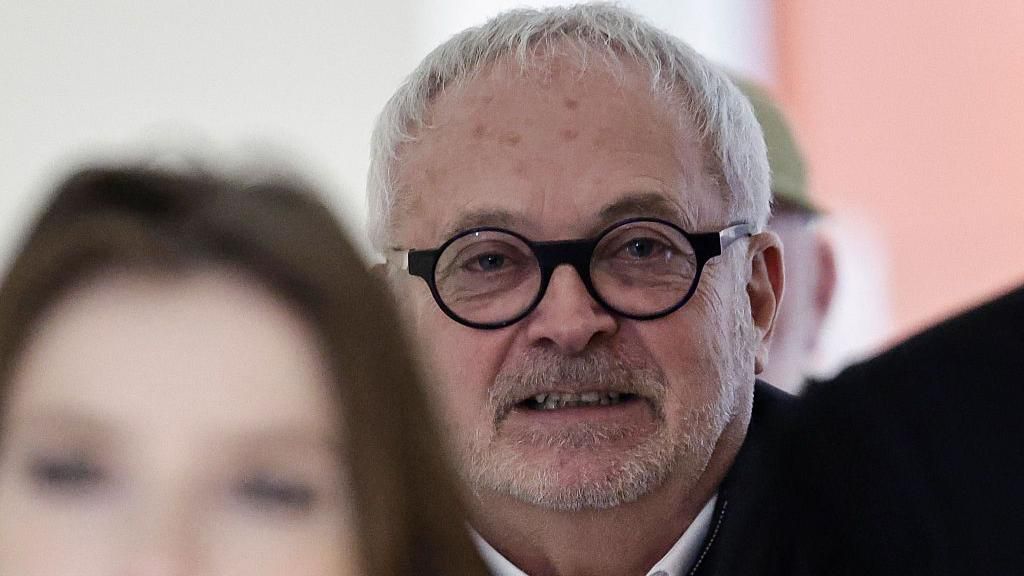
    A prominent French political scandal reached its judicial conclusion as former senator Joel Guerriau was convicted for drugging a fellow parliamentarian with ecstasy in what prosecutors characterized as a premeditated sexual assault attempt. The Paris criminal court delivered a four-year prison sentence against the 68-year-old politician, with 18 months to be served in custody and the remainder suspended.

    The case centers on an November 2023 incident where Guerriau invited Sandrine Josso, a 50-year-old MP from the center-right MoDem party, to his Paris residence under the pretense of celebrating his political re-election. According to court evidence, Josso consumed champagne laced with MDMA that triggered severe physical reactions and prompted her to seek medical assistance.

    Toxicology reports presented during the trial revealed Josso’s bloodstream contained triple the recreational dosage of MDMA. The parliamentarian testified about experiencing disorientation and intense vulnerability, describing how she strategically concealed her deteriorating condition to escape potential assault.

    Guerriau maintained throughout proceedings that the drugging was accidental, claiming he had prepared the substance for personal use during a depressive episode but inadvertently served it to his guest. However, prosecutors highlighted concerning internet searches regarding ecstasy and GHB—a known date-rape drug—found on Guerriau’s devices.

    The convicted former senator expressed remorse during testimony, stating he felt ‘disgusted with my recklessness and stupidity’ while simultaneously advocating for greater awareness about drug dangers. His legal team immediately announced plans for appeal following Tuesday’s verdict.

    For Josso, the ruling represents vindication after years of psychological trauma. She has emerged as a leading voice against chemical submission—drug-facilitated sexual assault—joining advocacy groups founded by victims of similar crimes. The case has sparked renewed political discourse about substance-assisted violence in France, particularly within elite circles.

  • Dubai’s self-driving robotaxis: Why milliseconds can make or break safety on road

    Dubai’s self-driving robotaxis: Why milliseconds can make or break safety on road

    Dubai’s ambitious transition to autonomous transportation is entering a critical phase as robotaxis begin operating on city streets, with full-scale deployment anticipated by 2026. While public attention has primarily focused on the vehicles themselves, industry experts reveal that the true determinant of safety lies in the invisible digital infrastructure supporting these autonomous systems.

    The emerging consensus among technology leaders indicates that latency—the minimal delay in data processing—represents the fundamental safety challenge for self-driving vehicles in dense urban environments. Autonomous taxis depend on continuous streams of sensor data to make instantaneous decisions, from pedestrian detection to responding to sudden traffic changes. In dynamic settings like Dubai’s roadways, micro-delays in processing can significantly impact vehicle responsiveness.

    Kamel Al Tawil, Managing Director for MENA at digital infrastructure firm Equinix, emphasizes that “latency directly determines how quickly an autonomous vehicle can interpret its surroundings and respond to hazards. In real-world city traffic, milliseconds matter.”

    This technological imperative aligns with Dubai’s Autonomous Transportation Strategy, which targets converting 25% of all trips to autonomous modes by 2030. The comprehensive plan envisions deploying approximately 4,000 driverless taxis across the emirate, aiming to reduce traffic accidents, alleviate congestion, and save hundreds of millions of travel hours annually.

    Current progress demonstrates tangible advancement: Dubai’s Roads and Transport Authority (RTA) has designated 65 locations across two operational zones for initial robotaxi services. In 2025, Baidu’s Apollo Go received Dubai’s inaugural permit for fully autonomous trials without safety drivers, while RTA’s partnership with WeRide enables residents in Umm Suqeim and Jumeirah to book autonomous rides through Uber’s platform—currently with specialist drivers onboard, transitioning to fully driverless operations imminently.

    Regulatory frameworks established under Law No. 9 of 2023 mandate stringent requirements for autonomous vehicle operators, including local storage and processing of operational data encompassing vehicle movements, maintenance records, and accident information. These regulations necessitate integrated electronic systems with real-time safety controls, enabling immediate intervention during malfunctions.

    The geographical proximity of data processing infrastructure has emerged as a critical safety consideration rather than merely a technical preference. Al-Tawil explains that “when data is processed far from where it’s generated, even minor network delays can degrade real-time perception. Autonomous systems consequently rely on edge and on-vehicle processing, where critical data is analysed as close to the vehicle as possible.”

    Local data processing not only ensures compliance with UAE safety and security standards but also facilitates secure software updates and enables real-time vehicle-to-everything (V2X) communication. Equinix’s UAE data centers are specifically engineered to manage high-density computing workloads, processing vast sensor data volumes in real time to support safety-critical applications.

    As Dubai accelerates its autonomous mobility initiatives, the focus is expanding beyond visible technological marvels to encompass the underlying digital ecosystems that enable their safe operation. The success of this transportation revolution will ultimately depend on how rapidly and reliably these vehicles can process information when confronting the unpredictability of urban environments—decisions that must occur within milliseconds, and crucially, within close geographical proximity.

  • Over 7.3 million people recorded as registered organ donation volunteers in China

    Over 7.3 million people recorded as registered organ donation volunteers in China

    China’s organ donation system has achieved remarkable growth since its inception, with official data revealing more than 7.3 million citizens have now registered as organ donation volunteers. The China Organ Donation Administrative Center reported that as of December 31, 2025, the country has documented over 63,000 organ donation cases involving more than 197,000 organs, successfully preserving the lives of approximately 190,000 recipients.

    According to Zhang Zongwei, deputy director of the administrative center, China’s organ donation program has evolved from non-existence to a sophisticated system since pilot initiatives began in 2010. The program has demonstrated world-leading post-transplant survival rates while making significant contributions to global medical knowledge in transplantation services.

    Demographic analysis reveals that posthumous organ donors are predominantly male (81%), with female donors comprising 19% of the total. The most represented age group consists of individuals between 46 and 60 years old, accounting for 40.2% of all donors.

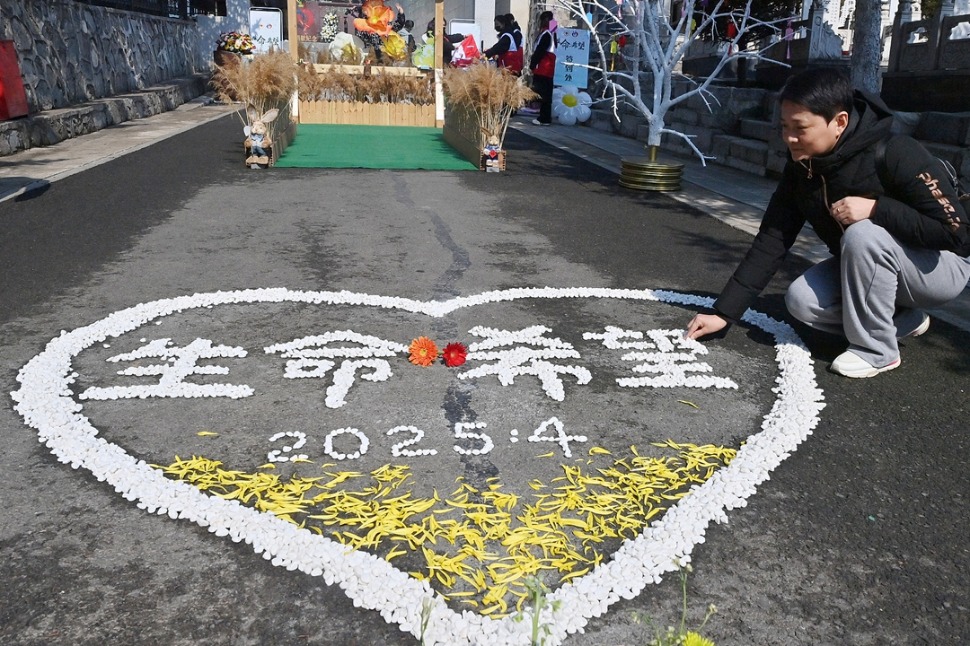
    The human impact of this growing movement was highlighted through the story of Lu Qile, a vibrant teenager who tragically died in a traffic accident during the 2025 National Day holiday in Xiamen, Fujian province. Following his brain death diagnosis, Lu’s parents made the compassionate decision to donate his organs, including his heart, liver, lungs, kidneys, and corneas. Their donation provided five critically ill patients with life-saving transplants and restored vision to two individuals suffering from blindness.

    Memorialization efforts have expanded significantly, with over 40 new organ donor memorial sites established at the county level and above in 2025 alone, bringing the national total to 316 such commemorative locations.

    In a significant policy development, several regions including Dingxi in Gansu province and Shanwei in Guangdong province have recently classified human organ donation as an act of ‘heroism’ through formal regulations, reflecting growing institutional recognition of this altruistic practice.

  • Possible return of Iraq’s Maliki stirs spectres of past chaos and Trump threats

    Possible return of Iraq’s Maliki stirs spectres of past chaos and Trump threats

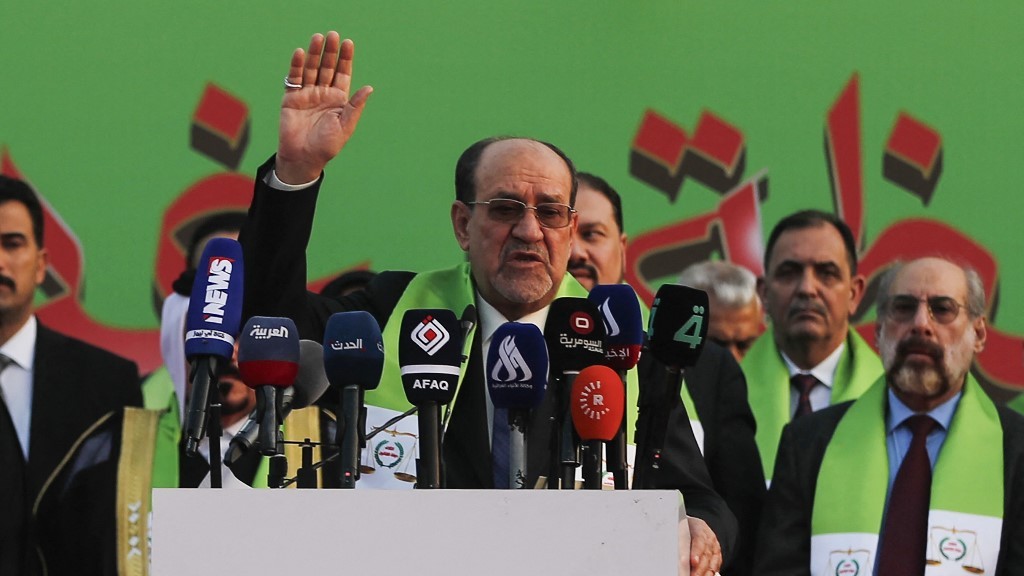
    The political landscape in Iraq faces renewed uncertainty as Nouri al-Maliki emerges as a potential prime ministerial candidate, stirring concerns about regional stability and international relations. The Shiite Coalition Framework alliance selected Maliki—former prime minister from 2006 to 2014—after the incumbent Mohammed Shia al-Sudani failed to form a government following November’s elections. This development has triggered alarm in Washington and among Iraqi citizens who recall Maliki’s previous tenure, which culminated in the Islamic State group capturing vast territories and widespread accusations of sectarianism and corruption.

    Donald Trump escalated tensions through a TruthSocial post, characterizing Maliki’s earlier rule as an era of ‘poverty and total chaos’ and threatening to withdraw U.S. support if Maliki returns to power. Maliki retaliated on social media platform X, condemning Trump’s remarks as a violation of Iraq’s democratic processes and advocating for diplomatic dialogue over threats.

    Analysts and journalists highlight the high stakes of this political maneuvering. Muntazar al-Zaidi—the journalist internationally known for throwing his shoes at Maliki and George W. Bush in 2008—described Maliki’s previous rule as a ‘dark period’ marked by corruption, repression, and economic mismanagement. Reports indicate that approximately $500 billion vanished from state coffers during Maliki’s eight-year administration.

    The U.S. administration has implied potential sanctions should a government backed by Iran-aligned paramilitaries take office, reflecting Washington’s view of Maliki as an Iranian ally. Internally, Maliki’s nomination has exposed divisions within Iraq’s political blocs. While the Sunni-led Taqadum party opposes his candidacy, citing risks of renewed sectarian conflict, the Azm Alliance has expressed support.

    Experts note that Maliki’s path to power remains uncertain. Hayder al-Shakeri of Chatham House observed that although Maliki holds a numerical majority within the Shiite Coordination Framework, he lacks full consensus, complicating his ability to present himself as a unifying leader. The ongoing government-formation process—delayed as Kurdish parties select a presidential candidate—will ultimately determine whether Maliki can secure a third term amid domestic and international apprehensions.

  • Zelensky condemns deadly Russian drone strike on passenger train

    Zelensky condemns deadly Russian drone strike on passenger train

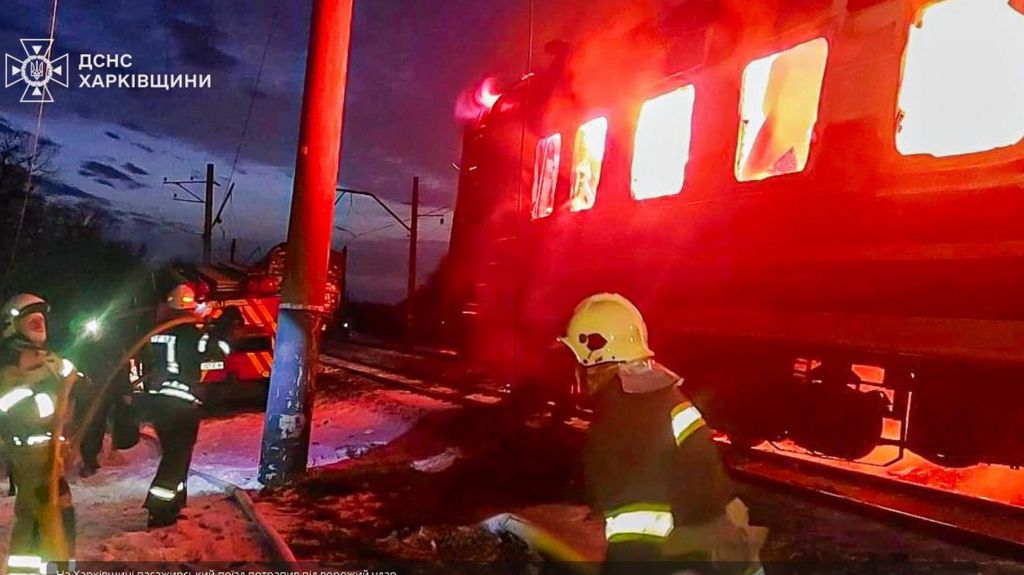
    In a severe escalation of attacks on civilian infrastructure, Russian drone strikes targeted a passenger train in Ukraine’s Kharkiv region, resulting in multiple casualties and widespread condemnation from Ukrainian authorities. The assault occurred on Tuesday near Yazykove village, where at least one direct hit on a passenger carriage ignited a fierce blaze that consumed the compartment.

    Ukrainian President Volodymyr Zelensky characterized the attack as unequivocal terrorism, emphasizing that the train carried over 200 civilians with no military justification for the strike. Initial reports confirm at least four fatalities with an additional four individuals reported missing. Emergency services imagery reveals at least one carriage completely destroyed by fire following the impact.

    The targeted train was traveling from the western border town of Chop to Barvinkove via Kharkiv, a route frequently used by both civilians and military personnel traveling to and from leave. Regional prosecutors confirmed one drone struck a carriage directly while two additional drones detonated in proximity to the train.

    Simultaneously, southern Ukraine faced coordinated assaults as Odesa officials reported Russia launched over 50 drones targeting energy and civilian infrastructure. The overnight attack resulted in three confirmed fatalities and 25 injuries, with several floors of a residential building collapsing entirely and multiple structures sustaining significant damage.

    These attacks occur despite recent diplomatic developments, as Ukraine-Russia negotiations involving US mediators concluded what participants described as constructive talks in the United Arab Emirates. However, critical territorial disputes remain unresolved with additional meetings anticipated.

    Moscow’s intensified campaign against Ukrainian infrastructure has left millions without heating, electricity, or water during the harshest winter months. The full-scale invasion launched in February 2022 currently maintains Russian control over approximately 20% of Ukrainian territory.

  • Kuwait recalls Danone infant formula products over contamination concerns

    Kuwait recalls Danone infant formula products over contamination concerns

    Kuwaiti food safety authorities have implemented an immediate recall of specific Danone infant formula products manufactured in Ireland after receiving critical contamination alerts through the European Rapid Alert System for Food and Feed (RASFF). The affected products, marketed under the Aptamil Advance brand, have been identified as potentially containing cereulide, a toxic chemical substance known to pose serious health risks.

    The Public Authority for Food and Nutrition confirmed the voluntary precautionary measure was initiated following official notifications from European regulators. Consumers are urgently advised to check batch and lot numbers against the published specifications and immediately discontinue use of any matching products. The regulatory body is coordinating with suppliers and distributors to ensure complete removal of the affected batches from circulation.

    In a related development, Kuwaiti authorities addressed another contamination concern involving Lactalis Nutrition Santé’s Enfastar brand formula, though they confirmed these specific recalled batches never reached the Kuwaiti market. This marks the third major infant nutrition safety incident in recent weeks, following last month’s recall of certain S26 AR Gold formula batches.

    The coordinated international response highlights the interconnected nature of global food supply chains, where a single compromised ingredient can trigger widespread regulatory action across multiple continents. Kuwait’s food safety agency emphasized its ongoing vigilance and coordination with international partners to ensure consumer protection remains paramount.