博客

  • The EU is seeking new trade partnerships. Here’s why

    The EU is seeking new trade partnerships. Here’s why

    BRUSSELS — In a strategic repositioning of global economic partnerships, the European Union has cemented a transformative free trade agreement with India, signaling a fundamental shift in international alliance structures. This development emerges against the backdrop of evolving trans-Atlantic relations and growing concerns over Washington’s reliability under the Trump administration.

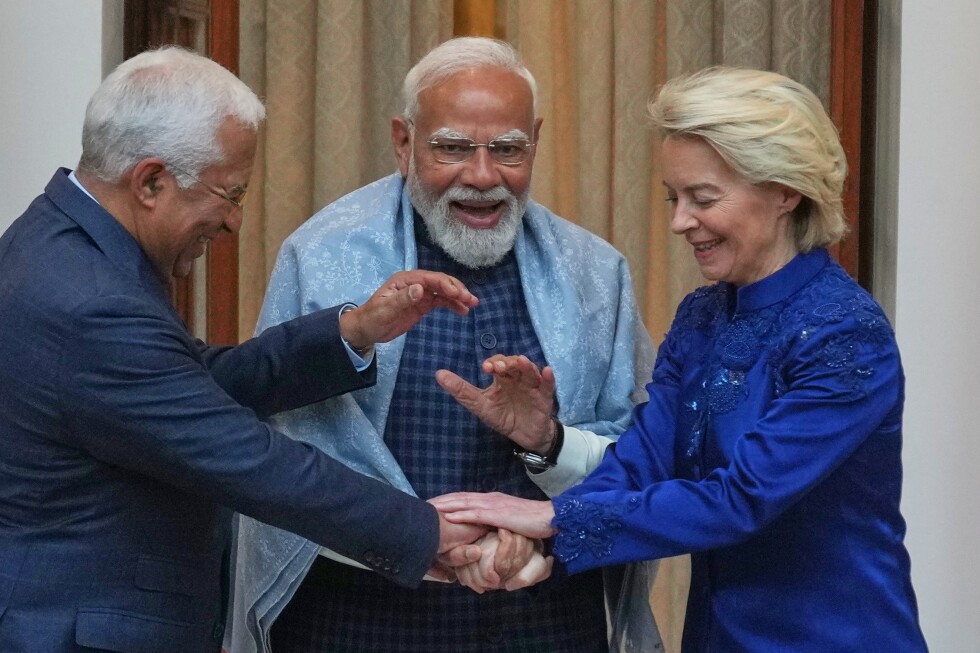
    The comprehensive pact, formally endorsed on Tuesday, represents the EU’s most ambitious trade arrangement to date. It will eliminate tariffs on approximately 97% of European exports to India—including automobiles and premium wines—while facilitating 99% of Indian goods entering EU markets, notably pharmaceuticals and textiles. The agreement potentially impacts nearly two billion people across both economies.

    European Commission President Ursula von der Leyen, during her official visit to New Delhi, characterized the arrangement as “the mother of all deals,” emphasizing its significance in strengthening economic and strategic cooperation between the two powers. The timing of this agreement reflects Brussels’ concerted effort to establish diversified global partnerships following heightened uncertainties in traditional alliances.

    Analysts identify multiple geopolitical factors driving this realignment. Garima Mohan, senior fellow at the German Marshall Fund, noted that “Europe and India need each other today like never before,” highlighting mutual concerns regarding China’s economic ascendancy and recent strains in trans-Atlantic relations. This strategic diversification movement, initially prompted by tensions with Beijing, has been accelerated by fractures in traditional Western partnerships.

    The India agreement constitutes just one component of Brussels’ expanded global outreach. Within the past year, the EU has finalized trade arrangements with Japan, Indonesia, Mexico, and the Mercosur nations of South America—creating a combined market exceeding 700 million people. Additionally, the bloc has enhanced diplomatic ties with Pacific nations including South Korea and Australia, all expressing wariness toward Beijing’s strategic ambitions and Washington’s political volatility.

    Concurrently, European leaders are advancing initiatives to bolster continental security autonomy. Russia’s invasion of Ukraine catalyzed the development of financial mechanisms to strengthen EU defense capabilities, while recent statements from the Trump administration regarding security priorities have accelerated these efforts. France has championed the concept of “strategic autonomy,” gaining increased support among member states.

    EU leaders have collectively committed to elevating defense expenditures, designating €150 billion ($162 billion) toward advanced military capabilities including missile defense systems, artillery, drone technology, and cyber warfare infrastructure. This substantial investment reflects growing recognition that meaningful military self-sufficiency requires overcoming decades-long dependence on American security guarantees.

    The geopolitical repositioning extends to energy security as well. While the EU has reduced energy imports from Russia, it has simultaneously increased dependence on American liquefied natural gas—now accounting for 60% of EU imports according to Eurostat. European Commissioner for Energy Dan Jørgensen cautioned against exchanging “one dependency for another,” advocating for diversified energy sources including potential suppliers in the Eastern Mediterranean and Gulf regions.

    As articulated by Nikos Christodoulides, President of Cyprus, during his European Parliament address: “The international order we relied upon for decades is no longer a given. This moment calls for action, decisive, credible and united action. It calls for a union that is more autonomous and open to the world.” This sentiment captures the essential calculus now guiding European foreign policy: in an increasingly multipolar world, strategic diversification provides crucial leverage in engagements with Beijing, Moscow, and Washington alike.
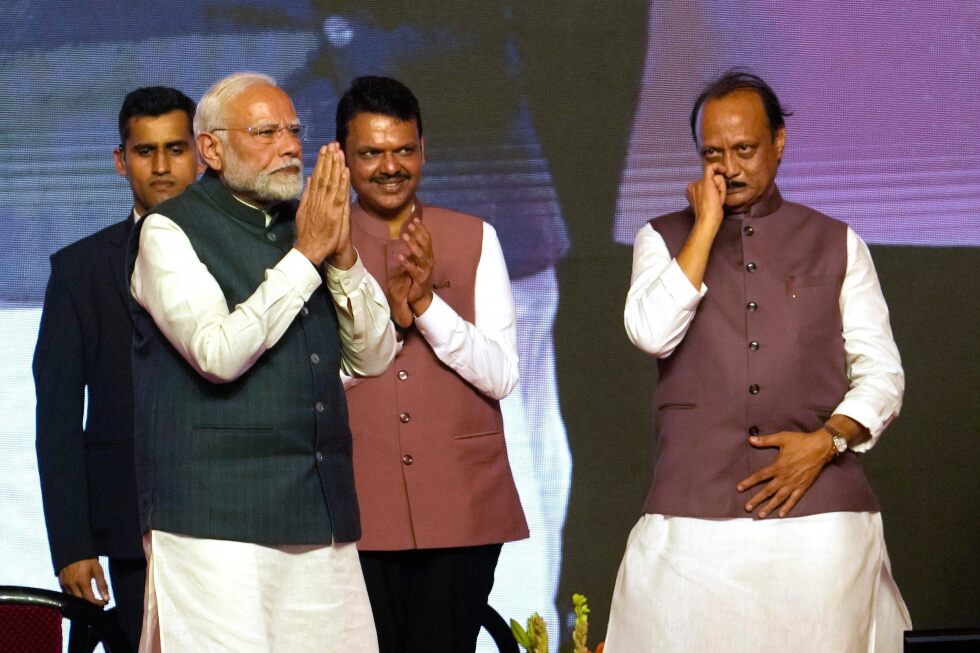

  • A private plane crashes in western India and kills a deputy chief minister and 4 others

    A private plane crashes in western India and kills a deputy chief minister and 4 others

    A private aircraft transporting Maharashtra’s Deputy Chief Minister Ajit Pawar crashed in western India on Wednesday, resulting in the tragic death of all five individuals aboard. The Learjet 45, en route from Mumbai to Baramati, crash-landed approximately 254 kilometers from its departure point and subsequently erupted in flames, with aviation authorities confirming no survivors.

    The fatal incident occurred as Pawar, aged 66, was traveling to his political stronghold of Baramati to participate in local election campaigning. Initial reports from the Directorate General of Civil Aviation indicated that alongside the prominent politician, two personal staff members and two flight crew perished in the catastrophe. The precise cause of the crash remains under investigation, with television broadcasts capturing disturbing imagery of smoke billowing from the wreckage site in an open field.

    Pawar stood as a pivotal figure within Maharashtra’s political landscape, serving as the state’s second-highest elected official while operating within Prime Minister Narendra Modi’s ruling coalition framework. His political influence proved particularly formidable within the state’s agricultural regions, where he demonstrated remarkable capacity for mobilizing rural electoral support. Prime Minister Modi publicly expressed profound shock and sorrow regarding Pawar’s unexpected demise, characterizing the late deputy chief minister as a dedicated public servant whose administrative acumen and commitment to impoverished communities left a significant mark on regional governance.

  • Minnesota congresswoman unbowed after attacked with liquid

    Minnesota congresswoman unbowed after attacked with liquid

    In a display of remarkable composure, US Congresswoman Ilhan Omar confronted an assailant who sprayed her with an unidentified liquid during a constituent meeting in Minneapolis before defiantly completing her remarks. The incident occurred Tuesday as the Somali-born lawmaker addressed immigration enforcement concerns.

    According to eyewitness accounts, 55-year-old Anthony Kazmierczak launched the attack from the front row just as Representative Omar called for the resignation of Homeland Security Secretary Kristjen Nielsen. The assailant employed a syringe-like device that emitted a foul-smelling substance before being swiftly subdued by attendees and removed from the venue amid chants of ‘Nazis out.’

    Minneapolis police confirmed the suspect’s arrest on suspicion of third-degree assault, noting the congresswoman sustained no physical injuries. The attack unfolded against a politically charged backdrop of ongoing tensions between local communities and federal immigration authorities.

    Rather than retreating, Omar advanced toward her attacker with raised fist before calming the agitated audience. ‘We are Minnesota strong and we will stay resilient in the face of whatever they might throw at us,’ she declared to applauding constituents.

    The event highlighted deepening political divisions as Minneapolis becomes a flashpoint in the Trump administration’s immigration enforcement operations. Omar, who has frequently been targeted by presidential criticism, previously accused the administration of turning her district into a ‘war zone’ through aggressive deportation tactics.

    Security protocols at the public forum are under review after journalists observed press members entering without screening while civilians underwent checks. Following the incident, Omar posted on social media platform X: ‘I’m OK. I’m a survivor so this small agitator isn’t going to intimidate me from doing my work.’

  • South Korea’s former first lady sentenced to 20 months in prison for corruption

    South Korea’s former first lady sentenced to 20 months in prison for corruption

    In a landmark judicial decision that has captured national attention, the Seoul Central District Court has imposed a 20-month prison term on Kim Keon Hee, former first lady of South Korea. The sentencing on Wednesday concludes a significant chapter in a corruption case that has dominated the country’s political landscape.

    The court found Kim guilty of accepting illicit gifts from the Unification Church in exchange for providing business advantages. This conviction represents a substantial reduction from the 15-year sentence that independent prosecutors had aggressively pursued. The prosecution’s case had encompassed multiple serious charges including bribery, stock manipulation, and campaign finance violations.

    In a notable judicial determination, the court exonerated Kim on allegations of stock price manipulation and political funding law infractions, citing insufficient evidentiary support. This partial acquittal introduces complex dimensions to the case’s legal narrative.

    Kim’s legal representatives issued a measured response to the verdict, expressing appreciation for the court’s deliberation while indicating they would carefully consider potential appellate options.

    The timing of this sentencing carries particular significance as it precedes by approximately three weeks another anticipated verdict involving former President Yoon Suk Yeol. Yoon faces grave rebellion charges related to his controversial imposition of martial law in December 2024, for which prosecutors have astonishingly sought capital punishment. These parallel proceedings represent one of the most consequential judicial moments in recent South Korean political history, with potential implications for the nation’s democratic institutions and governance standards.

  • Italy’s Ladin minority will be sidelined at the Winter Olympics held in their mountain home

    Italy’s Ladin minority will be sidelined at the Winter Olympics held in their mountain home

    In the shadow of the Milan Cortina Winter Olympics, Italy’s ancient Ladin minority is orchestrating an independent cultural showcase after being overlooked by official Games programming. This ethnolinguistic community, whose Dolomite mountain heritage spans two millennia, finds itself excluded from the international platform that has historically celebrated host cultures.

    The Ladin people, numbering approximately 35,000 speakers recognized by UNESCO as an endangered language group, inhabit five valleys across three Olympic territories: Veneto, Alto Adige, and Trentino. Despite comprising half of Cortina d’Ampezzo’s population and producing Olympic athletes like slalom skier Alex Vinatzer and bronze medalist figure skater Carolina Kostner, their distinct cultural identity received no invitation for representation in the February 6 opening ceremony.

    Organizers confirmed the 2.5-hour spectacle will emphasize Italian fashion, design, and music instead. This decision contrasts sharply with previous Olympic traditions, where Lillehammer featured the Arctic Sami people and Beijing showcased China’s 54 ethnic minorities.

    In response, Ladin communities across the Dolomites have launched grassroots initiatives to share their heritage. Elsa Zardini, head of Cortina’s Ladin community, leads a campaign distributing tricolor flags (azure, white, and green representing mountain landscapes) to welcome visitors while subtly protesting their exclusion. Simultaneously, the General Ladin Union produced multilingual mini-dictionaries and historical videos with English subtitles tracing their Roman origins through Napoleonic wars to modern times.

    The cultural displacement echoes deeper tensions: the 1956 Olympics transformed Cortina from a Ladin-majority town into a luxury resort, creating inheritance tax pressures that force young families to leave. While two traditional appearances were permitted—a torch ceremony presence and a non-broadcast parade—community leaders emphasize these token gestures fail to meaningfully represent their linguistic minority status.

    As the world watches the Games, Ladins are leveraging the international attention to assert their enduring presence through self-organized exhibitions of traditional woodcarving, costume displays, and musical events across the Dolomite region.

  • Japan’s last pair of pandas have arrived back in China

    Japan’s last pair of pandas have arrived back in China

    BANGKOK (AP) — Japan has entered its first panda-free period in fifty years following the departure of its last remaining giant pandas, Xiao Xiao and Lei Lei, who have been repatriated to China. This development occurs during a significant downturn in Sino-Japanese relations, primarily fueled by Japan’s current Prime Minister’s position on Taiwan, which Beijing considers a breakaway province. The strained diplomatic climate suggests that new panda loans to Japan are improbable in the near future.

    The twin pandas, born in 2021 at Tokyo’s renowned Ueno Zoo, garnered a massive and devoted following. Thousands of admirers visited the zoo for a final glimpse before the bears began their journey. This practice of panda diplomacy dates back to 1972 when China first gifted pandas to Japan to commemorate the normalization of diplomatic relations. For decades, China has strategically employed these charismatic animals as instruments of soft power and diplomatic goodwill—a gesture that can be withdrawn when bilateral relations become contentious.

    State broadcaster CCTV documented the arrival of Xiao Xiao and Lei Lei in crates at a facility in Sichuan province, the heartland of China’s giant panda conservation efforts. According to a statement from the China Conservation and Research Center for the Giant Panda, the animals arrived safely early Wednesday morning. They will now undergo a standard quarantine period at the research center. Under China’s long-standing policy, all pandas loaned to foreign nations, including any offspring born abroad, remain the property of China.

  • Maharashtra deputy chief minister dies in plane crash

    Maharashtra deputy chief minister dies in plane crash

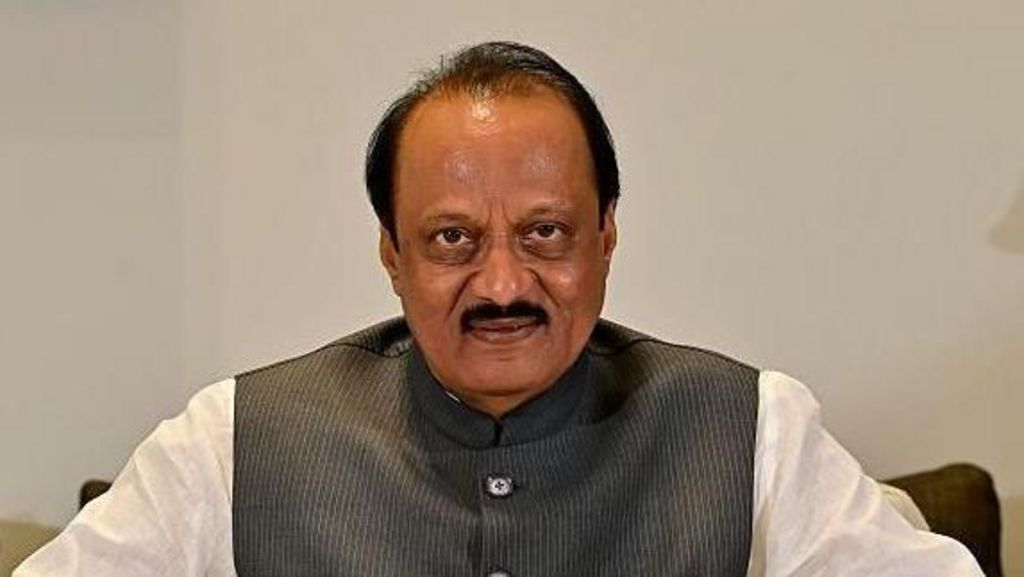
    In a devastating aviation incident that has sent shockwaves through India’s political landscape, Maharashtra Deputy Chief Minister Ajit Pawar perished alongside four others when his aircraft crash-landed at Baramati airport on Monday. The prominent politician was returning to his constituency when the tragedy occurred.

    The Directorate General of Civil Aviation confirmed the aircraft departed Mumbai and encountered fatal complications during its approach to Baramati, located approximately 250 kilometers southeast of the state capital. While official investigation into the precise cause remains ongoing, distressing visuals from the crash site depicted smoldering wreckage consumed by flames and thick smoke.

    Among the deceased were two members of Pawar’s personal staff and both crew members, all of whom perished instantly upon impact. The aviation regulator has initiated a comprehensive probe to determine the technical and operational factors that led to this catastrophic failure.

    Prime Minister Narendra Modi expressed profound grief over the incident, posting on social media platform X: ‘I am deeply saddened by the tragic news from Baramati. My thoughts are with all those who lost their loved ones in the crash. Praying for strength and courage for the bereaved families in this moment of profound grief.’ In a separate tribute, the Prime Minister honored Pawar’s significant contributions to public service.

    Ajit Pawar, nephew of veteran politician Sharad Pawar who founded the Nationalist Congress Party (NCP), was one of Maharashtra’s most influential figures. His political career spanned several decades, during which he held the deputy chief minister position multiple times. In a notable political maneuver several years ago, he fractured his uncle’s party by leading a splinter group of lawmakers to form a new faction that eventually gained official recognition as the NCP from India’s Election Commission. His party maintained an alliance with Modi’s Bharatiya Janata Party within Maharashtra’s governing coalition.

    The sudden demise of this powerful political operator has created immediate uncertainty in Maharashtra’s political equilibrium, with analysts anticipating significant realignments within the state’s power structure.

  • Axis Communications positions AI‑driven security as digital infrastructure for 2026

    Axis Communications positions AI‑driven security as digital infrastructure for 2026

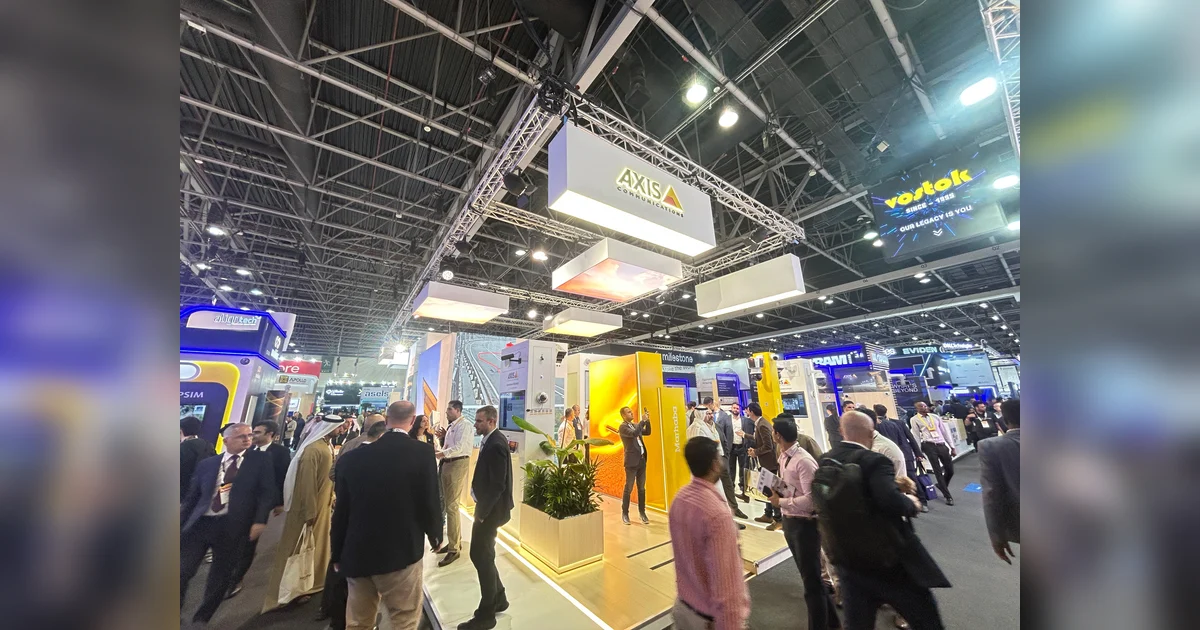
    Axis Communications is embarking on a transformative journey in 2026, fundamentally reimagining its position within the global security sector. The company is accelerating its transition from traditional hardware manufacturing toward delivering fully integrated, intelligence-driven security ecosystems that function as critical digital infrastructure.

    This strategic evolution builds upon an extensive portfolio encompassing network video, audio surveillance, advanced analytics, and access control technologies—all engineered to operate in seamless unison. The core objective is to empower organizations to shift from reactive monitoring frameworks to proactive security operations, resulting in significantly improved response times, substantially enhanced detection accuracy, and systems that actively contribute to operational resilience.

    Loubna Imenchal, Managing Director for Middle East, Türkiye, Central Asia and Africa at Axis Communications, emphasizes that global surveillance technology demand is experiencing sustained structural growth. This trend is fueled by long-term investments in smart city initiatives, national infrastructure modernization, and comprehensive digital transformation programs. While the video surveillance market continues to expand at nearly 6% annually through 2030, growth is increasingly driven by data value extraction rather than camera hardware alone.

    Contemporary businesses are reevaluating security technology’s potential amid pressures to optimize resources. Artificial intelligence, machine learning, and edge analytics are transforming conventional cameras into intelligent sensors and video footage into strategic business assets. This technological convergence is repositioning security from a cost center to a measurable value generator.

    The Middle East, particularly the UAE and Saudi Arabia, represents one of the world’s most dynamic growth regions due to massive mega-projects and digital infrastructure development. Africa simultaneously emerges as a promising long-term opportunity driven by rapid urbanization and public-sector digitization initiatives.

    Artificial intelligence serves as the foundational force behind this transformation, fundamentally reshaping physical security through advanced detection, classification, and contextual interpretation capabilities. Axis emphasizes its architectural approach to intelligence integration rather than superficial AI implementation, ensuring reliability and real-world performance.

    The future trajectory points toward predictive security systems powered by the convergence of AI, edge computing, and cloud-based architectures. Organizations that embrace security as integrated digital infrastructure rather than discrete hardware components will gain significant competitive advantages.

    Axis Communications plans to strengthen its regional leadership, expand intelligent solution adoption, and deepen strategic partnerships throughout 2026, aiming to actively shape—rather than follow—the future of intelligent security systems.

  • Arif Patel announces strategic business partnership with Preston Trading in Dubai

    Arif Patel announces strategic business partnership with Preston Trading in Dubai

    Dubai-based entrepreneur Arif Patel has unveiled a transformative strategic partnership with UK international trading firm Preston Trading, positioning Dubai as the central hub for their expanded Middle Eastern operations. The collaboration represents a significant advancement in strengthening trade connectivity between the United Kingdom and the Gulf region while aligning with the UAE’s Vision 2031 objectives focusing on economic diversification, innovation, and sustainable development.

    The alliance combines Patel’s extensive regional expertise with Preston Trading’s global network to optimize supply chain efficiency, enhance trade routes, and facilitate market expansion throughout the Middle East and beyond. Patel emphasized that selecting Dubai as the operational headquarters reflects profound confidence in the emirate’s economic environment, noting that “Dubai rewards long-term thinking by offering both dynamic growth and essential stability for building lasting enterprises.”

    With diversified experience across trade, real estate, logistics, and infrastructure sectors, Patel has developed a substantial business portfolio that now enters a new phase of international expansion. The partnership extends beyond establishing a regional office, with plans to pioneer new avenues in trading and energy solutions while implementing sustainable business practices.

    The strategic timing coincides with Dubai’s accelerating prominence as a global business hub, where logistics, finance, and technology sectors are driving substantial economic growth amid increasing population and sustained investor interest. Preston Trading will leverage its Dubai base to gradually expand into other emirates and broader Middle Eastern markets while fostering UK-Middle East trade relations.

    Beyond commercial objectives, the partnership commits to ethical business conduct and support for community initiatives in education, health, and social development. Patel characterizes Dubai as both a foundational pillar for his company’s future and a gateway to global innovation, asserting that the emirate presents exceptional opportunities for committed investors prepared to grow alongside its evolving economy.

  • Superstar Luana Vjollca turns Dubai Mall Festival of Fashion into must see moment

    Superstar Luana Vjollca turns Dubai Mall Festival of Fashion into must see moment

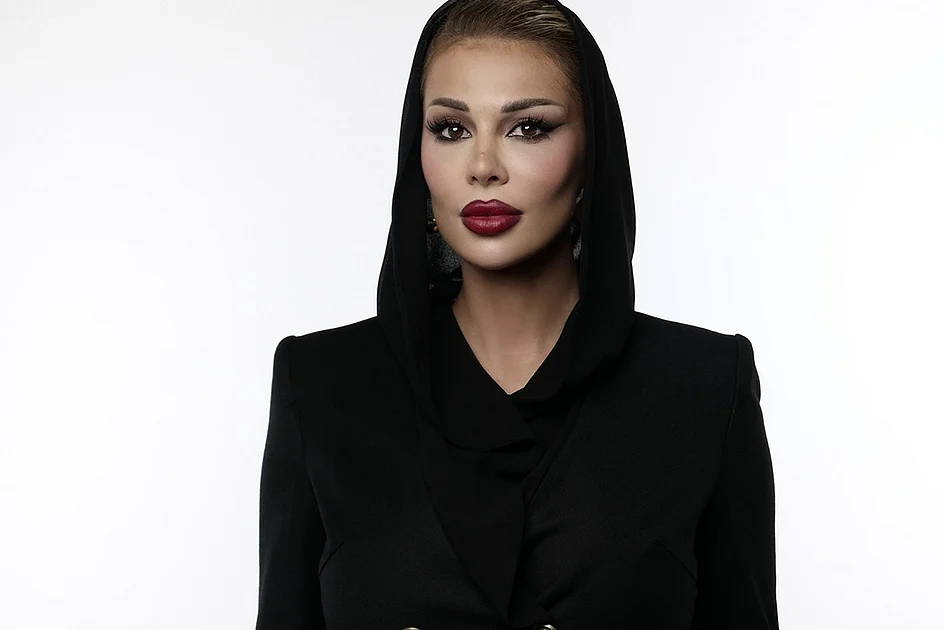
    Dubai’s premier fashion gathering gains international star power as Albanian media personality and fashion entrepreneur Luana Vjollca prepares to headline the Dubai Mall Festival of Fashion on January 30. The multifaceted entertainer-turned-designer will deliver a keynote address titled “From Vision to Brand,” detailing her remarkable transition from television fame to fashion entrepreneurship.

    Vjollca brings considerable credibility to the fashion forum, having built an entertainment career spanning nearly two decades since her television debut at age 15. Her portfolio includes hosting flagship Albanian programs including Fiks Fare, Top Fest, Love Island Albania, and creating her own formats that established her as a dominant force in Balkan media. This extensive background in entertainment now informs her approach to building her fashion label, LULU.

    The designer’s fashion venture emerged from a period of introspection, culminating in a brand philosophy centered on creating clothing “for women by an empowered woman.” LULU’s distinctive aesthetic combines body-conscious silhouettes with structural elements inspired by traditional corsetry, all crafted from premium materials sourced internationally by Vjollca herself. The brand has achieved remarkable commercial success since its launch, with collections frequently selling out—a testament to its resonant design language and Vjollca’s innate understanding of her audience.

    Unlike many celebrity-founded labels, Vjollca maintains hands-on involvement across all operational aspects, from design conception to marketing strategy and social media management. Her Dubai appearance will highlight this comprehensive approach, offering insights into the discipline required to maintain creative vision while scaling a fashion business. Organizers anticipate she will share substantive industry knowledge rather than superficial celebrity commentary, reflecting her reputation for transparency in an often-opaque industry.

    The Festival of Fashion presentation represents a significant evolution in Vjollca’s public persona—transitioning from entertainment performer to serious business innovator. Her participation adds considerable weight to Dubai’s fashion calendar, blending regional celebrity appeal with genuine entrepreneurial substance. The event aims to spotlight emerging voices in design and retail, making Vjollca’s journey from television studios to fashion ateliers a particularly relevant narrative for aspiring designers and business owners.