博客

  • Summer McIntosh storms to Pan Pacs 400 IM title, rebounding from 200 free runner-up finish

    Summer McIntosh storms to Pan Pacs 400 IM title, rebounding from 200 free runner-up finish

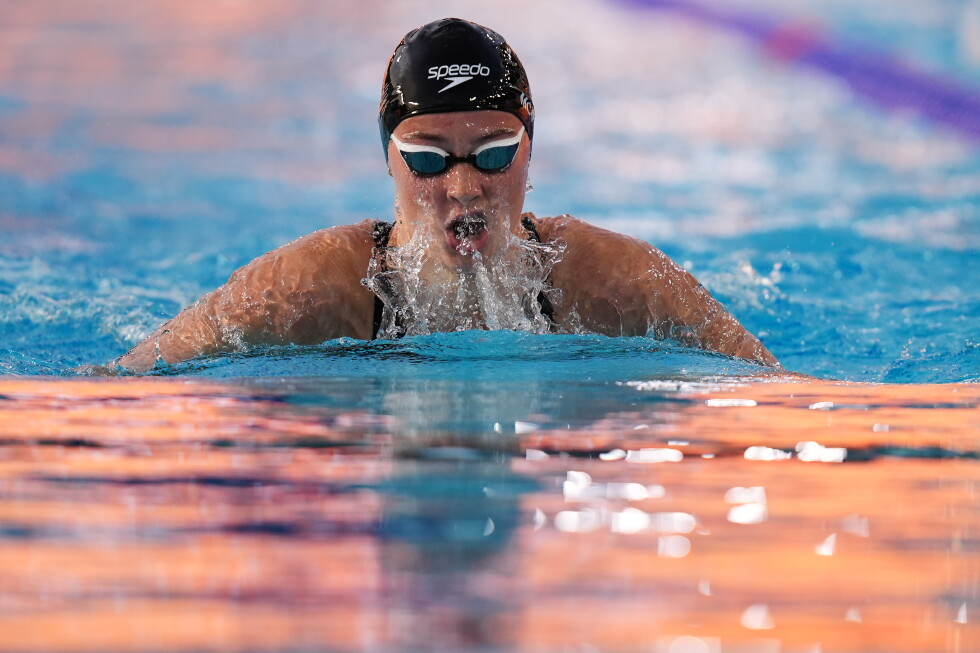
    The 2024 Pan Pacific Championships kicked off this week in Irvine, California, delivering a series of thrilling races, unexpected upsets, and record-breaking performances that kept swimming fans on the edge of their seats Thursday night. Leading the night of competition was 19-year-old Canadian swimming phenom Summer McIntosh, who claimed gold in the women’s 400-meter individual medley in dominant fashion, bouncing back quickly from a silver medal finish in the opening night’s 200-meter freestyle event.

    McIntosh held the lead from the opening stroke of the four-stroke race, and early on she even dipped briefly below her own existing world record pace, a testament to her world-class speed and conditioning. Entering the eight-woman outdoor final as the second-fastest qualifier, she crossed the touchpad in 4 minutes 28.01 seconds, setting a new Pan Pacific Championships event record. The result marked a strong redemptive performance for McIntosh, who had openly expressed disappointment with her result just one night earlier, when Australia’s Lani Pallister edged her out for gold in the 200m freestyle.

    Australia’s Jenna Forrester took silver in the 400m IM with a time of 4:31.50, while 18-year-old Argentine Agostina Hein rounded out the podium to take bronze. Hein entered the final as the top qualifier from the preliminary heats, holding onto her strong form to secure a spot on the medals stand.

    One of the night’s biggest upsets came in the women’s 100-meter freestyle, where Australia’s Meg Harris claimed an unexpected gold medal starting from the outside sixth lane. Harris touched the wall in 52.60 seconds, beating out American rising star Gretchen Walsh, who finished just 0.18 seconds behind in 52.77. Walsh had actually held a 0.01 second lead under world record pace at the 50-meter turn, but couldn’t hold off Harris’s strong finishing sprint. Australia’s Olivia Wunsch took third, while 2016 Rio Olympic gold medalist Simone Manuel of the United States finished just off the podium in fourth place.

    The U.S. men’s team claimed the top two spots on the podium in the men’s 100-meter freestyle. Jack Alexy took gold, clocking a new championship record of 47.14 seconds, shaving 0.26 seconds off the event record he had already set in the preliminary heats earlier in the day. His teammate Patrick Sammon took silver with a time of 47.62, while Brazil’s Guilherme Caribe earned bronze.

    In the women’s 100-meter breaststroke, American McKenzie Siroky claimed her first ever career international gold medal, outtouching China’s Tang Qianting in a tight final sprint. Siroky finished in 1:05.32, just 0.14 seconds ahead of Tang’s 1:05.46 to take the top spot on the podium.

    The final featured race of the night, the men’s 400-meter individual medley, delivered a historic result: Japan’s Tomoyuki Matsushita took gold in 4:06.75, erasing the 14-year-old Pan Pacific Championships record set by American swimming legend Ryan Lochte back at the 2010 Pan Pacific Championships, which were also hosted in Irvine. American Carson Foster took silver, and Matsushita expressed his joy at the historic win in post-race comments, saying through a translator, “Next time I come back to the U.S. I’m going to get gold again.”

    The four-day international swimming competition continues through the weekend, with more top swimmers from across the globe set to compete for championship titles and medals.

  • Adelaide man, 40, charged after alleged deluge of threatening online posts to Australian Federal Police

    Adelaide man, 40, charged after alleged deluge of threatening online posts to Australian Federal Police

    A months-long investigation into sustained online threats directed at Australia’s national law enforcement agency has culminated in the arrest and charging of a 40-year-old Adelaide man, authorities confirmed this week.

    The probe was launched in January 2026 by the Australian Federal Police’s (AFP) relatively new National Security Investigations (NSI) team, a specialized unit established just 15 months prior to crack down on individuals and groups deemed to pose severe risks to Australia’s social cohesion. The investigation was triggered after the AFP received intelligence about a series of threatening social media posts targeting the federal police force, according to an official AFP spokesperson.

    After building a case linking the 40-year-old South Australian resident to the social media account behind the threats, AFP tactical officers executed a search warrant at the man’s Adelaide home on Thursday. During the operation, officers took the man into custody at his residence and seized his mobile phone as key evidence for the ongoing legal process.

    Law enforcement alleges that over a period of multiple months, the suspect posted a large volume of threatening messages targeting the AFP via the connected social media account. Following his arrest, the man has been formally charged with one count of using a carriage service to menace, harass or cause offense under Australian law. He has since been released on bail and is scheduled to make his first appearance at the Adelaide Magistrates Court on September 29.

    The case marks one of the first high-profile prosecutions handled by the NSI team, which was formed to address emerging threats to public safety and social order in the digital space, highlighting the Australian federal government’s ongoing focus on addressing harmful online behavior targeting law enforcement institutions.

  • Tanzid’s 74 lifts Bangladesh to 181-2 at lunch on Day 2 of 1st cricket test against Australia

    Tanzid’s 74 lifts Bangladesh to 181-2 at lunch on Day 2 of 1st cricket test against Australia

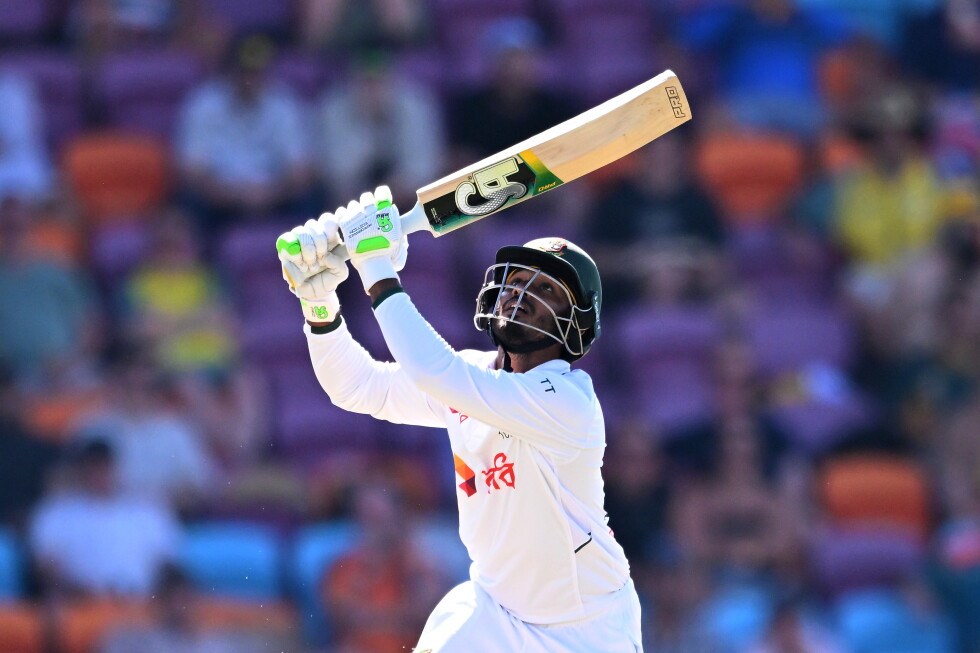
    In the tropical heat of Australia’s far northern city of Darwin, Bangladesh’s cricket team has built a commanding position against the host nation in the opening match of their two-test ‘Top End’ series, with rising batting star Tanzid Hasan leading the charge with an unbeaten half-century at the lunch break on Day 2.

    Bangladesh, which had restricted Australia to a first-innings total of just 198 all out on opening day, resumed play on Friday morning at 96 for one wicket, still trailing the hosts by 102 runs on first innings. Over the next three hours of the morning session, Hasan and his batting partners added a steady 85 runs to the total, losing only one wicket against Australia’s full-strength, world-renowned pace attack, leaving the visitors at 181 for two at the interval.

    The standout performance of the session came from 22-year-old Tanzid, who has now faced 144 balls to notch an unbeaten 74. The innings, which includes six fours and one towering six, marked the young opener’s maiden half-century in just his second appearance in test cricket, the sport’s longest and most prestigious format. He first shared a century stand of 102 runs with veteran batsman Mominul Haque, who compiled a patient 49 from 95 deliveries, hitting eight boundaries along the way. Mominul was just one well-timed shot away from claiming his 29th test half-century when he flashed at a wide delivery from star Australian paceman Josh Hazlewood, edging the ball through to wicketkeeper Alex Carey to be caught behind, breaking the 102-run partnership.

    After the loss of Mominul at 138 for two, Bangladesh captain Najmul Hossain Shanton joined Tanzid in the middle, and the pair added an unbeaten 43 runs before lunch. Shanton has so far scored 28 runs from 40 deliveries, with three boundaries, giving the visitors a solid platform to build on when play resumes after the break.

    The solid performance from Bangladesh’s batters follows a stunning display from their bowling attack on Day 1, which overshadowed the highly anticipated reunion of Australia’s legendary ‘Big Four’ bowling unit – pace trio Pat Cummins, Josh Hazlewood and Mitchell Starc, and veteran off-spinner Nathan Lyon. This series marks Bangladesh’s first test match played on Australian soil since 2003, and pace bowler Hasan Mahmud delivered a career-best performance, taking six wickets for 55 runs to bundle Australia out for 198 in just 53 overs.

    For the hosts, the opening test of the series kicks off a grueling 12-month schedule that will see Australia play 20 test matches, including away tours to South Africa, India and England. After years of test cricket being disrupted by global events, the 20-test year underlines the heavy fixture demand facing the world’s top cricket sides in the current international calendar.

  • US says dozens of countries helped China dodge Trump’s tariffs

    US says dozens of countries helped China dodge Trump’s tariffs

    On Thursday, the White House released a contentious trade report accusing China of systematically evading hundreds of billions of dollars in U.S. tariffs through a widespread global transshipment scheme, alleging more than 40 nations — including major U.S. allies and trading partners Canada, Mexico, India, Japan and South Korea — have facilitated the practice. The document claims the alleged tariff avoidance has stripped American workers of jobs and deprived the U.S. government of billions in annual import revenue, according to White House trade adviser Peter Navarro. Transshipment, a standard logistics practice of moving cargo through an intermediate country en route to its final destination, has been exploited by China to route goods produced on its mainland through nations that face lower U.S. import duties, the White House argued. The report further alleges Chinese actors deliberately repackage shipments and falsify origin documentation to conceal a product’s actual manufacturing source, framing the practice as a “Great Transshipment Scam” and “fraud cloaked in paperwork.” “What has changed in today’s Great Transshipment Scam is not merely the speed and scale of this modern form of smuggling, but the breadth, depth, and sophistication of the global Shadow Transshipment Network through which China’s tariff evasion now moves,” the report reads. To counter the alleged scheme, the White House confirmed U.S. authorities have begun leveraging artificial intelligence tools to detect and block illicit transshipment activity. In response to inquiries from the BBC, a spokesperson for the Chinese Embassy in Washington pushed back against the accusations, stating that “trade wars have no winners.” The spokesperson emphasized China opposes both the United States’ unilateral tariff measures and the use of state power to target Chinese companies, adding that “any unilateral actions or agreements concerning transshipped goods must not target or harm the interests of third parties.” The BBC has reached out to U.S. embassies of all nations named in the report to request comment on the accusations, with no official responses released as of publication. The explosive report lands amid an ongoing cycle of tit-for-tat trade sanctions between Washington and Beijing, and just weeks ahead of a scheduled high-stakes meeting between U.S. President Donald Trump and Chinese President Xi Jinping in Washington D.C. Experts widely expect the transshipment accusation to become a major new sticking point in bilateral trade talks ahead of the September summit. Current trade tensions between the two powers have persisted despite a May 2025 tariff pause that followed earlier negotiations. In the months since that agreement, both sides have rolled out new restrictive trade measures: Washington imposed new curbs on imports of Chinese humanoid robots, while Beijing tightened export controls on critical drone components. The current trade conflict traces back to April 2025, when President Trump unveiled sweeping new tariffs on dozens of U.S. trading partners, rooted in his long-standing position that import duties will strengthen American manufacturing and boost domestic job growth. While the Supreme Court later struck down those initial levies as unlawful, Trump has repeatedly enacted new tariffs using alternative legal authorities to advance his signature trade policy. The White House estimates that between $30 billion and as much as $300 billion in Chinese goods are annually routed through lower-tariff third countries to avoid U.S. duties, combining data from both government and private industry analysts.

  • ‘I want to be Eala’: Philippine sensation sparks tennis boom at home

    ‘I want to be Eala’: Philippine sensation sparks tennis boom at home

    In the sunbaked outer districts of Metro Manila, a four-year-old girl sends a forehand sailing wide across a court paved from crushed seashells. She is far from alone: dozens of young children across the Philippine archipelago are now lacing up tennis shoes and picking up rackets, all chasing the trail blazed by Alexandra Eala, the country’s first homegrown tennis star to reach the upper ranks of global competition.

    The 21-year-old’s rapid ascent to the world’s top 20 in the WTA rankings has upended the status of tennis in the Philippines, a nation long dominated by passion for basketball, professional boxing, and cockfighting, where tennis was long dismissed as a pastime exclusive to wealthy elites. Today, the sport is experiencing a surge of grassroots interest unseen in the country’s history: sales of entry-level tennis equipment have spiked, public and private courts are booked out weeks in advance, and parents are enrolling their preschool-aged children in training programs at a rate local tennis authorities never anticipated.

    “Apart from just bringing new people to watch the sport, she’s actually gotten people to play,” Tonette Mendoza, executive director of the Philippine Tennis Association (PhilTA), told Agence France-Presse. “Many parents are looking at her success and thinking, ‘If she can do it, maybe my kid can be the next Alex.’”

    For nine-year-old Mayumi Stevens, a single iconic photo of Eala diving full-stretch for a shot on Wimbledon’s Centre Court was enough to convince her to pursue tennis. “I felt like, wow, that’s going to be me,” Stevens said while waiting for practice at the Alabang Tennis Academy, an elite training facility in an exclusive Manila suburb. “I want to be Eala when I grow up.”

    Major sporting goods brands have already moved to capitalize on the Eala-fueled boom. French retail chain Decathlon reported that beginner tennis racket sales have jumped 66 percent over the past year, prompting the company to rearrange in-store displays and overhaul its social media content to center Eala’s success. “We really had to jump onto the bandwagon, creating content that’s very relatable, that’s very timely for whatever’s happening with Alex right now,” said Vince Roque, Decathlon’s partnerships and communications manager in the Philippines.

    The sudden surge in demand has exposed longstanding infrastructure gaps in the country, a sprawling archipelago of more than 7,600 islands that PhilTA estimates has fewer than 1,000 tennis courts in total. Many of these are unique local shell courts, built from a low-cost blend of crushed seashells, sand, and clay that is cheaper to construct and maintain than traditional red clay. Even so, booking a court has become a major challenge. “It’s super crazy to book tennis courts nowadays,” said Czarina Arevalo, coach of the Philippines’ under-12 and under-14 national girls’ teams, adding that she never expected to see a Filipino player break into the world’s top 20 in her lifetime.

    Eala, a former US Open junior girls’ champion, climbed to 20th in the WTA rankings just 12 months after qualifying for her first senior Grand Slam, the 2025 French Open. After reaching the fourth round of Wimbledon in July 2025, she claimed her first senior WTA title earlier this month in Washington, D.C., defeating former world number one Naomi Osaka and top-ranked player Jessica Pegula in back-to-back upset wins.

    Her historic run has earned her a loyal national following, even among the 10 million Filipinos who live and work overseas in search of better economic opportunity. Many overseas Filipino fans have paid hundreds of dollars for center court seats to watch Eala compete, bringing the raucous, passionate energy typical of Philippine basketball matches to traditional tennis crowds that once prioritized quiet etiquette. “People were screaming like in a basketball match,” Mendoza said of Eala’s appearance at the 2025 Australian Open earlier this year. “Many of them had never watched a tennis match in their entire lives, but this excitement makes sense. She’s our first who’s gone this far.”

    Despite the grassroots boom, Philippine tennis still faces steep structural barriers. Outside of Eala, the nation has almost no representation in the upper tiers of professional tennis: just four Filipino men hold ATP rankings, and none are ranked inside the world’s top 1000. Eala is the only ranked Filipina in the WTA. For a population of 116 million, public tennis courts are extremely scarce, and a quality entry-level racket can cost the equivalent of a full month’s wages for the average Filipino worker. Eala herself had to leave the Philippines at age 13 to accept a scholarship at Rafael Nadal’s renowned tennis academy in Spain to pursue her dream, a path not available to most young Filipino players. Most top emerging local players end up moving to the United States for college and transition to coaching after graduation, often out of economic necessity, Mendoza said.

    In response to the surge of interest, local governments across the country are now rushing to construct new hard courts, most often in multipurpose facilities that can host multiple sports. Decathlon reported it has received a growing wave of sponsorship requests from local communities building new courts and hosting free beginner tennis clinics. PhilTA is scheduled to break ground this year on a government-funded National Tennis Center north of Manila, which will include a development academy and an 8,000-seat competition stadium.

    For tennis advocates, the growing wave of young Filipinos taking up the sport can only increase the odds of producing the next Alexandra Eala. While that next star is “not in the pipeline yet,” Mendoza conceded, “But I’m sure there’s someone out there.”

  • US says lower oil prices, not Iran’s nuclear program, are now top priority in war

    US says lower oil prices, not Iran’s nuclear program, are now top priority in war

    A dramatic shift in Washington’s strategic priorities for the ongoing conflict with Iran has been laid bare by top US officials, who confirmed Thursday that taming soaring domestic gasoline prices has replaced curbing Tehran’s nuclear ambitions as the White House’s top goal. The announcement underscores how Iran’s closure of the strategically vital Strait of Hormuz has reshaped the conflict, handing Tehran a powerful bargaining chip amid growing political and military strain on the Biden-administration? No — the Trump administration, which launched the war alongside Israel in late February.

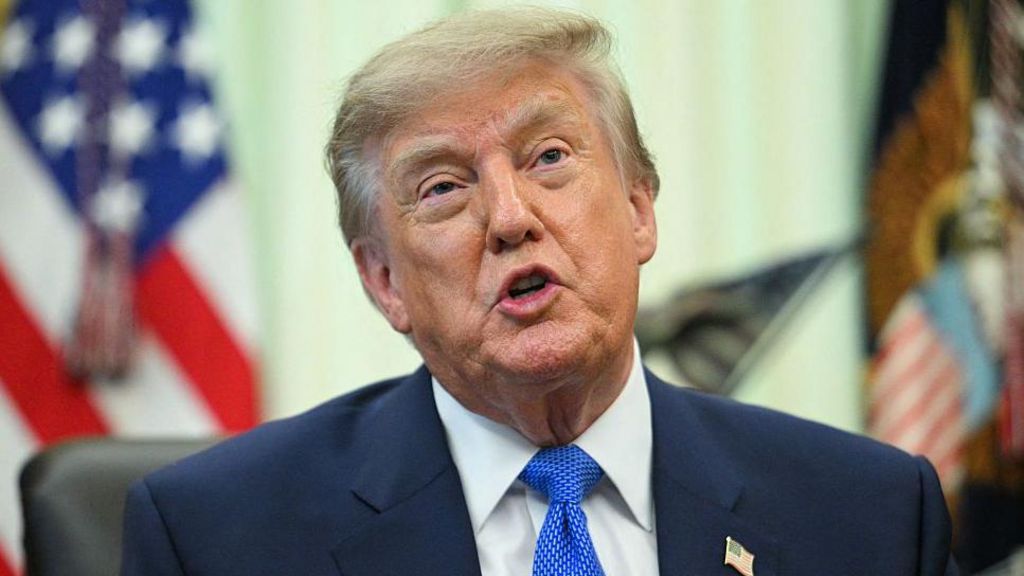
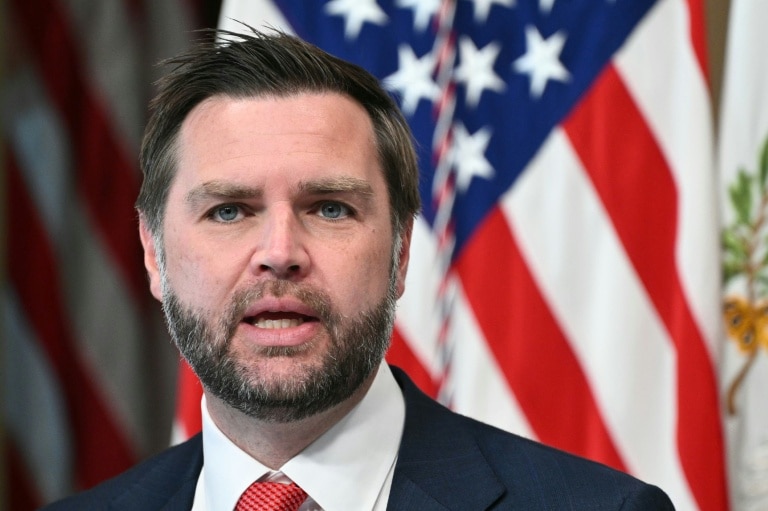
    Speaking in an interview with Fox News, Vice President JD Vance made clear that the long-stated core objective of preventing Iran from acquiring a nuclear weapon — which President Donald Trump repeatedly framed as his primary justification for launching the conflict — has now been pushed to second place. “That’s goal number one — keep oil and gas cheap for Americans all over our country,” Vance said. “And then obviously goal number two is ensure that Iran never gets a nuclear weapon.” His comments cement the new reality that the conflict now revolves entirely around control of the Strait of Hormuz, the world’s most critical chokepoint for global oil supplies that remained open before the US-Israel offensive began.

    In retaliation for the invasion, Iran has effectively shut down the strait, cutting off a major artery of global energy trade and sending US gasoline prices skyrocketing. The move has put Trump in an increasingly precarious position: his approval rating has plummeted amid broad public opposition to the war, and November’s midterm congressional elections are just months away. Congressional Republicans, who currently hold narrow control of both chambers, fear that voter anger over soaring energy costs and the unpopular war will cost them their majority in November.

    Vance, who has been one of the most skeptical voices within the Trump administration regarding the February offensive, said that the administration’s shifting focus reflects its need to address immediate economic pain for American households. “Sometimes we’re focused on the energy piece of it because we want Americans to be able to afford the price of oil and gas. Sometimes we’re obviously focused on the military… on the nuclear program,” he added.

    Treasury Secretary Scott Bessent reinforced the administration’s new approach Thursday, announcing that harsh new economic sanctions targeting Iran are set to roll out next week, as Washington doubles down on economic pressure to force Tehran to back down. Bessent threatened to subject Iran to economic isolation “like the world has never seen before” as part of the new measures. The announcement comes amid a sharp pivot from Trump, who just days ago claimed a deal to reopen the strait was imminent. Now, the White House has paused formal diplomatic negotiations, betting that mounting economic hardship in Iran — where inflation has surged and government revenues have collapsed amid the closure of oil exports — will force Tehran to concede to US demands.

    “We are low-keying it,” Trump told Axios Sunday. “We are only semi-negotiating with them. We are just watching Iran with its huge inflation and the fact they have no money.”

    A second major factor constraining Trump’s options is growing depletion of US military stockpiles. Multiple reports indicate that the US military has burned through billions of dollars worth of advanced high-tech missiles and other precision weapons in the first months of the war, leaving arsenals depleted and limiting the administration’s ability to resume large-scale offensive operations against Iran. Trump has repeatedly stated he would only hold off on new large-scale attacks if Tehran quickly agrees to reopen the strait.

    So far, however, Iran has shown no willingness to compromise on its own terms. Tehran has laid out a set of preconditions for reopening the Strait that the Trump administration is widely expected to reject: a full end to hostilities across all fronts, the lifting of the US naval blockade on Iranian ports, the removal of all long-running sanctions on Iran, the release of billions of dollars in frozen Iranian assets, and payment of compensation for wartime damage to Iranian infrastructure. These demands mirror the terms of a tentative memorandum of understanding reached between the two sides in June, which collapsed shortly after it was signed when fighting resumed. The draft June deal also included a provision to establish a $300 billion international reconstruction fund to help repair damage to Iran’s economy and infrastructure.

  • Heavy rain causes flooding near Tokyo that kills 4 and disrupts train and air travel

    Heavy rain causes flooding near Tokyo that kills 4 and disrupts train and air travel

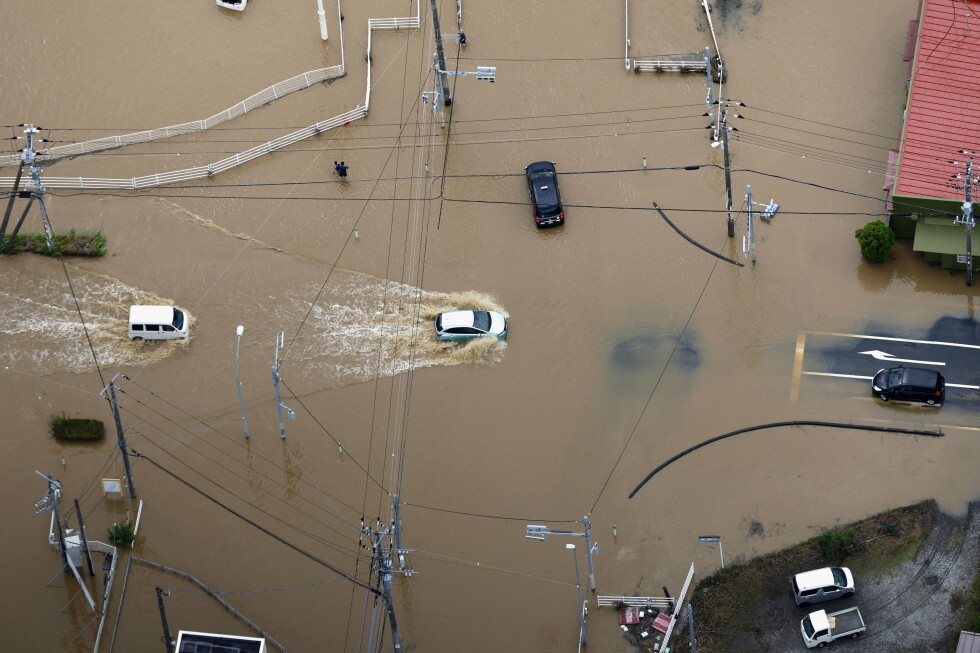
    Days after the end of Japan’s annual Bon Buddhist holiday week, devastating record-breaking downpours swept through eastern regions of Tokyo overnight, leaving a trail of destruction across Chiba prefecture that has claimed at least four lives and left one resident unaccounted for. The extreme weather triggered widespread flooding that submerged roads, damaged dozens of residential properties, cut power supplies to tens of thousands of households, and stranded thousands of travelers across the region.

    As rain levels began to subside early Friday morning, the Japan Meteorological Agency (JMA) announced it would downgrade its highest-level emergency heavy rain warning for more than 10 municipalities across the prefecture. Even so, forecasters warned of additional precipitation expected later in the day, keeping local disaster response teams on high alert. When dawn broke Friday, aerial footage and on-the-ground reporting revealed the full scale of the damage: muddy floodwaters engulfed ground floors of family homes, swallowed parked vehicles, and submerged sections of regional railway tracks.

    In response to the crisis, Japan’s Ground Self-Defense Force launched emergency rescue operations to evacuate stranded residents and travelers. Around 4,000 people who were forced to spend the night at Soga Train Station — a commuter hub that also serves the nearby Tokyo Disney Resort — were picked up by military-arranged buses. Officials confirmed the popular theme park suffered no structural damage or injuries from the flooding. Thousands more holiday travelers were stranded overnight at Narita International Airport, the major air hub serving the Tokyo metropolitan area, after all regional train services out of the affected area were halted. Train operations partially resumed Friday morning, though significant delays continued, while inbound and outbound flights at Narita operated on a normal schedule as travelers headed home following the end of the national holiday week. Hundreds of other residents affected by flooding took emergency shelter overnight at the Chiba prefectural government building.

    Prefectural disaster officials confirmed four fatalities linked to the flooding: a man found floating in floodwaters on a road in Ichikawa City, a woman trapped inside a submerged vehicle in Sakura City, and a third person pulled from a flooded car in Kashiwa City who was pronounced dead at the scene. As of Friday morning, one more person remained missing.

    Across Chiba, more than 80 residential properties have been fully or partially flooded, and local authorities issued evacuation advisories to nearly 230,000 residents, urging them to move to safer, higher ground. Power outages affected roughly 68,000 households at the peak of the storm, according to TEPCO Power Grid, and that number had dropped to around 23,000 by Friday morning as repair crews worked to restore service.

    Meteorological data confirmed the unprecedented intensity of the storm: Chiba City recorded 11.5 centimeters (4.5 inches) of rain in just one hour, while Sakura City hit 9.7 centimeters (3.8 inches) in the same time frame — both new all-time records for the region. “We have recorded rainfall levels that are unprecedented,” JMA forecast official Takuya Hosomi told viewers during a live televised emergency news conference Thursday night.

    AP contributes to this report, with additional coverage of Asia-Pacific events available at the AP News Asia-Pacific hub.

  • How the Mecca Agreement aims to manage US separation from Middle East

    How the Mecca Agreement aims to manage US separation from Middle East

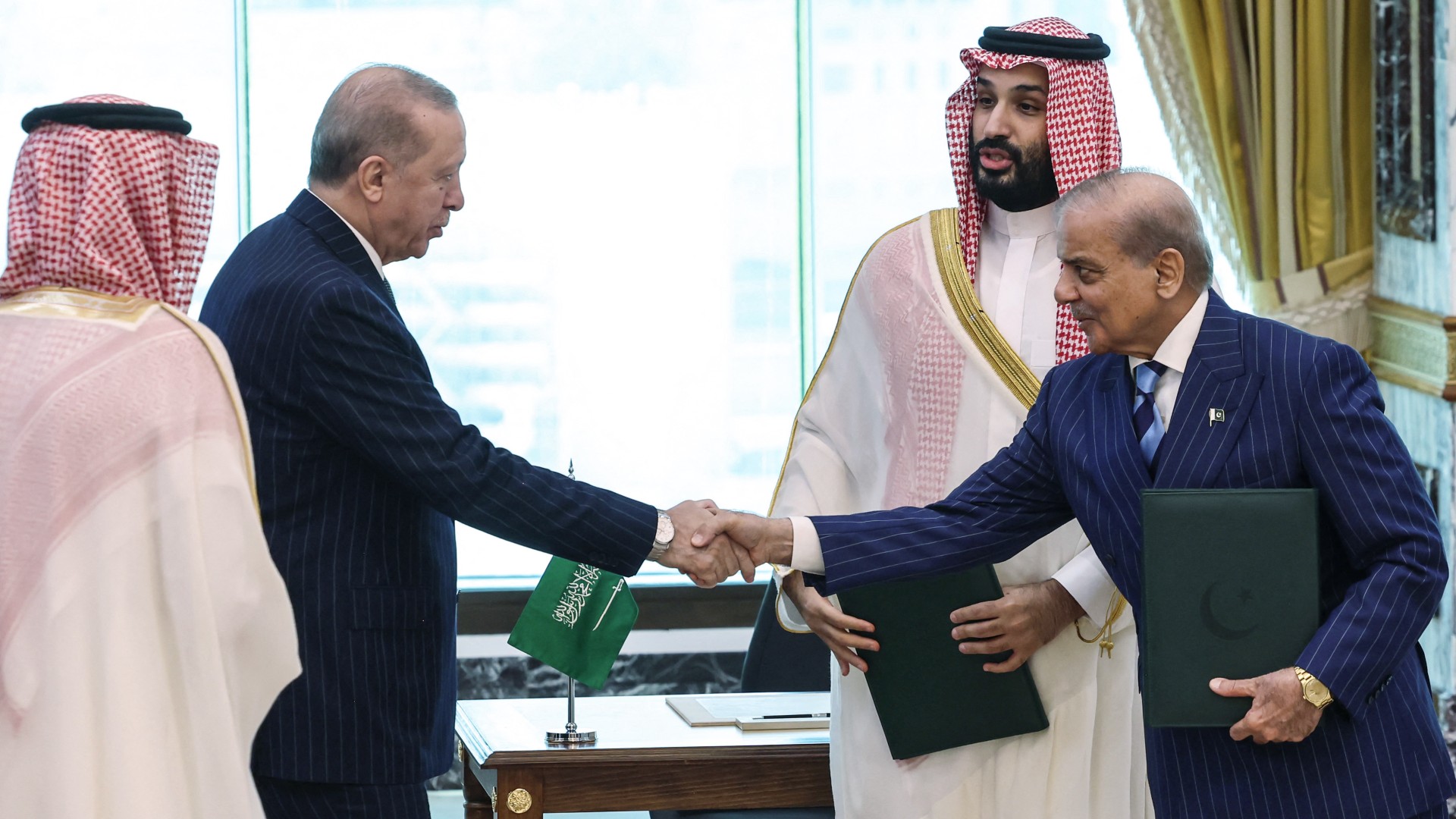
    The signing of the Mecca Joint Defence Agreement by Saudi Arabia, Pakistan, and Turkey on August 7 caught many off guard, yet its emergence follows clear regional trends that make it far from unpredictable. While some outsiders have rushed to frame the pact as a sectarian Sunni alliance – pointing to Saudi Arabia’s role as custodian of Islam’s two holiest sites, Mecca and Medina, Pakistan’s status as a nuclear-armed Islamic republic in South Asia, and Turkey’s assertive brand of Europe-facing political Islam – this characterization misses the mark: the agreement has no basis in religious sectarianism.

    Rather than creating a new, unified military alliance with a centralized command structure, the Mecca pact consolidates three deep, long-standing bilateral defense and economic partnerships into a single collective framework. It builds directly on a separate mutual defense agreement signed between Pakistan and Saudi Arabia in September 2025, a deal that sparked widespread speculation that it would provide Saudi Arabia with a nuclear defense umbrella, a detail all three parties have intentionally left ambiguous. The addition of Turkey to this existing bilateral dynamic created the tripartite agreement finalized in Mecca.

    Regional analysts broadly frame the pact as a key step toward regional countries taking ownership of their own security architecture, rather than relying on outside powers. “It was about time that regional agency takes shape,” explains Bahraini analyst Abdullah Aljunaid. “Put it this way: it’s not Islamic. It’s not about containing Iran either. It is there to prove that the region can produce its own security. You have three major players within the region: Pakistan, Saudi Arabia, and Turkey. What you need to look out for now is the geographical gaps between those three domains, all the way up to Syria.”

    The depth of pre-existing military and industrial ties between the three nations underpins the new framework. Pakistan and Turkey have maintained a close defense partnership for decades, and it is an open secret that Turkey’s defense industry leverages Pakistani engineering expertise for advanced research and development: roughly 200 Pakistani engineers currently work on Turkey’s Kaan fifth-generation fighter jet program. For its part, Saudi Arabia has relied on Pakistani military personnel, including soldiers and pilots, for decades, provided critical funding for Islamabad’s nuclear program, and repeatedly injected emergency financial support to shore up Pakistan’s fragile economy.

    Turkey also serves as a key arms supplier and strategic partner to Pakistan, contributing modular components to high-profile platforms such as the JF-17 Block III multirole fighter jet, which integrates Turkish ASLPOD targeting pods, MURAD AESA radars, and Bozdogan short-range air-to-air missiles. Over the past five years, Saudi Arabia and Turkey have also steadily aligned their strategic outlooks, with their cooperation in Syria earning praise from Washington as the pair built deeper strategic ties. Today, the partnership holds growing economic and strategic importance for Riyadh as it pursues its 2030 Vision goal of localizing 50% of its military spending, with a focus on armored vehicles, missiles, loitering munitions, and drones. Turkish defense firms such as Baykar and Aselsan have emerged as ideal partners, as they are far more willing than many Western suppliers to engage in technology transfer, joint production, and collaborative research.

    Despite these deep connections, merging three separate bilateral relationships into a cohesive tripartite framework poses significant challenges. Senior Ankara-based Center for Iranian Studies researcher Oral Toga notes that negotiations for the Mecca Agreement stretched over two years, meaning its scope was set long before the 2026 U.S.-Israeli war on Iran. Even so, its timing directly reflects growing regional instability around the Strait of Hormuz and the Red Sea.

    American security guarantees have lost much of their credibility in the region following the 2025 Hormuz crisis. Former U.S. ambassador to Qatar Patrick Theros argues that Washington’s strike on Iran turned the long-standing American security umbrella into a strategic liability for regional partners, as the U.S. failed to prioritize or deliver reliable air defense coverage for Gulf allies, creating a critical gap in the existing regional security order. “The Saudis have understood that the Abraham Accords have been a security guarantee for Israel, not the kingdom,” notes Dr. Yeghia Tashjian of the Issam Fares Institute at the American University of Beirut.

    This realization has pushed Gulf states to build new, regionally rooted defense architectures. Qatar moved early to deepen its strategic partnership with Turkey, well before the 2025 Israeli raid on Doha. Saudi Arabia and the United Arab Emirates have taken divergent paths: the UAE has doubled down on its partnership with Israel, which has deployed outer layers of its Iron Dome defense system in the Gulf, while Saudi Arabia has turned to its long-standing historical security partner Pakistan while steadily expanding its ties with Turkey.

    The core question that remains is the ultimate purpose and end state of the new agreement. Dr. Gallia Lindenstrauss, a leading expert on Turkish-Israeli relations at Tel Aviv’s Institute for National Security Studies, argues that while the pact is explicitly framed as defensive, it sends a clear strategic signal to Iran, Israel, and even the UAE. Retired Pakistani Air Marshal Saeed Khan, a former ambassador to Syria, projects that shifting U.S. strategic priorities will reshape the regional order in the near term: “Slowly and gradually, in the next one-two-three years, we will see America reducing its presence in the Gulf, and concentrating in the South China Sea.”

    A key point of ongoing ambiguity is whether the agreement qualifies as a full military alliance. By definition, an alliance requires a shared understanding of core national security threats and a unified command structure – two elements that remain absent more than a month after the pact’s signing. While Pakistani troops and pilots have deployed repeatedly in Yemen under Saudi command, it remains unlikely that Pakistan would deploy its own armed forces directly to confront the UAE, a key economic partner. The April 2026 withdrawal of more than $3.5 billion in Emirati deposits from Pakistan’s central bank served as a clear warning that Islamabad’s alignment with Riyadh carries tangible economic costs. Islamabad will also avoid direct confrontation with Iran: the two countries share a 1,000-kilometer unstable border and face the common threat of Baloch separatist groups, giving Pakistan strong incentive to avoid tensions with Tehran.

    Similarly, Ankara is unlikely to deploy forces to Yemen and risk conflict with Iran, as both countries face shared challenges from Kurdish separatist groups. Even Saudi Arabia has repeatedly sought to avoid stoking Sunni-Shia sectarian tensions, a reluctance that has been reinforced during successive U.S.-Israeli campaigns against Iran.

    Despite these divergent national priorities, the three nations do share interests in addressing common security challenges, particularly in the Red Sea region. Turkey’s Turksom military camp in Mogadishu serves as a key hub for its power projection in the Horn of Africa, and Pakistan has complemented this presence by signing a new military cooperation agreement with Somalia that allows for the deployment of a Pakistani expeditionary force. On the opposing side of this alignment, Israel recognized Somaliland’s independence in December 2025, and the UAE uses infrastructure at Bosaso port and airport to support its operations in Sudan’s ongoing conflict, creating a clear if messy polarization between camps supporting the status quo and those seeking to revise it – a far cry from the clear alignment of Cold War-era blocs such as NATO.

    Whether shared strategic outlooks will translate to coordinated joint military action depends on a range of contextual factors, and overlapping competing interests remain. Turkish-Emirati defense industrial cooperation continues to grow, and Pakistan relies heavily on remittances from the 1.6 million Pakistanis living in the UAE. As military analyst Kamal Alam notes, no one should expect Saudi Arabia to sever ties with India over New Delhi’s arms sales to Israel should the need arise.

    Overall, the Mecca Agreement delivers an intentionally ambiguous strategic message. The three underlying bilateral partnerships remain separate and compartmentalized, even as a broader regional polarization solidifies between status quo powers and revisionist actors. Across Ankara, Manama, Riyadh, and Beirut, analysts widely view the Emirati-Israeli alliance as seeking to revise the regional security status quo, just as Iran seeks to change the status quo around the Strait of Hormuz. This polarization creates risks, particularly for Israel, which also faces uncertainty over long-term U.S. commitment to the region.

    For Israel, the agreement makes the long-sought goal of normalizing relations with Saudi Arabia even more out of reach. “From an Israeli perspective, normalisation between Israel and Saudi Arabia, if not harder, is at least a more distant reality,” notes Lindenstrauss, adding that this is a major setback for Israeli Prime Minister Benjamin Netanyahu, who made expanded Abraham Accords a top policy priority.

    What unites the three Mecca signatories is a shared commitment to upholding the existing territorial status quo, in contrast to the UAE’s support for sub-state actors across the region. As Toga explains: “All three signatories have backed central state authority where the UAE has backed sub-state actors: the Sudanese army against the RSF, Yemen’s recognised government against the STC, Somalia’s territorial integrity against Somaliland’s recognition. Riyadh no longer faces that network alone, and after the Yemen confrontation of late 2025, that is a meaningful change. But I would not overstate it.”

    This consensus marks a foundational shift: the Mecca Agreement is a public statement of intent to defend the regional territorial status quo as the U.S. gradually draws down its military presence in the Gulf. Looking ahead, analysts say the next major development could be additional Chinese mediation to ease tensions between Iran and the Mecca signatories, as the U.S. is no longer seen as having the credibility or convening power to bring regional parties together.

  • Wild Tesla flip in Adelaide’s CBD caught on dashcam

    Wild Tesla flip in Adelaide’s CBD caught on dashcam

    Dramatic dashcam footage has documented a hair-raising road incident in the heart of Adelaide’s central business district that left onlookers stunned, with a 52-year-old female driver walking away from a catastrophic vehicle rollover with only minor harm. The incident unfolded just after 6 p.m. local time on Thursday, August 13, along Twin Street, a busy thoroughfare steps away from the popular Rundle Mall shopping precinct.

    Recorded by a nearby dashcam, the sequence of events shows the driver’s luxury Tesla electric vehicle moving down the street before striking a rigid traffic bollard positioned at the end of the roadway. The force of the high-impact collision sent the vehicle flipping violently into the air, before it came to a rest on its side mere moments later. The short clip also captures the immediate reaction of bystanders, who can be seen reacting with shock before rushing to the driver’s aid to offer help.

    In an official statement following the crash, a spokesperson for South Australia Police confirmed that against all odds, the driver – a resident of St Peters aged 52 – was able to exit the damaged vehicle without assistance. Emergency responders treated her for minor injuries on site, and no serious harm was reported. The wrecked Tesla was subsequently removed from the crash site via tow truck.

    Authorities have now launched a public appeal for any members of the public who witnessed the collision directly to come forward with information. Witnesses are asked to contact Crime Stoppers at 1800 333 000 and reference incident number 211273 to assist with ongoing inquiries into what caused the crash.

  • AFL 2026: Carlton caretaker Josh Fraser confirms interest in senior position

    AFL 2026: Carlton caretaker Josh Fraser confirms interest in senior position

    For months, interim Carlton Football Club coach Josh Fraser kept his ambitions for the vacant senior coaching role closely guarded. Now, after 13 weeks steering the struggling team to an extraordinary turnaround, the caretaker has broken his silence and made his aspirations official: he is ready to take on the permanent top job.

    When Michael Voss departed the club earlier this season, Carlton sat at a disappointing 1 win and 8 losses, their finals hopes all but written off by fans and analysts alike. Since Fraser stepped into the interim role, he has revitalized the squad, climbing the ladder to put the Blues firmly in contention for the final spot in this year’s AFL finals series. For weeks he deflected questions about whether he would pursue the permanent position, but he shared a definitive update with reporters this week.

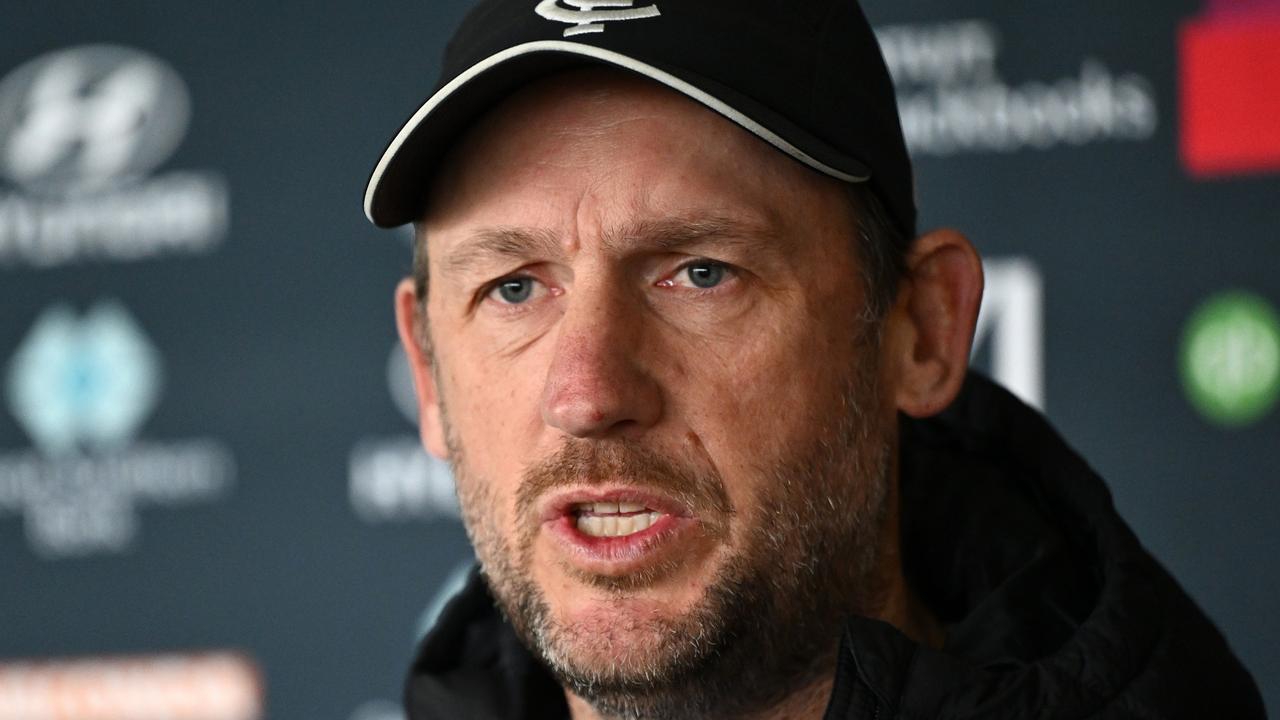
    “A fortnight ago, the club came to me and asked me to be a part of this coaching process and then this week I was in a position to go back to the club and accept that offer to go through the process,” Fraser explained in a press interaction. “I will present it to the coaching panel this week and now I can focus my attention to this week’s game. I’ve said all along if I committed to that process I was all in, so now it’s in the hands of the selection panel and we’ll see what comes of it.”

    Fraser’s extended interim tenure — a rare opportunity for a caretaker to lead a club across a large portion of a full season — has played a key role in confirming his confidence to step into the senior role permanently. When he first took the interim position 13 to 14 weeks ago, he admitted he was unsure if he was prepared to put his name forward for the permanent job.

    “That wasn’t to say I wasn’t, it was just that in my mind at that time, I wasn’t completely sure that I was ready to put my hand up,” he said. “This opportunity I feel has been able to fast-track me in many ways. It has been quite unique that you get an extended period of time to be a senior coach. There are so many things that whilst you’re not exposed to everything, there are so many things you are exposed to that ordinarily you wouldn’t be.”

    That on-the-job experience has reinforced the coaching philosophies Fraser developed over his career, he added, leaving him certain he is prepared for the full-time role. “I think having that little bit of experience now behind me, reinforcing some of the philosophies I’ve been able to develop over the years. Through conversations and through my own thinking, analysing, I think I’m ready.”

    Fraser noted that aspiring senior coaches constantly refine their approach and vision ahead of any opening, and his candidacy will center on the dramatic improvement the Blues have shown over his 12 weeks in charge, paired with the untapped potential he still sees in the playing group.

    “The growth we’ve shown has been exciting but that’s balanced out with I think we’ve got a lot more to go,” he said. “I think there’s the reality too that there’s 19 jobs to be a senior coach … I felt like it was the right time. I am as excited about this group as a lot of our Carlton supporters would be.”