
A new anthrax outbreak in a northern Zambian wildlife management area has killed dozens of wild animals and infected a dozen local residents, prompting emergency public health warnings from Zambian authorities. The outbreak, first detected in July in the Munyamadzi Game Management Area of Muchinga Province, has already claimed the lives of 46 hippos, 8 elephants, 5 buffalo, and one crocodile, according to the country’s Disaster Management and Mitigation Unit. Norman Chipakupaku, the unit’s national coordinator, explained that local communities often rely on the meat of naturally deceased wild animals for sustenance, leaving residents exposed to the deadly bacteria. To date, 12 people have been confirmed to have contracted anthrax after eating meat from the infected carcasses. All 12 patients are currently receiving medical care, and no human fatalities have been recorded from this latest outbreak. In response to the developing situation, Zambian officials have issued urgent guidance for residents across the affected region: people are banned from consuming, selling, distributing, or handling meat from animals that died suddenly or from unexplained causes. The public has also been instructed to report any unusual wildlife deaths to local authorities immediately, and all hunting activities in the affected zone have been suspended until officials can map the full spread of the outbreak and assess associated public safety risks. As of the latest update, field surveillance teams and laboratory researchers are still working to determine the full geographic scope of the outbreak. Anthrax, an infectious disease caused by the spore-forming bacterium Bacillus anthracis, is endemic to Zambia, where the bacteria can remain dormant as spores in soil for decades. The pathogen primarily targets grazing animals, often causing rapid sudden death, and can jump to humans through contact with contaminated animal products or infected tissue. While anthrax is endemic in the country, human fatalities from outbreaks remain rare. However, Zambia has faced several large-scale outbreaks in recent years. In 2023, the country recorded what public health officials described as an “unprecedented” outbreak that spread across nine of Zambia’s 10 provinces and killed four people. The deadliest recorded event in recent history dates back to 2011, when a major outbreak linked to infected hippo meat caused more than 500 human cases and five deaths. Public health teams continue to monitor the situation closely as work to contain the current outbreak progresses.
博客
-
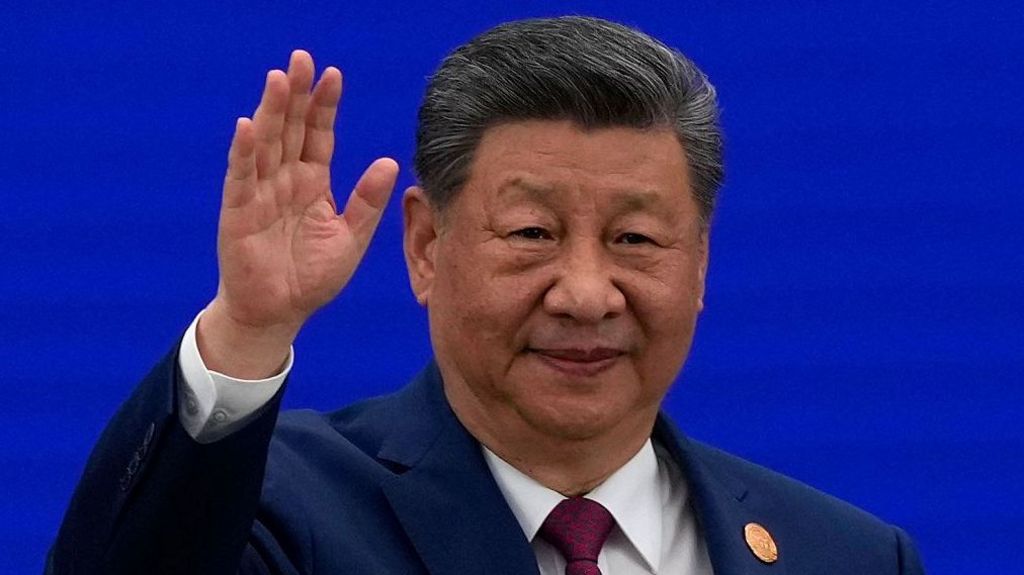
China criticises idea it is in ‘malicious competition’ over AI
Against a backdrop of growing global alarm over unregulated advanced artificial intelligence development, deep geopolitical tensions between the world’s two largest AI powers—the United States and China—have thrown the future of collaborative AI governance into doubt, with competing national priorities and threat narratives blocking consensus on safety standards.
-
Thousands demand end to violence in Mexican cartel hotspot
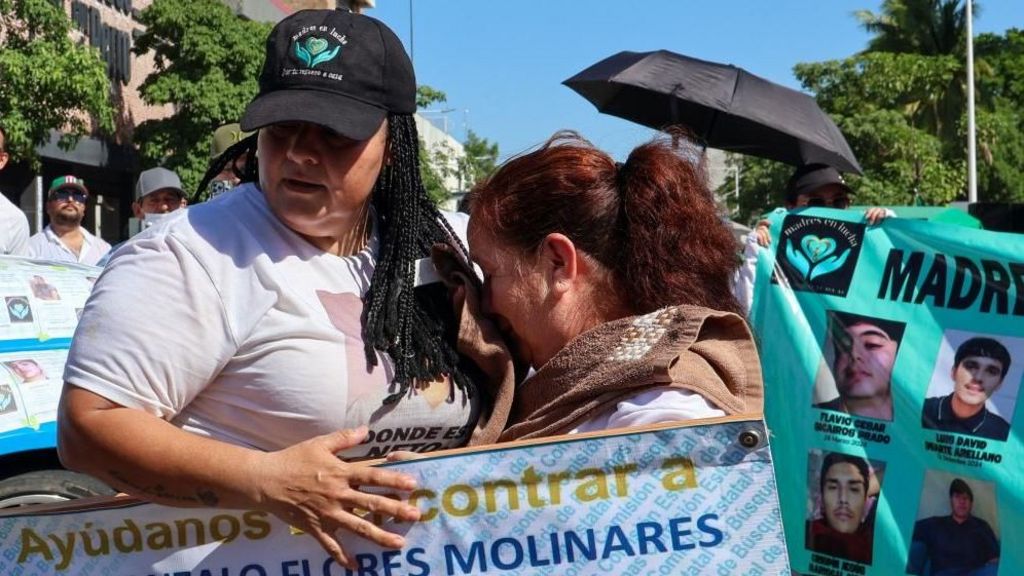
Two years after a deadly internal conflict erupted within the notorious Sinaloa cartel, thousands of frustrated residents of Culiacán, the capital of Mexico’s Sinaloa state, filled the city’s streets on Sunday to raise their collective voice against the unrelenting violence that has upended daily life across the region.
The cycle of bloodshed that has sent murder and disappearance rates skyrocketing across the state traces back to the 2022 arrest of high-profile drug lord Ismael “El Mayo” Zambada by U.S. authorities. Following Zambada’s capture, his faction of the cartel—dubbed La Mayiza—leveled accusations of betrayal against Los Chapitos, the faction led by the sons of jailed cartel founder Joaquín “El Chapo” Guzmán. What began as a dispute quickly devolved into open, brutal warfare that has left ordinary civilians trapped in the crossfire.
Protest organizers said the timing of the march was intentionally chosen to mark the second anniversary of the conflict’s start. Dressed in symbolic white clothing, attendees carried handcrafted posters bearing photos of their missing loved ones and hand-painted signs reading “We don’t want fear, we want peace.” The demonstration brought together a broad coalition of participants: relatives of missing and murdered victims, local business associations, civil society organizations, and leaders from the Catholic Church, which backed the call for an end to bloodshed.
The event opened with a public Mass led by Culiacán’s bishop, who directly addressed the warring cartel members in a heartfelt plea. “Stop, look at what’s happening, look at the affected families, look at the young people and at our city,” he told the crowd. “No amount of power, of money, territory or ambition is worth more than a human life.”
Among the attendees were family members of a one-year-old boy killed just one week before the march, when a stray bullet struck the toddler in the head during a cartel shootout in the city. The child’s death was just the latest high-profile example of the growing human cost of the conflict that has blighted Sinaloa, a state home to more than 3 million residents.
Official data confirms the widespread harm of the internecine war: alongside surging murders and enforced disappearances, rates of extortion and street robbery have also climbed sharply across the state. The economic toll is equally devastating: local business leader Sergio Esquer, who also holds a leadership position with center-left opposition party Movimiento Ciudadano, told reporters that more than 5,000 small and medium businesses have permanently closed since the feud began. “That’s the tragedy Sinaloa is experiencing,” Esquer told AFP.
Beyond the cartel violence, Sinaloa has also been roiled by recent political upheaval that has further destabilized the state. In April, U.S. federal prosecutors publicly named Sinaloa Governor Rubén Rocha and nine other current and former state officials as co-conspirators who collaborated with Los Chapitos to smuggle illicit narcotics into the United States. Rocha has repeatedly denied all allegations of wrongdoing, but stepped down temporarily from his post to allow Mexican federal prosecutors to launch an official investigation.
Three weeks before Sunday’s protest, Rocha returned to office after his temporary leave. But just days later, he requested a second leave of absence, following a public social media post from Mexican President Claudia Sheinbaum that did not name Rocha directly, but warned that “power without principles becomes arrogance.”
For the thousands of marchers who turned out on Sunday, the demonstration is just the latest step in a long fight to reclaim safety and normalcy for their community, after two years of chaos that has left thousands of families shattered.
-

Bali police investigate after Australian man and children found dead in home
Authorities in Bali, Indonesia have launched a full investigation into the tragic deaths of an Australian national and his two young children, whose bodies were discovered inside a rental bungalow in the island’s busy tourist hub of Kuta. The deceased have been identified as 56-year-old Damien John Shaw, originally from Fremantle, Western Australia, his 6-year-old son and 4-year-old daughter.
The sequence of events that led to the discovery began when Shaw’s wife, who was not present in Bali at the time, reached out to local neighbours to check on the family. According to police statements, the woman had been on a phone call with her husband when she heard one of her children crying in the background, before the call cut off unexpectedly. After she was unable to re-establish contact with Shaw in subsequent attempts, she alerted neighbours to the potential emergency. It has been confirmed that the woman had traveled to Jakarta, Indonesia’s capital, several days before the incident.
When neighbours arrived at the property and received no answer to repeated knocks on the door, they forced entry alongside other local residents, and made the grim discovery of the three bodies inside the bungalow on Sunday. Local police have dispatched teams of investigators and forensics officers to process the crime scene, but have so far not confirmed the official cause or manner of death. Further forensic examinations are currently underway to establish a clear timeline and determine how the three victims died.
While Australian media outlets have cited law enforcement sources describing the case as a suspected murder-suicide, Indonesian police have pushed back on premature conclusions, saying they will not confirm any motive or cause until all evidence has been reviewed. Western Australia Premier Roger Cook has publicly responded to the tragedy, describing it as deeply distressing. “This is a very sad situation; our hearts go out to everyone involved. We hope we can get to the bottom of what’s gone on as soon as possible,” Cook told reporters.
-

Hyrox athlete sparks debate for continuing race after soiling herself
A little-known incident at a recent Hyrox indoor fitness competition in Beijing has ignited a fierce global debate across social media and fitness communities, after an unidentified female athlete finished the full race despite an involuntary bodily accident mid-event.
Footage of the athlete, who continued pushing through the course with visibly soiled legs, spread rapidly across major social platforms this weekend, splitting public opinion into sharply contrasting camps. On one side, many observers have praised the competitor’s extraordinary grit and commitment to finishing a race she spent months training for, drawing parallels to well-documented similar incidents among elite endurance athletes. On the other side, critics have raised urgent public hygiene concerns, questioning why event organizers did not pull the athlete from the course immediately to sanitize the affected area before other participants continued competing. Some critics have also targeted event officials for their decision to allow the athlete to continue.
In the wake of the incident, Hyrox, the German-headquartered fitness brand that hosts the global series of races, released an official statement acknowledging the situation. The company confirmed that it launched a large-scale emergency cleanup operation immediately after Saturday’s event, which included full sanitization of all race equipment and replacement of contaminated sections of the event carpet.
While Hyrox recognized that the hygiene concerns raised by participants and the public are legitimate, the firm issued a firm rebuke of online harassment directed at the athlete, after her identity was leaked on social media. The unnamed competitor has since received multiple violent threats from internet users, a development Hyrox condemned in the strongest terms.
“There is no place in our community for threats of violence or encouragement to harm an athlete,” the organization said in its Monday statement. “Any person identified as engaging in this behaviour – whether through comments, direct messages or social media – will be permanently banned from all Hyrox events.”
According to Chinese state media reports, multiple participants who competed in the same Beijing race have demanded a formal apology and full refunds from Hyrox, arguing that they were unnecessarily exposed to potentially contaminated equipment during the race.
For context, Hyrox events combine a sequence of one-kilometer running intervals with eight different functional fitness stations, including sled pushes, burpee broad jumps, indoor rowing, and weighted sandbag lunges. Since its founding in Hamburg, Germany, in 2017, the mass participation fitness competition has exploded in popularity, attracting thousands of recreational and elite athletes across 30+ countries worldwide.
Critics of the organization’s handling of the incident have pointed out that Hyrox’s official rules already penalize other unsanitary acts, including spitting and littering, leading many to ask why officials did not intervene when the incident occurred.
“From a basic health and sanitation standpoint, the athlete should have been stopped immediately, and any contaminated areas should have been closed off and properly cleaned before other athletes were allowed through,” Erica Dodge, a U.S.-based nurse, wrote in a widely shared Instagram comment.
Joe Ho, one of the participants in the weekend Beijing race, has publicly criticized Hyrox’s delayed and insufficient response to the incident, calling on the organization to take accountability for procedural failures. “If the organisation accepts that something went wrong, why not offer affected participants refunds, credits, or some meaningful form of compensation?” Ho asked.
But many members of the global endurance fitness community have come to the athlete’s defense, noting that involuntary bodily accidents are not an uncommon occurrence during high-endurance, long-duration events, when athletes prioritize pushing their physical limits over stopping for mid-race breaks. Many have cited two well-publicized prior incidents to back this perspective: in the 2005 London Marathon, British elite runner Paula Radcliffe famously stopped mid-race to relieve herself on the side of the course in full view of broadcast cameras before going on to win the race, and earlier this year, Chinese elite marathoner Li Meizhen drew public support after finishing the Hengshui Lake Marathon with visible menstrual blood on her leggings, with many praising her commitment to competing.
Supporters of the Beijing Hyrox athlete echo that same reasoning, noting that many competitors spend months of intense training just to earn a spot in major races, and abandoning mid-event is simply not a choice many are willing to make. “They’ve trained too long and too hard to give up just like that,” one Facebook commenter wrote.
-
Police say it could take months to identify Philippine ferry fire victims
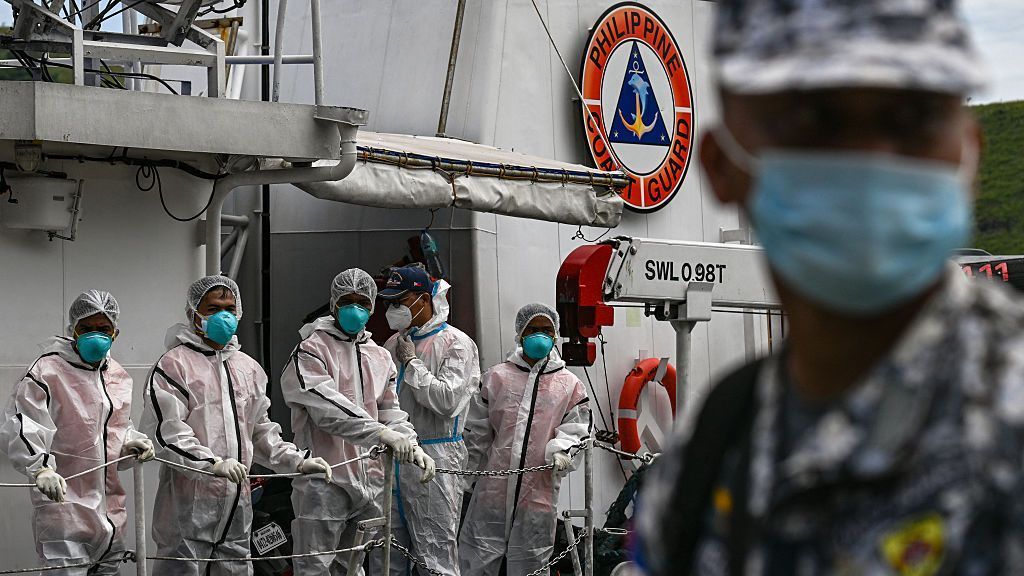
One week after a devastating cargo hold fire tore through the passenger ferry MV June Aster off the Philippine coast, local authorities are facing the grim, labor-intensive task of identifying the remains of 76 confirmed fatalities, a process that forensic officials warn could stretch from weeks to months. The disaster, which unfolded as the vessel sailed from Manila to the popular tourist hub of Coron in Palawan province, has left 13 people still missing and 43 survivors, many of whom have shared harrowing accounts of panic and escape from the rapidly spreading blaze.\n\nSpeaking to reporters on Sunday, Richard Allan Mangalip, a forensic specialist with the Philippine National Police, explained the primary challenge slowing the identification work: most recovered remains are heavily charred from the intense, prolonged fire that burned through the vessel for more than 40 hours. “We are pushing our full efforts to collect any potential identifying markers from the remains,” Mangalip said, noting that the large number of specimens has made it impossible to set a firm, fast deadline for the process. To assist forensic teams, authorities have requested that family members of missing passengers provide DNA samples and information about personal belongings that may help confirm identities.\n\nThe MV June Aster departed Manila last Tuesday on a routine voyage to Coron, a top tourism draw famous for its white-sand beaches and World War II-era shipwreck diving sites. The passenger manifest included a mix of international and domestic tourists, workers commuting to the island, and people traveling to visit family members. Survivor accounts collected in the days after the fire paint a picture of sudden chaos: many reported hearing a loud explosion seconds before smoke began billowing from the cargo hold, and the fire spread so quickly that passengers had only minutes to react before the entire vessel was engulfed. One survivor told the BBC that he was knocked to the deck and trampled in the panicked rush to escape, before managing to jump overboard into the ocean, where he waited hours for rescue.\n\nRescue and recovery operations were severely hampered by the conditions on board: the fire burned for more than 24 hours, generating extreme heat and toxic fumes that kept first responders from accessing the vessel for more than 40 hours. When teams finally were able to board, they found many remains clustered together in sections of the ferry, a grim reminder of how quickly the disaster overtook trapped passengers.\n\nIn an official statement released Sunday, the Philippine Coast Guard, which is leading the ongoing recovery and investigation, expressed its solidarity with those affected by the tragedy. “Our thoughts continue to be with the survivors and the families who are still waiting for word of their loved ones,” the statement read. “We understand the overwhelming pain and uncertainty they are living with every day as we work through recovery and identification, and we are committed to completing this process as thoroughly and expediently as possible.” A senior coast guard official confirmed Saturday that two parallel priorities are guiding the response: identifying all victims, and launching a full investigation to determine the root cause of the blaze.
-

Carney eyes ‘unique alliance’ with EU as trade war with US intensifies
As trade tensions between Canada and the United States spiral to new heights, Canadian Prime Minister Mark Carney has publicly clarified his government’s strategic approach to deepening ties with the European Union, confirming Ottawa is not pursuing full bloc membership but a bespoke, far-reaching partnership. Carney made the remarks to reporters in Toronto Sunday, on the sidelines of the Toronto International Film Festival.
“What we are looking – and will begin discussions for – [is] a unique alliance with the European Union,” Carney stated, pushing back against recent reports that Canada had sought associate member status in the 27-nation bloc. He emphasized that Canada and the EU share foundational democratic values, overlapping policy priorities, and economically complementary strengths that make closer collaboration mutually beneficial. “We’re stronger together. And this is at a time when the world’s more dangerous and divided, and friends need to stick together at these times,” he added.
Carney’s comments follow a Wall Street Journal report citing anonymous officials from both sides that revealed the prime minister had floated the idea of associate membership, and that EU officials had signaled openness to the proposal. The outlet also reported that Carney had directed his special envoy to Europe to map out the most ambitious possible cooperation frameworks that stop short of full accession. Carney’s Sunday briefing put those rumors of a membership bid to rest.
This week, Carney will embark on a high-stakes European tour to kick off formal discussions on the proposed alliance. He is scheduled to address the European Parliament in Strasbourg, attend European Commission President Ursula von der Leyen’s annual State of the European Union address, and travel to Liverpool to meet with United Kingdom Prime Minister Andy Burnham.
The push for closer EU alignment comes directly in response to a rapidly escalating trade conflict with the United States that erupted after bilateral trade negotiations collapsed in late August. The Trump administration has implemented steep tariffs on core Canadian export sectors, including steel, aluminum, and softwood lumber, before adding an extra 50% levy on roughly C$28 billion ($20 billion) worth of Canadian goods. Ottawa hit back with reciprocal tariffs of up to 50% on an equal value of U.S. imports, ranging from industrial steel to consumer goods like furniture and cotton apparel.
Since taking office, Carney has centered his economic policy on building a “more independent, more resilient economy” for Canada, a shift driven by increasingly hostile trade and political rhetoric from the Trump administration. In a notable escalation of tensions, Trump has publicly mused about absorbing Canada as the 51st U.S. state, and recently issued an executive order directing U.S. federal agencies to rebrand Lake Ontario as “Lake America” — a move widely seen as a deliberate provocation. In his January address to the World Economic Forum in Davos, Carney already laid out his vision for closer cooperation between like-minded middle powers, declaring that “the old order is not coming back” and urging aligned nations to build new frameworks for collective security and economic stability.
-
Nearly 86,000 people flee fighting in Yemen, UN says
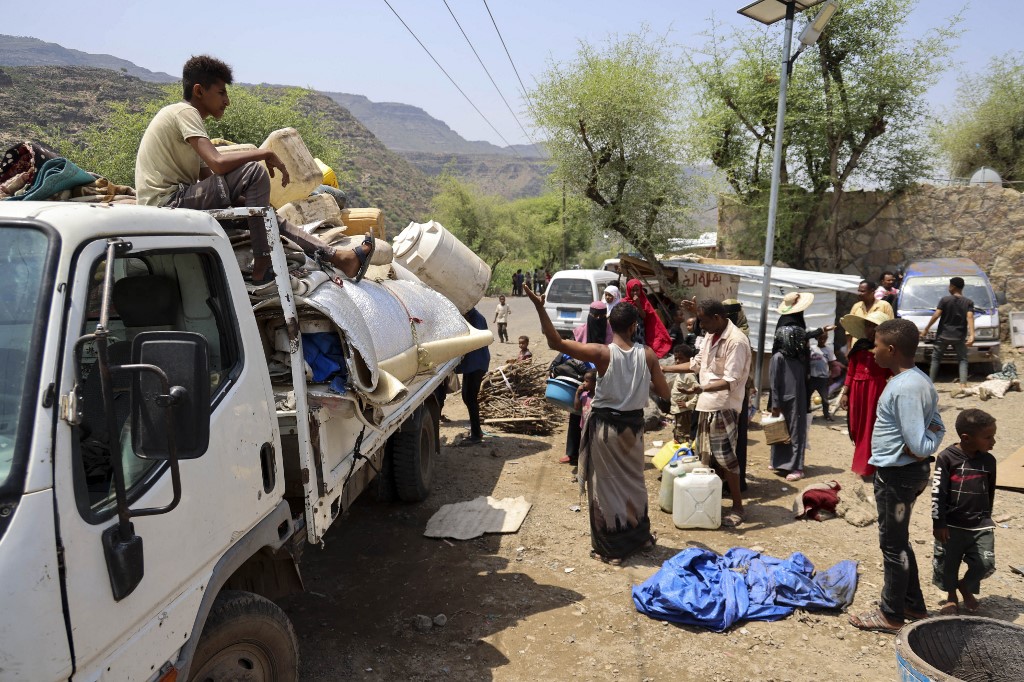
A sharp escalation of armed conflict between Yemen’s internationally recognized government forces and Houthi fighters has triggered a massive new humanitarian displacement crisis, the United Nations’ International Organization for Migration (IOM) confirmed in an official statement released Sunday. The total number of people forced to flee their homes since the resumption of major clashes has reached nearly 86,000, marking an increase of roughly 10,000 displaced people in just 24 hours.
Many of those uprooted by the violence have been forced to abandon their homes multiple times over years of ongoing conflict, the agency emphasized. In a stark appeal for global action, IOM Director General Amy Pope highlighted the human cost hidden behind the raw displacement figures. “Behind every number is a family who’s lost everything,” Pope said. “People are crossing the sea with nothing because they have no other choice left.” She warned that Yemen, already shattered by decades of instability and crippling extreme poverty, cannot bear the weight of this growing crisis without urgent international support.
Since Thursday evening alone, more than 2,000 displaced people — a large share of whom are women and young children — have crossed the Red Sea by boat to reach neighboring Djibouti, IOM data shows. All new arrivals in Djibouti have been moved to a dedicated reception site in the northern town of Obock, where they are currently receiving emergency life-saving aid. The organization, however, cautioned that new waves of displacement are expected as fighting intensifies across western Yemen, and called for significantly increased international assistance to meet growing needs.
The latest escalation of hostilities dates back to September 3, when clashes between Saudi-backed government forces and Houthi fighters reignited across multiple frontlines. The resumption of violence has already killed hundreds of people on both sides. The conflict has spilled across borders, with Houthi forces launching cross-border attacks targeting Saudi territory, while Houthi media outlets confirm that Saudi aviation continues to carry out frequent air strikes on population centers and military positions held by the group in northern and western Yemen.
In a rapid, large-scale offensive launched earlier this week, Houthi fighters captured a broad stretch of Yemen’s Red Sea coastline along the Arabian Gulf, including several strategically vital islands and control of the Bab el-Mandeb Strait — a critical global shipping chokepoint that connects the Mediterranean Sea to the Indian Ocean via the Red Sea.
Local human rights group the Yemeni Network for Rights and Freedoms (YNRF) has documented widespread abuses against civilian populations in the newly captured coastal areas following Houthi fighters’ entry into local cities. The group has recorded more than 950 separate violations against civilians on western frontlines. Among the documented abuses are more than 150 unlawful killings of civilians. Preliminary investigation gathered by YNRF also confirms that Houthi fighters have looted private residences and seized personal property across the seized regions.
Additionally, the rights organization reported that Houthi authorities have launched a widespread mass arrest campaign targeting both civilian residents and former government military personnel. The detainees are being held as leverage to pressure their relatives to surrender themselves, turn over any privately held weapons, and align with Houthi rule, YNRF said.
This report was originally published by Middle East Eye, a media outlet that provides independent, in-depth coverage of political, social and humanitarian developments across the Middle East, North Africa and surrounding regions.
-
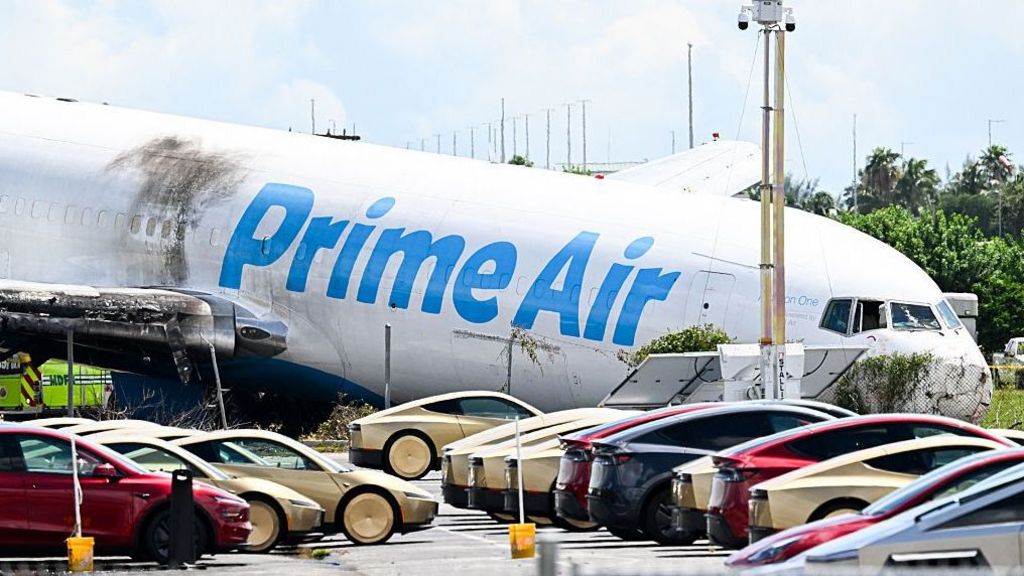
Amazon pauses work with cargo firm after fatal crash
One week after a deadly cargo plane crash at Miami International Airport left five people dead and five more injured, e-commerce behemoth Amazon has announced it will pause all operational partnerships with 21 Air, the aviation firm that operated the Boeing 767-300 jet involved in the incident. A company spokesperson confirmed the decision in a statement Sunday, noting that the move came after a preliminary review of circumstances surrounding the tragedy and ongoing coordination with official investigators.
The September 6 crash unfolded when the cargo plane, which had departed from Puerto Rico’s Luis Muñoz Marín International Airport bound for Miami, overshot the runway during landing. The jet smashed into several civilian vehicles on surrounding roads before coming to a stop, leaving a scene that National Transportation Safety Board (NTSB) chair Jennifer Homendy described as “utter devastation”. Last week, local authorities released the identities of the five victims: Rolando Aleman Leon, 55; Yoel Rodriguez Naranjo, 53; Julio C Pineda, 75; Carlos Acosta Fajardo, 53; and Javierkys Reyes Quevedo, 47.
Early investigative updates from the NTSB, which is leading the probe into the crash, have revealed key preliminary findings. One of the two pilots on board flagged multiple times that the aircraft was traveling at excessive speed as it approached the runway, according to the agency. Multiple safety alerts, including an altitude alarm and other electronic landing warnings, activated during the final approach, but investigators noted that the second pilot did not provide a consistent verbal response to the speed warnings. Investigators have already recovered the plane’s flight data and voice recorders to conduct deeper analysis of the factors that led to the accident.
21 Air, an all-cargo air carrier that contracts its services to global logistics giants including Amazon and DHL, has publicly expressed grief over the tragedy. In a previous statement, the company’s CEO Keith Winters said the firm was “devastated by the accident”, extended deepest condolences to the families of the deceased, and confirmed that the company was fully cooperating with NTSB investigators to clarify the root cause of the crash. The BBC has reached out to 21 Air for additional comment on Amazon’s decision to pause their partnership, and no further statement has been released from the carrier as of press time.
In Amazon’s official announcement, the company emphasized that safety has remained its non-negotiable top priority across all of its internal operations and third-party partnerships. “After the tragic incident last weekend, we’ve spent time supporting the investigation and reviewing some of the surrounding circumstances, and we’ve decided to pause our operations with 21 Air,” the spokesperson said, adding that Amazon will continue to support the ongoing investigation and all parties impacted by the crash.
-

Watch: Why a Russian strike on train near Ukraine-Poland border could mark an escalation
A startling new development in the ongoing Russia-Ukraine war has raised urgent international concerns over a potential dangerous escalation of hostilities, after a Russian drone targeted a passenger train in northern Ukraine just kilometers from the Polish border. Critically, the attack unfolded moments after former British Prime Minister Boris Johnson and a delegation of senior European Union policymakers had departed the same border region, where they had been conducting official talks with Ukrainian leadership.
Ukrainian emergency services confirmed that no fatalities or injuries were recorded in the strike, a stroke of luck that has not eased growing anxiety over the implications of the attack. The proximity of the strike to NATO member Poland – which has served as a key logistics and political hub for Western support to Ukraine since Russia’s full-scale invasion in 2022 – has led military analysts to frame the incident as a deliberate provocation that tests the alliance’s collective defense commitments.
While Russian officials have not yet issued a formal statement claiming responsibility for the strike, the targeting of infrastructure so close to the border immediately following a high-level Western diplomatic visit has sparked debate over whether the strike was intended to send a direct message to European capitals, or marks a shift in Russia’s strategy to target cross-border transport links that are critical to Ukraine’s war effort and international supply lines. Security sources across Europe have already moved to heighten border alert levels in response to the incident, with many leaders calling for increased vigilance against further Russian actions that could draw NATO into direct conflict with Moscow.