博客

  • Met Gala 2026: How to watch, the price of tickets and this year’s theme

    Met Gala 2026: How to watch, the price of tickets and this year’s theme

    The fashion industry’s most anticipated annual event is nearly upon us: the 2026 Met Gala is set to open its red carpet to hundreds of A-listers on the first Monday of May in New York City, with final preparations wrapping up across the city. Seamstresses have put the final stitches on custom designer gowns, high-end jewelry has been polished to a shine, and top local hair stylists and makeup artists have been fully booked for weeks as the industry gears up for what is widely dubbed the “Super Bowl of fashion.”

    This year’s gala, which raises critical funding for the Metropolitan Museum of Art’s Costume Institute, welcomes a star-studded lineup of co-chairs: global music icon Beyoncé, award-winning actor Nicole Kidman, tennis legend Venus Williams, and Amazon founder Jeff Bezos alongside his wife Lauren Sanchez Bezos, who also serve as official sponsors for the event. For Beyoncé, the appearance marks a full-circle return to the iconic event: she has not walked the Met Gala red carpet since 2016, when she turned heads in a futuristic ensemble for the event’s technology-themed iteration that year.

    Joining the co-chairs is an equally high-profile host committee, headlined by designer Anthony Vaccarello and actor-musician Zoë Kravitz. Notable names on the committee include pop star Sabrina Carpenter, rapper Doja Cat, entertainer Teyana Taylor, BLACKPINK’s Lisa, actor Elizabeth Debicki, and writer-director Lena Dunham.

    This year’s event ties directly to the Costume Institute’s brand-new spring exhibition, titled *Costume Art*, which will open to the public following the gala. The exhibition features more than 400 garments and historical objects spanning 5,000 years of fashion history, and will run through January 2027. Reflecting the exhibition’s focus, the official gala dress code is “Fashion Is Art,” which invites guests to interpret fashion as a tangible, embodied art form and celebrate how the dressed body has been depicted across art history.

    Industry outlets such as Vogue have speculated that many guests will lean into historical artistic references for their red carpet looks, with nods to movements ranging from the Renaissance and Baroque periods to Impressionism. Some celebrities may even pull direct inspiration from iconic individual paintings. That said, the flexible nature of the theme leaves room for endless personal interpretation, so attendees are expected to bring a wildly diverse range of styles to the red carpet.

    Beyond the fashion, the 2026 Met Gala has not been without controversy. Bezos’ role as co-chair and sponsor has sparked calls for a boycott from critics, who have raised concerns over workers’ rights issues tied to Amazon. Protest posters have even been spotted near the Metropolitan Museum of Art calling attention to the disputes.

    As per long-standing tradition, the event will kick off with guest arrivals starting at 6 p.m. EST (11 p.m. BST). While the official guest list is never released to the public ahead of time, around 450 invited A-list guests are expected to attend. The gala itself is a strictly exclusive, closed-door event: the general public cannot access the inside festivities, which include cocktails, a formal dinner, live entertainment, and a first look at the new *Costume Art* exhibition, and a strict no-selfie rule is enforced inside the venue. Even so, the hours-long pre-event red carpet guarantees global, wall-to-wall media coverage.

    As is common for major cultural moments, the 2026 Met Gala has already been leveraged for cross-promotion: the long-awaited sequel *The Devil Wears Prada 2* premiered this past weekend, with its release date deliberately timed to coincide with the gala. The original 2006 film, a beloved affectionate parody of the high fashion world, was loosely based on Met Gala chair Anna Wintour’s tenure as editor-in-chief of Vogue.

    For fans unable to attend in person, multiple free live streaming options will be available. Vogue will once again host the official red carpet stream, hosted by model Ashley Graham, model-actor Cara Delevigne, media personality La La Anthony, with fan-favorite correspondent Emma Chamberlain returning for another year. The stream will be broadcast across Vogue’s digital platforms, as well as YouTube and TikTok. Dozens of other news outlets and fashion brands will also stream their own coverage across Instagram and TikTok, and the BBC News website will run a dedicated live page throughout guest arrivals.

    For those curious about how the guest list comes together: the event maintains its tight exclusivity through a simple rule: every single invitation must receive personal sign-off from Wintour, who has chaired the Met Gala since 1995 and currently serves as global head of content for Condé Nast, Vogue’s parent company. While tables at the gala cost upwards of $350,000 and individual tickets run roughly $75,000, almost no celebrities pay for their own attendance. Instead, major fashion brands cover the cost of tables and tickets to host A-list stars, who in turn generate massive global publicity for the brand by wearing their designs on the red carpet — publicity that far outweighs the high cost of entry.

  • Man rushed to hospital with serious injuries after alleged horror attack on busy Melbourne CBD street

    Man rushed to hospital with serious injuries after alleged horror attack on busy Melbourne CBD street

    A violent midday incident on one of Melbourne’s most crowded commercial thoroughfares has left a local man hospitalized with life-threatening upper body trauma, prompting an active police investigation into the circumstances of the attack. Emergency response teams were dispatched to the intersection of Collins Street and Elizabeth Street, a bustling hub in Melbourne’s central business district, shortly after 2:10 p.m. on Wednesday following reports of an injured individual at the scene. The victim, identified only as a 37-year-old resident of the Melbourne suburb of Mill Park, was urgently transported to the Royal Melbourne Hospital after first responders assessed his condition. As of Wednesday afternoon, the victim remains in serious but stable condition, according to initial updates from emergency services. A spokesperson for Victoria Police confirmed Wednesday that investigators have not yet established how the man sustained his injuries, noting that the case remains open and active. Police have not yet released any information about potential suspects or motives for the incident, and additional details are expected to be released as the investigation progresses. Local witnesses reported a heavy emergency services presence at the downtown intersection in the minutes after the incident, though traffic and pedestrian activity in the area had returned to near-normal levels by late Wednesday afternoon.

  • Cruise ship operator says Dutch to repatriate two ill passengers

    Cruise ship operator says Dutch to repatriate two ill passengers

    A serious public health incident is unfolding on a cruise ship anchored off the coast of Cape Verde, where three people have already died amid a suspected hantavirus outbreak, and Dutch authorities are set to lead a coordinated mission to repatriate two acutely ill passengers still on board, the vessel’s operator has confirmed.

    In its first official public statement addressing the crisis, Netherlands-based Oceanwide Expeditions, which operates the expedition cruise ship MV Hondius, acknowledged the unfolding “serious medical situation” on the vessel. The ship was mid-voyage, traveling north from Ushuaia, Argentina toward Cape Verde when the outbreak began.

    The operator has verified three fatalities connected to the incident: two deaths occurred on board the ship, while a third victim died after disembarking earlier for emergency care. One passenger is already receiving intensive care treatment in a Johannesburg hospital, where hantavirus has been confirmed in their case. Two remaining symptomatic passengers on the MV Hondius now require urgent, advanced medical intervention that cannot be adequately provided on the vessel.

    Oceanwide Expeditions confirmed that Dutch authorities have committed to leading a joint international effort to medically evacuate and repatriate the two symptomatic people from the ship’s current position off Cape Verde to medical facilities in the Netherlands. The evacuation and repatriation effort remains contingent on multiple key approvals, most notably formal authorization from local Cape Verdean authorities, which has not yet been granted. While local medical practitioners have already boarded the vessel to evaluate the health status of the two passengers, permission to move them to onshore medical facilities in Cape Verde is still pending.

    A spokesperson for the Dutch Ministry of Foreign Affairs confirmed to Agence France-Presse that the department is actively assessing all logistical and regulatory options to carry out the medical evacuation of the affected passengers. “If this can take place, the ministry of foreign affairs will coordinate it,” the spokesperson said.

    Oceanwide Expeditions added that it remains in constant close communication with Cape Verdean health authorities to coordinate plans for full disembarkation and universal medical screening of all passengers and crew once local approval is secured.

    Though hantavirus has been confirmed in the Johannesburg patient, operators emphasize that it has not yet been definitively linked to the three recorded deaths, and neither has hantavirus been confirmed in the two symptomatic patients still on the ship. “The exact cause and any possible connection are under investigation,” the company said.

    The World Health Organization released an update on the incident Sunday, confirming one laboratory-positive case of hantavirus and five additional suspected cases. The U.N. health agency noted that while hantavirus infections in humans are rare, human-to-human transmission is possible, and the pathogen can cause life-threatening severe respiratory illness that requires constant specialized monitoring and supportive care.

    Hantavirus is most commonly transmitted to humans from contact with rodent excreta, according to global public health data.

  • Three dead after monster truck crashes into crowd

    Three dead after monster truck crashes into crowd

    A tragic accident at a monster truck exhibition in southern Colombia has left three people dead and at least 38 others injured after the vehicle lost control and crashed into a gathered crowd on Sunday. The incident unfolded in Popayán, the capital city of Colombia’s Cauca province, when the truck’s braking system reportedly failed mid-show, according to initial law enforcement assessments.

    Graphic footage circulating from the event captures the moment the out-of-control truck smashed through a protective barrier separating the vehicle from spectators. After barreling into the standing crowd, the truck only came to a halt after colliding with a nearby electricity pole, leaving panicked attendees scrambling for safety.

    Local official reports, shared by Colombian newspaper El Espectador, confirm that a 10-year-old girl was among those killed at the scene of the crash. Popayán’s police commander Colonel Julián Castañeda told local outlet El Tiempo that preliminary investigations point to a mechanical failure as the root cause of the disaster. “The vehicle accelerated, it couldn’t brake, and the driver is in stable condition,” Castañeda confirmed in his statement to press.

    Local and regional leaders have moved quickly to respond to the tragedy, announcing a full, transparent probe into the incident to determine what led to the crash and hold any responsible parties accountable. “These events, which should never have happened, will be clarified with total responsibility and transparency,” said Juan Carlos Muñoz Bravo, mayor of Popayán, in an official address following the accident.

    Regional governor Octavio Guzmán also extended public condolences to grieving families and the community of Popayán. “We express our solidarity with the families of those affected by this tragic accident, as well as with our capital city, Popayán,” Guzmán said. As of the latest updates, authorities have not released additional details on the condition of the injured, and the formal investigation remains ongoing.

  • Iran warns will attack US forces in Hormuz after Trump announces escort plan

    Iran warns will attack US forces in Hormuz after Trump announces escort plan

    Tensions between the United States and Iran have spiked dramatically in the strategic Strait of Hormuz, after former U.S. President Donald Trump announced a new U.S. military escort mission for commercial shipping through the waterway, prompting Tehran to issue an explicit threat to attack any American forces that enter the strait.

    The current standoff stems from a months-long conflict that has deadlocked diplomatic negotiations since a ceasefire between the U.S.-Israeli coalition and Iran went into effect on April 8. At the heart of the dispute is Iran’s decision to block access to the Strait of Hormuz, a critical global chokepoint that carries a third of the world’s seaborne oil and natural gas exports, along with key supplies of agricultural fertilizer. Iran’s blockade has choked off global energy and commodity flows, while the U.S. has retaliated with its own counter-blockade of Iranian ports.

    On Sunday, Trump took to his social platform Truth Social to unveil the new maritime escort operation, which he branded “Project Freedom”. He framed the mission as a humanitarian intervention, designed to assist hundreds of commercial ships and crews trapped in the Gulf region, many of which are facing dwindling supplies of food and essential provisions. “We will use best efforts to get their Ships and Crews safely out of the Strait. In all cases, they said they will not be returning until the area becomes safe for navigation,” Trump wrote, confirming the operation would get underway on Monday.

    The U.S. leader also noted that his diplomatic representatives were holding constructive talks with Iranian officials, adding that ongoing discussions could yield a mutually beneficial agreement for both sides. Notably, however, he made no public reference to the 14-point peace proposal that Tehran says it submitted last week to end the conflict, which includes a one-month deadline for negotiations to reopen the strait, lift the U.S. blockade, and formally end hostilities, according to U.S. news outlet Axios, which cited two anonymous sources briefed on the Iranian plan.

    Within hours of Trump’s announcement, Iran’s military central command issued a firm rebuke. In a statement carried by Iranian state broadcaster IRIB, Major General Ali Abdollahi emphasized that all safe passage through the Strait of Hormuz must be coordinated with Iranian forces under any circumstances. “We warn that any foreign armed force — especially the aggressive US military — if they intend to approach or enter the Strait of Hormuz, will be targeted and attacked,” Abdollahi said. The Iranian Revolutionary Guards doubled down on the warning Sunday, framing Trump’s choice as a binary one: “an impossible operation or a bad deal with the Islamic Republic of Iran.”

    U.S. Central Command has assembled a large-scale force for the Hormuz mission, including guided-missile destroyers, more than 100 land and sea-based aircraft, advanced multi-domain unmanned surveillance and strike platforms, and 15,000 active-duty service members. As of April 29, maritime intelligence firm AXSMarine recorded more than 900 commercial vessels stuck in the Gulf region amid the ongoing blockade.

    The escalating standoff has sparked deep concern among U.S. European allies, who face major economic damage from prolonged closure of the strait. German Foreign Minister Johann Wadephul publicly called for the immediate reopening of the waterway, and in a call with Iranian Foreign Minister Abbas Araghchi, Wadephul stressed that Germany supported a negotiated settlement, but insisted “Iran must completely and verifiably renounce nuclear weapons and immediately open the Strait of Hormuz.”

    French President Emmanuel Macron, who has led efforts to organize an international coalition to secure the strait alongside Britain and other partners, said the only viable path forward is “a coordinated reopening by the United States and Iran.”

    Global energy markets have already been roiled by the blockade: current oil prices sit roughly 50 percent higher than pre-conflict levels, driven almost entirely by supply chain disruptions through the strait.

    Trump, who spent the weekend at his Mar-a-Lago resort in Florida, declined to specify what actions would prompt new U.S. military strikes against Iran, but warned that any interference with the humanitarian escort mission would be met with force. “If in any way, this Humanitarian (ship-guiding) process is interfered with, that interference will, unfortunately, have to be dealt with forcefully,” he wrote.

    U.S. Treasury Secretary Scott Bessent doubled down on Washington’s pressure campaign, telling Fox News that the U.S. naval blockade is part of a sweeping economic embargo designed to cripple the Iranian government. “We are suffocating the regime, and they are not able to pay their soldiers,” Bessent said. “This is a real economic blockade, and it is in all parts of government.”

  • Africa eyes benefits from tariff waiver

    Africa eyes benefits from tariff waiver

    When China’s expanded zero-tariff policy for African exporters took effect on May 1, 2026, business leaders and policy experts across South Africa began framing the move as a transformative opportunity to deepen cross-continental trade and unlock broad-based economic gains for the African continent. Previously, China’s duty-free access schemes only covered a limited group of the world’s least developed African nations. The updated policy extends this preferential treatment to include major middle-income African economies such as South Africa and Nigeria, opening new doors for a far wider range of export sectors. Theuns Botha, chief executive officer of Kingday Textiles — a South African firm that imports Chinese textile inputs and exports raw aluminum and zinc to China — has called on domestic businesses across the continent to move quickly to capitalize on the new trade terms. “This is an incredible opportunity. China is actively working to expand two-way trade with African countries,” Botha explained in an interview. “This tariff waiver covers multiple core sectors, from manufacturing to agriculture to mining, and strong demand from Chinese consumers and industrial operators will drive job creation across the continent. What we are seeing is China opening its markets and making tangible trade concessions to partners across the globe.” Botha added that the new zero-tariff scheme comes at a critical moment for many African nations, which have faced growing uncertainty and volatility in their trade relations with the United States amid Washington’s unilateral tariff policies. Under the current U.S. administration, trade negotiations with Washington have become “difficult and complicated,” he noted, urging South African producers to scale up production capacity to meet rising Chinese import demand and capture a larger share of the vast Chinese market. Wolfe Braude, a senior manager at the Agricultural Business Chamber of South Africa, also welcomed the policy, while reminding prospective exporters that they must meet all of China’s regulatory requirements to access the market. Any African country seeking to export agricultural commodities to China is required to negotiate and sign official sanitary and phytosanitary (SPS) protocols to ensure food safety and prevent the spread of pests and disease, Braude explained. To date, South Africa has already finalized several such agreements, and the nation plans to add cherries and blueberries to the list of approved exports for China in 2026, he added. For non-agricultural goods, exporters are required to comply with product safety and quality standards set by Chinese regulatory authorities, Braude noted. He acknowledged that navigating China’s regulatory framework and market entry procedures poses challenges for some African firms, particularly small and medium-sized enterprises (SMEs) that lack the administrative and operational capacity to meet requirements on their own. These smaller businesses will need targeted capacity-building support to fully capture the benefits of the zero-tariff waiver, he said. Looking ahead, the 2026 Framework Agreement on Economic Partnership for Shared Prosperity, which South Africa signed with China earlier this year, will help exporters gain a clearer understanding of Chinese trade systems, rules and regulatory requirements, Braude noted. Beyond trade, the agreement also paves the way for deeper Sino-African cooperation in high-priority areas including green energy development, digital transformation, technical capacity building and infrastructure financing, he added. Braude also emphasized that China’s decades of rapid development experience offers valuable, actionable insights for African economies, noting that China has successfully addressed many of the same structural development challenges that African nations continue to grapple with today. Philani Mthembu, executive director of the South Africa-based think tank Institute for Global Dialogue, echoed these positive views, saying the zero-tariff policy will further deepen and strengthen trade ties between Africa and China. “China is opening its market wide to South African products, especially in the agriculture sector, which is a very important development for our economy,” Mthembu said. Looking forward, Mthembu noted that the next phase of Sino-African trade cooperation should focus on expanding cross-border investment and building joint manufacturing partnerships on the continent. “Even in the automotive sector, we encourage Chinese firms to establish manufacturing facilities for high-tech goods and other products right here in Africa,” he said. As the policy enters its first days of implementation, African stakeholders remain optimistic that the expanded zero-tariff waiver will deliver inclusive, long-term economic benefits across the continent, while also creating new opportunities to rebalance African trade partnerships amid global economic uncertainty.

  • Australian sharemarket falls ahead of looming interest rate hike

    Australian sharemarket falls ahead of looming interest rate hike

    The Australian equity market extended its prolonged downturn into a ninth losing session in 10 trading days on Monday, driven by growing investor anxiety over an impending interest rate hike from the Reserve Bank of Australia (RBA) and a wave of downbeat corporate announcements. By the closing bell, the benchmark ASX 200 had slid 32.7 points, or 0.38%, to settle at 8697.1, while the wider All Ordinaries index dropped 30.9 points, or 0.35%, to end the session at 8923.8.

    The nation’s big four banking giants recorded a mixed trading session, with results split by recent corporate earnings reports. National Australia Bank (NAB) led the declines among major lenders, dropping 1.58% or 62 cents to close at $39.20 after reporting a fall in half-year profits. Commonwealth Bank of Australia also closed in negative territory, edging 0.48% or 82 cents lower to $172.21. Gains were recorded by the remaining two major banks: ANZ rose 1.9% or 67 cents to finish at $36.29, while Westpac gained 0.13% to close five cents higher at $38.50.

    Commodity markets also trended downward through the session. Spot gold prices fell 0.37% or 16.97 points to settle at US$4595.53 per ounce, while international benchmark Brent crude dropped 0.8% or 0.87 points to trade at US$107.30 per barrel. Against this backdrop, the Australian dollar hit a four-year high against the U.S. dollar, last trading at 72.02 US cents.

    The majority of ASX sectors closed the day in negative territory. The Consumer Staples sector was the hardest hit, sliding 2.58% following a series of corporate updates. Alcohol and retail conglomerate Endeavour Group fell 3.8% or 12 cents to $3.29 after revealing plans to cut $100 million in operating costs by the 2027 financial year. Supermarket giant Coles Group dropped 3.93% or 90 cents to $22.02, while dairy processor Bega Cheese lost 3.58% or 20 cents to close at $5.38. The Utilities sector also posted notable losses, with AGL falling 3.1% or 30 cents to end at $9.39. The Information Technology sector was a rare bright spot, climbing 1.03% overall, led by a 6.15% jump for location technology firm Life360 (to $21.23, up $1.23) and a 2.92% rise for accounting software provider Xero (to $82.92, up $2.35).

    All investor attention now turns to Tuesday’s RBA monetary policy announcement, where another interest rate increase is widely forecast. Market expectations for a hike have been amplified by global energy market volatility stemming from the ongoing conflict in the Middle East. BetaShares chief economist David Bassanese noted that while an increase would be disappointing for Australian mortgage holders, the broader sharemarket is unlikely to see extreme volatility in the days following the decision, as the move is already largely priced in. “Given it’s expected, the decision shouldn’t have a big effect on the market on Tuesday,” Bassanese explained. “The tone of the statement that accompanies the decision will be probably just as important as the decision itself. The market may be relieved if they raise rates but then signal that they’ll be pausing for some time.” He added that the RBA needs to cool domestic economic growth to prevent energy-driven inflation from becoming embedded in long-term wage and price setting. All eyes will be on RBA governor Michele Bullock as she delivers the central bank’s latest policy call and forward guidance.

    A number of individual companies posted steep declines following negative corporate updates Monday. Footwear retailer Accent Group saw its share price plunge 12.9% or eight cents to 54 cents after the firm confirmed it is facing an investigation by the Australian Securities and Investments Commission (ASIC) into share market trading conducted by chief executive Daniel Agostinelli. The company also cut its full-year pre-tax earnings forecast to between $79.5 million and $84.5 million, well below consensus analyst expectations. Energy firm Viva Energy fell 3.2% or eight cents to $2.42 after announcing that repair works to its Geelong oil refinery, damaged in a major fire last month, would not be completed until the end of June, later than some market projections. Infant formula manufacturer A2 Milk recorded one of the steepest single-day drops, sliding 9.9% or 72 cents to $6.55 after issuing a recall of thousands of formula units shipped to the United States, triggered by the discovery of a toxin that can cause severe illness in young children.

  • In Wales, UK Labour Party loses grip on storied heartland

    In Wales, UK Labour Party loses grip on storied heartland

    For more than 100 years, Wales – the birthplace of the UK’s beloved National Health Service and a once-thriving industrial powerhouse – has stood as an unshakable stronghold of the UK Labour Party. Woven into the very identity of the nation’s working-class communities, Labour’s roots here run deep: the party’s first leader, Keir Hardie, held a seat in the industrial South Valleys, and Welsh statesman Aneurin Bevan founded the NHS in 1948. Since the creation of Wales’ devolved parliament, the Senedd, in 1999, Labour has held uninterrupted control of the regional government, overseeing key portfolios from healthcare to education. But that decades-long hold is on the brink of collapse ahead of the May 7 Senedd elections, as persistent cost-of-living crises push long-loyal voters to abandon historic political loyalties for anti-establishment alternatives.

    Polling data widely projects Labour’s 27-year run of devolved government will end this election cycle. The new proportional voting system leaves the final outcome unclear, but surveys show Labour trails both the hard-right Reform UK and progressive Welsh nationalist party Plaid Cymru, mirroring a national trend where the ruling Labour Party faces unprecedented pressure from both the far left and far right of the political spectrum. A defeat in Wales would deliver a devastating blow to UK Labour leader Keir Starmer, who has led the party for two years, and is expected to fuel growing calls for his resignation from within party ranks.

    Many long-time Labour voters say the party has abandoned its working-class roots, pushing them to seek options elsewhere. Ross Mumford, a 59-year-old delivery driver in Cardiff who has voted Labour his entire life, following the same loyalty as his father and grandfather, called the break from Labour a generational end to a family tradition. Critical of Starmer’s handling of the Peter Mandelson scandal, which he accuses the leader of lying about, Mumford will now cast his vote for Reform UK, drawn to party leader Nigel Farage’s reputation as a straight-talking outsider. “Let’s give them a try. What have we got to lose?” he said, echoing a common sentiment among voters frustrated by Labour’s governance since the party took power from the Conservatives in 2024 after 14 years of Conservative rule.

    Hope Porter, a 35-year-old artist and former Labour voter in Cardiff, plans to vote for the left-wing Green Party, angered by Starmer’s stance on the Israel-Gaza conflict. “They’re Tories in red at this point. I don’t think they are actually for working class people anymore,” she said. Not all long-time supporters have abandoned the party, however. Sitting near a statue of Aneurin Bevan in central Cardiff, 83-year-old retiree Sue Jenkins says she remains loyal to Labour. While she acknowledges Starmer could improve his performance, she praises his stance against former U.S. President Donald Trump over the U.S.-Israel conflict. “If Labour don’t get in, I’ll be very upset,” she said.

    Labour candidate Huw Thomas argues that the complex new voting system makes an overall majority for any party unlikely, leaving the race wide open. “The narrative that this is the end of the Labour Party in Wales, I don’t think that’s a given,” he told reporters. On the campaign trail in traditional Labour territories, anti-establishment parties are seeing unprecedented momentum. In Merthyr Tydfil, 23 miles north of Cardiff where Keir Hardie once served as MP, Reform UK volunteers distribute campaign fliers to passing voters, drawing honks of support from drivers and occasional criticism from opponents. The town, once a global hub of coal mining and iron production, still struggles with high unemployment and systemic deprivation, says Reform candidate David Hughes. “People are losing hope,” he noted.

    Robert Clarke, a 69-year-old Reform volunteer, cites the party’s pledges to scrap net-zero climate targets – he opposes large-scale wind farm development across Wales’ scenic countryside – and crack down on irregular migration as key reasons for his support. “Unless we change the direction this country is taking, I feel my grandchildren will not have a country,” he said. Further south in the market town of Pontypridd, Plaid Cymru campaigners are also capitalizing on voter discontent, knocking on doors in what has long been safe Labour territory. Candidate Heledd Fychan says the party is drawing thousands of disaffected Labour voters, who feel betrayed by Starmer’s decision to cut heating subsidies for elderly residents. “We’re definitely picking up disaffected voters,” Fychan said. Retired teacher Ceri James, 65, of Cardiff, says he will vote Plaid Cymru for their positive, community-focused policy agenda.

    Political analysts say a Labour loss in Wales would trigger immediate turmoil at the national level, with widespread speculation that disgruntled Labour MPs in Westminster would move to oust Starmer from his leadership position. Laura McAllister, a politics professor at Cardiff University, told AFP that a defeat “will pose enormous problems for the party.” As voters prepare to head to the polls, the election is set to be one of the most significant political shifts in modern Welsh history, ending an era of unbroken Labour rule and reshaping the future of UK politics.

  • European leaders see Trump’s troop drawdown from Germany as new proof they must go it alone

    European leaders see Trump’s troop drawdown from Germany as new proof they must go it alone

    YEREVAN, ARMENIA – During a gathering of European leadership in the Armenian capital this week, top European officials have reacted with surprise to U.S. President Donald Trump’s unexpected announcement that he plans to withdraw far more American troops from Germany than initially disclosed, with many framing the move as a long-delayed wake-up call for Europe to take full ownership of its own regional security.

    The Pentagon first made public last week that it would withdraw approximately 5,000 U.S. service members from German military bases. But during a press briefing Saturday, Trump upended that plan by confirming the final drawdown would be far deeper than the 5,000-troop figure, offering no public explanation for the sudden scaling back of the U.S. military presence on European soil. The unanticipated decision caught NATO alliance leadership completely off guard, and comes amid a rapidly escalating public dispute between Trump and German Chancellor Friedrich Merz over the ongoing U.S.-led Israeli war on Iran. A core source of Trump’s frustration has been the widespread reluctance among European NATO allies to commit military support or operational access to the Middle East conflict.

    Speaking to reporters on the sidelines of the European summit Monday, Norwegian Prime Minister Jonas Gahr Støre downplayed the immediate stakes of the drawdown, while acknowledging the shifting security dynamic across the transatlantic alliance. “I wouldn’t exaggerate that because I think we are expecting that Europe is taking more charge of its own security,” Støre said. “I do not see those figures as dramatic, but I think they should be handled in a harmonious way inside the framework of NATO.”

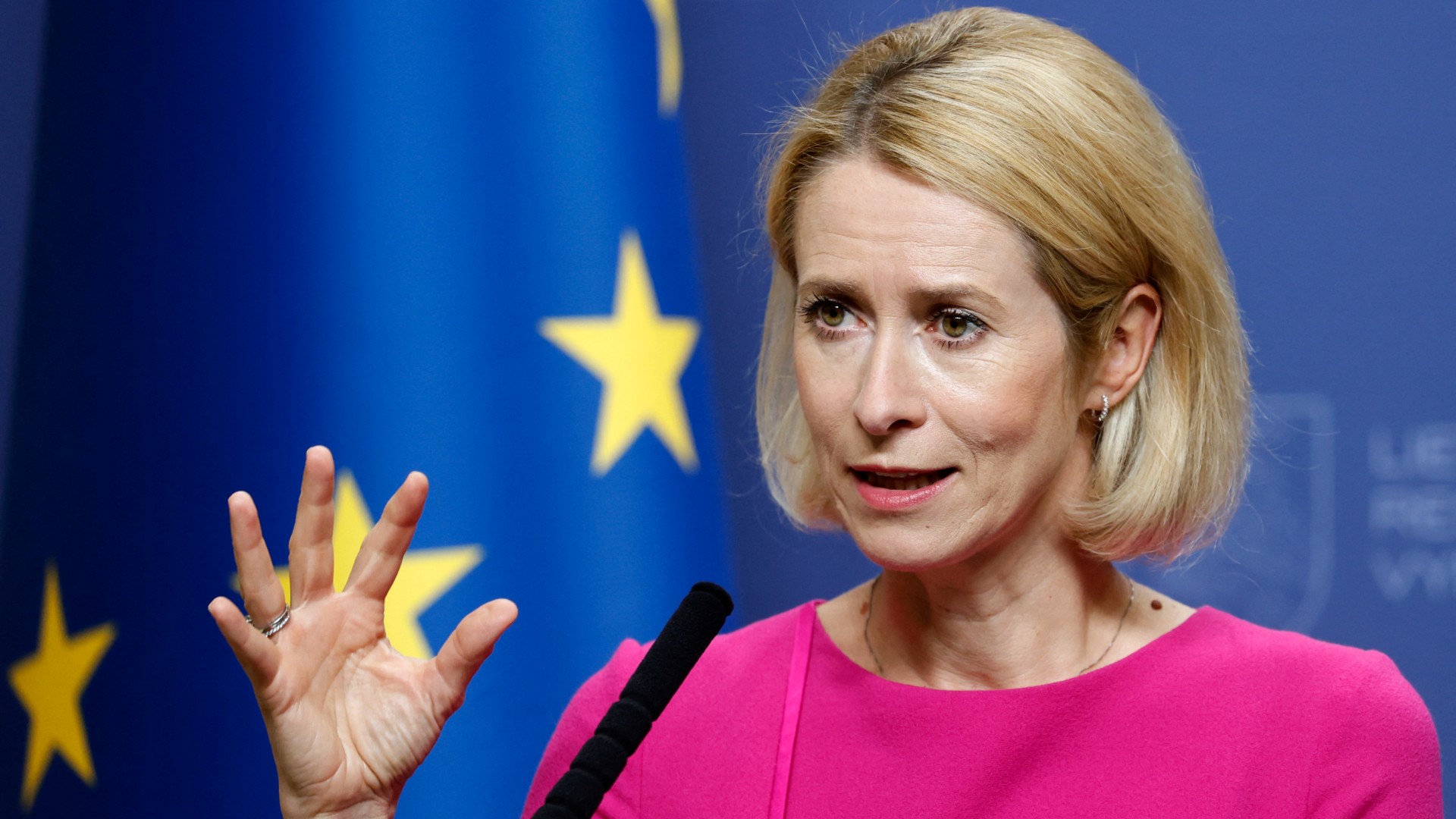
    European Union foreign policy chief Kaja Kallas noted that discussions about a potential U.S. troop drawdown from Europe have circulated for years, but admitted the sudden timing of Trump’s announcement took the bloc by surprise. “There has been a talk about withdrawal of U.S. troops for a long time from Europe. But of course, the timing of this announcement comes as a surprise,” Kallas said. When asked if the move is intended as a direct rebuke of Merz, who recently stated the U.S. had been humiliated by Iran during ceasefire negotiations, Kallas declined to speculate. “I don’t see into the head of President Trump, so he has to explain it himself,” she added.

    NATO leadership has moved quickly to clarify the alliance’s position, with a spokesperson noting over the weekend that officials from the 32-nation bloc are currently working with U.S. counterparts to work out the full details of the revised force posture in Germany. NATO Secretary-General Mark Rutte, who has long positioned himself as a key liaison between Trump and European allies, also sought to soften the impact of the announcement, acknowledging that the White House has been clear about its disappointment over limited European backing for the Iran war.

    Multiple major European powers have already rejected U.S. requests for unrestricted access to their national military bases and airspace for operations targeting Iran. Spain has gone the furthest, formally barring U.S. forces from using its Spanish-based infrastructure and airspace for any activities related to the Iran conflict. Even the United Kingdom and France, traditional U.S. security partners, have declined to grant the unrestricted access the White House has requested. Europe has also refused to commit forces to patrol the critical Strait of Hormuz, a chokepoint for nearly 20% of the world’s daily oil trade, until a ceasefire is reached in the war.

    Notably, European allies and Canada have been aware since Trump’s return to the White House last year that he intended to draw down U.S. troop levels in Europe; a small contingent of U.S. forces already withdrew from Romania last October. U.S. officials had previously pledged to coordinate all troop movement adjustments with NATO allies to avoid creating a destabilizing security gap across the continent. Rutte, who has openly praised Trump’s leadership within NATO despite the U.S. president’s repeated criticism of most alliance members, said the message from Washington has been received. “I would say the Europeans have heard a message. They are now making sure that all the bilateral basing agreements are being implemented,” Rutte said.

    Rutte added that European nations have already moved to pre-position key military assets closer to potential conflict zones in preparation for the next phase of transatlantic security alignment, though he offered no specific details on what assets would be moved or where they would be stationed. Additional reporting for this story was filed from Brussels by AP correspondent Dustin Cook.

  • Australian inquiry opens public hearings into Bondi Beach shooting

    Australian inquiry opens public hearings into Bondi Beach shooting

    Australia’s highest-level government inquiry has opened public hearings into the December 2025 antisemitic mass shooting at a Hanukkah gathering near Sydney’s iconic Bondi Beach, an attack that left 15 people dead and stands as the country’s deadliest mass shooting in three decades. The federal royal commission, led by former judge Virginia Bell, was convened to unpack the systemic and contextual factors that paved the way for the attack carried out by two gunmen: Sajid Akram, who was killed by police during the assault, and his 24-year-old Australian-born son Naveed Akram, who remains in prison awaiting trial on 15 murder charges and terrorism offenses.

    In her opening address to the inquiry, Bell emphasized that the sharp rise in antisemitic hostility recorded across Australia in recent years has mirrored trends across other Western nations, with the surge directly tied to escalating conflict in the Middle East. “It’s important that people understand how quickly those events can prompt ugly displays of hostility towards Jewish Australians simply because they are Jews,” Bell stated, noting the inquiry would center the long-building escalation of what has been called “one of society’s oldest hatreds.”

    Counsel assisting the inquiry Zelie Hegen confirmed the commission has already received thousands of public submissions detailing the widespread harm of rising antisemitism across the country. Witness testimony over the opening days centered on the gradual shift in open antisemitism that began shortly after the October 2023 Hamas attack on Israel and the outbreak of the Gaza war, a shift community members say allowed long-suppressed bigotry to move into the public sphere.

    Sheina Gutnick, whose father Reuven Morrison was among those killed in the Bondi attack, told the commission her refugee parents had met and built a life at Bondi Beach, a place that once held generations of happy family memories. “Now Bondi holds a really, really heavy weight in our community’s heart,” she said.

    Witnesses detailed a steady escalation of antisemitic incidents across Australia’s major cities in the two years leading up to the Bondi shooting. In the 12 months following the October 2023 Opera House protest against the Gaza war, where antisemitic chants were broadcast nationwide, Australian Jewish community groups recorded 2,062 antisemitic incidents — a surge that left parents afraid to send their children to Jewish schools. That summer saw a string of arson and graffiti attacks targeting synagogues and Jewish-owned businesses in Sydney and Melbourne.

    One witness, a woman working with a Jewish security organization, described escorting congregants to safety from a Melbourne synagogue on the 2023 anniversary of the Nazi Kristallnacht pogrom, after a masked mob of roughly 30 black-clad protesters arrived at the site. A Jewish woman whose grandparents survived the Holocaust told the inquiry she was stunned to witness flag burning at the 2023 Opera House protest, calling the open display of bigotry “such an un-Australian thing.” She added she was “incredibly disappointed that police hadn’t stepped in before things got as bad as they did,” urging broader Australian society to take Jewish community concerns seriously when members warn “history is repeating itself.”

    Alex Ryvchin, chief executive of the Executive Council of Australian Jewry, who migrated to Australia from Ukraine as a child, told the inquiry many of the Bondi victims were part of a tight-knit community of Soviet refugees who built new lives in Australia. “They were patriots who loved this country,” he said of the friends he lost in the attack. Ryvchin detailed a January 2025 firebomb attack on his former family home, an incident that marked a dangerous escalation of antisemitic violence by targeting a private residence. “We were on a path to catastrophe,” he said, noting he continues to receive regular death threats and was forced to send his children out of the city for safety ahead of the December attack. “That was January; by December on that same road, three kilometres down, there was a horrific massacre that has transformed us permanently.”

    Several witnesses appearing before the inquiry were granted pseudonyms over well-founded fears of violent reprisal, underscoring the persistent climate of fear facing Australian Jewish communities months after the deadly attack.