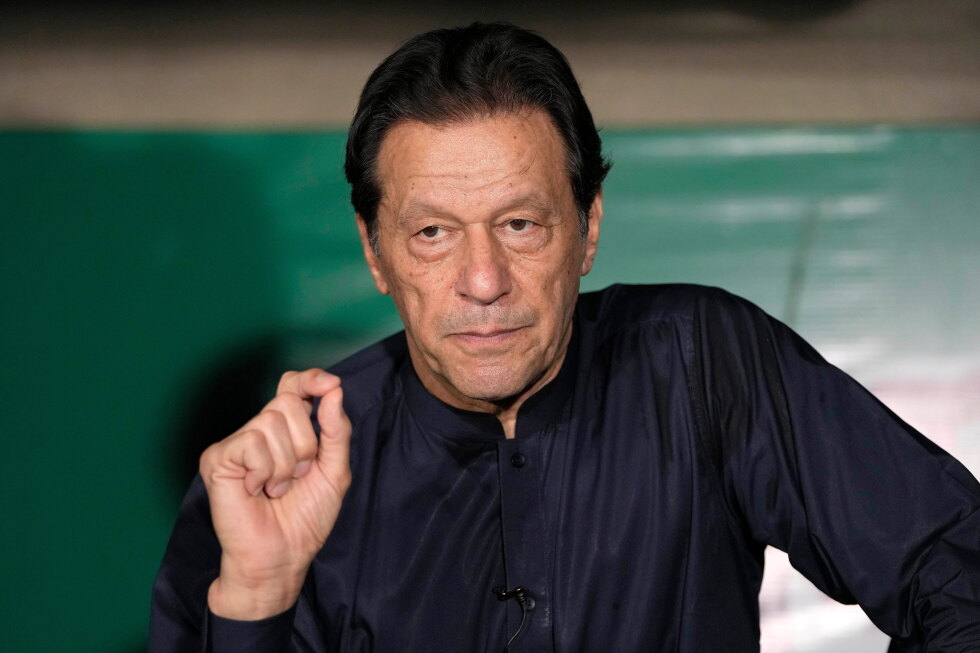
ISLAMABAD, Pakistan – In a landmark ruling that has reignited debate over legal rights and political justice in the South Asian nation, Pakistan’s Supreme Court issued a binding order Tuesday directing state authorities to transfer imprisoned former Prime Minister Imran Khan to a private Islamabad hospital for a comprehensive independent medical assessment. The ruling comes after months of sustained outcry from Khan’s family, personal medical team and political allies over alleged inadequate care and restricted access to treatment for the incarcerated ex-leader.
A three-judge constitutional bench handed down the order, stipulating that Khan must be moved to Islamabad’s prominent Shifa International Hospital in the coming days. The assessment will be conducted by an independent medical board that includes independent specialists as well as Faisal Sultan, one of Khan’s own personal physicians, a provision designed to address longstanding claims that Khan has been blocked from receiving care from doctors of his own choosing. Beyond the medical order, the court also ruled that prison officials must grant Khan weekly in-person visits with family members and regular telephone access to his two sons, a reversal of strict access limits imposed earlier this year.
Within hours of the Supreme Court’s ruling, authorities permitted one of Khan’s sisters to visit him at his current place of detainment, a high-security prison in the nearby garrison city of Rawalpindi. The harsh access restrictions put in place earlier this year were officially justified by government officials citing intelligence warnings of a potential security attack on the prison facility.
The court’s decision is the outcome of a petition filed by Khan months ago, in which he requested transfer from the Rawalpindi prison to a formal medical facility and expanded access to his personal doctors, legal team and immediate family. According to Khan’s lead counsel Salman Akram Raja, the court explicitly grounded its order in constitutional protections: the right to adequate medical care is enshrined in Pakistan’s constitution, and the court ruled that Khan’s current health status left no room for delay.
In a precautionary statement, Raja urged Khan’s massive base of supporters to refrain from gathering outside Shifa International Hospital when the ex-prime minister is transported for treatment, to avoid disrupting care for other patients at the facility.
Khan, a former international cricket star who pivoted to politics and won the prime ministership in 2018, has remained in prison since 2023 following a conviction on corruption charges that he and his supporters deny as politically motivated. He was removed from office in April 2022 through a parliamentary no-confidence vote, a move he has repeatedly claimed was orchestrated by a U.S.-backed conspiracy involving his domestic political rivals and former Pakistani army chief Qamar Javed Bajwa. All parties named – Washington, the Pakistani military and his political opponents – have flatly denied the allegations.
Earlier this year, Khan was transported multiple times to a public government hospital for treatment of a progressive eye condition. Concerns over his health reached a fever pitch in late January, when his family announced he had lost roughly 85% of the vision in his right eye – a claim that federal officials immediately disputed. Authorities later walked back the dispute partially, stating that Khan had recovered roughly 70% of his vision and that his condition was stabilizing.
Khan’s political party, Pakistan Tehreek-e-Insaf (PTI), issued a statement welcoming the Supreme Court’s ruling, calling it a long-overdue response to months of legitimate concerns about the former leader’s health and access to care, and urging the government to implement the court’s order without any delay.
Notably, the federal government has announced it will challenge the ruling. In televised remarks to the press, Law Minister Azam Nazeer Tarar stated that the cabinet had reviewed the medical provisions of the order and would file a formal application requesting the Supreme Court review its own decision. Tarar questioned the scope of the ruling, arguing that if it set a precedent for private medical care for prisoners, it would raise equity concerns: thousands of incarcerated Pakistanis live with chronic medical conditions, and almost all receive treatment exclusively in public government facilities, he noted.
Despite more than two years of sustained legal and political pressure and his current imprisonment, Khan remains one of the most influential and polarizing figures in Pakistani politics, and retains a large, loyal popular following across the country.