博客

  • Rugby’s fiercest rivalry resumes: Springboks play All Blacks in first 4-test series in 50 years

    Rugby’s fiercest rivalry resumes: Springboks play All Blacks in first 4-test series in 50 years

    Thirty years after their last full bilateral tour, two of rugby union’s most iconic and successful nations, South Africa and New Zealand, are set to kick off a historic four-test series this Saturday at Johannesburg’s Ellis Park, a venue widely revered as one of the sport’s most imposing home fortresses. The long-anticipated showdown arrives with just minor late injury concerns for a handful of players on both sides, as the two global powerhouses finalize their starting lineups for the opening match.

    Bookmakers and analysts broadly favor the two-time defending World Cup champion Springboks, who enter the first four-test series between the sides since 1976 as the top-ranked side in the world, opposite New Zealand’s second-ranked All Blacks. At the helm of South Africa is Rassie Erasmus, who has spent eight years as the Springboks’ head coach and director of rugby, building an impressive 8-6-1 head-to-head record against the All Blacks that buck decades of historical trend. The All Blacks hold an overall all-time lead in the matchup, largely buoyed by the Springboks’ historic struggles to secure wins on New Zealand soil, but Erasmus has completely reshaped the South African program since he took over following a humiliating 57-0 loss to the All Blacks in 2017. Under his leadership, the Springboks have claimed the last two consecutive World Cup titles, including a narrow 12-11 victory over New Zealand in the 2023 World Cup final.

    Widely known for his unconventional approach to selection, Erasmus regularly prioritizes developing young, uncapped talent over fielding his most experienced starting XV every match. But his innovative tactical approach — which introduced the famous “Bomb Squad”, a reserve bench stacked entirely with powerful impact forwards, and popularized the use of hybrid utility players — has earned unwavering trust across the entire Springboks squad. Proving their resilience, South Africa overcame early red cards to secure wins over France and Italy twice during the 2023 World Cup run, and Erasmus currently has at least 15 double World Cup winners in his squad, all of whom are already targeting a third consecutive title at the 2027 World Cup in Australia.

    Erasmus shares a long-standing coaching relationship with his All Blacks counterpart Dave Rennie, whose appointment as New Zealand head coach came only this June, following a successful title run in Japan’s domestic rugby league. The two first crossed paths a decade ago, when Erasmus led Ireland’s Munster against Rennie’s Glasgow Warriors, and met again during Rennie’s tenure as head coach of Australia from 2020 to 2022. Erasmus has praised Rennie’s ability to instill intensity and competitive fire in his squads, noting that “he makes it physical”.

    Despite limited preparation time to build cohesive starting combinations, Rennie has already successfully lifted team morale across the All Blacks camp, leading the side to wins over France, Italy and Ireland in the July Nations Championship. To help his squad get up to match speed ahead of the series, Rennie arranged for his players to gain competitive minutes with South African domestic clubs the Stormers, Sharks and Bulls earlier this month. While Rennie is still working to identify which fringe players can step up into key backup roles, Erasmus faces the far more favorable challenge of cutting established talent from his matchday squad, thanks to the Springboks’ unprecedented depth that is the envy of every other top rugby nation.

    Erasmus has approached the 2024 international window as a sort of pre-World Cup pool stage, making as many as 10 changes to his starting lineup between matches even as the Springboks continued to dominate top competition. Even with disrupted team cohesion from frequent lineup changes, South Africa put up more than 40 points against England, Scotland and Wales in the Nations Championship, and navigated their only tough test of the window with a 17-10 win in Buenos Aires. For Erasmus, this series against the All Blacks is the logical next step: the playoffs for the 2027 World Cup cycle.

    The grueling series structure — four tests on four consecutive Saturdays, split across two countries, with the final test hosted in Baltimore, USA — means injuries are all but guaranteed for both squads. Rennie has warned that the series is likely to see more than 30 players from his 44-man touring squad pick up knocks, and he has already been forced to replace four players, two of whom were capped test starters.

    Erasmus, however, enters the opener brimming with confidence, rooted in the Springboks’ last dominant showing against the All Blacks in Wellington last September. After a narrow loss at New Zealand’s unbeatable Eden Park fortress earlier in the tour, Erasmus made seven changes to his starting XV, was forced to substitute four players due to injury in the first half, and still watched his relatively young side secure a historic 43-10 victory over the All Blacks. That win launched the Springboks into an uninterrupted 12-test winning streak, their longest run of victories in 18 years.

    In a notable tactical shift for 2024, South Africa has evolved its traditional playing style, long defined by a physically punishing forward pack and kick-first halfback play, to adopt a more dynamic attacking strategy. This shift has been driven by the hiring of former All Black Tony Brown as attack coach, who has helped the Springboks increase their counterattacking frequency and score tries from fewer phases. Brown’s work has been so impressive that the All Blacks have already signed him to join their coaching staff starting in 2028.

    For their part, the All Blacks have historically offset their smaller average player size compared to the Springboks with faster play and sharper tactical decision-making. Former All Black captain and current assistant coach Tana Umaga described facing the Springboks as “a relentless wave of a big bang coming at you”.

    The history of the All Blacks’ success in South Africa has always been built on forward play: New Zealand’s only ever series win on South African soil, achieved in 1996, came behind one of the greatest forward packs in rugby history, led by icons Sean Fitzpatrick, Olo Brown, Michael Jones and Zinzan Brooke. Former South African head coach Heyneke argues that the current All Blacks’ scrum and set-piece play does not reach that standard, and predicts that this weakness will be their downfall in the series.

    “If you don’t have a good set-piece you’re in trouble. And we’ve got an unbelievable set-piece,” Meyer told the *Behind the Ruck* podcast. “So, it will be close, but at home you have to back the Springboks.”

  • Archaeologists unveil skeletal remains believed to be ritual offering in Lima

    Archaeologists unveil skeletal remains believed to be ritual offering in Lima

    LIMA, Peru – Archaeological teams in Peru announced a significant new discovery this Tuesday, unveiling the well-preserved skeletal remains of an adult individual unearthed at the foot of Huaca Pucllana, a massive centuries-old adobe pyramid located in the heart of Peru’s capital city Lima. Leading researchers believe the set of bones belongs to an adult male who was likely sacrificed as a ritual offering during a ceremony that marked the permanent closure of a water canal connected to a sacred ceremonial pool.

    Gladys Paz, the lead archaeologist heading the excavation project at the site, explained that the unusual positioning of the remains offers critical new clues about the ceremonial practices of the ancient Lima culture. The body was interred directly within the canal, laid on its left side with its skull oriented both toward the Huaca Pucllana pyramid and the distant Pacific Ocean – a deliberate placement that experts say carries deep ritual meaning.

    Paz emphasized that this new find will fill major gaps in scholarly understanding of Lima culture ceremonial traditions, allowing researchers to reconstruct details of religious rituals practiced more than a millennium and a half ago on Peru’s central coast.

    The Lima culture, which rose to prominence along Peru’s dry central coastline between the 1st and 7th centuries CE, flourished roughly 700 years before the Inca Empire emerged as the dominant power in the Andean region. Huaca Pucllana stood as one of the Lima culture’s most vital centers for both religious ceremony and administrative governance, and the culture itself had vanished from the region centuries before Spanish conquistadors established the modern city of Lima in 1535.

    In a striking contrast between ancient history and modern urban life, the pre-Columbian pyramid today sits nestled between tree-lined public parks, busy residential streets, and luxury apartment complexes in Lima’s upscale Miraflores and San Isidro neighborhoods. The archaeological site is open as a popular tourist attraction, and even hosts an on-site restaurant that serves iconic Peruvian dishes ranging from ceviche to lomo saltado and roasted alpaca.

    According to statistics from Peru’s national government, the greater Lima metropolitan area is home to more than 400 distinct registered archaeological sites, scattered throughout the expanding urban landscape. Pieter Van Dalen, a professor of archaeology at Peru’s National University of San Marcos who was not part of the current excavation team, noted that discoveries of ancient tombs, mummified remains, and burial artifacts are relatively common along Peru’s Pacific coast. Many such finds are even made accidentally during modern construction projects, including excavations for new utility infrastructure like natural gas pipelines.

    This discovery marks the latest in a series of archaeological insights into pre-Inca Andean cultures, continuing to reshape academic understandings of the complex civilizations that thrived in the region long before the arrival of European colonizers.

  • ZZ Top drummer Frank Beard dies aged 77

    ZZ Top drummer Frank Beard dies aged 77

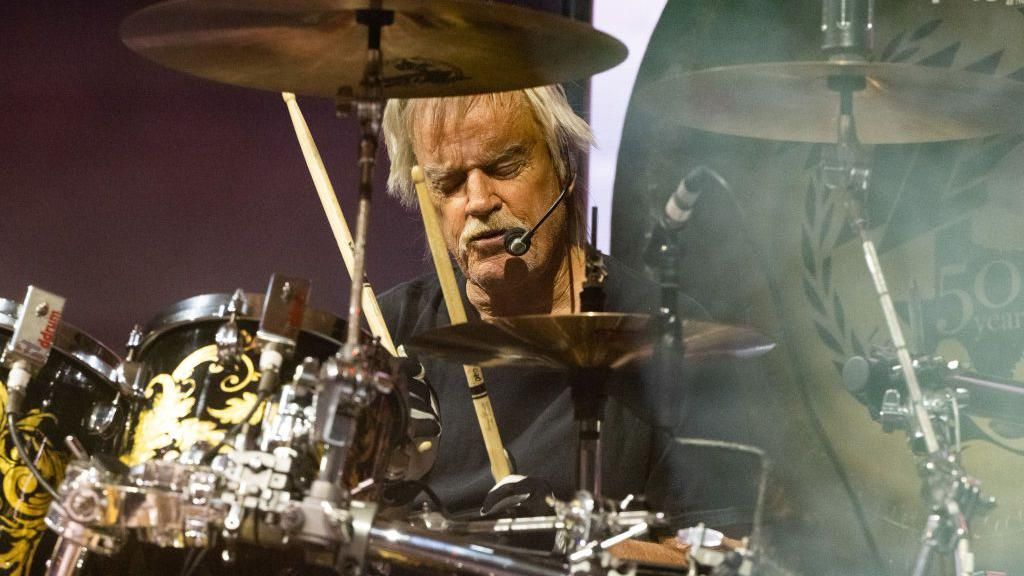
    The iconic blues-rock band ZZ Top has announced the passing of its longtime drummer, founding member Frank Beard, at the age of 77. According to an official statement posted to the band’s official website, Beard died on Monday while receiving hospice care at his personal ranch in Richmond, Texas, surrounded by his close family members. No details regarding his specific cause of death have been released to the public.

    Beard’s death has forced the band to cancel two scheduled tour stops this week in the western United States: a Monday performance in Salt Lake City, Utah, and a Wednesday show in Colorado Springs, Colorado. However, the group confirmed that it plans to pick up its ongoing *The Big One! Tour* this coming weekend, with two scheduled sets at the Austin City Limits venue in Austin, Texas — a spot the band says counted among Beard’s favorite performance spaces, in a city he considered a second home.

    A foundational member of ZZ Top, Beard was part of the band’s original lineup when the group was formed in Houston, Texas, in 1969. Alongside lead vocalist and guitarist Billy Gibbons and bassist Dusty Hill, Beard made up the iconic trio that played its first public live show in 1970. Over the course of his six-decade tenure with the band, Beard contributed to 15 full-length studio albums and four live albums, helping craft the group’s signature blues-rock sound that catapulted them to global fame. The band’s discography includes countless chart-topping hit singles such as *Gimme All Your Lovin’*, *Sleeping Bag*, and their well-known cover of *Viva Las Vegas*.

    The band underwent a major shift in 2021 when original bassist Dusty Hill passed away, after which the group chose to continue touring with new bassist Elwood Francis stepping into Hill’s role. Following Beard’s death, Gibbons shared a heartfelt tribute to his bandmate and collaborator of more than 50 years.

    “Today, Elwood and I lost a great friend and collaborator, and the world lost one of the most naturally innovative drummers and a great and true son of Texas,” Gibbons said in the statement. He added that Beard’s instantly recognizable, steady backbeat was the critical backbone that kept ZZ Top at the top of the rock scene for decades. Staying true to Beard’s own wishes, Gibbons confirmed that the band will continue performing moving forward.

    ZZ Top, one of the longest-running active rock bands in American history, was inducted into the Rock and Roll Hall of Fame in 2004, in recognition of its massive influence on blues and rock music. Over the course of their career, the band has toured extensively across North America, Europe, and South America, building a loyal global fanbase that spans multiple generations.

  • Saudi Arabia tightens rules on financial transfers to UAE

    Saudi Arabia tightens rules on financial transfers to UAE

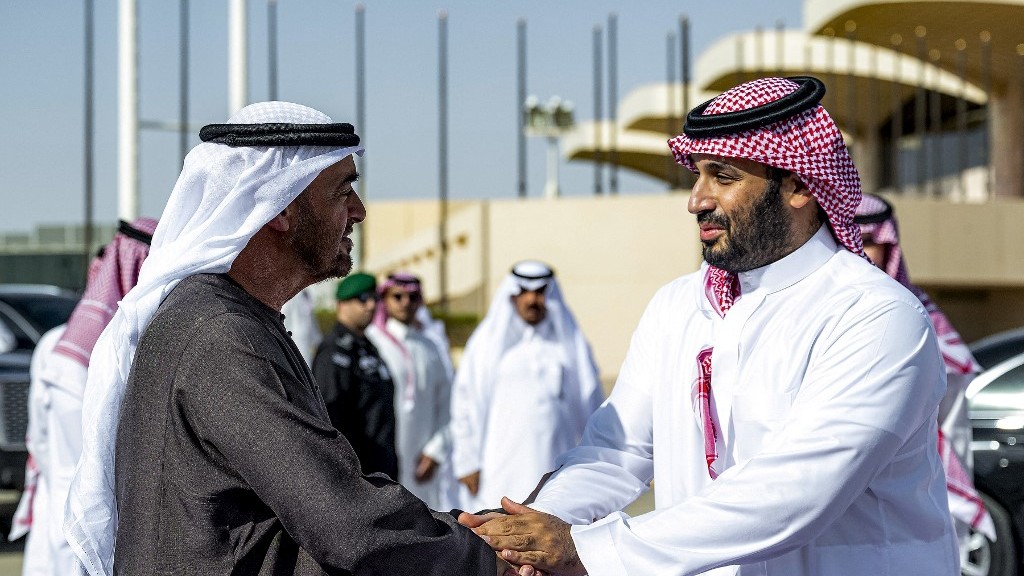
    Growing diplomatic and economic tensions between the two Gulf powerhouse neighbors Saudi Arabia and the United Arab Emirates have spilled into the financial sector, with Riyadh quietly implementing enhanced regulatory scrutiny on cross-border money transfers to the UAE, multiple sources with direct knowledge of the situation have confirmed. Per reporting from international news outlets including Reuters and The Financial Times, these unpublicized new measures place the UAE on Saudi Arabia’s list of high-risk jurisdictions for financial crime — a designation normally reserved for nations linked to elevated risks of illicit money flows. At present, this list counts more than half a dozen regional states. Multiple business operators told Reuters they have already encountered significant disruptions to their transactions: cross-border transfers denominated in a range of currencies have been held for extended delays or flat-out rejected by Saudi financial institutions, with no official reasoning provided for the actions. Both Saudi and Emirati authorities have pushed back against reports of targeted restrictions. When contacted for comment by Reuters, the Saudi Central Bank stated there are “no direct restrictions on specific countries.” A UAE government spokesperson also noted the nation’s economy ministry has not received any formal complaints from private sector entities about unusual delays or barriers to inter-country bank transfers. The current financial friction is the latest escalation of a years-long rift marked by increasingly divergent national priorities that has grown sharper in recent months. Tensions first flared into open view late last year, when Saudi aircraft carried out an airstrike on a shipment of UAE military supplies bound for the Southern Transitional Council, a separatist Yemeni faction that Abu Dhabi backs politically and militarily. Following the strike, the public rift deepened: prominent Saudi and Emirati social media influencers, political pundits, and state-aligned media outlets engaged in a series of heated public feuds, and by March, the UAE moved to block the X account of Saudi-owned major news network Al Arabiya. Disagreements have since widened across three core policy areas: the Yemen conflict, the 2024 Israel-Iran war, and global oil policy. On the Iran front, the two states have adopted starkly opposing stances: the UAE has emerged as a far more hawkish actor, carrying out dozens of unacknowledged air strikes against Iranian targets — a level of direct participation in the conflict that was not made public until recently. Saudi Arabia, by contrast, has pursued a more balanced hedging strategy: it has condemned Iranian attacks on Gulf allies and granted the U.S. military access to the King Fahd Air Base in Taif, while simultaneously working through Islamabad to open diplomatic channels for negotiations with Tehran. In the energy sector, the rift boiled over in May when the UAE announced its withdrawal from OPEC, the Riyadh-led oil producers’ cartel it had been a member of for nearly 60 years. Shortly after exiting the group, the UAE moved to sharply ramp up its crude oil production, a move that directly conflicts with Saudi Arabia’s ongoing strategy of production cuts to support global oil prices. Following reports of delayed and blocked money transfers as early as May, multiple international outlets confirmed the pattern of financial disruptions. A Western executive working for a Dubai-based healthcare firm told the Financial Times that starting in mid-May, Saudi banks had rejected and returned multiple payments from a long-standing Saudi client of the company. By July, independent regional outlet Middle East Eye framed the ongoing standoff as the two neighbors “embroiled in an economic war of attrition,” with business leaders across both nations already drafting contingency plans to prepare for further escalation of the bilateral feud.

  • Tracking USS Lincoln’s months-long mission as concerns about conditions grow

    Tracking USS Lincoln’s months-long mission as concerns about conditions grow

    In an unprecedented fact-checking and monitoring effort, BBC Verify has leveraged cutting-edge commercial satellite imagery to follow the movements of the USS Lincoln, a United States Navy aircraft carrier currently embarked on one of the longest extended maritime deployments in recent U.S. military history.

    The multi-month mission has sparked growing public and policy-focused concern over a range of critical issues, from the operational wear and tear on the warship itself to the physical and mental well-being of the thousands of service members deployed aboard. Unlike routine deployments that typically last between six and seven months, the USS Lincoln’s current assignment has stretched well beyond standard timelines, leaving observers questioning the strategic rationale and the toll of the extended tour.

    BBC Verify’s satellite tracking initiative offers unprecedented public visibility into the carrier’s movements across global waters, filling information gaps left by limited official U.S. Defense Department updates. As the deployment continues, questions surrounding the sustainability of the mission and the working conditions for crew members have intensified, prompting calls for greater transparency from military leadership about the carrier’s operational objectives and timeline for return to home port.

  • Trump labels Strait of Hormuz ‘US territory’ as Iran says Israel is biggest obstacle to negotiations

    Trump labels Strait of Hormuz ‘US territory’ as Iran says Israel is biggest obstacle to negotiations

    A rapidly escalating standoff over the strategically critical Strait of Hormuz has sent shockwaves through global markets and international diplomacy, after former U.S. President Donald Trump reignited tensions with a provocative claim declaring the key waterway as new American territory.

    Trump first floated the idea of claiming the strait last week, tying the move to an expected Iranian surrender that never materialized. On Tuesday, he doubled down on the threat, sharing a map of the waterway on his social platform Truth Social with the simple caption: “New US Territory”.

    Far from backing down to Washington’s pressure, Iran has responded with firm defiance, linking any reopening of the closed strait to the United States fulfilling its obligations under a previously agreed interim memorandum of understanding. Tehran’s demands include an end to U.S. naval blockade measures, the full lifting of crippling economic sanctions, and the release of billions of dollars in frozen Iranian assets held overseas.

    Iranian Parliament Speaker and chief nuclear negotiator Mohammad Bagher Ghalibaf cemented Tehran’s position in remarks Tuesday, leaving no room for compromise. “Let me state clearly: Until all the commitments made by the United States in the memorandum of understanding — including the lifting of the blockade, the release of frozen assets, the lifting of oil sanctions, the end of threats and military operations on all fronts, and other conditions to which America agreed — are fully implemented, the strait will not be opened,” Ghalibaf said.

    The ongoing closure has already gutted commercial traffic through the waterway, which handles roughly 20% of global oil and 30% of global liquefied natural gas trade. Preliminary shipping data from analytics firm Kpler shows that only six commodity vessels transited the strait on Monday, split evenly between inbound and outbound journeys. This marks a steep drop from the 10-day average of around 11 vessels, with even steeper declines recorded over the weekend: just three vessels crossed on Saturday, and only two on Sunday. No supertankers or LNG carriers appeared in public tracking data, though Kpler noted that vessels operating with their transponders turned off would not be counted in these figures.

    Tensions spiked further Tuesday when the UK Maritime Trade Operations agency confirmed that a commercial vessel departing the strait had been struck by an unknown projectile. “The Company Security Officer has reported that the vessel was struck by an unknown projectile while conducting an outbound transit of the Strait of Hormuz,” the agency said in a statement. “The impact caused damage to the engine room and resulted in a crew casualty,” it added, noting that Omani coastguard vessels were already on site providing assistance to the uninjured remaining crew.

    In response to the attack, Iranian Foreign Minister Abbas Araghchi blamed Israel for orchestrating the incident to derail ongoing negotiations and prolong the regional conflict. “The Zionist regime was and remains the biggest opponent and obstacle to the implementation of the memorandum of understanding. They made every effort to prevent such an agreement from being reached, every effort to make this agreement fail, and every effort to prevent it from being implemented,” Araghchi told Iran’s state-run IRNA news agency.

    Araghchi also pushed back against Trump’s earlier demand for Iran’s unconditional surrender, arguing that Tehran had turned the tide of the conflict to force Washington to negotiate on Iranian terms. “It was us who said we would not accept a ceasefire and continued the war until we reached a point where they accepted a ceasefire and negotiations on Iran’s terms,” he said, adding that those who initially demanded unconditional surrender were now begging for talks just weeks after the conflict began.

    Qatar, which has led regional mediation efforts, announced that diplomatic negotiators would resume work to end the wider conflict and restart stalled talks after Iran and Oman reached a separate bilateral agreement governing maritime transit through the strait.

    Domestically, U.S. Democrats have criticized Trump’s handling of the standoff, arguing that his hardline tactics have failed to produce any progress on curbing Iran’s nuclear program. Democratic Senator Chris Murphy said Tuesday that it was now clear Tehran had outmaneuvered the Trump administration. “It’s crystal clear that there is no current path to get Iran to give up its nuclear program,” Murphy wrote on social platform X. “They are toying with Trump and his diplomatic ingenus. They know they can get complete sanctions relief and all their frozen money without a single nuclear concession.”

    The persistent disruption to global shipping has already spilled over into the global economy, pushing up energy prices and creating supply chain bottlenecks. In a sign of shifting trade flows, China’s refined fuel exports rose 6.7% in July after Beijing adjusted wartime supply controls it had put in place to protect its domestic market from potential shortages.

    For Iran, the prolonged conflict has come at a severe economic cost. Latest domestic data shows Iran’s annual inflation rate has hit 66%, with food and beverage prices skyrocketing 128.1% compared to one year ago, deepening hardship for ordinary Iranian households.

  • Take a timelapse ride along the IndyCar racetrack in Washington

    Take a timelapse ride along the IndyCar racetrack in Washington

    Motorsports fans across the United States are gearing up for a groundbreaking event this summer, as Washington DC is set to host its first-ever professional IndyCar race, the Freedom 250 Grand Prix, on August 22 and 23. Ahead of the highly anticipated inaugural event, organizers have released a stunning timelapse video that gives racing enthusiasts a first-person preview of what it will feel like to scream around the capital city’s custom-built racetrack.

    For decades, major IndyCar races have been centered in other regions of the United States, from the iconic Indianapolis Motor Speedway to street courses in major metropolises like Long Beach and Toronto. This marks the first time a top-tier motor racing event has been awarded to the US capital, opening a new chapter for IndyCar’s national expansion and bringing world-class motorsports directly to the heart of American politics and culture. The timelapse footage, captured along the full layout of the temporary street circuit, highlights the track’s unique features—including straights that run past some of Washington DC’s most famous landmarks, tight technical turns that will test drivers’ skill, and elevation changes that promise exciting overtaking opportunities.

    Industry analysts note that hosting the Freedom 250 Grand Prix is expected to bring significant economic benefits to Washington DC, drawing tens of thousands of out-of-town visitors, filling local hotels and restaurants, and raising the city’s profile as a host for major international sporting events. Racing fans have already begun snapping up tickets for the two-day event, which will include practice rounds, qualifying sessions, and the 250-lap main race that will crown the first-ever IndyCar winner in the nation’s capital.

  • American Airlines to bring back TV screens on US flights

    American Airlines to bring back TV screens on US flights

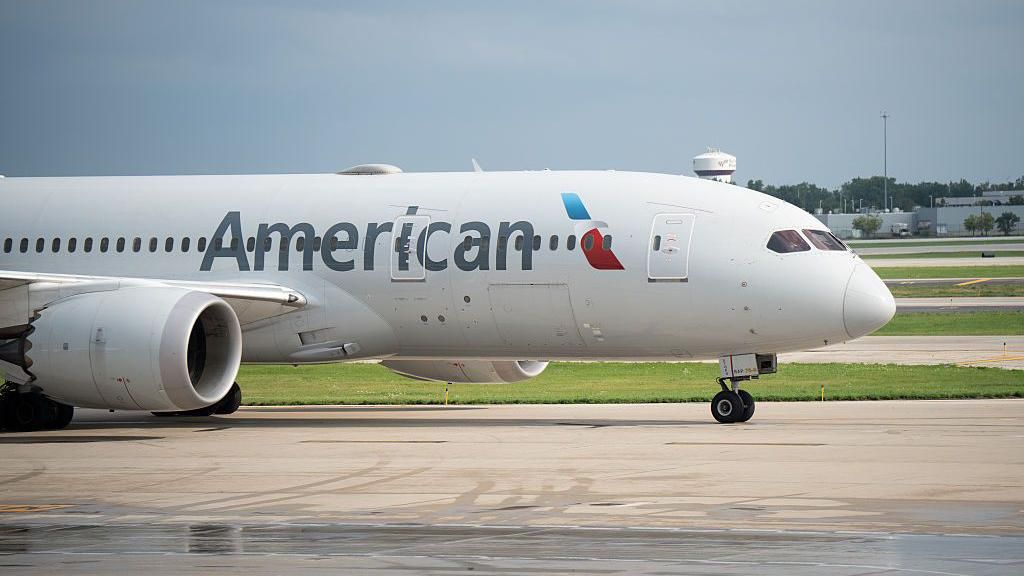
    Almost seven years after removing seatback televisions from all its U.S. domestic flights, American Airlines has announced a major course correction: the carrier will restore built-in seatback displays across its entire domestic fleet, alongside an expansion of premium seating offerings.

    The shift marks a full reversal of a cost-cutting efficiency strategy the airline rolled out throughout the 2010s. At the time, American Airlines argued that most travelers preferred to stream personal entertainment via their own smartphones, tablets, or laptops. Removing the heavy built-in screens also cut aircraft fuel consumption and reduced long-term maintenance costs, priorities for carriers chasing operational efficiency in a tight-margin industry.

    But the decision quickly sparked widespread passenger frustration that persisted for years. Frequent flyers repeatedly complained that relying on personal devices created a host of avoidable problems: drained batteries mid-flight, awkward cramped viewing angles, and inconsistent in-flight Wi-Fi that interrupted streaming content. The strategy also left American Airlines out of step with key competitors, who have taken the opposite approach in recent years. Rival Delta and United have poured investment into upgraded onboard entertainment to elevate their premium cabin experiences, while low-cost carrier JetBlue has retained seatback screens as a standard customer perk all along. Industry analysts note these competing choices have reshaped passenger expectations, repositioning seatback displays from an unnecessary luxury to a baseline expected amenity on most U.S. commercial flights.

    The restoration forms part of a broader cabin modernization investment American Airlines unveiled this week. The airline says the upgrades are designed to improve the overall customer travel experience while also driving higher revenue, a goal that comes as major U.S. carriers work to stabilize passenger demand in a cooling post-pandemic travel market.

    Advancements in display technology have also made the reversal feasible for the airline. Modern seatback screens are far lighter, use less power, and have lower upfront installation and maintenance costs than the models American Airlines removed years ago, making the investment far more justifiable for carriers today. American Airlines plans to begin rolling out the new displays immediately, with full installation across its domestic Boeing 737 and Airbus A320-family jets expected to be completed by the early 2030s.

    Raymond James industry analyst Savanthi Syth told the BBC that strategic positioning plays a key role in how quickly airlines roll out new customer amenities. Syth noted that Delta, which was the first major U.S. carrier to introduce a basic economy fare, has continued to roll out new customer offerings steadily, putting it further along in its commercial product development than many peers. For American Airlines, the decision to restore seatback screens reflects a push to stay competitive in an increasingly crowded market, betting that improved and more reliable onboard amenities will help the carrier win over both leisure and business travelers, while retaining appeal for budget-conscious passengers who still expect core in-flight comforts.

  • UN atomic watchdog says found tons of nuclear material at Syria site

    UN atomic watchdog says found tons of nuclear material at Syria site

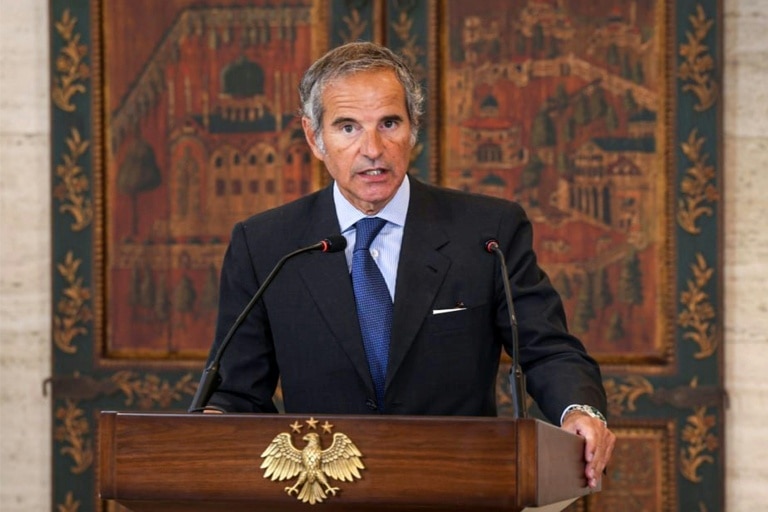
    In a landmark development marking a new chapter of nuclear transparency in Syria, the head of the United Nations’ atomic watchdog confirmed Tuesday that international inspectors have recovered several tons of nuclear material from an undeclared site that Syria’s new administration formally reported to the agency last month.

    Rafael Grossi, director general of the International Atomic Energy Agency (IAEA), made the announcement during an official visit to Syria, where he traveled to inspect two locations: the long-controversial Al-Kibar site in Deir Ezzor in eastern Syria, and the second undeclared location where the nuclear stockpile was discovered. The announcement came just one month after Damascus notified the IAEA of the stockpile, which it says was left behind by the ousted government of former leader Bashar al-Assad.

    During a joint press conference in Damascus with Syrian Foreign Minister Asaad al-Shaibani, Grossi commended the current administration for what he called a “courageous decision” to voluntarily disclose the previously unreported site. “We are talking about a few tons of nuclear material that could be put to bad use,” Grossi told reporters, adding that the IAEA would immediately bring the material under full international safeguards to eliminate any proliferation risks.

    Shaibani confirmed that Syria sent an official notification of the stockpile to the IAEA on July 17, stating that the government chose to declare the materials of its own free will as part of the legacy left by the former regime. He added that initial technical evaluations have concluded the materials do not pose an immediate active risk, and that the stockpile will remain under national Syrian ownership while adhering fully to the IAEA’s safeguard protocols.

    Grossi reaffirmed the IAEA’s commitment to overseeing the material, saying “this material will be accounted for, will be put within the international safeguards system.” He noted that IAEA and Syrian technical experts will collaborate on developing protocols for the long-term safe storage of the nuclear materials, framing the disclosure as a turning point in relations between Syria and the global non-proliferation body. “We are starting to turn a page, and turning a page does not mean forgetting the past,” he said.

    The discovery of the material draws new attention to the long-standing controversy over Syria’s former nuclear activities, centered on the Al-Kibar site in Deir Ezzor that has been shuttered for 18 years. In 2007, Israel carried out a secretive air strike that destroyed the uncompleted facility, a mission it only publicly acknowledged in 2011. A year after the strike, U.S. officials publicly accused Syria of constructing a secret nuclear reactor at the site, with alleged assistance from North Korea. The IAEA formally concluded in 2011 that the site was “very likely” a functional nuclear reactor under construction.

    Pierre Razoux, academic director of the French FMES Institute think tank, told Agence France-Presse the newly discovered material is “most likely… linked to the Syrian nuclear program, which was halted in 2007 after the Israeli raid on the Al-Kibar site.” He added that another potential origin for the stockpile could be nuclear materials that Iraq disposed of at the beginning of the 2000s following the U.S.-led invasion.

    Grossi said the find confirms the IAEA’s long-held suspicions about undeclared nuclear activities in Syria, noting that extensive excavation and investigation work is ongoing at the Deir Ezzor site. Last year, the watchdog confirmed that inspectors had detected particles of enriched uranium at the site during a 2024 inspection.

    Grossi’s high-profile visit comes one week after U.S. news outlet Axios reported that Washington and the IAEA had reached a deal to remove nuclear material from the clandestine Syrian site, following closed-door understandings with both Syria and Israel. According to the Axios report, Israeli officials had closely monitored a location dubbed “Site 99” where the Assad government was believed to have stored nuclear material leftover from the Al-Kibar project, and Israel had issued public threats to carry out a new bombing campaign on the site if the material was not secured.

  • Man in doll-mask chases and threatens Philadelphia residents, police say

    Man in doll-mask chases and threatens Philadelphia residents, police say

    Residents of Center City Philadelphia are on edge this week after a string of frightening, unprovoked attacks carried out by a man wearing a disturbing creepy doll mask, law enforcement officials confirmed Tuesday. The Philadelphia Police Department has launched a public appeal for assistance to track down the suspect, who is accused of threatening and chasing at least six separate victims in the area surrounding City Hall over the past week.

    One of the most alarming incidents unfolded on the morning of August 12, at approximately 5:30 a.m. local time. Surveillance camera footage from the area captured the masked suspect chasing a woman who was out for her regular morning run. According to police accounts, the man kept one hand hidden behind his back while shouting menacing remarks at his target, causing the woman to trip during her escape and suffer injuries. Immediately after the attack, the suspect fled into a nearby SEPTA underground rail station, disappearing before responding officers arrived on scene.

    In another high-profile encounter documented by witnesses, runner Luanda Marinho told CBS News—BBC’s U.S. media partner—that she and a friend came across the masked man while meeting for a morning workout. Marinho recalled that the suspect repeatedly pestered the pair to challenge him to a race, saying “Do you guys want to race me? I bet I am faster than you. Want to race?” When the two women ignored his advances, he did not press further, but the interaction left them deeply unsettled. Marinho noted that she and her friend are now planning to alter their regular running route to avoid the area, describing the encounter as “some twisted game” that felt deeply off-putting and dangerous.

    Philadelphia Police Department Captain Jason Smith told reporters that the suspect appears to be recording each of his encounters, as he has repeatedly been spotted holding a cellphone with its flashlight activated during the attacks. Investigators have not yet ruled out the possibility that the incidents are linked to a dangerous new social media prank trend that has spread across other U.S. cities in recent months, Smith added, but no definitive connection has been confirmed at this stage.

    To aid in the public manhunt, police have released surveillance photos and a short clip of the suspect captured during the attacks, urging anyone who recognizes the man or has information about his current whereabouts to contact law enforcement immediately. If apprehended, the suspect will face multiple criminal charges including terroristic threats, simple assault, and other related offenses, according to police. Local residents have been advised to stay alert in the City Hall area, especially during early morning hours when most of the incidents have occurred.