博客

  • Iran issues warning against Arab states aiding US, as UAE cuts economic ties

    Iran issues warning against Arab states aiding US, as UAE cuts economic ties

    Tensions across the Persian Gulf have spiked sharply this week, as Iran issued a stark public warning to neighboring Gulf states just hours after the United Arab Emirates announced it was severing all economic ties with Tehran, deepening a conflict that has already roiled the strategic region for months.

    Ali Abdollahi, chief of staff of Iran’s armed forces, delivered the warning Wednesday in comments carried by Iran’s state-run Mehr News Agency. Abdollahi emphasized that any form of support or logistical assistance provided to what he labeled the “aggressor United States military” would be treated as direct participation in Washington’s ongoing military operations against Iran.

    He questioned the plausibility of the large contingent of U.S. military aircraft — including critical refueling planes — operating from bases across the Gulf region without the explicit knowledge and approval of host nations, adding that Iranian intelligence maintains full situational awareness of all activity in the area. “Gulf countries should know that we are fully aware of the situation,” Abdollahi said.

    The warning comes in the wake of a series of escalating moves between the UAE and Iran that began earlier this week. On Tuesday, Abu Dhabi claimed that Iran had launched two ballistic missiles toward its coastline, with one projectile landing inside UAE territorial waters and the other falling in international waters. Iran’s foreign ministry spokesman Esmaeil Baghaei issued an immediate categorical rejection of the UAE’s accusation, denying any Iranian missile launch toward the country.

    Shortly after the missile claim, the UAE announced it would suspend all trade, commercial and financial transactions with Iran until further notice. “In light of regional escalations… all trade, commercial exchanges, and financial transactions with Iran have been halted until further notice,” said UAE foreign ministry official Afra al-Hameli.

    This latest break in economic ties marks a significant deepening of the rift between the two nations. Prior to the outbreak of the regional war in late February, the UAE — home to a large, long-established Iranian diaspora community — was one of the largest trading partners for Iran, which has been crippled by sweeping U.S. economic sanctions for years. Since the war began, which followed the launch of heavy joint attacks on Iran by the U.S. and Israel, the UAE has already implemented a series of punitive measures against Tehran, including recalling its ambassador from Tehran and closing Iran-linked educational institutions and a medical facility in the Emirates. In the early months of the conflict, Iran responded with heavy strikes on targets across the UAE.

    Beyond the escalating bilateral tensions between Iran and Gulf states, new reporting this week has shed light on a potential major shift in U.S. military posture in the region. The Washington Post reported Tuesday that the Trump administration is actively evaluating a full withdrawal of U.S. troops from the Gulf, in the wake of repeated Iranian drone and missile attacks on large U.S. military bases located in the region. The policy review is being led by the Pentagon’s policy office, which has described the ongoing war as “a once-in-a-generation chance for the Pentagon to reconsider its presence in the region.” The outlet added that U.S. officials have already signaled they may not rebuild damaged Iranian-attacked bases to their pre-war operational capacity. This reporting corroborates an earlier investigation published in June by Middle East Eye, which cited current and former U.S. officials predicting a major overhaul of the long-standing U.S. basing framework in the Gulf. Former senior U.S. officials have publicly floated the prospect of a troop drawdown for months.

    The shifting U.S. posture and rising regional tensions were further highlighted by an incendiary social media post from President Trump earlier Tuesday. Trump shared an altered map of the Strait of Hormuz — the strategic global energy chokepoint through which roughly one-fifth of the world’s oil and liquefied natural gas passes — labeled “NEW U.S. Territory” on his Truth Social account.

    The post drew immediate mockery and pushback from Iranian officials. Mohsen Rezaei, secretary of Iran’s Supreme National Security Council, wrote on X that the disconnect between Washington’s failure to reopen the strait and its claim to sovereignty over it is wider than the 11,265-kilometer distance between Washington D.C. and the waterway. “Welcome to the post-American order in the Persian Gulf,” Rezaei added.

    Iran’s top nuclear and foreign policy negotiator Mohammad Bagher Ghalibaf reaffirmed Tehran’s position Tuesday, stating that the Strait of Hormuz would remain closed to international shipping until the U.S. fulfills its previously agreed commitments outlined in a bilateral memorandum of understanding, including the lifting of Iran’s naval blockade.

    The fallout from escalating tensions has also reached East Asia. South Korean Foreign Minister Cho Hyun confirmed Wednesday that President Trump’s recent order to scale back joint U.S.-South Korea military drills includes implicit pressure on Seoul to commit greater support to the U.S.-led war on Iran. Cho noted that Trump’s order covers multiple overlapping priorities, including messaging toward North Korea and an effort to break the current stalemate in the Iran war, but added that neither South Korean nor U.S. national security officials had advance warning of the president’s announcement.
  • Gold mine hit by deadly landslide in CAR near border with Cameroon

    Gold mine hit by deadly landslide in CAR near border with Cameroon

    A devastating landslide that struck an informal gold mining site in Zamboï, western Central African Republic (CAR) near the Cameroonian border, has claimed the lives of more than 100 people, a regional official has confirmed to the BBC.

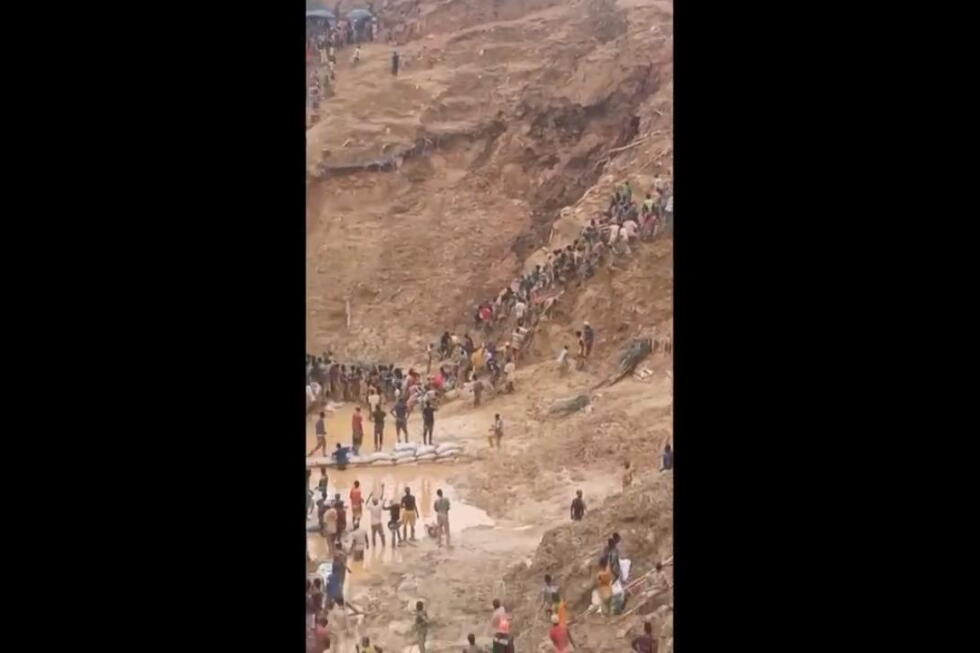
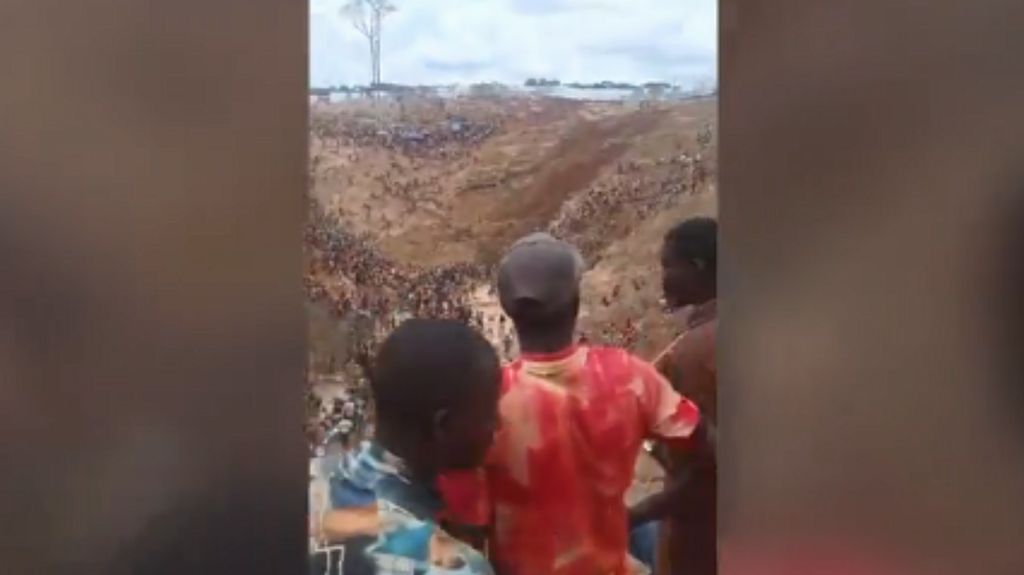
    Widely circulated user-generated videos from the disaster zone capture the moment a steep slope collapsed onto a large gathering of artisanal miners working at the site, as bystanders scrambled to escape to higher ground to avoid being swept into the rubble.

    Adamou Abdon, mayor of Garoua-Boulaï, a border town located on the Cameroonian side of the frontier, told reporters the disaster unfolded in the afternoon on Tuesday. As rescue teams continue working to clear debris and reach trapped people, there is widespread concern that the final death toll will climb higher than current counts.

    As of the latest update, authorities have recovered 107 bodies from the collapsed mining area, Abdon confirmed. The exact trigger for the landslide remains under preliminary investigation, but early accounts from survivors point to structural failure within the mine.
    “The entire ground just caved in, burying dozens of people where they stood,” Cedric Mbango, a miner who survived the disaster, told Agence France-Presse (AFP). “Even now, as we speak, more people remain trapped under the rubble.”

    Officials from Cameroon have confirmed that at least three of the fatalities are Cameroonian nationals, according to statements from Grégoire Mvongo, governor of Cameroon’s East Region, carried by Cameroonian state media. Mvongo added that the remains of the three victims are being repatriated to Cameroon for burial, while injured survivors in Zamboï are receiving emergency medical care.

    Survivors requiring hospital treatment have been transported to a medical facility in Baboua, a CAR town located roughly 50 kilometers (31 miles) from the remote mining site, AFP reports.

    Central African Republic national authorities have launched a formal investigation to determine the root cause of the collapse. Preliminary statements from the public prosecutor’s office in Baboua, obtained by AFP, suggest the disaster was likely caused by the failure of multiple unregulated underground tunnels miners were using to access gold deposits.

    Artisanal small-scale mining, a low-tech, labor-intensive form of mineral extraction, is the primary source of household income for tens of thousands of people across this border region. But decades of unregulated mining activity have created extremely dangerous working conditions: miners regularly operate without safety oversight, and the informal pits are rarely structurally reinforced or properly sealed when abandoned. Local geology and weather patterns amplify the risk, as frequent torrential rainfall weakens already unstable soil around the mining sites, making collapses and landslides a recurring hazard.

    For more reporting from across the African continent, the BBC invites audiences to visit BBCAfrica.com, and follow BBC Africa on social media platforms including Twitter, Facebook and Instagram.

  • Who is Natalie Harp, Trump’s right-hand woman?

    Who is Natalie Harp, Trump’s right-hand woman?

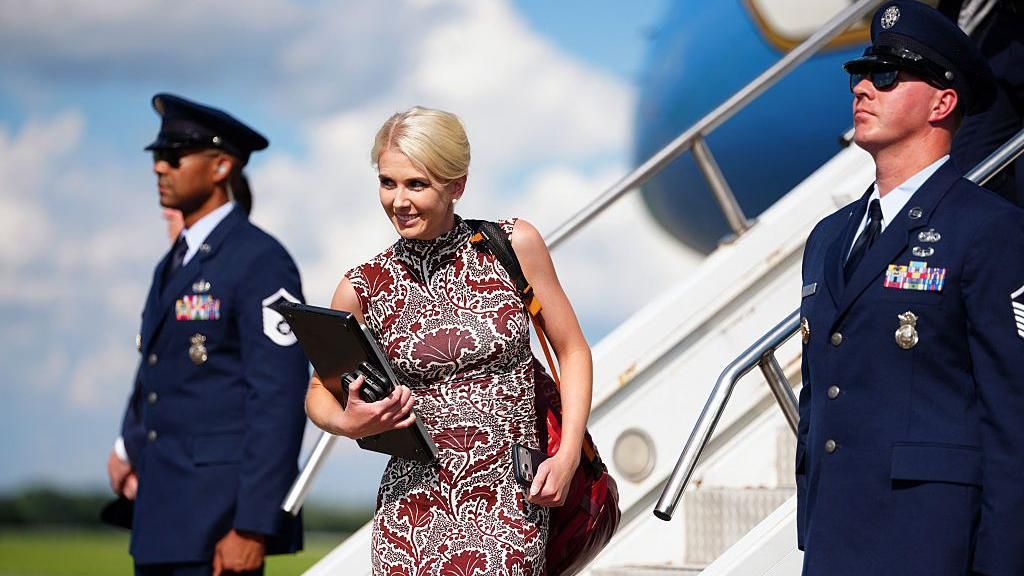
    In the inner circle of U.S. President Donald Trump, few aides have maintained as constant a presence at his side over the past several years as 35-year-old Natalie Harp. One of Trump’s longest-tenured and most trusted staff members, Harp holds a roster of high-stakes responsibilities, including drafting and posting the president’s Truth Social updates. This week, she has been catapulted back into the national spotlight after Democratic Georgia Senator Jon Ossoff — a consistent critic of Trump — name-checked her in a speech that quickly went viral across social media platforms.

    Ossoff’s viral remarks targeted what he called Trump’s “travel with Natalie on their apparently defenceless flying palace gifted by the Emir of Qatar”, a jab that referenced the new Air Force One aircraft as well as recent reporting that Harp was part of the small contingent that joined Trump when he secretly switched planes mid-departure from Turkey last month. Against this new swirl of attention, here is a full breakdown of the Trump aide that insiders have described both as a critical gatekeeper and the president’s personal “comfort blanket.”

    A native of California born into a conservative Christian household, Harp took an unconventional path into politics that aligned perfectly with Trump’s own unorthodox approach to the White House. She first rose to national prominence by crediting Trump with saving her life during his first presidential term. When Trump signed the Right to Try Act into law, the legislation expanded patient access to experimental medical treatments — a change that allowed Harp to access a novel therapy for her bone cancer after conventional chemotherapy failed.

    Harp shared her story widely with supporters in Trump’s Make America Great Again (MAGA) movement, rapidly building a following within the faction. By 2020, she had earned a seat on the advisory board for Trump’s re-election campaign, and delivered a high-profile address at that year’s Republican National Convention. “When I failed the chemotherapies that were on the market, no one wanted me in their clinical trials,” Harp told the crowd. “They didn’t give me the right to try experimental treatments, Mr President. You did, and without you, I’d have died waiting for them to be approved.” In response, Trump publicly praised her, saying “She lit up the television screen like very few people I have ever seen do it.”

    After Trump lost his 2020 re-election bid, Harp took a job hosting a political program at One America News Network (OAN), a conservative media outlet. During her time at OAN, she established a reputation as one of Trump’s most fierce public defenders and a prominent voice repeating unsubstantiated claims of widespread 2020 election fraud. She departed the network in 2022 to join Trump’s third presidential campaign, and followed him back to the White House after his 2024 election victory.

    Little is known about Harp’s private life, with almost all public reporting on her relationship with Trump coming from anonymous sources cited in journalistic books by prominent Trump reporters including Maggie Haberman, Jonathan Swan and Michael Wolff. Today, her official White House title is executive assistant to the president — a role typically categorized as a junior administrative position focused on logistics, scheduling, communications coordination and routine but critical secretarial work.

    By all accounts from insiders, however, Harp has redefined the role, and her influence and public profile far outpace that of any previous person holding the position, including Madeleine Westerhout who served in the same role during Trump’s first term. White House reporters routinely spot Harp standing just feet from Trump in the Oval Office, and she joins him on almost all domestic and international trips, including aboard Air Force One. “She’s always around,” one anonymous source close to the White House told the BBC. “Literally, always.”

    Among White House staff and the press corps, Harp has earned the informal nickname “the human printer”, because she regularly carries a portable printer to produce physical hard copies of news articles and social media posts for Trump, who prefers reading print over digital content. This proximity gives Harp outsized influence over what information and updates reach the president, according to a second source familiar with White House operations. That influence has led multiple insiders to label her a “gatekeeper” to the president, as well as his personal “comfort blanket.”

    Beyond controlling information flow, Harp acts as Trump’s personal social media scribe, drafting and posting content to his Truth Social account at his direction. A photo that spread widely after Ossoff’s speech captured Harp typing a Truth Social post in Trump’s distinct rhetorical style, as the president dictated to her while watching a 2024 campaign speech by Vice President Kamala Harris.

    Amid the new public focus on Harp, the White House has publicly characterized her as a “trusted and valued” member of the president’s senior team, though Trump has rarely spoken about her on camera. Ossoff was not the only Trump critic to highlight Harp’s presence on the secret plane swap out of Turkey, which occurred after U.S. intelligence reportedly received information about a potential threat from Iran.

    Prominent Trump reporter Maggie Haberman, who has covered Trump’s presidencies extensively, addressed the question of why Trump brought Harp along on the flight during an appearance on MSNBC. “Because she is sort of his binky, for lack of a better way of putting it, a comfort blanket,” Haberman explained. Haberman and Swan also reported in a 2024 New York Times article that Harp once wrote in a personal note to Trump: “You are all that matters to me.”

    When CNN reporter Kristen Holmes asked Trump about Ossoff’s viral comments earlier this week, the White House responded with unusual fury on its official X (formerly Twitter) account, labeling Holmes “a disgraceful, humiliating embarrassment to her alleged profession.” A follow-up post directed at Holmes added: “Someday, your children will come across your disgusting and inhumane question. They will be sickened and embarrassed to have a parent be so callous and vindictive.”

  • US long-term borrowing costs ease after government steps in

    US long-term borrowing costs ease after government steps in

    On Wednesday, long-term borrowing costs across the United States pulled back following a policy adjustment from the US Treasury Department, which announced a significant expansion of its debt buyback program. The intervention comes just one day after 30-year Treasury bond yields hit 5.34% – the highest recorded level in nearly two decades.

    Bond yields, which represent the effective long-term borrowing cost for both public and private sectors, have far-reaching ripple effects across the entire US economy. Beyond raising interest expenses for the federal government and large corporations, elevated yields directly push up consumer borrowing costs for critical products including 30-year fixed mortgages, auto loans, and credit card balances.

    Several interconnected factors have driven the recent sharp surge in long-term bond yields. Escalating geopolitical tensions between the US and Iran have pushed global crude oil prices higher, stoking renewed investor anxiety over persistent inflation. Compounding these inflation concerns are market jitters over the expanding size of US government debt, as well as the massive capital outflows from private markets toward technology firms pouring billions into artificial intelligence research and development – a sector where the timeline and scale of projected returns remain highly uncertain.

    In a public statement, the Treasury clarified that its expanded buyback program is designed to deliver greater liquidity support to the long-term bond market. The department will double its monthly buyback operations from the previous $2 billion level to $4 billion, with the new policy taking effect from September 9 through November 4. Immediately following the announcement, 30-year bond yields retreated to 5.18%, marking a notable near-term easing of borrowing costs.

    John Canavan, lead analyst at Oxford Economics, framed the policy shift as a targeted effort to alleviate acute pressure on long-term borrowing markets, which have been squeezed by three key headwinds: rising energy prices, persistent inflation risk, and a glut of new debt issuance from both sovereign and corporate borrowers globally. However, Canavan struck a cautious note, arguing that the modest increase in buyback volumes is unlikely to deliver sustained long-term relief, given the massive total size of outstanding US Treasury debt.

    Rene Albrecht, senior analyst at German financial institution DZ Bank, noted that long-term yields sustained above 5% pose broad economic pain for both the public and private sectors, giving the US government strong incentive to intervene. Albrecht also pointed to the upcoming midterm elections, just three months away, as an unspoken political driver for the policy move.

    Unlike many other advanced economies such as the United Kingdom, the US mortgage market is dominated by long-term fixed-rate products. Current data from housing finance firm Freddie Mac puts the average 30-year fixed mortgage rate at 6.67%. While this marks a notable rise from recent years, it remains below the 7.7% average recorded in 2023.

    Alongside the Treasury’s announcement, the Federal Reserve released minutes from its most recent monetary policy meeting on Wednesday, revealing that inflation concerns have deepened among central bank policymakers. The minutes noted that several meeting participants supported raising the benchmark interest rate at the last gathering. Despite this internal division, the Federal Reserve chose to hold its key policy rate steady in the 3.50%-3.75% range for the fifth consecutive policy meeting.

    Market analysts broadly expect the Federal Reserve to keep rates unchanged again at its September policy meeting, following recent economic data that showed a modest softening of inflation and an unexpected contraction in private sector payrolls during July.

  • Watch: Trump leads tour of White House helipad construction site

    Watch: Trump leads tour of White House helipad construction site

    In a move that underscores the high-stakes logistics of upcoming high-level diplomacy between the United States and China, former President Donald Trump has led an on-site tour of the ongoing construction work to upgrade the White House helipad. The project, which is already moving forward at an accelerated pace, is being fast-tracked to meet a critical deadline: the planned state visit to Washington by Chinese President Xi Jinping, scheduled for late September.

    Diplomatic visits of this caliber require rigorous infrastructure planning and security preparations, and the upgrade to the White House helipad is a key component of these pre-visit arrangements. The expedited construction timeline reflects the significance that the U.S. administration has placed on hosting the high-level Chinese delegation, with logistics teams working to ensure all facilities meet the strict security and protocol standards required for a head-of-state visit. Trump’s personal presence at the construction site tour draws additional attention to the meticulous preparations underway ahead of what is expected to be one of the most high-profile international diplomatic engagements of the year.

  • 81-year-old confesses to German cold case murder of US tourist in 1994

    81-year-old confesses to German cold case murder of US tourist in 1994

    For nearly three decades, the violent killing of a young American tourist in western Germany remained one of the country’s most high-profile unsolved cold cases. That chapter of mystery closed this week, when an 82-year-old German man publicly admitted to the 1994 murder of 24-year-old Amy Lopez, a Texas native who was traveling across Europe when she died.

    Lopez was last seen alive in September 1994, making her way along a steep hiking path toward Ehrenbreitstein Fortress, a iconic historic site in the city of Koblenz. Just two hours after she was spotted heading to the landmark, her body was discovered at the scene. Prosecutors lay out that the attacker encountered Lopez by chance on her route to the fortress, then lured her into a hidden, isolated space below the structure called the General von Aster room, named for a 19th-century Prussian military leader. There, they allege, he sexually assaulted her and stabbed her nine times, killing her with what prosecutors call base motives driven by sexual desire.

    For decades, the case went without a breakthrough, despite ongoing interest from local authorities. It was not until last year that advances in forensic science and a renewed investigative push broke the case open. Four years ago, improved DNA testing allowed investigators to isolate a genetic trace from skin fragments left on Lopez’s trousers, a clue that had not been detectable with older technology. Last year, Koblenz law enforcement launched a dedicated cold-case task force to reexamine the killing, launched repeated public appeals for information, and even featured the unsolved crime on a popular national German television program focused on unclosed cases.

    While the television broadcast generated dozens of new leads, the critical break came when investigators began collecting voluntary saliva samples from local residents to cross-check against the DNA trace. That effort led to the arrest of Hans S., then 50 at the time of the killing, who was taken into custody at a local retirement home in February 2024. German privacy laws prohibit releasing the suspect’s full surname to the public.

    According to the defendant’s defense attorney, Hans S. chose to provide a voluntary saliva sample because the 32-year-old case had “weighed heavily” on him, and he sought resolution for the long-unresolved crime. Investigators confirmed the DNA recovered from the victim’s clothing matched Hans S.’s sample perfectly. Notably, the suspect had already been convicted of a separate sexual offense in 1999, but at that time, investigators did not have the solid DNA evidence needed to connect him to Lopez’s killing.

    On the first day of his trial this week, the packed courtroom reflected the lasting notoriety of the case in the Koblenz region. The defendant entered the room using a walking frame. When his defense counsel confirmed that Hans S. admitted to committing the murder, the presiding judge asked him to verify the statement directly, and the defendant responded simply, “Yes.”

    Prosecutors have commissioned a psychiatric expert analysis, which already concluded that Hans S. was fully criminally responsible for his actions at the time of the killing. A final formal ruling on criminal responsibility will be delivered at the end of the trial, however. The defendant now faces a mandatory life sentence in prison, and a final verdict is expected to be handed down by the court early next month.

  • A triple crisis: Earthquake takes a heavy toll on Colombia’s impoverished and neglected region

    A triple crisis: Earthquake takes a heavy toll on Colombia’s impoverished and neglected region

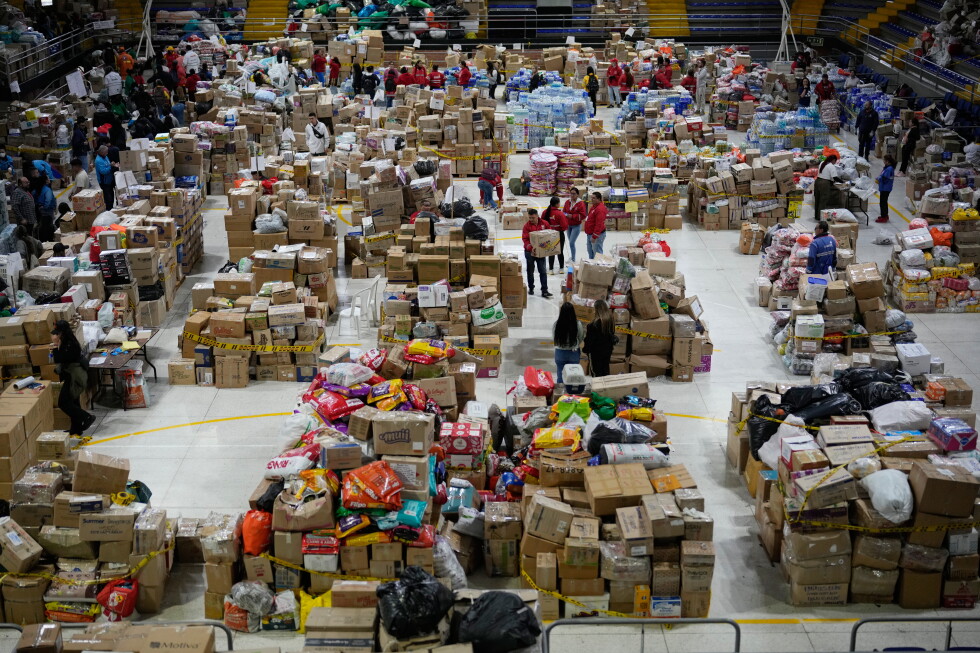
    One week after a catastrophic 7.4-magnitude earthquake centered in Colombia’s western, historically marginalized department of Choco left a trail of death and displacement, survivors and aid organizations are grappling with the immense challenge of recovering from a disaster that amplified the region’s long-standing inequities.

    For 66-year-old Quibdo-based math teacher Ismael Arias, a routine early trip to the local market last August 10 was the only thing that spared him from the same fate as the two-story home he spent years building and decades paying off. The structure, constructed with his modest teacher’s wages, crumbled entirely when the tremors struck.

    “Even if I am helped, I don’t think I will get enough,” Arias shared from temporary shelter at a relative’s home, where he and his partner have stayed since the quake. “It’s not the same. You don’t have the freedom there that you get in your own house.”

    Updated official death toll released by Colombia’s central government this week confirms the disaster has killed at least 312 people and destroyed 29,000 residential structures. The United Nations Office for the Coordination of Humanitarian Affairs estimates 69,000 Choco residents — roughly 10 percent of the region’s total population of 600,000 — have been displaced or otherwise affected by the quake. Most of the region’s population identifies as Afro-Colombian or Indigenous, and Choco has remained one of Colombia’s most underfunded and overlooked regions for generations.

    Luis Mora, representative of the United Nations Population Fund in Colombia, summarized the overlapping emergency facing the region: “We are facing a triple crisis. You have the humanitarian crisis caused by the earthquake, now joining the under development crisis and the crisis caused by armed conflict in this territory.”

    Long before the earthquake struck, Choco struggled with systemic challenges that have made recovery far harder than it would be in better-resourced parts of the country. Covered mostly by steep mountains and dense Amazon-adjacent rainforest, Choco is connected to the rest of Colombia by just two unstable, poorly maintained roads. More than 650 kilometers of Pacific coastline lacks any overland road connections to the region’s interior, leaving most remote communities accessible only by air or river travel — routes that become treacherous during bad weather. For decades, armed rebel groups have also battled for control of illegal mining operations and drug trafficking corridors across large parts of Choco, forcing civilian displacement and imposing arbitrary lockdowns that cut off local families from their farmland and livelihoods for days at a time.

    Critical public services were already on the brink of collapse before the disaster. More than 200 schools across the region sustained damage in the quake, and widespread lack of reliable high-speed internet rules out the option of shifting to remote learning for displaced students. The region’s only public hospital, located in the capital Quibdo, was ill-equipped to handle the surge of earthquake-related injuries.

    Cristian Maturana, a physician at the Quibdo public hospital, explained that in the immediate aftermath of the tremors, the emergency room was overwhelmed with patients suffering broken bones and crush injuries. Thirty-six patients with severe multiple fractures had to be airlifted to a larger, better-resourced hospital in Medellin, the capital of neighboring Antioquia, because Quibdo’s hospital lacked sufficient staff and specialized equipment to treat them. A power surge after the quake also damaged the facility’s only refrigerator for storing blood donations, halting all blood transfusion procedures for days until a replacement was donated over the weekend by a group of Bogota-based oncologists.

    “These have been tough days,” Maturana said, noting that outside support from across Colombia and the international community “has been crucial.” Currently, the emergency room operates at twice its intended capacity, with patients receiving care on stretchers and chairs lined up in hospital hallways. While donations of antibiotics, bandages, and blood pressure monitors have filled some gaps, the facility still faces critical shortages of wheelchairs and additional beds. “These seem like basic things,” Maturana said. “But they are items we have long had shortages of.”

    Local humanitarian groups have worked to deliver aid to hard-to-reach communities, relying on donated flight time from private aircraft owners to bypass the impassable road network. Camilo Prieto, a doctor with the Colombian Environmental Movement humanitarian organization, said his group has delivered more than two tons of medical supplies, including portable electrocardiogram and ultrasound machines, to affected areas, flying aid to remote towns via helicopter and small plane. “By land it would be very difficult,” Prieto explained.

    UNFPA, for its part, has prioritized supporting women and girls in emergency shelters, distributing personal hygiene kits and establishing dedicated safe spaces for female survivors in temporary accommodation sites. High-profile support has also emerged: global pop star Shakira, who is Colombian, recently made a surprise visit to earthquake-impacted areas and pledged to fund the rebuilding of damaged Choco schools. Colombian President Abelardo de la Espriella has also visited the region twice since the disaster, announcing a sweeping recovery plan that includes billions of dollars in new infrastructure investment, targeted job creation programs, rental subsidies for homeless families, and a dedicated government oversight position to lead recovery efforts.

    Colombia’s national statistics agency DANE confirms Choco already held the country’s highest unemployment rate in 2024, with a per capita GDP of just $3,500 — one quarter of the per capita income of the capital Bogota. Wiston Mosquera, the Roman Catholic bishop of the Quibdo diocese and a lifelong Choco resident, said he hopes the global attention brought by the earthquake will finally force action on the region’s decades of structural neglect. “We are decades behind the rest of Colombia’s regions,” Mosquera said, pointing to persistent gaps in healthcare, transportation, and power access that predate the disaster.

    But many local survivors remain skeptical of government promises, echoing the region’s long history of broken pledges for investment. For Arias, who took out bank loans totaling roughly $32,000 to build his now-destroyed home, rebuilding is all but out of reach on a teacher’s salary, even with proposed government subsidies. He is far from alone: thousands of homeless survivors across Choco face an uncertain future, as aid groups race to address an emergency that has deepened the Choco region’s decades-long struggle for equity and basic services.

  • Canada and US say they are finalising a trade deal, but details remain murky

    Canada and US say they are finalising a trade deal, but details remain murky

    After days of intensive negotiations and a last-minute pause to threatened tariffs, Canada and the United States have reached a tentative framework for a new bilateral trade deal, hailed by leaders on both sides as a landmark win for North American economic ties. The breakthrough comes after the Trump administration suspended a planned wave of 50% tariffs on a broad swathe of Canadian goods that was scheduled to take effect Wednesday, pushing negotiations across the finish line just as the deadline loomed.

    US President Donald Trump and Canadian Prime Minister Mark Carney have both publicly touted the tentative agreement as a success for their respective national economies. Trump told reporters the deal will deliver major benefits to American farmers and manufacturers, noting that Canada has agreed to eliminate tariffs on a range of US agricultural products — though he declined to name which specific sectors will gain access. When asked whether the US would reciprocate by rolling back some of its existing tariffs on Canadian imports, Trump confirmed the US would ease tariffs “by a little bit.”

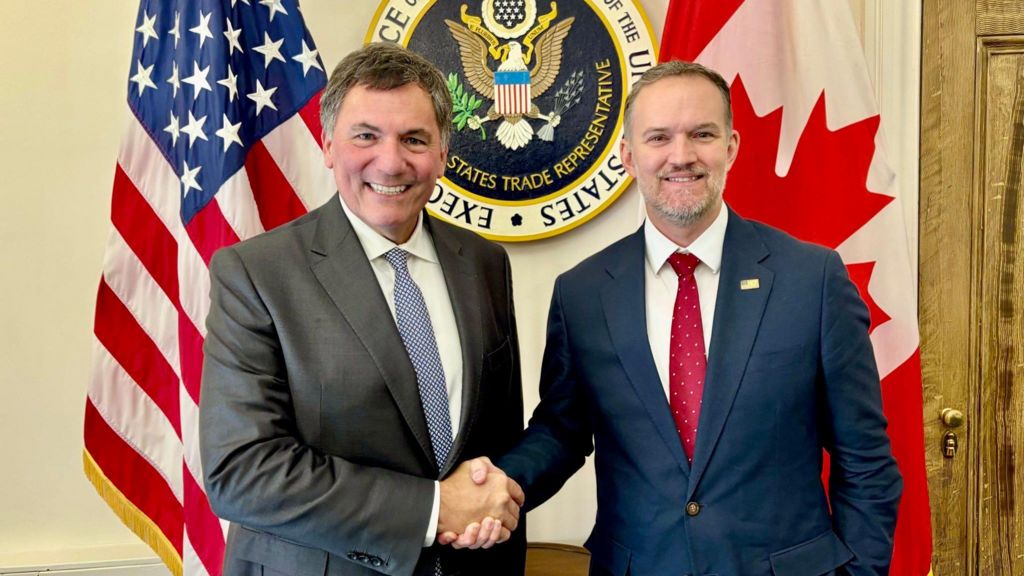
    Carney, in a post on X Wednesday, congratulated negotiating teams led by US Trade Representative Jamieson Greer and Canadian Trade Minister Dominic LeBlanc for the “significant progress” they achieved after more than a week of marathon talks in Washington. The tentative deal will lock in “the best terms” for Canada’s most critical strategic sectors and bring much-needed certainty to the long-strained bilateral trading relationship, Carney added.

    Speaking to reporters shortly after a 45-minute negotiating session with LeBlanc, Greer said US officials are “very happy” with the outcome of the latest talks. He confirmed the agreement eliminates a number of longstanding trade frictions that have complicated US-Canada trade relations for years. “We feel confident that we’ve reached an agreement that will not only continue to protect American workers, American jobs, American supply chains, but really strengthen the North American economy,” Greer said, adding that he will brief Congress and US industry stakeholders on the full details of the deal in the near future.

    LeBlanc, whose team has been stationed in Washington for more than a week to rush a deal before the tariff deadline, moved to reassure domestic audiences that one of Canada’s most sensitive agricultural policies remains untouched. When asked whether the deal included major concessions on dairy access that would undermine Canada’s supply management system — which governs production quotas, fixed pricing, and import limits for dairy, eggs, and poultry — LeBlanc confirmed the program will remain “entirely intact.”

    The core sticking points that dominated negotiations align with longstanding priorities from both countries. Canada has pushed for the US to roll back or eliminate existing tariffs on its key exports including steel, aluminum, automobiles and softwood lumber. For its part, Washington has demanded several key concessions from Ottawa: the removal of Canada’s remaining retaliatory tariffs on American automobiles, expanded access to Canada’s dairy market for US cheese producers, and the elimination of the ban on US alcohol sales that most Canadian provinces implemented last year in retaliation for earlier Trump-era tariffs.

    Public opinion in Canada remains sharply divided over how far Ottawa should go to reach a deal. Recent polling from Leger shows 56% of Canadian respondents favor a hardline negotiating approach, and a majority would oppose the Carney government making significant concessions to the US to avoid new tariffs. However, business groups on both sides of the border have repeatedly pressured negotiators to reach a deal, warning that new tariffs would inflict broad economic harm on two of the world’s largest trading partners, who share more than $2 billion in daily bilateral trade.

    As of Wednesday, many key details of the tentative agreement remain undisclosed: the full scope of policy changes, the specific concessions each side has agreed to, and the remaining outstanding issues that still need to be resolved before the deal can be finalized have not been made public. The threatened 50% tariffs have only been paused until the weekend, giving negotiators a narrow window to iron out the final details of the agreement.

  • After three years apart, a Gaza father returns to his wife – and six death certificates

    After three years apart, a Gaza father returns to his wife – and six death certificates

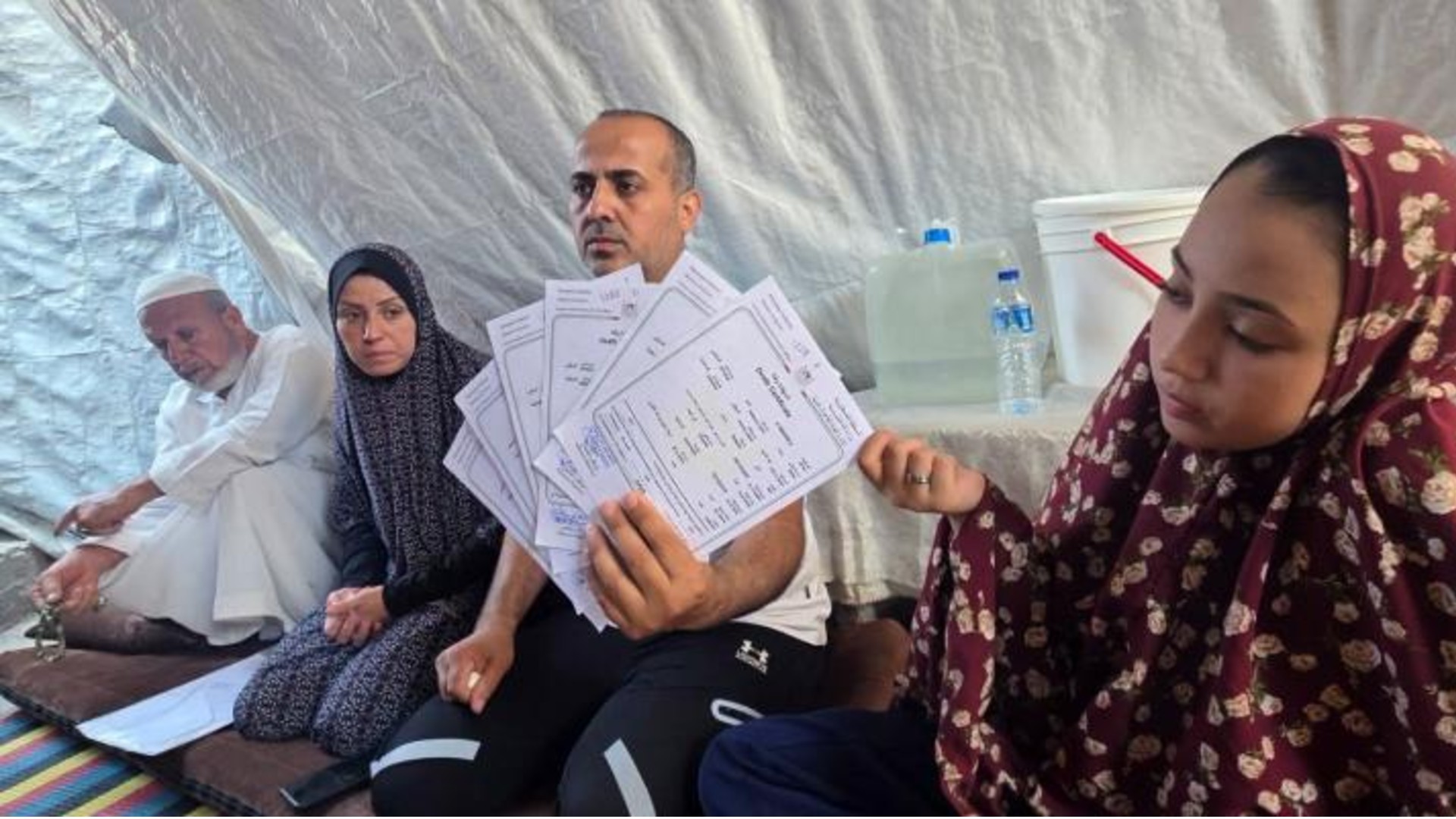
    For nearly three years, Ahmed al-Siqali, a Palestinian father of seven, dreaded the day he would step back into the Gaza Strip. Just one week before the outbreak of full-scale conflict in October 2023, he had crossed out of the besieged enclave to take a construction job in Israel, a routine move for thousands of Palestinian laborers who relied on Israeli work permits to support their families. When border crossings closed immediately after hostilities began, al-Siqali found himself stranded in the occupied West Bank, cut off from his wife and children for more than two years. That separation turned to unthinkable tragedy in December 2023, when an Israeli airstrike flattened the Gaza City home where his family was sheltering, killing six of his seven children. Only his daughter Rosan survived alongside his wife Hayat. When Israeli forces finally detained him during a West Bank raid last month and deported him back to Gaza weeks later, al-Siqali stepped into a homecoming no parent should ever face.

    Before October 7 2023, cross-border work was a common livelihood for Palestinian men from Gaza. Under a permit system run by Israeli authorities, thousands traveled regularly to Israel for jobs in construction, agriculture and services, sending earnings home to build better futures for their families. Al-Siqali had walked that same path: he had even purchased a new home near the Mediterranean coast in northern Gaza, fulfilling a long-held dream of his children to live steps from the beach. He never imagined that his final goodbye before leaving for work would be the last time he saw six of his children alive.

    “I never imagined that the journey meant to build their future would separate our fates, leaving me unable to protect them or even say goodbye,” al-Siqali told Middle East Eye in an interview following his return. As communications across Gaza collapsed repeatedly in the first weeks of the war, reaching his family became nearly impossible. On the rare calls that connected, his children begged him to come home, repeating “We don’t want work or money. We just want you here with us.” The last successful contact came on December 8, 2023, when al-Siqali reached his wife through a rare working eSIM. In the few minutes before the line cut out, he could hear the terror in his family’s voices. Fearing the worst, he asked Hayat to write all the children’s names on their hands so they could be identified if disaster struck. Minutes after the call dropped, a relative called with the devastating news: the shelter had been bombed.

    “There are no words that can describe what I felt at that moment. It was something no human being should have to endure,” al-Siqali said. Only two-month-old Eileen, whom he had held just once before leaving Gaza, was among the dead, alongside Mohammed, Muhannad, twins Kinan and Rayan, and Basant. “What did my children do to have their dreams taken away and be killed like this?” he asked. For two years, he remained stranded in the West Bank, passing days re-watching old photos and videos of a family trip to al-Nour resort taken just days before he left. The new coastal home he had worked so hard to buy was destroyed in the fighting, leaving nothing of the future he had planned.

    His long wait for reunion ended abruptly on July 21, when Israeli forces raided the Qalqilya compound where he was staying with other displaced Gaza laborers. Al-Siqali, who had already warned his wife of the incoming soldiers, was detained along with all the workers in the building. After two weeks in Ofer Prison, he was transferred back to Gaza alongside 23 other Palestinian workers, cuffed and blindfolded for the four-hour journey to the Kerem Shalom crossing. From there, the International Committee of the Red Cross took the group to Nasser Hospital for processing.

    “As I walked towards the crossing, my legs could barely carry me. I felt as though I was about to lose consciousness,” al-Siqali recalled. “All I could think about was my incomplete reunion, the reunion I had waited so long for. It had finally come, but my family was no longer whole. Instead of my children being there to welcome me, I was welcomed by their six death certificates.”

    Waiting for him at the hospital was Hayat, who had spent two weeks without any word of al-Siqali’s fate after his arrest. The 36-year-old mother, who survived the airstrike with physical wounds and crippling grief, said her mind froze when the bus pulled in. “My heart pounded, and I wanted to fly to him, yet I didn’t know how to face him without our six children,” she said. When al-Siqali walked toward her, their three-year-awaited reunion was held in silence, broken only by shared tears. Hayat whispered the words that had weighed on her through months of displacement: “Forgive me. I couldn’t protect what you entrusted to me.”

    Today, the small surviving family lives in a makeshift tent in al-Mawasi, a displacement camp in southern Gaza. UN data shows that more than 90% of all buildings across Gaza have been damaged or destroyed since the start of the conflict, forcing nearly 1.9 million Palestinians from their homes. More than 800,000 displaced people live in makeshift tent settlements that offer almost no protection from extreme summer heat, disease and harsh weather. Al-Siqali, once a skilled construction worker, now struggles to adjust to the primitive conditions of camp life, with no work to turn to in a completely collapsed local economy.

    Most days, he lies on a thin foam mattress in the tent, scrolling through the photos of his six children saved on his phone. Their six death certificates rest beside him. “This is all I have left of them,” he repeats. According to United Nations figures, more than 21,000 children have been killed in Gaza and the West Bank since the start of the war, with thousands more still missing and presumed dead, turning al-Siqali’s story of grief into one of thousands for Palestinian families across the region.

  • Death toll in mine collapse in Central African Republic rises to more than 100

    Death toll in mine collapse in Central African Republic rises to more than 100

    BANGUI, Central African Republic — Two local sources directly involved in response operations confirmed Wednesday that the confirmed death toll from a catastrophic gold mine collapse in western Central African Republic has climbed past 100, with fatalities expected to rise further as search and recovery efforts continue.

    The disaster struck at an unregulated, low-capacity artisanal gold mine on Tuesday morning in the rural village of Zamboye, located in Nana-Mambere prefecture just a short distance from Central African Republic’s border with Cameroon.

    Gervais Ganagoroh, a local Red Cross volunteer participating in on-the-ground relief work, reported that alongside the rising number of fatalities, multiple miners who escaped the initial collapse are currently in critical condition with severe injuries. Local youth council member Bertrand Be Yangué, who is also assisting in recovery operations, added that the final death count will likely grow, as dozens of people remain unaccounted for and dozens more are still trapped beneath tons of collapsed rock and rubble.

    Yangué told reporters that the chances of pulling any remaining trapped miners out alive are extremely slim. “Finding them alive would be a miracle,” he said. “We are saddened and heartbroken to see young men and women perish after coming to the mines to save their families from despair.”

    In the wake of the incident, judicial authorities have launched a formal investigation. The prosecutor for the Baboua sub-prefecture court released an official statement confirming the probe, which will focus on identifying the root cause of the collapse, confirming the identities of all victims, holding accountable any parties responsible for operating the unregulated mining site, and pursuing potential criminal charges where negligence or illegal activity is found.

    Local footage captured at the disaster site in the hours after the collapse paints a grim picture: mud-caked miners, most of them young adults, worked frantically to pull bodies from the deep open pit. Dozens of other people connected to the mine gathered across the large site, with many crying out for additional help to reach trapped loved ones.

    Collapses at unregulated small-scale mines are a recurring tragedy across Central African Republic. It is estimated that thousands of local residents rely on artisanal gold extraction for their livelihoods, driven by widespread poverty and a lack of alternative work opportunities. These small operations almost never provide workers with basic safety equipment or structural protections, a reality that has turned the trade into one of the country’s deadliest informal sectors.