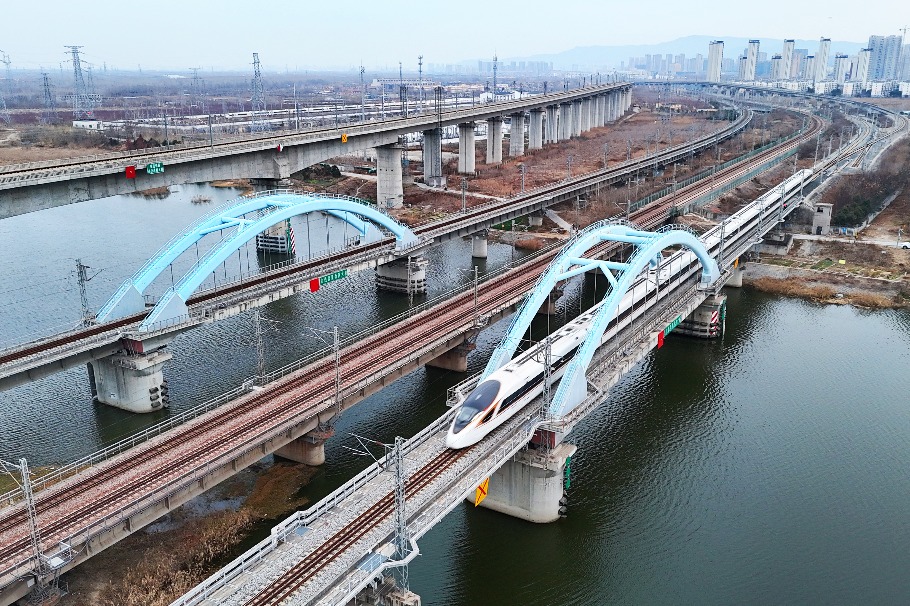
China’s transportation networks witnessed unprecedented activity in 2025 with official data revealing 66.86 billion cross-regional trips completed throughout the year. This substantial movement of people represents a 3.5 percent increase compared to the previous year’s figures, underscoring the nation’s rapidly expanding mobility patterns.
博客
-

Ukraine is bracing for brutal weather as Trump says Putin agreed to halt power grid attacks
KYIV, Ukraine — As Eastern Europe grapples with an extreme winter cold snap, diplomatic tensions intensify over unverified claims of a temporary ceasefire on energy infrastructure attacks. U.S. President Donald Trump announced Thursday that Russian President Vladimir Putin had acquiesced to a one-week moratorium on targeting Ukraine’s power grid, though neither the Kremlin nor White House provided immediate confirmation of the alleged agreement.
Ukrainian President Volodymyr Zelenskyy expressed profound skepticism regarding Moscow’s intentions, stating publicly Friday: ‘I do not believe that Russia wants to end the war. There is a great deal of evidence to the contrary.’ His comments came as the conflict approaches its fourth anniversary with no diplomatic resolution in sight.
The purported truce discussion emerged against a backdrop of continued hostilities. Overnight, Russia launched 111 drones and one ballistic missile toward Ukraine, resulting in at least three casualties according to Ukrainian air defense reports. Simultaneously, Russia’s Defense Ministry claimed interception of 18 Ukrainian drones over multiple regions including annexed Crimea and the Black Sea.
Meteorological conditions compound the humanitarian crisis, with temperatures forecast to plunge to -30°C (-22°F) across Ukraine this week. This severe cold wave threatens millions already suffering from Russia’s documented strategy of weaponizing winter conditions by targeting energy infrastructure.
The energy truce concept originated during multilateral talks in Abu Dhabi last weekend involving envoys from Ukraine, Russia, and the United States. Zelenskyy confirmed his administration’s willingness to adopt reciprocal measures: ‘If Russia does not strike us, we will take corresponding steps regarding their energy infrastructure.’
However, the Ukrainian leader clarified that no formal ceasefire agreement exists, emphasizing the absence of direct negotiations between the warring nations. Fundamental disagreements over occupied territories remain the primary obstacle to peace, with Zelenskyy reiterating Ukraine’s stance against compromising territorial integrity while expressing openness to economic compromise solutions.
Further diplomatic engagements scheduled for Abu Dhabi this weekend face uncertainty due to escalating tensions between the U.S. and Iran, potentially delaying critical dialogue on the conflict.
-
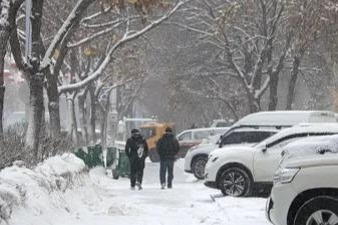
China braces for four cold waves in February
Meteorological authorities in China have issued warnings regarding four significant cold waves expected to sweep across the country throughout February, potentially disrupting the world’s largest annual human migration during the Spring Festival holiday period. According to Huang Zhuo, Deputy Director of the National Meteorological Center, these weather systems pose substantial challenges to transportation networks and energy infrastructure during the peak travel season.
The forecast indicates two major precipitation events between February 5-7 and February 10-13, bringing rain and snow to central and eastern regions. An additional cold air mass is projected to impact these areas during the initial phase of the Spring Festival holiday, which officially runs from February 15 to 23. Meteorological officials have identified four primary climate risks requiring coordinated preparedness measures across different regions.
Northern China must prepare for staged temperature declines, strong gales, and heavy snowfall, while northern sections of East and Central China, along with Southwest China, face potential low-temperature rain and snow events that could compromise transportation safety and energy distribution systems. Concurrently, southern and southwestern regions confront developing drought conditions and elevated forest fire risks, necessitating enhanced water resource management and fire prevention protocols.
The current weather patterns represent a continuation of January’s unusual conditions, which saw five cold waves—exceeding historical averages for the period. Since mid-January, meteorological drought has intensified across eastern and southern China, with particularly severe conditions reported throughout most of Fujian province, central Guangdong, and coastal areas of Zhejiang.
These weather developments coincide with the Spring Festival travel rush (chunyun), scheduled from February 2 to March 13—a 40-day period during which inter-regional passenger trips are projected to reach an unprecedented 9.5 billion, according to National Development and Reform Commission estimates. The convergence of extreme weather and record travel volumes presents complex challenges for transportation authorities and emergency management systems nationwide.
-

Scientists design flexible patch for precision drug delivery to complex organs
An international research consortium led by Beihang University has unveiled a groundbreaking bioelectronic patch technology that promises to revolutionize targeted therapeutic delivery to complex organs. Dubbed POCKET, this ultra-flexible device represents a paradigm shift from conventional systemic drug administration by conforming precisely to irregular organ surfaces like ovaries and kidneys.
The innovation addresses a critical clinical dilemma: women with hereditary BRCA1 mutations currently face radical preventive surgery involving ovary and fallopian tube removal, resulting in permanent infertility. Existing viral vector gene therapies pose unacceptable risks of germline genome contamination, making them unsuitable for reproductive organs.
Drawing inspiration from traditional paper-cutting artistry, the multidisciplinary team engineered a four-layer nanostructured patch achieving over 95% surface coverage on anatomically complex organs. The device integrates silver nanowire electrodes, a drug-loaded hydrogel reservoir, and precisely patterned nanopores created through femtosecond laser processing.
When activated by low-voltage current, POCKET generates localized electric fields that temporarily create microscopic channels in cell membranes. This electroporation mechanism allows direct intracellular drug delivery with nearly 1,000-fold efficiency improvement over passive diffusion while preserving deeper tissue integrity.
In preclinical models, the technology successfully delivered BRCA1 gene therapy exclusively to ovarian surface cells in mice, reducing cancer risk without compromising reproductive function. Additional trials demonstrated targeted anti-inflammatory delivery to transplanted kidneys, protecting renal function while eliminating systemic side effects associated with oral steroids.
Co-corresponding author Chang Lingqian from Beihang University emphasized the platform’s adaptability for treating diabetes, retinal disorders, and rheumatoid arthritis. This physical delivery approach avoids genetic contamination risks while enabling precision targeting previously unattainable with conventional methods.
The research, published in Cell on January 30, 2026, marks a significant advancement in bioelectronic medicine, potentially transforming treatment paradigms for sensitive and structurally complex organs throughout the human body.
-

Taiwan’s economy grows 8.6% in 2025, fastest rate in 15 years, turbocharged by the AI boom
TAIPEI, Taiwan — Taiwan’s economy has recorded its most robust annual expansion in 15 years, achieving an impressive 8.6% growth rate throughout the previous year. This exceptional performance, significantly surpassing economic forecasts, has been primarily driven by soaring exports in artificial intelligence technologies and increased shipments to the United States.
The island nation’s statistical authority released advanced estimates indicating this represents the strongest economic performance since 2010. Taiwan’s strategic position as a manufacturing hub for AI servers, computer chips, and precision instruments has positioned it advantageously within the global technology supply chain. Export figures reveal a remarkable 35% annual increase, with shipments to the U.S. market surging by an extraordinary 78%.
Recent trade agreements with the United States have further strengthened Taiwan’s economic prospects. The newly established trade deal reduces U.S. tariffs on Taiwanese imports from 20% to 15% in exchange for substantial investment commitments exceeding $250 billion in semiconductor and AI sectors within the United States.
Leading technology corporations including Taiwan Semiconductor Manufacturing Company (TSMC) and Foxconn have reported record-breaking profits and revenues. TSMC, the world’s premier contract chipmaker and key supplier to Nvidia, continues to demonstrate formidable market presence, while Foxconn maintains critical manufacturing partnerships with both Nvidia and Apple.
Despite current successes, economists project moderated growth in coming years due to higher baseline comparisons. Deutsche Bank forecasts approximately 4.8% economic expansion for 2026. Potential challenges include concerns regarding AI market sustainability, evolving U.S. trade policies under potential Trump administration changes, and ongoing geopolitical tensions with Beijing. China recently conducted substantial military exercises around Taiwan, reinforcing territorial claims over the self-governed island.
-

Uganda’s army chief accuses US Embassy officials of aiding opposition figure who went into hiding
Uganda’s military leadership has ignited a significant diplomatic controversy by alleging that U.S. Embassy officials assisted opposition figure Bobi Wine in evading capture following the country’s contentious presidential election. General Muhoozi Kainerugaba, who serves as both army chief and presumed political successor to President Yoweri Museveni, made explosive claims via social media platform X that American diplomats had coordinated with Wine to undermine Uganda’s national security.
The general asserted, based on unspecified intelligence sources, that Wine orchestrated his own disappearance in collaboration with U.S. officials—accusations he subsequently retracted by deleting the posts. Wine, whose legal name is Kyagulanyi Ssentamu, has been circulating videos from various locations across Uganda, demonstrating his ability to evade security forces while criticizing what he describes as systemic injustice.
This confrontation escalated dramatically when Kainerugaba declared Wine ‘wanted dead or alive,’ employing a derogatory variation of the opposition leader’s name and warning that foreign powers attempting to assist his escape would face severe diplomatic consequences. The military commander additionally claimed responsibility for a recent raid on Wine’s residence, though he denied allegations that soldiers assaulted Wine’s wife during the operation.
Official election results show Museveni securing 71.6% of the vote compared to Wine’s 24.7%, granting the 81-year-old president a seventh term extending his four-decade rule. Wine has rejected these results as fraudulent while his supporters point to his continued evasion as evidence of government weakness. Hundreds of Wine’s supporters have been detained according to police reports, with one of his deputies facing terrorism charges related to election violence.
The United States Embassy in Kampala has maintained silence regarding these allegations, while the Ugandan government has yet to specify formal charges against the opposition leader. This developing situation reflects deepening political divisions and growing international concern about democratic processes in the East African nation.
-
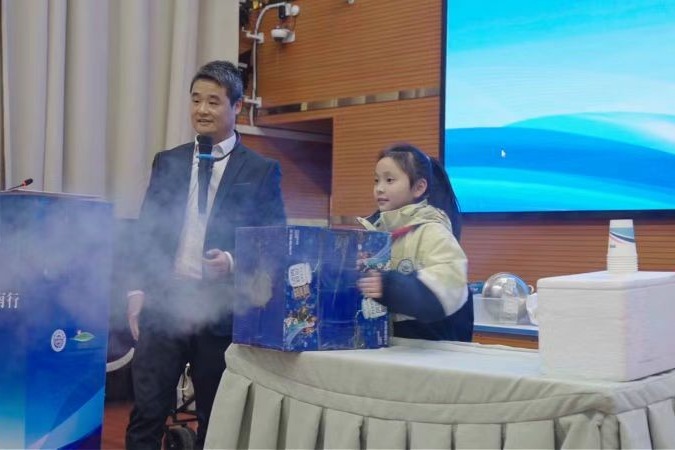
China reports rising investment in science popularization in 2024
China has demonstrated significant advancements in its national science popularization infrastructure during 2024, according to official statistics released by the Ministry of Science and Technology. The comprehensive data reveals substantial growth across multiple dimensions of scientific public engagement.
The country’s network of science and technology museums expanded considerably, reaching 1,890 facilities nationwide—marking an increase of 111 institutions compared to the previous year. This expansion represents China’s continued commitment to creating physical spaces dedicated to public science education.
Financial investment in science outreach initiatives reached unprecedented levels, with total funding climbing to 22.22 billion yuan (approximately $3.19 billion). This figure reflects a 3.32 percent year-on-year increase, demonstrating sustained government and institutional support for science communication programs.
The human capital supporting these efforts similarly grew, with the science popularization workforce expanding to approximately 2.21 million professionals working either full-time or part-time in the field. This represents a 2.62 percent increase from 2023, indicating career growth and opportunity in science communication sectors.
Public participation metrics reached extraordinary scales, with over 1.44 million science lectures conducted through both online and offline platforms, collectively attracting more than 2 billion participants. Additionally, approximately 109,200 specialized science and technology exhibitions were organized nationwide, drawing 480 million visits. In a significant move toward institutional transparency and public access, 9,680 research institutions and universities opened their facilities to public tours, receiving over 24.95 million visits throughout the year.
These developments highlight China’s strategic emphasis on enhancing public scientific literacy through multidimensional approaches including infrastructure development, financial investment, workforce expansion, and diverse public engagement initiatives.
-
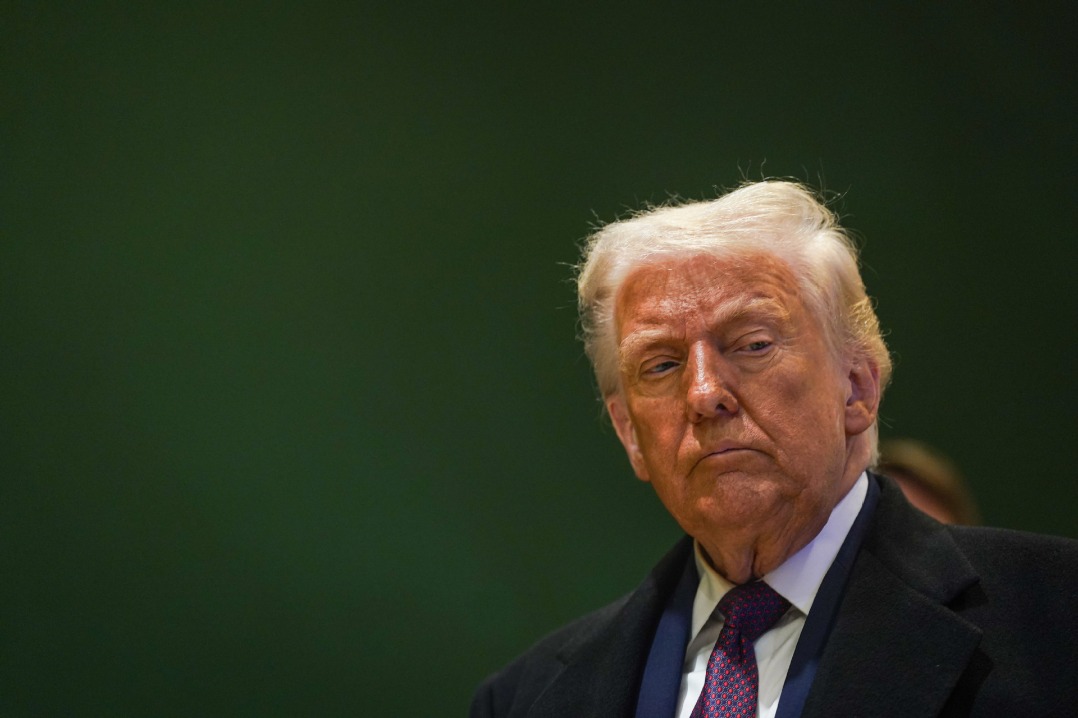
Trump says he plans to talk to Iran
In a notable shift from his previous hardline stance, U.S. President Donald Trump announced his intention to initiate dialogue with Iranian leadership during a public appearance at the Kennedy Center on Thursday. The declaration came alongside a stark reminder of American military capabilities, with Trump referencing “very big, very powerful ships” currently deployed toward Iranian waters.
The President framed potential diplomatic engagement as preferable to military action, stating unequivocally that avoiding the deployment of these naval assets would represent an optimal outcome. This dual-message approach—combining overt military demonstration with openness to negotiation—marks a significant development in the ongoing tensions between Washington and Tehran.
The timing and venue of these comments carry substantial symbolic weight, delivered at a cultural institution named for a president who navigated one of the most dangerous nuclear standoffs in modern history. Trump’s statement suggests a possible recalibration of foreign policy strategy toward Iran, though the specific framework for proposed talks remains undefined.
This development occurs against the backdrop of prolonged economic sanctions and periodic confrontations in the Persian Gulf, where U.S. and Iranian forces have previously engaged in dangerous encounters. The international community continues to monitor whether this overture will lead to substantive diplomatic engagement or represent merely tactical positioning.
-
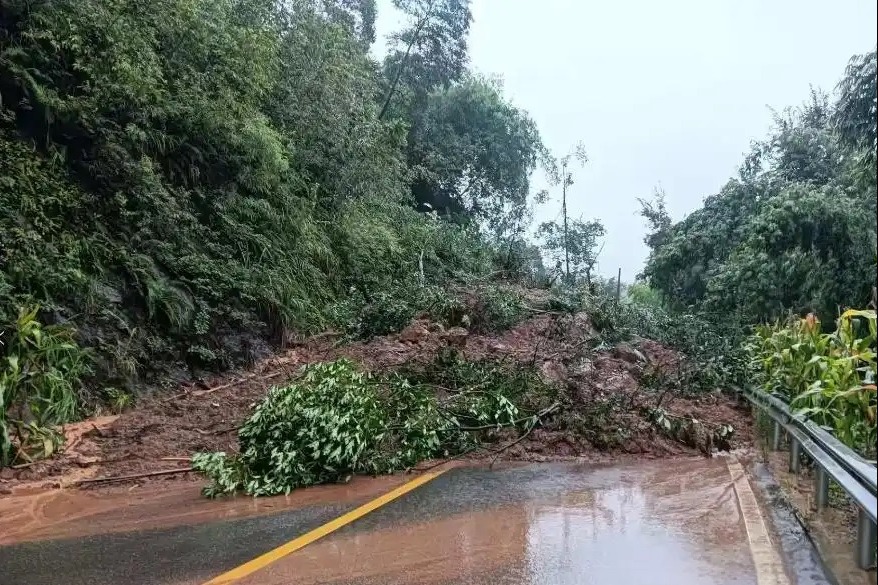
Last year was wetter and warmer in China
China witnessed unprecedented climate patterns throughout 2025, characterized by record-breaking warmth and increased precipitation levels nationwide. According to the recently released China Climate Bulletin (2025), the country’s annual average temperature reached 10.9°C, matching the previous record set in 2024 and standing 1°C above the 1991-2020 baseline. This places both years as the warmest since comprehensive meteorological records began in 1951.
The warming trend manifested most dramatically through prolonged heatwaves that affected extensive regions of central and eastern China from late June through early September. The number of high-temperature days across the nation surged to unprecedented levels, establishing new historical records.
Precipitation patterns showed significant deviation from historical norms, with annual rainfall exceeding long-term averages by 4.5%. The summer months brought particularly intense weather activity, as frequent rainstorms triggered severe flooding across northern China. Between late July and early August, North China experienced rainfall of both exceptional duration and volume during its rainy season, while western regions recorded their heaviest autumn precipitation in history.
Tropical cyclone activity intensified markedly, with both typhoon formation and landfall numbers surpassing seasonal averages. An unusual sequence of five consecutive typhoons made landfall or significantly affected southern China between September and October.
While meteorological drought conditions remained generally mild nationwide, regional water shortages emerged in southern China and along the middle and lower Yangtze River reaches, where consecutive winter and spring droughts developed. The year also saw increased wind intensity, with strong wind days reaching their highest frequency since 1991. Sandstorm activity intensified during spring months, though the season’s first sandstorm event occurred later than typical timing.
National Climate Center Deputy Director Gao Rong attributed these complex weather variations to multiple interacting atmospheric and oceanic factors across different timescales. Key influences included the early northward movement and subsequent retreat of the subtropical high-pressure system, a robust East Asian summer monsoon, and intensified rainstorm patterns across northern and northeastern regions.
Despite these extreme weather events, vegetation growth during the 2025 growing season reached its highest level this century, particularly in western Northeast China and central-eastern Inner Mongolia.
Looking ahead, meteorological authorities have issued specialized forecasts for the upcoming Spring Festival travel period. National Meteorological Center Deputy Director Huang Zhuo indicated that a potent cold air mass will affect central and eastern China from February 5-7, bringing widespread strong winds and temperature declines of 4-8°C, with some regions experiencing drops exceeding 10°C. Additional precipitation events are expected between February 10-13, potentially affecting transportation networks during peak travel periods. A subsequent cold air process is forecast for the early Spring Festival holiday period from February 15-23. The China Meteorological Administration will provide daily weather briefings throughout the travel season to assist public planning and safety.
-
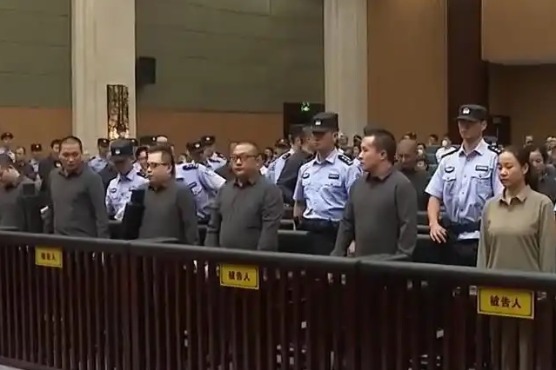
11 Myanmar syndicate members executed
China’s judicial system has carried out the execution of eleven principal operatives from a notorious Myanmar-based criminal syndicate, marking a significant development in cross-border law enforcement cooperation. The Supreme People’s Court confirmed the executions through its official WeChat channel on Thursday, following an extensive legal process that culminated in the approval of death sentences for crimes spanning intentional homicide, assault, unlawful confinement, fraud, and illegal casino operations.
The convicted individuals, identified as ringleaders Mg Myin Shaunt Phyin and Ma Thiri Maung along with nine accomplices, operated primarily in Myanmar’s Kokang region where they established multiple fraudulent compounds beginning in 2015. Their criminal enterprise collaborated with armed groups that provided both financial backing and military support, creating an extensive network responsible for telecommunications fraud schemes that generated approximately 10 billion yuan ($1.4 billion) in illicit proceeds.
According to judicial authorities, the syndicate’s activities resulted in fourteen confirmed fatalities among Chinese citizens and numerous injuries to others. The Supreme People’s Court characterized the nature of these crimes as exceptionally severe with devastating consequences, justifying the ultimate penalty under Chinese law.
The legal proceedings began with the Wenzhou Intermediate People’s Court’s initial death sentence verdict on September 29, which was subsequently appealed by the defendants. The Zhejiang High People’s Court upheld the original ruling in November, after which the case underwent mandatory review by China’s highest judicial authority. The Supreme People’s Court determined that the evidence presented was comprehensive, the legal procedures were properly observed, and the sentencing appropriately reflected the gravity of the offenses.
Foreign Ministry spokesperson Guo Jiakun addressed the executions as part of China’s broader initiative to combat transnational criminal organizations, particularly those engaged in online fraud and gambling operations. ‘China has been actively cooperating with Myanmar and other nations to eliminate these cross-border threats,’ Guo stated, emphasizing the commitment to protecting citizens’ assets and maintaining regional security through intensified international law enforcement collaboration.
This case represents one of several high-profile prosecutions targeting criminal networks operating across the China-Myanmar border. In a related development, five members of another family-run syndicate received death sentences in Guangdong province last November, while three additional suspects face multiple charges in Fujian province for their alleged involvement with armed criminal enterprises in Myanmar.