Fifty-five years after Henry Kissinger’s covert 1971 trip to Beijing laid the groundwork for Sino-American rapprochement, a high-stakes meeting between the United States and China is set to unfold in a dramatically altered global landscape.
In July 1971, then-U.S. National Security Advisor Henry Kissinger used a reported case of gastrointestinal illness during an official trip to Pakistan as cover to slip away on a classified flight to Beijing. Hidden from view behind Cold War divisions, Kissinger’s secret negotiations with Premier Zhou Enlai cleared the path for President Richard Nixon’s iconic 1972 visit to China, the trip widely remembered as the “week that changed the world.” That historic opening turned Cold War ideological adversaries into uneasy strategic partners aligned against a shared Soviet rival, a gamble that redefined global order for decades.
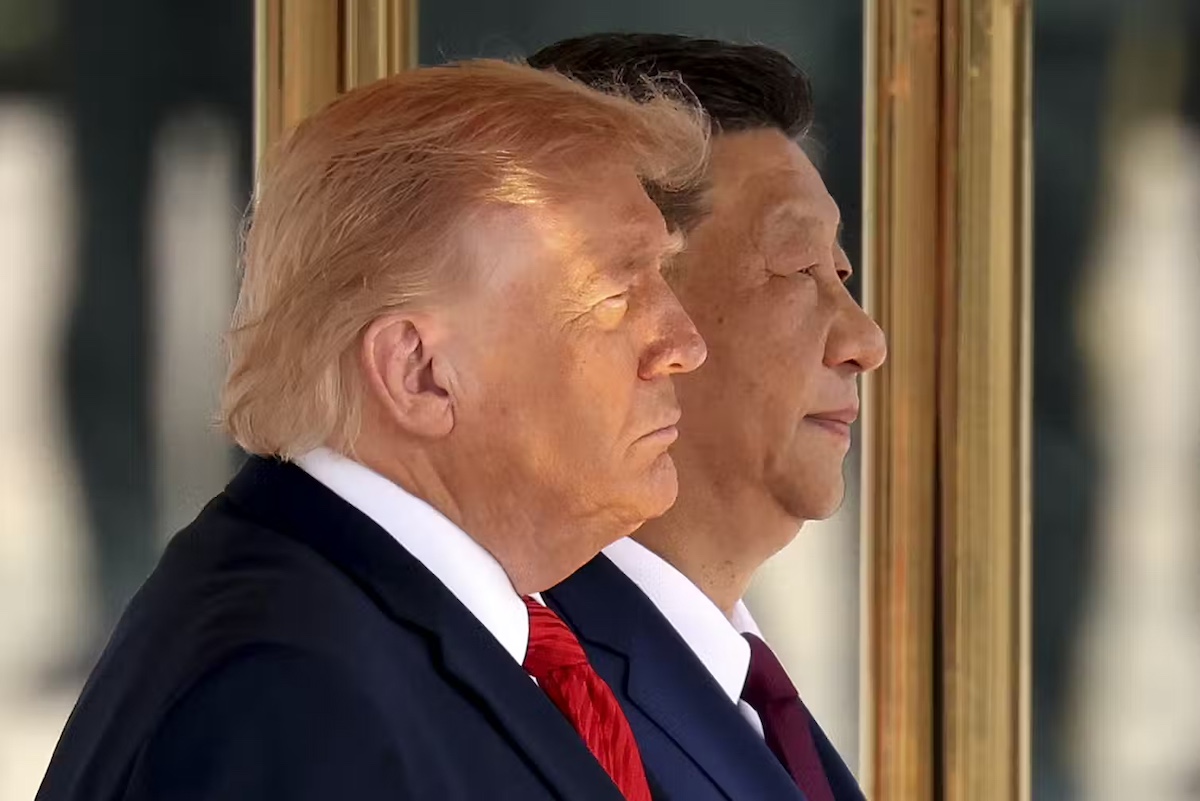
Half a century later, the geopolitical stage has flipped: on September 24, 2026, U.S. President Donald Trump will host Chinese President Xi Jinping at the White House, a meeting that follows an earlier bilateral summit in Beijing that May, where the two leaders first agreed to work toward “constructive strategic stability.” Unlike Kissinger’s hidden mission, this summit will play out entirely in the public eye, under the intense scrutiny of global media, with no backchannel secrecy and no shared overarching enemy to unify the two sides. Yet the core question facing both leaders echoes the same uncertainty that shadowed Kissinger’s 1971 flight: can two great power rivals forge a lasting, stable peace without ever setting aside their deep mutual differences?
### The Rise of Weaponized Interdependence
For much of the first Trump administration, public discussion of U.S.-China relations centered almost entirely on tit-for-tat tariff disputes. Today, that framing no longer captures the transformed nature of their rivalry, which has evolved into a contest over control of critical global supply chain chokepoints.
Nowhere is this new dynamic more visible than in the global rare earths market. China holds a near-total dominance over rare earth refining and processing capacity, so complete that even rare earth ore mined in California is currently shipped to China for value-added processing. This gives Beijing significant strategic leverage: China can weaponize its market position to hold critical U.S. industrial sectors – from aerospace and semiconductors to high-performance temperature-resistant coatings – hostage to its geopolitical priorities. Recent Chinese export restrictions have laid bare deep vulnerabilities in U.S. industrial supply chains, illustrating how a little-noted link in global production can suddenly become a major geopolitical flashpoint.
This dynamic cuts both ways, however. Washington maintains its own formidable set of economic and strategic tools: sweeping tariffs, export controls on cutting-edge semiconductors, regulatory investment restrictions, global financial leverage, and exclusive access to the most advanced artificial intelligence chips. For its part, Beijing’s arsenal draws on unmatched manufacturing scale, control of sprawling global supply chains, dominance of rare earths and critical minerals processing, and access to one of the world’s largest consumer markets.
Decades ago, political scientists Robert Keohane and Joseph Nye coined the term “complex interdependence” to describe how mutual economic reliance between states generates both constraints and coercive leverage for all parties. What is unfolding between Washington and Beijing today is a far more fraught iteration of this dynamic: their interdependence has become increasingly securitized, turning the deep economic ties that once bound them into a weaponized landscape of mutual coercion.
### Diverging Strategic Philosophies and Underlying Fault Lines
Beyond the new geoeconomics of rivalry, the two sides approach negotiations with fundamentally differing strategic instincts. Trump’s approach to diplomacy is deeply transactional, prioritizing immediate, measurable concessions that can be framed as clear victories for domestic political consumption before global attention shifts elsewhere. By contrast, Xi’s diplomatic style follows a longer time horizon, favoring incremental progress, deliberate sequencing, and calculated ambiguity, prioritizing the gradual expansion of strategic space over short-term wins while avoiding any commitments that could limit future flexibility.
Washington’s core priorities for the summit include securing more predictable rare earth supplies and commitments from Beijing to curb practices deemed harmful to U.S. economic and strategic interests. Beijing, in turn, is seeking relief from U.S. tariffs and technology restrictions, as well as a stable long-term framework for bilateral engagement. The bilateral Board of Trade established during the May 2026 Beijing summit has already made one modest start, agreeing to cut tariffs on non-sensitive commodity exports worth up to $30 billion annually, laying limited institutional groundwork for an otherwise highly volatile relationship.
Beneath these surface economic negotiations lies a far more intractable security dilemma. The Taiwan Strait remains the single most dangerous fault line in bilateral relations; during the May Beijing meeting, Xi explicitly warned Trump that mismanaging the Taiwan issue could push relations into “a very dangerous place.”
Artificial intelligence adds a further layer of growing complexity. The two powers are locked in a fierce race to dominate AI development, yet neither can manage the risks of unregulated AI alone. Every measure one side takes to boost its own security – from export controls to technology restrictions to military deployments and supply chain diversification – is automatically interpreted by the other as an attempt at strategic containment. It remains uncertain whether the U.S.-China AI dialogue mechanism, agreed ahead of the summit to monitor high-risk unregulated AI developments, will actually be activated and meaningfully used amid intensifying competition.
While these tensions do not make armed conflict inevitable, escalating friction across multiple fronts leaves the relationship vulnerable to unforeseen external shocks. And crucially, this summit’s outcomes will reach far beyond the bilateral relationship: the entire world has a direct stake in how the two leaders manage their rivalry.
### Global Expectations of Managed Coexistence
Recent conflicts in Ukraine and Iran have laid bare the inherent limits of great power influence, while a growing bloc of middle powers have steadily expanded their own geopolitical bargaining power. From India and ASEAN to Europe, Japan, South Korea, Australia, the Gulf states, and much of the Global South, most nations rely on China for manufacturing, on the U.S. for technology and finance, on Gulf producers for energy, and on one another for trade and connectivity. Few have any interest in being forced to choose an outright side between Washington and Beijing.
India’s focus on strategic autonomy and multi-alignment perfectly captures this global stance, as does ASEAN’s longstanding resistance to binary great power alignments. European governments seek economic resilience without fully severing ties to Beijing, while Gulf states have openly demonstrated that alignment with Washington does not require abandoning closer economic and strategic ties with China.
The most consequential question facing the 2026 summit is not which side holds greater coercive leverage, but whether their rivalry can leave enough strategic space for all other nations to operate independently. A U.S.-China bilateral condominium that divides global influence would alarm much of the world, just as a full-blown open confrontation between the two powers would carry unacceptable global risks. The only widely acceptable outcome is carefully managed rivalry: a framework that lets the two great powers adjust their equilibrium while allowing other nations to retain full strategic agency. This end goal is not friendship, trust, or even full reconciliation – it is simply stable, mutually accepted coexistence.
### Building Guardrails for Sustainable Rivalry
The success of the summit should not be measured by flashy photo ops or symbolic announcements, but by whether Trump and Xi can agree on a set of modest but durable guardrails to prevent uncontrolled escalation.
First, the two sides need to deliver greater economic predictability. Global businesses cannot afford to restructure sprawling supply chains every time Washington or Beijing rolls out a new trade or export control measure. Second, they need to reinforce open lines of strategic communication. While military-to-military contacts and crisis hotlines do not build trust on their own, they are proven tools to prevent accidental clashes from spiraling into full-blown crises.
Third, the two sides should pursue targeted selective cooperation. Issues including climate change, global public health, financial stability, and AI safety all demand urgent collaborative action that can advance even before the two sides resolve their deeper geopolitical differences. Fourth, they need to agree on boundaries for competition: great power rivalry is inevitable, but unconstrained competition carries catastrophic risks for all.
Finally, both sides must confront a difficult psychological reality: neither power is going away any time soon. The U.S. will remain a formidable technological, financial, and military superpower, while China will remain a major industrial, commercial, and geopolitical heavyweight. Any sustainable bilateral relationship must start from this unshakable reality.
In 1971, Kissinger’s secret trip proved that yesterday’s adversary could become tomorrow’s partner. In 2026, Trump and Xi face the opposite, equally urgent challenge: proving that today’s rival does not have to become tomorrow’s enemy. Where Nixon and Mao needed a strategic opening to suit Cold War demands, Trump and Xi need a strategic ceiling: a clear agreement to limit the escalation of their rivalry before it slips into catastrophe.
This summit will not decide which power will dominate the 21st century. But it can deliver a far more consequential outcome: it can determine whether the two great powers can compete peacefully, without forcing the rest of the world to pay the price for their rivalry.
*This analysis is by Swaran Singh, former professor of diplomacy and disarmament at the School of International Studies, Jawaharlal Nehru University, New Delhi.*