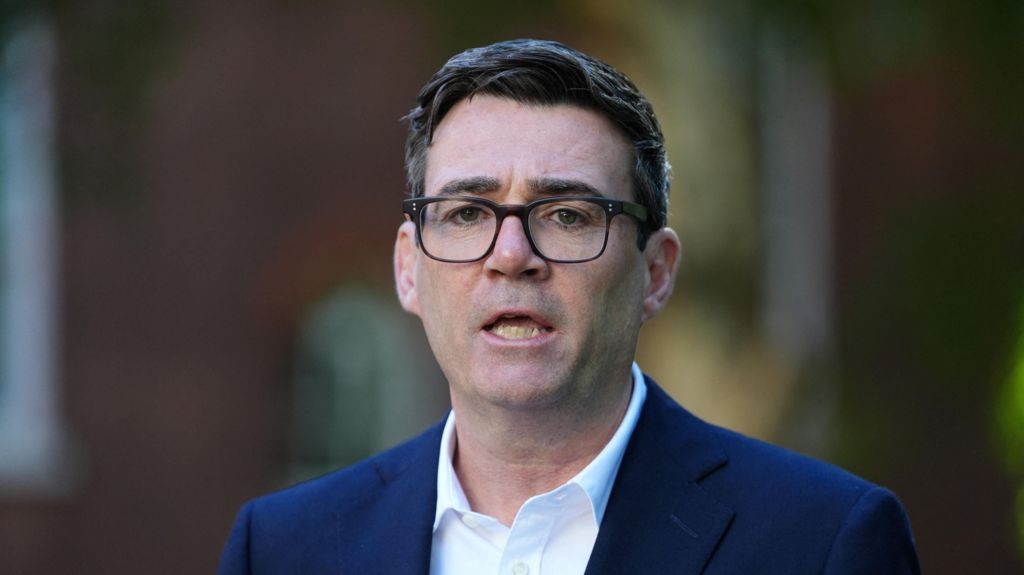
As Britain’s prime minister travels to New York for the United Nations General Assembly, he has highlighted pressing concerns over a controversial European Union trade policy, while keeping open the question of whether the UK will pursue a full return to the bloc in future election platforms.
Andy Burnham, who took over the premiership following Keir Starmer’s July resignation, is set to meet European Commission President Ursula von der Leyen on the sidelines of the annual UN summit this week to raise alarms over the EU’s proposed Made In Europe initiative, formally known as the Industrial Accelerator Act. The draft policy is designed to reduce the market access of Chinese firms within the EU by prioritizing bloc-based manufacturers for public procurement contracts and regional subsidies. However, Downing Street fears the rules could disproportionately harm British manufacturing and cross-border supply chains, even though the policy is targeted at third-party Asian competitors.
Speaking to reporters aboard his flight to the United States, Burnham emphasized that the proposals carry avoidable collateral damage for UK industries. “Made in Europe is dealing with a different problem. We are not your enemies here… we are not the problem,” he told journalists, adding that “we both suffer the same effects as other countries, particularly steel and the issue it raises for the steel industry in Europe and in Britain. Let’s avoid collateral damage.” Burnham also noted that his government already has backing for this position among multiple EU member states, giving him leverage to push for changes to the draft legislation ahead of its finalization.
The policy dispute has already contributed to further delays for a planned annual EU-UK summit, which was first pushed back after Starmer’s sudden departure from office earlier this summer. On the ongoing topic of Brexit and UK-EU relations, Burnham declined to rule out adding a commitment to rejoin the EU to the Labour Party’s manifesto for the next general election, framing the question as a matter for a later date.
“Our immediate priority is to build on the good work that Keir [Starmer] did in rebuilding bridges, because those bridges were broken in the early part of this decade,” he explained. The premier’s core goal for upcoming talks is to advance practical agreements that will strengthen the British economy, alongside progress on EU proposals for expanded youth mobility between the UK and the bloc.
Burnham’s own address to the UN General Assembly will mark 10 years since the original Brexit referendum, and he says it will focus on the risks foreign interference poses to democratic processes. “Turbulence comes when outside actors seek to manipulate, to distort facts, influence the British democratic process,” he said. “Going into the next decade, we need to be clear-eyed about that and become stronger and more on the front foot about challenging that.”
The premier has long voiced personal support for UK re-entry to the EU: last September, he stated he hoped to see the UK rejoin during his lifetime, and earlier this year he acknowledged Brexit has been damaging to the country, while arguing against reopening the divisive referendum debate in the immediate term.
On Monday, the European Union’s new ambassador to the UK, Jukka Salovaara, addressed the Liberal Democrat conference in Brighton, noting that “the doors are open” for the UK to deepen cooperation with the bloc, and any decision on ambition levels for the relationship ultimately rests with the British public. When asked if the EU’s recent discussion of granting associate membership to Canada could open a similar path for the UK, Burnham said the bloc has already made clear that associate status is not an option for Britain at this time.