博客

  • Bowen: Strait of Hormuz standoff raises risk of sliding back into all out war

    Bowen: Strait of Hormuz standoff raises risk of sliding back into all out war

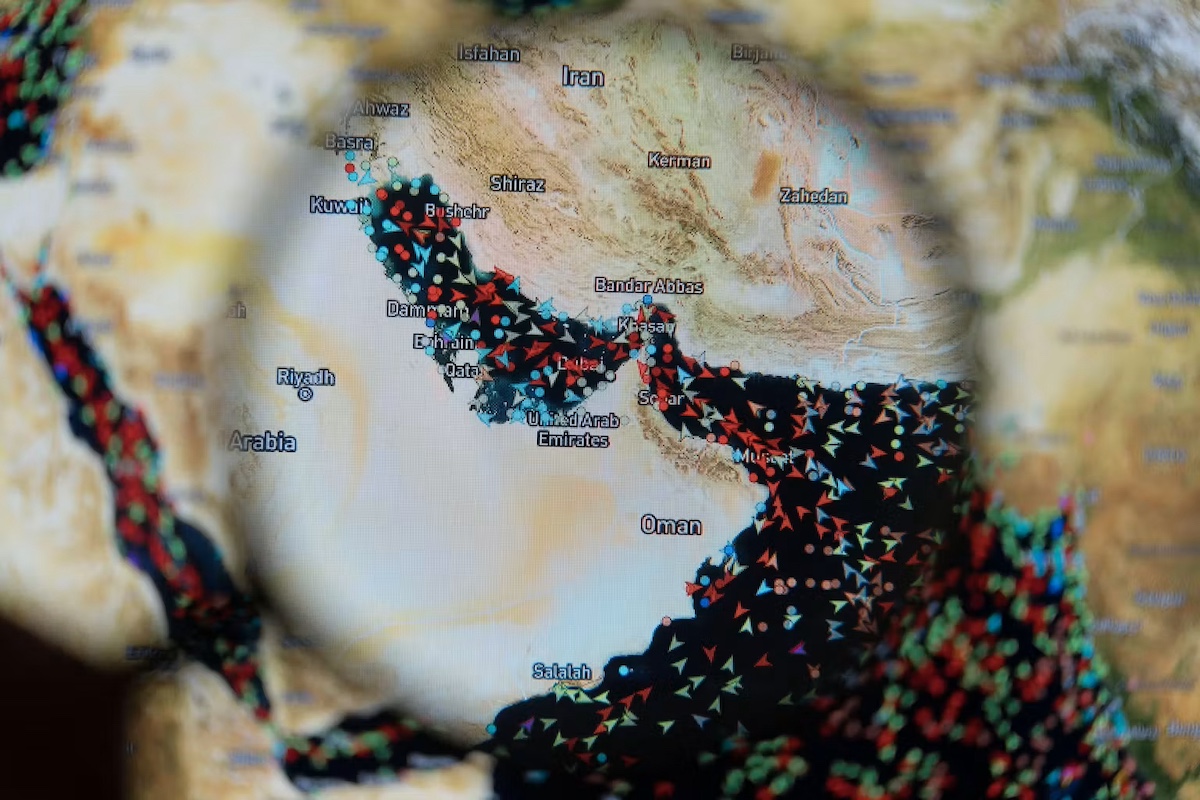
    Four weeks after a fragile ceasefire took hold across the Persian Gulf, the truce is rapidly crumbling, with escalating tensions between the United States and Iran pushing the region to the brink of renewed full-scale conflict. At the heart of the standoff is control over the Strait of Hormuz, the world’s most critical energy chokepoint that has become an existential strategic and economic flashpoint for both global powers.

    When the ceasefire was first announced, it opened a narrow window for diplomatic de-escalation. Negotiators from Washington and Tehran met face-to-face in Islamabad, the capital of Pakistan, which stepped in as a neutral mediator. But the talks concluded without any breakthrough, leaving the fragile truce hanging by a thread. Pakistani officials have continued efforts to restart dialogue, but so far their outreach has failed to bridge the deep divides between the two sides.

    Both Washington and Tehran have publicly expressed willingness to reach a negotiated settlement, but their competing demands and non-negotiable red lines have blocked any path to compromise. Neither side has shown willingness to make the concessions needed to break the impasse, leaving the region just one miscalculated incident away from a return to all-out war. This standoff has created an exceptionally high risk of misperceiving each other’s intentions, a common trigger that has historically pushed unintended crises into full-blown armed conflict.

    The strategic significance of the Strait of Hormusz cannot be overstated. Before the U.S.-Israeli strike on Iran in February 2025, the waterway remained open to unrestricted, toll-free navigation for all commercial vessels. Since the attack, Iran has effectively demonstrated its ability to restrict access to the strait, using control over the chokepoint as a leverage tool: it acts as an offensive weapon, a source of potential revenue through tolls, and a deterrent against further attacks. In remarks to Iranian lawmakers this week, Iranian Foreign Minister Abbas Araghchi made clear Tehran’s position that the pre-war status quo will not be restored.

    For the United States, allowing Iran to exert full control over the Strait of Hormuz and charge commercial shippers millions in passage tolls would amount to an unacceptable strategic defeat. But any escalation to enforce free navigation carries enormous risks, not just for the region but for the entire global economy.

    The economic ripple effects of even partial closure of the strait are already being felt far beyond the Gulf. Already, global supplies of oil, natural gas, helium critical to advanced technology manufacturing, and fertilizer feedstocks are facing growing disruptions. The fertilizer shortage in particular has sparked urgent fears of widespread hunger in low-income nations that lack robust food security systems, putting millions of vulnerable people at risk the longer the closure persists.

    U.S. President Donald Trump’s approach to the crisis has been marked by inconsistency and conflicting priorities, rooted in a rash initial decision to go to war that has left the U.S. trapped in a strategic bind. Trump, who has long framed himself as a champion of low energy prices for American consumers, has taken to social media to pressure oil traders against raising gasoline prices for U.S. motorists. But he remains frustrated by the resilience of the Iranian regime, which has refused to buckle under pressure from U.S. and Israeli military strikes and economic sanctions. The Islamic Republic’s security apparatus, which cracked down violently on domestic anti-government protests in January, has shown it is willing to prioritize holding onto power over the well-being of its citizens, giving it little incentive to back down under pressure.

    Trump’s recent order for the U.S. Navy to escort two commercial vessels through the strait was intended as a show of force to defend freedom of navigation, but the move did little to restore pre-war traffic levels. Before the outbreak of war, 40 to 60 vessels transited the strait daily; that flow remains severely restricted, and the provocative escort mission was always guaranteed to draw a harsh response from Tehran.

    Tehran’s new leadership, which has replaced the former supreme leader and multiple senior officials killed in U.S.-Israeli strikes, has signaled it is willing to escalate to set the terms of the conflict. For the regime, the gamble of renewed war is seen as a calculated risk worth taking to secure its strategic goals.

    Regional tensions have spread beyond the U.S.-Iran standoff, with the United Arab Emirates emerging as a key Iranian target among Gulf Arab states. The UAE has deepened its security alliances with the U.S. and Israel in response, receiving an Iron Dome anti-missile defense system from Israel along with Israeli Defense Forces personnel to operate it – a step Israel refused to take for Ukraine amid its ongoing war with Russia.

    Iran’s targeting of the UAE’s key Port of Fujairah carries particular strategic weight. Located on the UAE’s Gulf of Oman coastline, outside the boundaries of the Strait of Hormuz, Fujairah is the terminus of a major oil pipeline that allows the UAE to export crude without passing through Hormuz, and it hosts one of the region’s largest commercial oil storage facilities. While the UAE has issued public warnings to Tehran and maintains capable armed forces, it has sought to avoid direct conflict with Iran. That policy could become unsustainable if the ceasefire collapses entirely, and the UAE has already committed billions of additional dollars to purchasing advanced U.S. military hardware to bolster its defenses.

    Looking ahead, Trump continues to bet that increasing pressure will force the Iranian regime to collapse and accept a deal on U.S. terms. However, he has refused to accept any agreement that would be seen as weaker than the 2015 Joint Comprehensive Plan of Action (JCPOA), the landmark nuclear deal brokered by former President Barack Obama that Trump withdrew from during his first term in office, at the strong urging of Israeli Prime Minister Benjamin Netanyahu. Trump replaced the JCPOA with a policy of “maximum pressure” that failed to halt Iran’s uranium enrichment program, and ultimately set the U.S. and Iran on the current path to a war with no clear off-ramp.

  • Gap co-founder Doris Fisher dies aged 94

    Gap co-founder Doris Fisher dies aged 94

    Doris Fisher, the pioneering female entrepreneur who co-built one of the world’s most recognizable retail empires alongside her husband Don Fisher, has passed away at the age of 94. She died peacefully on Saturday surrounded by her immediate family, the company confirmed in an official announcement, with no specific cause of death disclosed.

    The story of Gap began in 1969, rooted in a mundane but frustrating shopping trip that changed the course of global retail. Don Fisher left San Francisco stores empty-handed after failing to find a well-fitting pair of jeans, spurring the couple to launch their own retail venture out of a single San Francisco store. It was Doris Fisher who coined the brand’s now-famous name: Gap, short for the generation gap, a deliberate choice designed to resonate with 1960s youth culture and attract younger shoppers.

    While Don Fisher led the company as chief executive and later chairman, Doris Fisher served as the brand’s core merchandiser until her retirement in 2003, shaping Gap’s signature accessible, casual style and public image that would define the brand for decades. Early on, the company revolutionized retail by organizing its inventory by size and style rather than by category, a radical customer-friendly approach that set a new standard for apparel stores worldwide. Under the Fishers’ leadership, Gap grew from a single jeans shop into a multi-brand global corporation, acquiring brands including Banana Republic, Old Navy, and Athleta. Today, the company operates roughly 3,570 stores across the globe, generating roughly $15 billion in annual revenue.

    In a statement honoring Fisher’s legacy, Gap Inc. President and CEO Richard Dickson praised her as a trailblazer at a time when female co-founders and lead entrepreneurs were extremely rare in the business world. “Doris was a full partner in Gap Inc.’s founding and a path-breaking entrepreneur at a time that was highly unusual for women,” Dickson said. “She understood first-hand the value of self-expression, diversity, and inclusion. And she worked tirelessly to ensure that Gap Inc. always did more than sell clothes.”

    Beyond her work in retail, Fisher was a dedicated philanthropist and leading advocate for arts access and education, the company noted. At the time of her death, Forbes estimated her personal net worth at $1.7 billion, and she previously earned a spot on the outlet’s list of the 100 most powerful women globally. Don Fisher preceded his wife in death in 2009, and the couple’s three sons remain active in both the family’s retail business and their philanthropic work.

    Industry analysts have highlighted Fisher’s outsized impact on modern retail that still resonates today. Consumer expert Kate Hardcastle of Insight with Passion noted that Fisher broke longstanding industry norms by building a brand around accessible, everyday apparel that felt “clear, democratic and dependable.” “That is the power of Gap really – at its best, it is not fashion that asks too much of the customer. It is… the quiet confidence of knowing what you came in for and why it works. Fisher helped build a brand around that rare retail discipline: removing doubt,” Hardcastle explained. She added that Fisher’s legacy feels particularly relevant today, when modern consumers are often overwhelmed by endless product choices and constant trend shifts.

    After decades of global expansion, Gap has navigated shifting retail tides in recent years. In 2021, the company closed all of its standalone physical stores in the UK and Ireland after struggling to maintain market relevance against cheaper, faster-growing competitors. But the brand retains a foothold in the region through a joint venture with British retailer Next, which manages Gap’s UK e-commerce operations and hosts Gap branded concessions within Next stores. Three standalone Gap locations also returned to the UK market at the end of 2025, marking a limited comeback for the brand in the region.

  • Thailand scraps 2001 maritime territory deal with Cambodia after years of deadlock

    Thailand scraps 2001 maritime territory deal with Cambodia after years of deadlock

    BANGKOK – In a significant shift to decades-long bilateral dispute resolution mechanisms, Thailand’s cabinet announced Tuesday it is terminating a 2001 Memorandum of Understanding (MoU) with neighboring Cambodia that established a bilateral framework for negotiating overlapping maritime territorial claims. The development comes 22 years after the agreement was signed, following a years-long deadlock in talks and a sharp deterioration in cross-border relations that erupted into deadly armed clashes last year.

    The original 2001 MoU was designed to create a collaborative foundation for the two Southeast Asian nations to peacefully delimit their shared maritime boundaries and jointly manage overlapping claimed marine resources in line with international law. However, despite five rounds of negotiations held over more than two decades, the two sides failed to make any tangible progress toward a settlement.

    The termination will not enter into legal force until Thailand formally delivers an official notification letter to Phnom Penh. Its end dashes long-held hopes in both countries that resolving the competing claims would unlock development of untapped offshore oil and gas reserves located in the disputed waters – resources that could deliver major economic gains to both nations.

    Thailand’s decision to scrap the bilateral agreement follows a dramatic escalation of border tensions that spilled into open armed conflict last year. Clashes over competing land border claims broke out in both July and December 2023, leaving dozens of civilian and military casualties on both sides and forcing hundreds of thousands of residents to evacuate their homes near the border. A fragile ceasefire was reached in late December, but low-level sporadic incidents continue to be reported, and both sides have maintained large-scale military deployments along the contested border.

    The 2023 fighting reignited domestic political pressure in Thailand over border sovereignty, pushing nationalist sentiment to the forefront of national politics ahead of 2024 general elections. Prime Minister Anutin Charnvirakul’s ruling Bhumjaithai Party included terminating the 2001 MoU as a key campaign pledge to address public concerns over territorial integrity.

    Speaking after Tuesday’s cabinet meeting, Anutin sought to downplay concerns over the impact of the decision on the current fragile border calm. He emphasized the termination is unrelated to ongoing land border tensions and will not alter the existing ceasefire arrangements. He added that negotiations over the maritime dispute will continue under alternative frameworks, specifically citing the United Nations Convention on the Law of the Sea (UNCLOS) as a preferred platform moving forward.

    Thai government spokesperson Rachada Dhnadirek echoed the prime minister’s framing, stressing that the move is a strategic adjustment to the dispute resolution framework, not a break in bilateral relations or an end to negotiations. “Thailand will continue discussions with Cambodia, but we propose shifting to mechanisms under UNCLOS, which is clearer, more comprehensive and more systematic to allow maritime disputes to be resolved effectively,” she explained.

    In Phnom Penh, Cambodian officials reacted with measured regret to the Thai decision. Foreign Minister Prak Sokhonn called the move “a departure from the spirit and political will that enabled our two countries to establish a framework for peacefully resolving these issues in accordance with international law.”

    Despite the disappointment, Cambodia reaffirmed its commitment to peaceful resolution of the dispute under international law. Prak Sokhonn announced Cambodia will proceed with compulsory conciliation under UNCLOS mechanisms, a step that reaffirms Phnom Penh’s commitment to a peaceful, rules-based settlement.

    Cambodia’s newly installed Prime Minister Hun Manet emphasized his country’s commitment to peaceful coexistence in a social media statement. “Cambodia’s approach reflects our sincere hope that both countries can reach a just and lasting solution in line with international law, allowing our peoples to live together in peace, stability, and harmony,” he wrote.

    Sopheng Cheang, reporting from Phnom Penh, contributed to this report.

  • Counterterror police probe arson attack at a former London synagogue amid antisemitic attacks

    Counterterror police probe arson attack at a former London synagogue amid antisemitic attacks

    LONDON – Counterterrorism law enforcement agents launched an investigation Tuesday into a deliberate arson attack targeting a disused synagogue in East London, as Prime Minister Keir Starmer convened an emergency gathering of Jewish community leaders to address an unprecedented wave of antisemitic violence that has spread alarm across Britain’s Jewish population.

    The Metropolitan Police confirmed the attack, which took place at the shuttered Whitechapel neighborhood synagogue, caused only minor damage to the building’s front gates and entrance lock, with no injuries reported among any bystanders or local residents.

    This latest incident marks the fifth act of targeted violence against Jewish-linked sites in the United Kingdom since March, when four ambulances operated by a UK Jewish charity were destroyed in a deliberate fire attack. In the months that followed, an active synagogue was struck by a firebomb, multiple other Jewish community spaces have been targeted in attempted arson plots, and last week two Jewish men were stabbed in an attack police have formally classified as an act of terrorism.

    Addressing community leaders during the closed-door meeting, Starmer framed the rising violence as a national crisis affecting all Britons, not just the Jewish population. “It is part of a pattern of rising antisemitism that has left our Jewish communities feeling frightened, angry, and asking whether this country, their home, is safe for them,” Starmer said. “These disgusting attacks are being made against British Jews. But, make no mistake, this crisis — it is a crisis for all of us.”

    Data collected by the Community Security Trust, a leading British charity that monitors antisemitism and protects Jewish communities, shows reported antisemitic incidents have skyrocketed across the UK since the October 7, 2023, Hamas attack on southern Israel and the subsequent Israeli military campaign in Gaza. The organization recorded 3,700 antisemitic incidents nationwide in 2025, a more than 120% jump from the 1,662 incidents documented in 2022.

    Investigators are currently examining potential links to foreign interference, after the latest string of attacks began following the February 28 start of open conflict involving Iran. Law enforcement officials are exploring whether the attacks are being orchestrated by Iranian proxy groups. A pro-Iranian faction calling itself Harakat Ashab al-Yamin al-Islamia – the Islamic Movement of the Companions of the Right – has already claimed responsibility for multiple recent attacks in the UK. The group has also taken credit for similar attacks targeting Jewish and Israeli-linked sites including houses of worship, businesses, and financial institutions across multiple European countries in recent months.

    “One of the lines of inquiry is whether a foreign state has been behind some of these incidents,” Starmer confirmed, issuing a firm warning to any foreign power attempting to sow unrest in British society. “Our message to Iran, or to any other country that might seek to foment violence, hatred or division in society, is that it will not be tolerated.”

    The prime minister outlined a series of new policy measures to combat rising antisemitic hate crime, including mandatory public reporting of antisemitism incidents on university campuses, with requirements for higher education institutions to implement concrete intervention strategies to curb hate speech and violence. The government also announced it will pull public arts funding from any individual or organization that promotes antisemitic rhetoric.

    Following last week’s fatal stabbing of two Jewish men, the UK government elevated the country’s national terror threat level from “substantial” to “severe” — the second-highest ranking on the government’s five-tier threat scale. A raised severe rating indicates that intelligence agencies assess a terrorist attack to be highly likely within the next six months.

    Government officials clarified the threat level adjustment was not driven solely by the recent stabbings, but also reflected elevated risks from both Islamist and extreme right-wing terrorist actors operating as individuals and small unaffiliated cells based within the UK’s borders.

  • Romania’s prime minister fights for survival as no-confidence motion is debated in Parliament

    Romania’s prime minister fights for survival as no-confidence motion is debated in Parliament

    Romania’s pro-European center-right government, led by Prime Minister Ilie Bolojan of the National Liberal Party (PNL), faces a defining no-confidence motion on Tuesday that could oust the administration less than 12 months after it took office, bringing fresh political instability to the Eastern European EU member state.

    The motion, submitted to Romanian parliament last week, is a joint push by two unlikely allies: the leftist Social Democratic Party (PSD), a former coalition partner that exited the governing bloc in late April, and the hard-right opposition Alliance for the Unity of Romanians (AUR). To succeed, the vote requires a minimum of 233 votes in favor from sitting lawmakers, and both opposition parties have already claimed they have secured enough backing to pass the measure.

    Romania has been mired in persistent political uncertainty since the December 2024 annulment of its presidential election. Beyond the political turbulence, the country is also grappling with severe economic headwinds: it holds one of the largest budget deficits across the European Union, faces soaring inflation, and is currently stuck in a technical recession. When the ruling coalition was inaugurated last June, its top policy pledge was to cut the ballooning national deficit. But tensions over the austerity reforms implemented to hit that target ultimately split the coalition: the measures include tax increases, freezes on public sector wages and pensions, public spending cuts, and reductions to civil service roles, and PSD has repeatedly clashed with Bolojan over these policies.

    Addressing parliament on Tuesday ahead of the vote, Bolojan slammed the no-confidence motion as “cynical and artificial”, arguing it was drafted by actors unfamiliar with the daily work of governing. “It is cynical, because it does not take into account the context in which we find ourselves,” he said. “I assumed the position of prime minister, being aware that it comes with enormous pressure and that I would not receive applause from the citizens. But I chose to do what was urgent and necessary for our country.”

    Bolojan added that the tough but necessary fiscal policies his government implemented had already “regained the trust of the markets in the Romanian government”. For its part, PSD argues the prime minister has “failed to implement any genuine reform” over his 10 months in office, and claims the country needs a leader “capable of collaboration”.

    AUR leader George Simion struck a populist tone in his parliamentary address, arguing that voters “supported and wanted water, food, energy, but had received taxes, war and poverty.” “We assume the future of this country, a future government and restore the hope of the Romanians,” Simion said. “Romania must go back to the vote of the Romanians.”

    If the motion passes and Bolojan is removed from office, any new pro-European parliamentary majority will still require the participation of PSD. The party has repeatedly ruled out entering into a formal governing coalition with AUR, a stance backed by the presidency, which has confirmed it would never endorse an official PSD-AUR cabinet.

    Cristian Andrei, a political consultant based in Bucharest, projected the crisis will most likely end in a prolonged political stalemate. “No one has a majority, or a coalition, and it will take the president weeks to find such a majority and name a new prime minister, prolonging the indecision,” Andrei explained.

    He outlined two potential paths forward if Bolojan steps down, both of which carry significant hurdles: a reshuffled coalition made up of the same original partners but led by a new prime minister, or a minority cabinet led by PSD with informal support from populist groups including AUR and smaller parliamentary factions. A rotation of the prime ministerial post from PNL to PSD was already scheduled for 2027 as part of the original power-sharing agreement between the two former allies, with a general election set to take place in 2028.

    This report was contributed by Stephen McGrath from Leamington Spa, England.

  • Dramatic footage shows moment van engulfed in flames on Bondi street

    Dramatic footage shows moment van engulfed in flames on Bondi street

    A sudden, out-of-control van fire has shut down a busy street in one of Sydney’s most popular coastal neighborhoods, prompting a rapid response from emergency crews and drawing crowds of curious onlookers this Tuesday afternoon.

    The blaze broke out just after 4 p.m. local time on O’Brien Street, located steps from the iconic Bondi Beach, reducing a parked van to a charred hulk within minutes. Emergency officials confirmed the vehicle was completely engulfed by flames when firefighters arrived, and its proximity to large, mature trees along the street raised brief concerns the fire could spread to surrounding vegetation.

    Local community social media pages quickly issued alerts to regular commuters and pedestrians, urging all non-essential visitors to steer clear of the area while firefighting teams worked to bring the raging, often exploding, flames under control. As crews battled the blaze, dozens of passers-by stopped to observe the dramatic incident, forcing on-scene officers to repeatedly ask the crowd to step back and maintain a safe distance to give emergency personnel room to operate effectively.

    A spokesperson for the New South Wales Police Force confirmed Wednesday that investigators do not currently consider the fire suspicious, indicating it was likely caused by an accidental mechanical or electrical fault rather than foul play. The street was reopened to traffic and pedestrians once crews confirmed the fire was fully extinguished and the scene was made safe, with no reported injuries to bystanders or emergency workers released in initial statements.

  • China’s top envoy meets with Iran’s in Beijing as Trump pauses US effort in the Strait

    China’s top envoy meets with Iran’s in Beijing as Trump pauses US effort in the Strait

    In a sudden Tuesday evening announcement from Dubai, United Arab Emirates, former U.S. President Donald Trump said he is halting the U.S. military mission to escort stranded commercial vessels through the blockaded Strait of Hormuz, pausing operations to give diplomatic negotiations time to finalize a deal to end the ongoing Iran war. The U.S. naval blockade of Iranian ports, however, will stay firmly in place.

    The pause comes just one day after U.S. forces launched the operation to open a secure shipping corridor through the strategic waterway, which has been choked off by Iran since the conflict began. In his social media statement, Trump cited three key factors driving the decision: requests from Pakistan and other regional nations, the military gains the U.S. has made during the campaign against Iran, and what he called “Great Progress” toward a full, final agreement with Iranian negotiators. The White House has declined to offer additional context or confirm the details of the negotiation progress Trump referenced.

    The current conflict kicked off on February 28, when the United States and Israel launched joint military strikes against Iranian targets. A ceasefire has been in place for nearly a month, but the truce has remained deeply fragile as tensions over control of the strait continue to escalate.

    In a parallel diplomatic development, official Chinese state news agency Xinhua confirmed Wednesday that Iranian Foreign Minister Abbas Araghchi met with his Chinese counterpart Wang Yi in Beijing. This trip marks Araghchi’s first visit to China since the war began, a meeting that carries significant weight given China’s deep economic and political ties to Tehran that grant Beijing unique leverage over the Iranian government. Ahead of the meeting, U.S. Secretary of State Marco Rubio publicly urged China to pressure Iran to lift its control of the strait, a critical global energy chokepoint.

    Before Trump’s announcement, Rubio told reporters at a White House press briefing that any lasting peace agreement would require Iran to meet two core U.S. demands: rolling back Tehran’s disputed nuclear program, and reopening the Strait of Hormuz to unimpeded global commercial traffic. “We would prefer the path of peace,” Rubio said, framing the U.S. push to open the strait as a strictly defensive mission focused on rescuing thousands of stranded civilian mariners. Rubio described the trapped sailors as “sitting ducks, they’re isolated, they’re starving, they’re vulnerable,” noting that at least 10 sailors have already died since the strait was closed.

    During the first day of the U.S. operation Monday, American military forces said they sank six small Iranian boats that threatened commercial shipping. To date, only two commercial vessels have successfully traversed the new U.S.-guarded corridor, while hundreds of ships remain bottled up in the Persian Gulf. Iranian officials have disputed the U.S. account of the clash, with Iranian state media reporting that two small civilian cargo vessels were hit in the strikes, killing five civilian crew members. Iran has also decried the U.S. corridor effort as a direct violation of the existing ceasefire.

    Top U.S. military leaders have downplayed the escalation, however. Speaking at a Pentagon press briefing Tuesday, Defense Secretary Pete Hegseth and Chairman of the Joint Chiefs of Staff Gen. Dan Caine said Iran’s retaliatory attacks had not crossed the threshold into “major combat operations.” Caine called Tuesday “a quieter day” in the strait, adding that more than 100 U.S. military aircraft are now patrolling the airspace above the waterway to secure the corridor. The U.S. blockade of Iranian ports, implemented April 13, has already cut off most of Tehran’s oil export revenue, severely straining Iran’s already ailing economy. Caine also emphasized that U.S. forces would not open fire unless fired upon first. “There’s no shooting unless we’re shot at first, OK? We’re not attacking them,” Rubio echoed to reporters at the White House.

    Iran’s top parliamentary speaker and chief nuclear negotiator Mohammad Bagher Qalibaf offered a muted response to the U.S. mission, signaling that Tehran has not yet committed to a full response. In a post on X, Qalibaf said, “We know full well that the continuation of the status quo is intolerable for America; while we have not even begun yet.” He did not directly reference the backchannel negotiations between the U.S. and Iran, which are currently being mediated through Pakistan.

    The closure of the strait has already sent shockwaves through the global economy: before the war, the waterway carried the vast majority of global oil and natural gas exports, as well as fertilizers and other key petroleum products, and its closure has caused global fuel prices to surge dramatically. Breaking Iran’s control of the strait would also eliminate Tehran’s most powerful geopolitical leverage, a key goal for the Trump administration as it pushes for deep cuts to Iran’s nuclear program.

    Major global shipping companies remain deeply wary of the new U.S. corridor, even after the pause. Danish shipping giant Maersk confirmed one of its operated vehicle carriers successfully exited the strait Monday with U.S. military assistance, but leading container line Hapag-Lloyd AG said its risk assessment “remains unchanged” and that transits through the strait “are for the moment not possible for our ships.” Former military officers with experience in the region have also warned that opening the 34-kilometer wide strait is an extremely dangerous and challenging operation, even with military escorts— a security measure the U.S. is not currently providing for most commercial vessels. Currently, Iran requires all transiting vessels to use a northern corridor along the Iranian coastline, where ships must undergo vetting by the Islamic Revolutionary Guard Corps and in many cases pay fees to the Iranian government. The U.S.-backed corridor runs through Omani territorial waters to the south, outside of Iran’s control.

    Iran’s retaliatory strikes have fallen heaviest on the United Arab Emirates, a key U.S. Gulf ally. The UAE Defense Ministry confirmed it faced a second consecutive day of Iranian drone and missile attacks Tuesday, though no damage or casualties were reported. On Monday, Emirati air defense systems intercepted 15 missiles and four Iranian drones, with one wayward projectile sparking a fire at a major UAE oil facility that wounded three Indian nationals. The British military also reported two cargo ships were set ablaze off the UAE coast Monday, and a second cargo vessel was hit by an “unknown projectile” in the strait Tuesday. Iran has officially denied launching any attacks on the UAE “in recent days,” per a statement read by joint military command spokesman Ebrahim Zolfaghari on Iranian state TV.

    The Trump administration has also drawn scrutiny for its handling of congressional war oversight, citing the April 8 ceasefire to argue the president is not required to submit a formal update to Congress under the War Powers Resolution. The 1973 law requires presidents to secure formal congressional approval for military action within 60 days of launching operations.

  • Nine coal miners die in gas explosion in Colombia

    Nine coal miners die in gas explosion in Colombia

    A deadly explosion at a coal mine in the Colombian town of Sutatausa, located just north of the capital Bogotá, has claimed nine lives, marking the latest in a long string of fatal industrial accidents plaguing the South American nation’s troubled mining sector. The blast was triggered at 16:00 local time (21:00 GMT) on Monday, emergency officials confirmed. Search and rescue teams successfully pulled six trapped miners out of the collapsed mine shafts immediately following the incident, and all six survivors have been transported to local medical facilities for ongoing treatment for their injuries. As of Tuesday, first responders remain on site working tirelessly to recover the remains of the nine deceased miners still trapped underground, according to Álvaro Farfán, captain of the regional fire department.

    Preliminary investigations point to an uncontrolled buildup of flammable gas as the root cause of the explosion, according to Colombia’s national mining agency. In a striking revelation that raises urgent questions about regulatory oversight and mine operator accountability, the agency confirmed it had already flagged severe safety hazards at the site during a routine inspection carried out less than one month before the blast. The inspection report issued to the mine’s operators explicitly warned of the “potentially dangerous gas buildup” that ultimately caused the fatal explosion, alongside a series of mandatory corrective recommendations that appear to have gone unaddressed.

    This incident is far from an isolated tragedy. Colombia’s mining sector has long been plagued by systemic safety failures, driven largely by the prevalence of unregulated informal mining operations that operate without adherence to basic health and safety standards. Fatal accidents are an all-too-common occurrence across the country’s mining regions. Just last July, 18 workers were rescued after being trapped for 18 hours deep inside an unlicensed gold mine following a mechanical breakdown. Most notably, the same town of Sutatausa was the site of one of the deadliest Colombian mining disasters of recent years: in 2023, a methane gas buildup triggered an explosion that ripped through a network of local coal mine tunnels, killing 21 workers. For decades, Sutatausa has been a major coal mining hub in Colombia, with a large share of the local population relying on the industry for their livelihoods.

  • Zelenskyy slams Russia’s ‘utter cynicism’ as strikes kill 5 in Ukraine before brief truce takes hold

    Zelenskyy slams Russia’s ‘utter cynicism’ as strikes kill 5 in Ukraine before brief truce takes hold

    Fresh waves of coordinated Russian missile and drone attacks targeting Ukraine’s critical energy infrastructure killed at least five civilians and left 39 others injured in overnight strikes between Monday and Tuesday, Ukrainian officials confirmed this week.

    The assault came only days after Russia announced a two-day unilateral ceasefire set to begin Friday, timed to align with Moscow’s annual May 9 celebrations marking the 1945 defeat of Nazi Germany in World War II. Ukrainian President Volodymyr Zelenskyy condemned the simultaneous attacks and upcoming truce announcement as a demonstration of Moscow’s “utter cynicism,” pointing out the brazen contradiction between launching deadly strikes days before a self-declared pause in fighting.

    “Russia could cease fire at any moment, and this would stop the war and our responses,” Zelenskyy wrote in a post on social platform X. “Peace is needed, and real steps are needed to achieve it. Ukraine will act in kind.”

    Shortly after Russia made its truce declaration, Zelenskyy announced that Ukraine would implement its own reciprocal ceasefire starting at 12 a.m. Wednesday, without specifying an end date for the Kyiv-proposed pause. This latest exchange of ceasefire proposals fits a long-established pattern throughout the more than two-year full-scale invasion: Russia has repeatedly announced short, unilateral holiday ceasefires — most recently for Orthodox Easter — that have failed to deliver any lasting de-escalation, amid pervasive, deep-rooted mistrust between the two governments.

    The Russian Defense Ministry’s truce statement included a warning that Russian forces would respond with immediate force if Ukrainian troops attempted to disrupt Victory Day events during the planned pause.

    According to Ukraine’s Air Force, Russian forces launched 11 Iskander-M ballistic missiles and 164 attack drones in the overnight strikes, including an upgraded jet-powered variant of the Iranian-made Shahed drone widely used by Russian forces. Air defense crews successfully intercepted 149 drones and one incoming missile, while two additional ballistic missiles malfunctioned and failed to hit their intended targets. Nonetheless, many projectiles penetrated Ukrainian defenses to strike critical infrastructure.

    For months, Russian forces have systematically targeted Ukraine’s energy network as part of a sustained campaign to disrupt civilian life and energy supplies ahead of seasonal peak demand. Tuesday’s strikes hit natural gas production facilities in Ukraine’s central Poltava region and northeastern Kharkiv region, according to Naftogaz Group, Ukraine’s state-owned national energy company. The company confirmed that its infrastructure has been targeted 107 times by Russian strikes since the start of 2024 alone.

    Zelenskyy called the strike on the Poltava facility “especially vile,” revealing that Russian forces launched a second missile at the same site while first responders were already on the ground conducting rescue operations after the initial attack. Ukrainian Prime Minister Yulia Svyrydenko noted that while energy facilities, oil and gas infrastructure, railways, and industrial sites were the primary intended targets of the overnight assault, the strikes also damaged civilian residential buildings, commercial businesses, and public transportation networks. “Russia’s ceasefire proposals remain only statements,” Svyrydenko added, dismissing Moscow’s announcement as empty rhetoric.

    Alongside defensive efforts to repel the Russian strikes, Ukraine has maintained its own campaign of long-range drone attacks targeting Russian rear-area infrastructure, with a growing focus on Russian oil and energy facilities. In overnight attacks on Russian territory, the Russian Defense Ministry reported that its air defense systems destroyed 289 Ukrainian drones across 18 different Russian regions. Drones were also intercepted over the Azov Sea and the Crimean Peninsula, which Russia illegally annexed from Ukraine in 2014.

    Regional officials confirmed that a Ukrainian drone attack wounded three people in Cheboksary, a city located more than 900 kilometers (560 miles) east of Moscow far from the front lines of the war. Another wave of drones targeted the Kirishi oil refinery in Russia’s Leningrad region, near St. Petersburg, igniting a large fire in the facility’s industrial zone. Regional Governor Alexander Drozdenko reported that 29 incoming drones were shot down during the attack, and no casualties were recorded at the refinery site.

    The escalation of cross-border strikes comes amid heightened global attention on the trajectory of the war, as both sides adjust their military strategies ahead of potential upcoming peace negotiations and seasonal battlefield shifts. The Associated Press continues to provide ongoing coverage of the Russia-Ukraine conflict at its dedicated hub.

  • German car-ramming suspect had mental health problems: reports

    German car-ramming suspect had mental health problems: reports

    A deadly car-ramming incident in the historic center of Leipzig, eastern Germany, has left two people dead and multiple others injured, with emerging reports indicating the suspected attacker had recently received psychiatric care before the violence unfolded.

    The 33-year-old German national is accused of accelerating his vehicle down a busy main street on Monday, striking pedestrians gathered in the area. Officials confirmed the two fatal victims were a 63-year-old German woman and a 77-year-old German man, while the exact number of injured people has not yet been released by authorities.

    Multiple local and national German outlets, including top tabloid Bild and regional public broadcaster MDR, have reported that the suspect had recently been undergoing treatment at a psychiatric facility. Bild further detailed that the suspect had admitted himself voluntarily to the center, but was discharged on Sunday just one day before the attack over aggressive behavior directed at other patients. It remains unclear whether the facility fulfilled its legal obligation to notify local police ahead of releasing an individual that could pose a public danger; German authorities have so far declined to directly confirm reports of the suspect’s mental health history.

    The suspect was taken into custody at the scene immediately after the attack, and senior officials have stated they have found no evidence linking the attack to political or ideological extremism or religious motive, a common line of investigation after high-profile vehicle attacks in Europe in recent years.

    Germany has faced a string of deadly car-ramming attacks over the past decade, most recently a December 2024 attack on a Magdeburg Christmas market that also left multiple casualties. Previous incidents have also targeted public spaces in Berlin and Munich, keeping issues of public safety and threat assessment top of mind for national and local security officials.

    On Tuesday, the day after the attack, the affected street remained cordoned off as law enforcement carried out forensic searches to collect evidence. Members of the local and regional community have already begun gathering to mourn the victims and express solidarity: 32-year-old Heidi Rheinsdorf traveled from a neighboring town to attend a gathering at a university campus church, telling AFP she was devastated by the news. “I was shocked when I heard about the car-ramming. I just don’t understand why the alleged perpetrator did it, I just feel so sorry for the people,” she said, wiping away tears during the gathering.

    The investigation into the attack is ongoing as authorities work to confirm the suspect’s background and clarify the circumstances of his release from the psychiatric facility.