博客

  • Chinese researchers propose near-zero-emission coal power technology

    Chinese researchers propose near-zero-emission coal power technology

    As global energy systems grapple with the dual challenge of meeting rising power demand and cutting greenhouse gas emissions, a team of Chinese researchers has introduced a groundbreaking new approach to coal-based power generation that promises near-zero carbon dioxide output. The innovation, led by Xie Heping, an academician of the Chinese Academy of Engineering and professor at Shenzhen University, was officially published in the academic journal *Energy Reviews* on Thursday, according to an official statement released on the university’s website.

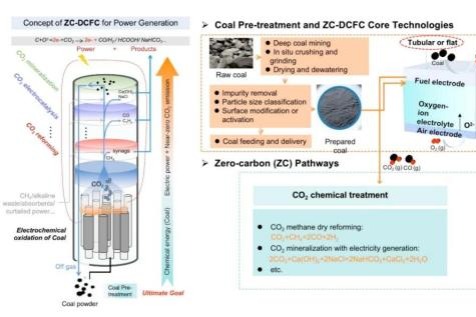
    Traditional coal-fired power generation relies on thermal combustion to heat water into steam, which then drives turbines to produce electricity. This centuries-old approach is inherently inefficient, and it releases massive volumes of carbon dioxide that drive climate change. By contrast, the new zero-carbon-emission direct coal fuel cell (ZC-DCFC) technology skips the combustion step entirely. Instead, it converts the chemical energy stored in coal directly into electrical power through a controlled electrochemical oxidation reaction, eliminating the carbon emissions associated with burning fuel.

    For decades, coal has remained the backbone of global energy supply, meeting roughly one-third of the world’s total energy demand even as renewable energy capacity expands rapidly. Current leading advanced coal power technologies, such as Integrated Gasification Combined Cycle (IGCC), top out at energy conversion efficiencies of around 45 percent, and still produce more than 800 grams of CO2 for every kilowatt-hour of electricity generated, according to the research team’s analysis.

    The research team began developing the ZC-DCFC concept in 2018, and over eight years of iterative development, they have delivered key breakthroughs in three critical areas: high-performance reaction materials, specialized pre-treatment for coal fuel, and optimized electrode design that enables stable, efficient power output. Beyond cutting emissions, the technology opens new possibilities for utilizing coal resources that were previously considered uneconomical or high-impact to develop. As easily accessible shallow coal reserves are gradually depleted around the world, the innovation could unlock deep underground coal deposits while transforming coal from a major climate liability into a fundamentally cleaner energy source to support the global energy transition.


  • FBI Director Kash Patel files $250m lawsuit against The Atlantic

    FBI Director Kash Patel files $250m lawsuit against The Atlantic

    A high-stakes legal battle has erupted in U.S. political and law enforcement circles, as Federal Bureau of Investigation Director Kash Patel has launched a $250 million defamation lawsuit against the major American magazine The Atlantic. The suit centers on what Patel calls deliberately false, reputation-ruining claims published by the outlet about his professional conduct in office.

    In the formal court filing, Patel alleges the magazine printed a series of fabricated and harmful assertions, including unproven accusations of habitual excessive drinking and repeated unexcused absences from his official duties. The lawsuit argues that the entire piece was constructed with intentionally false, manufactured allegations crafted explicitly to destroy Patel’s professional standing and force him out of his leading role at the FBI. Beyond disputing the story’s core claims, the suit accuses The Atlantic of failing to provide Patel with sufficient time to respond to the detailed list of allegations before publication, and of disregarding a pre-publication warning letter sent by his legal team. According to the filing, the outlet only granted Patel’s side a mere two hours to prepare a response to the claims. “They were on notice that the claims were categorically false and defamatory. They published anyway,” Jesse Binnell, Patel’s lead attorney, shared in a post on social platform X, alongside the full text of the pre-publication letter his team sent to the magazine.

    The original article, published by The Atlantic, drew on anonymous sources to claim that Patel’s on-the-job conduct posed a tangible risk to U.S. public safety and national security. The outlet has stood firmly behind its reporting, noting the piece was rooted in interviews with more than two dozen sources familiar with the situation. In an official statement released after the lawsuit was filed, the magazine said: “We stand by our reporting on Kash Patel, and we will vigorously defend The Atlantic and our journalists against this meritless lawsuit.”

    The story’s reporter, Sarah Fitzpatrick, pushed back against Patel’s claim that the outlet failed to properly seek comment for the piece, pushing back on that allegation in an interview with MSNBC. “We reached out for comment to The White House, and to the Justice Department, neither of which disputed anything,” Fitzpatrick said. “We gave multiple opportunities, including 19 detailed, detailed questions. So we stand by every word.” Notably, the published article even included a direct response attributed to Patel himself, in which he dismissed all claims outright: “Print it, all false, I’ll see you in court—bring your checkbook.”

    Under longstanding U.S. defamation law, established by the 1964 U.S. Supreme Court ruling in *New York Times Co. v. Sullivan*, public officials like Patel are required to meet a high legal bar to win a defamation suit: they must prove that the publishing outlet acted with “actual malice” — meaning the organization either knew the published information was false, or deliberately ignored critical fact-checking steps that would have revealed the falsity before going to print.

    The White House has publicly thrown its support behind Patel in the dispute. When reached for comment by the BBC following the lawsuit’s filing, White House press secretary Karoline Leavitt highlighted the Trump administration’s law enforcement record under Patel’s leadership at the FBI. “Under President Trump and Director Patel’s leadership at the FBI, crime across the country has plummeted to the lowest level in more than 100 years and many high-profile criminals have been put behind bars,” Leavitt said, adding, “Director Patel remains a critical player on the Administration’s law and order team.”

    Patel first publicly addressed the allegations during a Fox News interview this past Sunday, where he first confirmed he would pursue legal action against the magazine. As of press time, the FBI has not issued an immediate response to the BBC’s request for comment on the ongoing lawsuit.

  • Live stream for good, prosperity for Xinjiang

    Live stream for good, prosperity for Xinjiang

    Launched in 2022, the Taste Xinjiang brand has emerged as a transformative force in connecting the northwestern Chinese region’s rich agricultural resources to domestic and global consumers, built on a core commitment to product quality and sustainable development. Far more than a commercial label for local farm goods, the initiative has evolved into a key driving force behind rural revitalization and inclusive economic growth across Xinjiang, opening new income streams for smallholder farmers and rural communities that previously faced limited access to outside markets.

    At the heart of Taste Xinjiang’s success is its innovative integration of e-commerce livestreaming, a digital sales model that has revolutionized rural retail across China in recent years. By showcasing regional specialties directly from farmlands and production sites to online audiences, the brand has cut out intermediary layers, boosted profit margins for local producers, and helped build a reputation for Xinjiang’s premium agricultural products, from cotton and fragrant grapes to handcrafted snacks and organic nuts.

    As of 2025, official data highlights the remarkable scale of the brand’s achievements through livestream e-commerce, marking three years of steady growth since its founding. The initiative has not only strengthened Xinjiang’s agricultural sector competitiveness but also aligned with national development goals to lift rural communities out of poverty and achieve shared prosperity, demonstrating how digital innovation can create tangible, long-term benefits for underdeveloped regional economies.

  • Hungary’s Magyar announces ministers after landslide election win

    Hungary’s Magyar announces ministers after landslide election win

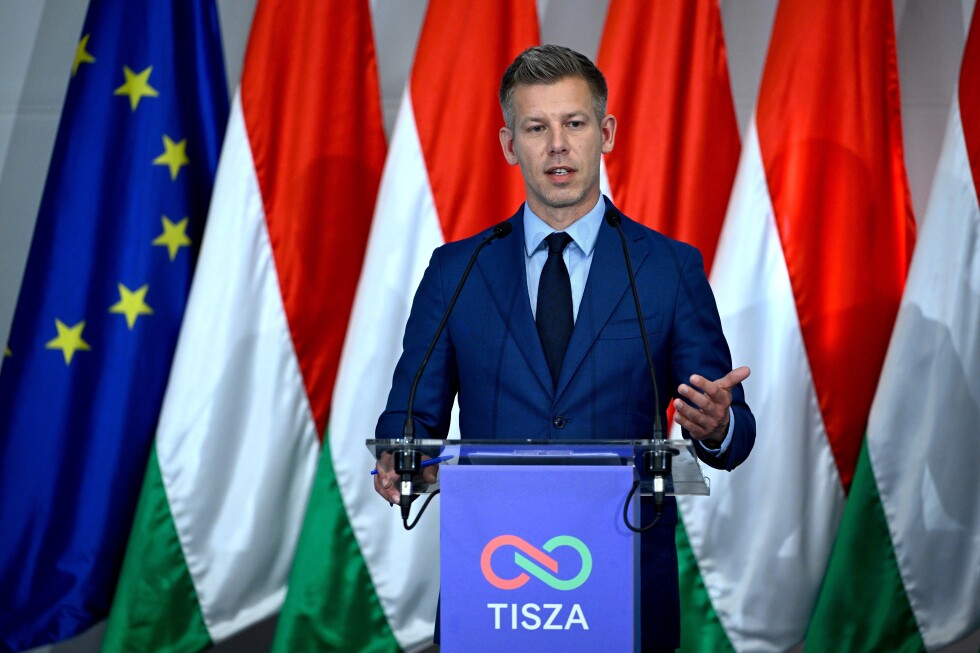
    BUDAPEST, Hungary — Fresh off a defining electoral upset that ended 16 years of populist rule in Hungary, prime minister-in-waiting Péter Magyar has released the first slate of cabinet nominees for his incoming administration, marking the first formal step toward building his new government following an opening meeting of his party’s parliamentary bloc.

    Magyar and his center-right Tisza party secured a historic landslide victory on April 12, ousting long-serving Prime Minister Viktor Orbán and capturing a supermajority two-thirds of seats in Hungary’s national parliament. The lopsided win grants Tisza the legislative power to roll back decades of controversial policies enacted by Orbán’s administration. Out of the 199 total parliamentary seats, Tisza walked away with 141 — the largest governing majority Hungary has seen since the end of Communist rule. Orbán’s far-right, euroskeptic Fidesz party, which held 135 seats before the vote, will now hold just 52 seats in the new legislature.

    Since his victory, Magyar has campaigned on a platform of systemic overhaul, promising to restore democratic institutions and the rule of law, which critics argue eroded significantly during Orbán’s tenure. He has also pledged to launch accountability investigations into figures he accuses of overseeing and profiting from the widespread public corruption that flourished under the previous government.

    Speaking at a press briefing in Budapest on Monday, Magyar laid out plans to restructure the national government, expanding the number of cabinet ministries from the current 12 to 16. Under his plan, separate portfolios for health, environmental protection, and education — which were merged into larger departments under Orbán’s administration — will be reestablished as standalone ministries.

    Among the first nominees announced, Magyar named Anita Orbán (no relation to outgoing Prime Minister Viktor Orbán) as his pick for foreign minister, István Kapitány for the role of economy and energy minister, and András Kármán to lead the finance portfolio. Magyar emphasized that his administration will work every day to honor the mandate Hungarian voters gave the party, saying it will be “a government that will be worthy of the Hungarian people’s trust.”

    The incoming prime minister confirmed that the inaugural session of the new parliament will convene on either May 9 or 10. Immediately following the opening session, the legislature will vote to confirm the new prime minister, with full confirmation of all cabinet appointments expected in the days after that vote.

  • EU says Serbia could lose access to a billion euros over democratic backsliding

    EU says Serbia could lose access to a billion euros over democratic backsliding

    BRUSSELS – The European Union has issued a stark ultimatum to Serbia: reverse eroding democratic standards or risk losing access to nearly €1.5 billion ($1.8 billion) in pre-accession development funding, EU Enlargement Commissioner Marta Kos confirmed to EU legislators Monday.

    Kos emphasized that the European Commission is increasingly alarmed by multiple troubling developments in Serbia, which has been working toward EU accession for years. The bloc’s concerns span systemic issues, including newly enacted laws that weaken judicial independence, heavy-handed crackdowns on public protest movements, and repeated interference with independent media outlets. These issues have raised serious questions about whether Serbia continues to meet the eligibility requirements for disbursements from EU pre-accession financial instruments, Kos added.

    International election monitors have already documented widespread irregularities and instances of voter intimidation during last month’s local elections held across 10 Serbian municipalities, adding to international scrutiny of Belgrade’s democratic commitments.

    Under the EU’s pre-accession assistance framework, candidate countries gain access to large-scale growth-focused funding on the condition that they implement targeted democratic and institutional reforms. To date, Serbia has received roughly €110 million ($130 million) from the allocation, leaving the remaining €1.5 billion in funding now hanging in the balance, Kos said.

    This warning comes amid a broader EU push to deepen integration with Western Balkan nations, a strategy accelerated after Russia launched its full-scale invasion of Ukraine in February 2022. The bloc has grown increasingly concerned that Moscow could seek to expand its influence and destabilize the Western Balkans, a region still grappling with political and economic fallout from the violent conflicts of the 1990s.

    Serbian populist President Aleksandar Vucic has repeatedly stated his government’s official goal of securing EU membership, but his administration has maintained close political and economic ties to Moscow. Last year, Vucic openly defied EU diplomatic warnings by attending Russia’s annual Victory Day parade in Moscow alongside Russian President Vladimir Putin, a move that deepened distrust between Belgrade and Brussels.

    To address growing concerns over judicial reforms, experts from the Venice Commission – Europe’s leading constitutional and democratic oversight body – traveled to Serbia last month. The delegation held meetings with senior political leaders, judicial heads, and legal officials to review concerns raised by the speaker of Serbia’s national parliament. The Commission is set to release an urgent formal opinion on its findings in the coming weeks.

    Kos made clear that Brussels’ demands are non-negotiable: Serbia must fully bring its national judicial legislation into line with the Venice Commission’s upcoming recommendations, and take concrete steps to restore full independence to the country’s media sector. “Serbia has to deliver,” Kos told lawmakers.

  • More than 200 rescued from IS-linked group in DR Congo

    More than 200 rescued from IS-linked group in DR Congo

    A joint military mission carried out by Ugandan and Congolese forces has secured the release of more than 200 civilian captives held by the Islamic State-linked Allied Democratic Forces (ADF) in eastern Democratic Republic of the Congo, Uganda’s military has confirmed.

    The operation targeted a fortified militant encampment controlled by the ADF, an insurgent group with roots tracing back to 1990s Uganda, formed by dissidents opposed to the Ugandan government’s treatment of Muslim communities. After being driven out of Uganda by national forces decades ago, the remaining ADF fighters re-established their base across the border in eastern DRC, where they have built a brutal reputation for widespread violence, kidnappings, and killings. Among the freed hostages were multiple children, including a 14-year-old girl, according to an official statement from Uganda’s military.

    While details of when and where the captives were abducted remain undisclosed, survivors reported being held in appalling conditions, including persistent food shortages, forced labor, and harsh punishment for any disobedience. Many of the rescued civilians were found in fragile health, with widespread reports of malaria, respiratory complications, and extreme exhaustion among the group.

    “You are not under detention. You are victims of abduction, and we shall ensure you are handed over to the relevant authorities so you can reunite with your families,” Maj Gen Stephen Mugerwa, commander of the joint Uganda-DRC mission, told the freed captives, per the official statement.

    The raid on the ADF camp also left multiple militant fighters dead and resulted in the seizure of a large weapons cache, the military confirmed. No details have been released about potential casualties among the joint Ugandan and Congolese force.

    The ADF has operated out of remote areas of eastern DRC for more than 20 years. Group leader Musa Seka Baluku first pledged allegiance to the Islamic State in 2016, and IS formally recognized the ADF’s activity in the region in 2019. After years of limited overt operations inside Uganda, the group has been linked to a string of high-profile attacks in the country in recent years, including 2021 suicide bombings in the capital Kampala and a 2023 attack on a school in western Uganda.

    In eastern DRC, however, the ADF’s campaign of violence against civilians has reached staggering levels. A 2024 analysis by BBC Monitoring found the group responsible for more than half of all civilian deaths in the conflict-plagued eastern region. Late last year, a senior researcher with global human rights group Amnesty International described the frequency of ADF abductions and killings as “alarming,” noting that women and girls captured by the group are systematically exploited as sexual slaves.

    “Men, women and children told me how they ran for their lives as fighters armed with blades and guns descended on their villages. Released hostages talked of agonizing spells – sometimes months and years – spent in captivity, practically starved and forced to do various tasks in ADF camps,” Rawya Rageh, Amnesty International’s researcher, reported.

    Uganda first deployed its troops to eastern DRC in 2021 to target ADF strongholds as part of the joint offensive with Congolese forces, a campaign launched to eliminate the militant group from its regional bases. Despite repeated military operations, the ADF has continued to carry out frequent attacks on civilian and military targets across the region, leaving thousands displaced and dead.

  • China to curb ‘one-size-fits-all’ law enforcement on factory ventilation

    China to curb ‘one-size-fits-all’ law enforcement on factory ventilation

    BEIJING – In a targeted move to address widespread complaints from manufacturing enterprises over inflexible regulatory practices, three top Chinese government agencies have jointly released new policy guidelines aimed at eliminating rigid, uniform law enforcement surrounding factory ventilation requirements.

    The new framework, issued by the Ministry of Justice, the Ministry of Ecology and Environment, and the Ministry of Emergency Management, was developed in direct response to repeated reports from businesses across the country that local enforcement officials often imposed contradictory, one-size-fits-all rules forcing factories to either keep all production windows permanently open or fully closed, regardless of individual operational circumstances.

    Under the newly published guidelines, uniform blanket requirements are set to be replaced with context-appropriate regulation tailored to different factory setups. For production facilities that release airborne pollutants but cannot fully enclose or seal their work areas, law enforcement officers are no longer permitted to issue simple mandatory orders to keep all windows closed. Instead, regulators are required to allow alternative mitigation strategies, including switching to lower-emission raw materials and implementing targeted local exhaust gas management systems to control pollution.

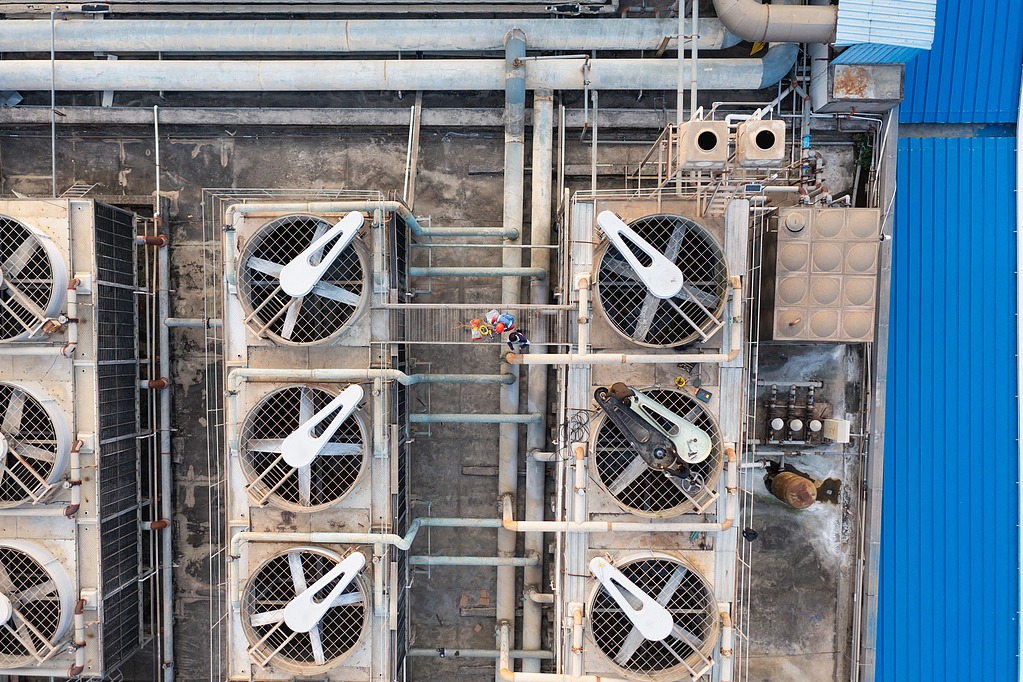
    For factories that operate in fully enclosed or sealed workspaces, the guidelines also ban rigid mandatory orders requiring windows to be kept open at all times. If hazardous airborne substances in these enclosed environments exceed official safety thresholds, facilities are directed to install professional ventilation solutions such as interlocked fan systems that meet regulatory requirements, rather than relying on arbitrary window-opening rules that do little to improve worker safety or reduce pollution.

    Beyond revising ventilation-specific rules, the policy calls on local regulatory authorities across China to refine their understanding of enforcement standards by accounting for the unique operational characteristics of enterprises in different industrial sectors. It also mandates expanded professional training for frontline law enforcement personnel to reduce the incidence of rigid, noncontextual enforcement that unnecessarily disrupts legitimate production activities.

  • El Nino likely to form in coming months, raise global heat risk: China climate center

    El Nino likely to form in coming months, raise global heat risk: China climate center

    A new El Niño event, defined by anomalously warm sea surface temperatures across the central and eastern equatorial Pacific, has a high likelihood of developing in the coming months, potentially intensifying to moderate or stronger levels by the end of 2026, according to China’s National Climate Center. This development will amplify the risk of elevated global temperatures and an increase in extreme weather events across the planet.

    Recent ongoing monitoring from the center confirms that sea surface temperatures in the key equatorial Pacific region have continued a steady upward trend, a defining early indicator that El Niño is already in the early stages of formation. Projections from the center indicate the Pacific will transition into official El Niño conditions around May 2026, with a moderate or stronger event expected to take shape between summer and autumn, persisting at minimum through the end of the calendar year.

    The forecast comes amid widespread viral online speculation claiming the world could face the most intense El Niño event in 140 years, paired with predictions of unprecedented record-breaking global heat this year that has drawn broad public concern. However, Chen Lijuan, chief forecaster at the National Climate Center, emphasized that it is far too early to confirm that 2026 will see all-time high global temperatures.

    “Taking into account the well-documented lagging effect of El Niño, it remains premature to conclude that the planet will hit a new extreme heat record this year. That said, the associated risks are clearly increasing,” Chen explained.

    El Niño forms when sea surface temperatures across large swathes of the tropical Pacific rise far above long-term average levels. This ocean warming releases massive quantities of heat stored deep in the ocean into the atmosphere, driving a measurable rise in global average temperatures. When this additional warming overlays the long-term, human-caused trend of global warming, it makes heat waves more frequent, more intense, and longer-lasting, the center noted.

    The full warming impact of an El Niño event typically emerges with a delay, with peak influence most often felt in the calendar year following the event’s formation. “For this reason, we cannot yet confirm whether 2026 will see record-breaking heat,” Chen added.

    Wang Yaqi, a senior engineer at the National Climate Center, pointed out that stronger El Niño events carry far-reaching negative impacts across global economies, energy infrastructure, and public health, as they are closely linked to more frequent extreme heat, severe droughts, and intense heavy rainfall events. For example, extreme flooding triggered by intense El Niño-driven rainfall can force hydropower facilities to reduce generation or shut down entirely, while prolonged drought conditions can also cut electricity output sharply across multiple generation types.

    In the public health sector, shifts in rainfall and temperature patterns tied to El Niño can increase the transmission rate of a range of infectious diseases. Additionally, drought and sustained extreme heat raise the risk of destructive wildfires in vulnerable regions, Wang explained.

    Crucially, the risks associated with El Niño do not stem from the climate pattern alone. Instead, harmful impacts typically emerge from the interaction of multiple overlapping climate factors, with El Niño acting as a triggering event within a broader climate system already altered by long-term global warming.

    Climate science confirms that for every 1 degree Celsius increase in global average atmospheric temperature, the maximum moisture capacity of the air rises by roughly 7 percent. This basic physical effect means higher temperatures accelerate evaporation, worsening drought conditions in dry regions, while also increasing the probability of extreme rainfall and destructive flooding when precipitation does occur.

    Looking ahead, the combination of long-term background global warming and additional warming driven by El Niño will raise the likelihood of compound extreme weather events, including more intense heat waves and abrupt, destructive shifts between prolonged drought and sudden heavy rainfall, Wang concluded.

  • Tour de France Femmes UK stage routes revealed

    Tour de France Femmes UK stage routes revealed

    For the first time in history, the women’s edition of the Tour de France will bring its world-class racing to British roads, with organisers pulling back the curtain on the full route details for the event’s opening three stages of the 2027 race.

    This historic occasion marks a milestone for global cycling: 2027 will be the first time that both the men’s and women’s Grand Departs (opening stages) of the Tour de France are hosted outside France in the same nation, building on the UK’s long history of welcoming the world’s most prestigious cycling race. The men’s race has previously held its opening stages in Britain four times, most recently in 2014 when an estimated 4.8 million fans lined the roads to cheer on riders.

    The three newly revealed stages for the 2027 Tour de France Femmes Avec Swift bring a mix of sprint opportunities, high-altitude drama, and a groundbreaking first for the women’s event. The opening 85.7km stage will kick off in Leeds and finish with a likely sprint finish in Manchester, setting the tone for a race that will push even the most elite riders to their limits. The most anticipated test comes in the second stage: a gruelling 154km route from Manchester to Sheffield that packs nearly 3,000 metres of climbing, including the iconic Winnats Pass in the Peak District. Race organiser ASO calls this leg “one of the hardest Grand Depart stages we’ve ever seen before”, a description echoed by rising British cycling star Cat Ferguson. The third and final opening stage will be an approximately 18km team time trial finishing at London’s Mall, a first for any edition of the women’s Tour de France; full route details for the time trial are set to be announced this coming October.

    For Ferguson, a 19-year-old rider with Movistar who was born in the Yorkshire town of Skipton, the opportunity to race on home roads feels like a full-circle moment. As a young child, she watched the 2014 men’s Grand Depart in Yorkshire from the side of local roads, and now she is gearing up to compete in the 2027 edition. “I trained on those roads and I know they’re going to be super brutal stages. Stage two in particular – always up and down. It’s really going to be one [stage] that can change the Tour. The GC [general classification] leaders can lose a lot,” Ferguson explained.

    The 2027 event will see the opening three stages of both the men’s and women’s races held across the UK, with the men’s race kicking off on 2 July and the women’s race starting on 30 July. Men’s route details for stages starting in Edinburgh, Keswick and Welshpool were first unveiled back in January 2026. UK government’s Department for Culture, Media and Sport (DCMS) has billed the combined event as “the most accessible major sporting spectacle ever held in Britain”: organisers estimate the combined Grand Departs will pass within an hour’s drive of 60% of the UK population, with free public access to spectating along more than 900km of public roads.

    Tour de France Femmes race director Marion Rousse highlighted the broader significance of the UK hosting the women’s race, saying: “The United Kingdom has already shown its passion for the Tour, and these stages will once again showcase the energy of the crowds, the beauty of the landscapes and the growing importance of women’s cycling on the world stage.” The official route announcement included a focus on growing grassroots participation, with seven young girls joining race leaders and professional riders as part of the JOY programme, an initiative designed to reduce physical inactivity and improve mental wellbeing among girls in the UK.

    The 2027 event comes as the UK is poised to reap the benefits of a previous golden age of British cycling sparked by the 2014 Tour Grand Depart. After British riders Bradley Wiggins claimed the 2012 Tour title and Chris Froome won in 2013, the 2014 event cemented the UK’s status as a global cycling powerhouse. Today, that legacy has grown: the UCI World Tour now counts a combined record 49 British male and female riders, with many ranked among the top contenders to win the sport’s biggest events. The combined six stages of the men’s and women’s races in 2027 draw a global audience of over one billion viewing hours across 190 countries, making it an unprecedented moment for UK cycling.

    Even with this momentum, the event faces notable challenges. British Cycling, the national governing body for the sport, has seen declining membership numbers in recent years, and only stepped in to rescue the men’s and women’s Tours of Britain from collapse in 2024. Hosting major pro cycling races on closed public roads in the UK is far more expensive than it is on the European continent, driven largely by exorbitant policing costs for high-speed events that require a full race cavalcade of 40 cars and dozens of motorbikes. While no official cost figures have been released, unofficial estimates place the total cost of hosting all six 2027 stages at over £50 million, with the majority of funding coming from central government and local councils.

  • Victory slips away as marathon runner celebrates too soon

    Victory slips away as marathon runner celebrates too soon

    The Delaware Marathon delivered one of the most dramatic and heartbreaking final moments in recent road racing history on Sunday, when a premature celebration turned a sure victory into a stunning upset. With only a few hundred meters remaining in the 42.195-kilometer race, the front-running runner had built a comfortable gap over his closest competitor, appearing poised to cross the finish line first and claim the top prize. In a moment that will be replayed in running highlight reels for years to come, the leader began slowing down early, raising his arms in celebration to acknowledge the cheering crowds lining the race course before he had actually crossed the official finish mat. Seizing the unexpected opportunity, the trailing runner, who had never given up the chase, dug deep for a final, all-out sprint. Closing the gap in mere seconds, the chaser surged past the stunned leader right at the finish line, crossing the tape first to steal the victory in a shocking turnaround. The shocking upset has already sparked widespread discussion among running communities about the importance of staying focused until the final step, serving as a cautionary tale for competitors at all levels of endurance sports.