博客

  • China tightens supervision of addictive drugs to curb abuse

    China tightens supervision of addictive drugs to curb abuse

    In a targeted move to rein in the misuse of controlled pharmaceutical substances, Chinese authorities announced sweeping new regulatory measures for two high-risk addictive drugs on Monday, April 20, 2026. The updated rules, jointly issued by the National Medical Products Administration, the Ministry of Public Security, and the National Narcotics Control Commission, apply to oral pregabalin and all compound medications containing guaifenesin, establishing end-to-end oversight across every segment of the two products’ industrial supply chains.

    Starting with the source of production, provincial drug regulatory bodies are now mandated to enforce rigid production quotas for the two substances, a policy designed to cut off excess supply that could be diverted for illicit abuse. Digital sales channels face an outright ban: the circular explicitly prohibits online retail of these medications, as well as any unlicensed offline sales through unapproved vendors.

    For brick-and-mortar retail pharmacies, a series of strict operating requirements have been put in place to secure access to the drugs. All eligible stocks must be stored in locked, designated cabinets managed by specially assigned staff, and dispensing can only proceed when a customer presents a valid, official medical prescription. Pharmacies are required to log full, detailed transaction records covering every sale, including the drug’s name, dosage specifications, total quantity sold, manufacturer information, batch number, purchase date, and the buyer’s full name and government-issued identification number. All prescriptions must also be retained on file for regulatory inspection.

    For formulations that were previously available over the counter, the new rules cap single-transaction sales at a maximum of five minimum packaging units to reduce the risk of bulk diversion. Sales to any minor are strictly prohibited under all circumstances. If pharmacy staff or licensed pharmacists identify suspicious purchasing behavior—such as repeated bulk purchases or inconsistent prescription documentation—they are required to immediately deny the sale and report the incident to local law enforcement and drug regulators.

    To boost oversight transparency and responsiveness, the circular also mandates the rollout of a full-chain digital traceability system that tracks every unit of the two medications from factory to end consumer. This system will be paired with expanded drug abuse monitoring and early warning infrastructure across all levels of regulation. Provincial regulators are required to add oral pregabalin and guaifenesin-containing compounds to their priority drug abuse monitoring rosters, and any emerging signs of clustered, regionally concentrated abuse or growing misuse trends must be investigated immediately and reported to the national drug regulator for coordinated response.

  • Tianjin surgeon impresses foreign delegation with 40-minute procedure

    Tianjin surgeon impresses foreign delegation with 40-minute procedure

    During a recent international medical exchange visit hosted by Tianjin Hospital, a senior Chinese orthopedic surgeon has drawn widespread praise from a visiting delegation of orthopedic specialists from Malaysia, Jordan, and Armenia after completing a highly complex shoulder procedure in less than an hour.

    Cao Jiangang, director of the hospital’s Department of Sports Injuries and Arthroscopy, performed an arthroscopic suture repair to treat a massive rotator cuff tear — a procedure that requires extreme precision and years of specialized training — in just 40 minutes, all while being closely observed by the international visiting team.

    The speed of the operation came as a major surprise to many delegates. Qutibeh Abdelqader Ahmed Darwish, a member of the Jordan Sports Medicine Federation and medical supervisor for Jordan’s national sports team, noted that a comparable procedure in his home country would usually take more than three hours to complete. He attributed the remarkable efficiency to two key factors: seamless coordination across the entire surgical team and access to cutting-edge surgical instruments that streamline complex steps of the operation. Darwish added that beyond the impressive speed, the procedure delivered exceptional technical outcomes and aligns fully with the highest leading international standards for orthopedic care, with a documented high long-term success rate for this approach at Tianjin Hospital.

    Johan Ahmad, a consultant orthopedic surgeon from Malaysia’s KPJ Damansara Specialist Hospital, also highlighted the institutional strengths that enabled the successful, efficient procedure. He pointed to Tianjin Hospital’s rigorous, detailed preoperative planning process, where multidisciplinary medical teams collaborate closely to combine clinical assessments and advanced imaging to pinpoint the exact location and severity of lesions before entering the operating room. The hospital also maintains clear contingency protocols to address any unexpected complications that may arise during surgery, a practice Ahmad called a model for standardized care. Following the demonstration, Ahmad announced that he plans to send trainee doctors from his facility to Tianjin Hospital to receive hands-on training in these advanced techniques.

    Xu Weiguo, Party secretary of Tianjin Hospital, emphasized that the institution has long prioritized open international medical collaboration. He said the hospital welcomes medical professionals from across the globe to exchange knowledge, with the goal of sharing advanced orthopedic techniques, China’s prevention-focused approach to sports rehabilitation, and insights from the country’s public healthcare system with the international medical community.

    The demonstration, held in mid-April 2026, marks another milestone in China’s growing engagement with global healthcare networks, showcasing the maturity of specialized surgical care developed in leading Chinese medical centers.

  • Forum explores integration of copyright protection with accessible reading services

    Forum explores integration of copyright protection with accessible reading services

    A high-level national forum focused on reconciling robust copyright protection with expanded accessible reading services kicked off Monday in Nanchang, the capital of east China’s Jiangxi Province. The convening brought together policymakers, disability advocacy leaders and cultural officials to advance a core goal: making reading rights more inclusive for marginalized groups and lifting the quality of China’s nationwide public reading initiatives.Organized jointly by the Publicity Department of the Communist Party of China Central Committee and the China Disabled Persons’ Federation, the forum framed the protection of reading access for people with disabilities as a foundational pillar of China’s people-centered development approach. Beyond advancing cultural inclusion, attendees emphasized that guaranteeing equal reading access is a critical step toward upholding broader societal fairness and justice.A key highlight of the discussions was the landmark national regulation on promoting public reading, which entered into force across China in February 2026. The policy centers on closing gaps in reading resources across different population groups, prioritizing the protection of reading rights for vulnerable key demographics, and includes explicit, targeted provisions to expand accessible formats and uphold reading access for people with disabilities.As authorities work to build out a comprehensive national accessible reading ecosystem aligned with the new regulation, forum participants called for scaled-up investment in technology-driven copyright management. Leveraging digital innovation to both strengthen copyright protection and streamline authorized access to accessible reading materials, they argue, will allow service providers to deliver far more convenient, affordable reading options for people with disabilities.In addition to domestic policy and infrastructure priorities, forum organizers also committed to deepening international exchanges and cooperation on accessible reading initiatives. The move is designed to share China’s progress in advancing cultural inclusion and collaborative problem-solving on equitable access to information with the global community.

  • AFL 2026: Collingwood gun Nick Daicos speaks on his role resting as a forward

    AFL 2026: Collingwood gun Nick Daicos speaks on his role resting as a forward

    AFL superstar Nick Daicos of Collingwood has cemented his status as one of the league’s most dynamic young talents after a match-winning standout performance against Carlton, and he’s now pushing to retain his flexible dual-position role that draws direct advice from his football royalty father Peter Daicos.

    In a tense Thursday night clash, Daicos turned the tide of the game in a spectacular final-quarter comeback that lifted the Magpies to a narrow five-point win over the Blues. While primarily a starting midfielder, Daicos spent stretches of the decisive final term resting inside Collingwood’s 50-metre arc as a forward, a tactical shift that paid immediate dividends for his side. He notched one goal from his own boot as a midfielder, and played a critical role in setting up two more majors to spark the Magpies’ late comeback.

    For Daicos, experimenting with the forward role is more than just a tactical adjustment: it’s a chance to put guidance from his father, legendary AFL forward Peter Daicos, into real-game practice. “I love playing up forward and I think it gives us a different look as a team,” Daicos told reporters post-game. “It also allows more players to roll through the midfield for us. We’ve got so many strong midfielders. Being a dynamic team, players switching positions, it works in our favour and whatever the coach thinks, wherever he thinks my best position, I’m happy to play.”

    The young star added that he has learned the nuances of forward play directly from his father’s decades of experience in the league. “I get a lot of forward craft from Dad and I love it. I think anytime I watch his highlights, he was an amazing forward with such good craft. Anytime he gives me footy advice in general I love listening because I think he’s one of the smartest football people I’ve come across. I am very lucky to have him in my corner.”

    Collingwood’s comeback relied on a seven-goal final quarter that overcame a sluggish start in front of goal that had left the side trailing heading into the final break. Daicos acknowledged that while the team’s ability to deliver under pressure is a major strength, the playing group will review why their attacking momentum has failed to materialize earlier in recent matches.

    “Absolutely, that’s something we’ll definitely look through today, is how do you find that balance of trying to attack,” Daicos said. “We don’t want to be down heading into the last quarter … we want to be proactive with it, come out this week in the first quarter and kick seven goals. We’ll work out the mental side of things and why that is happening, but the ability to kick seven goals (in a quarter) when the game is on the line is also a strength as well.”

  • US singer D4vd charged with murder stemming from death of missing teenage girl

    US singer D4vd charged with murder stemming from death of missing teenage girl

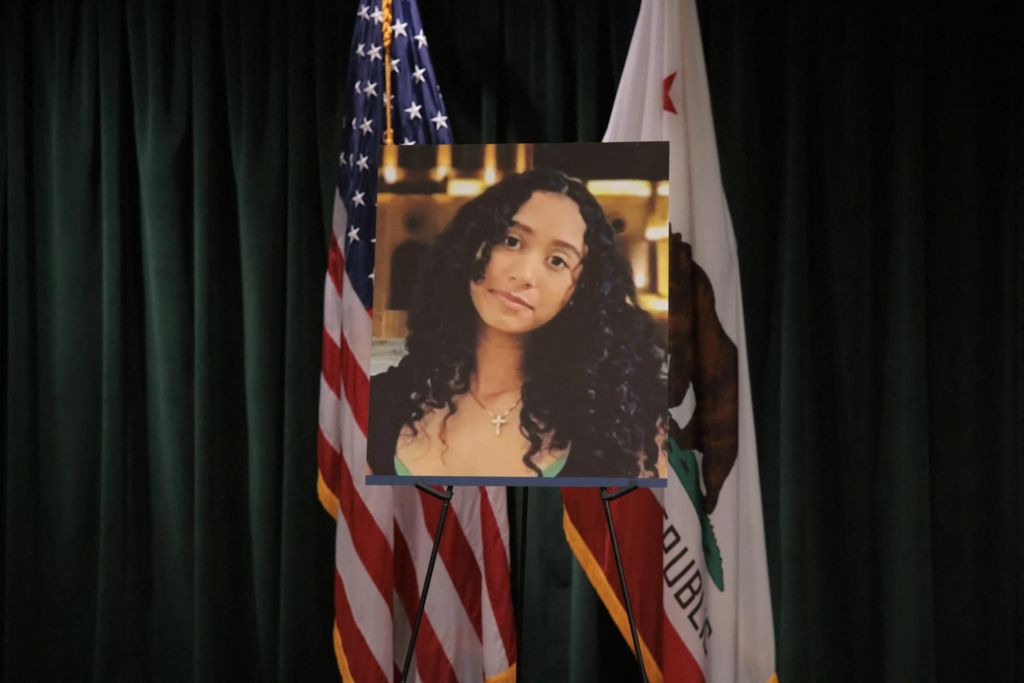
    Rising American indie-pop musician D4vd, legally known as David Anthony Burke, 21, is facing three counts of first-degree murder over the 2025 killing of 14-year-old Celeste Rivas Hernandez, Los Angeles County prosecutors announced in a public press conference.

    According to District Attorney Nathan Hochman, Rivas Hernandez visited Burke’s Hollywood Hills residence on April 23, 2025, and was never seen or heard from again after that meeting. Five months later, on September 8, 2025, investigators recovered the teen’s dismembered, decomposed remains from the trunk of a Tesla vehicle registered to Burke’s Texas address. The remains were discovered at a Hollywood tow yard, where the vehicle had been impounded.

    Prosecutors have outlined three aggravated special circumstances attached to the murder charges. First, they allege Burke lay in wait to carry out the killing. Second, they claim the murder was committed for financial gain: Hochman stated Rivas Hernandez was threatening to expose Burke that night, which would have endangered his fast-growing, lucrative music career. Third, prosecutors say Burke killed Rivas Hernandez to eliminate her as a witness to prior sexual offenses he is alleged to have committed. Additional charges against Burke also include multiple counts of sexual assault of a minor and corpse mutilation. Hochman confirmed that prosecutors could pursue the death penalty in the case if Burke is convicted.

    Burke was arrested last week and remains in custody without bond. He is scheduled to be arraigned Monday at a downtown Los Angeles court. His legal team has issued a forceful denial of the allegations following his arrest, stating that factual evidence in the case will prove Burke did not kill Rivas Hernandez and is not responsible for her death. The BBC has reached out to his attorneys for additional comment ahead of the arraignment, but has not received a further response.

    Los Angeles Police Department Chief Jim McDonnell addressed widespread public criticism over the seven-month gap between the discovery of Rivas Hernandez’ remains and the filing of charges. He defended the investigation’s pace, emphasizing that the priority was to build a solid case that would not be jeopardized by premature disclosure of details.

    “ My duty is not to fuel speculation. It’s to deliver justice, and that requires patience and discipline on everybody’s part,” McDonnell said. He noted that the degraded condition of the remains, which had been left undiscovered for months, delayed efforts to determine an official cause of death and degraded key evidence. Hochman echoed that explanation, adding that investigators had to interview dozens of witnesses, some of whom were uncooperative, and thoroughly process all available evidence before moving forward with charges. He urged any member of the public with additional information about the case to contact authorities.

    Before his arrest, D4vd had become one of the fastest rising young stars in indie pop. A Houston native, he first gained an online following as a teenager posting Fortnite gameplay content before teaching himself music production. He broke into the mainstream in 2023 with the viral hit singles *Here With Me* and *Romantic Homicide*, and released his debut EP *Petals To Thorns* that same year. He earned a spot on *Variety*’s 2023 Young Hollywood list and opened for Grammy-winning artist SZA on her SOS world tour. He released his first full-length studio album in April 2025, and at the time of his arrest he had 22 million monthly listeners on Spotify and nearly four million followers on TikTok. When remains were first discovered in the singer’s vehicle in September 2025, Burke was mid-world tour. He immediately canceled all upcoming tour dates and withdrew from public view. He was publicly named as a target of a grand jury investigation into Rivas Hernandez’ death in court documents released in February 2025. It remains unclear how the grand jury process will move forward following the filing of formal charges. Rivas Hernandez’ family has not issued any public statement about the case to date.

  • Israel flattening civilian buildings in southern Lebanon during truce, say commanders

    Israel flattening civilian buildings in southern Lebanon during truce, say commanders

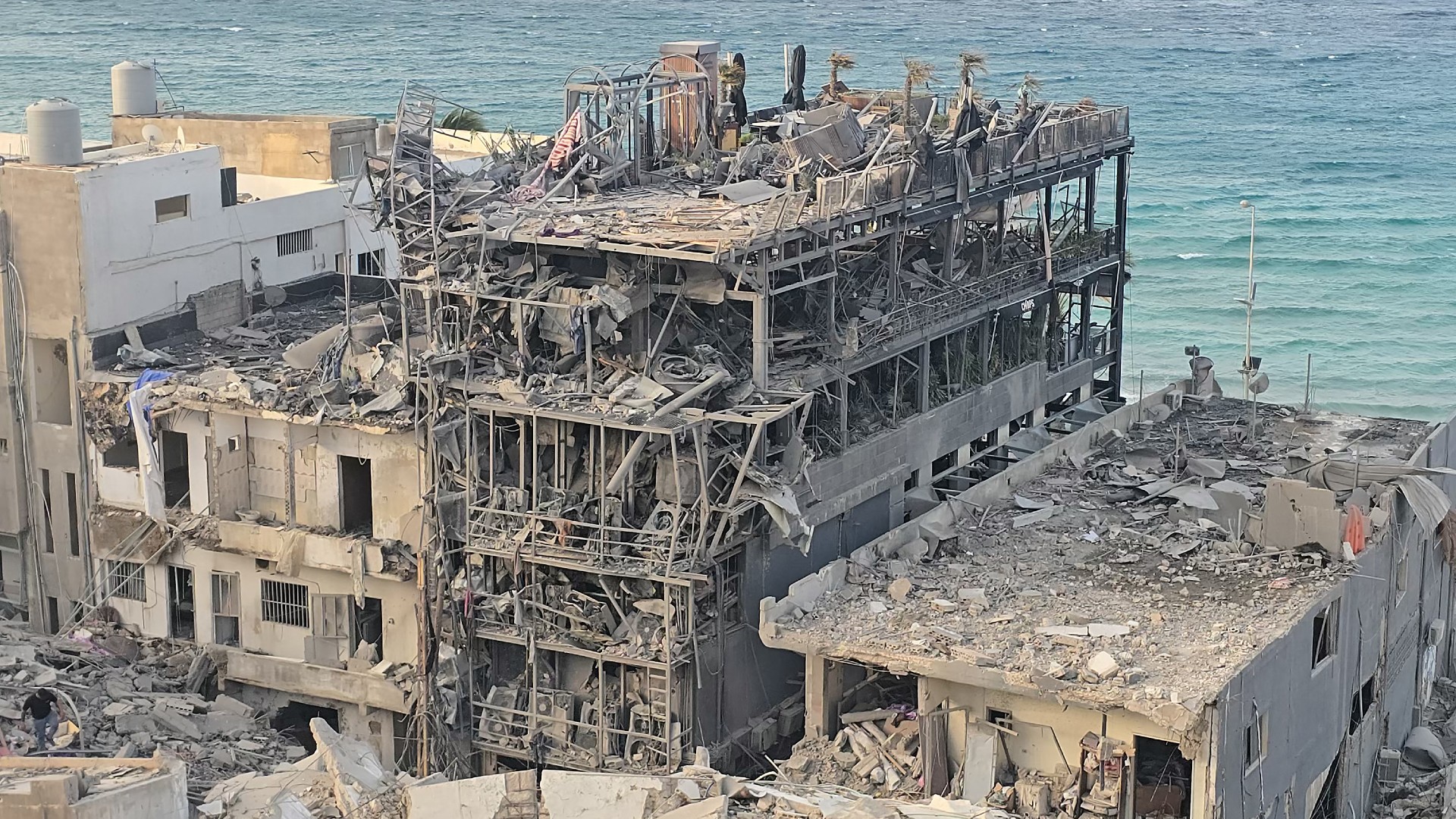
    A fresh expose published in Israeli newspaper Haaretz on Sunday has revealed that the Israeli military has continued the systematic demolition of civilian buildings across southern Lebanon, even after a 10-day ceasefire agreement halted formal open hostilities last Thursday. The ceasefire, which brought a temporary end to months of deadly large-scale conflict, has not put a stop to state-backed destruction of residential and public infrastructure in border-area villages, according to senior Israeli army commanders who spoke to the outlet on condition of anonymity.

    Per the sources, the demolition operation is being carried out by paid Israeli civilian contractors deployed with heavy civilian engineering equipment, including dozens of excavators. Contractors are compensated either through a fixed daily wage or via performance-based payments tied to the number of structures destroyed and the total scope of the work. Multiple sources confirm that some of these contractors have prior experience carrying out similar demolition work in the Gaza Strip, with one witness noting that roughly 20 excavators were operating simultaneously in a single southern Lebanese village alone.

    The operation targets schools, residential homes and other civilian sites as part of an official Israeli policy framed as “cleaning up the area,” a tactic directly modeled after widespread destruction campaigns Israel carried out in Gaza starting in October 2023. All destruction is occurring south of the so-called “yellow line” — a boundary unilaterally drawn by Israel roughly 20 kilometers south of the Litani River — which Israeli forces are barred from crossing under the terms of the current ceasefire agreement.

    Haaretz’s sources confirmed that one of the core strategic goals of the demolition campaign is to prevent displaced Lebanese residents from returning to their homes in border communities adjacent to Israel. The Israeli military is even using advanced digital tracking tools, including specialized statistical systems, to monitor and quantify the number of buildings destroyed across different operational sectors to measure progress on the campaign.

    The policy of widespread demolition was explicitly announced by Israeli Defense Minister Israel Katz last month, who confirmed that “All houses in villages near the border in Lebanon will be demolished in accordance with the Rafah and Beit Hanoun models in Gaza.” At the time, Katz also stated that after the conclusion of Israel’s offensive in Lebanon, the Israeli military would retain full security control over the entire territory extending north to the Litani River.

    The current conflict between Israel and Hezbollah erupted after US-Israeli airstrikes targeting Iran killed Iranian Supreme Leader Ali Khamenei in early March, prompting a retaliatory cross-border rocket barrage from the Iran-backed militant group. Since that escalation, the Lebanese Ministry of Health reports that Israeli attacks have killed at least 2,294 people across Lebanon — including 100 rescue workers and healthcare employees — and wounded more than 7,500 others. The violence has also displaced roughly 1.2 million Lebanese people nationwide, destroying all bridges crossing the Litani River, including the critical Qasmiyeh bridge that formed the last major transport link between southern Lebanon and the rest of the country. In the immediate aftermath of the new ceasefire taking effect, workers hastily constructed a makeshift crossing to accommodate tens of thousands of displaced residents seeking to return to their homes.

    Even before the current ceasefire, there have been repeated violations of prior truce agreements. A United Nations assessment found that Israel violated the 2024 ceasefire brokered by the Biden administration more than 10,000 times over the course of one year, and has maintained five permanent military outposts inside Lebanese territory since that agreement was reached. Last week, Haaretz also reported that the Israeli military has been constructing additional new outposts inside southern Lebanon despite the terms of the current truce. Just hours before the latest ceasefire went into effect, an Israeli airstrike on a residential complex in the southern Lebanese city of Sour killed 11 people and wounded 35 more.

  • Exploring global goods at Linyi RCEP expo

    Exploring global goods at Linyi RCEP expo

    On April 20, 2026, one of East Asia’s most anticipated regional trade events kicked off at the Linyi International Expo Center: the fifth iteration of the RCEP (Shandong) Import Expo. This year’s gathering has drawn participation from more than 400 international product suppliers and over 5,300 domestic and overseas buyers, marking one of the largest and most high-profile editions of the expo since its launch.

    Running for three days, the exhibition space is organized into 18 dedicated national pavilions spanning a total of 1,200 individual booths, showcasing a vast, diverse assortment of goods sourced from markets across the globe. China Daily Website’s foreign expert Douglas Dueno is on-site to guide audiences through the wide range of international products on display, highlighting the expo’s role in bringing global merchandise directly to Chinese and regional buyers.

    Conceived as a strategic platform to advance trade cooperation under the Regional Comprehensive Economic Partnership agreement, the expo fills a key niche in strengthening cross-border connectivity between RCEP member economies and global trading partners. By bringing international suppliers face-to-face with bulk and retail buyers from China and beyond, the event fosters new commercial partnerships, expands market access for imported goods, and reinforces Linyi’s growing reputation as a vital hub for regional trade in northern China.

  • A history of Israel’s invasions of Lebanon

    A history of Israel’s invasions of Lebanon

    ### Decades of Conflict: Israel’s New Occupation of South Lebanon and Lebanon’s Push for Sovereignty

    Nearly 80 years of overlapping invasions, broken ceasefires, and unfulfilled peace agreements have culminated in a fresh crisis along the Israel-Lebanon border, where Israeli forces have established a new 10-kilometer deep security buffer inside Lebanese territory and rejected calls to withdraw. The latest escalation has reignited long-simmering tensions over Israeli occupation, with Lebanon’s new leadership reaffirming its commitment to reclaiming full sovereignty over its southern lands.

    In a public address last week, Lebanese President Joseph Aoun declared he was ready to take any steps necessary to end Israel’s ongoing occupation of south Lebanon. He emphasized that the Lebanese government has, for the first time in almost 50 years, reclaimed full control over the country and its independent decision-making. Aoun’s comments came just one day after former U.S. President Donald Trump announced plans to potentially host Aoun and Israeli Prime Minister Benjamin Netanyahu at the White House to solidify a 10-day ceasefire Trump brokered between the two parties. This truce paused six weeks of open fighting between Israeli forces and Hezbollah, and coincided with the first direct bilateral talks between Israeli and Lebanese ambassadors in Washington since 1993.

    The current crisis traces its origins to a large-scale Israeli air campaign launched on March 2, 2026, followed rapidly by a full ground invasion of southern Lebanon. Official casualty figures document more than 2,290 people killed, over 7,500 wounded, and 1.2 million Lebanese displaced – a full 20 percent of the country’s total population. Upon launching the ground incursion, Israeli officials announced plans to hold large swathes of southern Lebanon and barred displaced Lebanese residents from returning to their homes. For weeks, Israeli forces have systematically demolished entire border villages, using bulldozers to clear structures and rigging remaining homes with explosives for large-scale controlled detonations. Even after the ceasefire officially took effect, Israeli troops continued offensive operations, carrying out additional demolitions, artillery strikes, and land-clearing work in multiple border areas in direct violation of the truce terms.

    Over the weekend following the ceasefire, the Israeli military announced it had established a new “Yellow Line” roughly 10 kilometers inside Lebanese territory, a separation barrier modeled after the buffer zone Israel created in Gaza between Israeli-held areas and Hamas-controlled territory. In public remarks, Prime Minister Benjamin Netanyahu confirmed that Israeli forces would remain permanently in the reinforced security buffer, stating: “This is a security strip ten kilometers deep, which is much stronger, more intense, more continuous and more solid than what we had previously. That is where we are and we are not leaving.”

    To contextualize the current standoff, independent outlet Middle East Eye has traced the long history of Israeli incursions into Lebanon dating back to the founding of the Israeli state in 1948. One day after Israel declared independence in historic Palestine on May 14, 1948, Lebanon joined a coalition of Arab states including Syria, Egypt, Jordan, and Iraq in military intervention, responding to the mass displacement of hundreds of thousands of Palestinian people by Zionist paramilitary groups. Approximately 750,000 Palestinians were displaced in the period surrounding Israel’s founding, and around 100,000 of those refugees resettled in Lebanon.

    Lebanese forces played only a limited role in the 1948 war, but by the end of October that year, Israeli troops had crossed into Lebanon and occupied 15 southern villages. In the village of Hula, Israeli forces carried out a documented massacre, gathering between 34 and 58 civilians in a single building before detonating explosives that killed everyone inside. Israel later withdrew from these 1948 occupied villages under a UN-brokered armistice agreement signed with Lebanon in March 1949, which marked the end of the first Arab-Israeli War and the defeat of the Arab coalition.

    Unlike 1948, Lebanon did not participate in the 1967 Six-Day War, in which Israel seized East Jerusalem, the West Bank, Gaza, Egypt’s Sinai Peninsula, and Syria’s Golan Heights from a coalition of Arab states. In the wake of its 1967 victory, Israel withdrew from the 1949 armistice agreements it had signed with Lebanon and other Arab states, and proceeded to occupy the strategic Chebaa Farms area of southern Lebanon, a territory it continues to hold to this day. The 1967 defeat of Arab states also catalyzed the rise of the Palestine Liberation Organization (PLO), a coalition of Palestinian factions dedicated to armed struggle to reclaim Palestinian territory. By 1971, Lebanon had become the PLO’s main base of operations, with Palestinian fighters launching intermittent strikes against Israel from south Lebanon. The PLO’s growing influence also made it a key actor in the Lebanese Civil War that broke out in 1975.

    In March 1978, Israel launched its first large-scale invasion of southern Lebanon aimed at pushing PLO fighters north of the Litani River. The offensive killed roughly 1,000 Lebanese and Palestinian people, most of them civilians, along with 18 Israeli soldiers. Under international pressure following the passage of UN Security Council Resolution 425, Israel withdrew from most of southern Lebanon by June 1978. The resolution established the United Nations Interim Force in Lebanon (UNIFIL), tasked with verifying Israeli withdrawal and helping the Lebanese government reassert its authority in the south. Despite this, Israel transferred control of occupied territories to a pro-Israel proxy militia rather than returning full control to the Lebanese army, and the PLO retained positions south of the Litani River.

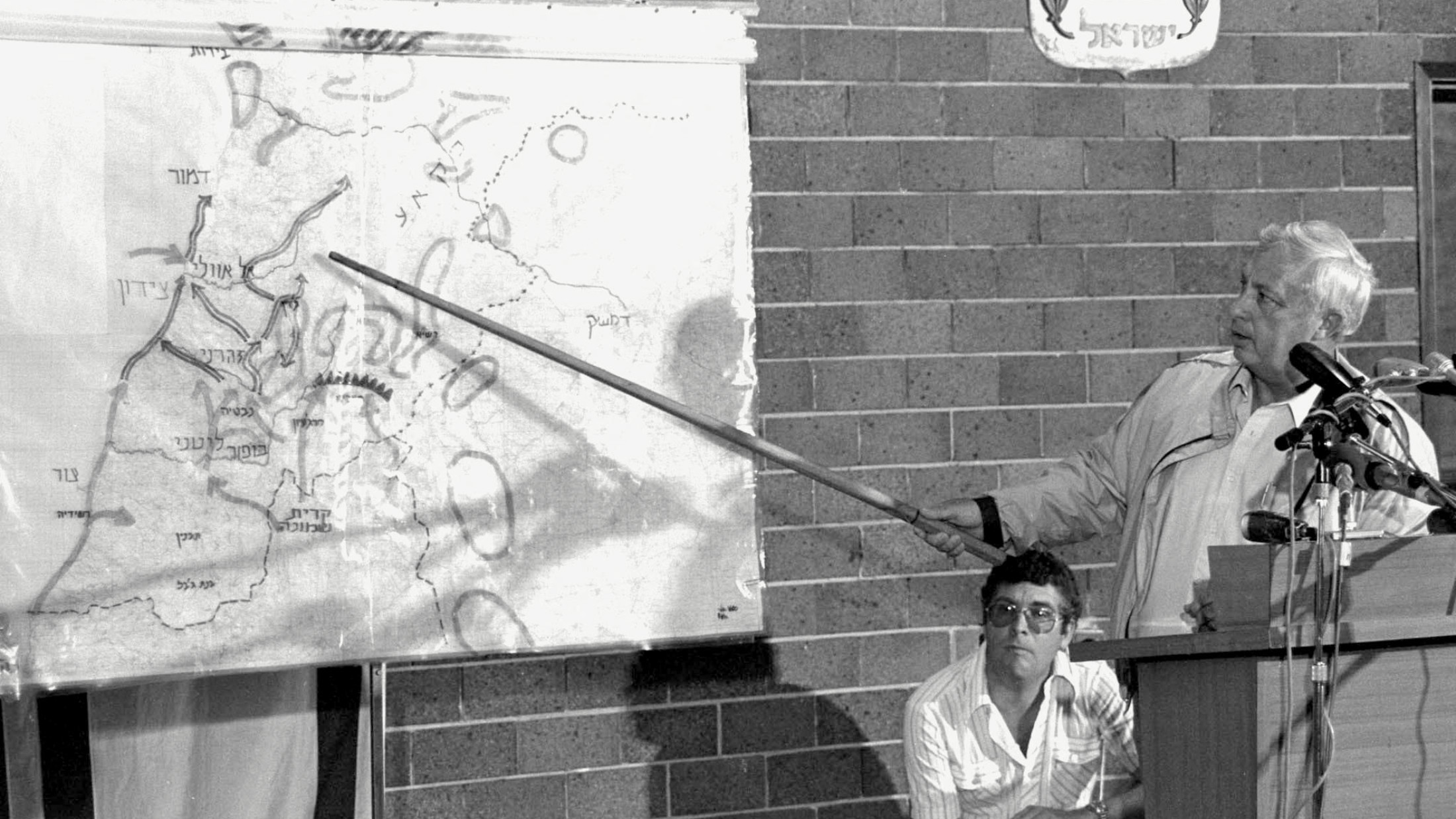
    Israel launched a second, far larger invasion in June 1982, codenamed “Operation Peace for Galilee,” which advanced all the way to the Lebanese capital Beirut and occupied the city by September. The invasion killed an estimated 19,000 Lebanese and Palestinian people, most of them civilians, and forced the entire PLO leadership and thousands of fighters to evacuate Lebanon. Israel’s rapid military reshaping of Lebanese politics brought its ally Bachir Gemayel to the presidency, but Gemayel was assassinated just weeks after taking office. His brother Amin succeeded him, and his new government entered U.S.-brokered negotiations with Israel that concluded with a 1983 agreement aimed at securing Israeli withdrawal. The agreement ended the formal state of belligerency between the two states but stopped short of being a full peace treaty, and faced fierce opposition from major Lebanese factions including the Shia Amal Movement and Progressive Socialist Party, which were backed by Syria – a power that had maintained troops in Lebanon since 1976 and viewed the agreement as a threat to its regional influence. Opponents argued the deal undermined Lebanese sovereignty by granting Israel extraordinary security arrangements in the south. Backed by Damascus, the opposition factions launched an armed uprising that seized control of West Beirut in 1984, forcing Gemayel to scrap the agreement and align his government more closely with Syria.

    While Israel withdrew from Beirut and the Chouf Mountains, it retained control of all of southern Lebanon. A new round of bilateral withdrawal talks held in Naqoura between 1984 and 1985 failed to reach a compromise. Amid ongoing guerrilla attacks and mounting casualties, Israel approved a unilateral partial withdrawal in 1985, pulling out of major population centers including Saida, Nabatieh, and Sour but retaining control of a narrow border strip that it labeled a “security zone.”

    After the end of the Lebanese Civil War in 1990, Syria emerged as the dominant power in Lebanese politics, and Beirut aligned its negotiation position with Damascus under what became known as the “unity of tracks” framework. Under this approach, Lebanon refused any separate peace deal and called for a comprehensive agreement that would require Israel to withdraw simultaneously from southern Lebanon and Syria’s Golan Heights, which Israel had occupied since 1967. Lebanon and Syria joined the U.S.- and Soviet-sponsored Madrid Peace Conference in 1991, and bilateral talks between Lebanon and Israel resumed in Washington in 1993 – the first such talks in decades – but produced no meaningful progress.

    Throughout the 1990s, Hezbollah, the Shia resistance group formed in 1982 in response to the Israeli invasion, ramped up its guerrilla campaign against Israeli occupation positions and the pro-Israel South Lebanon Army (SLA) militia. By 1999, the SLA had withdrawn from dozens of villages in the Jezzine region, and in May 2000, the Israeli army completed a full withdrawal from southern Lebanon, ending 18 years of continuous occupation. Under UN supervision, Lebanon and Israel agreed to a withdrawal boundary called the Blue Line, though the formal international border between the two countries has never been fully demarcated. Israel retained control of the Chebaa Farms and Kfar Shouba Hills, and Hezbollah continued periodic strikes against Israeli positions in those contested areas. The 2000 withdrawal also broke the “unity of tracks” framework with Syria, as Israel continued to hold the Golan Heights after failed peace talks between the two countries brokered by U.S. President Bill Clinton earlier that year.

    The next major escalation came in 2006, when Hezbollah carried out a cross-border raid that abducted two Israeli soldiers, intending to exchange them for Samir al-Qontar, a Lebanese prisoner held by Israel since 1979. Israel responded with a 33-day large-scale war that included another ground invasion of southern Lebanon. The conflict killed roughly 1,200 Lebanese, most of them civilians, and 160 Israelis, most of them soldiers. Israel failed to achieve its stated goals of releasing the two soldiers and dismantling Hezbollah, and the war ended under UN Security Council Resolution 1701, which ordered a cessation of hostilities, expanded UNIFIL’s mandate to monitor the truce, and called for the disarmament of all non-state armed groups in Lebanon. Israel withdrew from most of the territory it occupied during the 2006 war, retaining only control of part of the village of Ghajar in addition to its ongoing hold on Chebaa Farms and Kfar Chouba Hills. Hezbollah retained its arsenal but moved most of its operations underground, and in 2008, Israel released Qontar in exchange for the remains of the two abducted soldiers.

    The current round of conflict began in October 2023, when Hezbollah opened fire on northern Israel in solidarity with Hamas after Hamas’s October 7 attack on southern Israel. For nearly a year, the two sides exchanged intermittent cross-border fire, before Israel launched a full-scale ground invasion and air campaign targeting Hezbollah in October 2024. A ceasefire brokered by France and the United States went into effect that November, which required Israel to withdraw from all occupied Lebanese territory within two months and required the Lebanese government to dismantle Hezbollah infrastructure south of the Litani River. While Lebanon completed the first phase of its obligations, Israel retained control of five military positions inside Lebanon and continued carrying out strikes across the country.

    Today, as Israeli forces dig in to maintain their new 10-kilometer buffer zone, Lebanon’s leadership remains firm in its demand for a full end to occupation, marking a new chapter in one of the Middle East’s longest-running unresolved conflicts.


  • Lanzhou lily takes nine years to grow, expands into global markets

    Lanzhou lily takes nine years to grow, expands into global markets

    In a sunbaked, freshly harvested field on the outskirts of Lanzhou, the capital of northwestern China’s Gansu province, 54-year-old veteran lily farmer Jin Yougang kneels in dark loamy soil, gently prying apart a plump, ivory-hued bulb he has just unearthed. “This isn’t the bitter ornamental lily most people know,” Jin explains, brushing flecks of dirt from the layered scales. “Lanzhou lily is naturally sweet — crisp enough to eat fresh, just like a piece of fruit.”

    Jin makes his home in Agan Town, Qilihe District, a region celebrated as the most ecologically ideal growing area for this unique crop, which thrives in the district’s cool, well-drained loess soil and dramatic diurnal temperature shifts. In 2025 alone, Qilihe District’s total Lanzhou lily output hit 33,000 metric tons, with a total output value reaching 1 billion yuan, equal to roughly $140 million.

    Widely acclaimed as the only naturally sweet edible lily in China — and potentially the entire world — the Lanzhou lily’s one-of-a-kind flavor and delicate texture come at a remarkable cost of time. Unlike common agricultural crops that reach maturity in a single growing season, the journey from a tiny bulblet to a harvest-ready, full-sized Lanzhou lily takes up to nine full years. Local growers summarize this patient process in a simple proverb: “Three years to sprout, three years to grow, three years to mature.”

    With more than four centuries of documented cultivation history rooted in local agricultural tradition, the Lanzhou lily has evolved far beyond a small regional specialty. Today, it has grown into a robust, multi-billion-yuan industry that sustains the livelihoods of tens of thousands of rural farming households across Gansu. A wide range of value-added products — from dried lily slices for traditional Chinese cuisine to lily-infused health supplements and snacks — have pushed the total national market value of the Lanzhou lily industry over 6.1 billion yuan, according to new data from the Qilihe District Agricultural Industrialization Office. What is more, the premium crop has expanded beyond China’s borders, finding loyal consumers in export markets including Japan, South Korea, the United States, and multiple countries across Southeast Asia, as international demand for unique, high-quality Chinese agricultural goods continues to climb.

    Yet alongside growing global demand and rising market opportunities, the industry faces pressing structural challenges. Decades of reliance on traditional propagation methods have led to gradual variety degradation, with bulbs accumulating pathogens over generations that drag down both product quality and overall crop yield. To address these bottlenecks and support the industry’s long-term growth, local agricultural experts have turned to cutting-edge propagation technology to revitalize the iconic crop.

    “Through lab-based propagation techniques such as virus-free seedling cultivation, we remove harmful pathogens from Lanzhou lily germplasm, then purify and rejuvenate the stock to restore the crop’s natural vitality,” explained Li Bin, a senior agronomist at the Qilihe District Agricultural Technology Extension Station. “This process improves overall bulb quality and lays a solid foundation for the industry’s shift toward high-end, value-focused development.”

    Li added that researchers are combining both sexual and asexual breeding strategies, paired with rapid propagation protocols, to systematically upgrade the Lanzhou lily variety. “By integrating these different methods, our goal is to build a far more stable and efficient cultivation system that meets the needs of large-scale commercial production,” he said.

    Most notably, optimized propagation systems could cut the crop’s notoriously long growing cycle from nine years down to approximately six — without sacrificing the signature sweetness and dense nutritional profile that makes Lanzhou lily so sought-after. “Our ultimate goal is to leverage agricultural technology to boost both quality and productivity,” Li noted. “That means higher incomes for local farmers, and a consistent, premium product for consumers around the world.”

  • Korir defends Boston Marathon title with course record

    Korir defends Boston Marathon title with course record

    The 130th edition of the Boston Marathon delivered historic drama and unforgettable performances on Monday, as Kenya’s long-distance running elite once again dominated the world-famous race, with John Korir breaking a 14-year course record to claim his second consecutive men’s title and compatriot Sharon Lokedi holding off challengers to defend her women’s crown.

    Korir, 29, delivered a masterclass in pacing and endurance to cross the finish line in 2 hours 1 minute 52 seconds, an astonishing 1 minute 10 seconds improvement on the previous Boston course mark set by fellow Kenyan Geoffrey Mutai back in 2011. This stunning result already ranks as the fifth fastest marathon time ever recorded globally, capping a remarkable winning streak for the athlete that includes victories at the 2024 Chicago Marathon and the December 2024 Valencia Marathon.

    For Korir, the triumph was even sweeter after a chaotic 2024 race, where he fell early in the route before battling back to claim victory. This year, he faced no such disruptions. “This year was a breeze for me because I had no problems at the start or at the finish,” he told reporters after the race. “It felt like a race back home with all the people cheering. It was in my mind to set the course record and I thank God that he fulfilled my wishes.”

    On the women’s side, Lokedi matched Korir’s back-to-back feat, finishing with a time of 2 hours 18 minutes 51 seconds. While she fell short of breaking her own 2024 Boston course record of 2:17:22, the 2022 New York Marathon champion held off a tight challenge from fellow Kenyan Loice Chemnung, crossing the finish line 44 seconds ahead of her second-place compatriot.

    Lokedi credited mental grit and a sweet moment with a young spectator for carrying her to the finish line. “I just kept telling myself ‘Be patient, be humble, you can do this’,” she said. “And then I saw a little girl who said ‘You got this, ladies!’ And it was so cute, and that was what I needed.”

    The race also made headlines for a remarkable display of athleticism from British runner Calli Hauger-Thackery, who completed the full 26.2-mile course at 22 weeks pregnant, finishing in 2:43:58. This is not the first high-profile marathon finish for the 33-year-old during pregnancy: she won the Honolulu Marathon four weeks into her current pregnancy, followed by a win at the Houston Marathon just one month later.