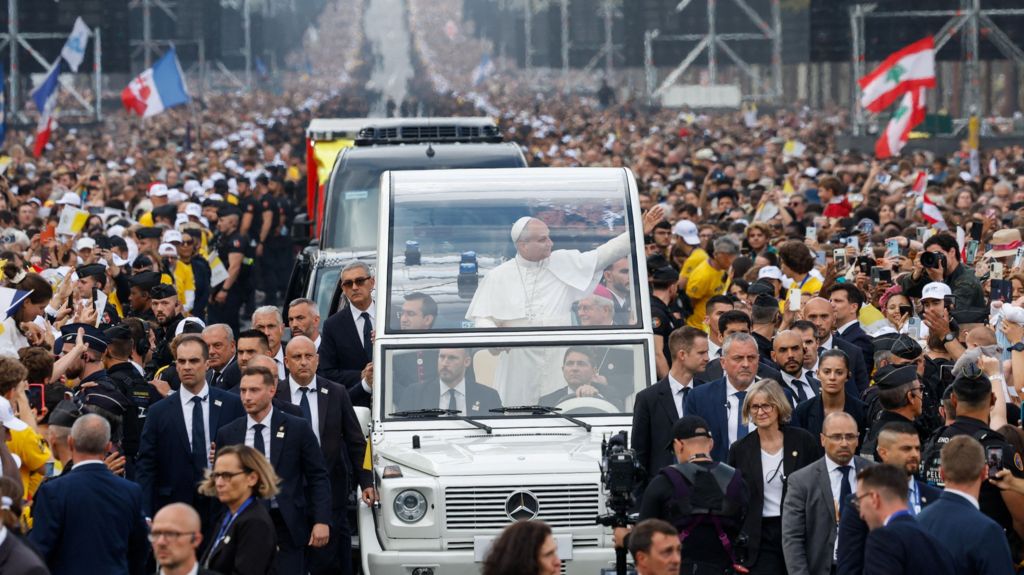
A landmark moment for global Catholicism unfolded this week as Pope Leo touched down in France, transforming the iconic city streets of Paris into what faith leaders and attendees have described as a sprawling “open-air cathedral” for the historic visit. The gathering drew tens of thousands of worshippers and onlookers from across France and neighboring European countries, who filled the city’s central plazas and boulevards to catch a glimpse of the pontiff and take part in open-air religious services.
The BBC’s senior religion editor, Aleem Maqbool, has broken down the complex layers of what the visit means for both the Catholic Church in France and the country’s broader social and political landscape. Beyond its religious significance, the visit comes at a time of shifting religious dynamics in Western Europe, where secularism remains a core founding principle of the French state, but Catholic traditions still hold deep cultural sway for millions of citizens.
Maqbool notes that Pope Leo’s choice to prioritize open-air, public gatherings over closed-door, Vatican-only ceremonies was a deliberate strategic move, designed to connect with lapsed Catholics and engage with French society more broadly, rather than only speaking to the existing faithful. By turning the entire city into a space of worship, the pontiff has emphasized a message of accessibility and inclusion, that resonates with many younger French believers who have grown disconnected from formal institutional religion.
Local authorities confirmed that security arrangements were robust but low-key, designed to avoid disrupting daily life in the capital while ensuring the safety of all attendees and the pontiff. Footage from the visit shows crowds gathering peacefully along the procession route, many holding small papal flags and rosaries, singing hymns that echoed through Paris’s historic architecture. Local residents expressed mixed reactions, with many saying the open-air gatherings added a unique, joyful energy to the city, while a small number of secular advocacy groups raised questions about the mixing of religious ritual and public urban space.
Looking ahead, observers say the visit is expected to leave a lasting mark on the relationship between the Catholic Church and the French state, as well as prompt renewed conversation about the role of faith in contemporary French society.