博客

  • Pope wraps up an Africa visit for the history books with a Mass in Equatorial Guinea

    Pope wraps up an Africa visit for the history books with a Mass in Equatorial Guinea

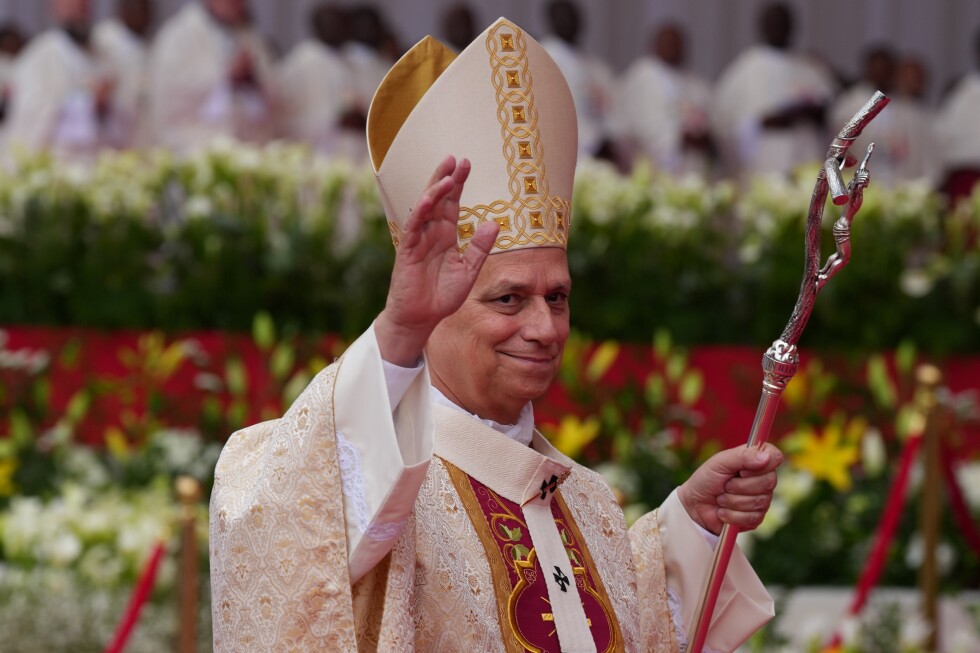
    MALABO, Equatorial Guinea – Pope Leo XIV closed out a landmark 11-day, four-nation tour of Africa on Thursday, wrapping up one of the most closely watched papal journeys in modern history, overshadowed by a highly public back-and-forth with former U.S. President Donald Trump. The final stop of the trip, a farewell Mass held at Malabo’s main sports stadium, was greeted by an intense early-morning rainstorm that soaked the 30,000 devotees who had gathered before dawn to see the pontiff. The downpour paused just as Pope Leo arrived in his covered popemobile, weaving through a crowd of cheering worshippers greeting him with thunderous applause. This voyage spanned more than 17,700 kilometers (11,000 miles) across Algeria, Cameroon, Angola, and Equatorial Guinea, with 18 separate flights – including three in a single day Wednesday that crisscrossed Equatorial Guinea from its western coast to its eastern border with Gabon and back.

    As the first American pope in Church history, Leo drew raucous, enthusiastic welcome nearly everywhere he traveled, particularly in remote regions that had never hosted a papal visit before. Papal foreign travel dates back to 1964, when Pope Paul VI made the first modern international trip to Jordan and Israel. It was St. John Paul II who transformed the role of the globetrotting pontiff, completing 104 foreign trips over 27 years and popularizing multi-nation itineraries like the one Leo followed on this African journey.

    Many local worshippers went to extraordinary lengths to attend the final Mass. Michaela Mecha, a nurse who brought her two young daughters and her sister Encarnacion to the stadium, arrived at 4 a.m. in the pouring rain, decked out head-to-toe in pope-themed gear, including yellow umbrellas printed with Leo’s portrait. “We feel very special and blessed that the pope has chosen our country,” Mecha said. “This visit is bringing young people closer to God.” In his homily, Leo honored Fortunato Nsue Esono Ayíambeng, the vicar general of Malabo and a member of the tour’s organizing committee, who died on April 17. “May full light be shed on the circumstances of his death,” the pontiff said, an apparent nod to widespread rumors of foul play surrounding the death.

    What was expected to be a focused pastoral trip quickly became entangled in geopolitical tension, when Trump launched a series of unprecedented public attacks against the pope over his stance on the ongoing Iran conflict. On the first day of the tour, Leo pushed back, noting he was simply preaching the Gospel of peace and maintained he had no fear of the Trump administration, after Trump accused the pope of being soft on crime and aligned with left-wing politics. As attacks continued, Vice President JD Vance joined the criticism, warning Leo to “be careful” when discussing theological issues. Leo attempted to de-escalate the conflict, blaming media for taking his words out of context. The effort ultimately succeeded: both sides moved on from the dispute, allowing the pope to refocus on his African agenda, which centered on encouraging local Catholics with a message of hope while calling out what he described as the continued “colonization” of the continent’s natural resources by foreign actors. Later, after headlines misconstrued a criticism of “a handful of tyrants” as an attack on Trump, the pope clarified the remark was not aimed at the U.S. president.

    The 11-day trip was filled with emotional and personal moments that highlighted Leo’s pastoral approach. In Sampaka, Equatorial Guinea, he deviated from a planned visit to a psychiatric hospital to greet every patient individually and pose for selfies. In Muxima, Angola – a historic hub of the transatlantic slave trade and now one of the country’s most popular Catholic pilgrimage sites – Leo prayed the rosary, a deeply personal act given that his own ancestry includes both enslaved people and slave owners. In Algeria’s Bab El Oued, he stopped to visit nuns from his own Augustinian religious order, and purchased a tree-of-life necklace from a display of crafts made by local women, noting it was a gift for his niece. In Cameroon’s Bamenda, located at the center of a nearly 10-year separatist conflict, he pleaded for an end to violence and condemned war-mongering leaders.

    One of the most striking moments of the entire tour came during a visit to a prison in Bata, Equatorial Guinea. In the lead-up to the pope’s visit, inmates were given new neon orange or beige uniforms and new rubber shoes, the facility was repainted salmon pink, and new saplings were planted along its perimeter. When Leo arrived, inmates stood in pre-arranged positions in the open courtyard and sang a hymn about sin. After the pope spoke to them of God’s love and inherent human dignity, they danced and waved Vatican flags in unison as another rainstorm poured over the complex. Immediately after Leo and Equatorial Guinea’s justice minister exited the courtyard, the inmates broke from their choreographed formation and began chanting “Libertad! Libertad! Libertad!” – Freedom! Freedom! Freedom! – as they danced.

    The lengthy tour also brought quiet milestones. On the papal plane, Leo marked the one-year anniversary of Pope Francis’ death with an off-the-cuff tribute that remembered Francis’ commitment to mercy and small, kind gestures. He also celebrated the birthdays of several reporters traveling with the Vatican press pool, with the ITA Airways flight crew passing out birthday cake to mark each occasion. When answering questions from journalists mid-tour, Leo dropped a piece of news that delighted local Catholics: the southern African nation of Angola will likely receive its first cardinal in the coming years, though not in the immediate future.

    Associated Press writer Monika Pronczuk contributed to this report. AP religion coverage is supported through a collaboration with The Conversation US, with funding from Lilly Endowment Inc. The AP retains sole responsibility for all content.
  • Britain and France will sign a 3-year deal to curb small-boat Channel crossings

    Britain and France will sign a 3-year deal to curb small-boat Channel crossings

    PARIS — In a landmark step to address the long-standing challenge of irregular migration across the English Channel, the United Kingdom and France are scheduled to formalize a new multi-million pound agreement on Thursday, which ramps up joint enforcement and surveillance measures along France’s northern coastline to cut down on small boat crossings.

    The three-year accord will be signed during a joint site visit by UK Home Secretary Shabana Mahmood and French Interior Minister Laurent Nunez, marking a deepening of bilateral cooperation on one of the most contentious migration issues in Western Europe. The framework of the deal sets out a clear funding structure and measurable performance benchmarks that tie additional financing to tangible progress in stopping crossing attempts.

    Under the terms of the agreement, the UK will commit an initial 500 million pounds (equivalent to $675 million) to bolster counter-migration operations in northern France. A further 160 million pounds ($216 million) in additional funding will be disbursed only if the new tactics deliver successful results, the UK Home Office confirmed. If intervention efforts fail to meet agreed targets, this supplementary funding will be terminated after the first year of implementation.

    France’s Interior Ministry outlined sweeping planned increases to on-the-ground enforcement capacity: the total number of deployed security officers will rise from the current 907 to 1,392 by the 2026-2029 period. France will also fund the creation of a dedicated new police unit focused explicitly on dismantling irregular smuggling networks that facilitate Channel crossings.

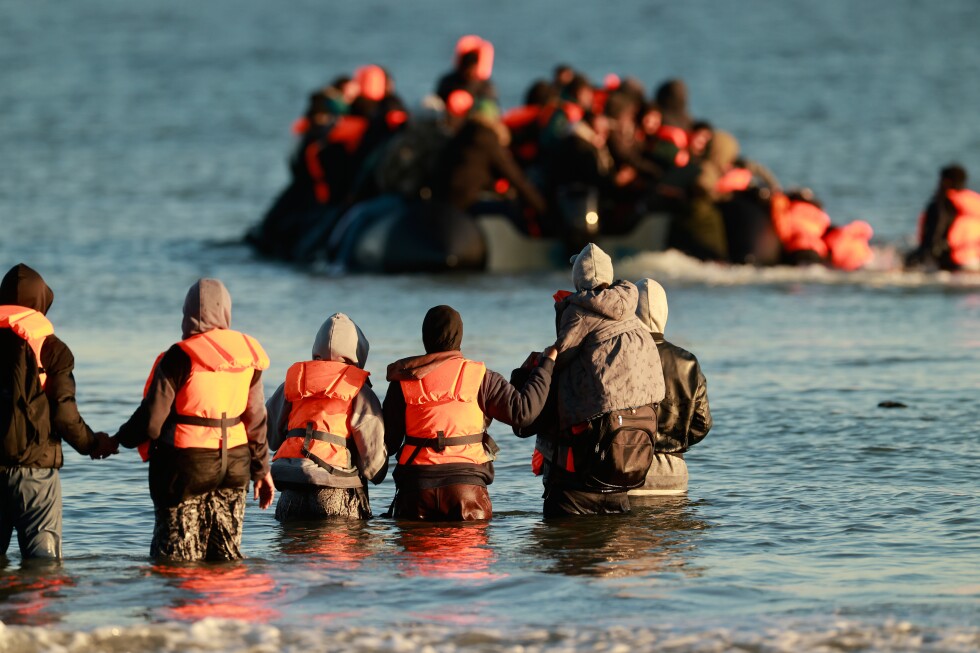
    A core component of the new deal is targeting the increasingly common smuggling practice of so-called “taxi boats” — small, usually inflatable motorized vessels operated by smuggling rings. Unlike craft carried into the water by migrants themselves, these “taxi boats” depart empty from hidden, isolated coastal spots before picking up groups of migrants at pre-arranged beach meeting points along France’s long northern shoreline. New surveillance technology will be deployed specifically to disrupt these coordinated departures.

    Surveillance capabilities will be significantly expanded across the region, with the deployment of more drones, helicopter patrols and electronic monitoring systems to detect and intercept crossing attempts before they can depart French territory. UK Prime Minister Keir Starmer emphasized that existing bilateral cooperation has already delivered meaningful results. “Cooperation between our two countries has already stopped tens of thousands of crossings,” Starmer said, adding that “this historic agreement means we can go further — ramping up intelligence, surveillance and boots on the ground to protect Britain’s borders.”

    Early data from the French Interior Ministry shows that intervention efforts are already moving in the right direction: total migrant arrivals in the UK so far this year have dropped by more than 50% compared to the same period in 2025. Last year alone, joint police operations led to the arrest of 480 people suspected of involvement in people-smuggling networks.

    Most of the new resources allocated under the agreement will be deployed ahead of early summer, the annual peak period for crossing attempts when milder weather makes the dangerous journey more likely to be attempted by smugglers and migrants.

    The announcement of the new deal comes in the wake of a recent fatal incident that underscored the deadly risks of irregular Channel crossings. Earlier this month, four migrants — two men and two women — died while attempting to board an inflatable boat off northern France’s coast. British law enforcement arrested a Sudanese national on Friday on suspicion of endangering life in connection with the tragedy.

    This new agreement is the latest update to bilateral migration cooperation, building on the 2018 Sandhurst Treaty that was most recently renewed in 2023. Both governments have framed the accord as a pragmatic, results-focused approach to tackling a shared challenge that has strained bilateral relations and posed major humanitarian and security risks for years.

  • Philippine ex-president Duterte to stand trial as ICC confirms crimes against humanity charges

    Philippine ex-president Duterte to stand trial as ICC confirms crimes against humanity charges

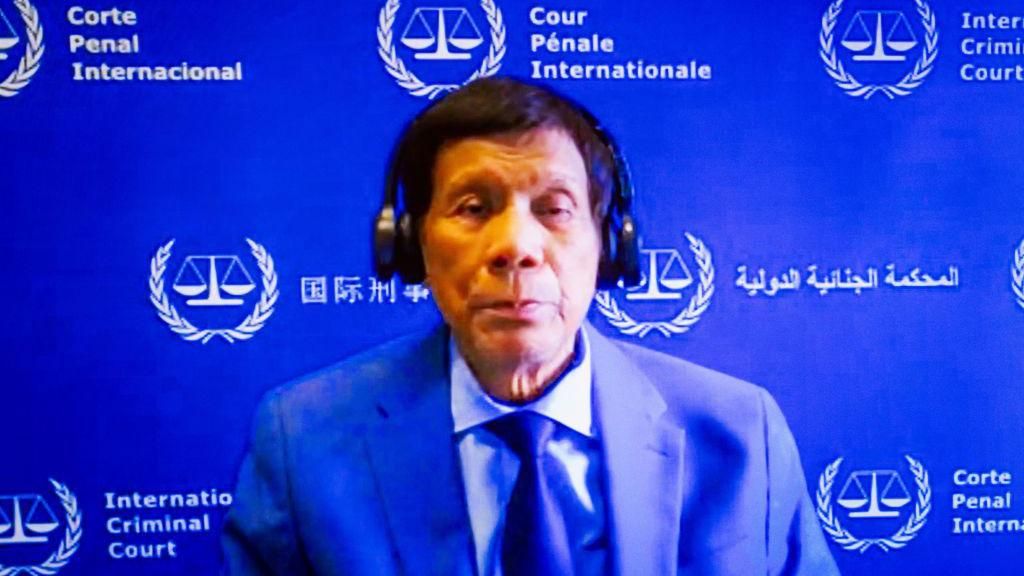
    In a landmark ruling that has sent ripples across global human rights circles, pre-trial judges at the International Criminal Court (ICC) have officially confirmed charges of crimes against humanity against former Philippine President Rodrigo Duterte, greenlighting a full trial for the 81-year-old over accusations of mass extrajudicial killings linked to his controversial war on drugs.

    The charges center on thousands of unlawful deaths that occurred between 2011 and 2019, at the height of Duterte’s harsh anti-drug crackdown. In an official statement released Thursday, the ICC announced that pre-trial judges had unanimously backed the charges, concluding there were substantial grounds to believe Duterte bears responsibility for the alleged atrocities. This confirmation comes more than a year after Duterte was taken into ICC custody, and follows multiple failed appeals from his legal team seeking his release.

    Duterte has long rejected the ICC’s jurisdiction over his case, arguing that the Philippines’ 2019 withdrawal from the Rome Statute — the ICC’s foundational governing treaty — strips the court of authority to prosecute him. However, in a ruling issued Wednesday, the Pre-Trial Chamber rejected this position, noting that all of the alleged crimes took place before the country’s withdrawal, when the Philippines remained a full member state bound by the court’s jurisdiction. The court also granted participation rights to more than 500 victims of the crackdown, allowing them to contribute to the upcoming proceedings.

    Human rights organizations have long criticized Duterte’s war on drugs for its disproportionate targeting of low-level street dealers and users, while major drug kingpins largely avoided prosecution. Duterte has repeatedly denied all wrongdoing, dismissing the charges against him as a baseless, outrageous smear. Philippine police have similarly defended their actions during the campaign, claiming all fatal operations were carried out in self-defense.

    Duterte’s legal team had also pushed to dismiss the proceedings on health grounds, claiming the former leader suffers from cognitive impairment that leaves him unfit to stand trial. ICC judges rejected this claim, citing independent assessments from medical experts that confirmed Duterte is mentally capable of participating in the trial and exercising all his legal procedural rights.

    Duterte’s arrest at Manila International Airport last year, which led to his transfer to The Hague, came amid a well-documented political rift between his daughter, current Vice President Sara Duterte, and incumbent Philippine President Ferdinand Marcos Jr. The upcoming trial has been celebrated as a historic milestone for global accountability by critics of the former president’s deadly crackdown. At the same time, Duterte retains a deeply loyal popular base in the Philippines, and his supporters have held widespread public protests decrying his detention and the ICC proceedings against him.

  • 17 injured, five critically, in head-on train crash in Denmark

    17 injured, five critically, in head-on train crash in Denmark

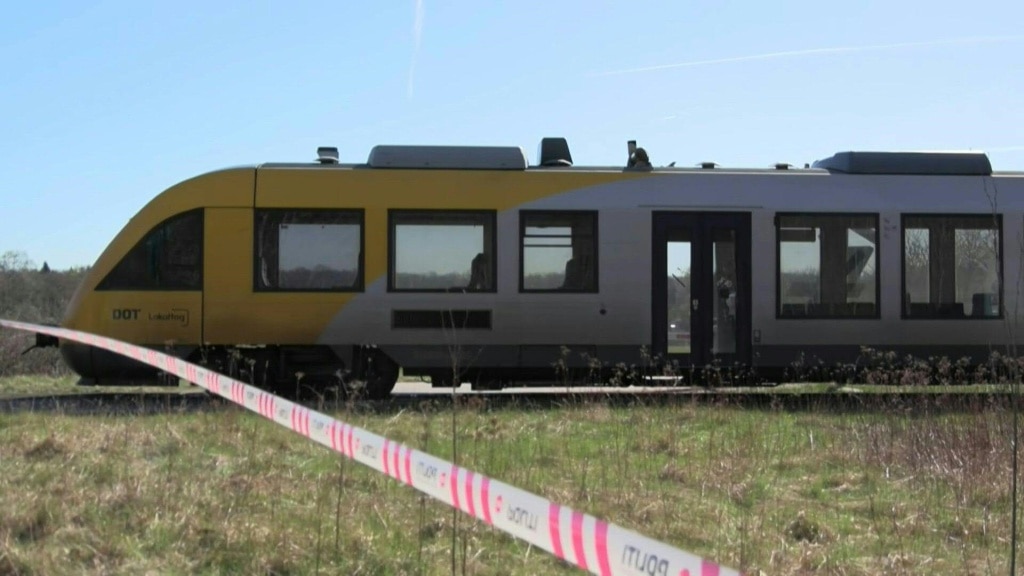
    A devastating head-on collision between two commuter trains just outside Denmark’s capital Copenhagen early Thursday has left 17 people injured, with five of those casualties in critical condition, according to the country’s emergency response authorities. The crash unfolded shortly after 6:00 a.m. local time near a rural level crossing, in a forested area approximately 40 kilometers north of Copenhagen, close to the small town of Hillerod, falling within Gribskov Municipality.

    As of the initial briefing hours after the incident, investigators have not released any confirmed details on what triggered the collision, with multiple probes now ongoing to piece together the sequence of events. Anders Damm-Hejmdal, chief physician for Copenhagen’s emergency medical services, confirmed the breakdown of casualties to reporters on the scene: “A total of 17 people were injured. Of them, five were deemed to be in critical condition at the scene.”

    Local police confirmed they received the first emergency alert about the collision at 6:29 a.m. local time (0429 GMT). Visual footage from the crash site shows the yellow and grey front ends of both trains crumpled and smashed inward, with nearly all windshield and side window glass shattered across the carriages. Remarkably, both trains and all their attached cars remained upright on the railway tracks. In total, 38 passengers and crew were on board the two trains combined.

    Emergency responders quickly mobilized a large fleet of ambulances and police vehicles to the remote site, and all passengers were evacuated within hours. All injured people have now been transferred to nearby hospitals for treatment, with some airlifted by medical helicopter according to Gribskov Mayor Trine Egetved. Rescue operations wrapped up roughly three hours after the crash, though official accident investigators remain on site to collect evidence and reconstruct the incident.

    Morten Kaare Pedersen, a senior local police official, told reporters that no conclusions on the cause would be released until evidence gathering is complete. “We are in the process of gathering the necessary information about the course of events,” he said. “So there are, and will continue to be for quite some time, a lot of investigations underway.”

    Damm-Hejmdal added that the number of critically injured patients could shift in the coming hours, noting that casualty statuses are dynamic in the immediate aftermath of major trauma incidents. “Initially it is difficult to get an overview of the exact injuries,” he explained at a press conference held nearly four hours after the crash. “You can imagine two trains colliding. That causes a lot of different injuries, people get thrown around.”

    Mayor Egetved expressed her profound shock at the incident, noting that the commuter route is relied on daily by local workers and students. “I have been deeply upset and shocked,” she wrote in a post on Facebook. “This train is used by many residents of Gribskov, workers and students.”

    Denmark has long held a reputation for strong rail safety standards, but this collision marks the third serious train incident in the country in less than five years. A 2019 fatal collision left eight people dead and 16 others injured, and in August 2022, an express train struck a farm truck at a level crossing, killing one person and injuring 27 more.

  • Museums and cultural institutions build bridges between China, US

    Museums and cultural institutions build bridges between China, US

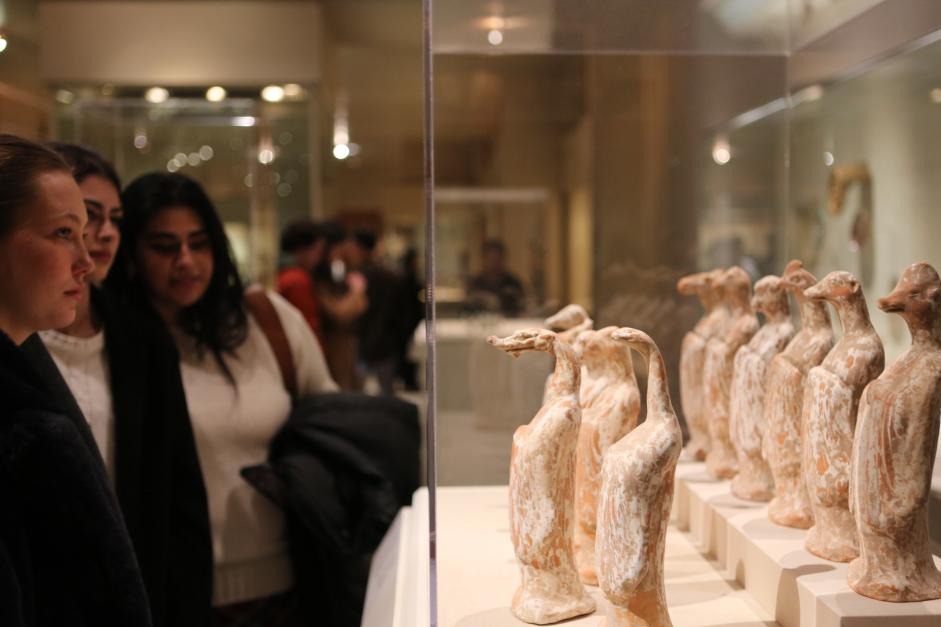
    Against a backdrop of rising geopolitical friction between the world’s two largest economies, cultural and museum institutions on both sides are quietly working to sustain open lines of communication, building tangible connections that deepen mutual understanding between the Chinese and American people.

    The grassroots push for cross-border cultural exchange traces its origins to a deeply personal journey for Tina He, founder of the H Foundation for the Arts. As a university student, He traveled back to her ancestral hometown of Fuzhou, where a walk through the historic Three Lanes and Seven Alleys district — widely celebrated as an open-air museum of Ming and Qing dynasty architecture — left an indelible mark on her. Wandering the preserved lanes, she encountered the enduring legacies of Lin Zexu, Yan Fu, and Bing Xin, three iconic figures whose work and lives fundamentally shaped the course of modern China. That experience planted the seed for a career dedicated to sharing Chinese cultural heritage with global audiences.

    In 2016, that vision became a formal institution when He established the Cultural Foundations of Zhendai He, named in honor of her great-grandfather, a prominent 20th-century Chinese poet and classical scholar. Speaking at the foundation’s 10th anniversary forum earlier this year, He emphasized that the organization’s mission extends far beyond simply establishing an administrative body. “It is not merely about creating an institution, but rather about undertaking a legacy of continuity, carrying these cultural values forward into a new era,” she explained.

    Over the past decade, the foundation has pursued a two-way exchange model that benefits creative communities on both sides of the Pacific. It has supported emerging and established Chinese artists in securing exhibition opportunities at major American cultural institutions, including the Los Angeles County Museum of Art, bringing contemporary Chinese creative practice to mainstream US audiences. At the same time, it facilitates residencies and exhibitions that introduce contemporary American artists to cultural hubs in China, most notably Jingdezhen in Jiangxi province, the centuries-old historic center of Chinese porcelain production, where visiting creators can engage with local artisans and audiences.

    “By building this kind of bridge, we promote cultural exchange between China and the United States,” He noted.

    The critical role of museums and cultural institutions as neutral, accessible spaces for cross-cultural dialogue took center stage at a recent forum hosted by the foundation, which brought together leading scholars, museum administrators, and cultural leaders to explore how public and private cultural organizations can strengthen people-to-people ties between the two nations.

    Daryle Williams, dean of the College of Humanities, Arts and Social Sciences at the University of California, Riverside, noted that American public cultural and academic institutions are constantly evolving to reflect the changing makeup of the communities they serve. “We really want to look at how the Chinese American history is,” Williams said. “Now we’re considering Asian American, Pacific Islander experiences as an integral part of our community that’s evolved over time.”

    Leading curators from top American museums echoed the forum’s core theme, emphasizing that museums serve as global stewards of humanity’s shared cultural legacy, making them uniquely positioned to foster cross-cultural understanding.

    Jason Sun, curator of Chinese art at New York’s Metropolitan Museum of Art — the most visited art museum in the world — pointed out that Chinese art has occupied a central place in the Met’s narrative of global civilization for decades. Through landmark, carefully curated exhibitions, the Met has introduced millions of American audiences to defining chapters of Chinese history and artistic development. Sun explained that these exhibitions do more than showcase the depth and richness of Chinese civilization; they also illuminate the centuries-long history of exchange and interaction between East and West, demonstrating that all civilizations have grown and evolved through mutual learning. “Through museums, one can understand a country’s culture and history, and thereby understand the country itself,” Sun said.

    Similar perspectives were shared by Claire Lyons, curator of antiquities at the J. Paul Getty Museum in Los Angeles. Lyons noted that the Getty has maintained long-standing collaborative partnerships with Chinese cultural institutions, and her team sees enormous untapped potential for even deeper cooperative work in the coming years. The Getty’s China-focused programming has explored topics ranging from Qing Dynasty porcelain trade and export, highlighting hundreds of years of maritime and commercial exchange between China and global markets, to landmark exhibitions showcasing the ancient artistic heritage of the Mogao Caves in Gansu province. These projects do more than allow visitors to appreciate the artistic beauty of Chinese cultural treasures; they also draw attention to the painstaking work of cultural heritage preservation that sustains these sites for future generations.

    For Emily Zhang, program director of the H Foundation for the Arts, the work of building these cultural connections has grown even more important in an era defined by rapid technological change. As artificial intelligence and digital tools reshape nearly every aspect of daily life, Zhang argued that human connection and cross-cultural understanding have only grown in urgency, rather than becoming less important. “In a world where technology becomes more powerful, what matters more and more is our community,” she said. “It’s not just about what we can do, but how we understand each other and how we stay connected. That is exactly what arts and culture can do.”

  • No Fifa plans for Iran-Italy swap at World Cup

    No Fifa plans for Iran-Italy swap at World Cup

    The 2026 FIFA World Cup, co-hosted by the United States, Canada and Mexico, has been drawn into an unexpected political and sporting dispute after a senior U.S. diplomatic figure proposed swapping Iran’s qualifying spot for four-time champion Italy, a proposal that governing body FIFA has quickly rejected, multiple sources confirm.

    The suggestion to replace Iran with the Azzurri came from Paolo Zampolli, special envoy to former U.S. president Donald Trump. Zampolli, an Italian-born diplomat, confirmed to the *Financial Times* that he had pitched the idea to both Trump and FIFA president Gianni Infantino. As a native Italian, he framed the swap as a fan’s dream, noting that Italy — currently ranked 12th globally by FIFA, making it the highest-ranked nation outside the 2026 tournament field — has the historic pedigree to deserve a spot, with four World Cup titles to its name. The *FT* also reported the proposal was partly intended to repair bilateral tensions between the U.S. and Italy, which emerged after Italian Prime Minister Giorgia Meloni criticized Trump over his remarks about Pope Leo XIV.

    Uncertainty around Iran’s participation has lingered for months, fueled by ongoing geopolitical conflict between Iran, the U.S. and Israel. Just last March, Iran signaled it might withdraw from the tournament over safety concerns following U.S. and Israeli airstrikes, and the Iranian Football Federation had entered negotiations with FIFA to relocate its scheduled group stage matches from the U.S. to Mexico. However, that uncertainty has been repeatedly dismissed by top FIFA officials. Infantino explicitly stated last week that “the Iranian team is coming, for sure”, adding that “sports should be outside of politics” in remarks made in Washington. He emphasized that Iran earned its place through qualification, the team’s players want to compete to represent their people, and that Iran fields a strong squad that deserves its spot. In a March visit to Iran’s team camp in Turkey, Infantino already confirmed Iran’s U.S. group matches would go forward as planned, and Iranian government spokesperson Fatemeh Mohajerani reaffirmed this month that the country is “fully prepared” to participate in the tournament, Al Jazeera reported. This is not the first time Zampolli has pushed for this type of swap: he made an identical request to FIFA ahead of the 2022 Qatar World Cup during his tenure as a U.N. ambassador.

    For Italy, the rejection closes another door to what would be a dramatic late comeback to the tournament. Italy has now failed to qualify for three consecutive World Cups, after dropping a qualification play-off match to Bosnia and Herzegovina last month that solidified its exclusion from the 48-team 2026 field.

    FIFA’s regulations explicitly grant the governing body full discretionary power to replace a qualifying team if a member association withdraws or is excluded from the tournament. Despite this rule, FIFA has repeatedly reaffirmed its commitment to keeping Iran in the competition, and has made clear no replacement will be pursued at this stage.

    Iran is scheduled to play group stage matches against New Zealand on June 15 in Los Angeles, Belgium on June 21 also in Los Angeles, and Egypt on June 26 in Seattle. The 2026 World Cup kicks off across the three host nations on June 11. The White House World Cup Taskforce has not yet issued a comment on Zampolli’s proposal. Donald Trump has previously taken a mixed public stance on Iran’s participation: he has said Iran would be “welcome” at the tournament, while also suggesting they should not participate “for their own life and safety”.

  • For a moment, only the story matters

    For a moment, only the story matters

    Every April 23, readers around the globe mark World Book Day — a celebration that carries unique, layered meaning in China, where the practice of reading has long transcended a simple pastime to become a foundational part of cultural heritage.

    For countless generations of Chinese people, reading is not merely a leisure activity or a task tied to academic or professional advancement. Instead, it is a tradition rooted in the ancient wisdom of Chinese philosophers and embedded in the nation’s long-held noble ideals, woven tightly into the fabric of ordinary daily life across every region of the country. From hand-copied scrolls passed down through imperial dynasties to modern printed paperbacks and digital reading platforms accessible to millions today, this enduring tradition has nurtured generation after generation, shaping worldviews, fostering critical thinking, and strengthening cultural bonds between communities.

    As the nation marks this year’s World Book Day, the occasion invites readers of all ages and backgrounds to pause and reflect on their own personal journeys with literature. Whether the memory is a childhood picture book read by a grandparent by lamplight, a worn classic novel carried through years of schooling, or a quiet 10 minutes of reading snatched from a busy workday on a commuter train, these small, intimate moments with stories connect individual experiences to thousands of years of Chinese literary and cultural tradition. In those quiet moments when the page opens, nothing matters except the story itself — a universal experience that continues to bind readers across China together today.

    This year’s World Book Day observance also aligns with broader national cultural efforts centered on storytelling and cultural identity, framed as a key priority for public cultural engagement in recent special coverage from Chinese media outlets.

  • BBC visits migrant camp in northern France as new deal announced

    BBC visits migrant camp in northern France as new deal announced

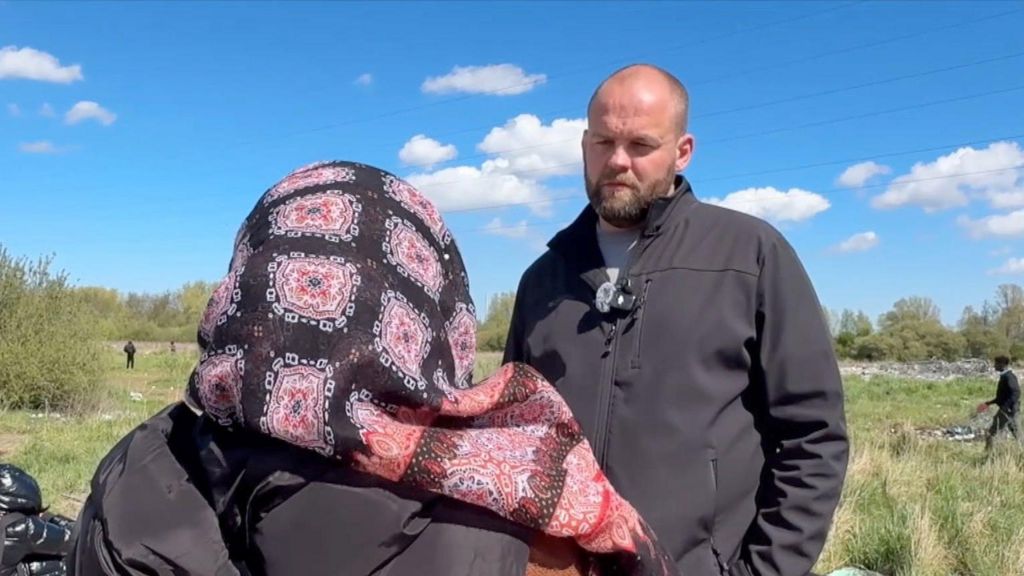
    In a recent on-the-ground reporting trip, a BBC reporting team has gained access to a migrant camp located in northern France, a visit that comes as British and French authorities formally unveil a new proposed three-year bilateral agreement focused on curbing dangerous small-boat crossings of the English Channel.

    The migration crisis along this busy shipping lane has persisted for years, with thousands of migrants attempting the perilous 21-mile crossing from northern French ports each year, seeking to reach the United Kingdom. Many of these migrants gather in informal camps dotted along the French coastline near Calais and Dunkirk, waiting for opportunities to board small, overcrowded vessels that are often unseaworthy, leading to frequent fatalities.

    The newly outlined deal, negotiated between London and Paris, marks a fresh attempt to address the root causes of the unauthorized crossings. Over the proposed three-year term, the agreement is expected to expand joint patrol operations, increase information sharing between British and French law enforcement, and boost support for migrant processing and camp management on the French side of the border. It represents the latest iteration of cross-border cooperation on a file that has strained bilateral relations repeatedly in recent years, with successive British governments pushing for stronger French action to stop departures before they begin.

    During the visit to the camp, BBC journalists documented the living conditions for the hundreds of migrants currently staying in the facility, many of whom have fled conflict, persecution, and poverty in their home countries across the Middle East, Africa, and South Asia. The on-site reporting offers a rare firsthand look at the daily realities facing migrants as they wait, even as policymakers on both sides of the Channel work to implement new measures to stem the flow of crossings. The deal still requires final formal approval from both British and French legislative bodies before it can go into full effect, with negotiations expected to wrap up in the coming weeks.

  • Mutual gains via Five-Year Plan welcomed

    Mutual gains via Five-Year Plan welcomed

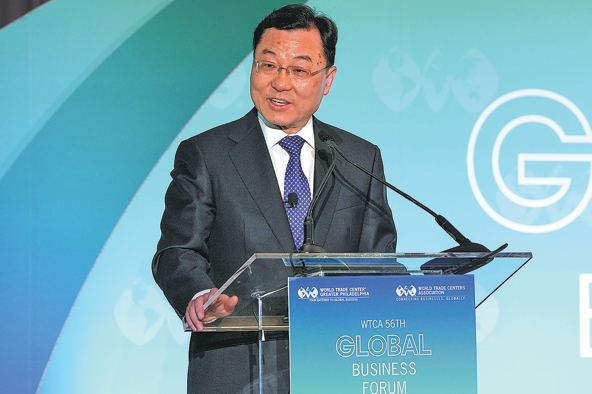
    On a Monday gathering of nearly 500 global business leaders from China, the United States and dozens of other nations, Chinese Ambassador to the U.S. Xie Feng delivered a keynote address at the 56th Annual World Trade Centers Association (WTCA) Global Business Forum, framing China’s 15th Five-Year Plan (2026–2030) as both a domestic development roadmap and an open invitation for the international community to tap into new mutually beneficial growth opportunities.

    Xie laid out four core pillars of the new five-year plan to illustrate its direction and global impact. First, the blueprint centers people-centered development: more than one-third of the plan’s 20 key national indicators are dedicated to improving lifelong public well-being, marking a shift from expanding basic access to boosting the quality of social services across all age groups. Second, innovation is positioned as the primary engine of growth, with a strong focus on integrating technological breakthroughs with industrial upgrading to cultivate new quality productive forces. Third, the plan prioritizes accelerated expansion across green technology, green energy and green finance to advance China’s low-carbon transition. Fourth, openness remains a core feature of China’s modernization path, with the country set to align its regulatory frameworks with high-standard international rules in key sectors including finance and healthcare services.

    Throughout his speech, Xie emphasized that over the coming five years, the world will encounter a China brimming with economic vitality and untapped potential. He highlighted the enormous opportunity presented by China’s rapidly growing consumer market, which is on track to become the world’s largest and most dynamic consumer market in the near term. Xie specifically welcomed foreign investment in high-value sectors including value-added telecommunications, biotechnology, and wholly foreign-owned medical institutions.

    He also pointed to China’s globally leading innovation ecosystem, which enables rapid scaling of laboratory innovations to mass production, and framed China as both a global testbed and deployment platform for cutting-edge green technologies backed by the world’s largest clean energy infrastructure system, inviting global partners to join the ongoing global new energy revolution.

    Turning to China-U.S. bilateral relations, Xie stressed that a stable China-U.S. relationship is foundational to global stability. Comparing the relationship to the first button on a shirt, he noted that getting this first button right is critical, calling on both nations to adopt a correct strategic perception that frames the two countries as partners rather than strategic rivals. Citing the healthy competitive dynamic between U.S. automaker Tesla and Chinese electric vehicle manufacturers as a model, Xie advocated for fair, mutually beneficial competition over zero-sum, win-lose confrontation. He called on both sides to clarify reasonable boundaries for national security policy, restore common sense and rationality to bilateral economic cooperation, and break free from the harmful chilling effect that has constrained cross-border exchange in recent years.

    Xie also shared his expectation for expanded high-level bilateral engagement in 2026, including confirming hopes for a planned visit to China by U.S. President Donald Trump later this year.

    Other key speakers at the forum echoed Xie’s call for open trade and constructive bilateral engagement. Thomas Young, president and CEO of the World Trade Center of Greater Philadelphia, the event’s host, noted that global markets are rapidly shifting and supply chains are continuing to evolve, meaning regions that position themselves strategically for cross-border collaboration will shape the next decade of global economic growth. He described the WTCA forum as a critical space to build professional relationships, exchange open and honest ideas, and facilitate tangible cross-border business deals.

    David L. Cohen, former U.S. Ambassador to Canada, observed that international trade does not develop in a vacuum—it grows from face-to-face connections between stakeholders in forums like this one. He emphasized that few bilateral relationships carry as much global economic weight and opportunity as the partnership between China and the United States, adding that sustained dialogue and mutual understanding are absolutely essential to expanding both global economic growth and shared prosperity for both nations.

    John E. Drew, chairman of the WTCA, centered his remarks on the foundational role of trust in global trade. “Trade is something that is in our genes as human beings,” Drew said, arguing that the single most important ingredient for successful cross-border trade is trust. When trading partners can rely on each other’s words and commitments, he explained, they can create unique, long-term value that benefits all sides.

    During panel discussions, Kellie Meiman Hock, senior counselor at global advisory firm McLarty Associates, echoed a common sentiment among business attendees, noting that global companies crave policy certainty around trade rules of the road and tariff schedules to plan long-term investments.

    As the global governing body for the World Trade Center brand, the WTCA supports more than one million enterprises across the world. Its annual Global Business Forum is the association’s flagship event, hosted each year by a different local World Trade Center to foster cross-border economic cooperation and connection.

  • China issues guideline to boost energy conservation, carbon reduction

    China issues guideline to boost energy conservation, carbon reduction

    BEIJING – In a major step forward for the country’s long-term climate and sustainable development strategy, Chinese authorities released a comprehensive policy guideline on Wednesday to scale up nationwide energy conservation and carbon reduction initiatives. The new policy document was jointly issued by two top administrative bodies: the General Office of the Communist Party of China Central Committee and the General Office of the State Council.

    The framework emphasizes that decarbonization and energy efficiency efforts must proceed in tandem with systematic industrial upgrading, calling for coordinated cross-sector action to balance economic growth and environmental progress. A core focus of the guideline is accelerating the adoption of energy-efficient, low-carbon and clean production technologies, specialized equipment and end products across key industrial sectors. It also outlines explicit support for integrating digital, intelligent and green technological innovations to modernize China’s traditional industrial base, bringing legacy sectors into line with national low-carbon development goals.

    To lay the foundation for a cleaner energy future, the guideline lays out clear strategic priorities: capping total national consumption of both coal and oil to peak their emissions output, aggressively expanding the share of non-fossil energy in the national energy mix, scaling up emerging utility-scale energy storage systems, and speeding up construction of a flexible, renewable-centered new power system.

    Beyond broad strategic direction, the policy sets out targeted implementation plans for energy conservation and carbon reduction across seven key high-impact sectors: manufacturing, construction, transportation, digital infrastructure, and public institutions operated by the government. It also confirms that strengthened regulatory oversight and performance management will be enforced to ensure all targets are met on schedule.

    The policy rollout comes as China continues to advance its stated “double carbon” strategic goals, which aim to peak carbon dioxide emissions before 2030 and achieve carbon neutrality before 2060. This new guideline provides a clear, actionable policy framework to translate long-term climate commitments into concrete, sector-specific action across the country’s economy.