
Arsenal manager Mikel Arteta has expressed serious concerns about how a worsening injury situation could derail the club’s Premier League championship campaign, despite their commanding 2-0 victory over Brentford that extended their unbeaten streak to 18 matches across all competitions. The Wednesday night triumph at Emirates Stadium, powered by goals from Mikel Merino and Bukayo Saka, propelled the Gunners to a five-point advantage over second-place Manchester City. However, the win came at a significant cost as both midfielder Declan Rice and defender Cristhian Mosquera were forced from the pitch with apparent injuries. The situation compounds existing absences including first-choice center-backs Gabriel Magalhaes and William Saliba, along with attackers Kai Havertz and Leandro Trossard. Arteta particularly lamented the demanding fixture schedule that required his squad to play with one fewer recovery day than their opponents, questioning the Premier League’s commitment to player welfare. With a critical early Saturday kick-off against in-form Aston Villa looming, the injury-depleted squad faces mounting physical challenges despite their impressive table position.
博客
-

Ireland among countries boycotting Eurovision after Israel allowed to compete
The European Broadcasting Union (EBU) faces mounting diplomatic pressure as four European nations announced their withdrawal from the 2026 Eurovision Song Contest following the decision to permit Israel’s continued participation. Ireland, Spain, the Netherlands, and Slovenia have formally declared their boycott, citing ethical concerns regarding the humanitarian situation in Gaza and allegations of compromised voting integrity.
Ireland’s national broadcaster RTE issued a statement emphasizing that participation remains “unconscionable given the appalling loss of lives in Gaza and the ongoing humanitarian crisis.” The Dutch broadcaster Avrotros similarly stated that competing under current circumstances contradicts their essential public values.
Spanish broadcaster RTVE revealed that its board had predetermined withdrawal should Israel participate, a decision that extends to non-broadcast of both the finals and semi-finals. RTVE had previously advocated for Israel’s exclusion and requested a secret ballot on the matter, which organizers denied—a move the broadcaster claims confirms “political pressure surrounding the festival.”
Slovenia’s RTV maintained its unchanged position, asserting that recent rule modifications fail to address fundamental ethical concerns. The broadcaster emphasized its commitment to equal standards for all EBU members and participating nations.
In contrast, Israeli President Isaac Herzog celebrated the EBU’s decision as “an appreciated gesture of solidarity, brotherhood, and cooperation,” characterizing it as a victory over attempts to silence Israel. He expressed hope that the competition would continue to promote cultural understanding and friendship between nations.
The controversy emerges amidst ongoing debates about the politicization of the world’s largest music competition. While Iceland is reportedly considering similar action, no official announcement has been made. The EBU has responded by implementing new rules designed to protect the contest’s integrity, though these measures have failed to appease the boycotting nations.
-

Arne Slot searches for positives as Liverpool drop points again
Liverpool’s concerning run of form persisted as they narrowly avoided a disastrous defeat against Sunderland, managing only a 1-1 draw in Wednesday’s Premier League clash. The match represented another setback for manager Arne Slot’s squad following their promising 2-0 victory over West Ham United just days earlier.
Florian Wirtz’s deflected effort in the 81st minute ultimately rescued a point for the struggling champions, preventing what would have marked their tenth loss in fourteen competitive fixtures this season. The pattern of inconsistent performances continues to define Liverpool’s campaign, characterized by moments of progress followed by significant regression.
Slot acknowledged the team’s persistent difficulties in his post-match comments, stating to BBC: ‘Repeatedly this season, we’ve conceded from limited opposition opportunities. While fortunate not to suffer defeat tonight—a scenario that would have resulted in loss in previous weeks—our inability to secure victory remains troubling.’
The Dutch manager highlighted Liverpool’s fundamental deficiency in offensive effectiveness, noting: ‘After fourteen matches, our production from open play and set pieces remains insufficient.’ Statistical analysis supported Slot’s assessment, revealing Liverpool’s overwhelming possession dominance and pass completion rates more than doubling Sunderland’s, yet yielding minimal genuine scoring threats until Wirtz’s fortunate intervention.
Slot elaborated to Sky Sports: ‘Similar to the West Ham match, we created limited opportunities while conceding few. The deflection goal against us exemplified misfortune, but ultimately we required luck when Alisson faced one-on-one situations.’
The match nearly concluded in dramatic fashion during added time when Wilson Isidor bypassed goalkeeper Alisson Becker, only to see his goalbound effort miraculously cleared off the line by Federico Chiesa. Slot praised the defensive commitment: ‘That clearance demonstrates the absolute effort required—continuous effort ultimately prevented certain defeat.’
The result leaves Liverpool seeking solutions to their scoring inefficiency and defensive vulnerabilities as they navigate a season increasingly defined by underperformance relative to expectations.
-
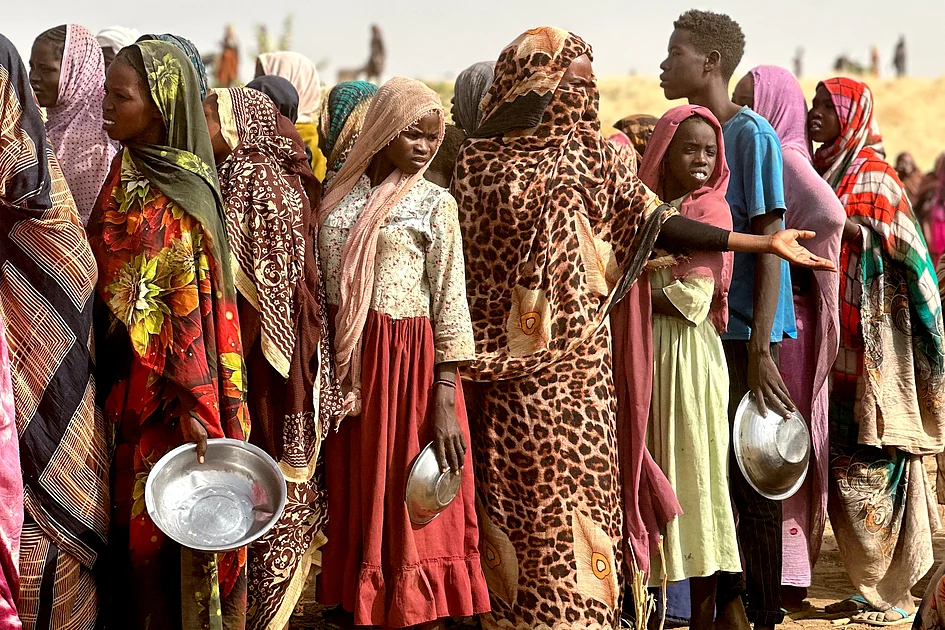
Sudan army chief’s Islamist ties complicate peace efforts
The already daunting challenge of achieving peace in Sudan faces additional complications stemming from Army Chief Abdel Fattah Al Burhan’s intricate relationship with Islamist factions, whose influence has expanded significantly since the conflict’s inception. These groups have become instrumental to Burhan’s military strategy and political survival, providing both combat personnel and strategic guidance in his war against former deputy Mohamed Hamdan Daglo’s Rapid Support Forces (RSF).
Analysts indicate that Islamist elements within Burhan’s power structure actively oppose ceasefire initiatives, fearing that any peace agreement and subsequent return to civilian governance would marginalize their recently regained political influence. Sudanese analyst Kholood Khair notes, ‘The Islamists are very upset at the prospect of a ceasefire. They want the war to continue as much as possible.’
Despite welcoming international mediation efforts, including recent engagement with US President Donald Trump facilitated by Saudi Crown Prince Mohammed bin Salman, Burhan has consistently rejected proposed ceasefire arrangements. His delicate balancing act requires maintaining Islamist support while navigating increasing pressure from international mediators who view these alliances as destabilizing.
The term ‘Islamists’ in Sudan’s context refers to a network of parties, leaders, and patronage systems developed under former autocrat Omar Al Bashir. Since the conflict began, Bashir-era associates have been released from detention, mobilized troops, and regained political prominence—a significant reversal from their diminished status following Bashir’s 2019 ousting.
Daglo has strategically framed the conflict as a struggle against ‘radical Islamists’ and remnants of Bashir’s regime. Meanwhile, Burhan publicly denies Muslim Brotherhood presence in his government, despite evidence of complex interdependencies. A secret August meeting with US envoy Massad Boulos resulted in tentative agreements to gradually distance from Islamist allies, though implementation has been limited to minor personnel changes.
International actors including the United States, Saudi Arabia, the UAE, and Egypt have jointly declared that Sudan’s future cannot be determined by groups linked to the Muslim Brotherhood, which the Trump administration has moved to designate as terrorist organizations. Recent US sanctions targeting Burhan’s finance minister and the Al Baraa ibn Malik Brigade reflect efforts to limit Islamist influence and counter Iran’s regional activities, which include alleged drone shipments to Sudanese forces.
Burhan currently faces mounting pressures: maintaining unity within his factionalized camp, addressing military setbacks including losses in Darfur, and responding to intensified diplomatic pressure from regional powers concerned about national security implications. With exhausted troops and diminishing territorial control, the army chief appears trapped between Islamist dependencies and international demands, lacking viable alternatives for political survival without his controversial allies.
-
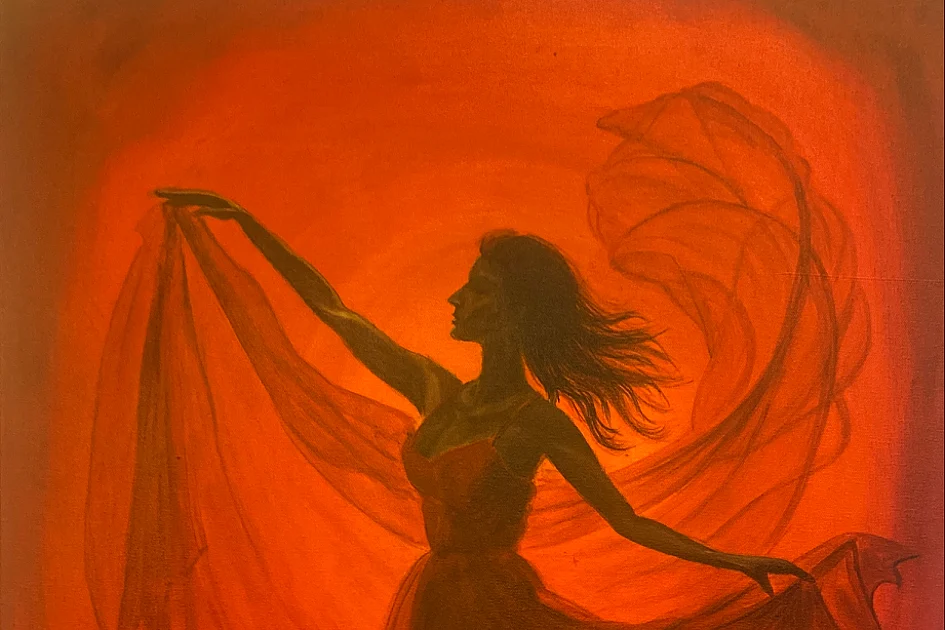
Look: How this army doctor reinvented herself as a contemporary artist
Dr. Meenakshi Singhal has embarked on an extraordinary professional metamorphosis, transitioning from a distinguished career as an Indian Army radiologist to emerging as a celebrated contemporary artist within a single year. Her journey represents a profound evolution from medical science to artistic expression that has captured international attention.
After more than three decades interpreting grayscale radiological images with precision at the Armed Forces Medical College in Pune, Dr. Singhal made the decisive shift to full-time artistry in January 2025. Her medical background continues to profoundly influence her artistic vision, with years of analyzing anatomical structures and subtle densities refining her exceptional eye for composition, depth, and underlying architectures.
“In many ways, I still read images,” Dr. Singhal reflects, “just with a completely different purpose now.” Her canvases represent a liberation from monochrome medicine into vibrant color fields, where technical precision merges seamlessly with intuitive expression. The discipline and resilience cultivated during demanding forward-area postings with the Army now manifest in artworks that explore themes of protection, grounding, and quiet strength.
Her artistic ascent has been remarkably rapid. Following successful group exhibitions across India including ‘Raabta,’ ‘Imprints,’ and ‘Art Spectra,’ her work gained international recognition at Hanoi’s ‘Intersection’ exhibition in October 2025. The following month, her participation in Dubai’s ‘Khwab-e-Mussawiri’ event drew admiration from diverse international audiences and established regional artists, including celebrated Emirati artist Ahmed Al Awadhi Rukni who took particular interest in her artistic evolution.
This December marks a significant milestone with her debut solo exhibition in Gurgaon, representing both a personal and professional culmination. “This show is the story of my transition,” she explains, “from a life rooted in science and service to one rooted in intuition and creation. It is a celebration of coming home to myself.”
The emotional resonance of her work transcends cultural boundaries, with viewers from different backgrounds connecting with her pieces for varied reasons. As one international attendee observed upon learning this was only her first year as a professional artist: “Then your soul has been painting much longer.”
-
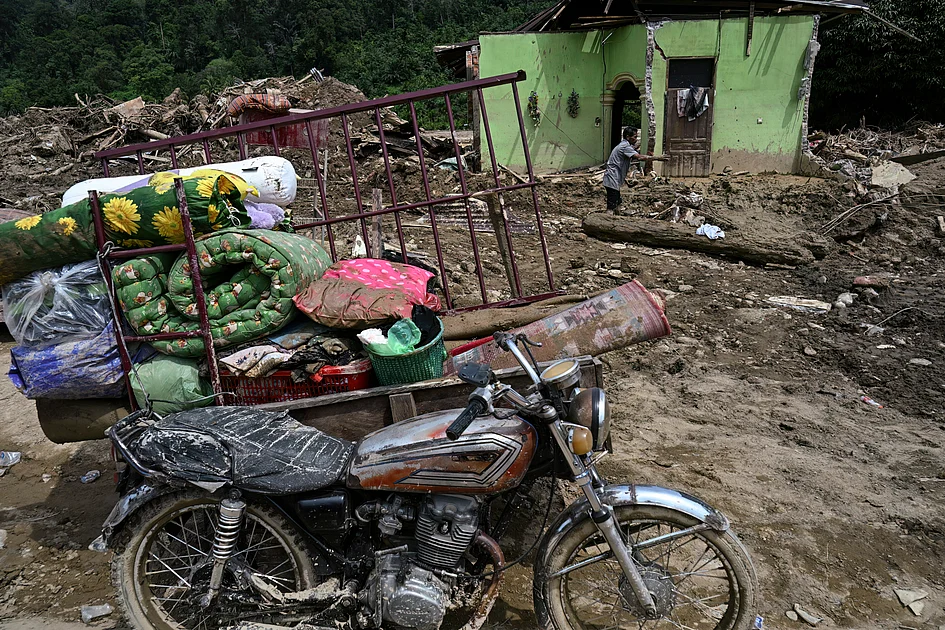
Rain forecasts raise fears in flood-hit Indonesia, Sri Lanka
Meteorological warnings of impending rainfall have triggered widespread alarm throughout flood-ravaged regions of Indonesia and Sri Lanka, where previous cataclysmic flooding has already claimed over 1,500 lives across four Southeast Asian nations. The Indonesian meteorological agency issued specific alerts for Sumatra’s most severely affected provinces, forecasting moderate to heavy precipitation between Thursday and Friday. Although current rainfall intensity remains below last week’s catastrophic levels, the psychological impact on survivors remains profound, with many expressing terror about potential repeat flooding.
Current official figures place Indonesia’s death toll at 776, with more than 560 individuals still unaccounted for due to compromised communication infrastructure and electrical failures in remote areas. Survivor testimonies reveal harrowing accounts of endurance, including one woman’s experience of being stranded on her rooftop for 48 hours without sustenance. The scale of destruction has overwhelmed local response capabilities, with fuel shortages creating kilometers-long queues at distribution points and relief operations struggling to reach isolated communities.
The broader meteorological context reveals a disturbing pattern: while seasonal monsoons traditionally provide essential irrigation for agricultural systems, climate change has dramatically altered their behavior, creating erratic and increasingly deadly weather phenomena. Last week’s catastrophic events simultaneously drenched Sri Lanka, Sumatra, southern Thailand, and northern Malaysia through two separate weather systems, creating a regional humanitarian crisis of unprecedented proportions.
In Sri Lanka, authorities renewed landslide alerts for vulnerable areas and advised against returning to unstable homes. The national death toll has reached 479, with hundreds still missing and survivors reporting entire villages transformed into graveyards. The economic implications are staggering, with preliminary rebuilding estimates approaching $7 billion—a devastating financial burden for a nation still recovering from its worst economic crisis in decades.
-

Watch: Quebec debates stricter rules on religion in public spaces
A contentious legislative proposal in Quebec has sparked vigorous debate across the Canadian province, focusing on the proper place of religious expression within public institutions. The proposed bill, currently under consideration by provincial lawmakers, seeks to expand existing secularism laws by imposing stricter limitations on religious symbols and practices in government-funded spaces.
The BBC’s recent documentary from Montreal captured diverse perspectives from Quebec residents amidst freezing temperatures, revealing deep divisions within society. Proponents argue the legislation reinforces state secularism and promotes cultural cohesion, while opponents contend it disproportionately targets religious minorities and infringes upon personal freedoms.
This legislative initiative builds upon Quebec’s historical journey with secularism, notably through Bill 21 passed in 2019, which already restricted some public servants from wearing religious symbols at work. The new proposal would potentially extend these restrictions to additional public venues and situations, raising complex questions about the balance between state neutrality and individual rights.
Legal experts anticipate constitutional challenges should the bill pass, as it would likely face scrutiny under Canada’s Charter of Rights and Freedoms. The debate reflects broader tensions between Quebec’s distinct cultural identity within the Canadian federation and evolving multicultural realities across the province.
-
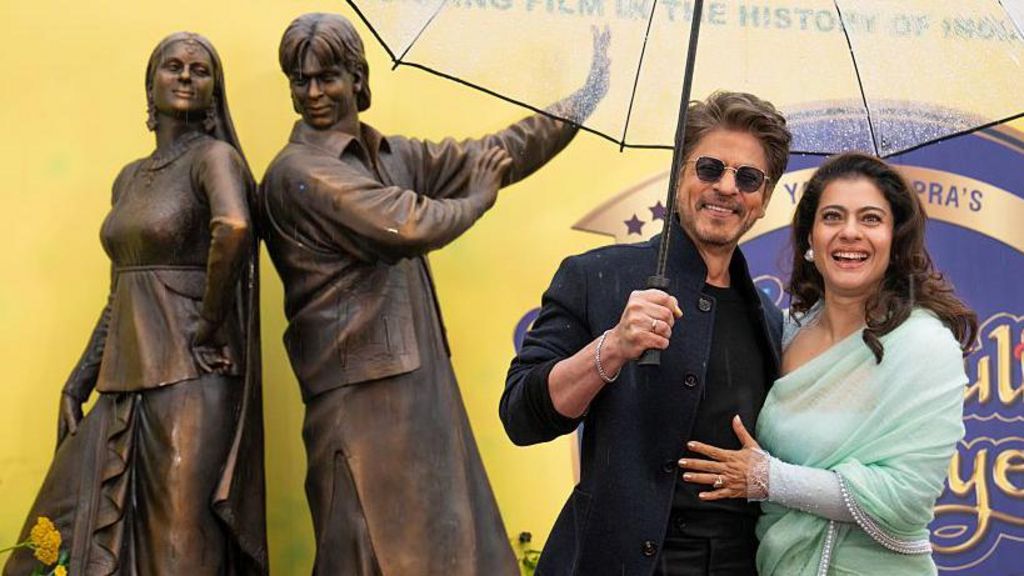
Bollywood star Shah Rukh Khan says UK statue is like having ‘life-size doll’
In a historic celebration of Indian cinema, Bollywood megastars Shah Rukh Khan and Kajol unveiled a dual statue honoring their iconic roles in Leicester Square, London, amidst torrential rainfall on Thursday. The monument commemorates the 30th anniversary of Dilwale Dulhania Le Jayenge (DDLJ), the longest-running film in Indian cinematic history.
Khan, humorously remarking that the statue resembled a “life-size doll,” engaged in playful banter with his co-star during the ceremony. “I think I’m looking very handsome. You’re also looking very pretty,” he told Kajol, who responded with laughter: “It’s like a second thought, but thanks.”
The installation joins Leicester Square’s prestigious Scenes in the Square trail, placing the Bollywood icons alongside cultural monuments including Harry Potter, Paddington Bear, and the recently added Bridget Jones statue. Khan emphasized the significance of the London location, noting that “England’s audience has been very responsible for Indian cinema’s takeoff globally in modern times.”
Despite monsoon-like conditions, dedicated fans gathered to witness the unveiling, demonstrating the enduring appeal of the film often described as Bollywood’s Romeo and Juliet. DDLJ follows the cross-continental romance between Raj (Khan) and Simran (Kajol), with several key scenes filmed in London and Leicester Square itself.
The ceremony sparked broader discussions about Bollywood’s contemporary challenges. Both actors addressed the industry’s post-pandemic struggles, with Kajol noting increased competition from streaming services and changing viewer habits. Khan countered by affirming the enduring power of communal viewing experiences: “We like to see things, enjoy things together.”
The event also highlighted Khan’s remarkable career trajectory—from romantic lead to industry mogul. Recently joining the billionaire club, he now ranks among the world’s wealthiest actors alongside figures like Taylor Swift and Arnold Schwarzenegger. Despite his global success, Khan maintained his characteristic humility, deflecting suggestions of playing James Bond with his trademark wit: “I don’t have the accent. And I don’t like shaken martinis.”
-
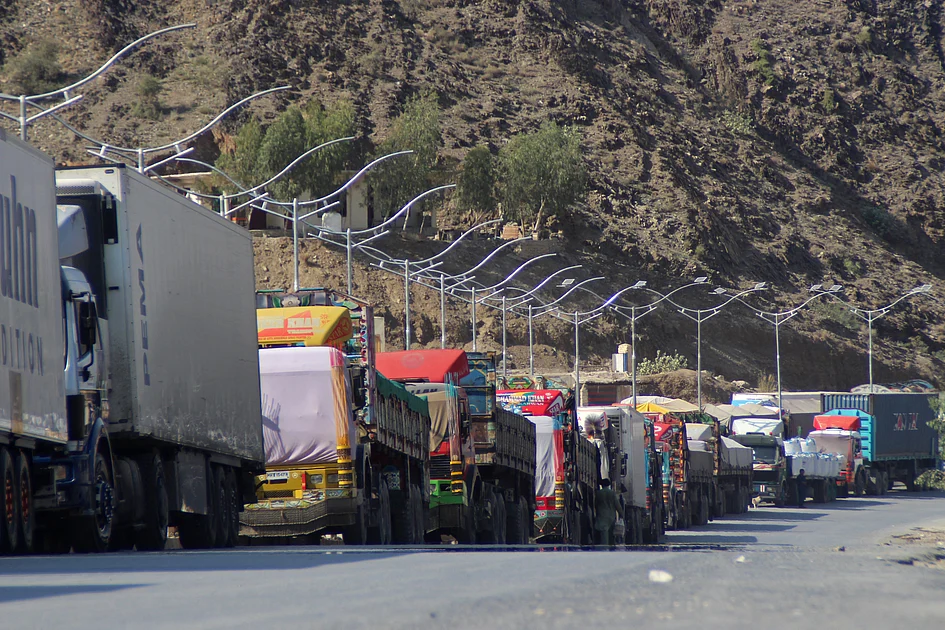
Pakistan to allow UN humanitarian aid into Afghanistan
In a significant humanitarian gesture, Pakistan has authorized the United Nations to transport essential supplies into Afghanistan through a temporary border opening. This marks the first partial reopening since October’s deadly cross-border clashes severely strained relations between the neighboring nations.
The approval came through a formal exception to Pakistan’s border closure policy, specifically for UN humanitarian containers. According to anonymous government officials, this limited authorization covers critical supplies including food provisions, medicinal products, medical equipment, and other health and education-related essentials.
The aid delivery will be implemented through a structured three-phase process, though specific timelines for the initial phase remain undisclosed. A United Nations representative confirmed the arrangement, indicating readiness to commence operations once logistical details are finalized.
However, uncertainty persists on the Afghan side. Authorities in Spin Boldak, the Afghan border city near the crucial Chaman crossing, reported no official notification regarding the humanitarian corridor and confirmed the border gate remains closed.
The border closure, initiated on October 12 following lethal cross-border exchanges and a subsequent fragile ceasefire, has created substantial economic hardship. The Pakistan-Afghanistan Joint Chamber of Commerce and Industry estimates losses exceeding $100 million on both sides, with approximately 25,000 border region workers affected by the trade suspension.
Pakistan emphasized that this authorization constitutes a conditional humanitarian exception rather than a full border reopening. Official statements clarify that general trade, immigration, and Afghan Transit Trade arrangements remain suspended indefinitely. The decision reflects ongoing tensions stemming from Islamabad’s allegations that Taliban authorities harbor militants conducting cross-border attacks—claims consistently denied by Afghanistan’s government.
As Afghanistan’s largest trading partner, Pakistan normally supplies crucial commodities including rice, pharmaceuticals, and raw materials while absorbing nearly half of Afghan exports, according to World Bank data. This humanitarian corridor represents a critical lifeline for a nation facing severe economic and humanitarian challenges.
-

Shenzhou XXI crew set for first extravehicular activities
China’s ambitious space program reaches another milestone as the Shenzhou XXI astronauts aboard the nation’s orbiting space station prepare to conduct their inaugural extravehicular activities (EVAs) in the coming days. The China Manned Space Agency officially confirmed the planned operations during Thursday’s announcement, marking a significant advancement in China’s celestial capabilities.
The upcoming spacewalks represent a critical phase in China’s ongoing space station operations, demonstrating the country’s growing proficiency in complex orbital maneuvers. These activities will involve crew members exiting the station’s pressurized modules to perform external maintenance, scientific experiments, and equipment testing in the vacuum of space.
This mission continues China’s steady progression in space exploration, building upon previous successful missions that established the country as a major spacefaring nation. The carefully orchestrated EVAs require meticulous planning and coordination between the astronauts and ground control teams to ensure absolute safety during the high-risk procedures.
Technical teams at mission control have been conducting comprehensive simulations and system checks to prepare for the operations. The astronauts have undergone extensive training in both underwater simulations and virtual reality environments to master the complex movements required for working in microgravity conditions while encumbered by pressurized spacesuits.
The successful execution of these spacewalks will provide invaluable data for China’s future space station operations and potential lunar missions, contributing to humanity’s broader understanding of long-duration space habitation and extravehicular operations.