博客

  • New Zealand’s Māori Queen meets King Charles at Buckingham Palace

    New Zealand’s Māori Queen meets King Charles at Buckingham Palace

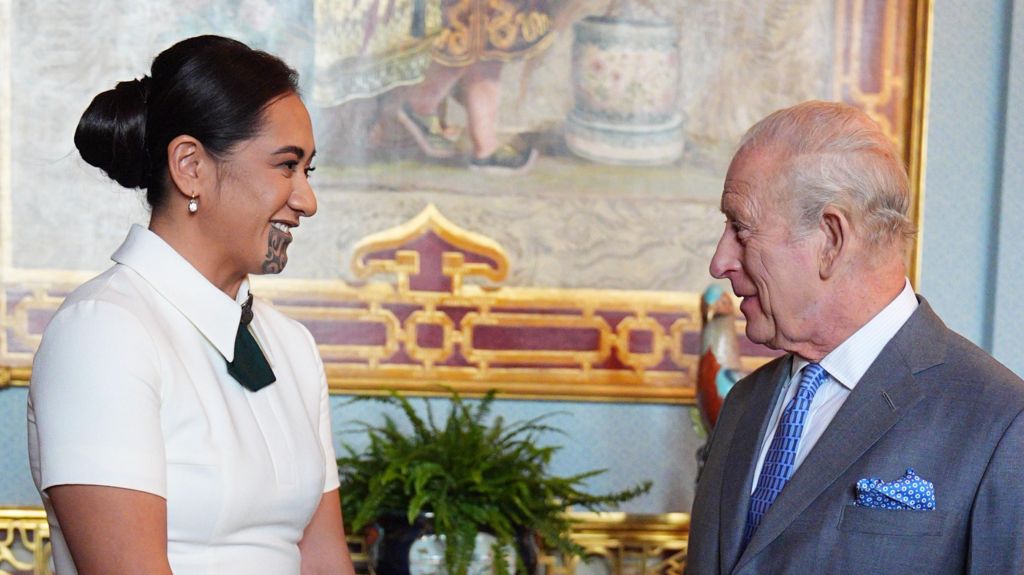
    In a landmark moment marking nearly two centuries of formal ties between Māori people and the British Crown, New Zealand’s newly installed Māori Queen Te Arikinui Kuini Nga Wai hono i te po has held her first official audience with King Charles III at London’s Buckingham Palace. This meeting comes two years after Te Arikinui ascended to the Māori throne in 2024, following the passing of her father Kiingi Tuheitia, the previous Māori monarch.

    Earlier the same week, the Māori Queen was formally welcomed by Prince William at Windsor Castle, in a meeting that covered a broad spectrum of pressing global issues. In an Instagram post following the encounter, Prince William shared that it had been a great pleasure to welcome Te Arikinui and host her at the royal residence. A post-meeting statement from Kīngitanga, the Māori monarchy institution, confirmed that Te Arikinui used the discussion to reaffirm her conviction that indigenous knowledge and long-term, cross-generational environmental stewardship are critical tools to address the world’s most urgent environmental and social challenges.

    Te Arikinui’s ascension in 2024 made her only the second Māori queen in the history of the Kīngitanga movement; the first was her grandmother, Te Arikinui Dame Te Atairangikaahu, who held the role for four decades. The institution of Māori monarchy was first established in the 19th century, when disparate Māori iwi (tribes) united to create a single unifying leadership figure modeled on the European monarchical structure. At its founding, the movement was conceived as a defensive strategy to slow widespread land loss to British colonial settlers and protect Māori cultural identity from erasure. Today, the role remains largely ceremonial, but carries enormous cultural and symbolic weight for Māori communities across New Zealand.

    The historic meeting at Buckingham Palace underscores a bilateral relationship that was first formalized with the 1840 signing of the Treaty of Waitangi, one of the foundational founding documents of modern New Zealand. According to a spokesperson for Te Arikinui, the conversation between the Māori Queen and King Charles III was warm and heartfelt. It included reflections on the passing of Queen Elizabeth II, the late mother of King Charles III, alongside discussions focused on deepening and strengthening the long-standing relationship between the Māori monarchy and the British Crown.

  • US agrees to settle lawsuit that accused an Indian billionaire of hiding an alleged bribery scheme

    US agrees to settle lawsuit that accused an Indian billionaire of hiding an alleged bribery scheme

    Court filings made public Thursday have confirmed that the U.S. government has reached a civil settlement in a high-profile fraud lawsuit against Indian billionaire Gautam Adani and his nephew Sagar Adani, leaders of the global energy conglomerate Adani Green Energy Limited. The case, filed by the U.S. Securities and Exchange Commission (SEC) in late 2024, centers on allegations that the pair misled international investors by hiding a large-scale alleged bribery scheme tied to the company’s massive Indian solar energy project. According to the SEC’s original complaint, the Adanis promised hundreds of millions of dollars in bribes to Indian government officials in exchange for lucrative public contracts that guaranteed inflated rates for energy purchased from the company. At the same time, the conglomerate raised billions of dollars in capital from Wall Street investors, who were falsely assured that the firm maintained a rigorous anti-bribery compliance framework and that senior leadership had committed to no corrupt practices. The SEC asserts these actions directly violated U.S. securities law anti-fraud provisions. Under the terms of the proposed settlement, Gautam Adani will pay $6 million in civil penalties, while Sagar Adani will pay $12 million. Critically, the agreement does not require either defendant to admit guilt to the allegations brought by the SEC. The Adani Group has repeatedly denied all claims since the lawsuit was filed, describing them as entirely baseless, and requests for comment from the Adanis’ legal teams Thursday went unanswered. Alongside the civil settlement, multiple major U.S. news outlets including The New York Times and Bloomberg reported Thursday that the criminal securities fraud and conspiracy charges brought against the pair in a New York federal court in late 2024 are expected to be dropped. Requests for confirmation from prosecutors for the Eastern District of New York have not yet been returned. The impending dismissal of criminal charges follows a sequence of events that many observers see as a clear foreshadowing of the move, starting after former President Donald Trump won a second term in the 2024 U.S. presidential election, an outcome Gautam Adani publicly praised extensively. In March 2025, Trump issued an executive order suspending enforcement of the Foreign Corrupt Practices Act, the federal law that bans U.S.-linked companies from paying bribes to foreign officials to secure business deals. The move immediately led to widespread speculation in Indian business and political circles that the entire Adani prosecution would be derailed. For decades, Gautam Adani has built one of the world’s largest personal fortunes and emerged as one of India’s most powerful business figures. He got his start building a coal business in the 1990s, before expanding the Adani Group into a sprawling conglomerate with holdings across critical sectors including renewable energy, defense, and agriculture. Marketing itself under the slogan “Growth with Goodness,” the group has built one of the world’s largest renewable energy portfolios, totaling more than 20 gigawatts of installed capacity, including a massive solar power plant in the southern Indian state of Tamil Nadu. The firm has publicly committed to investing $70 billion in new clean energy projects by 2032, with a stated goal of becoming India’s largest clean energy producer by 2030. Adani’s career has long been marked by controversy, however. His well-documented close political ties to Indian Prime Minister Narendra Modi and the ruling national government have repeatedly drawn accusations of crony capitalism, with critics claiming he has secured unfair preferential treatment for government contracts, claims the Adani Group has consistently denied. In 2023, U.S.-based short seller Hindenburg Research released a scathing report accusing Adani and his conglomerate of “brazen stock manipulation” and systemic accounting fraud, claims the group dismissed as a malicious set of outdated, discredited, and selective misinformation. This latest U.S. legal action has already had global ripple effects on Adani’s international business: after the original indictment was announced in Brooklyn, Kenya’s president scrapped hundreds of millions of dollars in planned contracts with the Adani Group for airport modernization and energy infrastructure. Adani Green Energy was also forced to withdraw planned wind energy projects from Sri Lanka after the country moved to renegotiate contracted pricing, while a major French energy giant paused all new planned investments in Adani-led projects. Market analysts note that Adani’s decades-long rapid rise to power has been largely driven by his ability to align the Adani Group’s strategic priorities with the policy goals of the Modi government, a dynamic that has kept him at the center of Indian political and economic life even as controversy has followed his career. The impending end of the U.S. criminal case marks a major turning point in the legal saga, though questions about the conglomerate’s business practices and political ties remain unresolved.

  • Can World Cup fuel North America’s soccer boom?

    Can World Cup fuel North America’s soccer boom?

    For generations, North America was widely regarded as the last major untapped market for global soccer. But over the past 30 years, the region’s love affair with the beautiful game has grown at a staggering pace – and the 2026 FIFA World Cup, co-hosted across the United States, Canada and Mexico, is poised to push that expansion to unprecedented heights.

    Any visitor can see the shift firsthand: at Miami’s Nu Stadium, the sparkling new home of Inter Miami CF and global superstar Lionel Messi, stands are packed week in and week out, with crowds brimming over with unbridled enthusiasm. In Los Angeles, sports bars open their doors before dawn for English Premier League kickoffs, drawing packed houses of fans, most speaking with American accents.

    US soccer legend Mia Hamm, who helped lead the American women’s national team to back-to-back World Cup titles in the 1990s, says the transformation still astonishes her as she travels across the country. “You didn’t see that when I was growing up playing,” she told AFP. “It was just the small soccer community… (now) you can go along the street here in Los Angeles, anywhere across the country, people know the players.”

    Hard data confirms Hamm’s on-the-ground observations. According to Daniel Monaghan, a senior analyst at research firm Ampere Analysis, when American sports fans are asked to name their favorite sport, soccer sits comfortably in third place – trailing only the region’s long-dominant American football and basketball. Since at least 2021, when Ampere launched its annual survey, soccer has pulled ahead of the once-untouchable baseball, and that gap widened dramatically last year: 15 percent of respondents named soccer their top sport, compared to just 8 percent for baseball.

    That explosive growth in fan enthusiasm has been matched by a parallel surge in the sport’s financial value across North America. FIFA projects it will generate a record-breaking $11 billion in total revenue from the 2026 World Cup, marking a new high for the global tournament. But the boom in soccer-related revenue was well underway long before the tournament was set to kick off.

    Total spending on media rights for soccer content in the US – covering everything from Major League Soccer (MLS) matches and US national team games to top European and global leagues – has already surpassed that of baseball. Ampere’s data shows that North American soccer audiences skew disproportionately toward higher-income demographics, and they are far more willing to pay premium prices for sports content than fans of many other traditional sports.

    Even domestic league growth has hit new milestones. Data analytics firm Opta reports that 400,000 fans attended MLS’s 2025 opening weekend matches, and the 2024 season drew a total of 12.1 million attendees – a figure that puts MLS second only to the English Premier League for total annual attendance among top-tier global soccer leagues. While transfer fees for MLS clubs still pale in comparison to those of Europe’s elite sides, they have risen sharply in recent years: last year alone, MLS clubs spent a combined $336 million on new player signings.

    Across North America, roughly $11 billion has been invested in new soccer-specific stadiums and elite training facilities over the past decade, a figure that includes massive shared venues built for the 2026 World Cup that also host National Football League games, such as Atlanta’s Mercedes-Benz Stadium. New purpose-built soccer stadiums for top MLS clubs including New York City FC, Chicago Fire FC and the New England Revolution are set to open to fans in the near future.

    The origins of North America’s soccer boom trace all the way back to 1994, when the United States last hosted the FIFA World Cup. At that time, top-tier competitive soccer was still in its infancy in the US, but the 1994 tournament still holds the record for the highest total attendance in World Cup history, drawing more than 3.5 million spectators over the course of the event. As part of the agreement to host the tournament, the US was required to launch a professional top-tier domestic league, laying the critical foundational groundwork for all the growth that followed.

    Around the same time, the US women’s national team claimed gold at the 1996 Atlanta Olympics and won the 1999 FIFA Women’s World Cup on home soil – a watershed moment that sparked widespread interest in soccer across all genders and age groups.

    “A lot of the parents that grew up playing now have kids, and you just see them sharing the love of the game with the next generation,” Hamm explained. “There’s such access to the game now that we didn’t have back then.”

    Today, demand for World Cup content in the US is so strong that the cost of domestic broadcast rights has nearly doubled since the 2022 tournament in Qatar, jumping from around $450 million to $870 million, according to Ampere Analysis. “The US is actually the highest paying market for World Cup rights globally,” Monaghan noted.

    As the 2026 tournament approaches, industry analysts and fans alike are watching closely to see just how much this global event will accelerate the already rapid rise of soccer in North America, cementing its place as one of the region’s most popular sports.

  • Zimbabwe’s vivid English first names carry family histories, from Privilege to Shame

    Zimbabwe’s vivid English first names carry family histories, from Privilege to Shame

    In Zimbabwe, a country in southern Africa with a deep, layered cultural history, naming a newborn child is far more than a simple act of assigning personal identity. Unlike the common practice of picking names for aesthetic or familial tradition in many parts of the world, Zimbabwean naming conventions turn common English words into living, breathing narratives that capture the emotions, struggles, joys and circumstances of a family at the moment a child enters the world.

    For 37-year-old Harare bar manager Privilege Mubani, her name only revealed its full, meaningful backstory as she entered adulthood. Raised never questioning the moniker she carried from birth, Mubani finally asked her father to explain the choice behind her name. What she learned unlocked an unexpected story of stigma, resilience, and quiet gratitude.

    Mubani’s mother had become pregnant before marriage, a status heavily stigmatized in Zimbabwe’s conservative social landscape, where single motherhood is widely frowned upon. Having already resigned herself to a lifetime of unmarried status and public judgment, her mother was surprised when a suitor chose to marry her despite the social stigma attached to her pregnancy. The experience left her feeling redeemed after months of public mockery for carrying a so-called “fatherless” child. “Naming me Privilege was her own expression of gratitude,” Mubani explained with a grin.

    Zimbabwe’s widespread use of English words for given names traces its roots partially to the country’s history as a former British colony, as well as its status as a majority Christian nation, where English remains the official language and the dominant medium of instruction in schools and government operations. But experts explain that the practice of embedding personal and social narrative into names runs much deeper than colonial influence.

    David Chikwaza, a decolonization researcher at Dublin City University’s School of History and Geography, notes that pre-colonial African naming traditions have long carried deep symbolic weight, rooted in the region’s spiritually oriented cultural norms. “Parents would name their child as a way of addressing a societal or a personal issue,” Chikwaza explained. “Colonialism promoted English as a language of sophistication, so Africans simply turned to the English vocabulary for expression, but the meanings remain the same” as they did in pre-colonial naming practices.

    This one-of-a-kind naming culture has often caught the attention of international observers and outsiders. During the 2024 African Cup of Nations soccer tournament, Zimbabwe’s national men’s team went viral on social media worldwide, after users were struck by the striking, meaningful names on the team roster: players including Teenage, Godknows, Divine, Marvellous, Knowledge, Prince and Prosper sparked widespread amusement and fascination on platforms like TikTok, where one user commented she could barely believe the names were real.

    The unusual names have also become a source of comedy for international performers. Learnmore Jonasi, a Zimbabwean comedian who reached the finals of *America’s Got Talent* in 2024, regularly draws laughs from U.S. audiences by joking about his own name and the wide array of unconventional monikers common back home. Beyond Privilege and Learnmore, common names that raise eyebrows abroad include Givemore, Best, Promise, Guarantee, Anxious, Innocent, Confidence, and Hardlife—all of which are unremarkable within Zimbabwe.

    For many Zimbabweans, these narrative names are a source of deep personal pride, and many see their names as a standard to live up to. Lovejoy Mutongwiza, a 33-year-old journalist and chief executive of independent online news outlet 263chat, describes his name as a perfect reflection of his own identity and his parents’ experience. “My mum and dad said they were madly in love and in a happy place in their lives when they conceived me, so they aptly named me Lovejoy,” he said. “It’s a befitting name. I think I have lived up to it because I am rarely angry. I am naturally a bubbly person.”

    Even those with names that outsiders might see as burdensome or negative embrace their monikers as part of their cultural and family heritage. Fifty-one-year-old Shame Chikwana has never felt ashamed of his name, and turned down repeated pressure from his sister to change it to a more conventional name as an adult. “I would never trade it for any other name. I was named after my late grandfather so it’s a heritage I am carrying,” Chikwana said, adding that his parents have never shared why his grandfather received the name. “I hope it stays within the family for generations to come.”

  • Iran war energy shock drives interest in ethanol and other biofuels across hard-hit Asia

    Iran war energy shock drives interest in ethanol and other biofuels across hard-hit Asia

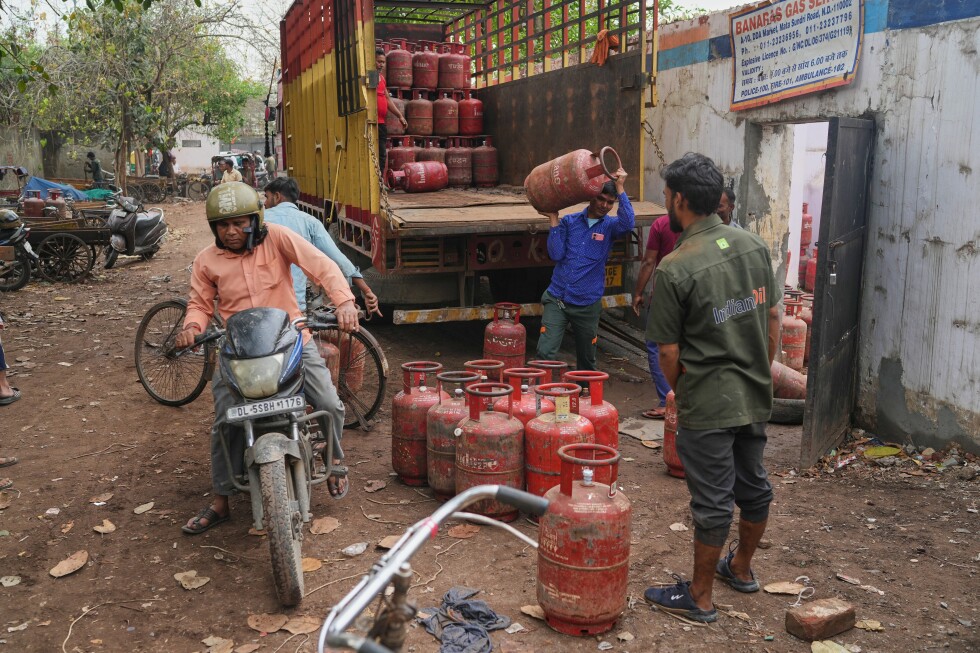
    The ongoing Iran war has triggered crippling energy supply shocks across Asia, with the closure of the Strait of Hormuz — the world’s most critical energy shipping chokepoint — upending fuel access and sending prices soaring for millions of ordinary households. From the crowded streets of New Delhi to the coastal hubs of Southeast Asia, consumers are grappling with steep cost hikes and disrupted daily routines, pushing regional governments to accelerate plans to expand biofuel use as a buffer against global energy volatility.

    In New Delhi, taxi driver Ravi Ranjan, who supports his wife and young child on his driving income, has seen his cooking fuel costs triple amid widespread shipping delays and supply shortages. “I used to pay 1,000 rupees ($11) for a standard LPG cylinder. Now I’m forced to pay 3,000 rupees ($31) on the black market just to put food on the table,” he explained. Halfway across the country in Chennai, advertising executive Sushmita Sankar faces similar strains: her gasoline and cooking fuel bills have skyrocketed, and the 20% ethanol-blended gasoline that is now standard at Indian pumps has cut her car’s fuel efficiency, adding extra time and stress to her already packed schedule of work and childcare.

    “With prices going up and mileage dropping, I now have to spend far more time queuing to fill my tank or track down cooking gas,” Sankar said. “It’s turned a routine chore into another major source of stress.”

    For India, which imports nearly 90% of its crude oil to meet domestic energy demand, the supply disruptions from the Iran war have hit every corner of the economy — from private motorists and home cooks to industrial operations reliant on natural gas. Only the country’s national power grid, powered mostly by coal with a growing share of renewables, has remained largely unaffected. Prime Minister Narendra Modi has publicly called on Indian citizens to make “nationally responsible choices” to conserve fuel, urging more carpooling, greater use of public transport, and cutting back on non-essential international travel.

    To address the long-term risk of global energy shocks, New Delhi has laid out aggressive plans to ramp up domestic ethanol production and increase the share of biofuel blended into national gasoline supplies. The country already hit its 20% ethanol blending target nationwide in 2025, five years ahead of its original schedule, and policymakers are now weighing a push to 27% blending by 2030. In a policy shift that signals a major push for higher biofuel adoption, India’s transport ministry has recently proposed allowing passenger and commercial vehicles to run on blends of 85% ethanol, or even 100% pure ethanol, a move designed to pressure automakers to begin manufacturing engines compatible with these higher concentrations. To protect domestic supplies of feedstock for ethanol production, the government has also banned all sugar exports through at least September, ensuring enough raw material is available to scale up output.

    Proponents frame the policy shift as a win for both energy security and climate action. “Moving toward higher ethanol blends reflects the government’s long-term vision for energy security, lower emissions, and reduced dependence on imported crude oil,” explained Chandra Kumar Jain, president of the Grain Ethanol Manufacturers Association. Data from the Institute for Energy Economics and Financial Analysis (IEEFA) shows the current 20% ethanol blend already cut India’s crude oil imports by 2.5% in 2025.

    But the rapid push for higher crop-based ethanol blending has drawn sharp criticism from analysts, who warn of multiple trade-offs for consumers, food security, and the environment. Drivers already report reduced fuel mileage with existing 20% blends, and ethanol’s lower energy density means higher blends will lead to even greater efficiency losses. Environmental and energy analysts warn that diverting large volumes of corn, rice, and sugarcane — staples of India’s food system — to ethanol production could create competition for arable land, drive up food prices, and worsen existing water stress. Producing just one liter of grain-based ethanol requires between 3,000 and 10,000 liters of water, a major concern in a country already facing widespread groundwater depletion.

    “It’s not clear how higher ethanol blends will perform in existing vehicle engines, and it will take years to scale up manufacturing of new engines built to handle these higher concentrations,” said Shyamasis Das, a senior researcher at the New Delhi-based Centre for Social and Economic Progress. “The broader climate benefits of crop-based ethanol are also very limited when you account for land use change and water consumption. Only ethanol produced from agricultural residues, municipal waste, and used cooking oil — materials that don’t require new land or water inputs — can truly qualify as sustainable.”

    India is not alone in turning to biofuels amid the current energy crisis. Across Southeast Asia, governments are also rolling out new policies to expand biofuel blending to boost energy sovereignty and insulate their economies from global price shocks. In Indonesia, President Prabowo Subianto launched a new program in March that aims to increase biodiesel blending from 40% to 50%, with the country relying on palm oil as its primary biofuel feedstock.

    “We are going in a big way to biofuel,” Subianto said. The policy also helps support Indonesia’s domestic palm oil industry by creating a larger local market for the commodity, but analysts warn that expanded production could drive new land clearing and deforestation of old-growth tropical forests.

    Malaysia, another major palm oil producer, followed suit in April, approving a plan to gradually increase biodiesel blending to 15%, with a future target of 20% under consideration. “Skyrocketing fuel prices from the Iran war have revived political and public support for expanded biofuel use,” said Kuala Lumpur-based energy analyst Ahmad Rafdi Endut. “But higher blends require extensive additional testing, and many consumers are already wary of the reduced fuel efficiency that comes with higher biofuel mixes.”

    Despite the sudden policy momentum driven by the Iran war energy crisis, industry analysts caution that it will still take years for higher ethanol and biodiesel blends to become widely available across Asia. Developing the full supply chain, testing new fuel formulations, and rolling out vehicles compatible with high-concentration blends all require significant lead time. Many analysts also note that biofuels are at best a temporary buffer against energy shocks, arguing that electric vehicles paired with expanded renewable energy generation represent a more sustainable long-term solution for both energy security and climate action.

    “The current crisis has pushed governments to prioritize near-term energy independence, but rapid expansion of crop-based biofuels carries new long-term risks for food security and environmental protection,” said IEEFA analyst Charith Konda. “Moving forward, the focus needs to be on scaling sustainable non-crop biofuels and accelerating the transition to electric vehicles and renewables.”
  • ‘Not bigger’: Angus Taylor refuses to rule out public servant cuts

    ‘Not bigger’: Angus Taylor refuses to rule out public servant cuts

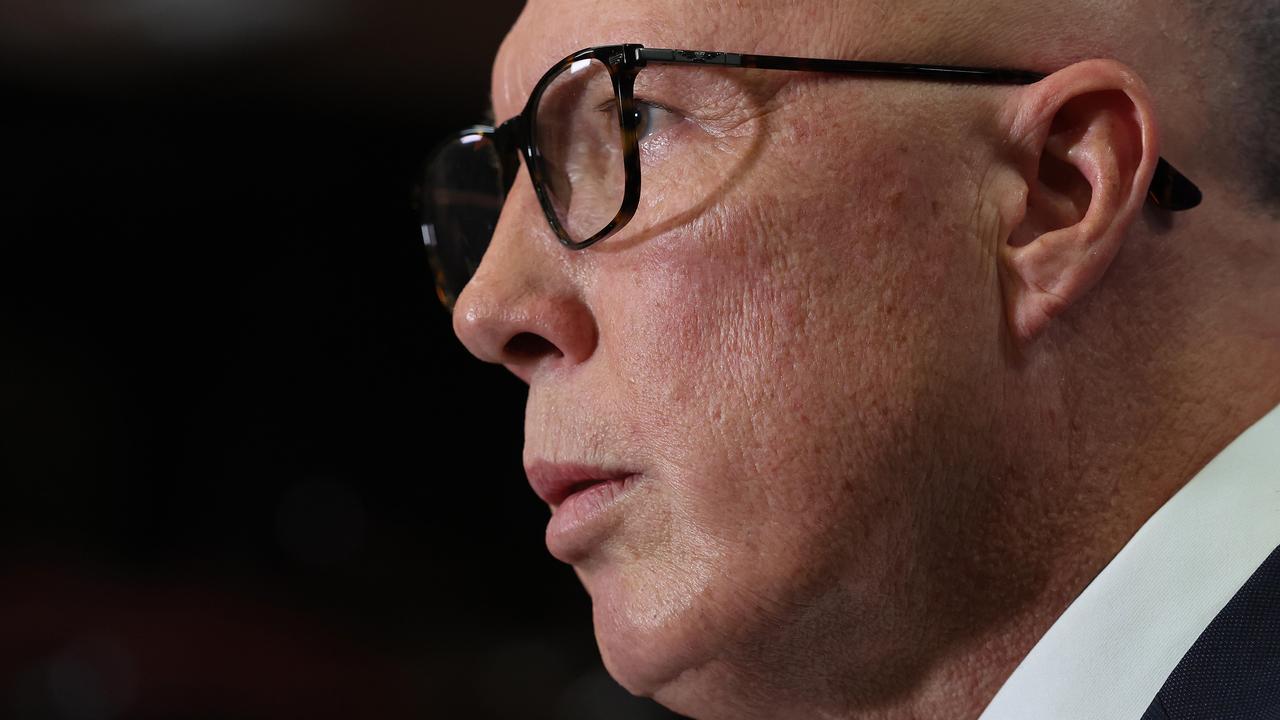
    Australia’s political landscape has been thrown into fresh tension after Shadow Treasurer Angus Taylor faced intense media scrutiny over a key 2025 election campaign pledge that an internal Liberal Party review found directly contributed to Peter Dutton’s electoral defeat.

    The pressure on Taylor comes days after he delivered the Coalition’s budget reply speech on Thursday, where he laid out the opposition’s core platform: reining in what the party frames as out-of-control government spending, rolling back Labor’s tax reforms for housing investors, pushing back against the current government’s clean energy transition agenda, and announcing a series of targeted policy cuts.

    When pressed by reporters in Canberra on Friday about the fate of Australia’s public sector, which has expanded by more than 45,000 full-time roles since the Albanese Labor government took office in 2022, Taylor avoided committing to the controversial public service cuts that Dutton took to the 2025 election.

    “I want to see better government, not bigger government,” Taylor told reporters, framing his party’s proposed savings measures as a means to prevent future income tax hikes for Australian households and rule out new taxes on personal savings and small business operations. He added that a future Coalition administration would end corporate welfare funneled to offshore entities and scrap what he called wasteful “climate bureaucracy” created by the current government.

    When reporters pushed Taylor again to clarify whether the Coalition would cut public service jobs, and whether he would rule out the 40,000-cut target Dutton previously announced, Taylor only confirmed that the party would cap public service growth to avoid forcing tax increases.

    The original pledge of deep public service cuts traces back to Dutton’s early 2025 election campaign, which also included plans to eliminate widespread work-from-home arrangements for public sector employees, a policy modeled on former U.S. President Donald Trump’sDepartment of Government Efficiency (DOGE) and mass public sector layoffs backed by Elon Musk. That policy ultimately backfired spectacularly, according to an internal Liberal Party post-election review that Taylor attempted to suppress.

    The review found that while the initial wave of public sector cuts announced by Trump and Musk’s DOGE garnered some early positive support among Australian voters, public opinion shifted sharply negative in a short period. It noted that Dutton’s decision to launch a shadow government efficiency portfolio modeled directly on Trump’s DOGE, paired with the explicit pledge to cut 40,000 public service jobs and eliminate work-from-home policies, was widely labeled by voters as overly Trump-like and deeply unpopular. The policies were eventually watered down or reversed entirely before polling day, too late to reverse the electoral damage, the review concluded.

    Responding to Taylor’s comments on Friday, current Public Service Minister Katy Gallagher defended the size of the current Australian public service, saying it is “the right size” to meet the needs of Australian communities.

  • Sci-fi or battlefield reality? Ukraine’s bet on swarm drones

    Sci-fi or battlefield reality? Ukraine’s bet on swarm drones

    Four years into Russia’s full-scale invasion of Ukraine, a once-dystopian vision of future warfare – coordinated swarms of AI-powered drones that can communicate with one another and attack targets without direct human control – is moving from science fiction toward potential battlefield reality. Ukraine has positioned itself as a global pioneer in drone warfare, and swarm drone technology has become one of the most discussed and debated innovations in the country’s rapidly evolving defense sector.

    Industry leaders, military officials and defense experts gathered recently at the Drone Autonomy conference, hosted by the Lviv-based defense coalition Iron Cluster at an undisclosed location in the western Ukrainian city to discuss the technology’s progress and future. Military expert Yury Fedorenko emphasized the widespread urgency across Ukraine’s defense community to advance the technology, telling attendees: “No matter who you speak to, they always say: show them to us. Where are they, we want to see!”

    The concept of drone swarms – groups of uncrewed aerial vehicles that can collaborate to complete pre-defined missions independent of constant human input – has sparked a mix of excitement and apprehension across Ukraine’s military and defense circles. Volodymyr, callsign “Colt”, head of civil-military cooperation for Ukraine’s 412th brigade, noted that military stakeholders have awaited the technology for years, saying: “The only question is when it will happen.”

    Ukrainian military and defense industry representatives confirm that Kyiv has made tangible progress in developing the widely discussed technology, though many agree full mass deployment remains years away. Even so, the strategic benefits of fully operational drone swarms are clear for Ukraine: a small team of operators would be able to launch dozens or hundreds of attack drones in a single coordinated wave, overwhelming Russian air defense systems and helping counterbalance Moscow’s significant advantage in frontline manpower. Most importantly, proponents argue, the technology would reduce the number of Ukrainian soldiers exposed to lethal frontline danger.

    “The main purpose is to save the lives of our servicemen,” Andrii Lebedenko, deputy commander-in-chief of Ukraine’s armed forces, told AFP. “Today we have such projects. They’re not large-scale, but they’re growing… mass deployment is possible in the coming years.”

    Ukraine’s Defense Minister Mykhailo Fedorov has made advancing cutting-edge military technology a top priority to fend off Russian attacks, including the launch of the country’s Defense AI Center A1. Danylo Tsvok, head of the center, confirmed that swarm drone systems are currently in the testing phase, adding that many details of the program remain confidential for operational security.

    One of the leading players in the sector is Swarmer, a Ukrainian-American defense firm that listed on the U.S. Nasdaq exchange earlier this year. CEO Alex Fink told AFP the company has deployed early-generation swarm technology on frontline combat operations since April 2024. Its current systems allow multiple drones to autonomously navigate to a target area, after which either human pilots take over for final targeting, or operators select targets and the drones complete the strike independently. Fink stressed that human control remains a core safeguard, saying: “It’s definitely not at the point where we can trust technology to make strategic decisions or even make tactical decisions about what’s a valid target. We don’t want our systems to make that decision. We want the humans to be in charge.”

    Despite widespread enthusiasm, some defense experts have expressed skepticism that the technology is as far along as proponents claim, arguing that the concept of drone swarms has been overhyped largely because of its association with popular sci-fi storytelling. Yaroslav Azhnyuk, head of Ukrainian defense firm Fourth Law which specializes in drone autonomy, noted that full autonomous drone capability extends far beyond just coordinated swarms, covering navigation, target identification, and strike execution for all drone types. He compared the current focus on swarms to obsessing over the italic text button in Microsoft Word instead of developing the entire software platform.

    Azhnyuk framed the global race for full drone autonomy as a defining competition of the current era, comparing it to the World War II-era Manhattan Project that developed the first nuclear weapons. “Imagine if either the Nazis or the Russians got the nuclear bomb first. That would have been a very, very different world,” he said. “Now imagine if they get the full autonomy first.”

    That threat is not an abstract one: Russia has already identified AI and drone technology as top military priorities, and a 2026 report from Center for Strategic and International Studies expert Kateryna Bondar found that Russia has “likely fielded a fully autonomous unmanned system in combat”. For Ukrainian stakeholders, the stakes of the race could not be higher. Anton Melnyk, co-founder of defense industry investment firm MITS Capital, put it bluntly: “Either we will achieve this – the Armed Forces of Ukraine, together with various NATO partners – or the enemy will.”

  • Man City battle ‘fatigue’ ahead of FA Cup final clash with troubled Chelsea

    Man City battle ‘fatigue’ ahead of FA Cup final clash with troubled Chelsea

    The stage is set at Wembley Stadium for one of the most anticipated domestic showdowns on the English football calendar: Saturday’s FA Cup final, where a fixture-fatigued Manchester City will lock horns with a Chelsea side desperate to rescue a deeply turbulent 2024-25 season.

    For Pep Guardiola’s treble-chasing City, the FA Cup clash comes amid a relentless stretch of matches that has left the squad stretched thin. Guardiola’s men remain locked in a frantic last-gasp race to overtake Arsenal at the top of the Premier League, sitting just two points adrift of the league leaders with just two games remaining. After a midweek Premier League fixture against Crystal Palace on Wednesday — a match Guardiola heavily rotated to preserve fitness, resulting in a comfortable 3-0 win — City will face just three days of recovery before returning to league action at Bournemouth immediately after the final.

    In contrast, Chelsea have enjoyed a full week of uninterrupted training at their Cobham base, a gap that Guardiola warned could hand the Blues a crucial physical edge this weekend. “After the FA Cup, it is Bournemouth, we play every three days. Chelsea have a week at home training, preparing the final,” Guardiola told reporters ahead of the trip to London. “We have to travel to London. They will be at home with their wife and kids. So that is fatigue and fatigue and fatigue.”

    To mitigate the physical toll of their crowded schedule, Guardiola opted to leave key first-team players including Erling Haaland, Jeremy Doku and Rayan Cherki on the bench against Crystal Palace, turning to fringe options Savinho, Antoine Semenyo and Omar Marmoush who delivered impressive performances in the win. “I have full confidence in all the squad, including the ones that didn’t play against Palace. They are so good,” Guardiola said. “I thought we needed more energy. [Savinho, Semenyo and Marmoush] were really good. Now we rest and focus on the final.”

    This weekend marks a historic milestone for City, who will become the first club to reach four consecutive FA Cup finals. However, their recent form in the showpiece has been underwhelming, with back-to-back final defeats in 2023 to Manchester United and 2025 to Crystal Palace. A third FA Cup title for Guardiola — following wins in 2019 and 2023 — would also mark his 20th major trophy since taking charge at the Etihad a decade ago, adding another chapter to his already legendary tenure at the club. The Catalan’s future remains the subject of widespread speculation, with his current contract set to expire at the end of next season and no public indication yet of whether he will extend his stay. For now, though, Guardiola says he is focused only on the occasion. “It is a pleasure to go to the cathedral of English football to play the final. Hopefully the result will be better than the last two times,” he said.

    Across the dressing room, Chelsea’s road to Wembley has been defined by off-pitch chaos, mirroring a turbulent season that has seen the club go through three different permanent and interim managers since the turn of the year. Interim boss Calum McFarlane, a former Chelsea youth team coach, stepped into the top job in April following the sacking of Liam Rosenior after just 106 days in charge. This is already McFarlane’s second interim stint of the season: he took charge temporarily after Enzo Maresca left the club in January, and famously held City to a 1-1 draw at the Etihad in that spell, a result that dented City’s 2024-25 title charge. Remarkably, McFarlane has not been linked with the permanent job, leaving him in the unprecedented position of leading a major European club in a cup final with no expectation of keeping the role long-term.

    McFarlane’s rapid appointment is just one symptom of the instability that has rocked Chelsea since American ownership group BlueCo completed their takeover from Roman Abramovich in 2022. The Blues have lurched from crisis to crisis on the pitch this term, entering the FA Cup final on the back of a seven-game winless run in the Premier League that has ended all hopes of qualifying for next season’s Champions League. For a Chelsea side that has not lifted a domestic trophy since their 2018 FA Cup win, Saturday’s final represents the only chance to salvage any pride from a disastrous campaign. A win would end an eight-year domestic trophy drought, even if it can only partially heal the wounds of a traumatic season for the West London club.

  • CIA director visits Cuba as communist island runs out of oil

    CIA director visits Cuba as communist island runs out of oil

    In an unprecedented development that marks a notable shift in high-level contact between Washington and Havana, CIA Director John Ratcliffe traveled to Cuba for meetings with senior Cuban intelligence officials this Thursday, even as the island nation formally announced it has exhausted its entire oil reserves amid a deepening U.S.-imposed fuel blockade.

    The Central Intelligence Agency, which has long been at the center of more than six decades of tense geopolitical rivalry between the two countries, confirmed the visit following an official announcement from the Cuban government. Images shared by the agency on the social platform X show Ratcliffe seated across from Ramon Romero Curbelo, head of intelligence for Cuba’s Interior Ministry, alongside other senior Cuban representatives; the faces of several additional attendees were blurred for security purposes.

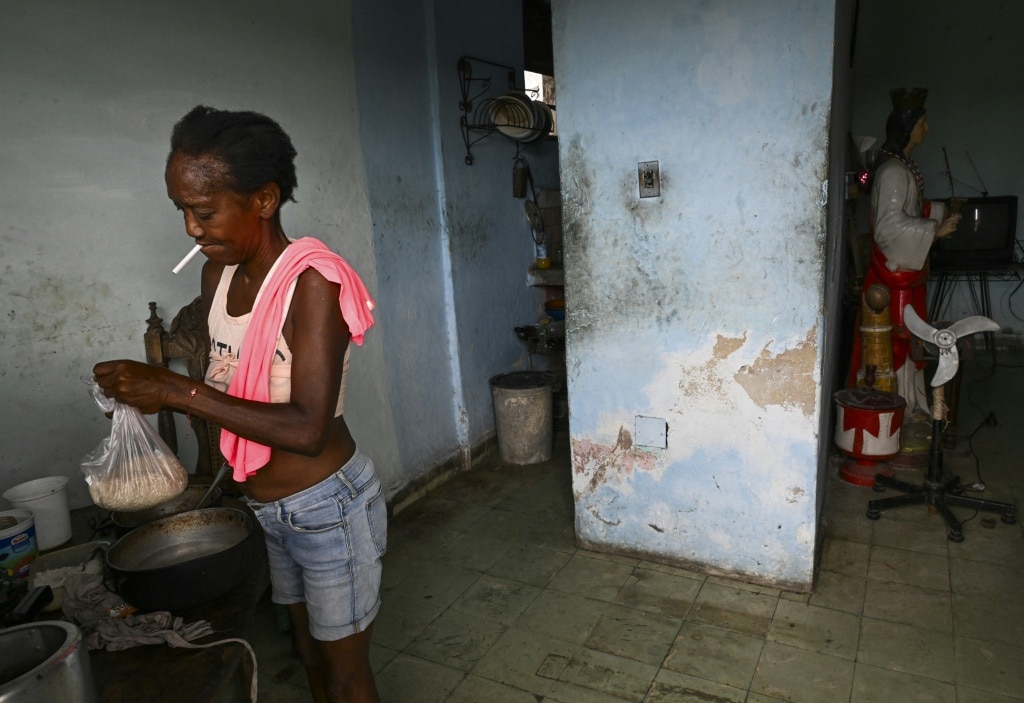
    The high-stakes meeting unfolds against a backdrop of rapidly escalating crisis in bilateral relations, with widespread, sustained power outages crippling daily life across Cuba, a crisis directly triggered by the Trump administration’s strict fuel trade blockade. Only one oil tanker from Russia, Cuba’s long-standing strategic ally, has successfully reached the island in recent months, and even that limited supply has now been completely exhausted, Cuban Energy Minister Vicente de la O Levy confirmed in an interview with state television.

    “The impact of the blockade is indeed causing us significant harm…because we are still not receiving consistent fuel supplies,” de la O Levy stated.

    For years, the Trump administration has maintained an explicit goal of forcing regime change in Cuba, cutting off most economic channels and tightening trade restrictions. Recent reporting from CBS News, citing anonymous senior U.S. officials, also revealed that the administration is moving forward with plans to indict 94-year-old Raúl Castro, the former Cuban leader and brother of late revolutionary icon Fidel Castro.

    Despite the deep underlying tensions, Cuban authorities framed Ratcliffe’s visit as a constructive opportunity to de-escalate friction between the two nations. In an official government statement, the meeting was characterized as taking place “in a context marked by the complexity of bilateral relations, with the aim of contributing to the political dialogue between both nations.”

    Cuba used the dialogue to firmly reject long-standing U.S. accusations, stating that the exchanges “made it possible to demonstrate categorically that Cuba does not constitute a threat to U.S. national security, nor are there any legitimate reasons to include it on the list of countries that allegedly sponsor terrorism.” The statement also pushed back against recent claims of unauthorized Chinese military activity on Cuban soil, emphasizing: “Cuba has never supported any hostile activity against the United States, nor will it permit actions against any other nation to be carried out from Cuba.”

    The current energy emergency is the result of a series of U.S. actions that have cut off Cuba’s last remaining major economic lifelines. In January, U.S.-backed forces removed Venezuelan strongman Nicolás Maduro from power, ending the discounted oil shipments that sustained Cuba’s economy for years, and a full fuel blockade was enforced immediately after. U.S. Secretary of State Marco Rubio has recently reiterated a $100 million humanitarian aid offer, but with a strict condition that all assistance be distributed by the Catholic Church, completely bypassing the sitting Cuban government.

    Cuban President Miguel Díaz-Canel has pushed back on that framework, calling on Washington to end the decades-old trade embargo instead. “The damage could be eased in a much simpler and faster way by lifting or relaxing the blockade, since it is known that the humanitarian situation is coldly calculated and induced,” Díaz-Canel wrote in a post on X.

    Remarkably, even amid soaring tensions, formal intergovernmental discussions have continued. A high-level diplomatic meeting was held in Havana on April 10, marking the first time a U.S. government plane has landed in the Cuban capital since the re-opening of diplomatic relations in 2016.

    On the ground, the energy crisis has sparked growing public discontent. On Thursday, eastern Cuba was hit by a full national blackout, the latest in a string of widespread outages that have left millions without power for extended stretches. Power was partially restored to some regions later in the day, but rolling outages continue across most of the island.

    AFP collected on-the-ground accounts confirming that small, spontaneous protests have broken out in residential neighborhoods across Havana. On Wednesday evening, residents of the San Miguel del Padrón suburb demonstrated by banging pots and pans, a traditional form of public protest in Cuban culture. Similar small demonstrations were reported in multiple other neighborhoods across the capital. In the western Havana district of Playa, residents chanted “Turn on the lights!” as they gathered to express their frustration.

    Data compiled by AFP shows that Cuban power infrastructure is now facing record generation shortfalls, with blackouts stretching on for 12 hours or more in most regions. On Tuesday alone, 65 percent of the country’s territory was without power simultaneously.

    Speaking to Fox News, Rubio doubled down on the administration’s stance, arguing that the crisis confirms the failure of Cuba’s current economic and political system. “It’s a broken, nonfunctional economy, and it’s impossible to change it. I wish it were different,” Rubio said. “I don’t think we’re going to be able to change the trajectory of Cuba as long as these people are in charge.”

  • Coalition would ‘rip the guts out’ of social housing but mum on tax costs, Albanese claims

    Coalition would ‘rip the guts out’ of social housing but mum on tax costs, Albanese claims

    Australia’s political landscape has erupted into fresh tensions over the 2024 federal budget, with Prime Minister Anthony Albanese launching a scathing attack on the federal opposition Coalition’s policy agenda, which he claims will dismantle critical affordable housing initiatives while refusing to disclose the full cost of its planned tax cuts.

    The verbal clash followed Opposition Treasurer Angus Taylor’s Thursday budget reply speech, where he outlined what he framed as ‘generational’ tax reform for Australia. The centrepiece of Taylor’s proposal is indexing the nation’s two lowest income tax brackets to inflation to curb the impact of bracket creep – the process that pushes workers into higher tax brackets as wages rise with inflation, acting as a stealth tax increase. The plan also includes repealing Labor’s recently passed changes to capital gains tax and negative gearing rules, with the indexation policy set to expand to higher tax brackets in coming years.

    Speaking to media on Friday, Albanese slammed the Coalition for failing to put a clear price tag on the reform, noting Taylor had only stated the total cost would ‘depend on inflation’ without offering a concrete figure. He went further to accuse the opposition of directly targeting Australia’s affordable housing supply: his core criticism is that the Coalition plans to scrap Labor’s signature Housing Australia Future Fund, a AUD 10 billion initiative designed to accelerate the construction of desperately needed social and affordable housing across the country. ‘He doesn’t say how much these measures would cost but could say that he would rip the guts out of essential housing programs,’ Albanese told reporters.

    Drawing a clear distinction between his government’s priorities and the opposition’s, Albanese argued that Taylor and the Coalition are singularly focused on countering the rising electoral threat of One Nation, rather than advancing national development. ‘We’re interested in building our nation. That’s the difference,’ he said. Albanese dismissed the entire Coalition tax plan as unserious, adding ‘Angus Taylor has no solutions. He comes up with a whole range of things without any costings that can’t be taken seriously.’

    For his part, Taylor defended the Coalition’s proposal in an interview with the ABC, arguing that targeting lower tax brackets delivers broad benefits to all working Australians, regardless of their total income. ‘We think the most important tax brackets are the lower ones which by the way benefits absolutely everybody. Everyone gets access to that, to those lower tax brackets, even if you’re in higher tax brackets,’ he explained. Taylor pushed back against criticism of the staggered rollout of indexation, noting that responsible budget management requires a phased approach, and claimed that savings from cutting what the Coalition calls Labor waste would offset the cost of the tax changes.

    He argued that bracket creep under Labor has eroded living standards for working and middle-income Australians, calling the policy a ‘sneaky tax’ that allows the government to expand its size without explicit public approval. Beyond tax reform, Taylor also announced a suite of other Coalition policies if elected: a AUD 50,000 instant asset write-off for small businesses with annual turnover below AUD 1 million, a policy to tie net permanent migration levels directly to annual housing completions to ease housing market pressure, and a restriction blocking new permanent residents from accessing social welfare.

    The budget response was not limited to the major parties: One Nation leader Pauline Hanson delivered her own separate reply to the Senate on Thursday night, echoing criticism of bracket creep as a stealth tax that erodes working Australian incomes. Hanson argued that Labor’s AUD 250 Working Australians Tax Offset would be completely wiped out by bracket creep driven by high inflation, calling the policy a political trap designed for future elections. One Nation has put forward its own proposals to end bracket creep via full indexation of all tax brackets, and to remove Goods and Services Tax from insurance and housing construction materials to ease cost of living pressures.

    The political clash comes as the Coalition faces growing pressure from the resurgent One Nation, which is siphoning support from conservative voters ahead of the next federal election, making the opposition’s policy positioning on cost of living and housing a critical electoral battleground.