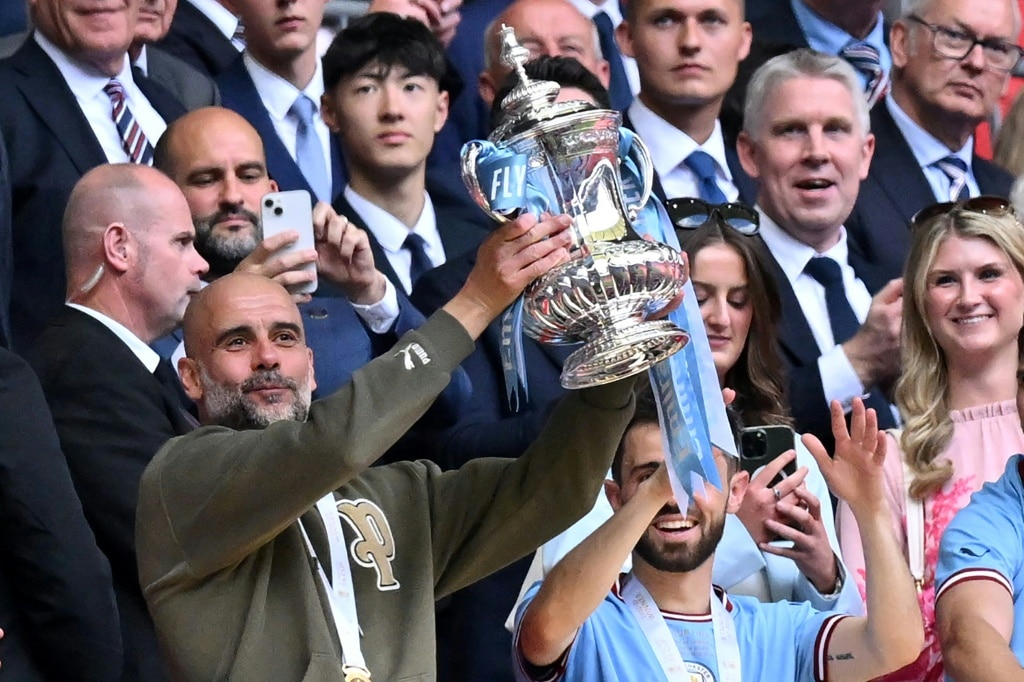
The stage is set at Wembley Stadium for one of the most anticipated domestic showdowns on the English football calendar: Saturday’s FA Cup final, where a fixture-fatigued Manchester City will lock horns with a Chelsea side desperate to rescue a deeply turbulent 2024-25 season.
For Pep Guardiola’s treble-chasing City, the FA Cup clash comes amid a relentless stretch of matches that has left the squad stretched thin. Guardiola’s men remain locked in a frantic last-gasp race to overtake Arsenal at the top of the Premier League, sitting just two points adrift of the league leaders with just two games remaining. After a midweek Premier League fixture against Crystal Palace on Wednesday — a match Guardiola heavily rotated to preserve fitness, resulting in a comfortable 3-0 win — City will face just three days of recovery before returning to league action at Bournemouth immediately after the final.
In contrast, Chelsea have enjoyed a full week of uninterrupted training at their Cobham base, a gap that Guardiola warned could hand the Blues a crucial physical edge this weekend. “After the FA Cup, it is Bournemouth, we play every three days. Chelsea have a week at home training, preparing the final,” Guardiola told reporters ahead of the trip to London. “We have to travel to London. They will be at home with their wife and kids. So that is fatigue and fatigue and fatigue.”
To mitigate the physical toll of their crowded schedule, Guardiola opted to leave key first-team players including Erling Haaland, Jeremy Doku and Rayan Cherki on the bench against Crystal Palace, turning to fringe options Savinho, Antoine Semenyo and Omar Marmoush who delivered impressive performances in the win. “I have full confidence in all the squad, including the ones that didn’t play against Palace. They are so good,” Guardiola said. “I thought we needed more energy. [Savinho, Semenyo and Marmoush] were really good. Now we rest and focus on the final.”
This weekend marks a historic milestone for City, who will become the first club to reach four consecutive FA Cup finals. However, their recent form in the showpiece has been underwhelming, with back-to-back final defeats in 2023 to Manchester United and 2025 to Crystal Palace. A third FA Cup title for Guardiola — following wins in 2019 and 2023 — would also mark his 20th major trophy since taking charge at the Etihad a decade ago, adding another chapter to his already legendary tenure at the club. The Catalan’s future remains the subject of widespread speculation, with his current contract set to expire at the end of next season and no public indication yet of whether he will extend his stay. For now, though, Guardiola says he is focused only on the occasion. “It is a pleasure to go to the cathedral of English football to play the final. Hopefully the result will be better than the last two times,” he said.
Across the dressing room, Chelsea’s road to Wembley has been defined by off-pitch chaos, mirroring a turbulent season that has seen the club go through three different permanent and interim managers since the turn of the year. Interim boss Calum McFarlane, a former Chelsea youth team coach, stepped into the top job in April following the sacking of Liam Rosenior after just 106 days in charge. This is already McFarlane’s second interim stint of the season: he took charge temporarily after Enzo Maresca left the club in January, and famously held City to a 1-1 draw at the Etihad in that spell, a result that dented City’s 2024-25 title charge. Remarkably, McFarlane has not been linked with the permanent job, leaving him in the unprecedented position of leading a major European club in a cup final with no expectation of keeping the role long-term.
McFarlane’s rapid appointment is just one symptom of the instability that has rocked Chelsea since American ownership group BlueCo completed their takeover from Roman Abramovich in 2022. The Blues have lurched from crisis to crisis on the pitch this term, entering the FA Cup final on the back of a seven-game winless run in the Premier League that has ended all hopes of qualifying for next season’s Champions League. For a Chelsea side that has not lifted a domestic trophy since their 2018 FA Cup win, Saturday’s final represents the only chance to salvage any pride from a disastrous campaign. A win would end an eight-year domestic trophy drought, even if it can only partially heal the wounds of a traumatic season for the West London club.