博客

  • No new funding under Albanese’s affordable housing scheme in 2026-27, inquiry told

    No new funding under Albanese’s affordable housing scheme in 2026-27, inquiry told

    Australia’s deepening national housing affordability crisis has hit a new stumbling block, with the Albanese government’s cornerstone social and affordable housing initiative falling well behind its initial delivery timeline, a recent Senate inquiry has heard.

    Launched as a signature policy to address growing intergenerational housing inequality, the $10 billion Housing Australia Future Fund (HAFF) was designed to deliver 40,000 new social and affordable homes over five years starting in 2022, with completion targeted by mid-2029. The fund operates as a dedicated investment vehicle, issuing grants and low-interest loans to community housing providers and developers to deliver housing accessible to low-income and vulnerable households.

    Scott Langford, chief executive of Housing Australia, the government body overseeing the scheme, outlined the latest delivery progress to the Senate inquiry on Monday. As of the latest update, only 1,432 homes across the country have been completed – just over 3.5% of the total 40,000 target. Of those finished homes, 979 were completed in the current 2025-26 financial year, and 670 were classified as turnkey projects, where developers complete construction before handover to funding recipients. Langford confirmed that the agency does not directly purchase existing homes, but he was unable to immediately provide a breakdown of how many completed units were refurbished existing properties rather than entirely new builds, saying he would release full data at a later date.

    The most significant delay confirmed during the hearing involves the third round of HAFF funding, which opened for applications from industry and community groups in January this year. Langford told the inquiry that contracting for this round of funding has “slipped” from its original timeline, with contracts no longer expected to be finalized before the end of the current financial year. Despite the delay, Langford emphasized that all funding for round 3 will be fully allocated by the 2026-27 financial year, adding that the extended timeline will actually give the agency more time to assess proposals and ensure projects have sufficient runway for delivery.

    When pressed on whether the delay would put the overall 40,000-home target at risk, Langford maintained that Housing Australia remains fully committed to hitting the target by 2029. “We are coming towards the end of the second year of a five-year delivery window, and with funding commitments to be made in the second half of this financial year, we see a clear pathway to completion of all those projects,” he said, noting that the delay would not have a material impact on overall delivery and is actually a suitable adjustment to keep the project on track. To date, funding has already been contracted for 18,650 homes across the first two rounds of the scheme.

    The latest update on HAFF comes as Australia faces intensifying public and political pressure to tackle the country’s decade-long housing affordability crisis, which has pushed home ownership far out of reach for millions of would-be buyers and driven record rental prices. The Albanese government has positioned HAFF as its core policy to boost housing supply, and recently expanded its housing agenda with new proposed reforms to capital gains tax (CGT) and negative gearing, aimed at curbing excessive investor activity and freeing up more stock for first-home buyers.

    The conservative Coalition opposition has taken a sharply different approach to the housing crisis, promising to scrap both the planned CGT and negative gearing reforms and abolish the HAFF entirely if elected. Instead, the opposition has proposed cutting planning red tape to speed up construction and adjusting migration intake levels to be tied directly to the number of new housing completions each year.

    Advocacy groups have offered mixed reactions to the government’s recent policy changes. Maiy Azize, national spokesperson for the housing campaign group Everybody’s Home, told the inquiry that her organization is broadly supportive of the proposed CGT and negative gearing changes. She noted that the reforms are not retrospective, a key win for policy stability, but added that they do not grandfather new investments, which will help deliver long-term change to the market. Azize described CGT reform as the most impactful of the proposed changes, but raised questions about whether the adjustments will be enough to shift investor behaviour after 25 years of the existing policy framework becoming entrenched in Australia’s property market. “There is a strong case to be made for doing more on negative gearing,” Azize said, pointing out that the current changes heavily protect existing investors and leave room for further reform to free up more housing stock for owner-occupiers.


  • What to Stream: John Krasinski, ‘Ladies First,’ Rod Stewart, Brooke Shields and a ‘Lego Batman’ game

    What to Stream: John Krasinski, ‘Ladies First,’ Rod Stewart, Brooke Shields and a ‘Lego Batman’ game

    As streaming platforms continue to flood audiences with new content every week, Associated Press entertainment writers have curated a handpicked selection of the most notable new films, series, music releases, and video games hitting digital platforms between May 18 and 24. From long-awaited franchise returns to genre-bending original stories, this week’s lineup offers something for every type of viewer and gamer.

    ## New Films Premiering This Week
    Four years after wrapping up his hit Amazon Prime Video series adaptation of Tom Clancy’s iconic spy franchise, John Krasinski is pulling the CIA analyst’s suit back on for the new standalone feature *Jack Ryan: Ghost War*, premiering Wednesday on Prime Video. Marking the sixth theatrical/streaming entry and third overall reboot of the decades-long Jack Ryan franchise, the new film also brings back fan-favorite series regulars Wendell Pierce, Michael Kelly, and Betty Gabriel to round out the core cast.

    Over on Netflix, the sharp gender satire *Ladies First* debuts Friday, May 22, headlined by Sacha Baron Cohen and Rosamund Pike. Cohen steps into the role of an unapologetic chauvinist who wakes up one morning to find himself trapped in a parallel reality where women hold all the social and political power. The supporting cast is packed with acclaimed talent, including Charles Dance, Emily Mortimer, and Richard E. Grant.

    Hulu is adding Oscar-nominated animated fantasy *Arco* to its lineup this Friday, May 22. A vivid, rainbow-hued French time-travel adventure, the film follows 12-year-old Arco, who lives in the distant year 2932, only to accidentally warp back to 2072. There, he befriends a young girl growing up in a world reshaped by extreme climate disaster, where robots handle most child-rearing duties. In an earlier assessment, AP film critics praised the feature as a whimsical, dreamlike parable that “directly confronts ecological apocalypse and yet still finds a thrillingly optimistic note to end on.”

    Quentin Tarantino’s unified cut of his two-part revenge epic, *Kill Bill: The Whole Bloody Affair*, makes its streaming debut Friday, May 22 on Peacock. The reworked film merges *Kill Bill Vol. 1* and *Kill Bill Vol. 2* into a single continuous narrative, adding a previously cut 7.5-minute animated sequence that was omitted from the original standalone releases after the project was split in two back in the early 2000s.

    ## New Music Releases to Stream
    With the Grammy Awards set to move their annual broadcast to ABC starting next year, CBS and the Recording Academy are celebrating one last collaboration this week with *Forever Young: A Grammy Salute to Rod Stewart*, a two-hour television special airing Tuesday on CBS. Blending live concert performances, intimate new interviews, and never-before-seen archival and behind-the-scenes footage, the special is a must-watch for any fan of the iconic British rock star. Paramount+ Premium subscribers can stream the special live or on-demand the same day, while those on the Essential tier will be able to watch it starting Wednesday.

    Acclaimed British singer-songwriter Maisie Peters expands her discography this week with the release of her new folk-pop album *Florescence*, out Friday. Peters, known for her sharp, intimate storytelling, leans into themes of new love across the album’s tracklist, creating a warm, relatable soundtrack that will appeal both to long-time fans and new listeners drawn to melodic, heartfelt pop.

    Indie rock duo Lowertown — made up of Atlanta-born, New York-based collaborators Olivia Osby and Avsha Weinberg — release their most polished and compelling work to date this Friday with *Ugly Duckling Union*, out via their own Summer Shade Records. Early in their career, the pair built a following as a lo-fi bedroom pop act heavily influenced by indie cult hero Alex G, signed to Dirty Hit Records, the label behind The 1975. The new record finds the duo refining their sound: hook-driven tracks like the standout love song “I Like You A Lot” trade scrappy lo-fi edges for catchy, accessible melodies, while experimental cuts like “Big Thumb” lean into stream-of-consciousness folk-jazz arrangements featuring harmonica and 12-string guitar. Narrative tracks like “Worst Friend” play to the pair’s chemistry, with Osby and Weinberg trading verses to amp up emotional impact. The release is already being tipped as one of the best indie rock records of 2024.

    ## New Streaming Series to Watch
    Acorn TV’s new six-episode murder mystery *You’re Killing Me* premieres Monday, starring Brooke Shields as a beloved novelist who teams up with a true crime podcaster to unravel a small-town killing.

    Emmy winner Tatiana Maslany leads the new Apple TV+ original *Maximum Pleasure Guaranteed*, which drops its first two episodes Wednesday. Maslany plays a recently divorced woman down on her luck who witnesses a violent crime unfold in real time over a webcam feed, with Jake Johnson of *New Girl* fame co-starring as her ex-husband.

    *Stranger Things* creators the Duffer Brothers are stepping into a new genre as executive producers for Netflix’s *The Boroughs*, debuting Thursday. Leaving behind the teen-focused supernatural drama of their hit Netflix series, the Duffer Brothers’ new project centers on a very different group of heroes: residents of a quiet, picturesque retirement community who band together when monstrous threats emerge in their small town. The star-studded cast includes Geena Davis, Bill Pullman, Alfred Molina, Alfre Woodard, and Denis O’Hare.

    Lena Waithe’s beloved Chicago-set drama *The Chi* returns for its eighth and final season this Friday, May 22 on Paramount+. The long-running coming-of-age series has followed a group of residents on Chicago’s South Side for nearly a decade, exploring how they navigate systemic racism, community violence, and the fight to build better lives for themselves and their families.

    ## New Video Games to Play This Week
    The most ambitious Lego Batman title ever made, *Lego Batman: Legacy of the Dark Knight*, launches Friday, May 22 on PlayStation 5, Xbox Series X/S, and PC. Developed by TT Games, a studio long known for balancing playful humor with heartfelt love for the DC franchise, the new release acts as a full career retrospective for the Caped Crusader, pulling inspiration from 80 years of Batman comics, films, and television shows. Players will face off against classic Batman villains including the Joker, Penguin, Two-Face, and Bane, and can even team up with a friend in co-op mode to play as Robin, Batgirl, or Catwoman. The open-world version of Gotham City built for the game is the studio’s largest and most detailed to date.

    Nintendo’s iconic dinosaur hero Yoshi headlines a new family-friendly adventure for the Switch 2, *Yoshi and the Mysterious Book*, launching Thursday. The game kicks off when Yoshi stumbles upon a talking encyclopedia named Mr. E, where every two-page spread opens into a brand new explorable world for Yoshi to bounce through. Staying true to classic Yoshi gameplay, the hero can swallow enemies with his long tongue and carry friendly creatures on his back to borrow their unique abilities. While the game is designed specifically for younger players, the vibrant, lush animation style is sure to appeal to adult players as well.

    Microsoft’s open-world racing franchise *Forza Horizon 6* hits Xbox Series X/S and PC this Tuesday, bringing the beloved series to Japan, one of the world’s most iconic destinations for car culture. The new entry features a diverse range of terrain, from winding mountain roads and coastal coastal trails to the neon-lit city streets of Tokyo. Beyond hundreds of on-road and off-road races, players can complete side activities including stunt challenges, food delivery missions, and collectible hunts for fast-food mascots — even a surprise giant robot encounter is hidden across the map. With 550 real-world licensed cars available to collect and upgrade, completionists will have dozens of hours of content to enjoy filling out their garages.

  • ASX falls to seven-week low, miners and industrials main draggers

    ASX falls to seven-week low, miners and industrials main draggers

    A sharp downturn has dragged Australia’s benchmark sharemarket to its lowest point in seven weeks, driven by skyrocketing global crude oil prices that have punished oil-reliant industries and triggered widespread selloffs across multiple blue-chip and mid-cap stocks on Monday.

    The S&P/ASX 200 closed the trading session at 8,505.3 points, marking a 1.45% drop that was twice as steep as pre-market futures had forecast. Out of the benchmark index’s 11 industry sectors, only energy managed to end the day in positive territory, while materials and industrial firms recorded the largest losses. The broader All Ordinaries index followed a similar trajectory, falling 1.52% for the day.

    Multiple individual stocks suffered dramatic single-day declines, driven by company-specific challenges alongside broader market headwinds. Pallet and supply chain giant Brambles led the blue-chip losses, plummeting 20.2% after issuing an $84 million revenue downgrade. The company disclosed that widespread labor shortages have left it unable to repair and refurbish pallets to the strict specifications required for automated robotic handling systems – robots cannot accommodate splintered, chipped, or bent pallets, disrupting Brambles’ core CHEP operations. Brambles is the latest in a string of major Australian blue chips, including Cochlear, Commonwealth Bank, and CSL, to see major selloffs in recent weeks.

    Other notable losers included Singapore-based telco holding company Tuas, which collapsed 62.8% after Singaporean authorities blocked a planned acquisition and revealed one of the firm’s local subsidiaries may have been illegally using unapproved radio frequencies. Agribusiness wholesaler Elders dropped 22.9% following the release of its half-year results, where the company reaffirmed that elevated diesel prices would continue to hit its bottom line. While high wool and livestock prices and favorable growing conditions in South Australia and Victoria have offset some losses, Elders is still grappling with severe drought and reduced crop yields in northern New South Wales, with diesel costs showing no signs of easing.

    The oil price surge that shook market sentiment on Monday saw Brent crude climb above $110 per barrel, while West Texas Intermediate crossed the $107 per barrel threshold. This rally delivered clear gains to domestic energy producers: Woodside Energy rose 2.9%, Santos added 2.7%, Beach Energy gained 2.7%, and Viva Energy closed up 1.3%.

    In contrast, 36 of Australia’s 40 largest mining firms dropped by at least 1.3% on the day. BHP fell 2.8%, Fortescue Metals Group declined 2.9%, Rio Tinto slid 3.6%, and Northern Star Resources shed nearly 2.5%. Rising bond yields and persistent inflation concerns also weighed heavily on gold-focused mining equities, with Newmont dropping 4.2% and Greatland Resources falling 5.9%. The lone gainer among the 40 largest miners was Lynas Rare Earths, which rose 5.5% after federal Treasurer Jim Chalmers ordered Chinese shareholders to divest their holdings in rare earth miner Northern Minerals, clearing a path for increased market access for Australian producers.

    Justin Lin, a strategist at Global X ETFs, noted that the ASX materials sector has actually outperformed financials for nine consecutive months (excluding volatility tied to geopolitical tensions around Iran), marking the longest streak of relative outperformance in more than two decades. This run has been fueled by a range of tailwinds, including a low post-pandemic base, Western-led supply chain restructuring away from China, and surging global demand for critical minerals used in semiconductor manufacturing. “Smart money has clocked this trend for a while now,” Lin explained. “Due to the significant overweight position of financials within the domestic index, the road ahead for Australian equities could still prove challenging, even with materials acting as a ballast against weakening conditions in the local economy.”

    The Australian dollar also saw extreme volatility in May, completing what Westpac currency analysts described as a “full round trip” that erased almost 1.4 US cents of earlier gains. After trading comfortably above the US$0.72 mark for much of the month, the currency suffered a bruising pullback to end last week. Westpac analysts noted in a research note that the ongoing global bond selloff is now clearly spilling over into risk-sensitive assets, leaving the Australian dollar facing a packed week of market events with significant uncertainty to price in.

  • ‘Everest Man’ and ‘Mountain Queen’ break own records scaling world’s tallest peak

    ‘Everest Man’ and ‘Mountain Queen’ break own records scaling world’s tallest peak

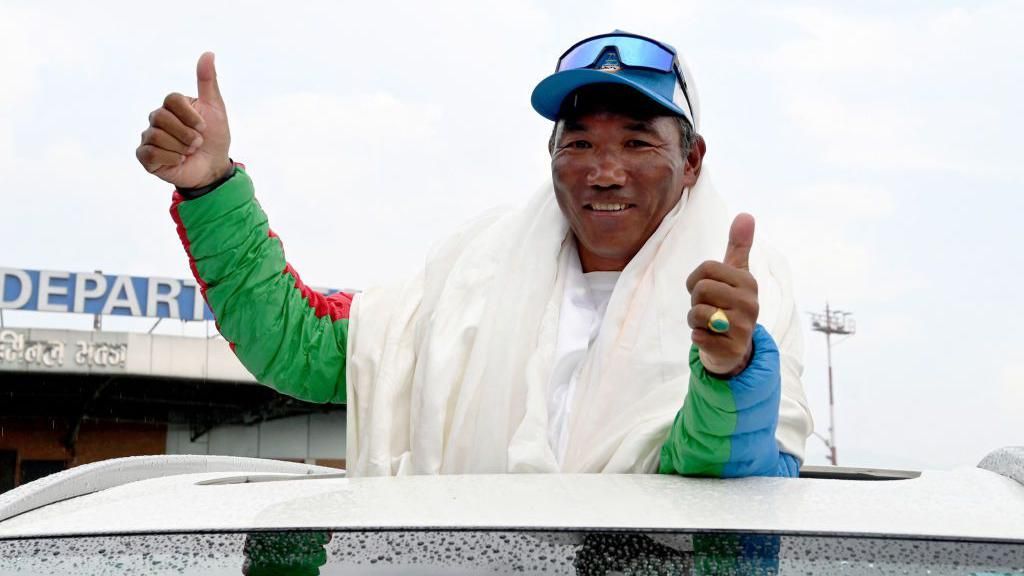
    Two legendary Nepali Sherpa climbers have etched their names into mountaineering history once again, shattering their own world records for the most successful ascents of Mount Everest, the highest point on Earth at 8,849 meters above sea level.

    Fifty-six-year-old Kami Rita Sherpa, globally celebrated by the nickname “Everest Man”, notched his 32nd summit of the iconic peak on Sunday while working as a guide for commercial expedition group 14 Peaks Expedition. This achievement extends his unrivaled status as the mountaineer with the most Everest summits in history. Born into a multi-generational climbing family in Nepal’s Solukhumbu district, the region that hosts Mount Everest’s southern approach, Kami Rita first stood atop Everest in 1994. He has returned to the peak almost every year since, even summiting twice in some single climbing seasons. He first claimed the outright world record for most Everest ascents in 2018, when he reached the peak for the 22nd time, breaking a shared record he had held with two other veteran Nepali Sherpa climbers, both of whom have since retired from high-altitude expeditions.

    On the exact same day that Kami Rita set his new record, 52-year-old Lakpa Sherpa, known widely as the “Mountain Queen”, also broke her own existing record for the most Everest summits by a female climber, logging her 11th successful ascent of the mountain. Lakpa made history of her own back in 2000, when she became the first Nepali woman to both summit Everest and complete a safe descent back to base camp. Her extraordinary life, which includes her decades of high-altitude climbing and her experience raising children as a single mother, was the focus of a 2023 documentary that shares her “Mountain Queen” nickname.

    The record-breaking feats come amid what is already the busiest climbing season in Everest’s modern history. Nepal’s tourism department has issued a record-high number of climbing permits to foreign aspirants hoping to reach the peak this year, totaling almost 500. Unlike foreign climbers, Nepali guide staff do not need individual permits to join expeditions, meaning the total number of people attempting the ascent this year is far higher than the permit count alone.

    The busy season has been accompanied by unanticipated disruptions that have raised widespread safety concerns among the climbing community. A large unstable chunk of glacial ice broke off and blocked the traditional route from Nepal’s Base Camp to the upper slopes of the mountain earlier in the season, creating significant delays in opening the route for climbing. Many observers have warned that the combination of delayed route opening and an unprecedented number of climbers could lead to dangerous “traffic jams” in the high-altitude death zone near the summit, where prolonged exposure to low oxygen and freezing temperatures can quickly become fatal.

    Nepali official and political leaders have already issued public praise for the two record-setting climbers. Nepal’s Department of Tourism congratulated the pair on their “historic achievement”, and Prime Minister Balendra Shah also shared his congratulations via the social platform X. “Such historic success can only be achieved through unwavering courage, rigorous self-discipline, and honest dedication to one’s work,” Shah wrote of the pair’s accomplishment.

  • Tributes flow after Australian shark attack victim named as father-of-two

    Tributes flow after Australian shark attack victim named as father-of-two

    A devastating shark attack has claimed the life of a 38-year-old Australian father of two, sparking an outpouring of grief and tributes from across Western Australia’s coastal community over the weekend.

    Steven Mattaboni was spearfishing alongside a group of friends roughly one kilometer offshore from Horseshoe Reef, a popular spot located northwest of Perth’s iconic Rottnest Island, when the incident unfolded around 10 a.m. local time on Saturday. The massive predator, measuring approximately 4 meters (13 feet) in length, bit Mattaboni on his lower leg in what law enforcement has described as a horrific attack. He was around 20 meters from his anchored vessel when the attack occurred, leaving his friends to witness the traumatic event firsthand.

    Mattaboni’s companions immediately rushed him back to shore in a desperate bid to save his life, but emergency responders were unable to resuscitate him. Western Australia Police will prepare a full report for the state coroner to formally document the circumstances of the fatality.

    In a heartbreaking statement released after the attack, Mattaboni’s wife Shirene opened up about the irreparable loss her family has suffered, remembering her husband as an incredible parent to the couple’s two young daughters — a child turning three next month and a four-month-old baby. An avid fisherman who was deeply passionate about ocean life, Mattaboni “lived and breathed the water,” his wife said. “Fiercely loyal, endlessly generous, and the kind of man who would give you the shirt off his back,” she wrote. “The world has lost a truly one-of-a-kind gentleman, and our daughters have lost an incredible father far too soon. Our hearts are irrevocably broken.”

    Tributes quickly extended beyond Mattaboni’s immediate family to the local community groups he was part of. The Kingsley Amateur Football Club, based in Perth’s northern suburbs where Mattaboni played for the team, remembered him as a much-loved friend to many members. “Mattas was one of the most genuine people you could meet,” the club shared in a public online post. “He had a smile and presence that could light up a room, and he will be remembered fondly by all who had the privilege of knowing him.”

    Graham Henderson, president of the Australian Underwater Federation, the national peak body representing spearfishing enthusiasts, said the entire community was reeling from the unexpected loss. “My heart goes out to his family, the club members and the people who were supporting him out on that dive,” Henderson told the Australian Broadcasting Corporation.

    Henderson noted that while spearfishing inherently carries some level of risk, the community works proactively to mitigate threats. For organized competitive events, safety protocols include on-site patrol boats and drone surveillance to spot sharks in surrounding waters before they reach divers. “But of course when people are doing it recreationally… that is probably when they are most vulnerable,” he added.

    Reece Whitby, Western Australia’s police minister, acknowledged the courage and quick action of Mattaboni’s friends, who put themselves at risk to get him back to shore, as well as the first responders who attempted to save his life. “I want to acknowledge the diver’s friends who played a critical role in doing the best they could to bring him back to shore,” Whitby said Saturday. “They all witnessed a very confronting, disturbing and tragic scene.”

    The WA Department of Primary Industries and Regional Development has confirmed it received an official report of the attack by the 4-meter shark, marking another tragic reminder of the risks that come with recreational ocean activity along Australia’s well-known shark-populated western coast.

  • China agrees to boost trade for US ag products such as beef and poultry following Trump-Xi summit

    China agrees to boost trade for US ag products such as beef and poultry following Trump-Xi summit

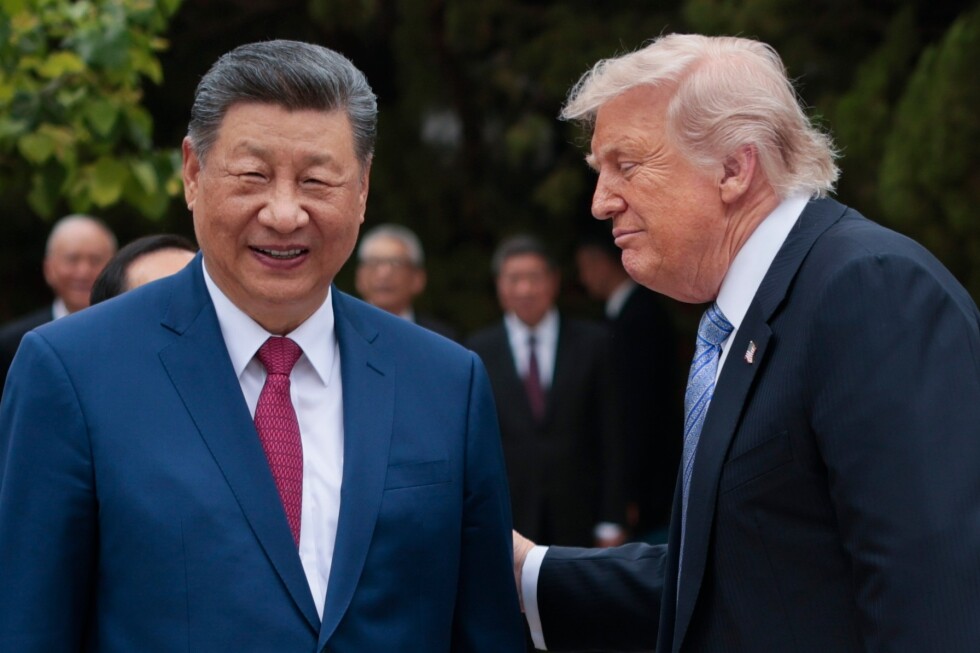
    WASHINGTON (AP) – Two days after U.S. President Donald Trump concluded a high-stakes negotiating summit in Beijing aimed at mitigating economic harm to American agricultural producers from the 2024 trade war he initiated, the White House made a major announcement Sunday: China has committed to scaling up purchases of key U.S. farm products including beef and poultry, hitting an annualized purchase target of $17 billion per year starting in 2026, with this level maintained through 2027 and 2028.

    According to the White House’s statement, the agreement will restore full Chinese market access for U.S. beef and resume Chinese imports of U.S. poultry from states certified as avian influenza-free by the U.S. Department of Agriculture (USDA). This new framework builds on existing soybean purchase commitments China made last year, offering a much-needed lifeline to American farmers who have lost critical export volume after China sharply cut agricultural imports amid the trade conflict.

    American agricultural producers have faced overlapping economic pressures in recent months. Beyond the trade war that erased China as a major export market for soybeans and other commodities, new disruptions stemming from the U.S.-Israel military campaign against Iran have restricted shipping through the Strait of Hormuz, a critical global trade chokepoint. This disruption has shrunk global fertilizer supplies and driven input prices to record highs, squeezing farm profit margins even further.

    As of Sunday, Beijing had not issued immediate public confirmation of the specific $17 billion purchase terms outlined by the White House. On Saturday, China’s Ministry of Commerce released a more general statement confirming that the two sides had reached agreement to “resolve or make substantial progress toward resolving certain non-tariff barriers and market access issues” for agricultural products.

    Per the Chinese commerce ministry’s spokesperson, the U.S. has agreed to actively address Chinese regulatory concerns covering detained Chinese dairy and seafood shipments, U.S. import rules for Chinese potted bonsai, and Chinese requests for official recognition of Shandong Province as an avian influenza-free zone. In turn, China will actively advance U.S. priorities including registration approvals for American beef processing facilities and market access for U.S. poultry from eligible states. The two sides also committed to expanding overall agricultural and general trade through reciprocal tariff cuts for an unspecified “specific range of products.”

    In the years since the trade war escalated, China has systematically diversified its sources of imported agricultural commodities to protect its own food and national security, shifting growing volumes of purchases to Brazil, Argentina and other supplier nations instead of the U.S. USDA data underscores the scale of the drop-off in U.S. agricultural exports to China: after peaking at $38 billion in total agricultural imports in 2022, Chinese purchases fell to just $8 billion in 2025. Soybean imports alone dropped from nearly $18 billion in 2022 to only $3 billion in 2025.

    After Trump hiked tariffs on Chinese goods last year, China — long the largest foreign buyer of U.S. soybeans — halted nearly all new soybean purchases, leaving U.S. soybean producers, the hardest-hit segment of American agriculture, facing massive surplus stock and depressed prices. The new announcement builds on an October trade truce between Trump and Chinese President Xi Jinping, where China first agreed to resume soybean purchases, with an initial commitment of 12 million metric tons for the 2025-2026 marketing year and 25 million metric tons annually for the following three years.

    For the U.S. beef sector, the agreement will re-open the Chinese market to hundreds of U.S. processing facilities, including major operations run by industry giants Tyson Foods and Cargill. China allowed licenses for hundreds of U.S. beef plants to expire last year, pushing total U.S. beef export value to China down to less than $500 million in 2025, a sharp drop from the 2022 peak of $2.14 billion. U.S. poultry exports to China have followed a similar trajectory, falling from over $1 billion in 2022 to just $286 million in 2025. It remains unclear what the actual annual export volume for U.S. beef and poultry will be under the new agreement.

    Beyond agricultural trade, the Beijing summit focused on identifying new areas of bilateral economic cooperation, including expanded market access for U.S. firms in China and increased Chinese investment in U.S. domestic industries. The two leaders announced plans to establish two new bilateral coordinating bodies: a Board of Trade to manage trade in “non-sensitive goods” and address specific tariff reduction issues, and a Board of Investments to facilitate dialogue on cross-border investment issues. Both sides have offered few details on how these new bodies will differ from existing bilateral trade dialogue frameworks. The commerce ministry spokesperson noted that the two sides agreed “in principle” to reciprocal tariff cuts of equivalent scale for products of mutual concern.

    Meeting with U.S. business leaders accompanying Trump on the trip, including Cargill CEO Brian Sikes, Xi emphasized that China’s door of opportunity for international business will continue to widen.

    Soybeans, used heavily for livestock feed and biofuel production in China, have long been the top U.S. agricultural export to the country, accounting for roughly half of all U.S. agricultural exports to China in past years. As of May 7, USDA data shows U.S. exports of soybeans to China have reached 10.9 million metric tons, putting China on track to meet its original October commitment by the end of the current marketing year on August 31. That volume remains far below the 25 million to 30 million metric tons China purchased annually before the latest escalation of the trade war.

    Before Trump’s originally scheduled Beijing trip in late March — postponed amid the outbreak of the Iran conflict — the American Soybean Association publicly urged the president to prioritize expanded soybean access in trade talks with Xi. Association president Scott Metzger said Thursday that the group is pushing for additional soybean purchases in the current marketing year alongside steady progress on meeting long-term purchase commitments. “Greater certainty and consistency in the marketplace help provide farmers with the confidence they need as they make decisions for the year ahead,” Metzger said.
    AP journalist Kevin Vineys contributed reporting to this article.

  • Taiwan will not provoke conflict nor give up sovereignty, says president

    Taiwan will not provoke conflict nor give up sovereignty, says president

    Following the high-profile summit between U.S. President Donald Trump and Chinese leader Xi Jinping that centered heavily on cross-Strait tensions, Taiwan’s leader Lai Ching-te has issued his first public direct response, laying out the island’s stance while emphasizing the critical need for the United States to maintain its longstanding arms sales policy to Taiwan.

    During the meeting, Chinese state media reported that Xi framed the Taiwan issue—where Beijing claims the self-governing democratic island as an inalienable part of its territory—as the single most consequential matter in bilateral U.S.-China ties. Xi warned that mishandling the question of Taiwan could open the door to direct conflict between the two major global powers. After wrapping up his trip to Beijing, Trump made his own position clear in an interview with Fox News, stating he did not support any move toward formal Taiwan independence, while adding that U.S. policy toward the island had not shifted, and he had no intention of provoking a confrontation with Beijing. Trump also noted that Xi held deeply entrenched views on the Taiwan issue, but he had made no binding commitments to China on the matter during their talks.

    For years, under the administrations of Lai Ching-te and his predecessor Tsai Ing-wen, Taiwan’s government has held the position that no formal declaration of independence is necessary, as the island already considers itself a sovereign nation. Lai reiterated this long-held stance in a public post on his Facebook page, his first direct public comment following the Trump-Xi summit. He wrote, “Taiwan, the Republic of China, is a sovereign and independent democratic country,” and added that “Taiwan’s future must follow the will of all the Taiwanese people.” Public opinion data consistently shows that a majority of Taiwan’s residents identify as citizens of a sovereign nation, though most also support maintaining the current cross-Strait status quo: rejecting both immediate unification with China and an official formal declaration of independence.

    Beijing has repeatedly condemned Lai, labeling him a dangerous “troublemaker” and a threat to cross-Strait peace. In his Facebook post, Lai pushed back against these characterizations, emphasizing that Taiwan has no intention of initiating aggression or escalating tensions. “Taiwan will not provoke, will not escalate conflict, but will not under pressure give up national sovereignty and dignity, as well as the democratic and free way of life,” he wrote. He further clarified that Taiwan is a committed defender of the existing cross-Strait status quo, not a party seeking to unilaterally alter the current arrangement. Lai added that Taiwan is open to holding healthy, structured exchanges and dialogue with Beijing, as long as those talks take place on the basis of equal dignity and mutual respect. However, he firmly rejected Beijing’s practice of framing dialogue under the precondition of “unification” as a pretext to coerce Taiwan into accepting its terms.

    This position echoes an earlier statement from Lai’s presidential spokesperson, who affirmed that it is self-evident Taiwan is a sovereign, independent democratic nation, and the government remains dedicated to upholding the cross-Strait status quo. For its part, Beijing has consistently stated it prefers peaceful reunification with Taiwan, but has never formally ruled out the use of military force to bring the island under its control. In recent years, Beijing has ramped up military pressure on Taiwan, conducting regular large-scale military drills—including simulated blockades of the island—around Taiwan’s territorial waters and airspace.

    For more than four decades, the United States has supplied defensive arms to Taiwan under the terms of the Taiwan Relations Act, a U.S. law that requires the U.S. to provide Taiwan with the means to defend itself against potential aggression. The U.S. remains Taiwan’s most powerful international ally and its largest supplier of military equipment. In December prior to the summit, the Trump administration approved a massive $11 billion arms package for Taiwan, one of the largest single arms deals in the history of U.S.-Taiwan relations. That approval drew sharp condemnation from Beijing, which has long opposed all U.S. arms sales to the island.

    After leaving Beijing, Trump told reporters aboard Air Force One that he had discussed the proposed arms sale in great depth with Xi, and would make a final decision on whether to move forward with the transaction later. When pressed on the longstanding 1982 U.S. commitment that it would not consult Beijing on arms sales decisions to Taiwan, Trump dismissed the commitment, noting the 1980s were “a long time ago.”

    Over the weekend following the summit, Lai expressed gratitude to Trump for his continued support for peace across the Taiwan Strait, and reaffirmed that sustained U.S. arms sales are non-negotiable for regional stability. “Given that China has never given up the use of force to annex Taiwan and continues to expand its military power to try to change the regional and cross-strait status quo, America’s continued sale of arms to Taiwan and deeper U.S.-Taiwan security cooperation is necessary and a key factor in maintaining regional peace and stability,” Lai wrote.

  • Luke Sayers and wife Cate battle in court over ‘dick pic’ scandal trial

    Luke Sayers and wife Cate battle in court over ‘dick pic’ scandal trial

    A high-profile legal dispute has erupted in Australia’s Supreme Court between former Carlton Football Club president Luke Sayers and his estranged wife Cate Sayers, centered on a viral explicit image scandal that played out on social media platform X earlier this year. The conflict centers on an explicit photo of Luke Sayers that was posted to his personal X account in January, which also tagged one of Carlton Football Club’s major sponsors. The image was taken down just 15 minutes after it went live, but not before it sparked widespread public and media attention across the country.

    Both sides have vehemently denied responsibility for the post. Luke Sayers, who has stepped away from his leadership role at the AFL club, claims he could not have uploaded the image because he was showering at the time of the post. He has previously alleged that one day after the incident, Cate Sayers made comments implying she was behind the post, saying words to the effect of “let’s see how you get out of this one”. Cate Sayers has firmly refuted this accusation, noting she was not staying at the same hotel as her estranged husband when the post went live, and has outright denied sharing the image.

    The legal fight has now expanded beyond who posted the photo to include cross claims of defamation, as well as a dispute over where the trial should be heard. Luke Sayers’ legal team, led by prominent barrister Matthew Collins KC, is pushing to have the case transferred to the family court division of the Federal Court. Collins argued in court that the original X post itself constitutes a defamatory act against his client, noting that Luke Sayers faced relentless negative media attention in the days after the image was published. A separate internal inquiry conducted by the Australian Football League (AFL) cleared Luke Sayers of any intentional wrongdoing in connection with the post.

    For her part, Cate Sayers is pushing to keep the proceedings in the Supreme Court, and has launched her own defamation counterclaim. She argues that a statutory declaration submitted during the investigation into the X post defamed her, with legal representatives noting that the reputational damage she has suffered extends across the entire country. Last week, the *Herald Sun* revealed that Cate Sayers had issued formal subpoenas to both Carlton Football Club and the national AFL governing body as part of her case.

    During opening procedural hearings on Monday, Supreme Court Justice Andrew Watson ordered a temporary closure of the court for early closed-door arguments over whether the full trial should proceed in open court. Watson previously ordered that live streaming of the proceedings be halted, after Collins argued that heightened public and social media attention around the salacious case could complicate fair judicial proceedings. While stressing that “we don’t want to exclude the media from being able to report”, Justice Watson also shared concerns that members of the general public attending the open trial may not be prepared for the explicit nature of the evidence and legal discussions in the case.

  • Who could be the 2026 World Cup’s breakout star?

    Who could be the 2026 World Cup’s breakout star?

    The FIFA World Cup has long been the ultimate launchpad for young football talent, turning promising prospects into household global names overnight. As the 2026 tournament co-hosted by the United States, Mexico and Canada approaches, AFP Sport has profiled five standout young players widely tipped to emerge as the competition’s next breakout superstar.

    First up is 21-year-old Nico Paz, a product of the Real Madrid academy who currently plies his trade at Italian side Como. Though born and raised in Spain, the son of former Argentina international Pablo Paz chose to represent the reigning World Cup champions. Over the past two seasons working under manager Cesc Fabregas at Como, Paz’s game has developed rapidly, with Real Madrid already preparing to trigger their buyback clause to bring the youngster back to the Spanish capital. Renowned for his polished technical skill and deadly long-range finishing, Paz has drawn attention from top clubs across Europe. For Argentina, he could step into a critical role: with coach Lionel Scaloni expected to manage 38-year-old Lionel Messi’s minutes carefully during the side’s title defense, Paz may face the high-pressure task of filling the legendary forward’s shoes.

    Next is 20-year-old France winger Desire Doue, who has already proven his quality on the biggest club stage. Last season, he claimed the man-of-the-match award and netted twice in Paris Saint-Germain’s Champions League final thumping of Inter Milan. The 2026 World Cup will mark his first appearance at a major senior international tournament, however. Doue faces stiff competition just to earn a starting spot in Didier Deschamps’ deep attacking corps, which already includes Kylian Mbappe, Ballon d’Or winner Ousmane Dembele and Bayern Munich’s Michael Olise. But he gave Deschamps a clear reminder of his potential in March, scoring his first two international goals during a 3-1 friendly win over Colombia.

    For hosts England, 21-year-old Nico O’Reilly has emerged as a potential breakout candidate after earning the trust of Pep Guardiola to become a regular starter at treble-winning Manchester City. Originally a goal-scoring midfielder, O’Reilly has been converted into an attacking left-back by Guardiola, who has leveraged his unique combination of height, pace and technical skill to create a dangerous offensive weapon from deep positions. His emergence could also solve a long-standing problem for England manager Thomas Tuchel: during the Three Lions’ run to the Euro 2024 final, the side spent most of the tournament without a fit natural left-back after Luke Shaw’s injury. Guardiola has been full of praise for the youngster’s rapid rise, saying: “What a player. He has made an incredible step up and he has had a lot of minutes, but he deserves it.”

    Brazil’s 19-year-old Endrick, one of the most hyped teenage prospects in the world, is also primed for a breakout. The prodigy made his Palmeiras debut at 16 and was signed by Real Madrid before he turned 18, and his chances of shining at the World Cup have been boosted by a successful loan spell at French side Lyon that has reignited his scoring form. Endrick made history two years ago when he scored the match-winning goal against Brazil at Wembley, becoming the Seleção’s youngest goalscorer since Ronaldo Nazário. After a slow start following his agreement to join Real Madrid, the forward has found his touch in front of goal since moving to Lyon in January 2026. Frequently compared to Brazilian legend Romario thanks to his low, powerful build, Endrick will be hoping to replicate the great’s 1994 World Cup success, when Romario scored five goals to lead Brazil to title on U.S. soil.

    Rounding out the list is Spain’s Pedri, the 23-year-old midfield playmaker who has already been hailed as the natural heir to Barcelona and Spain legend Xavi Hernandez. Pedri first announced himself to the world as an 18-year-old at Euro 2020, and was a key part of Spain’s Euro 2024 title run before a hamstring injury ruled him out of the semi-final and final matches. At the club level, Pedri has put his past fitness issues behind him under Barcelona manager Hansi Flick, starring in the side’s back-to-back La Liga title triumphs over the past two seasons. With a full bill of health heading into the 2026 World Cup, Pedri is widely expected to anchor Spain’s title challenge and cement his status as one of the world’s top midfielders.

  • Hantavirus-hit cruise ship nears end of voyage, to dock in Rotterdam

    Hantavirus-hit cruise ship nears end of voyage, to dock in Rotterdam

    A polar expedition cruise ship that triggered international concern following a deadly hantavirus outbreak is preparing to conclude its disrupted journey at the Dutch port of Rotterdam on Monday, bringing an end to weeks of uncertainty for global health authorities. The MV Hondius, operated by Netherlands-based Oceanwide Expeditions, is scheduled to dock between 10 a.m. local time and midday, with only 27 people remaining on board: 25 skeleton crew members and two dedicated medical staff, all of whom are currently asymptomatic and under constant health monitoring.

    The vessel first made global headlines when three passengers died from complications of hantavirus, a rare zoonotic pathogen with no licensed vaccine or targeted antiviral treatment. As cases mounted and concerns over human-to-human spread grew, the World Health Organization moved quickly to calm public fears, emphasizing that the outbreak did not represent the emergence of a new pandemic similar to COVID-19. WHO Director-General Tedros Adhanom Ghebreyesus confirmed on May 12 that there was no evidence of an emerging large-scale outbreak, though he warned that the virus’ multi-week incubation period meant additional cases could still surface among people who were exposed during the voyage.

    As of the latest official counts compiled by Agence France-Presse, hantavirus has been confirmed in six patients, with one additional probable case recorded. A seventh asymptomatic person in Canada has returned a preliminary positive test result, which is still pending final confirmation.

    The crisis unfolded after the ship departed Ushuaia, Argentina on April 1 for a planned expedition through remote South Atlantic islands, scheduled to conclude in Cape Verde. When cases were first detected, the voyage was thrown into chaos, sparking diplomatic negotiations as multiple nations debated whether to allow the vessel to dock. Cape Verde declined to accept the ship, leaving it anchored off the capital Praia while three infected passengers were evacuated to Europe by air. Eventually, Spain granted permission for the vessel to anchor off the Canary Islands, a decision that drew fierce pushback from the regional government of the Atlantic archipelago.

    On May 10, the ship reached the Canary Islands, where more than 120 passengers and non-essential crew were evacuated and repatriated to their home countries or to the Netherlands, the nation under which the vessel is flagged. Among those evacuated, a 65-year-old French woman developed symptoms during her repatriation flight and was admitted to a Paris hospital in critical condition with a confirmed hantavirus infection. Two other passengers – one Dutch national and one British national – were airlifted directly to the Netherlands for urgent hospital care. Dutch officials now report both are in stable condition, with the British patient well enough to return home to complete self-isolation. All other evacuated passengers who entered the Netherlands have tested negative for the virus; some remain in quarantine in the country, while others have already returned to their home nations.

    Those remaining on board when the ship docks on Monday represent a range of nationalities: 17 crew from the Philippines, four from the Netherlands (including two crew and the two medical staffers), four from Ukraine, one from Russia and one from Poland. All will enter quarantine either at port facilities or in private accommodation after disembarkation. The body of a German passenger who died during the outbreak will also remain on the ship until docking is complete.

    Late Sunday, the WHO reaffirmed its official risk assessment for the outbreak, classifying it as “low risk.” In a statement, the organization noted that while additional cases may still occur among people exposed before public health measures were put in place, the risk of further community transmission will drop significantly once all passengers and crew have disembarked and appropriate control measures are implemented. After docking, the MV Hondius will undergo a comprehensive deep cleaning and disinfection process, with preparations already underway to begin the procedure immediately after the vessel arrives.

    Public health experts note that hantavirus is typically spread through contact with the urine, feces, and saliva of infected rodents, and the pathogen is endemic to parts of Argentina, where the voyage originated. The strain involved in this outbreak is the Andes variant, the only known strain of hantavirus that can transmit between humans, a detail that added to early global concern over the incident.