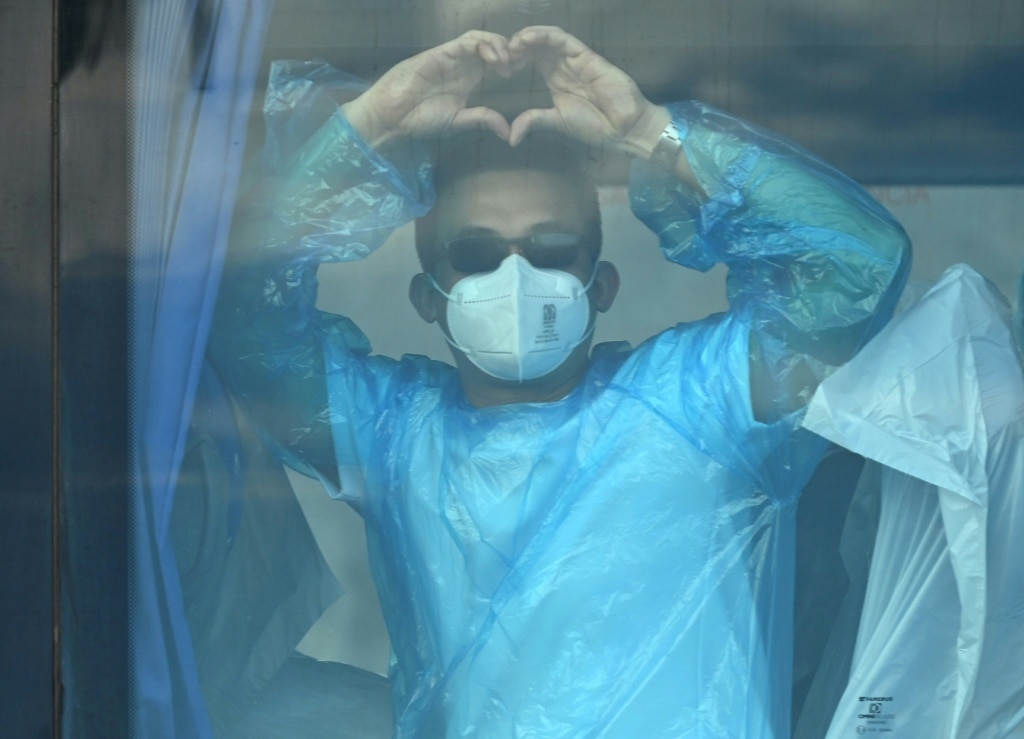
A polar expedition cruise ship that triggered international concern following a deadly hantavirus outbreak is preparing to conclude its disrupted journey at the Dutch port of Rotterdam on Monday, bringing an end to weeks of uncertainty for global health authorities. The MV Hondius, operated by Netherlands-based Oceanwide Expeditions, is scheduled to dock between 10 a.m. local time and midday, with only 27 people remaining on board: 25 skeleton crew members and two dedicated medical staff, all of whom are currently asymptomatic and under constant health monitoring.
The vessel first made global headlines when three passengers died from complications of hantavirus, a rare zoonotic pathogen with no licensed vaccine or targeted antiviral treatment. As cases mounted and concerns over human-to-human spread grew, the World Health Organization moved quickly to calm public fears, emphasizing that the outbreak did not represent the emergence of a new pandemic similar to COVID-19. WHO Director-General Tedros Adhanom Ghebreyesus confirmed on May 12 that there was no evidence of an emerging large-scale outbreak, though he warned that the virus’ multi-week incubation period meant additional cases could still surface among people who were exposed during the voyage.
As of the latest official counts compiled by Agence France-Presse, hantavirus has been confirmed in six patients, with one additional probable case recorded. A seventh asymptomatic person in Canada has returned a preliminary positive test result, which is still pending final confirmation.
The crisis unfolded after the ship departed Ushuaia, Argentina on April 1 for a planned expedition through remote South Atlantic islands, scheduled to conclude in Cape Verde. When cases were first detected, the voyage was thrown into chaos, sparking diplomatic negotiations as multiple nations debated whether to allow the vessel to dock. Cape Verde declined to accept the ship, leaving it anchored off the capital Praia while three infected passengers were evacuated to Europe by air. Eventually, Spain granted permission for the vessel to anchor off the Canary Islands, a decision that drew fierce pushback from the regional government of the Atlantic archipelago.
On May 10, the ship reached the Canary Islands, where more than 120 passengers and non-essential crew were evacuated and repatriated to their home countries or to the Netherlands, the nation under which the vessel is flagged. Among those evacuated, a 65-year-old French woman developed symptoms during her repatriation flight and was admitted to a Paris hospital in critical condition with a confirmed hantavirus infection. Two other passengers – one Dutch national and one British national – were airlifted directly to the Netherlands for urgent hospital care. Dutch officials now report both are in stable condition, with the British patient well enough to return home to complete self-isolation. All other evacuated passengers who entered the Netherlands have tested negative for the virus; some remain in quarantine in the country, while others have already returned to their home nations.
Those remaining on board when the ship docks on Monday represent a range of nationalities: 17 crew from the Philippines, four from the Netherlands (including two crew and the two medical staffers), four from Ukraine, one from Russia and one from Poland. All will enter quarantine either at port facilities or in private accommodation after disembarkation. The body of a German passenger who died during the outbreak will also remain on the ship until docking is complete.
Late Sunday, the WHO reaffirmed its official risk assessment for the outbreak, classifying it as “low risk.” In a statement, the organization noted that while additional cases may still occur among people exposed before public health measures were put in place, the risk of further community transmission will drop significantly once all passengers and crew have disembarked and appropriate control measures are implemented. After docking, the MV Hondius will undergo a comprehensive deep cleaning and disinfection process, with preparations already underway to begin the procedure immediately after the vessel arrives.
Public health experts note that hantavirus is typically spread through contact with the urine, feces, and saliva of infected rodents, and the pathogen is endemic to parts of Argentina, where the voyage originated. The strain involved in this outbreak is the Andes variant, the only known strain of hantavirus that can transmit between humans, a detail that added to early global concern over the incident.