博客

  • Fighter jet crews parachute safely after collision at US air show

    Fighter jet crews parachute safely after collision at US air show

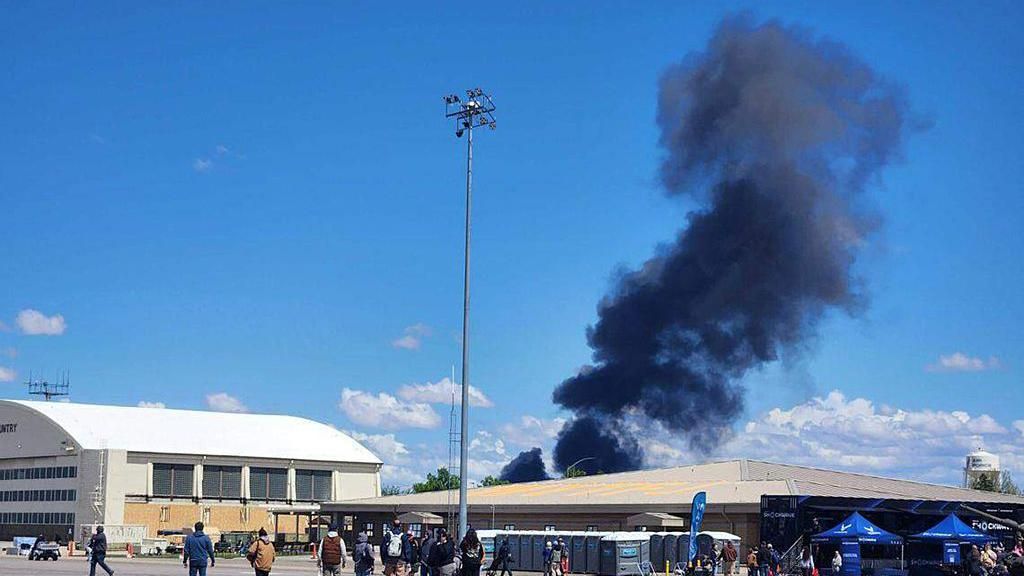
    A shocking mid-air collision between two U.S. Navy EA-18G Growler fighter jets has disrupted the final day of a popular Idaho air show, leaving military officials and event attendees shaken but relieved after all four crew members escaped before the crash. The incident unfolded Sunday afternoon approximately two miles northwest of Mountain Home Air Force Base, on the second and closing day of the biennial Gunfighter Skies air show.

    Military spokespersons confirmed that all crew members on board both jets safely ejected from their aircraft immediately following the collision. In an official social media statement posted Sunday, Mountain Home Air Force Base Gunfighters confirmed that all aircrew involved are currently in stable condition, with responding emergency personnel transporting the team for mandatory medical evaluations. U.S. Navy Commander Amelia Umayam told CBS News that the crew remains in the care of on-base medical staff for routine checks, adding that it has not yet been confirmed whether any crew sustained injuries during the ejection or collision.

    The collision sparked a post-crash fire at the crash site, prompting base officials to enact a brief lockdown as emergency response teams worked to secure the area. Following the incident, event organizers made the immediate decision to cancel all remaining activities for the 2026 Gunfighter Skies air show. In their statement, base officials thanked attendees for their cooperation during the emergency response, noting that public patience allowed first responders to work quickly and effectively to contain the situation.

    The two aircraft involved in the crash are assigned to an electronic attack squadron based out of Washington state. According to U.S. Navy data, each EA-18G Growler carries an approximate price tag of $67 million, meaning the collision resulted in an estimated $134 million in military aircraft losses. Kim Sykes, a representative for Silver Wings of Idaho—the local organization that co-organized the event—confirmed that no base personnel, event staff or attendees on the ground suffered any injuries in connection with the crash.

    This is not the first fatal accident linked to the Gunfighter Skies air show: the event was last held in 2018, when a glider pilot lost their life in a separate accident during demonstration activities. As of Monday, military officials have launched a formal investigation to determine the root cause of Sunday’s collision, with no further details on potential contributing factors released to the public. The BBC has reached out to both Mountain Home Air Force Base and event organizers for additional comment on the incident.

  • AFL 2026: Melbourne forward Bayley Fritsch on contract talks, moments against Hawthorn and Steven King

    AFL 2026: Melbourne forward Bayley Fritsch on contract talks, moments against Hawthorn and Steven King

    As the Melbourne Demons mount an unexpected on-field resurgence under new head coach Steven King, star goalkicker Bayley Fritsch has opened up about progressing contract extension talks and his unshakable belief that his top AFL performances are still to come.

    The 29-year-old forward, currently in the final season of the contract he signed following his breakout 2021 campaign, confirmed that negotiations on a new deal to stay at the club have reached a productive phase. Fritsch, a left-footed sharpshooter, was dropped from the senior side last season but earned his place back after just one week out, and has since become a key fixture in the rejuvenated Demons line-up.

    For Fritsch, there is no question of continuing his career anywhere other than Melbourne. “It’s something that’s obviously playing out behind the scenes, I think we’re in good conversations with the club,” he told reporters. “I don’t see myself anywhere else. Hopefully, we can get something sorted pretty soon.”

    A late bloomer in professional AFL ranks, Fritsch was not drafted until he was 19, and he argues that late start means he still has plenty of high-quality playing years left in him. “I started pretty late, so I’d like to think I can play well into my 30s,” he explained. “I feel I’ve got a lot of good footy ahead of me. There’s still plenty of things to work on in my game and I think I’m still improving every year.”

    Fritsch’s mixed performance in the third quarter of Saturday’s clash against Hawthorn laid bare the fluctuating nature of his 2024 form so far. After pulling off a desperate match-winning tackle and nailing a long-range goal, he made a selfish call to shoot for goal again instead of playing a simple handball to an unmarked Latrelle Pickett. Looking back on the mistake, Fritsch admitted he let the roar of the 70,000-strong home crowd get the better of him. “If I had my time again, I would’ve heard him, I would’ve handballed it, but that’s footy,” he said.

    The Demons have emerged as one of the form teams of the 2024 season under first-year coach King, notching seven wins from their opening 10 matches with an attacking style of play that marks a stark shift from the club’s recent game plans. King has set his side an ambitious target: to become a must-watch “box office” team capable of scoring 100 points every week.

    Fritsch has heaped praise on the new coach, crediting King for instilling unwavering belief in the playing group from his first day in charge. “The sky is the limit,” Fritsch said. “That’s one thing Kingy said on day one: ‘If you don’t have an eye on the premiership, what’s the point of playing?’ It’s not saying we think we’re going to win the premiership, but you’ve got to have a goal and obviously that’s everyone’s goal. If you don’t have the goal to win the premiership coming into day one of pre-season, then I think you’re in the wrong mindset. We’ll keep taking it week by week, as cliche as it is, (and) keep working on our game, but I think we’re in a really good spot.”

  • White House mass prayer event seeks to reclaim US Christian roots

    White House mass prayer event seeks to reclaim US Christian roots

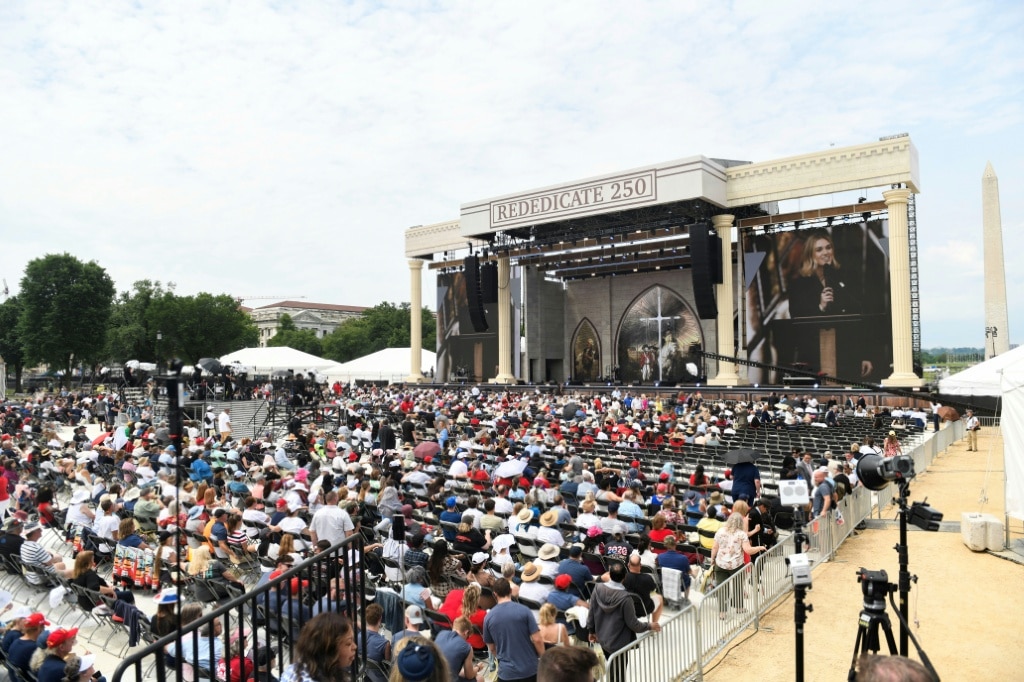
    On a Sunday on Washington’s National Mall, thousands of conservative Christian supporters gathered for a high-profile mass prayer rally organized by the Trump White House, kicking off a controversial event tied to the United States’ 250th anniversary celebrations that has reignited fierce national debate over the intersection of faith and government. The gathering was framed by organizers as a mission to revive what they frame as the nation’s forgotten founding principles rooted in Christianity, but critics immediately decried it as a blatant embrace of Christian nationalism that erodes the constitutional separation of church and state.

    The day-long outdoor event featured a lineup of political leaders and prominent evangelical figures, mixing religious worship with overt political messaging. Attendees filled the open green space of the Mall, singing contemporary Christian hymns and listening to a series of addresses from both pastors and top Trump administration officials. Vice President JD Vance and Defense Secretary Pete Hegseth delivered pre-recorded video remarks to the assembled crowd, while former and current President Donald Trump made a brief video appearance, reading a well-known biblical passage promising divine healing for nations that turn to God. House Speaker Mike Johnson opened the event with a prayer targeting what he called “sinister ideologies” spreading across the country, arguing that the nation’s core moral and spiritual identity had come under sustained attack. “We’ve witnessed attacks on our history, on our heroes and the cherished moral and spiritual identity of this great nation,” Johnson told the gathering. “We turn to you once again to save us from these afflictions.”

    The event comes as muscular Christian nationalism – an ideology that binds American national identity explicitly to Christian faith – has gained unprecedented access to power following Trump’s return to the presidency, with white evangelical voters remaining one of the president’s most loyal and vocal base of support. Hegseth, one of the most high-profile evangelical figures in the cabinet, is a member of an ultra-conservative evangelical congregation and has drawn attention for framing ongoing U.S. conflicts including the Iran war through bellicose religious rhetoric. Speaking to the crowd, Virginia pastor Gary Hamrick doubled down on this framing, framing the moment as an existential spiritual conflict for the nation’s future. “Today, friends, we are in a spiritual war,” Hamrick said. “This is a battle for the very soul of America.”

    The U.S. Constitution’s First Amendment explicitly prohibits the federal government from establishing an official national religion, while also guaranteeing the free exercise of all religious beliefs, a balance that has been at the center of debate around the event. Ahead of the rally, Johnson pushed back against critics during an appearance on Fox News Sunday, arguing that the term “Christian nationalism” is nothing more than a pejorative label invented by opponents seeking to censor Christian voices in public life. For many attendees who traveled from across the country to attend the rally, the event was a long-overdue correction to what they see as decades of declining religious influence in American public life. Jeana Dobbins, a 67-year-old retiree who made the trip from North Carolina, told Agence France-Presse she came to “rededicate our country back to God. Our country has fallen away in so many areas.” Sarah Tyson, who traveled from New York with a church group and held a hand-painted “Jesus Saves” sign, echoed that sentiment, saying she believes Trump was divinely chosen to lead a national spiritual revival. “God ordained him for a time like this, because these United States needs to wake up,” Tyson said.

    While every modern U.S. administration has hosted or attended faith-based gatherings to mark national holidays or moments of national significance, Sunday’s event stands out for its massive scale and the direct involvement of nearly the entire top tier of the Trump administration. Of the 20 scheduled “faith leader” speakers, nearly all were evangelical Protestant, with only a single rabbi and one retired Catholic archbishop included on the roster. Religious studies scholars note that while blending conservative Christianity and nationalist rhetoric is not a new tactic in American politics, the scope of official government backing for the event marks a significant shift.

    “It’s not unprecedented to have a group of evangelical pastors or conservative clergy come together for something like this and blend a certain kind of nationalism with a certain kind of conservative Christianity,” said Sam Perry, a professor at Baylor University, a prominent Christian higher education institution in Texas. But “the Trump administration taking the lead on this celebration at this scale is different than previous events,” Perry added. Julie Ingersoll, a professor of religious studies at the University of North Florida, argued that the narrow lineup of speakers reveals an underlying vision of American identity that excludes non-Christians and people of color. While the event’s official website claims it welcomes “Americans of every background,” Ingersoll said the speaker list reflects “an idea of American identity that is rooted in whiteness and Christianity.” The event, she added, “sends a specific message… that they are the mainstream Americans, and the rest of us are sidelined.”

    The rally took place on the National Mall, the iconic stretch of federal parkland between the U.S. Capitol and the Lincoln Memorial that has hosted decades of defining mass gatherings for American democracy, most notably the 1963 March on Washington for Jobs and Freedom, where 250,000 people gathered to hear Martin Luther King Jr. deliver his historic “I Have a Dream” speech.

  • International dive group joins Maldives search for missing Italians

    International dive group joins Maldives search for missing Italians

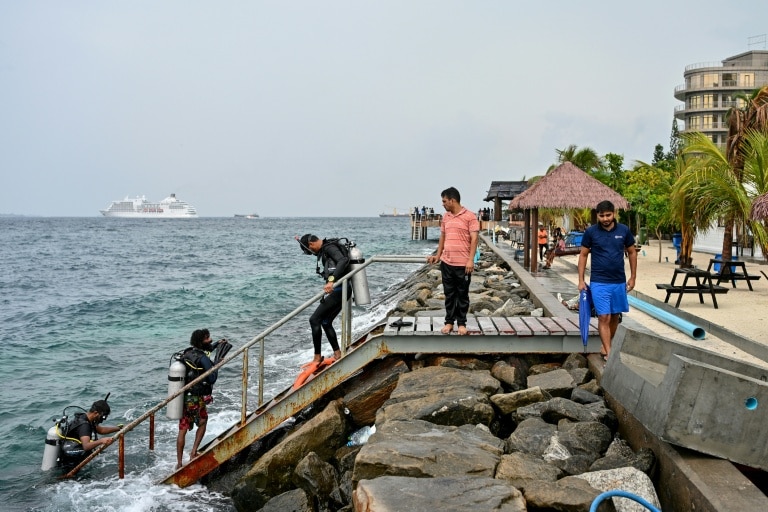
    One of the deadliest diving accidents in the history of the Maldives, a top Indian Ocean diving destination, has triggered a wide-ranging multinational recovery effort, with an international dive safety organization deploying specialist personnel to assist in locating four missing Italian nationals. The tragedy, which unfolded last Thursday, unfolded when a group of five Italian divers got into distress while exploring a deep submerged cave in a remote stretch of the Maldives’ waters. By the end of the same day, local authorities had only recovered one of the five victims’ bodies, leaving four still unaccounted for deep inside the cave system. The disaster compounded when a Maldivian National Defence Force rescue diver, Staff Sergeant Mohamed Mahudhy, developed life-threatening decompression complications during an initial search mission, and passed away in a local hospital on Saturday. Following the diver’s death, the initial search operation was temporarily paused.

    According to Mohamed Hussain Shareef, chief spokesperson for the Maldivian government, the international community has already stepped forward to offer support for the challenging high-risk recovery operation. Italy, the United Kingdom, and Australia had already deployed assets and personnel to assist before Sunday. On that same day, three specialist diving experts from Divers Alert Network (DAN), an international dive safety group commissioned by the Italian government, arrived in the Maldives to join the mission, with their active deployment on the search expected to start Monday. The United States has also extended an offer of assistance to the Maldivian government. Currently, all international support efforts are coordinated jointly between DAN and the Maldivian Coast Guard, which has dispatched its largest operational vessel to the remote search site to facilitate operations.

    The single recovered Italian victim was pulled from the cave at an approximate depth of 60 meters, a depth that poses extreme risk even to highly experienced technical divers, making the ongoing recovery operation particularly challenging. On Saturday night, the Maldives held a full military honors funeral for Staff Sergeant Mahudhy, honoring his sacrifice during the rescue mission. In comments to Agence France-Presse, Shareef expressed the shared grief of both the Maldivian and Italian people: “We are very sad about the tragic loss of the Italians. We are also very saddened by the loss of our own diver. We are two nations united in grief.”

    Italy’s foreign ministry has confirmed the five Italian deaths, and the University of Genoa has released details identifying the victims: the group includes a marine biology professor from the institution, the professor’s daughter, and two early-career researchers from the university. In the wake of the disaster, Maldivian regulators took swift administrative action on Saturday, suspending the operating license of the luxury live-aboard dive vessel that the Italian group had departed from for the fatal dive.

    As a nation made up of more than 1,100 low-lying coral islands and atolls spread across 800 kilometers of the Indian Ocean along the equator, tourism anchored around pristine coastal and marine environments is the single largest contributor to the Maldivian economy. The country’s crystal-clear turquoise waters, unspoiled beaches, and vibrant diverse coral reefs draw recreational divers and snorkelers from across the globe, many of whom choose to stay on secluded island resorts or live-aboard dive vessels that access remote, unspoiled dive sites. While a small number of diving-related fatalities have been recorded in the Maldives in recent years, official data shows that such accidents remain relatively uncommon in the country’s thriving adventure tourism sector.

  • Inside the ‘kill-zone’ on Ukraine’s front line, where new weapons have transformed war

    Inside the ‘kill-zone’ on Ukraine’s front line, where new weapons have transformed war

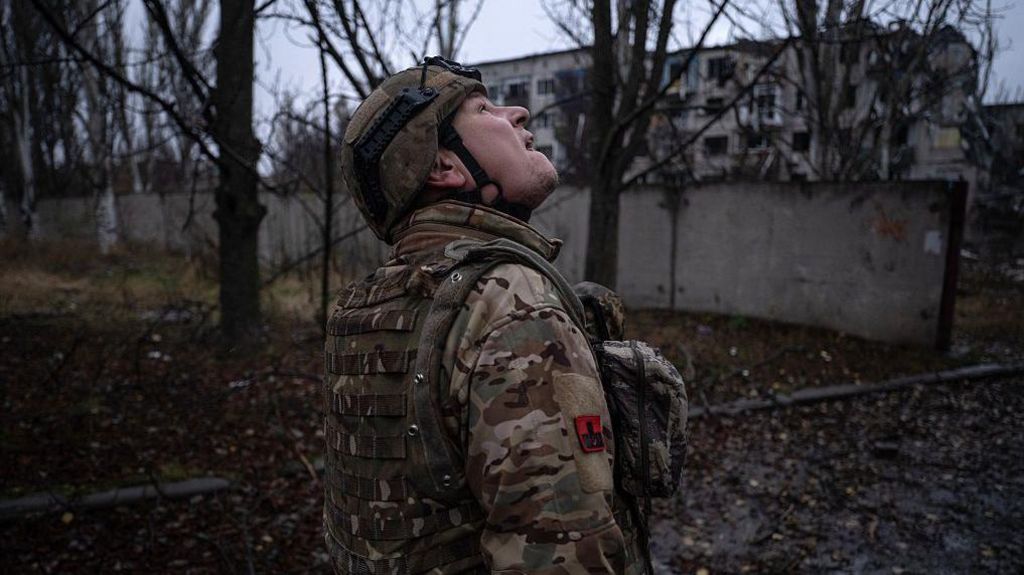
    Deep in the desolate frontline landscape outside Kostyantynivka, one of eastern Ukraine’s most hotly contested hotspots, a Ukrainian infantryman known only as Kenya sat trapped in a cramped forward foxhole for 225 straight days. Cut off from rotation by the constant, deadly threat of Russian surveillance and attack drones, five attempted relief efforts by his unit failed to reach him. By the time he finally escaped, months of immobility had left his muscles so atrophied he could barely stand, requiring a grueling two-day, 11-kilometer trek through minefields and under constant drone watch to reach the safety of his 93rd Brigade headquarters.

    Kostyantynivka has emerged as a critical linchpin in Russia’s long-stated campaign to seize full control of the Donbas region, a priority goal Moscow has targeted for completion this year, according to Ukrainian intelligence. If the strategic city falls to Russian forces, it will open up three-pronged access from the north, east, and south to the last remaining major Ukrainian strongholds in Donbas: Kramatorsk and Sloviansk. President Volodymyr Zelenskyy has warned that the Kremlin is preparing a large-scale new offensive this summer to push for these gains. Still, Russia’s advance has slowed considerably in recent months: Ukrainian conflict monitoring outlet DeepStatedata reports that Russian territorial gains in Donbas fell by half between March and April 2026, to just one-sixth of the territory Moscow captured in December 2025. The U.S.-based Institute for the Study of War further notes that Russia lost more territory than it gained in Ukraine last month, in part due to renewed Ukrainian strikes on Russian supply lines and logistics networks.

    For the soldiers of the 93rd Brigade tasked with holding Kostyantynivka’s outskirts, the current conflict represents a striking paradox of 21st-century warfare. While drones have replaced mass tank assaults and large infantry charges as the primary source of firepower and surveillance, the fundamental rule of warfare remains unchanged: no territory can be permanently held without boots on the ground. Drones cannot seize and hold fortified positions, control high ground or strategic river crossings, so small teams of infantry are still required to garrison forward outposts in the so-called “kill zone” — a wide, unpopulated grey area along the front where every moving object is hunted by remote-controlled drones from both sides.

    In this new landscape of combat, speed matters far more than heavy armor for survival. Assaults are no longer carried out by massive columns; instead, small teams of two or three soldiers cross open terrain on foot, motorbikes, bicycles, or even horseback to avoid detection. For the troops stuck in forward dugouts, daily life is a relentless battle against deprivation and fear. All overland supply routes to the kill zone are cut off, so food and ammunition must be ferried in by small delivery drones — a precarious system that often fails when drones are shot down or jammed, leaving garrisons with intermittent supplies. Kenya told reporters that mice infested his foxhole, gnawing through all non-canned food stores, and the most critical shortage his unit faced was clean drinking water. For him, a rare rainstorm was a moment to remember: it let him strip down and wash after months without clean water. During the winter, when temperatures plummeted to -25°C, worn-out sleeping bags offered little protection against frozen ground and concrete basement floors. Khani, another 93rd Brigade soldier who spent 122 days in a forward outpost, lost a comrade to hypothermia during the cold snap.

    Khani’s own story of survival illustrates the constant, close-quarters danger these troops face. His position in the basement of a ruined two-story home was detected by Russian drones, which directed heavy artillery fire to collapse the building. When Russian troops approached, Khani and his partner opened fire, triggering a coordinated assault: drone strikes, followed by a fiber-optic guided drone that infiltrated the basement before becoming tangled in its own wiring. Khani disabled the drone by shooting its cable reel, cutting its connection to the Russian pilot. Two Russian soldiers then stormed the remains of the basement, detonating anti-tank mines to collapse the entrance and leaving the pair for dead. The two men escaped via a hidden emergency exit they had dug months earlier. Another soldier, Granata, who recently exited the front after 110 days of garrison duty, recalled an incident where Russian forces used a gas-filled explosive to force his team out, leaving his partner severely wounded.

    Even as Ukraine targets Russian logistics to slow the impending summer offensive, frontline infantry like Kenya, Khani and Granata remain the backbone of Ukrainian defense in Donbas. Every time troops leave their dugouts for rotation or resupply, they risk their lives, and even basic movement requires hiding from thermal cameras with short-lived anti-drone cloaks that last barely 20 minutes. “Every time when we had to come out of our positions, we prayed we would come back alive,” Kenya said. Without these small, exposed garrisons holding every kilometer of the front line, Khani says, the entire defensive line would crumble. The experience of these soldiers confirms that even in an era of AI-guided drones and remote warfare, the human cost of holding territory remains as high as ever.

  • From escaping child marriage ‘to an old pervert’ to becoming Sierra Leone’s first lady

    From escaping child marriage ‘to an old pervert’ to becoming Sierra Leone’s first lady

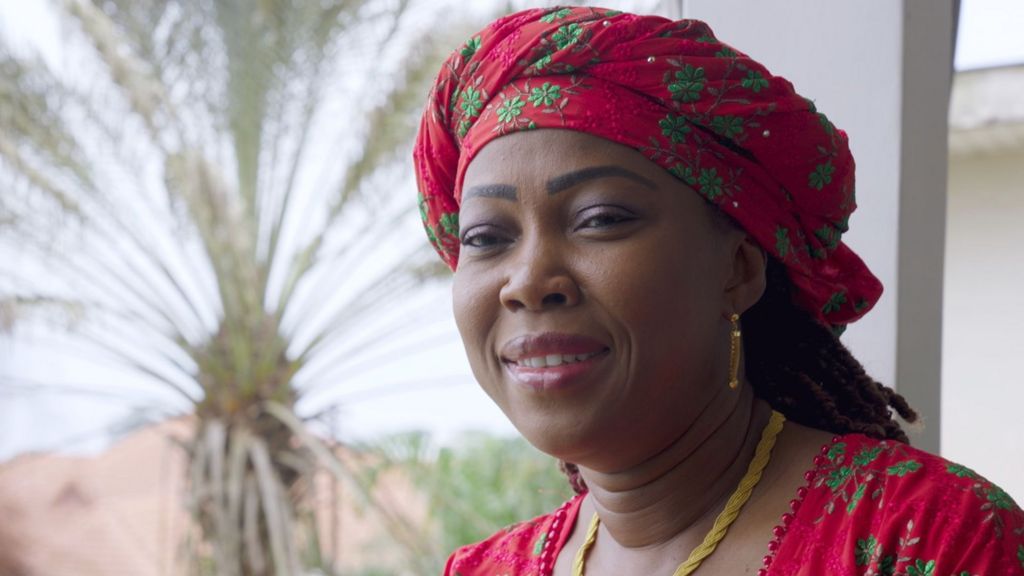
    Against the backdrop of decades of civil conflict, public health crises, and persistent economic inequality in Sierra Leone, one woman has risen to become the country’s most debated public figure: Fatima Bio, the wife of President Julius Bio. Her life story is one of extraordinary escape, reinvention, and unapologetic activism that has split public opinion, turning her into both a beacon of women’s empowerment and a lightning rod for political criticism.

    Fatima Bio’s fight for gender equality began long before she entered the presidential residence. Born to a diamond miner in Kano district, she was just 13 when her father arranged her marriage to a man in his 30s, a family acquaintance she had grown up knowing as an uncle. “There was no discussion. It was decided,” she recalls of the forced union. It was only the chaos of Sierra Leone’s 1996 civil war that created a window for her to escape, with help from relatives, and flee to the United Kingdom to claim asylum.

    She arrived at London’s Gatwick Airport on Christmas Eve, clad only in a thin T-shirt, shocked by the biting British cold but overwhelmed with relief at the chance of a new life. Moving in with a distant relative, she carved out a new future for herself: building a career as an actress, and eventually meeting Julius Bio during an interview about prominent Sierra Leonean diaspora figures. Today, she still retains that humble starting point: she holds a subsidized council tenancy in Southwark, central London, where her children reside. This arrangement has drawn fierce criticism from media on both sides of the Atlantic, given that more than 18,000 people are on Southwark’s social housing waiting list, with even the most high-need applicants facing years of waiting. But Fatima Bio has vigorously defended her right to the home, noting her children are British citizens and she pays rent on the property herself, having broken no rules. Southwark Council has declined to comment on individual tenancies, confirming only that it conducts regular compliance checks for all tenants.

    As first lady, Fatima Bio has broken long-held norms that frame the role as largely ceremonial. She has leveraged her personal experience of near child marriage to successfully champion a landmark national ban on child marriage, which came into force in 2024. She has also taken on the largely taboo issue of period poverty in Sierra Leone, where no national policy guarantees free sanitary products for schoolgirls. Unicef research confirms girls here often miss weeks of school each year due to a lack of access to hygiene products, and Fatima Bio has made free distribution of sanitary towels a core personal campaign. “If you miss 80 days of the school year, it is almost like missing an entire term. They are still not getting the equality they deserve,” she explains. “I want girls to get the education so they can be at the table, making decisions for themselves.”

    This accessible, unfiltered approach has won her widespread acclaim, particularly among young Sierra Leoneans, and saw her elected as head of the Organization of African First Ladies for Development (OAFLAD). She has cultivated a huge social media following, regularly posting informal content, dancing, and engaging directly with supporters, pushing back against the outdated international narratives that have long defined Sierra Leone only by conflict and blood diamonds. An interfaith Muslim-Christian couple, Fatima and President Bio also highlight the country’s long history of religious tolerance, she notes, pointing to the fact that sub-Saharan Africa’s first girls’ high school was built in Sierra Leone.

    But her refusal to stay in a traditional, ceremonial role has sparked fierce backlash. She is an active, visible member of the ruling Sierra Leone People’s Party (SLPP), openly campaigning for favored candidates, speaking at rallies without her husband, and publicly criticizing fellow politicians – even within her own party – and the Speaker of Parliament. During the 2025 State Opening of Parliament, she was booed and subjected to derogatory chants by opposition MPs. She responded by putting in earphones and listening to music, and shrugs off the hostility now: “It just shows that not all men are educated. Not all men believe in women’s empowerment and women’s equality. I have been an activist for far too long to be a calendar wife,” she says, rejecting the expectation that she only fill a symbolic role.

    Further controversy has followed her over a 2025 incident in which a notorious European drug kingpin, Jos Leijdekkers – known as “Chubby Jos,” who was sentenced in absentia to 24 years in prison for cocaine trafficking – appeared in a deleted social media video behind the first couple at a public church service. Fatima Bio flatly denies knowing Leijdekkers, dismisses rumors of a family connection to him as lies, and notes that as a Muslim, she does not control access to church events she attends alongside her husband. Critics have also raised unsubstantiated questions about unreported properties the first family is alleged to own, including mansions in The Gambia, which Fatima Bio has declined to address, saying she will only respond when proof is presented.

    Against the current backdrop of crippling cost-of-living pressures in Sierra Leone – exacerbated by global inflation, the fallout of the Russian invasion of Ukraine, and decades of uneven distribution of the country’s rich mineral wealth – most ordinary citizens prioritize daily survival over these controversies, political analysts note. Still, speculation has grown that Fatima Bio is laying groundwork to run for the presidency herself when her husband’s second and final term ends in 2028. While she dismisses claims of personal ambition, she leaves the door open to divine possibility: “I’m not hungry to be president. It’ll have to be the will of God. I’m a very fervent believer that when God wants something, he does it… If it is what God wants, no man can stop it.”

    This profile is part of the BBC World Service’s Global Women series, which elevates underreported stories of impactful women across the globe.

  • France moves to deport prominent Palestinian-Egyptian activist over criticism of Israel

    France moves to deport prominent Palestinian-Egyptian activist over criticism of Israel

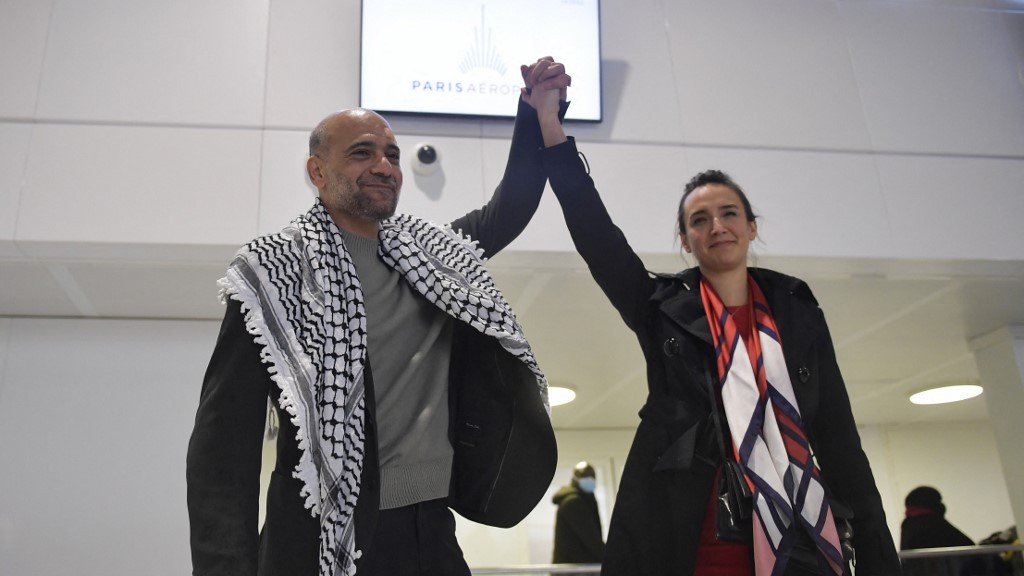
    A prominent Egyptian-Palestinian human rights defender and long-time political activist is facing expulsion from France, after French authorities labeled his pro-Palestinian advocacy a ‘serious threat to domestic public order’, escalating a wider crackdown on pro-ceasefire speech in the country that has alarmed rights campaigners.

    Ramy Shaath, a key organizing figure in the 2011 Arab Spring uprisings and former coordinator of the Egyptian branch of the Boycott, Divestment, Sanctions (BDS) movement, was released from arbitrary political detention in Egypt in January 2022 after direct intervention from French President Emmanuel Macron. At the time of his release, Paris framed his freedom as a victory for human rights, welcoming Shaath to reunite with his French wife on French soil.

    Now, just over two years later, the French government is moving to deport him. Shaath is scheduled to appear before a national deportation committee on May 21, and his attorney Damia Taharraoui confirmed that local prefecture officials could issue an immediate enforceable deportation order as soon as the hearing concludes.

    A copy of the deportation notice from Nanterre Prefecture, reviewed by Agence France-Presse, explicitly cites Shaath’s public pro-Palestinian activism and commentary as the justification for the expulsion. The activist confirmed to AFP that he has participated in multiple peaceful demonstrations calling for an immediate ceasefire in Gaza, an end to what he describes as Israeli genocide in the enclave, the imposition of economic sanctions and arms embargoes on Israel, and urgent multilateral international intervention to protect Palestinian civilians.

    “My stance has never changed since the time France worked to secure my release from Egyptian prisons where I was a political prisoner… but today, it seems they want to silence me,” Shaath told reporters.

    French authorities have specifically called out Shaath’s public descriptions of Israel’s military campaign in Gaza as a criminal occupation, and his references to Israeli forces as “terrorists” for targeting residential homes and civilian healthcare facilities. His legal team has argued that deportation is not a viable option in this case: Shaath no longer holds Egyptian citizenship, and cannot be sent to the Palestinian territories due to the active, large-scale conflict that has devastated Gaza since October 2023.

    In response to the expulsion order, Shaath’s family, friends and supporters launched a national campaign on Sunday to block the deportation, using the hashtag #FreeRamyShaath2 – a reference to his 2019 to 2022 imprisonment in Egyptian jails.

    In an official statement, the campaign condemned France’s abrupt reversal of position: “When he arrived in France, Ramy Shaath was welcomed as a prisoner of conscience, finally freed. President Macron himself publicly welcomed his release and his reunification with his French wife. France congratulated itself then on having helped wrest a human rights defender from the prisons of the Egyptian dictatorship. Today, that same State is turning against him with scandalous brutality by trying to portray him as a threat to public order. After claiming to denounce Egyptian arbitrariness, it is reproducing its logic: turning a Palestinian political voice into a security file.”

    Supporters added that even if the deportation attempt is blocked, French authorities have prepared alternative punitive measures, including imposing house arrest, seizing Shaath’s passport, and requiring mandatory daily check-ins with local police.

    Shaath’s case is not an isolated incident. Since the start of Israel’s military campaign in Gaza in October 2023, French student groups, teacher unions, and civil society organizations have repeatedly warned of growing systemic pressure against individuals who voice public support for Palestinian rights. Peaceful actions including demonstrations, public statements, and campus occupations have been increasingly criminalized, leading to disciplinary action, administrative fines, formal legal prosecution, and in multiple cases, permanent criminal records.

    Just last month, a controversial new bill tabled in the French National Assembly would codify new penalties for public criticism of Israel, including criminal sanctions for those who deny Israel’s right to exist or compare Israel’s actions to Nazi Germany. The draft legislation also expands the definition of terrorism-linked offenses to include so-called “implicit” incitement, broadening the scope for legal action against pro-Palestinian speakers.

    Context on the Egyptian political landscape further highlights the risks of deportation: the country ranks just 18 out of 100 on Freedom House’s 2024 Freedom in the World index, where lower scores reflect stricter restrictions on political rights and civil liberties. Independent human rights groups estimate that more than 60,000 political prisoners are currently detained in Egyptian facilities, and Human Rights Watch has documented that the Egyptian government engages in widespread, systematic repression of peaceful dissent, arbitrarily detaining and punishing critics and activists.

    Middle East Eye, which first reported on this case, reached out to the French Interior Ministry for comment and clarification on the government’s planned deportation destination for Shaath, but had not received a response as of the publication of this report.

  • Thai PM urges swift response to fatal Bangkok collision

    Thai PM urges swift response to fatal Bangkok collision

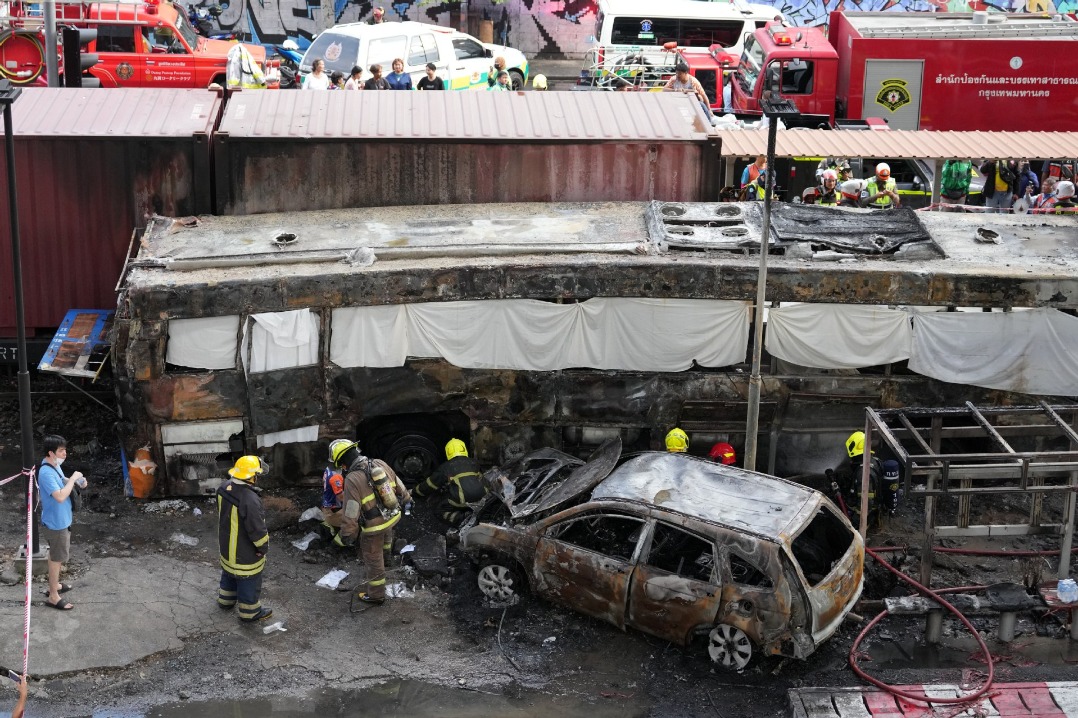
    A devastating collision between a freight train and a public bus in central Bangkok has left eight people dead and 25 others injured, prompting Thailand’s prime minister to demand rapid support for victims and a sweeping probe into transport safety across the capital. The deadly crash unfolded at approximately 3:40 p.m. local time on Saturday, in the immediate vicinity of the Airport Link Makkasan Station, one of the capital’s busy transit hubs.

    Eyewitness accounts confirm the public bus became trapped on the railway tracks after gridlocked city traffic forced it to stop in the train’s path. The force of the collision was so severe that the bus burst into flames, billowing thick black smoke across the surrounding neighborhood and damaging multiple vehicles parked or stopped nearby. Emergency response teams including urban search and rescue units, fire crews, and advanced medical teams were immediately dispatched to contain the blaze, extract survivors, and triage casualties.

    Official updates from Thai authorities later confirmed all eight fatalities were passengers aboard the public bus. All injured victims have been transported to adjacent medical facilities for urgent care, with several still listed in critical condition as of Sunday morning. The Thai Department of Rail Transport has formally launched a full investigation to determine the root causes of the disaster.

    Preliminary evidence points to chronic urban traffic congestion as a contributing factor, which left the bus unable to clear the railway crossing before the oncoming freight train arrived. Investigators are also conducting a full inspection of the crossing’s infrastructure to confirm whether warning signals and automatic safety barriers were operating correctly at the time of the crash.

    Thai Prime Minister Anutin Charnvirakul visited the accident site Saturday evening to meet first responders and oversee the response effort. During his visit, he issued explicit instructions for all relevant government agencies to accelerate victim assistance efforts, ensure full coverage of medical care for all those affected, complete a transparent full investigation, and conduct a comprehensive review of existing safety protocols for all at-grade railway crossings across the country.

    The tragedy has reignited long-simmering public concern over transportation safety in Thailand, particularly in densely populated, heavily congested urban centers where existing infrastructure has struggled to keep pace with growing road and rail traffic volumes. Many safety advocates have called for urgent upgrades to aging crossing systems and new traffic management strategies to reduce the risk of similar incidents in the future.

  • Trump’s White House ballroom loses federal funding proposed by Senate Republicans

    Trump’s White House ballroom loses federal funding proposed by Senate Republicans

    In a high-stakes legislative win for congressional Democrats, the Senate’s nonpartisan rule-keeper has struck down a provision that would have allocated $1 billion in taxpayer funds for security upgrades tied to former President Donald Trump’s controversial White House East Wing overhaul, which includes a planned $400 million ballroom. The ruling delivered a major early blow to Republican efforts to advance the spending provision through the budget reconciliation process, a procedural tool that allows budget-related bills to move forward with a simple majority and avoid the Senate filibuster. The provision was tucked into a larger omnibus spending package that would fund immigration agencies under the Department of Homeland Security.

    The ruling came from Senate Parliamentarian Elizabeth MacDonough, the respected procedural referee who has overseen Senate rules compliance since 2012. On Saturday, Democrats confirmed that MacDonough had deemed the security funding provision out of order, finding it violated the Byrd Rule — a longstanding Senate regulation that bars extraneous, non-budgetary provisions from being included in reconciliation legislation. MacDonough determined the funding covered activities that fall outside the jurisdiction of the Senate Judiciary Committee, which has oversight over the package, and failed to meet the Byrd Rule’s requirements for provisions included in reconciliation.

    Republicans originally pushed for the taxpayer-funded security upgrades after a late April shooting at a Trump gala event that the former president attended. The incident prompted the Trump administration to accelerate timelines for the ballroom project, which was already underway after construction crews demolished the historic East Wing last October to clear space for the new facility, which Trump has billed as “the finest ballroom of its kind, anywhere in the world”.

    Following the ruling, Trump has confirmed that private donors will cover the $400 million cost of the ballroom itself, but Republicans had sought to draw on public funds to cover Secret Service security upgrades for the renovated space. Democrats had forcefully pushed back against the public funding allocation, arguing that taxpayer money should not be used to fund a personal vanity project for the former president.

    “Republicans tried to make taxpayers foot the bill for Trump’s billion-dollar ballroom. Senate Democrats fought back — and blew up their first attempt,” Senate Minority Leader Chuck Schumer wrote in a post on social media platform X Saturday. “Now Republicans say they’re going back to the drawing board to try again. And Senate Democrats will be ready to stop them again. Americans don’t want a ballroom. They don’t need a ballroom. And they sure as hell should not be forced to pay for one.”

    Oregon Senator Jeff Merkley, the ranking Democratic member of the committee overseeing the package, warned that Republicans are expected to revise the legislation to appease Trump and resubmit the provision, adding that Democrats are fully prepared to challenge any new attempt to include the funding.

    Ryan Wrasse, a spokesperson for Senate Majority Leader John Thune, pushed back on suggestions the maneuver was irregular, noting that revisions to provisions during reconciliation are common. “Redraft. Refine. Resubmit. None of this is abnormal during a Byrd process,” Wrasse wrote on X.

    The ballroom project has sparked controversy from its inception, with preservation advocates pushing back aggressively against the demolition of the historic East Wing. The National Trust for Preservation filed a lawsuit against the Trump administration to halt construction, arguing that the teardown and renovations violate federal law because they were carried out without formal congressional approval. While a federal appeals court ruled in April that construction could continue on both the underground and above-ground portions of the project, legal challenges remain ongoing.

    The ballroom project is part of a broader slate of changes Trump has pushed for in Washington D.C. during his second term, rooted in his background as a real estate developer. The former president has already added gold decorative finishes to the Oval Office, replaced part of the White House Rose Garden with a patio modeled after the one at his Mar-a-Lago resort in Florida, renamed multiple prominent D.C. institutions including the Kennedy Center and United States Institute of Peace to include his name, and unveiled plans for a 250-foot triumphal arch near Arlington National Cemetery.

  • Iraqi farmer killed to hide evidence of two Israeli bases in country: Report

    Iraqi farmer killed to hide evidence of two Israeli bases in country: Report

    A New York Times investigation has uncovered explosive new details about unacknowledged Israeli military bases operating in Iraq’s western desert, linking the discovery of one facility to the fatal shooting of a local Iraqi shepherd who stumbled across the site by accident. The revelations have reignited deep tensions across Iraq, strained already fragile alliances in the region, and raised serious questions about alleged United States complicity in keeping the covert operations hidden from the Iraqi government.

    The disclosure of the secret outposts builds on reporting published last week by The Wall Street Journal, which first revealed that Israel established an initial covert presence in the remote western Iraqi desert amid its ongoing open conflict with Iran. According to initial accounts, the first installation was constructed in the weeks immediately before the outbreak of full-scale war in February, with the facility purpose-built to support Israeli air operations and house elite special forces detachments. In March, Israeli forces launched an airstrike against Iraqi troops that had nearly exposed the hidden outpost, using the site to coordinate the attack, the original report confirmed.

    Israeli outlet Maariv later added further context, reporting that the forward operating base also served as a staging point for Israeli rescue and commando units, whose core mission would be to extract downed Israeli aircrew from Iranian territory if any pilots were shot down during combat missions.

    The NYT investigation adds a previously unreported development: confirmation of a second secret Israeli base located in the same remote desert region. Unlike the first outpost, this facility was established before the 2025 full-scale war between Israel, the U.S. and Iran, and was actively used throughout the June 2025 conflict, unnamed officials told the NYT.

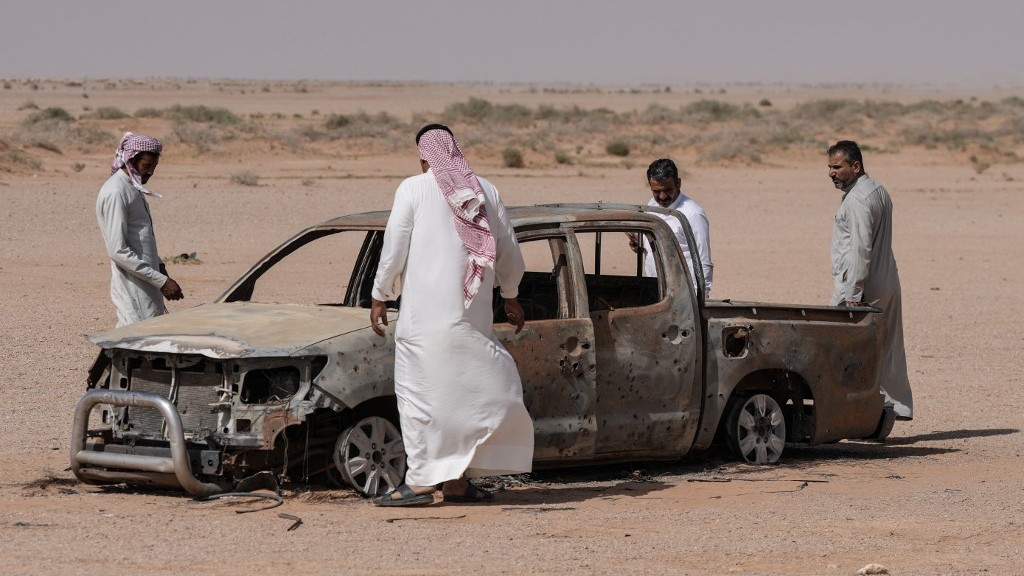
    The fatal incident that exposed the presence of the bases unfolded when 52-year-old Awad al-Shammari, a local Bedouin shepherd, accidentally came across one of the hidden installations while traveling through the desert to pick up groceries. Local witnesses told the NYT that after Shammari discovered the outpost, an Israeli helicopter opened fire on his pickup truck, killing him instantly.

    Shammari’s family spent two full days searching for him before they were able to confirm his death, with local residents too afraid of the sensitive site to approach the area immediately. “We were told that a burned-up pickup truck matching Awad’s was out there, but no one dared to go there,” his cousin Amir al-Shammari told the NYT. “When we got there, we found the car and his body burned beyond recognition.”

    The reports of uninvited Israeli military presence on Iraqi soil, and the killing of an unarmed civilian, have triggered widespread public anger across Iraq. The country has never maintained diplomatic relations with Israel, and public sentiment toward the Israeli government is overwhelmingly hostile. Iraqi citizens and political leaders are now increasingly demanding that the interim Iraqi government launch a full public investigation, disclose what officials knew about the bases, and hold all parties responsible for Shammari’s death accountable.

    One of the most damaging revelations to emerge from the NYT investigation is that U.S. officials have been aware of the existence of the base Shammari discovered since at least June 2025. Despite the United States’ formal security alliance with Iraq, which includes commitments to respect Iraqi territorial sovereignty, U.S. officials never shared information about the covert Israeli outpost with the Iraqi government, the NYT reported.

    Senior Iraqi political figures have already responded with sharp condemnation of both Israel and the United States. Raed al-Maliki, a prominent Iraqi member of parliament, accused the U.S. of effectively ceding control of Iraqi airspace and territory to Israel during the 2025 war. “The United States handed Iraqi airspace to the [Israeli] entity during the war and ordered radar systems to be shut down,” al-Maliki said in a statement responding to the reports. “Now it has become clear that Iraqi territory was also used to establish a secret intelligence centre or base for the Zionist entity.”

    As of press time, the Iraqi government has not issued any official public comment or response to the published reports. The revelations come at an already volatile moment for regional security, as the 2025 Iran-Israel war has left border regions across the Middle East unstable and fueled widespread anti-government sentiment in Iraq over perceived failures to protect territorial integrity.