博客

  • Western Australian government offering scheme offering residents $150 in cash to plant native trees

    Western Australian government offering scheme offering residents $150 in cash to plant native trees

    Thousands of adult residents across Western Australia are currently eligible to receive a one-off $150 cash rebate through a state government environmental initiative designed to boost local native tree populations. Launched one year ago under the name “Treebate,” the incentive program is administered by the WA Department of Water and Environmental Regulation, and has already drawn more than 2,000 participants with two months remaining until its first anniversary.

    The core premise of the program is simple: eligible residents 18 years and older can purchase a qualifying native tree from a local garden center or nursery, plant it on their residential property, and submit a rebate claim through the ServiceWA online platform to receive the full $150 purchase incentive. To qualify for the rebate, participants must meet three key requirements: select a native species that will grow to a minimum mature canopy height of 3 meters, provide clear photographic evidence of the tree labeled with its common or scientific name, and retain a tax invoice as official proof of purchase.

    The $6.9 million four-year program was developed in direct response to a pressing ecological crisis in Perth, where more than 4,500 native trees have been killed in recent years by invasive shot-hole borer insects. To complement the residential Treebate scheme, the state government has also launched a second complementary initiative, the WA Tree Recovery Program, which offers landowners the same $150 rebate for every native tree they replace after it was lost to the shot-hole borer infestation.

    WA Environment Minister Matthew Swinbourn emphasized the far-reaching value of expanding the state’s native tree cover, noting that every new tree planted across Perth and broader Western Australia delivers cascading social, economic, and environmental benefits that lift up the entire community. With more than $4 million in remaining funding allocated for the program, thousands more eligible residents are still able to claim the rebate before the program’s allocated funds are exhausted.

  • Shoot-and-scoot: Mobile missile launchers play key role in US Pacific deterrence strategy

    Shoot-and-scoot: Mobile missile launchers play key role in US Pacific deterrence strategy

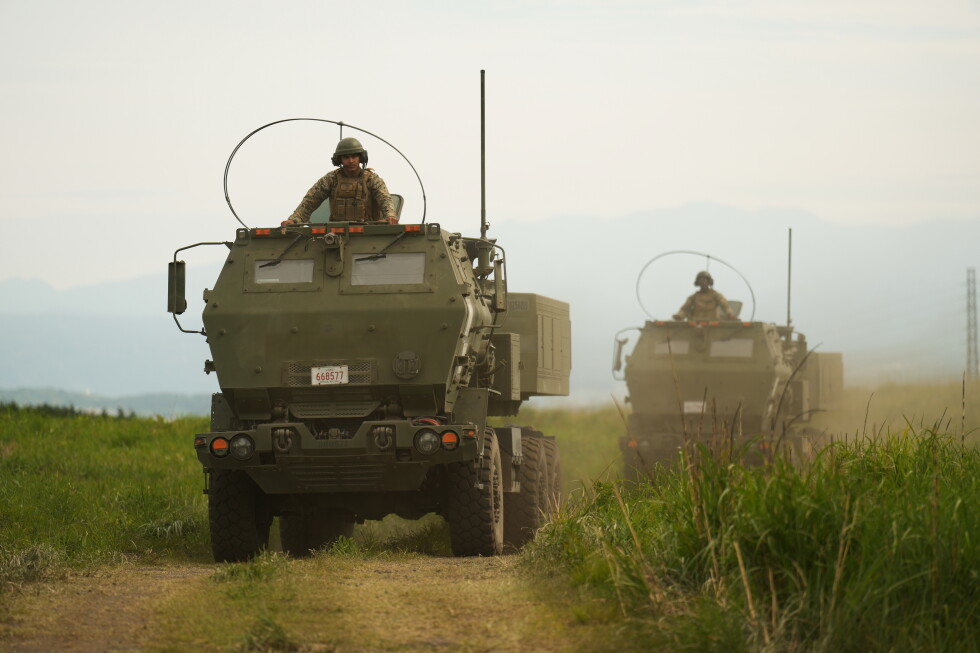
    GOTEMBA, Japan — In a dramatic display of military capability against the quiet backdrop of training grounds tucked into the foothills of Japan’s iconic Mount Fuji, the first rocket launched by U.S. Marines from a mobile launcher tore across the clear blue sky. A burst of flame preceded a thunderous roar that shattered the area’s pastoral calm, the engine’s bright orange glow leaving a sharp, visible trail in its wake. Five additional rockets followed in rapid sequence, before a second High Mobility Artillery Rocket System (HIMARS) truck emerged from its concealed position in a grove of evergreen trees, launched its own six-rocket salvo, and immediately withdrew back into cover.

    This week’s brief live-fire drill at the U.S. military’s Camp Fuji East Maneuver Area, which lasted only a matter of minutes, carries outsize strategic weight. As Washington works to deter potential Chinese military action against Taiwan — the self-governing democracy that Beijing claims as its own territory and has not ruled out seizing by force — the exercise serves as a clear signal of American military credibility to regional allies.

    The drill also lays bare a deliberate shift in U.S. military tactics across the Indo-Pacific, a change driven by the rapid modernization and expansion of China’s military capabilities over the past decade.

    “The United States’ core goal is preventing a Chinese invasion of Taiwan, but it is no longer banking on the traditional large-scale carrier-based attack air wings that defined past conflicts,” explained Euan Graham, senior defense analyst at the Australian Strategic Policy Institute. “During U.S. tensions with Iran, more than 40 American manned and unmanned aircraft were destroyed or damaged by a far less capable adversary. Against China, that vulnerability would be exponentially greater. That is why the U.S. is now prioritizing smaller, dispersed, mobile units.”

    According to the Pentagon’s most recent annual report to Congress, the new strategic framework aims to “deny any nation in the Indo-Pacific the ability to dominate the region or overpower our allies,” with a core focus on strengthening deterrence “through strength, not confrontation.”

    The core value of the HIMARS system is written into its name. Mounted on a standard military truck, the rocket pod can be easily hidden from drone or satellite surveillance, driven to a firing position to launch its precision GPS-guided missiles, then relocate to a new hidden position almost immediately — a tactic military officials call “shoot-and-scoot.”

    “Depending on the crew, we can be in and out in as little as two to four minutes,” said Sergeant Kevin Alvarez, section chief for one of the two HIMARS units from Fox Battery, 3rd Battalion, 12th Marines, 3rd Marine Division that took part in the Camp Fuji exercise.

    First introduced roughly 20 years ago, HIMARS saw combat service in Iraq and Afghanistan, but it rose to global public prominence only after Ukrainian forces deployed it to devastating effect against Russian invasion forces. Recent conflicts, marked by the widespread proliferation of surveillance drones that can quickly spot and target static artillery positions, have only underscored the critical advantage of mobile systems like HIMARS.

    “Compared to traditional cannon artillery, HIMARS is far quicker, far more maneuverable, and much easier to conceal,” noted Lieutenant Colonel Ryan Anness, commander of the 3rd Battalion. “Combine that with precision strike capability, and it’s easy to see why this system is a priority for so many nations, and for the U.S. military in the Pacific.”

    HIMARS is compatible with a range of missile types. Initially, the U.S. only supplied Ukraine with shorter-range munitions, but it later approved the delivery of Army Tactical Missile Systems (ATACMS), which can strike targets roughly 180 miles away. More recently, the U.S. has deployed the even longer-range Precision Strike Missile (PrSM), built by manufacturer Lockheed Martin, which can hit targets more than 310 miles away. According to Air Force General Dan Caine, chairman of the Joint Chiefs of Staff, PrSM saw its first combat use in February during operations against Iran, where HIMARS sank multiple Iranian surface ships and a submarine while docked in port.

    Graham explained that when paired with the Army’s Typhon system — another truck-based launcher that fires longer-range Tomahawk missiles, though it is less maneuverable than HIMARS — the two systems can fully cover the Taiwan Strait and the strategically critical Luzon Strait between the Philippines and Taiwan if deployed on Taiwan and nearby Japanese and Philippine islands. Both waterways are central to any potential Chinese invasion or blockade of Taiwan.

    “Ahead of any conflict over Taiwan, most large U.S. military assets would likely move outside the range of China’s coastal missile capabilities,” Graham said. “What would remain are highly survivable submarines, and small, dispersed units built around rugged, mobile systems like HIMARS.”

    The Wednesday drill at Camp Fuji incorporated strict safety protocols: Japanese military observers oversaw the exercise, and a local road was closed as a precaution against stray projectiles, with some launches using inert, concrete-filled dummy rockets to meet safety requirements. Though the precautions slowed the drill compared to real combat operations, Anness emphasized that the exercise delivered tangible value both for troop readiness and for strengthening alliances in the region.

    “Fielding long-range precision strike weapons directly bolsters deterrence here in the Pacific,” Anness said. “Training alongside our Japanese partners as often as we can ensures we are ready to respond if needed.”

  • Large fire causes extensive damage to family business

    Large fire causes extensive damage to family business

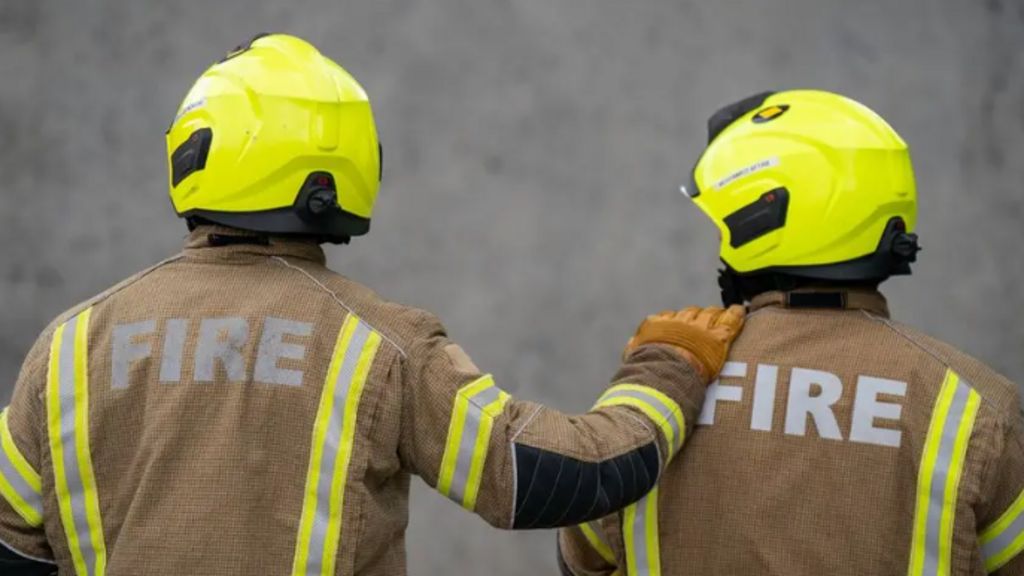
    A devastating large-scale fire has left a well-established local furniture business in County Donegal, Republic of Ireland, facing extensive damage after breaking out on Thursday evening. The blaze broke out at Cherrymore Kitchens & Bedrooms, a family-owned manufacturing and storage facility based in Donegal Town that this year marks three decades of operation.

    Emergency response was triggered at 22:46 local time, when authorities received a 999 emergency call reporting the fire. The first crew of firefighters arriving from Donegal Town quickly assessed that the blaze had already spread extensively across the site, prompting an immediate call for additional backup. In total, 58 firefighters from six brigades across Ballyshannon, Bundoran, Killybegs, Stranorlar, Letterkenny and the local Donegal Town area mobilized to bring the fire under control.

    Investigations into the cause of the fire remain ongoing as of Friday, with An Garda Síochána, Ireland’s national police service, confirming the incident is still an active investigation. According to Donegal County Council (DCC) officials, the fire was concentrated in a central storage area that held large volumes of raw wood used for the company’s custom kitchen and bedroom production. This core storage zone was “largely destroyed” by the flames, while other parts of the facility suffered widespread smoke damage. Three fire crews remained on site through Friday morning to dampen hotspots and ensure the fire did not reignite.

    Fortunately, no workers or members of the public were present at the facility when the fire broke out, and emergency services have not recorded any injuries related to the incident. In an official social media statement released Friday, Cherrymore’s leadership confirmed the absence of on-site staff at the time of the blaze, and extended gratitude to first responders for their rapid, extensive response. The company also thanked workers at the adjacent Donegal Waste site for their on-the-ground support during the emergency, as well as local community members for their patience as emergency access routes were managed.

    Widely recognized as one of the most modern and advanced manufacturing facilities in Ireland, Cherrymore employs a large local workforce and holds a prominent place in the County Donegal business community. The Ballybofey and Stranorlar Chamber of Commerce released a statement Friday expressing solidarity with the McLaughlin family, who own the business, as well as their staff, suppliers and customers who have all been impacted by the incident. The chamber emphasized that the loss comes as a particular blow this year, as the company prepares to mark 30 years of operation. Officials confirmed the local business community stands ready to provide any support necessary to help the firm recover.

    Donegal County Council also echoed these sentiments, sharing official condolences for the family and everyone affected by the serious incident. As of Friday, investigations into the exact cause of the fire are continuing.

  • Slow Food founder and advocate of clean eating Carlo Petrini dies in Italy at 76

    Slow Food founder and advocate of clean eating Carlo Petrini dies in Italy at 76

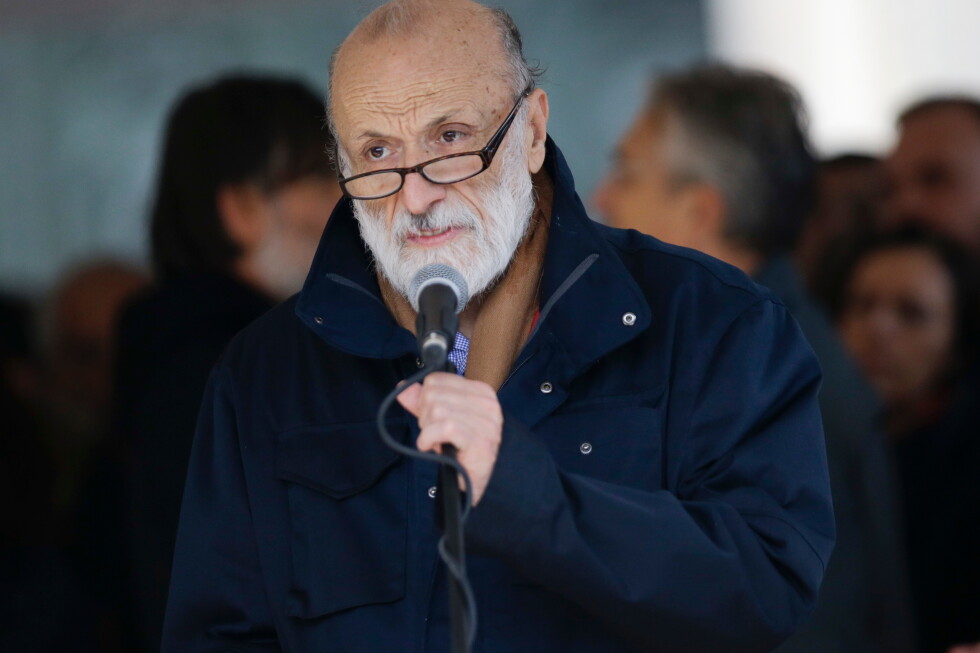
    Carlo Petrini, the trailblazing Italian thinker and activist who built the global Slow Food grassroots movement advocating for sustainable food systems, local heritage cuisine, and ethical agricultural practices, passed away on Friday at his home in Italy’s northwestern Piedmont region at the age of 76. The Slow Food organization formally confirmed his death in an official statement this week.

    In paying tribute to Petrini, Slow Food’s leadership remembered him as a far-sighted pioneer and public intellectual whose life’s work was rooted in unwavering dedication to collective well-being, respectful human connection, and stewardship of the natural environment. What would grow into a worldwide food reform movement began as a small but fierce act of resistance in 1980s Italy, when a cohort of food activists led by Petrini pushed back against the rapid spread of fast food culture. The movement’s public launch came in 1986, when Petrini and his supporters held a high-profile protest directly on the steps of a newly opened McDonald’s location at Rome’s iconic Spanish Steps, a moment that first brought their mission to global public attention. Originally named Arcigola, the organization would soon rebrand to adopt the now-famous name Slow Food.

    Three years after the Rome protest, in 1989, delegations representing more than 20 countries gathered in Paris to formally endorse the Slow Food Manifesto, and delegates unanimously elected Petrini as the movement’s first president. He would hold this leadership role for more than three decades, stepping down only in 2022.

    Under Petrini’s guidance, the movement coalesced around a simple but transformative core philosophy: that all food should be “good, clean and fair” — good in flavor and quality, clean in its production process to protect ecosystems and consumer health, and fair for producers and workers who grow and process it. This accessible, values-driven framework allowed the movement to spread rapidly across Italy before expanding to more than 160 countries around the world. Restaurants that commit to Slow Food’s principles display a recognizable certification sticker, formally called the Snail of Approval, marked by the movement’s iconic snail logo.

    Over his decades of leadership, Petrini spearheaded a series of landmark institutional initiatives to embed Slow Food’s values into global food systems. In 2004, he launched Terra Madre, a groundbreaking network that connects small-scale farmers, fishers, chefs, and food academics to share knowledge and advance the movement’s mission across borders. Later, he founded the University of Gastronomic Sciences in northern Italy, the world’s first higher education institution dedicated to the multidisciplinary academic study of food and food culture. This innovative approach earned formal recognition from the Italian government in 2017, when national education officials established an official Bachelor’s degree program in gastronomic sciences modeled on the university’s curriculum. To date, the institution has trained roughly 4,000 food sector professionals from more than 100 countries, according to Slow Food data.

    In 2017, Petrini partnered with Bishop Domenico Pompili of Verona to launch the Laudato Si’ Communities, a network of around 80 local groups that translate the environmental principles laid out in Pope Francis’ 2015 environmental encyclical Laudato Si’ into on-the-ground food and sustainability action.

    Beyond his activism and institution-building, Petrini shared his philosophy with global audiences through a number of influential published works. His best-known books include *Slow Food Nation: Why Our Food Should Be Good, Clean and Fair* and *Slow Food: The Case for Taste*, the latter of which features a foreword from American farm-to-table movement pioneer Alice Waters.

  • Uganda’s electric buses drive green shift

    Uganda’s electric buses drive green shift

    Across the bustling thoroughfares of Kampala, Uganda’s bustling capital, a quiet but transformative shift is reshaping the city’s daily transit landscape: sleek, domestically manufactured electric buses are now a regular part of urban mobility, pushing the East African nation’s ambitious push for low-carbon, sustainable public transportation forward.

    The 40-seater electric buses, finished in a distinctive green-and-gray design, have captured public curiosity since their launch. Fitted with on-board WiFi, they let passengers stream content and share their travel experiences to social media in real time, turning ordinary commutes into shareable moments that have boosted the vehicles’ popularity among local residents.

    Uganda’s foray into electric mobility is not a recent development. The country first marked its entry into the sector in 2016, when it unveiled the Kayoola electric bus – Africa’s first solar-powered electric vehicle, whose name translates loosely to “mass carrier” in local languages. Today, that early prototype has evolved into a full-fledged national initiative, led by domestic automotive manufacturer Kiira Motors Corporation (KMC) and its subsidiary E-Bus Xpress Kiira Ltd, which are spearheading efforts to scale electric mobility across the country.

    During a recent media tour of KMC’s Kiira Vehicle Plant in Jinja, eastern Uganda, KMC managing director Ian Kyeyune announced that the fleet of electric buses operating on Kampala’s urban routes will expand from 16 to 45 within just one month. Looking ahead, the company has set a target to manufacture more than 1,500 electric buses over the coming 12 months, a milestone that aligns with Uganda’s national e-mobility strategy, which aims to put 15,000 electric vehicles on the country’s roads by 2030.

    To clear the way for this green transition, Kampala’s municipal authorities have already begun overhauling urban traffic management. The city has eliminated curbside parking in dense downtown districts and introduced dedicated bus lanes, measures designed to cut through chronic congestion and prioritize public transit in a city where gasoline and diesel-powered private vehicles have long dominated road space. The national government is also encouraging growth in the sector by opening it up to private investment: under a new franchise framework, independent transport operators can own full fleets, while outside investors can purchase stakes in individual buses over fixed contract periods.

    Beyond their environmental benefits, KMC technical leaders highlight that the electric buses deliver substantial economic advantages over traditional diesel-powered alternatives, from lower upfront procurement costs to reduced ongoing service and maintenance expenses. “We save over 60 percent of energy costs,” Kyeyune explained. “While an ordinary diesel taxi would spend 1,800 Ugandan shillings ($0.48) per kilometer, we only spend 800 shillings on energy.” Kyeyune added that lower operating costs mean private operators can recoup their initial investment in approximately three years, and the buses’ batteries can be repurposed for grid energy storage paired with solar power systems once they reach the end of their automotive lifespan.

    The 12-year lifespan batteries currently used in the buses are sourced from Chinese suppliers, and KMC has built a close collaborative partnership with Chinese automotive firms to build domestic technical capacity in electric vehicle manufacturing. “We are working with a partner from China because their auto industry, in terms of electric vehicles, is the best in the world. We want to learn from the best,” said Richard Madanda, KMC’s director of production.

    Uganda is already looking to expand its electric mobility footprint beyond its national borders. In late 2025, the country completed a pan-African demonstration expedition, where a single domestically built electric bus traveled 13,000 kilometers across five Southern and East African nations: Tanzania, Zambia, Botswana, Eswatini, and South Africa, showcasing the viability of Ugandan-built electric transit for markets across the continent.

  • Irish PM to discuss Middle East conflict with Pope

    Irish PM to discuss Middle East conflict with Pope

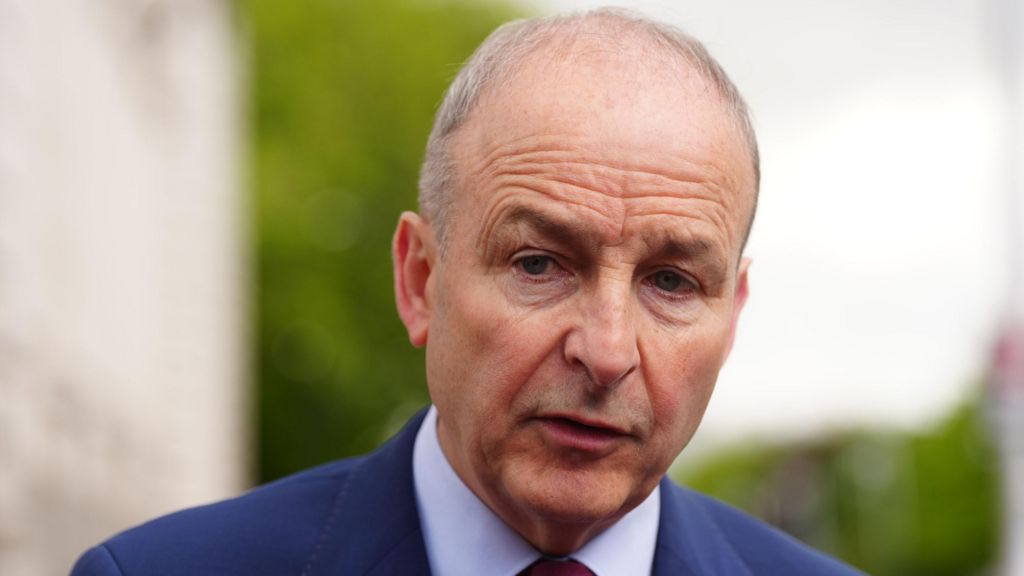
    On Friday morning, Irish Taoiseach Micheál Martin touched down in Vatican City to begin a scheduled private audience with Pope Leo XIV, marking a significant high-level diplomatic and faith-based engagement between Ireland and the Holy See. Martin and his spouse Mary were formally welcomed in Vatican’s iconic San Damaso Courtyard by Petar Rajic, Prefect of the Papal Household, alongside members of the papal gentlemen’s delegation.

    Ahead of the closed-door meeting, which is scheduled to run for a maximum of 35 minutes, Martin outlined the key priorities he intends to raise during the discussion. Top of the agenda are the ongoing armed conflicts tearing through the Middle East, Ukraine, and Sudan, with the Taoiseach emphasizing a shared commitment between Ireland and the Holy See to advancing peace through dialogue. Martin also noted that Pope Leo XIV has centered his papacy on peace as a defining mission, aligning closely with Ireland’s long-held diplomatic priorities.

    “We share many core values: a deep commitment to a rules-based international order, and a belief that dialogue and diplomacy are the only path to lasting peace,” Martin told reporters ahead of the audience. “I look forward to exchanging views with him on how we can collaborate to advance effective multilateralism as the most effective tool to tackle our shared global challenges and bring an end to ongoing conflicts.”

    Domestically, Martin plans to update the Pope on the continuing reconciliation process across the island of Ireland, including the sensitive, critical work of addressing the violent legacy of decades of conflict known as the Troubles. The Taoiseach highlighted that faith leaders and clergy from all Christian denominations have played an indispensable role in advancing peace and reconciliation across Ireland, and that this input will be a core focus of the conversation.

    The meeting will also create space for a frank reflection on the historical relationship between the Irish government and the Catholic Church, including the ongoing harms and unmet needs of survivors of clerical abuse. Martin confirmed this difficult but necessary topic will not be avoided during the discussion.

    Beyond his audience with the Pope, Martin has a full schedule of diplomatic and institutional engagements during his trip. He will hold a separate bilateral meeting with Cardinal Secretary of State Pietro Parolin, the top diplomat of the Holy See, before traveling to the Pontifical Irish College in Rome. During his stop at the college, Martin will meet with members of its community, tour the institution’s historic archives, and announce new Irish government funding to support the cataloguing, digitization, and long-term preservation of the archive collection. This investment is part of a broader project to improve conservation, expand public access, and boost outreach for the college’s historical holdings.

    The Vatican visit comes at a key juncture for Irish foreign policy: ahead of Ireland’s assumption of the rotating Presidency of the Council of the European Union, which begins on 1 July. Martin confirmed he will outline Ireland’s policy priorities and planned agenda for the six-month presidency during his discussions at the Vatican.

    Following the conclusion of his engagements in Vatican City, Martin will travel to Rome for a meeting with Italian Prime Minister Giorgia Meloni later on Friday. This stop follows a bilateral meeting Martin held with French President Emmanuel Macron at the Élysée Palace in Paris on Thursday, as part of a broader European diplomatic tour ahead of Ireland’s EU presidency.

    The meeting marks the latest high-level engagement between Irish leaders and the Vatican. In 2018, then-Taoiseach Leo Varadkar met with Pope Francis during the Pope’s historic visit to Ireland, the first papal visit to the country in 39 years. Speaking in 2025, Varadkar noted that the 2018 meeting took place at a time when relations between the Irish state and the Catholic Church were already strained, amid ongoing reckoning with the clerical abuse crisis.

  • Cubans grapple with fuel shortages and blackouts as US steps up pressure

    Cubans grapple with fuel shortages and blackouts as US steps up pressure

    Decades after a fateful mid-1990s incident that left four people dead, the shadow of a Cold War-era tragedy has reemerged to roil already strained relations between the United States and Cuba. On Wednesday, U.S. authorities unsealed a grand jury indictment charging former Cuban president Raúl Castro and five other co-defendants with murder over the 1996 shooting down of two civilian aircraft operated by Brothers to the Rescue, a Cuban-American activist group. All four people killed in the incident, including three U.S. citizens, have remained a flashpoint between the two nations for nearly 30 years, and the charges have etched the event back into the collective consciousness of communities in both Havana and Miami.

    The announcement comes amid a sharp escalation of pressure from the Trump administration, which has spent years pushing for a regime change in Cuba. The White House has repeatedly called for broad political and economic overhauls on the island, with publicly stated demands including opening the island’s economy to expanded foreign direct investment and removing Russian and Chinese intelligence assets from Cuban territory. U.S. Secretary of State Marco Rubio has framed Cuba as an ongoing national security threat to the U.S., and recently warned that the odds of reaching a peaceful diplomatic breakthrough between the two nations remain “not high.” Cuban President Miguel Díaz-Canel has already rejected the charges, dismissing them as a baseless political stunt with no legitimate legal standing.

    While global headlines focus on the diplomatic firestorm, most ordinary Cubans on the island have been cut off from the full scope of the news, as the country grapples with crippling 20-hour daily blackouts that have paralyzed daily life. The prolonged power outages stem from a near-total U.S. fuel blockade that has disrupted every sector of the Cuban economy, from public services to residential living. For vulnerable residents of Havana, the crisis has upended basic routines and created life-threatening conditions.

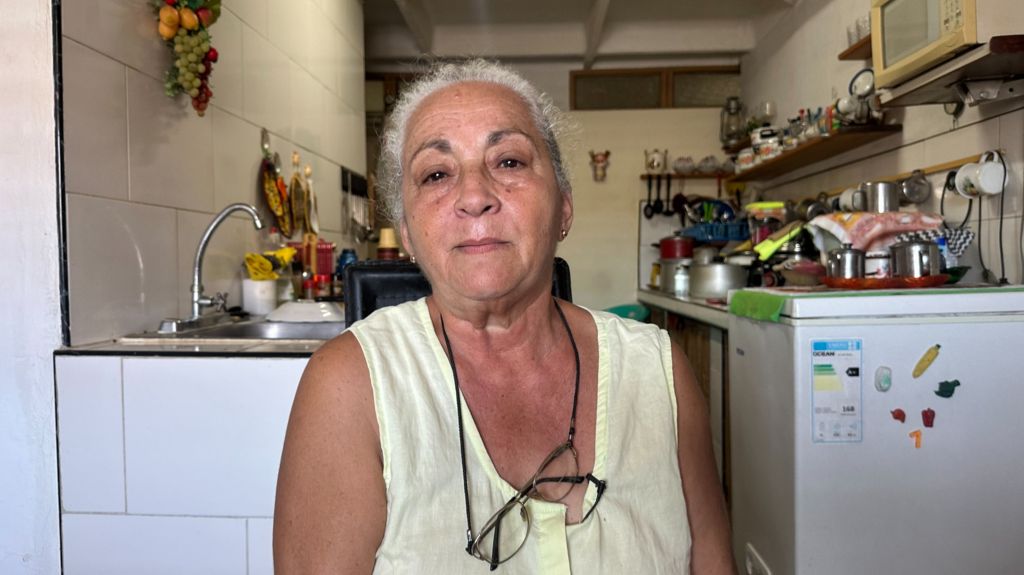
    Seventy-something widow Ana Rosa Romero, a retired philosophy teacher who lives in an 11th-floor apartment in Havana’s iconic Granma Dos social housing complex, knows this hardship firsthand. When her husband passed away recently, a neighborhood blackout left her unable to arrange for his body to be moved for hours, forcing her to sit with his remains alone in the dark. These days, with the building’s elevator out of service more often than it runs, Romero says she barely leaves her small apartment. A 70-year-old woman carrying groceries up 11 flights of unlit stairs faces significant fall risks, and uncertainty hangs over every outing: no one knows when the power will cut out, or how long the blackout will last.

    “ If you do venture out, it’s with the uncertainty of not knowing what’s coming next. When is the power due to go out? When is it coming back? How many hours are we going to be without electricity?” Romero says. A framed portrait of Fidel Castro hangs on her wall, a quiet reminder of the decades of political upheaval and economic pressure her country has already weathered.

    Juana Garcia, the building’s superintendent, says the crisis has hit vulnerable residents the hardest. Nine tenants rely on pacemakers to regulate their heartbeats, and cannot risk being caught in a blackout without power to their devices, or trapped between floors if the elevator cuts out mid-ride. That has forced many to stay confined to their apartments for weeks on end. For six months straight, Garcia has carried or pumped fresh water up multiple flights of dark stairs for more than 100 residents, including bedridden elderly tenants who would go without water entirely without help from neighbors. “It’s dangerous to go up and down these stairs without lights. This is such a difficult situation. We know we’re going through tough times, but it’s sad to see this great building stuck in the darkness,” Garcia said. She holds out hope that the Cuban government will be able to provide solar panels to bring at least small relief to the building’s most vulnerable residents.

    Elsewhere in the capital, in the Barrio Toledo neighborhood, Cuban officials are pushing forward with an innovative small-scale project to address the country’s decades-old acute housing crisis, even amid fuel and power shortages. Around 40 decommissioned shipping containers are being repurposed into fully functional two-bedroom homes, each fitted with a kitchen and bathroom. A dozen of the container units are nearly complete, with exterior shipping company logos still visible on the metal walls and new windows cut into the sides. The development will eventually center on a small community playground and a local corner store, but no residents have moved in yet as work proceeds through ongoing supply constraints.

    Critics warn that the metal structures will trap unbearable heat during Cuba’s hot, humid summer months. But Orlando Diaz, the site’s foreman and a self-identified committed revolutionary, argues the adaptive reuse project is a practical, well-ventilated solution to a critical housing shortage. “This technique is already being used successfully in other countries,” he notes. “We’re just catching up.” Like many Cubans, Diaz plans to join a government-organized march this Friday to show public support for Raúl Castro and reject the U.S. charges. He describes the indictment as a “vile lie,” and points out that Washington never brought charges against late Cuban-American militant Luis Posada Carriles, who Cuba has long accused of orchestrating the 1973 bombing of a Cuban airliner that killed 73 people.

    When asked if he believes the indictment could be a precursor to U.S. military action, similar to the January removal of Venezuelan President Nicolás Maduro by U.S. forces, Diaz is unyielding. “Venezuela is Venezuela, but Cuba is Cuba,” he says defiantly. “And here we don’t lack the necessary courage to face this moment.”

    Back on her 11th-floor balcony, Ana Rosa Romero gazes out across Estadio Latinoamericano, the iconic baseball stadium where just over a decade ago she watched then-President Barack Obama and Raúl Castro sit side by side at an exhibition game, a moment that raised hopes of a long-term thaw in U.S.-Cuba relations. Today, she contemplates the prospect of U.S. military intervention on her island, and speaks with the quiet resolve of a person who has lived through generations of crisis. “At my age, I know I’m going to die in Cuba,” she says matter-of-factly. “We’ve faced so many things over the years. And if now we have to face an invasion, then I guess we’ll face that too.”

  • Real Madrid coach Alvaro Arbeloa says will leave post

    Real Madrid coach Alvaro Arbeloa says will leave post

    In a confirmation that has sent ripples through European football, Real Madrid’s interim head coach Alvaro Arbeloa announced Friday that he will step down from his position at the end of the current campaign, which has ended without a single trophy for the Spanish giants.

    When pressed by reporters at a press conference to confirm widespread speculation that he would not return for the 2025-26 season, Arbeloa gave a direct affirmative answer. The confirmation comes amid persistent, high-profile reports that veteran Portuguese manager Jose Mourinho is on the brink of making a sensational return to the Santiago Bernabeu to take over the top job.

    Arbeloa’s tenure at the helm of Los Blancos wraps up this weekend, when the club hosts Athletic Bilbao in its final La Liga fixture of what has widely been described as a turbulent, underwhelming season. The former Real Madrid full-back was hand-picked by club president Florentino Perez back in January to step into the role following Xabi Alonso’s departure to take over Bayern Munich, but his short stint in charge never delivered the silverware the club demanded.

    Now, with Mourinho widely expected to step into Arbeloa’s role, the departing coach made clear he has no interest in joining the new manager’s technical staff should the appointment go through. “Mou has a fantastic technical team, he’s got good people around him,” Arbeloa explained to reporters. “If he comes to Madrid he will come with his team. There’s no chance that I would be with him.”

    As for what comes next for his career, Arbeloa admitted he has not yet mapped out his future plans. “Then, my future… from Monday I’ll think about that,” he said.

    The 42-year-old has deep, longstanding ties to Real Madrid, having played for the first team between 2009 and 2016 before moving into coaching within the club’s youth academy. He framed his impending exit as a temporary parting rather than a permanent goodbye to the club he considers his lifelong home.

    “I hope it’s a see you later… I’ve always considered this my home, I’ve belonged to Madrid for 20 years in various roles,” Arbeloa said. “It will be my last game this season as coach of Real Madrid, I don’t know if it will be the last game of my life as coach of Real Madrid. We never know. I’ll try and enjoy it and try to get the win.”

  • NATO ministers sound out US on Trump’s ‘confusing’ troop moves

    NATO ministers sound out US on Trump’s ‘confusing’ troop moves

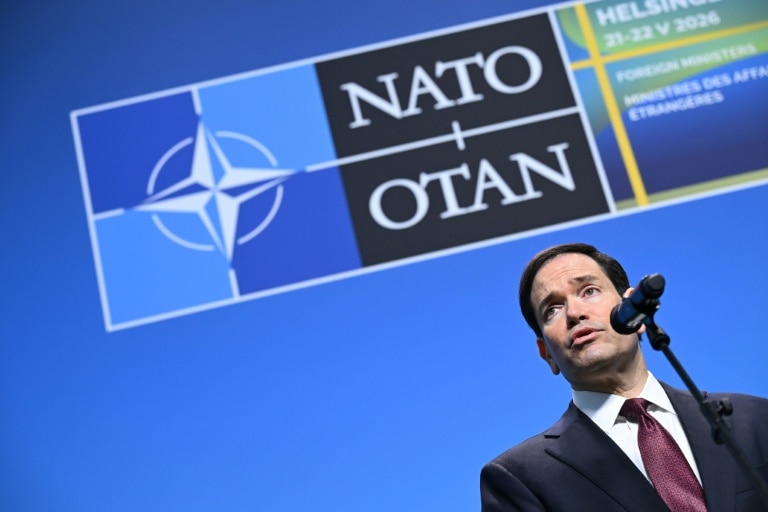
    As senior diplomats from across NATO gathered in the southern Swedish city of Helsingborg for a critical pre-summit meeting on Friday, European member states moved quickly to press U.S. Secretary of State Marco Rubio for clear answers on the Trump administration’s rapidly shifting plans for troop deployments across the continent. The talks were framed by a urgent goal: defusing growing tensions with President Donald Trump over Washington’s Iran policy, and smoothing over rifts before the alliance’s high-stakes July leaders’ summit scheduled for Ankara, Turkey.

    The confusion that dominated the meeting was sparked by Trump himself. Just as foreign ministers convened, the U.S. president announced he would deploy 5,000 additional troops to Poland, a sudden reversal of an earlier plan that had been scrapped by the White House. While the sudden shift drew public praise from NATO Secretary General Mark Rutte and Poland’s foreign minister, it stoked quiet but widespread concern among allies about a growing lack of strategic coordination between Washington and its European partners.

    “It is confusing indeed, and not always easy to navigate,” Swedish Foreign Minister Maria Malmer Stenergard told reporters on the sidelines of the gathering. The latest about-face came only weeks after Trump abruptly announced he would withdraw 5,000 U.S. troops from Germany, amid a high-profile public dispute with German Chancellor Friedrich Merz.

    Speaking to his NATO counterparts, Rubio pushed back against suggestions that the troop adjustments were intended to punish European allies, framing the moves as routine strategic planning. “All decisions on force posture are not punitive,” Rubio said. “We constantly need to reexamine our deployments to meet our evolving global security needs.”

    Many NATO ministers acknowledged that gradual U.S. force drawdowns in Europe were expected, as Washington reorients its military focus to other global threat hotspots and European allies have pledged to take on greater responsibility for their own territorial defense. But leaders stressed that any changes need to follow a predictable, structured framework to give European governments time to build up their own military capacity. “What is important is that it happens in a structured manner, so that Europe is able to build up when the US reduces its presence,” Norwegian Foreign Minister Espen Barth Eide noted.

    The Helsingborg meeting was called specifically to address Trump’s repeated public criticism of European allies over their response to his ongoing conflict with Iran, which has included open threats from the president that he could consider pulling the United States out of the 75-year-old alliance entirely. Diplomats told reporters the core goal of the pre-summit talks was to move past current disagreements and set a unified tone for the Ankara gathering, where allies plan to highlight their progress in meeting increased defense spending pledges they made to Trump last year.

    “The president’s views, frankly disappointment, at some of our NATO allies and their response to our operations in the Middle East — they’re well documented — that will have to be addressed,” Rubio told reporters. He added that the upcoming Ankara summit would be “probably one of the more important leaders’ summits in the history of NATO.”

    In a bid to ease tensions with Washington, a number of European allies have already repositioned naval vessels closer to the Middle East, with plans to assist security operations in the Strait of Hormuz once the Iran conflict concludes. “Europeans have heard the message,” Rutte affirmed. German Foreign Minister Johann Wadephul also clarified that Berlin does not expect NATO to launch an independent alliance-led military mission in the region.

    Trump’s second term in office has already brought a string of unexpected crises for the transatlantic alliance, including a tense standoff last year when the president openly mused about seizing Greenland from Denmark. Now, the ongoing fallout from the Iran war threatens to overshadow the entire Ankara summit, which NATO leaders had hoped would focus on demonstrating progress toward the commitment European allies made last year: increasing collective defense spending to 5% of GDP by 2030. Diplomats confirmed that a wave of major new arms purchases are being finalized in time for the summit, to show Trump that allies are following through on their promises with tangible action.

    Beneath the public scramble to accommodate Trump’s demands, there is a growing quiet consensus among European capitals that the bloc must take increasing responsibility for its own security. Led by Germany, which has ramped up military spending dramatically in recent years, European allies are taking a more assertive stance, though current discussions center on integrating greater European leadership into the existing NATO framework rather than building a separate independent defense alliance.

    “As the US reevaluates its level of engagement and presence in Europe within the alliance, it is exactly the opportunity… to Europeanise NATO,” French Foreign Minister Jean-Noel Barrot said.

    One area where Europe has already begun to take greater independent action is in its long-term support for Ukraine, which remains a core unifying priority for the alliance. Rutte is currently pushing allies to increase commitments to supply weapons to Kyiv, and recently floated a plan that would require all European NATO members and Canada to commit 0.25% of their annual GDP to arms purchases for Ukraine. However, the NATO chief acknowledged that the proposal was quickly rejected by a number of key allies, including major European economies like France, Spain, and Italy, which have already been criticized for contributing less than their fair share to the Ukraine effort.

    “What I want to achieve is that the burden is more evenly spread, that there is more burden sharing here,” Rutte said. “At the moment it is only six or seven allies who are doing the heavy lifting.”

  • Injury carnage: Bulldogs lose superstar forward to broken arm, Storm winger forced off with rib issue

    Injury carnage: Bulldogs lose superstar forward to broken arm, Storm winger forced off with rib issue

    The Canterbury Bulldogs’ already grim NRL season has taken another devastating turn, after their star starting forward Jacob Preston suffered a broken forearm in the opening minutes of their highly anticipated Friday clash against the Melbourne Storm, effectively dashing the club’s hopes of ending a five-match losing skid. Preston was forced to leave the pitch just 12 minutes into the first half of the game, after sustaining the injury that the club confirmed will rule him out of action for a minimum of several weeks. This latest setback comes at a brutal time for the Bulldogs, who have plummeted down the competition ladder after a shocking upset win over the premiers Panthers earlier in the season. The club has already been missing key forward Viliame Kikau for an extended period, after he suffered a season-disrupting torn pectoral muscle. With the State of Origin series approaching, which will pull top representative talent away from their NRL clubs, Canterbury’s recruitment and coaching staff now face an urgent scramble to find a replacement edge forward to fill the gap left by Preston’s injury. The Storm, who entered the match as clear favorites, were not immune to injury trouble of their own on Friday: starting winger Will Warbrick was pulled from the game midway through the first half after complaining of a rib injury. At the time of Warbrick’s exit, Melbourne held a comfortable 18-6 lead over the Bulldogs on the road.