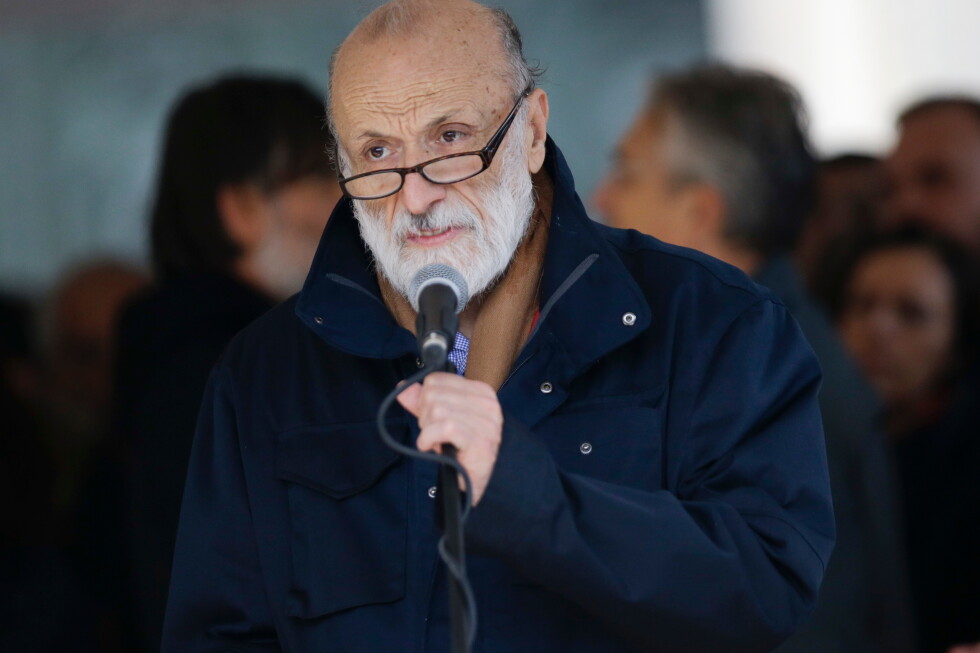
Carlo Petrini, the trailblazing Italian thinker and activist who built the global Slow Food grassroots movement advocating for sustainable food systems, local heritage cuisine, and ethical agricultural practices, passed away on Friday at his home in Italy’s northwestern Piedmont region at the age of 76. The Slow Food organization formally confirmed his death in an official statement this week.
In paying tribute to Petrini, Slow Food’s leadership remembered him as a far-sighted pioneer and public intellectual whose life’s work was rooted in unwavering dedication to collective well-being, respectful human connection, and stewardship of the natural environment. What would grow into a worldwide food reform movement began as a small but fierce act of resistance in 1980s Italy, when a cohort of food activists led by Petrini pushed back against the rapid spread of fast food culture. The movement’s public launch came in 1986, when Petrini and his supporters held a high-profile protest directly on the steps of a newly opened McDonald’s location at Rome’s iconic Spanish Steps, a moment that first brought their mission to global public attention. Originally named Arcigola, the organization would soon rebrand to adopt the now-famous name Slow Food.
Three years after the Rome protest, in 1989, delegations representing more than 20 countries gathered in Paris to formally endorse the Slow Food Manifesto, and delegates unanimously elected Petrini as the movement’s first president. He would hold this leadership role for more than three decades, stepping down only in 2022.
Under Petrini’s guidance, the movement coalesced around a simple but transformative core philosophy: that all food should be “good, clean and fair” — good in flavor and quality, clean in its production process to protect ecosystems and consumer health, and fair for producers and workers who grow and process it. This accessible, values-driven framework allowed the movement to spread rapidly across Italy before expanding to more than 160 countries around the world. Restaurants that commit to Slow Food’s principles display a recognizable certification sticker, formally called the Snail of Approval, marked by the movement’s iconic snail logo.
Over his decades of leadership, Petrini spearheaded a series of landmark institutional initiatives to embed Slow Food’s values into global food systems. In 2004, he launched Terra Madre, a groundbreaking network that connects small-scale farmers, fishers, chefs, and food academics to share knowledge and advance the movement’s mission across borders. Later, he founded the University of Gastronomic Sciences in northern Italy, the world’s first higher education institution dedicated to the multidisciplinary academic study of food and food culture. This innovative approach earned formal recognition from the Italian government in 2017, when national education officials established an official Bachelor’s degree program in gastronomic sciences modeled on the university’s curriculum. To date, the institution has trained roughly 4,000 food sector professionals from more than 100 countries, according to Slow Food data.
In 2017, Petrini partnered with Bishop Domenico Pompili of Verona to launch the Laudato Si’ Communities, a network of around 80 local groups that translate the environmental principles laid out in Pope Francis’ 2015 environmental encyclical Laudato Si’ into on-the-ground food and sustainability action.
Beyond his activism and institution-building, Petrini shared his philosophy with global audiences through a number of influential published works. His best-known books include *Slow Food Nation: Why Our Food Should Be Good, Clean and Fair* and *Slow Food: The Case for Taste*, the latter of which features a foreword from American farm-to-table movement pioneer Alice Waters.