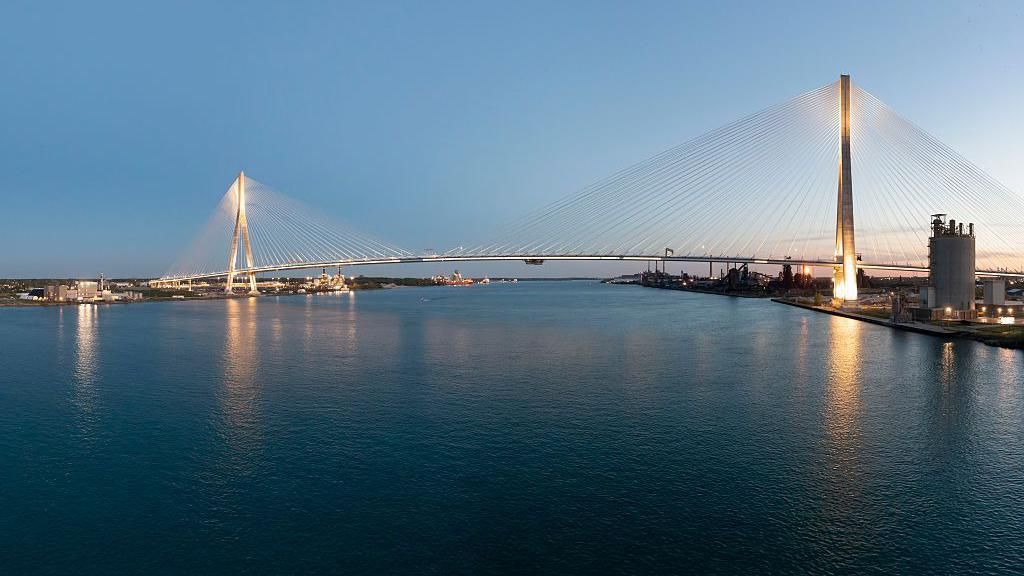
The much-anticipated cross-border infrastructure project linking Canada and the United States, the Gordie Howe International Bridge, has faced yet another unanticipated delay, pushing back the planned opening and its scheduled ribbon-cutting ceremony indefinitely, according to the Canadian authority managing the construction. The ceremonial opening was originally set to take place this Friday, a milestone that would have capped years of planning and construction for the crossing connecting Windsor, Ontario to Detroit, Michigan.
Named for legendary Canadian NHL player Gordie Howe, who had a iconic career with the Detroit Red Wings, the bridge has been framed by both proponents as a transformative economic artery for North American trade and cross-border movement. In a formal statement issued this week, Chuck Andary, a representative of the Windsor-Detroit Bridge Authority (WDBA), confirmed that the two national governments had mutually agreed to postpone the opening to work through remaining unresolved issues. “The bridge will stand as a vital economic link for Canada and the United States, and the two sides are taking a collaborative approach to finalize preparations and set a firm new opening date,” Andary said.
This latest delay does not come as a complete surprise. Earlier this week, Canadian Prime Minister Mark Carney acknowledged that the project might miss its original timeline, but downplayed growing public concern, noting there was “no big drama” surrounding the hold-up. Carney reaffirmed that all relevant teams were “working hard to make sure the bridge is open as soon as possible”, adding that “if it takes a little longer, it’ll take a little longer”. Notably, the WDBA has not released any details on the specific causes of this latest delay, nor given any indication of when a new opening date or rescheduled ribbon-cutting might be announced.
The $6.4 billion CAD (£3.4 billion) project has been plagued by political and commercial disputes for more than a decade, even before construction kicked off in 2018. Past disruptions include widespread construction delays caused by global Covid-19 pandemic shutdowns, and repeated political interference from former and now returning US President Donald Trump, who has openly opposed the project since his first term in office.
In February, during his second presidential term, Trump demanded that Canada cede shared authority and ownership of the crossing to the United States. The bridge is currently developed and owned by WDBA, a Canadian federal Crown corporation that operates independently from direct government control. Commercial opposition has also played a major role in delaying the project: the Moroun family, owners of the nearby privately owned Ambassador Bridge, the existing busiest crossing between Detroit and Canada, has spent years lobbying to block the Gordie Howe bridge. The family argues the new crossing would break their long-held exclusive right to collect tolls for cross-border vehicle traffic in this corridor.
Supporters of the new crossing, including Michigan Democratic Governor Gretchen Whitmer, US Senator Elissa Slotkin, and municipal leaders in Windsor, have long argued that the bridge will generate thousands of new local jobs and unlock billions in annual economic benefits for both countries by cutting severe congestion at the existing Ambassador Bridge and the Detroit-Windsor Tunnel. The project was first negotiated by former Republican Michigan Governor Rick Snyder specifically to address chronic overcrowding on the two existing crossings between the two regions.
The latest delay comes amid a sharp rise in bilateral tensions between Canada and the United States following Trump’s return to the White House. Over the past year, Trump launched a new trade war against Canada and other US allies by imposing sweeping new tariffs on Canadian goods, and triggered widespread diplomatic anger when he publicly suggested Canada should become the “51st state” of the United States. Just this week, during ongoing trade negotiations between the three North American nations, Trump cast doubt on whether he would renew the US-Mexico-Canada Agreement (USMCA), the landmark trade pact that has integrated the North American economy for decades.
These escalating trade tensions have already had tangible economic impacts on both sides. Estimates from the US Travel Association show that Canadian travel to the United States dropped by 20% over the past year, costing the US economy more than $4 billion in lost tourism revenue alone.
Opening of long awaited US-Canada bridge delayed again