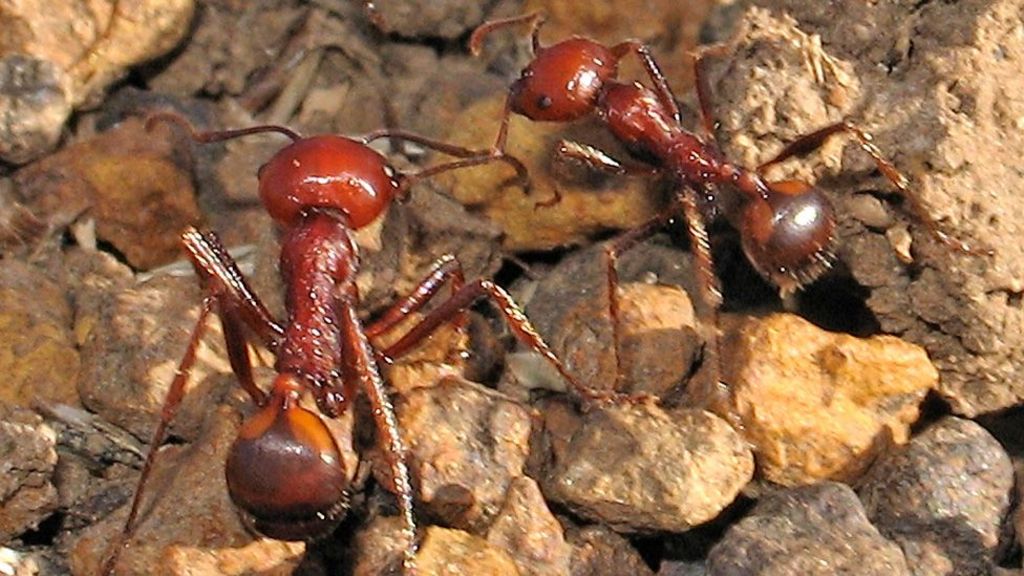
In Kenya’s Rift Valley region, an illicit international trade network has emerged targeting one of nature’s most fascinating insects: the giant African harvester ant. The agricultural town of Gilgil has become the epicenter of this booming black market operation where collectors swarm during rainy seasons to capture winged queen ants during their mating rituals.
These prized Messor cephalotes specimens command staggering prices—up to £170 ($220) per queen—on global underground markets catering to ant-keeping enthusiasts. The trade operates through sophisticated smuggling networks where foreign buyers coordinate with local brokers to collect and transport live ants concealed in test tubes and syringes with moisture-preserving cotton wool.
Kenyan authorities uncovered the scale of this biopiracy last year when 5,000 live ant queens were discovered at a Naivasha guest house, leading to the conviction of suspects from Belgium, Vietnam and Kenya. The trade continues despite enforcement efforts, as evidenced by the recent arrest of a Chinese national at Nairobi’s Jomo Kenyatta International Airport attempting to smuggle 2,000 queens concealed in tissue rolls.
Scientists warn that this unsustainable harvesting poses severe ecological threats. Dr. Dino Martins, a Kenyan biologist, explains that harvester ants serve as “keystone species and ecosystem engineers” that maintain grassland health through seed dispersal. Queen removal causes colony collapse, with some nests surviving over 50 years under natural conditions.
The environmental implications extend beyond Kenya. Research led by Sichuan University’s Zhengyang Wang reveals that over 25% of ant species traded in China are non-native, creating risks of invasive establishment that could “wreak havoc” with local agriculture and ecosystems.
While Kenya has approved policy guidelines for commercializing wildlife resources—including potential legal ant farming—no permits have been issued under required benefit-sharing agreements. Conservation experts now advocate for listing ant species under CITES protections to regulate international trade and prevent ecological damage from this growing underground market.