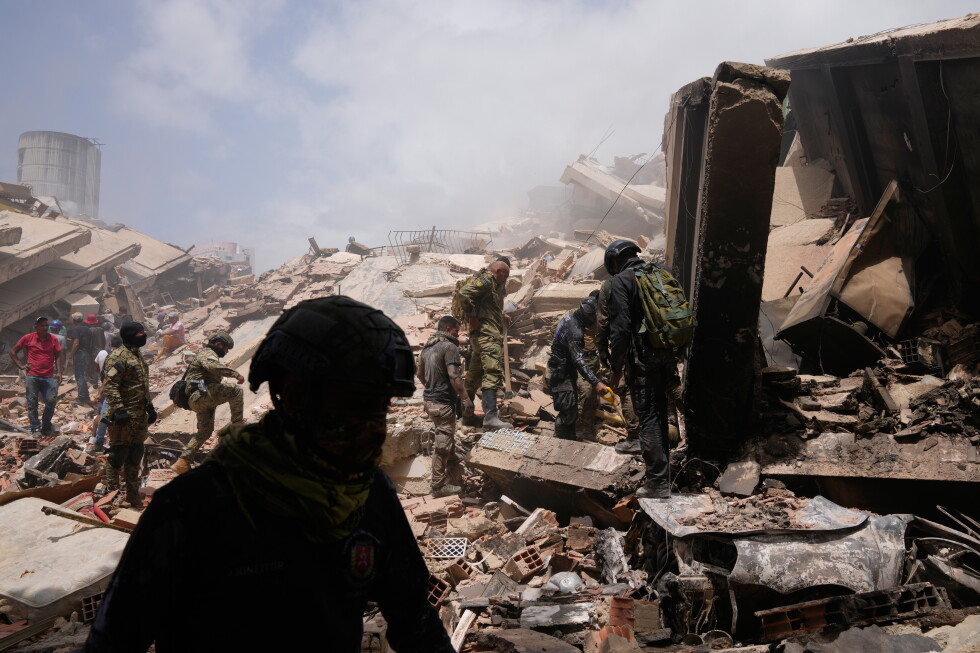
When two back-to-back intense earthquakes struck Venezuela this week, the scale of destruction laid bare long-documented vulnerabilities in the country’s built environment, rooted in outdated construction, lax enforcement of safety standards and unforgiving geography. Experts confirm the doublet quakes, among the strongest to hit the South American nation in over 100 years, have left at least 910 people dead, a death toll that is projected to climb as rescue teams continue to access hard-hit regions.
Visual analysis from The Associated Press, which reviewed on-the-ground video and high-resolution satellite imagery of affected areas, confirms that dozens of multi-story residential and commercial buildings have crumpled completely. To formalize this damage assessment, Microsoft’s AI for Good Lab applied specialized machine learning damage mapping models to satellite data of Catia La Mar, a Caribbean coastal city in La Guaira state that bore the brunt of the disaster. The AI analysis found that roughly one-third of the city’s nearly 30,000 structures suffered partial or total damage.
Structural engineers and geoscience experts have outlined a cascade of overlapping risk factors that turned the powerful seismic event into a catastrophic disaster. One key issue is the legacy of hurried construction during Venezuela’s recent oil booms, when developers rushed to erect large housing complexes without following modern seismic risk mitigation best practices, experts said.
Many older residential buildings, constructed across the 1950s and 1960s before Venezuela adopted modern earthquake safety codes, were never retrofitted to withstand violent ground shaking. Compounding this structural weakness, a large share of urban development in high-seismic-risk northern Venezuela was built on loose, soft soil that amplifies seismic vibration, raising the likelihood of collapse. According to David Cocke, a California-based structural engineer and former president of the Earthquake Engineering Research Institute, this combination of soft foundation soil, mid-rise construction and outdated concrete framing created ideal conditions for “pancake collapse,” where floors crumple sequentially on top of one another.
“These older structures lack the reinforced steel connection standards that are mandatory in modern earthquake-resistant building design today,” Cocke explained. Since the 1970s, global engineering standards have required concrete buildings to be reinforced with steel to reduce earthquake vulnerability, but enforcement of retrofitting mandates for older buildings has lagged severely in low- and middle-income countries that prioritize more immediate socioeconomic challenges. While wealthy, seismic-prone nations including Japan, New Zealand and the United States have rolled out mandatory upgrade or demolition programs for high-risk structures, many other countries have not implemented similar rules—a gap that puts millions at risk, Cocke added.
Other experts point to two additional structural flaws that amplified collapse risk: the use of heavy non-structural brick walls, and the prevalence of “soft-story” construction, where ground floors are designed as open parking garages or commercial spaces with minimal load-bearing support. These open lower floors are far more likely to buckle during seismic shaking, triggering full building collapse. “Soft stories are a major global hazard,” noted Eduardo Miranda, a professor of civil and environmental engineering at Stanford University. “In Venezuela, they are extremely common, and when you combine that hazard with soft foundation soil, total collapse becomes far more likely.”
Geophysicists also emphasize that the sequential nature of the two quakes—classified as a seismic doublet—worsened the destruction. Marcos Ferreira, a geophysicist and researcher at the Geological Survey of Brazil, compared the effect to overlapping sound waves: the first quake weakens structures, and the second shaking amplifies the damage, just as two overlapping screams create a louder, more powerful sound. A similar doublet quake event struck Turkey and Syria in 2023, killing nearly 60,000 people.
Notably, even buildings constructed after Venezuela updated its building codes following a deadly 1967 earthquake collapsed in this week’s event, raising urgent questions about enforcement of existing standards. After catastrophic floods and landslides in 1999 that destroyed thousands of homes across coastal northern Venezuela, the Venezuelan government launched a massive rapid construction program to replace destroyed housing and resettle displaced people. Juan Carlos Vielma, a Venezuelan civil engineer who now heads academic affairs at the Pontifical Catholic University of Valparaíso’s civil engineering school in Chile, confirmed that many of these hastily built newer structures also collapsed this week.
“What puzzles me most is that multiple collapsed buildings were designed and constructed recently under current building standards,” Vielma said. “We need to launch a comprehensive process that not only focuses on reconstruction, but also reviews our existing engineering standards and enforcement processes, because it is clear that failures exist within our current systems.”
This reporting includes contributed work from AP writer Mauricio Savarese based in Sao Paulo.