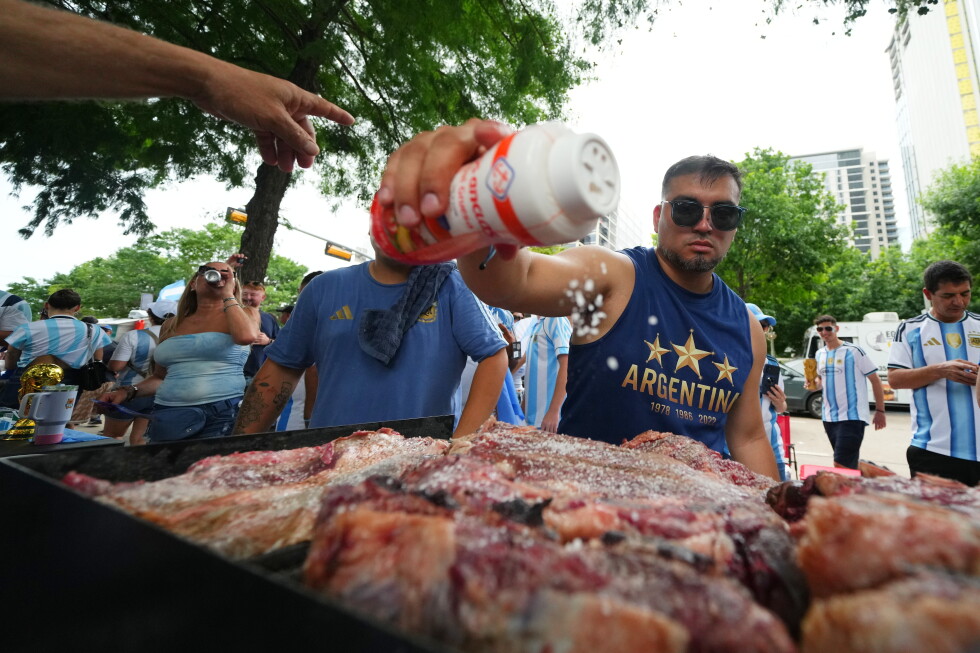
When thousands of diehard Argentina soccer fans descended on Dallas, Texas for the 2026 FIFA World Cup, a surprisingly heated debate emerged off the pitch — one that had nothing to do with starting lineups, tournament brackets, or Lionel Messi’s GOAT status. Instead, the crowd clashed over a question deeply rooted in the culinary and cultural identity of both regions: which part of the world produces the juiciest, most flavorful steak, and what’s the correct way to prepare it?
This friendly rivalry over red meat comes as no surprise: both Texas and Argentina are globally renowned powerhouses in cattle ranching and beef production. According to data from the U.S. Department of Agriculture, Texas holds the top spot for beef output across the United States, and the U.S. as a whole ranks second globally in beef production, behind only Brazil. Argentina lands sixth on the world ranking, and steak remains a central pillar of its national diet and cultural tradition.
To many long-time Argentine chefs and transplants living in Texas, the answer is clear: Argentine beef cannot be matched. “Argentine beef is simply unbeatable. The savory texture, the style of the cut — there is no competing with it,” said Carlos Eduardo Barahona, a 64-year-old Argentine chef who has made Texas his home since 1998, after working in kitchens across Argentina, Uruguay and the U.S. Barahona argues that the quality gap holds across every price point: even the most affordable cut of Argentine beef transforms into a delicious asado, the traditional Argentine open-fire grilled meal, while high-end cuts from U.S. suppliers can often turn out tough or inconsistent depending on their source. The difference, he explains, stems from production practices: nearly all Argentine beef cattle are grass-fed on expansive open pastures, requiring a longer growing period before they reach market. This process produces leaner meat with a deep, rich, earthy flavor that can’t be replicated.
Texan beef advocates have their own strong case to make, rooted in different production traditions. Most beef raised in Texas and across the U.S. is grain-fed, a practice that creates higher levels of intramuscular marbling — the thin streaks of fat that baste the meat from within as it cooks, resulting in a reliably juicy, tender cut with a naturally sweeter flavor profile. “There’s no better beef than U.S. beef, particularly Texas beef,” said Sid Miller, Texas’ Agriculture Commissioner. That said, Miller was quick to acknowledge that Argentine beef has improved dramatically in recent decades — and he credits Texas for that progress. More than 10 years ago, Miller’s agency opened a marketing office that connects Texas cattle raisers with South American ranchers, primarily in Argentina. “I don’t want to disparage our friends in Argentina, but we have helped them improve,” Miller explained. “Their genetics were lacking. We do have them up to pretty high quality. We sold them a lot of semen, embryos, and breeding stock. Their herds have American genetics in them, so they should be good.”
For many fans caught in the middle of the debate, the verdict comes down to personal preference, not regional supremacy. After watching Messi lead Argentina to a 2-0 win over Austria in Dallas, Argentine fan Gonzalo Herrera browsed the meat aisle at a local Walmart in Arlington, picking up four T-bone steaks for a post-match cookout. He shrugged off the rivalry, saying “Honestly, I don’t see a massive difference. The key is knowing exactly which cuts to buy and finding the equivalent of what we eat in Argentina.” Herrera did note one clear difference between the two regions: steak prices are significantly higher in Texas than back home.
Much of the disagreement also boils down to preparation tradition, rather than the quality of the meat itself. Preparations, seasoning choices, and cut preferences vary drastically between the two cultures. At Corrientes 348, a popular Argentinian steakhouse in Dallas, assistant manager Emmanuel Tobon explained that authentic Argentine steaks are seasoned only with salt and grilled over mesquite charcoal, to let the natural flavor of the beef take center stage. By contrast, Tobon noted, most Texan preparations rely on heavy pepper, butter, and barbecue sauce to add flavor. With Argentina set to play at least one more group stage match in Dallas on Saturday, the restaurant has been packed with Albiceleste fans craving a small taste of home amid the World Cup excitement. Tobon says fans have embraced the local culture too, noting “They have been enjoying the Texas culture. But it has been a great pleasure to have all of them, to make them feel like home.”
Many fans agree that while preparation traditions differ, both regions produce high-quality beef. Fernando Garcia Morillo, an Argentine transplant from Buenos Aires now living near Miami, says he loves U.S. steak, but still misses the traditional preparation methods of home. “I order just salt, no pepper, just plain,” he said of ordering steak in the U.S. “Sometimes they use a lot of sauce.” Morillo dismissed the idea of any real hard feelings between the two beef cultures, noting the only real South American beef rivalry is between Argentina and its neighbor Brazil, adding “I love the U.S. meat.”