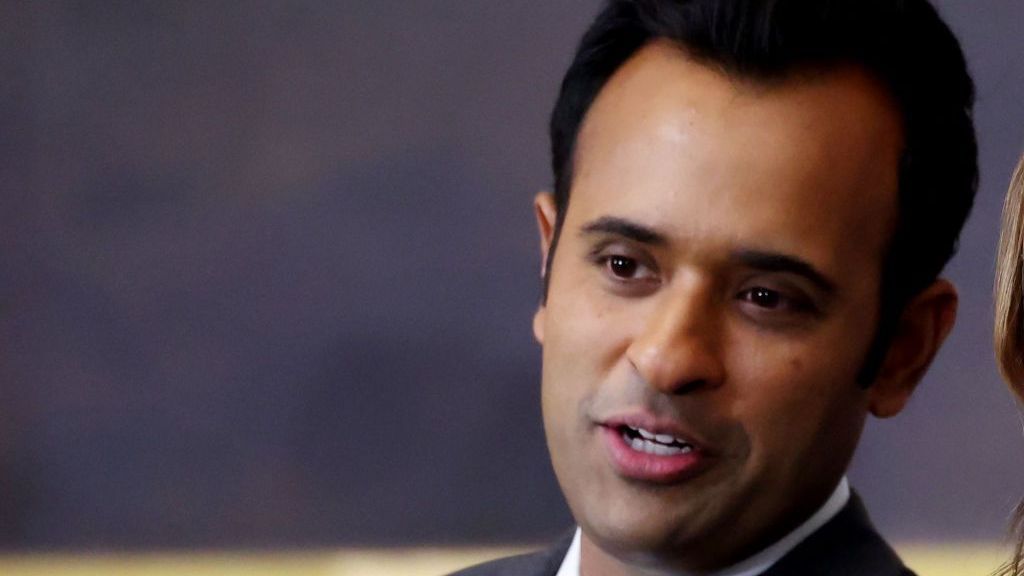
The 2026 midterm race for Ohio’s governorship has erupted into unprecedented controversy after a deeply personal attack ad from Republican candidate Vivek Ramaswamy sparked widespread bipartisan condemnation and sparked new conversations about the eroding boundaries of modern American political campaigning.
Ramaswamy’s campaign dropped the viral ad featuring Donna Arthur, the estranged biological mother of Democratic candidate Amy Acton, in which Arthur claims her daughter has “lied her entire life” and urges Ohio voters to reject Acton’s candidacy. What the ad intentionally omits, however, is a decades-old explosive allegation: Acton has stated she was raped by Arthur’s husband, her stepfather Cledith Arthur, in 1978 when Acton was only 12 years old.
Following the 1978 arrest of Cledith Arthur on rape charges, Acton and her brother were removed from Arthur’s custody, and Acton has not spoken to Donna Arthur since that time, the candidate told Ohio outlet The Vindicator. After the arrest, the Arthurs fled the state, and Cledith Arthur never faced prosecution for the alleged assault before his death in 2004. Acton’s brother, Philip Stearns, has condemned the ad, calling the exploitation of a decades-old alleged sexual assault for political gain a “despicable low” for Ohio politics.
While negative attack advertising has long been a staple of U.S. electoral politics, experts who spoke with the BBC note that modern campaign messaging has grown increasingly harsh, with acceptable boundaries continuing to stretch. David Lublin, a public affairs professor at American University, explained that while deploying family members against opposing candidates is not unprecedented – pointing to testimony against Robert F. Kennedy Jr. during his confirmation hearing for health secretary – this ad crosses a new line. Unlike previous intra-family political attacks, the rift between Acton and her mother stems not from policy disagreements, but from a violent alleged sexual trauma.
Initial questions arose over the ad’s provenance when it first posted to social media on Monday evening, as it lacked required disclosures identifying the Ramaswamy campaign as its funder. By Tuesday, Ramaswamy confirmed his campaign was behind the spot, and went a step further: he pledged to pour an additional $4 million into airing the controversial ad across the state.
A spokesperson for the Ramaswamy campaign reiterated the ad’s claims that Acton has been untruthful in a statement to CBS News, the BBC’s U.S. partner, but conceded that the campaign has no knowledge of the veracity of the personal conflict between Acton and her mother. The BBC reached out directly to the Ramaswamy campaign for additional comment.
The move to amplify the ad has drawn fierce backlash from across the political spectrum. Top Democrats have widely decried the spot, with New York Governor Kathy Hochul calling it “an abhorrent attack” on social platform X. Illinois Governor and potential 2028 presidential candidate JB Pritzker said Ramaswamy “has reached a new low by launching these vile and false attacks.” In response, Acton’s campaign released a counter-ad Tuesday featuring Stearns, who recounted the childhood abuse the siblings endured, emphasized that Acton bore the brunt of the violence, and slammed Ramaswamy for holding contempt for both Acton and the state of Ohio.
Criticism has even come from within Republican ranks. Nikki Haley, who competed against Ramaswamy for the 2024 Republican presidential nomination, called Ramaswamy “a bad guy” and said it “is a shame he continues to get away with” attacks of this nature. Vice President JD Vance, when asked by the BBC whether he deemed the ad appropriate, declined to take a position, saying the race is not his focus and he is more concerned with long-term leadership of American government.
Lublin argues that the broader shift toward more aggressive, personal political rhetoric in the U.S. has been catalyzed in large part by the rhetoric and campaigns of former President Donald Trump, pointing to Trump’s widely criticized mockery of a disabled reporter based in Ohio decades ago. While he notes that the core strategic goal of most attack ads is not to convert an opponent’s supporters, but to demoralize them enough to suppress their turnout on election day, experts widely expect this particular ad to backfire on Ramaswamy.
Lublin says the extreme nature of the attack suggests Ramaswamy’s campaign is growing desperate to shift momentum in a race that has grown unexpectedly competitive, despite the fact that no Democrat has won the Ohio governorship in more than 20 years. Nonpartisan election analyst Cook Political Report has already shifted its rating of the race, moving it from “leans Republican” to a competitive “toss up” as the controversy continues to unfold.