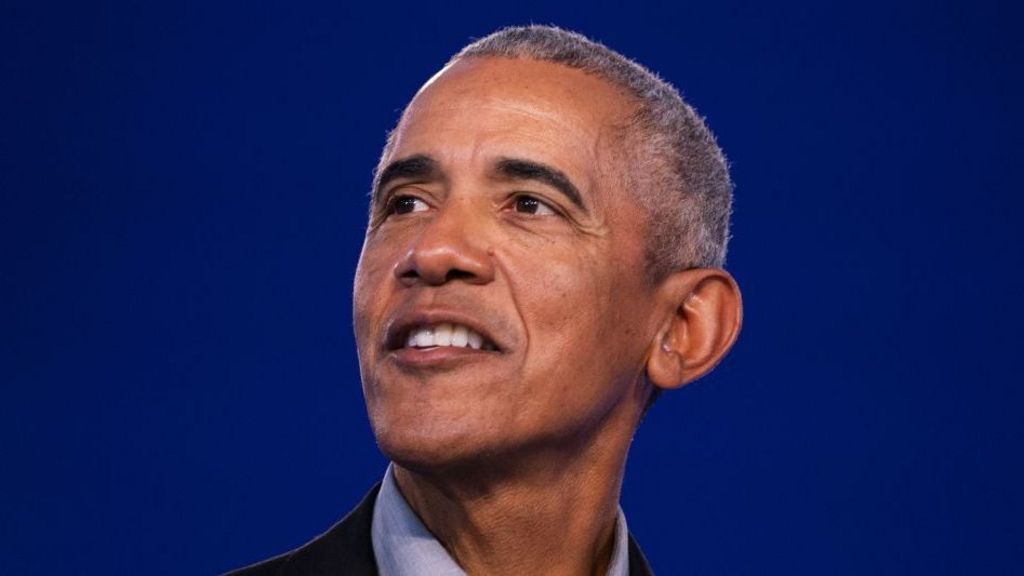
Former U.S. President Barack Obama delivered a stark yet hopeful address to a crowd of more than 12,000 attendees at Glasgow’s OVO Hydro Monday, as part of his three-city speaking tour across the United Kingdom. In conversation with British journalist and author Sathnam Sanghera, the 44th U.S. president reflected on his time in the White House, unpacked the growing political and social rifts reshaping the modern world, and pushed back against the narrative that a global slide toward extremism is unavoidable.
Obama recalled that during his historic 2008 presidential campaign, when social media and digital connectivity were just beginning to go mainstream, he viewed these emerging technologies as a powerful force for good. Tools that could mobilize grassroots movements for democracy, human rights and collective action, he once believed, would open new avenues for marginalized voices to be heard. That optimism, he argued, was not entirely misplaced—but it overlooked a critical flaw in how these platforms have evolved in the years since.
Today, Obama explained, the business models of major online platforms prioritize content that taps into humanity’s most primal emotional impulses: anger, fear, resentment, and the paranoia that external groups are threatening one’s way of life. “The reptilian side of our brain really gets attracted to anger, fear, resentment and the sense that someone is out to get you,” he told the packed venue. “So a lot of social media and a lot of our information is informed around that.” This algorithmic focus on divisive content, he argued, is a core driver of the record political polarization and rising populism seen across Western democracies and beyond. He added that the constant flood of outrage-driven content creates an unhealthy “information diet” for the public, leaving many young people particularly discouraged about the future of politics.
Looking ahead, Obama raised urgent alarms about the emerging threat of artificial intelligence, warning that increasingly sophisticated AI tools will make it even harder for the public to distinguish factual information from deliberate misinformation. This erosion of shared basic facts, he stressed, poses a fundamental threat to the functioning of democratic systems.
The former president drew a historical parallel to post-World War II efforts to regulate harmful propaganda, noting that after Hitler’s use of misinformation to incite violence and seize power, governments in the U.S. and Europe put guardrails in place to hold bad actors accountable for spreading dangerous lies. Today, he argued, global leaders have failed to update that framework for the digital age, choosing inaction over targeted regulation.
Obama emphasized that governments and tech actors must strike a critical balance between protecting the principle of free speech and putting guardrails in place to prevent the spread of harmful disinformation. New mechanisms and institutional frameworks, he said, are needed to support robust, respectful debate while helping the public separate fact from fiction.
He also touched on a repeating cycle of collective amnesia that plagues modern societies: over time, populations forget the lessons of past conflicts and prejudice, and begin normalizing harmful rhetoric that scapegoats marginalized groups including immigrants, Jewish people, Black people and LGBTQ+ people. What starts as “just talk” or edgy humor gradually erodes public tolerance, opening the door to far more dangerous outcomes, he warned.
Despite his stark warnings about the risks facing the modern world, Obama closed his remarks on a note of deliberate hope. When asked whether he still stands by the famous Martin Luther King Jr. quote about the moral universe bending toward justice, Obama reaffirmed his belief in the idea, framing hope not as passive optimism but as an active, intentional choice that people must make. “It is a decision about how do we face and embrace this finite amount of time we have on the planet,” he said. While progress is never guaranteed, Obama argued that acting on the belief that change is possible leads to incremental improvement over time. The world faces unprecedented challenges, he acknowledged, but fighting to build a better future remains a cause worth fighting for.