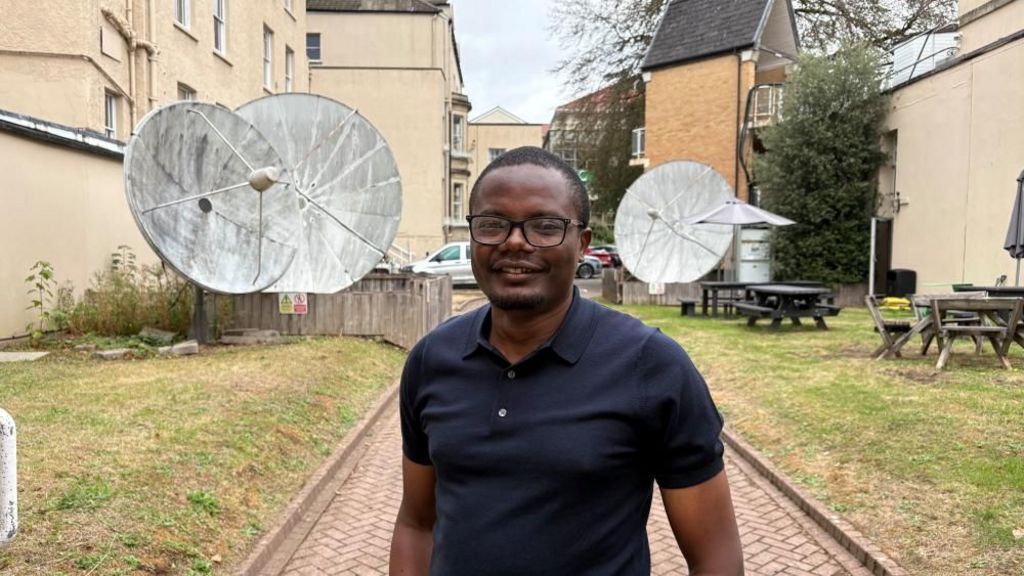
Against all odds that stacked against him from early life, 43-year-old David Etor has gone from growing up in extreme deprivation in rural Nigeria to securing a respected position as a lecturer in electrical and mechanical engineering at the University of Bristol in the UK, opening up about his decades-long fight to escape systemic disadvantage in a candid new interview with BBC.
Etor’s childhood was marked by deprivation so severe that even neighbors better off than his family categorized them as the poorest of the poor. Raised in a crowded multi-family compound where all residents shared a single kitchen, toilet, and bathroom, he did not learn to read and write until he was 12 years old, and many people around him went as far as to tell him outright that no meaningful success would ever come from him. The most haunting memory of that period, he recalled, is how his mother would fake cooking meals for their family simply to preserve their dignity: she would repeatedly boil water, stir it over the heat, and carry the pot back to their room as if she had prepared a full dish, hiding the fact that they had nothing to eat from the neighbors.
“I didn’t see a way out” when I was young, Etor told BBC Radio Bristol’s John Darvall during an interview to mark the release of his first memoir, which chronicles his extraordinary life trajectory.
His first major turning point came during a period of national service in Nigeria, when he noticed a widespread public health crisis affecting local communities: dozens of residents were being hospitalized with severe food poisoning because the common method of drying food for preservation — leaving it out in open fields — exposed it to contaminants and pathogens. Etor, who had long nurtured an interest in building and engineering, set out to create a low-cost accessible solution for his community. Drawing on his limited resources, he designed and constructed a homemade solar-powered drying oven that allowed locals to preserve food safely and affordably. The invention worked far better than he had anticipated, earning him a public award from the Nigerian state government and his first formal paid job.
That breakthrough opened new doors for Etor, who eventually moved to the UK to pursue higher education. He completed his undergraduate degree at Newcastle University, went on to earn a PhD from the University of Durham, and ultimately landed his current academic post at Bristol.
Sir Steve Webb, a former UK Member of Parliament and Pensions Minister who got to know Etor through their shared local church in Bristol, described Etor’s achievements as nothing short of remarkable. “David’s core message is that people should never be defined by their childhood upbringing or their starting background,” Webb explained. “No one should ever write off a person’s potential just because of where they come from.”
Reflecting on how far he has come, Etor says he still sometimes pinches himself to believe his own success. “Growing up, everyone said nothing good was supposed to come out of me,” he said. “Now, I get to stand in a position I never could have imagined as a hungry child in that compound.”