A landmark report published in *The Lancet* by a panel of 38 leading global health experts has delivered a stark condemnation of the current state of the international humanitarian aid system, warning that deep funding cuts and pervasive politicization have reduced life-saving support to intentional rationing that leaves hundreds of millions of vulnerable people without critical care, and demanding an immediate, transformative restructuring of how aid is delivered globally.
The analysis, led by the Johns Hopkins Center for Humanitarian Health and *The Lancet* Commission on Health, Conflict, and Forced Displacement, argues that the global aid architecture has degraded into little more than “survival triage”, where only the most extreme, high-profile needs are addressed while millions of unmet needs are pushed entirely out of formal response plans. The report identifies growing politicization of aid — where funding is tied to donor nations’ national security and foreign policy priorities rather than on-the-ground need — as the core driver of the system’s collapse, pointing to the 2025 dismantling of the U.S. Agency for International Development (USAID) under the second Trump administration as a defining catalyst for the current crisis.
For decades, the United States held the position of the world’s largest single donor to international humanitarian programming. What began as a 90-day temporary freeze on all foreign assistance after Trump took office in January 2025 quickly escalated into a near-total dissolution of U.S. global humanitarian efforts. By July 2025, USAID had been fully shut down, and its remaining functions were absorbed into the U.S. State Department, a restructuring that gutted longstanding aid operations across the globe.
Paul B. Spiegel, director of the Johns Hopkins Center for Humanitarian Health and chair of the commission that produced the report, explained to *Middle East Eye* that while the administration’s stated goal of cutting wasteful aid spending had some surface legitimacy, the chaotic and ideologically driven method of dismantling USAID caused irreversible damage to the global system. Beyond the restructuring of U.S. aid, Spiegel highlighted two other critical contributing factors: the rise of anti-refugee populist sentiment across Western donor nations, and a widespread global erosion of international humanitarian law, with little push for accountability from major world powers.
New data from the Organisation for Economic Co-operation and Development (OECD) underscores the scale of the funding collapse: total humanitarian aid from the world’s richest nations dropped nearly 25% in 2025 compared to 2024, with more than half of that decline directly attributable to U.S. aid cuts. Citing UN figures, the *Lancet* report notes that global unmet humanitarian need fell from a projected $44 billion to just $29 billion in allocated response funding in 2025, and by the end of the year, only half of that reduced allocation had actually been funded. For 2026, global need is pegged at $33 billion, with $23 billion earmarked exclusively for the most immediately life-threatening crises — a figure that equals just 1% of total annual global military spending. By 2026, an estimated 239 million people across the globe will require humanitarian aid, the report projects, but only one-third of that population will actually receive any support.
The report stresses that public health financing must never be treated as a tool of statecraft. When aid is structured around political priorities rather than need, the system cannot self-correct: exclusion of vulnerable populations becomes normalized, accountability is reduced to mere bureaucratic compliance, and life-saving humanitarian health support becomes increasingly selective and unreliable, the authors warn.
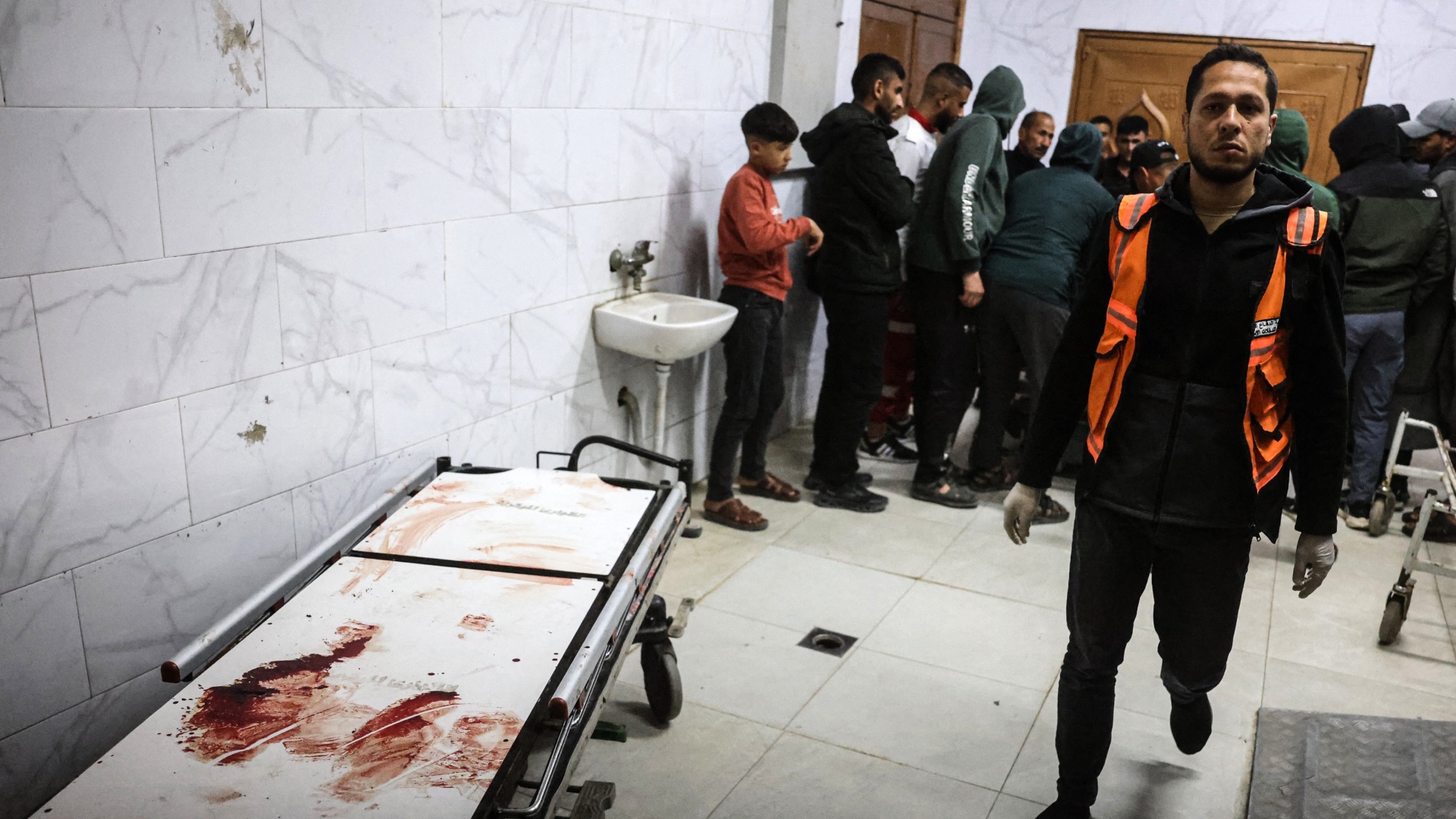
The ongoing crisis in the Gaza Strip serves as a devastating case study of the system’s failure, the report argues. Despite an October 2024 ceasefire, ongoing Israeli military operations have left more than 172,000 Palestinians wounded, with the UN confirming that at least one-third of those injured live with permanent, life-altering disabilities. Since the October 7, 2023 Hamas attacks, nearly 600 aid workers have been killed by Israeli fire, and only 14 of Gaza’s 36 hospitals remain partially operational. While the UN, leading academic scholars, and major human rights organizations have recognized the conflict in Gaza as a genocide, a 2024 *Lancet* study placed the total Palestinian death toll at over 186,000, far higher than the official count of more than 72,500. Backed by the U.S., Israel has conditioned approval for humanitarian aid convoys entering Gaza on Hamas meeting its demand for full disarmament, a policy that intentionally blocks aid from reaching hundreds of thousands of vulnerable civilians.
“I think Gaza was a huge turning point, where people said enough is enough,” Spiegel told *Middle East Eye*. The crisis in Gaza laid bare the core failures of the current system: politicization strips international law of any meaningful consequence, core humanitarian principles are applied only when politically convenient, and access to survival is deliberately rationed. The report concludes that the current system is devoid of its founding principles and is “no longer fit for purpose.” The core objective of reform, Spiegel says, must be to remove political influence from humanitarian funding as much as possible and refocus the entire system on measured, on-the-ground need.
Unlike many previous reports that offer scattered, optional policy recommendations, the commission frames its proposals as a cohesive, actionable framework designed to be implemented, measured, and enforced, even in the face of political resistance and unequal global power dynamics. The authors argue that incremental tweaks to the current system will not be enough; a full, long-term structural overhaul is required.
The first core reform is a radical shift in power: instead of control resting with Western lawmakers and senior leaders of international aid organizations, decision-making authority should be transferred to local communities and the people who actually receive aid. International organizations that operate in crisis zones should be required to clearly justify their involvement, set explicit timelines for exiting, and transfer full authority to local leaders as quickly as possible. Spiegel noted that the UN currently suffers from redundant, overlapping humanitarian operations, with agencies competing against one another for funding and influence. To address this, the report recommends consolidating all UN humanitarian emergency operations into a single, streamlined unified agency focused exclusively on operational response.
Additional key recommendations include the creation of a new Global Health Protection Alliance tasked with preventing attacks on healthcare infrastructure and holding perpetrators accountable for violations, the adoption of measurable health outcomes — such as preventable death rates and continuity of care — as core indicators of compliance with international humanitarian law, and the establishment of an independent, global pooled humanitarian fund that is fully insulated from donor political pressure. The report also calls for expanding direct cash assistance to affected populations, which bypasses inefficient and politically compromised traditional aid delivery systems.
At its core, the report argues that the right to health must be the central, non-negotiable principle guiding all humanitarian decision-making. Spiegel argues that the current confluence of geopolitical shifts and massive funding cuts creates a rare, once-in-a-generation opportunity for transformative change. While global leaders may not embrace reform voluntarily, the scale of the current crisis will force change across the board. “Our goal is to try to find and provide a pathway to make it so it’s transformative,” Spiegel said.