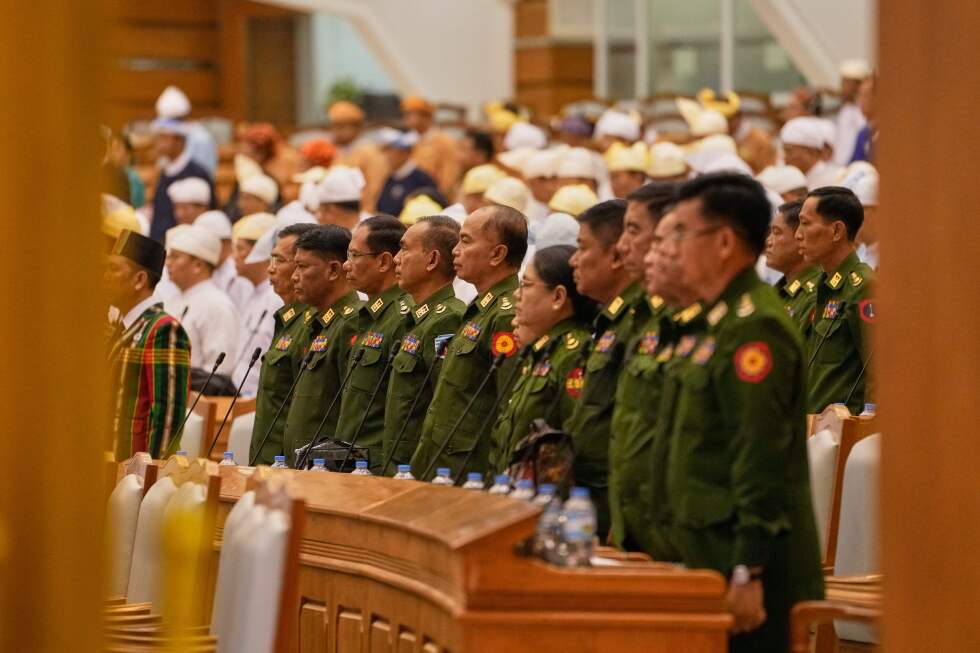
Five years after Senior General Min Aung Hlaing led the 2021 military takeover that ousted Myanmar’s democratically elected civilian government, the country’s newly convened parliament has formally approved a cabinet stacked overwhelmingly with current and former military figures, leaving no realistic path to a swift return to civilian rule. The vote, held Thursday in the capital Naypyitaw, clears the way for Min Aung Hlaing to be sworn in Friday as Myanmar’s president, alongside two vice presidents and the full slate of 30 cabinet appointees. Parliament Speaker Aung Lin Dwe confirmed all 30 ministerial appointments passed without objections. An official breakdown of the approved cabinet shows 24 of the 30 nominees are either active or retired military officers, or politicians affiliated with the military-aligned Union Solidarity and Development Party. Furthermore, 18 of the incoming ministers held cabinet positions in the previous military junta government, while four additional appointees served as military or administrative officials under that same administration. Many of these newly appointed cabinet members are already the target of international sanctions, imposed by Western governments that have accused the officials of complicity in human rights violations and participation in the unelected military regime. Beyond cabinet appointments, the parliament also voted Thursday to reappoint senior judicial officials, including the chairman of the constitutional tribunal, the attorney general, and all sitting Supreme Court judges. The new government was formed following disputed general elections held in two phases across late December 2024 and early 2025, a vote that has been widely rejected by the international community. The Association of Southeast Asian Nations (ASEAN) is among the major regional and global bodies that have refused to recognize the election results. Critics note the vote was deeply flawed: nearly all major opposition parties were barred from participating, public dissent was harshly suppressed, and no voting could be conducted across large swathes of Myanmar where ongoing civil conflict between the junta and armed resistance groups continues to rage. ASEAN has already maintained that it will stick to its long-stalled five-point peace plan for Myanmar, even as the initiative has failed to end the years-long deadly civil war that has displaced millions of people across the country.