Ten weeks have passed since two powerful back-to-back earthquakes ripped through coastal Venezuela, leaving widespread destruction, thousands dead, and a bitter rift between desperate families and the nation’s government over unaccounted-for missing people. For the Molina family, the tragedy has become a grueling, self-funded fight for answers, as they comb through the rubble-strewn streets of La Guaira — the hardest-hit region just north of capital Caracas — in search of 18-year-old Andrés Molina, who has been missing since the disaster struck on June 24.
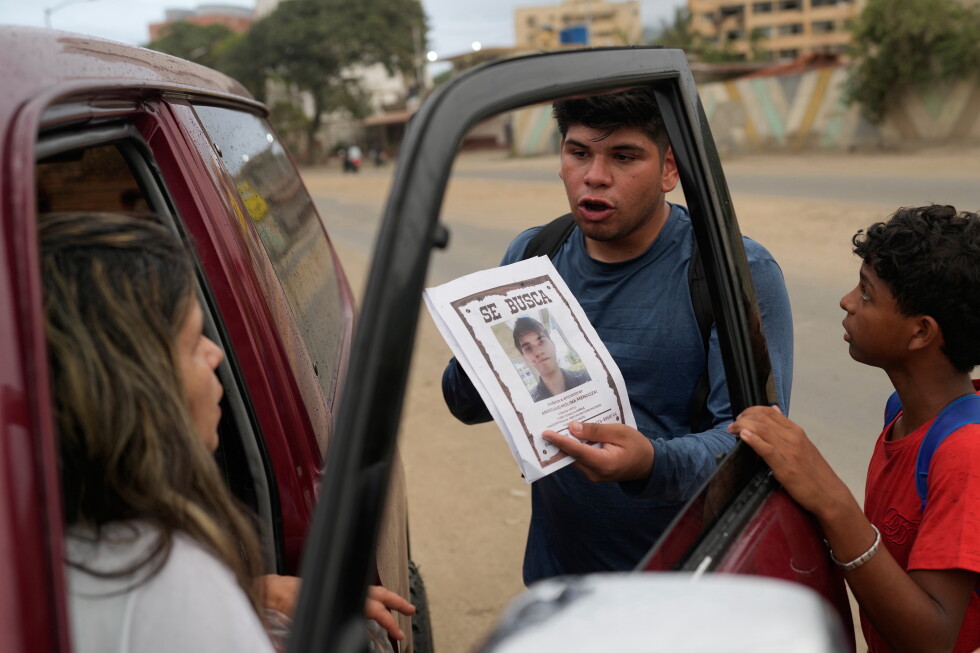
On a recent Saturday at 8 a.m., Antonella Molina, Andrés’ aunt, her 18-year-old nephew Pedro (Andrés’ cousin), and roughly a dozen other friends and relatives set out on their latest search. Their arms were stacked with printed flyers bearing Andrés’ photo and a contact number, their boots crunching over cracked concrete and collapsed masonry that still litters La Guaira’s neighborhoods. The family already recovered the bodies of Andrés’ mother and brother from the ruins of their 10-story apartment building, which crumbled when the quakes hit, killing more than 30 residents. No trace of Andrés — not even the backpack he carried everywhere — has been found in the wreckage.
Countless tip-offs have kept the family clinging to hope, despite months of fruitless searching. Neighbors have reported sightings of the teen wandering the destruction zone collecting scrap metal; days after the quakes, multiple witnesses said they saw him roaming the area with a minor head injury. Just one day before the latest search, local police confirmed they too had spotted him gathering scrap nearby. Residents also told the family they often saw Andrés feeding stray cats, his favorite pastime. Tips have placed him at a nearby golf course, a community park, a local restaurant, and a neighborhood McDonald’s, but each lead has ended in disappointment when the search party arrives to find he is already gone.
This grassroots search is a deliberate choice, born from deep distrust of Venezuelan government authorities. The official government count puts the death toll at 6,500 and the number of missing people at 1,500, numbers that Caracas insists are rigorously verified, compiled after a rapid response effort. But independent accounts put the actual number of missing people far higher, in the tens of thousands, and families like the Molinas say they have never received any official support for search efforts.
“We’ve never had support from the government to help us find the people disappeared. Never,” Antonella told the AP, as she approached construction crews and local residents on the search route, greeting each with the warm, familiar Venezuelan greeting “how are you, mi amor?” A construction worker told the group he had seen Andrés near the golf course, matching a prior tip; another local resident recognized the photo from the flyers but had no recent information; a third man’s description of a matching young man included mention of tattoos, which Andrés does not have, ruling the sighting out.
For Pedro, who reconnected with his cousin via WhatsApp in the months before the quake but never got the chance to meet him in person (he lives six hours away in Anzoategui state), the search is about making sure Andrés knows he is not alone, even after losing his mother and brother. “We don’t know how he must feel if he is alive,” Pedro said.
The search effort has also been complicated by a long-standing family rift between Andrés’ mother and father, Antonella’s brother, which has kept the two sides of the family estranged for years, though Andrés’ father has joined the search efforts. The day’s search ended earlier than usual around 10 p.m. at a local McDonald’s, cut short after Antonella injured her arm. By the end of each day of searching, Antonella said she is left with a flood of conflicting, painful emotions.
“At the end of each search, I always feel anger, helplessness, pain, sadness. Even despair,” she said. “Because it’s so many days, so much effort, so many hours walking, searching, asking questions. And we end up with the same answers. They saw him, they saw him, they saw him. But not having him present in our arms has been a very hard blow.”
Antonella has even begun to wonder if Andrés may be choosing to stay out of reach, pointing to the frequent discovery of her flyers torn right through Andrés’ face. Still, she says she will not stop. Driven by love and the hope that her nephew is alive, she will keep searching the rubble-strewn streets of La Guaira until she finds him. “I have to continue until I find my nephew,” she said.