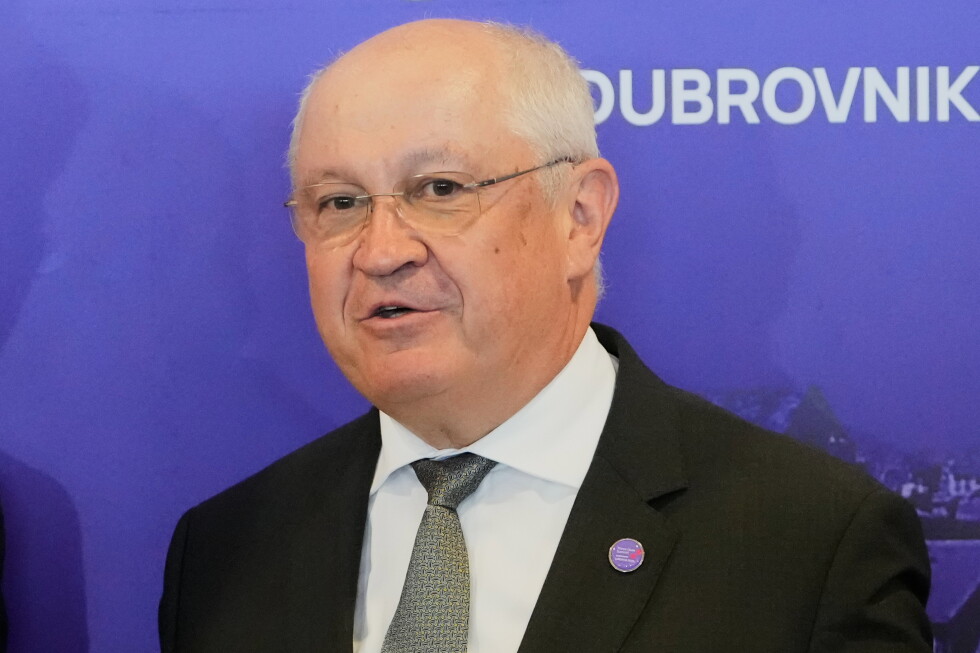
CHISINAU, Moldova – In an unexpected announcement that has upended the pro-Western administration of this EU candidate nation, Moldovan Prime Minister Alexandru Munteanu revealed Friday he will resign from office — a step that automatically dissolves the entire sitting government. Munteanu took office less than 12 months ago, leading his pro-European bloc to power after a hard-fought national election framed widely as a defining geopolitical choice between alignment with the West or continued ties to Russia. In a departure that has sparked political uncertainty across the country, he offered no explicit explanation for his sudden exit.
In a public statement shared via social media, Munteanu framed his decision as a matter of personal principle. “Today I end my term as prime minister,” he wrote. “The moment I understand that I can no longer exercise my mandate in accordance with my principles and beliefs, I choose to walk away.” He went on to note that he took on the role of prime minister with a deep sense of responsibility and unwavering confidence that he could help move Moldova toward meaningful, positive change.
Under Moldovan constitutional rules, a prime minister’s resignation takes effect immediately upon announcement. While the cabinet remains in place to manage routine government business as a caretaker administration, all executive authority is limited until a new prime minister is nominated and a full new cabinet is approved by parliament.
Shortly after Munteanu’s announcement, Moldovan President Maia Sandu, the leading architect of the country’s push for EU membership, released a statement acknowledging the resignation. She thanked Munteanu for guiding the country through what she described as a uniquely complex period for Moldova, but made clear that his leadership did not meet her expectations. Sandu stated she had sought greater engagement on tough policy decisions and more openness to public input from the prime minister.
The president outlined her next steps, noting that she will meet with representatives of all parliamentary factions starting next week to begin consultations on nominating a new prime minister. “We must have a united, strong team in the Government that will fulfill our country’s objective,” Sandu said. “We are obliged to succeed in taking Moldova into the EU and helping the country.” She acknowledged the challenges ahead, noting that finding viable candidates for the prime ministership has grown increasingly difficult in recent Moldovan politics, and she could not predict how long the process of forming a new government would take. Even so, she stressed the urgent need to install a new administration in a timely manner.
Nestled between war-torn Ukraine to the east and Romania — a member of both the European Union and NATO — to the west, Moldova has a unique and volatile geopolitical position. A former constituent republic of the Soviet Union, Moldova gained formal independence in 1991. Over the past three years, it has pursued an unambiguous path of Western integration, earning official EU candidate status in 2022. This shift has turned the small nation into a key front in the ongoing geopolitical standoff between Russia and the European bloc.