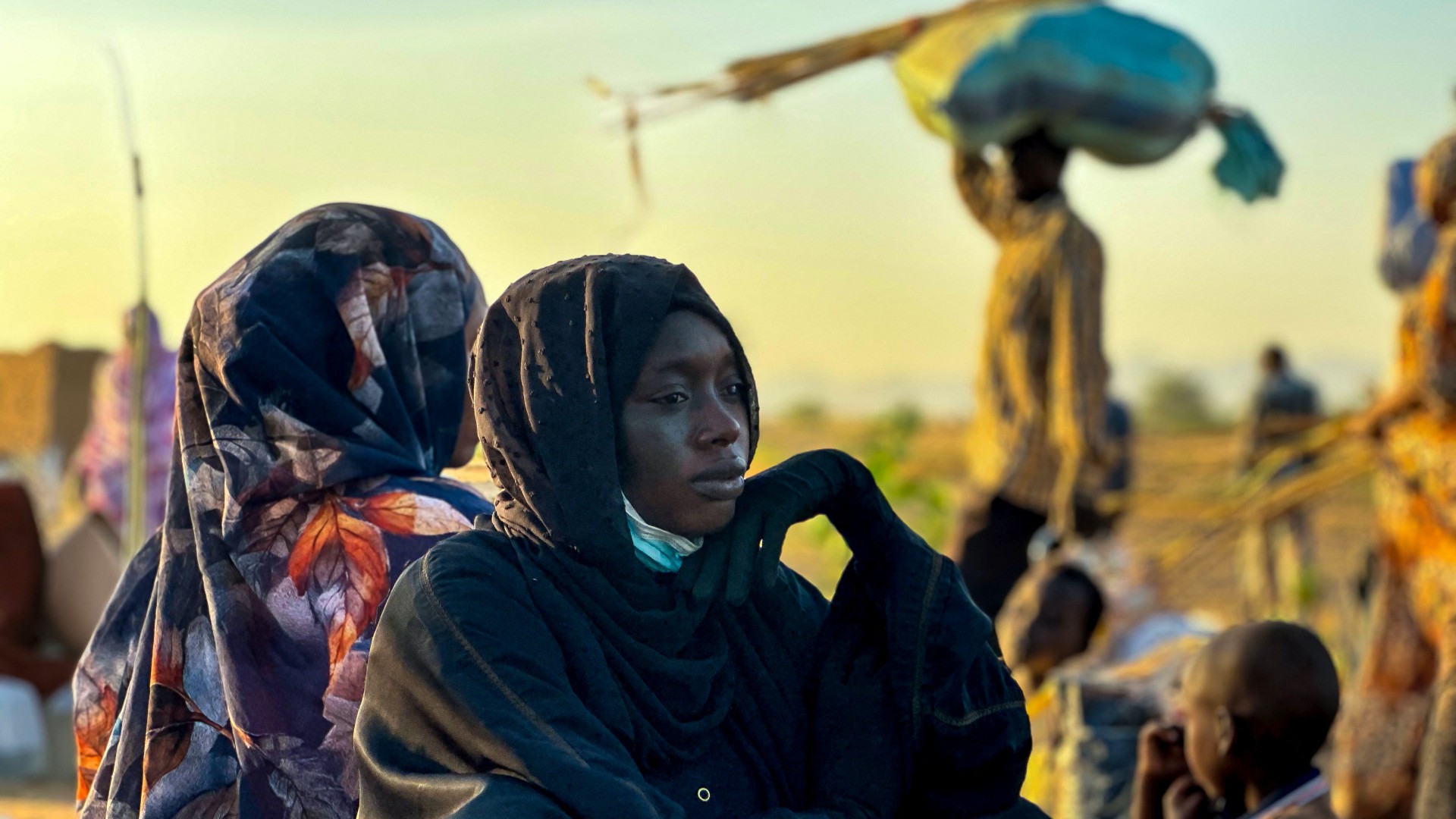
More than three years after launching an investigation into atrocities committed during Sudan’s ongoing civil conflict, the International Criminal Court’s Office of the Prosecutor has yet to submit a single new arrest warrant for crimes in Darfur dating to the war’s start in April 2023, an exclusive investigation by Middle East Eye has revealed. Multiple senior sources and internal court documents confirm the OTP has scrapped plans to file an arrest warrant application against a top Rapid Support Forces commander – a step that ICC Prosecutor Karim Khan publicly pledged to submit “imminently” to pretrial judges in January 2024. The shelved application focused on allegations of crimes against humanity and war crimes perpetrated in West Darfur in the months following the war’s outbreak.
The issue of delayed accountability has erupted into open friction between the OTP and the court’s pretrial oversight panel. After more than 12 months of silence following Karim Khan’s May 2025 leave of absence, during which the prosecution failed to offer any explanation for the missed filing timeline to the three-judge pretrial chamber, the panel issued a formal rebuke last month. The judges ordered the OTP to disclose the root causes of the delay and submit a clear, public timeline for when warrant applications will be filed. In its order, the panel referenced recent briefings to the UN Security Council from current acting lead of the Darfur investigation, Deputy Prosecutor Nazhat Khan, where she acknowledged the rapidly deteriorating security and human rights situation in Darfur, and noted that arrest warrants would be a critical tool to deter additional atrocities. To date, MEE has confirmed Nazhat Khan has not shared any timeline for the filing of new warrants, beyond the one previously announced.
When contacted for comment by Middle East Eye, the OTP declined to share any specific details on progress toward warrant applications, citing mandatory confidentiality requirements to the court, as well as protections for victims and witnesses who cooperate with investigations. Under the ICC’s amended operational regulations, all arrest warrant applications are classified as sealed or secret until court authorization for public release. In a written statement, an OTP spokesperson asserted that “the investigation has accelerated in recent months, with more focused investigative lines, increased evidence collection and witness interviews, and further analytical work. Priority has been given to the investigation of gender-based crimes, and crimes against and affecting children.”
The ICC first opened its formal investigation into crimes committed during the current Sudan war in July 2023, when Karim Khan announced the office would examine allegations of war crimes and crimes against humanity against all three major warring parties: the Sudanese Armed Forces, the RSF, and their respective allied militias. In every subsequent semi-annual briefing to the UN Security Council, OTP leadership has repeated assurances that progress toward arrest warrant applications was ongoing. Despite these repeated promises, no suspects have been charged in connection with the atrocities of the 2023–present war, including the RSF’s year-long siege and October 2025 capture of North Darfur’s capital el-Fasher.
Independent UN investigations have corroborated widespread atrocities by the RSF in recent months: a UN fact-finding mission concluded in February 2026 that the paramilitary group carried out genocide against non-Arab communities in el-Fasher, and a separate UN report released last week found the RSF is responsible for more than 70% of all sexual violence perpetrated by warring parties across Sudan over the past three years. International bodies have already taken action against the group: the UN Security Council imposed targeted sanctions on four senior RSF commanders for Darfur atrocities, and the United States formally designated the RSF’s actions as genocide and sanctioned RSF leader Mohamed Hamdan Dagalo, widely known as Hemedti, in January 2025.
Notably, all existing ICC arrest warrants connected to Darfur date back to the 2003–2007 wave of violence in the region. Four long-standing warrants remain unexecuted, targeting former Sudanese president Omar al-Bashir, former interior minister Ahmad Harun, former defense minister Abdel Raheem Muhammad Hussein, and rebel commander Abdallah Banda. The ICC’s only conviction related to Darfur, that of former Janjaweed leader Ali Muhammad Ali Abd-al-Rahman (known as Ali Kushayb), also relates to the 2003–2007 violence; he was sentenced to 20 years in prison in December 2025, though the conviction is currently under appeal.
Nazhat Khan is scheduled to deliver the OTP’s mandatory semi-annual briefing on Darfur investigations to the UN Security Council later this month, where pressure will mount for her to address the delay and outline a clear path forward. The three-year war between the SAF and RSF, which has drawn backing from competing foreign powers for both sides, has left a catastrophic humanitarian toll: more than 12,000 people have been confirmed killed, with independent observers estimating the actual death toll is many times higher, more than 13 million people have been internally displaced or forced to flee across Sudan’s borders, and more than 19.5 million people are now on the brink of famine. The United Nations and European Union have labeled this crisis the world’s largest humanitarian and displacement emergency currently unfolding.
Human rights organizations have also pressured the OTP to expand its investigation beyond Sudanese warring parties, submitting two formal communications requesting the office examine the role of foreign actors that have armed and supported the RSF. These communications specifically name senior government officials from the United Arab Emirates, who rights groups accuse of aiding and abetting RSF atrocities. The UAE has repeatedly denied all allegations of military or political support for the RSF.